Hello readers! - !שלום, קוראים

What is this? Read the introduction - מה זה הדבר הזה? הסבר בהקדמה
Showing posts with label 1960s. Show all posts

Monday, July 21, 2014

Cable Car - רכבל

קיץ, וחם בחוץ. והחדשות די מחורבנות. אז בואו נעשה איזו הפסקת אסקפיזם קלה, ונצא לחופשה בהרים. לאיזה מקום קריר ויפה ושקט. בואו נחזור אל הרי האלפים.

It's summer, and hot out. And the news is pretty horrible, too. So let's take a nice escapist break, a mountain vacation. Somewhere cool and beautiful and quiet. Let's go back to the Alps.

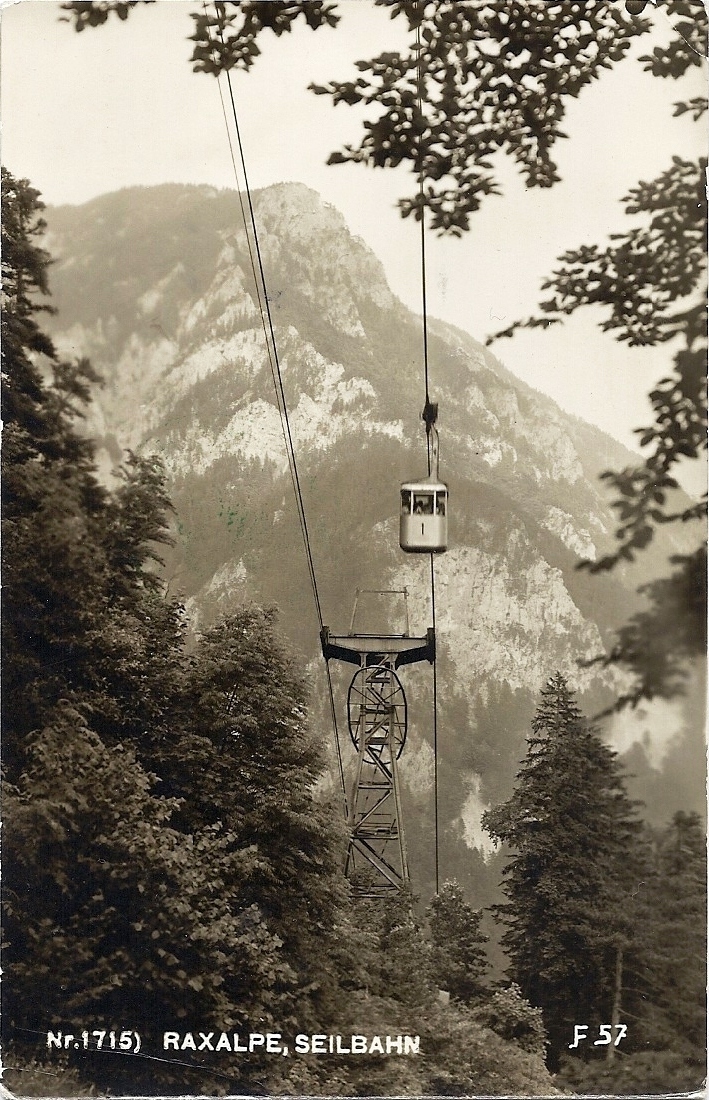
זו לא גלויה עם סיפור. בחרתי אותה פשוט כי אהבתי את הצילום - תמיד יש משהו מרשים בצילומי שחור-לבן, וכאן, עם העלווה המטושטשת בקדמת התמונה והקווים האלה של הרכבל שחותכים את התמונה לפרוסות א-סימטריות, הרגשתי שזה מוצלח במיוחד.

This isn't a story-postcard. I just got it because I liked the photo - there's always something striking about black-and-white, and here, with the off-focus leaves in the foreground and the lines of the cable car asymmetrically slicing the image, it seems to work quite well.

צד קדמי:
Front:

מצאתי את הגלויה הזו במקום אחר ברשת (שם יש מסר בצד האחורי, אם כי אני לא יכולה לקרוא אותו כי הוא בגרמנית) ושם מתארכים אותה לשנות ה-60, אז זו התגית ששמתי, למרות שאני לא לגמרי בטוחה. בכל אופן, על פי הכיתוב מדובר על ה-seilbahn - כלומר רכבל, אם כי מסתבר ששמה האנגלי הוא 'חשמלית אווירית', שזה די חמוד בעיניי - על רכס הראקס שבאוסטריה התחתית. ולאתר התיירות המקומי יש עמוד שמוקדש לרכבל! כמה נחמד.

Another place online that has this postcard (with a message on the back, albeit one I can't read, since it's in German) dates it to the 1960s, so that's what I put in the tag, although I can't really tell. Anyway, the caption identifies it as the seilbahn - cable car or aerial tramway - on the Rax mountain range in Lower Austria. And the local tourism website has a page about the aerial tramway ('ropeway', I suspect, is a rather adorable literal translation)! How nice.

צד אחורי:
Back:

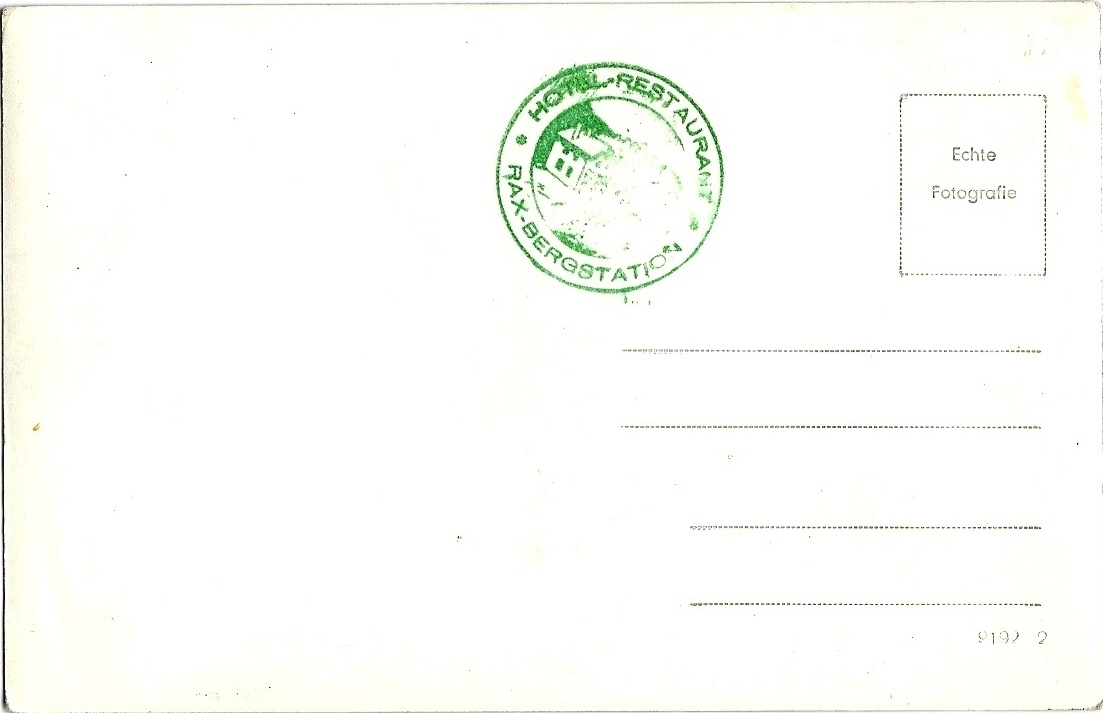
מאחור, כפי שאמרתי, לא כתוב שום דבר, יש רק חותמת של המלון-ומסעדה Rax Bergstation - נראה לי שמדובר על המלון הזה, שנשמע ממש נחמד (והוא אפילו לא כ"כ יקר, יחסית לאירופה). ומסתבר שיש בסביבה גם מצלמת רשת, אז אפשר להסתכל שם ולדפדף לאורך השעות האחרונות, לראות את השמש זזה על פני העמק ומשתקפת מהגגות ומהמים שלמטה, ואת הרוח נושבת בנחת, ואת העצים עצים, והכל נראה יפה ושקט ממש כמו שאפשר להסיק מהגלויה.
[עריכה: מצאתי איך להטמיע את התמונה ממצלמת הרשת. אבל בכל זאת נחמד ללכת לאתר.]

Nothing on the back, as I said, but it's stamped by the hotel-restaurant Rax Bergstation - I think it's this hotel, which sounds quite lovely (and relatively inexpensive, for Europe). And turns out there's a webcam around there, too, so you can have a look and flip through the recent hours to see the sun moving across the valley and shining on the roofs and waterways below, and the wind blowing gently, and the trees being trees, and it all seems just as beautiful and quiet as the postcard makes it out to be.
[Edit: I found a way to add an embedded image from the webcam. It's still nice to go to the site, though.]


אההה, זה טוב. נראה לי שזה בדיוק מה שכולנו צריכים. איזה נופש איפשהו בהרים. הרכבל עולה, הרכבל יורד, יש שם... כבשים, או משהו. אני לא יודעת. יש אוויר קריר ורענן, והרבה ירק מסביב, ושמיים ענקיים.

Ahhh, that is nice. I think that's just what we all need. A nice retreat somewhere in the mountains. The cable car goes up, the cable car goes down, there's... sheep, or something. I don't know. There's cool crisp air, and plenty of greenery, and a great big sky.

ומכיוון שאני לא יכולה לנסוע לשם (לפחות לא בזמן הקרוב), נראה לי שאעלה עוד כמה רשומות עם מקומות כאלה. לחלום עוד אפשר, לפחות.

And since I can't go there (at least not any time in the near future), I think I'm gonna do some more posts with places like that. At least we can dream.

Tuesday, September 18, 2012

Absinthe and biscuits - אבסינת וביסקוויטים

I've recently returned from a vacation in the US, but this is not the reason I chose this New York postcard (I actually chose it ages ago, but stuff - including being abroad - kept me from updating, as often happens). No, I chose it for the regular reasons: interesting picture, interesting little story in the message, and mainly one thing that sparked my interest: absinthe.

חזרתי לא מזמן מחופשה בארה"ב, אבל זו לא הסיבה שבחרתי את הגלויה הניו-יורקית הזו (למעשה, בחרתי אותה ממש מזמן, אבל היו כל מיני דברים - כולל הנסיעה לחו"ל - שבגללם לא עדכנתי, כרגיל). בחרתי אותה מהסיבות הרגילות: תמונה מעניינת, סיפור קטן ומעניין במסר הכתוב, ובעיקר בגלל דבר אחד שמשך את תשומת הלב שלי: אבסינת.

I remember some of the stories about artists and absinthe, back from when I studies some art history in highschool. And I've seen Heston Blumenthal getting a massive absinthe hangover during one of his culinary experiments. I know how alluring, and dangerous, it was - but I didn't know that in the 60s, there was an Absinthe House in New York City, and this is probably the main reason that I decided to get this card to begin with.

אני זוכרת את הסיפורים על אמנים ואבסינת, אי אז כשלמדתי תולדות האמנות בתיכון. וראיתי את הסטון בלומנטל מקבל האנגאובר נוראי מאבסינת במהלך אחד הניסויים הקולינריים שלו. אני יודעת על הקסם של המשקה הזה, והסכנה שבו - אבל לא ידעתי שבשנות ה-60 היה 'בית אבסינת' בניו יורק, וזו כנראה הסיבה העיקרית שבכלל החלטתי לקנות את הגלויה הזו.

Front:
צד קדמי:


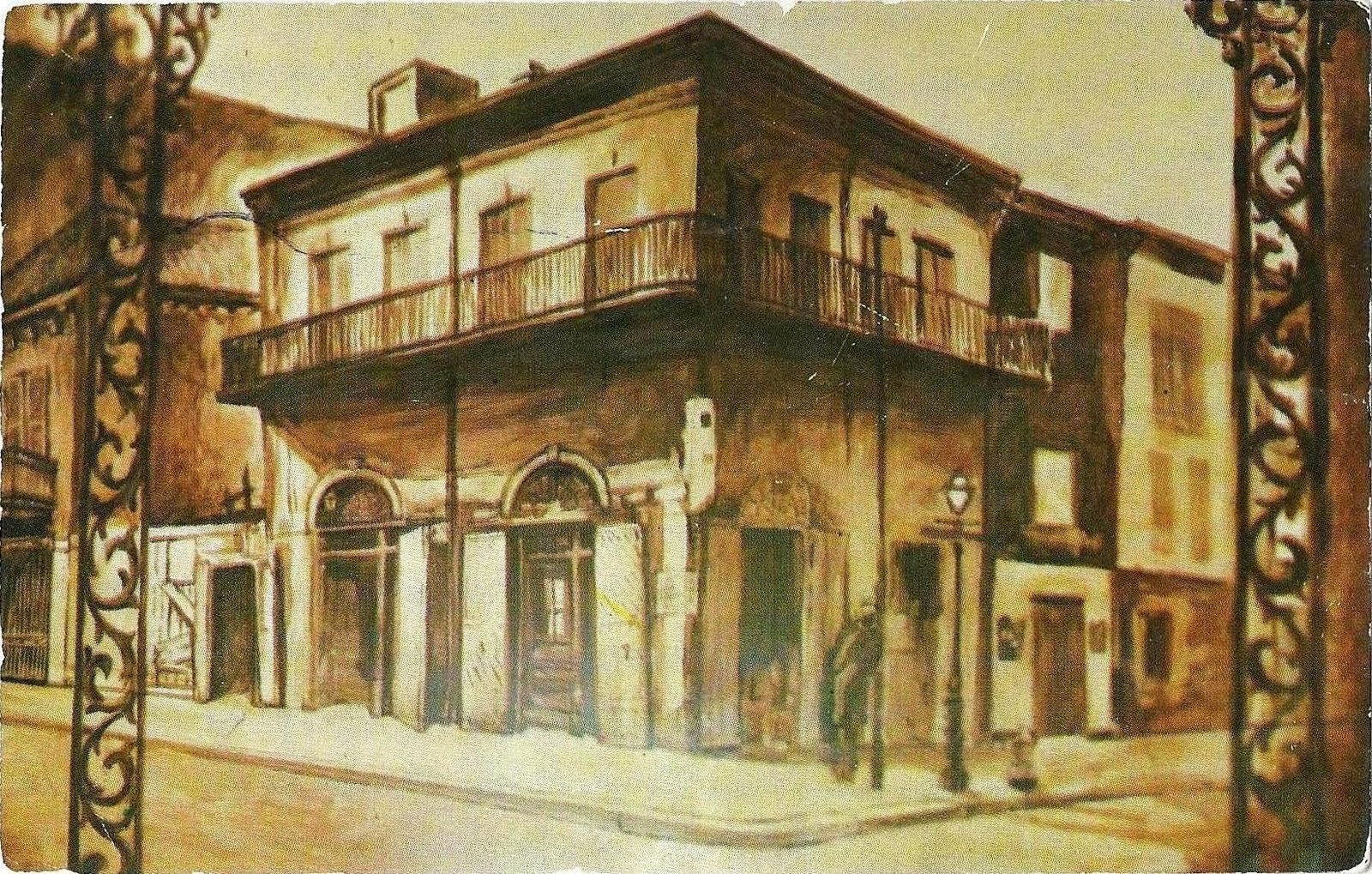
The picture is a bit misleading, however: this is in fact not the NYC Absinthe House (which I'll get to, shortly), but the New Orleans establishment, which apparently still exists today. The picture in the website I just linked to is unmistakable. Did the New York place look like that? I suspect it didn't, but couldn't find out. I'll get to that later, as well.

מה שכן, התמונה קצת מטעה: זה בעצם לא 'בית האבסינת' בניו יורק (שאגיע אליו עוד מעט), אלא המוסד בניו אורלינס, שמסתבר שעדיין קיים כיום. התמונה באתר שבלינק היא ללא ספק אותה תמונה. האם גם המקום בניו יורק נראה כך? אני חושדת שלא, אבל לא הצלחתי לברר. גם לזה אגיע בהמשך.

But first, the message on the back. This is where the biscuits from the post title come into the picture - as well as a little family story, most of which remainds pretty vague.

אבל קודם כל למסר שכתוב בצד האחורי. שם כבר נכנסים לתמונה גם הביסקוויטים מכותרת הפוסט - וגם סיפור משפחתי קטן, שרובו נשאר מעורפל למדי.

Back:
צד אחורי:

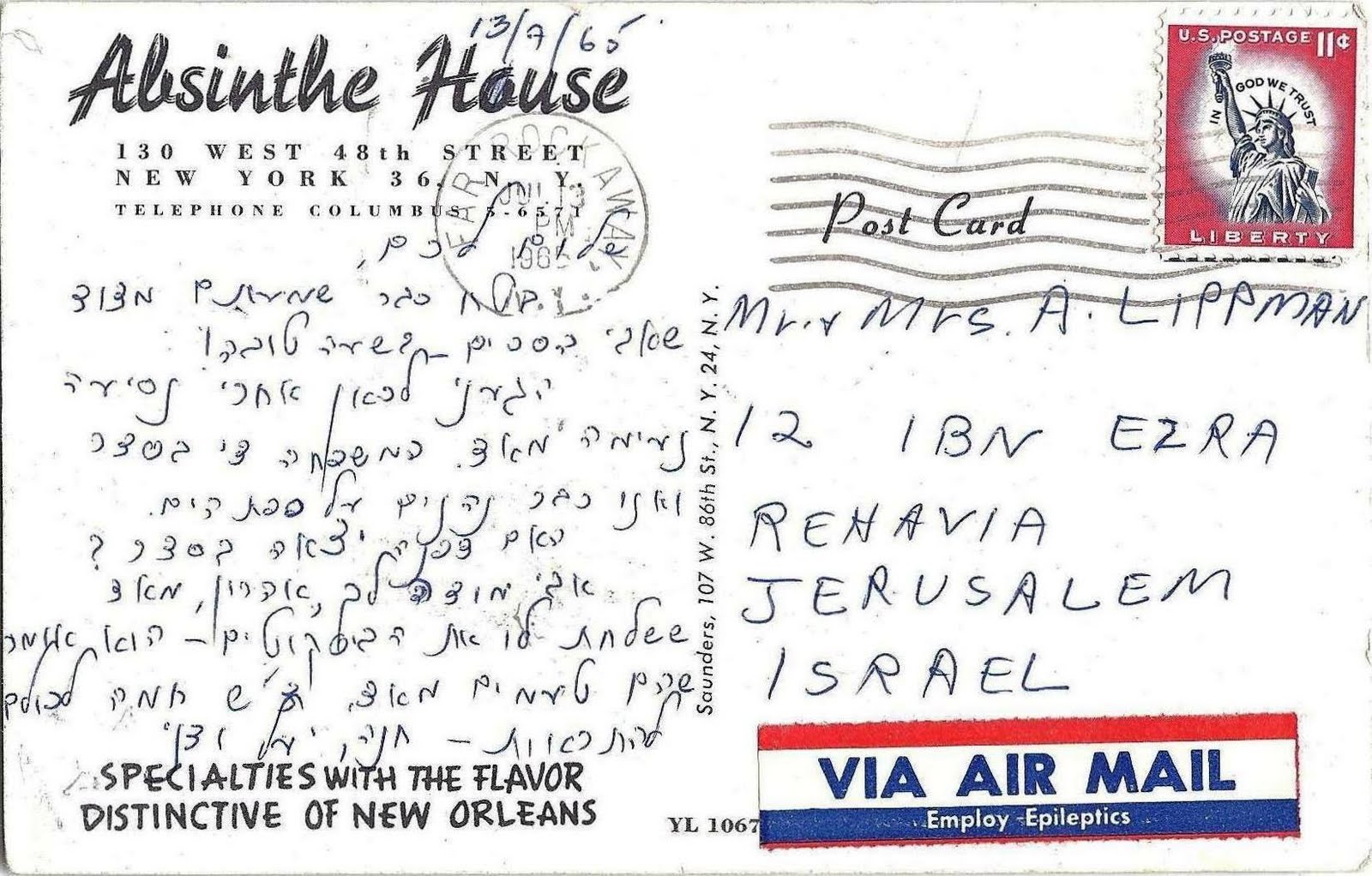
13/7/65
שלום לכם,
בטח כבר שמעתם מדוד שאבי הסכים - בשעה טובה!
הגענו לכאן אחרי נסיעה נעימה מאוד. המשפחה די בסדר ואנו כבר נהנים על ספת [כך במקור!] הים.
האם דפנה יצאה בסדר?
אבי מודה לך, אהרון, מאד ששלחת לו את הבסקוטים - הוא אומר שהם טעימים מאוד. ד"ש חמה לכולם
להתראות - חנה, יעל ודני
13/7/65
Hello everyone.
You probably already heard from David that Avi [/ my father (could be either in Hebrew, can't really tell from context)] agreed - congratulations!
We arrived here after a very pleasant ride. The family is quite alright, and we are already having a good time on the beech [sic!].
Did Daphna come out alright?
Avi [/ my father] thanks you, Aharon, very much for sending him the biscuits - he says they are delicious. Send a warm hello to everyone
See you - Hannah, Yael and Danny

The biscuit thing can be explained by the fact that Mr. Lippman is probably one of the Lippmans that owned the Hadar bakeries [Hebrew link! Sorry, couldn't find any English ones] in Jerusalem (their locally-famous biscuits are still being produced under the Hadar name, but from what I managed to understand, I think it's being done by another company, who bought the brand, or something like that). There's also something about shares in the Hadar Mall [Another Hebrew link, sorry again], and in case all this financial-pages talk hasn't bored you silly yet, there's a company called Lipman Electronic Engineering (or was, looks like they changed their name), and I think one of the owners might be the same Aharon Lipman/Lippman, maybe. So that's him, and those are probably the biscuits sent abroad, but that doesn't really tell me anything about Daphna, Hannah, Yael or Danny, and I couldn't really look them up. I assume they're family, or perhaps close friends - something about the tone of the writing suggests more than a casual acquaintance. And the handwriting is interesting: it's a bit crude and unpracticed, and with that misspelling in there it makes me think that the writer was either pretty young, or not a native speaker of Hebrew, but more probably the latter. There has to be a story there. I wish I knew it.

את עניין הביסקוויטים ניתן להסביר בכל שמר ליפמן הוא ככל הנראה אחד הליפמנים שהיו בעלי מגדניית הדר בירושלים (הביסקוויטים היחסית מפורסמים שלהם עדיין מיוצרים תחת השם 'הדר', אבל לפי מה שהצלחתי להבין נראה לי שחברה אחרת קנתה את המותג ומייצרת אותם עכשיו, או משהו כזה). יש גם משהו שקשור למניות בקניון הדר, ולמקרה שכל ידיעות המוספים הכלכליים האלה עוד לא שיעממו אתכם למוות, יש גם חברה בשם 'ליפמן הנדסה אלקטרונית' (טוב, הייתה, הם שינו את השם) ואני חושבת שהבעלים עשוי להיות אותו אהרון ליפמן מהגלויה, אולי. אז זה מה שיש לגביו, וכנראה שגם לגבי הביסקוויטים שנשלחו לחו"ל, אבל מכל זה לא גיליתי כלום לגבי דפנה, חנה, יעל או דני, ולא ממש הצלחתי לחפש אותם. אני משערת שהם קרובי משפחה, או חברים קרובים - יש משהו בטון של מה שנכתב שם שמעיד על יותר מהיכרות סתמית. וכתב היד די מעניין: הוא קצת פשוט, כמו של מישהו שלא מתורגל בכתיבה, וביחד עם שגיאת הכתיב שם יש לי הרגשה שהכותב היה או צעיר מאוד או לא דובר עברית כשפת אם, וסביר יותר שמדובר באפשרות השנייה. בטח יש פה סיפור. הלוואי וידעתי מהו.

As for the actual place - looking up the address quickly shows that the building that stood there back in the 60s is no longer there:

לגבי המקום עצמו - חיפוש של הכתובת מגלה שהבניין שהיה שם בשנות ה-60 כבר לא שם:


The building you're looking at, in the above Street View image, is the News Corp. Building (also known by the much less imaginative name 1211 Avenue of the Americas), built in the early 70s. I've been trying to find an earlier picture of that part of the street - hopefully one which might also show the Absinthe House - but to no avail. The closest I could get to 130 W 48th St. were this picture of a church at no. 143, and this picture of a theater (I thought at first it might be the Cort Theater at no. 138, which still stands today, but judging from the name 'Never Say Die' on the marquee, it's apparently the 48th Street Theater, further down the street at no. 157, which apparently was destroyed back in 1955 and is now a very ugly car park). Both pictures are from very early in the 20th century, anyway; nothing from the 60s. That's too bad.

הבניין שאתם רואים בתמונה שב-Street View לעיל הוא בניין ניוז קורפ (News Corp. Building, הידוע גם בשם הלא מקורי במיוחד 1211 Avenue of the Americas), שנבנה בתחילת שנות ה-70. ניסיתי למצוא תמונה מוקדמת יותר של הקטע הזה ברחוב - ואפילו קיוויתי למצוא תמונה שבה מופיע 'בית האבסינת' - אבל כל חיפושיי היו לשווא. הכי קרוב שהצלחתי להגיע לכתובת הדרושה, רח' 48 מערב מס' 130, היו התמונה הזו של כנסייה במס' 143, והתמונה הזו של אולם תיאטרון (חשבתי בהתחלה שמדובר בתיאטרון קוֹרְט במס' 138, שעדיין עומד על מכונו, אבל לפי שם המחזה שמופיע שם, Never Say Die, עולה שמדובר בתיאטרון רחוב 48, ששכן בהמשך הרחוב, מס' 157, ושנהרס ב-1955, ובמקומו עומד עכשיו חניון מכוער להפליא). בכל אופן, שתי התמונות הן ממש מתחילת המאה ה-20; אין לי כלום משנות ה-60. וזה חבל.

So out of all this long and link-heavy paragraph above, the bottom line is that I have no idea what the place really looked like. Actually, I barely know anything about it, except for the (lovely, mind you!) information in the paragraph below, taken from a New York restaurant guide from 1959 (I'm supplying a full quote - and translation - because the page I linked to has a long list of places and it takes a bit of scrolling to get to the Absinthe House, but it's a fun read for those who like that sort of stuff, or who have a time machine and are planning to drop by 1959 New York and grab some dinner):

אז מכל הפסקה הארוכה ועתירת-הלינקים הזו, מה שיצא זה שאין לי מושג איך המקום נראה באמת. למעשה, אני לא יודעת עליו כמעט שום דבר, מלבד המידע (המקסים, יש לציין) בפסקה שלהלן, מתוך מדריך מסעדות בניו יורק מ-1959 (אני מצטטת - ומתרגמת - כי בעמוד המקושר יש רשימה ארוכה של מקומות, וצריך לגלול די הרבה עד שמוצאים את 'בית האבסינת', אבל בהחלט נחמד לקרוא שם, למי שאוהבים דברים כאלה, או שיש ברשותם מכונת זמן ומתכננים לקפוץ לניו יורק של 1959 לאכול משהו):
Absinthe House, at 130 W. 48th St., gets its name from a famous old New Orleans institution, though there is no connection. It does feature New Orleans decoration and some French Creole dishes. Operated and co-hosted by Marc Reuben and his pretty wife Edith, who strikingly resembles Lauren Bacall. Favorite hangout for showfolks and newspapermen, TV executives, etc. Originally across the street, it became necessary to seek another location, so Marc financed it, as many Broadway shows are financed, with a group of 90 backers, all clients.

בית האבסינת, ברחוב 48 מערב מס' 130, קיבל את שמו מהמוסד הניו-אורלינסי הוותיק, אם כי אין ביניהם קשר. עם זאת, יש שם דקורציה בסגנון ניו-אורלינס וכמה מנות של המטבח הקריאולי-צרפתי. הבעלים והמארחים הם מארק רובן ואשתו אדית, הדומה באופן מפתיע ללורן באקול. זה מקום בילוי מועדף על אנשי תיאטרון ועיתונאים, בכירים בחברות הטלוויזיה, וכיו"ב. במקור המסעדה שכנה בצד השני של הרחוב, אבל היה צורך למצוא מקום חדש, ומארק מימן אותו באותה שיטה שבה ממומנות הרבה הצגות בברודוויי - בעזרת קבוצה של 90 משקיעים, כולם מלקוחות המקום.
And these few lines are enough to give some sort of picture of the place. Mid-sixties New York (I know some people who will get royally mad if I don't add a reference to that famous show that I don't watch), alcohol and cigarette smoke, a strange mix of buttoned-down or semi-buttoned-down businessmen and of beatnik theater-people, in a world that is just starting to change, a moment before the era of Counter Culture. I wonder if our Israeli tourists (and their biscuits) actually spent time in there, or just found the card somewhere else and used it without really thinking about it - and if they did spend time in there, I wonder what did they do, who did they see, what did they think. And just in general, how was their time in New York? Israel in the sixties was a pretty small place (in many ways), and it must have been pretty impressive to visit such a big cosmopolitan city. But maybe they were frequent fliers (and according to what they say in the card, they apparently visited family or friends in the States), and it was all routine for them. And I wonder if they drank absinthe, and if they noticed that Edith Reuben looks like Lauren Bacall, and if they whispered about it (and maybe also about the frog legs, if there were any in the French Creole menu) around the table, in Hebrew so that the people around can't understand. I wonder what they looked like, what they wore. I wonder about everything. As usual, I have no answers, and I probably never will, and as usual, it's nice to imagine the whole story out of the little piece I'm holding.
And as usual, I already have plans for the next post, but we'll see when I get to that. Until then, a happy new (Jewish) year and happy holidays to anyone celebrating, and one little necessary(?) reminder: the blog has a Facebook page. You should use it if you like using Facebook things.

והשורות הספורות האלה כבר מספיקות לצייר תמונה של המקום. ניו יורק של אמצע שנות השישים (אני מכירה כמה אנשים שיצלבו אותי אם לא אכניס כאן את הרפרנס המתבקש לסדרה המפורסמת שאני לא רואה), אלכוהול ועשן סיגריות, תערובת מוזרה של אנשי עסקים מכופתרים או מכופתרים-למחצה ושל אנשי תיאטרון ביטניקים, בעולם שבדיוק מתחיל להשתנות, רגע לפני התקופה של 'תרבות הנגד'. אני תוהה אם התיירים הישראלים שלנו (והביסקוויטים שלהם) אכן בילו בו, או שסתם מצאו גלויה במקום אחר והשתמשו בה בלי לחשוב יותר מדי - ואם בילו שם, אני תוהה מה עשו, את מי ראו, מה חשבו. ובכלל, איך היה בניו יורק? ישראל של שנות השישים הייתה מקום די קטן (בכל מיני מובנים), ובטח היה די מרשים לבקר בעיר גדולה וקוסמופוליטית שכזו. אבל אולי הם היו נוסעים מתמידים (ולפי המתואר בגלויה כנראה שהם ביקרו משפחה או חברים בארה"ב), ומבחינתם זה היה עניין שגרתי. ומעניין אם הם שתו אבסינת, ואם הם שמו לב שאדית רובן דומה ללורן באקול, ואם הם התלחשו על זה (ואולי גם על רגלי הצפרדעים, אם הייתה מנה כזו בתפריט הקריאולי-צרפתי) ליד השולחן, בעברית כדי שמי שמסביב לא יבין. מעניין איך הם נראו, ומה לבשו. הכל מעניין. כרגיל, אין לי תשובות, וכנראה שגם לא יהיו, וכרגיל, נחמד לדמיין את הסיפור מתוך הקטע הקטן שברשותי.
וכרגיל, יש לי כבר תכניות לרשומה הבאה, אבל נראה מתי אגיע אליה. עד אז, שנה טובה וחגים שמחים לכל החוגגים, וגם תזכורת קטנה ונדרשת(?): יש לבלוג עמוד פייסבוק. אתם מוזמנים להשתמש בו, אם אתם אוהבים להשתמש בדברים כאלה בפייסבוק.
Wednesday, June 6, 2012

Out of principle - מתוך פרינציפ

ונפתח בשתי הודעות מנהלתיות:
א. לבלוג יש עכשיו גם עמוד פייסבוק. אז מי שמעדיף להתעדכן בפייסבוק - בבקשה. ולא אכחיש שקצת צומי (בדמות לייק, שייר וחבריהם) תעשה לי טוב על הלב. [הערה: חשבתי לעשות איזה וידג'ט כזה עם קישור רשמי-למראה לפייסבוק, אבל לא הצלחתי למצוא איך עושים את זה בלי מה שנראה לי כמו המון ווג'ערא'ס. אם אתם מכירים דרך קלה ופשוטה לארגן את העניין, אשמח לשמוע. עד אז, פשוט הוספתי עוד קישור לרשימת הקישורים.]
ב. כפי שכבר עדכנתי בעמוד הנ"ל, הוספתי לאחרונה כמה פרטי מידע מגניבים למדי לרשומה 'האדונית מסקערניעוויץ', אותם תוכלו למצוא כאן.
ועכשיו, גלויה! האח!

To start, two administrative announcements:
1. The blog now has a Facebook page. So those who prefer to get their updates that way - go ahead. Also, I will not deny that a certain amount of gratuitous attention (in the form of likes, shares, and all that stuff) will be rather nice. [Note: I thought of making one of those official-looking Facebook button side widget things, but couldn't find a way to do it without what looks like a lot of hassle. If you find a quick and simple way, let me know. Until then, it's just another link on my link list.]
2. As has already been updated in the aforementioned page, I recently added a few pretty cool details to the post 'The Lady from Skierniewice', which you can find here.
And now, a postcard! Hurrah!

אני לא בטוחה אם שמתי לב לראשונה לגלויה הזו בגלל התמונה או בגלל מה שכתוב בה, אבל התמונה באמת נחמדה. די יוצאת דופן - לא רואים כ"כ הרבה גלויות שמציגות אמצעי תחבורה יומיומיים.

I'm not sure if I first noticed it because of the picture or the writing, but the picture is nice. Sort of unusual - you don't see that many postcards depicting mundane means of transportation.

צד קדמי:
Front:


הכתובית בתחתית התמונה (Rorschach-Heiden Bergbahn: מסילת הרכבת ההררית רורשאך-היידן, וזה גם שם של חברת רכבות ישנה, כפי שאפשר לראות בראשי התיבות RHB על קרון הרכבת עצמו - אפשר לקרוא קצת על החברה באנגלית כאן, או, למי שקורא גרמנית, אפשר לקרוא ערך הרבה יותר מפורט כאן) מביאה אותנו היישר אל הפינה הצפון-מזרחית של שווייץ, על שפת ימת קונסטנץ, היא ה-Bodensee (ר' מפה למטה). נראה כמו מקום חביב למדי, ובכלל, נראה לי שמתאים לחזור להרים הקרירים של שווייץ עכשיו כשבחוץ נהיה כבר קיץ וחם.

The caption at the bottom (Rorschach-Heiden Bergbahn: the Rorschach-Heiden mountain railway, and also the name of an old railway company, as seen in the initials RHB on the actual train car - you can read about it here, or, if you read German, there seems to be a much more detailed entry here) places us right in the northeastern corner of Switzerland, on the shore of Lake Constance, or Bodensee (see map below). Seems like a rather lovely place, and it kinda feels right to return to the cool mountains of Switzerland now that it is getting hot and summery out again.


אבל כמו שקורה לעתים קרובות, החלק החביב עליי הוא מה שכתוב בצד האחורי. חוששתני שהסריקה לא יצאה משהו, אבל כרגיל צירפתי תעתיק ותרגום מתחת.

But as is often the case, my favourite part is on the back. The scan isn't great, I'm afraid, but as usual I got the transcription and translation right below.

צד אחורי:
Back:


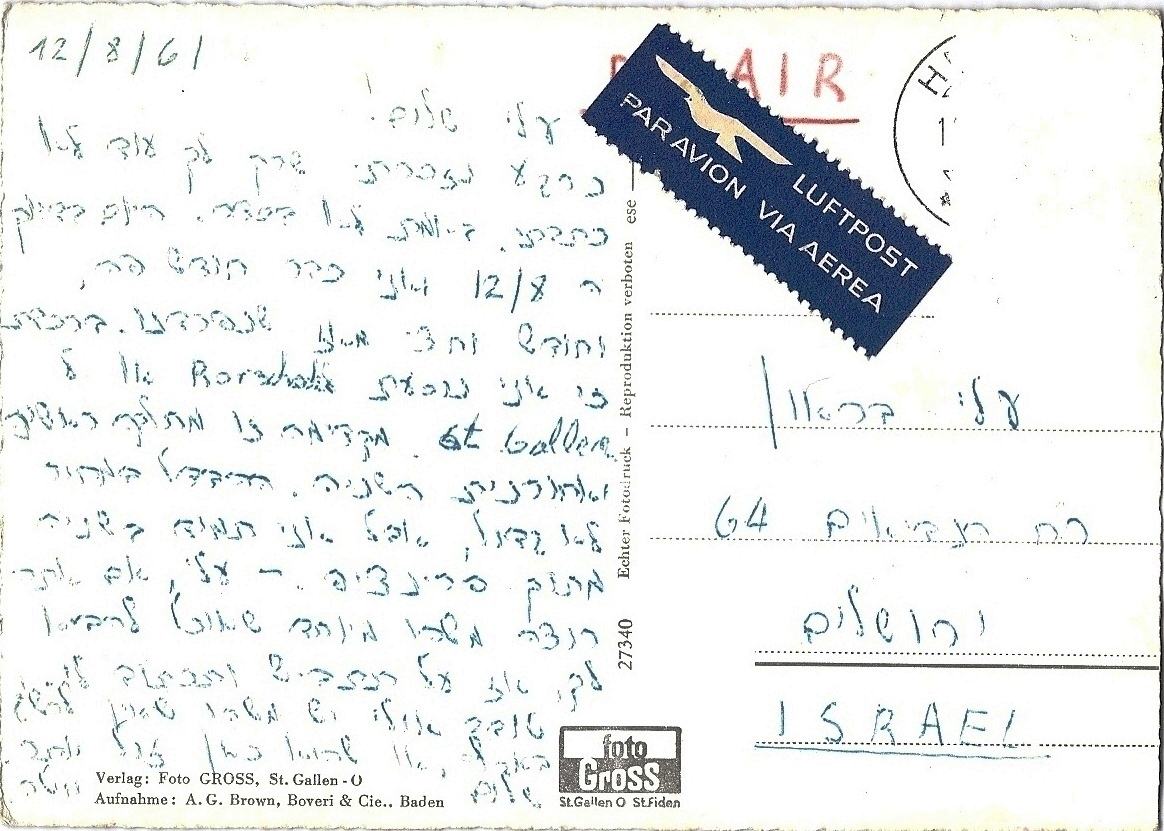
12/8/61
עלי שלום!
כרגע נזכרתי שרק לך עוד לא כתבתי. באמת לא בסדר. היום בדיוק ה 12/8 ואני כבר חודש פה, וחודש וחצי מאז שנפרדנו. ברכבת זו אני נוסעת לRorschach או ל St Gallen. מקדימה זו מחלקה ראשונה ואחורנית השניה. ההבדל במחיר לא גדול, אבל אני תמיד בשניה מתוך פרינציפ. - עלי, אם אתה רוצה משהו מיוחד שאוכל להביא לך, אז על [כך במקור!] תתביש ותכתוב לי, טוב? אולי יש משהו שאין להשיג בארץ, או שהוא כאן זול יותר.
שלום, ויטה[?]

12/8/61
Hello, Eli!
I just remembered now that you are the only one I have not written yet. How dreadful of me. Today is exactly 12/8 [for any American readers: that means August 12, not December 8] and I am already here a month, and it's been a month and a half since we said goodbye. This is the train that I take to Rorschach or to St Gallen. At the front is the first class, at the back the second. The price difference isn't very big, but I am always in the second, out of principle. - Eli, if you want anything special that I can bring you, then dont [sic!] be shy and write me, alright? Perhaps there is something that can't be found back home, or that is cheaper here.
Goodbye, Vita[?]

ניסיתי לחפש את עלי בראון, אבל לא מצאתי שום דבר שנראה כמו זיהוי מוחלט של הבנאדם. יהיה קשה עוד יותר לחפש את הכותבת, כי אני אפילו לא בטוחה שאני מצליחה לקרוא את השם שלה כמו שצריך. בכל אופן, זה לא ממש משנה; העיקר כאן הוא הסיפור, מה שנאמר כאן, ואיך הוא נאמר. ותכל'ס, נכון שזה מגניב? יש כאן איזה טון דיבור שעולה מהכתיבה די בבירור - אפשר ממש לדמיין אותה, לא? יש פה משהו חמור-סבר כזה, שגורם לי לחשוב על אישה קצת מבוגרת, קצת דודתית או מורתית, מאלה שתמיד יודעות מה הן רוצות ולמה, שיש להן סיבות ספציפיות ותכניות מסודרות (קצת מזכיר לי את האמא מ'להתראות לנין', ואם לא ראיתם את הסרט הזה כדאי שתראו כי הוא נהדר). מה היא עושה בשווייץ, לתקופה של לפחות חודש, ואולי יותר? ועוד בתחילת שנות ה-60, כשנסיעות לחו"ל לא היו עניין נפוץ במיוחד פה בארץ? האם היא נסעה לאיזה בית הבראה, או אולי ללימודים (יש אוניברסיטה בסנט גאלן)? בכל אופן, אני משערת שהיא נהנתה שם, ושגם אם היא בסך הכל היתה שם בחופשה נינוחה, היא בכל זאת הלכה לכל מקום בקצב נמרץ, תמיד עם מטרה ברורה לפניה, כי היא פשוט היתה בנאדם כזה.

I tried looking for Eli Brown/Braun/Bar-On, but didn't come up with anything that feels like it might definitely be the guy. Would be even harder to search for the writer, since I'm not even sure I'm reading her name right. Anyway, this doesn't really matter; it all about the story, all about what is being told, and how. And really, isn't it neat? There's a certain tone of voice that comes so clearly through the writing - you can just imagine her, can't you? (At least, I tried to capture in the translation what she sounded like to me.) There's a sort of severity about it that makes me think of a somewhat older woman, a little like a teacher, the kind who always knows what she wants and why, the kind who has specific reasons and orderly plans (it sort of makes me think about the mother from Goodbye Lenin, which you should see if you haven't because it's a lovely film). What is she doing in Switzerland, for at least a month, and possibly longer? And back in the early 60s, when trips abroad weren't very common around here? Is she there for her health, or maybe for study (there's a university in St. Gallen)? Anyway, I'm assuming she enjoyed herself, and that even if she was there on a leisurely vacation, she walked briskly everywhere, always with a clear purpose, just because that's the sort of person she is.

אבל כמובן, זה רק הדמיון שלי - זה רק מה שאני רואה, כשאני מסתכלת על הגלויה. אנשים אחרים אולי יראו דברים אחרים. אם יש לכם סיפורים משלכם, אתם מוזמנים לחלוק.

But of course, that's just my imagination - just what I see, when I look at this card. Other people might see other things. If you have your own stories, go ahead and share them.


עדכון (12 באוקטובר 2012): תגובה אנונימית אחת מצאה לי את עלי בראון מהגלויה - ואני ממש שמחה על זה, כי זה סיפור נפלא. הנה הקישור שקיבלתי שם, ואתם יכולים פשוט ללכת ולקרוא, אבלאם לא בא לכם, התקציר הוא כזה: בבית שבכתובת הזו, ברחוב הנביאים 64, התגוררה רחל המשוררת אחרי שנאלצה לעזוב את קיבוץ דגניה בגלל השחפת שלה. את השיר הלירי העצוב-אך-אופטימי והיפהפה שלה 'עץ אגס' - אחד השירים העבריים האהובים עליי (בקישור אפשר לקרוא גם את התרגום האנגלי החיוור שלו) - היא כתבה שם, על עץ האגס שגדל בחצר מחוץ לחלונה.
אז מה לכל זה ולעלי בראון, מלבד הכתובת המשותפת? ובכן, אחרי שרחל עברה לתל אביב, אבא של עלי, וולפגנג בראון (אני די בטוחה שהוא מופיע בעוד כמה גלויות שהעליתי פעם; אבדוק את העניין אחר כך) התגורר בבית במשך הרבה שנים. למעשה, הוא מת שם ב-2009, בגיל 94. הוא היה מאוד קשור לסיפור של רחל, וכשעץ האגס שהונצח בשיר מת לפני כמה שנים, הוא ובנו עלי נטעו עץ אגס חדש במקומו. מקסים, לא?

Update (Oct 12 2012): Some anonymous in the comments found me the Eli Braun from the postcard - and I'm so glad s/he did, because it's a  wonderful story. The link there is to an article in Hebrew (and I suppose most of the story will speak more to the Hebrew-speakers, but it's still wonderful), but the gist of it is that the house at this address, 64 HaNevi'im Street, was for a while the home of one of the most famous Hebrew women poets, Rachel. She moved there from the kibbutz after she was diagnosed with tuberculosis and was no longer allowed to work with children (a work she loved, by all accounts). Yes, she basically fulfilled the stereotype of the frail, lonely poet dying from consumption. But she wrote beautiful poetry. During the time she spent in Jerusalem she also wrote one of my favourite poems, the lyrical, sad-yet-optimistic Pear Tree (alas, so much is lost in this translation - you'll just have to trust me that in the original Hebrew it's just beautiful), about an actual pear tree growing in the courtyard, outside her window.
But while all this introduction was probably necessary for my non-Hebrew readers, at this point you are probably asking yourselves what it all has to do with Eli Braun, except for that address. Well, after Rachel moved to Tel Aviv, Eli's father, Wolfgang Braun (who I'm pretty sure appeared in some previous postcards I had here; I'll look it up later) lived in that house for many years. In fact, he died there in 2009, at the age of 94. He cared a lot about the story of Rachel, and when the pear tree immortalised in the poem died some years ago, he and Eli planted a new pear tree in its place. Isn't that sweet?
Thank you, Anonymous!

והנה המקום עכשיו - או לפחות, פיסת הגינה שאפשר לראות כשמסתכלים מהרחוב:

And here's the place now - or at least, the bit of the garden you can see from the street:

Thursday, May 24, 2012

Be Prepared - היה נכון

It's not like I'm going to make a new tag just for 'I found this inside a book' or something, but, well, I found this inside a book. Was just reading some Agatha Christie novel I picked up in a use book store, and this piece of paper was inside.

זה לא שאני הולכת ליצור תגית חדשה רק לנושא 'מצאתי את זה בתוך ספר' או משהו כזה, אבל, נו, מצאתי את זה בתוך ספר. סתם קראתי לי איזה בלש של אגתה כריסטי שמצאתי בחנות ספרים משומשים, וחתיכת הנייר הזו היתה בפנים.

Of course, I got really excited about it, because it's so neat to me to think that it's just been sitting in a book since the early 60s (when it was probably used as a temporary bookmark by someone who just picked up the first piece of paper lying around, because he knew better than to leave the book open page-side down, because you do not do that to a book, dammit, but I'm getting carried away), with the book changing hands who knows how many times, until it ended up on my shelf. And I left it in the book, because someday in the future that book will move on again, and so will this thing. It might be used as a bookmark again; it might be noticed, and enjoyed, and maybe even treasured; it might be thrown away. For now, it's here, in the permanent temporary collection that is the internet. Have a look.

וכמובן שזה ממש הלהיב אותי, כי זה ממש מגניב בעיניי שדבר כזה פשוט ישב בתוך הספר מאז אי-אז בתחילת שנות ה-60 (כשמישהו בטח השתמש בו כסימניה זמנית, כי הוא היה מספיק חכם כדי לא להשאיר את הספר פתוח עם הדפים למטה, כי לא עושים דבר כזה לספר, לעזאזל, אבל אני נסחפת), ובינתיים הספר החליף ידיים מי יודע כמה פעמים, עד שבסופו של דבר מצא את עצמו על המדף שלי. ואני השארתי את הנייר בספר, כי מתישהו בעתיד הספר ימשיך את המסע שלו, והנייר ביחד איתו. אולי שוב ישתמשו בו כסימניה; אולי ישימו לב אליו, ויהנו ממנו, ואפילו ישמרו אותו; אולי יזרקו אותו לפח. בינתיים, הנה הוא כאן, באוסף הקבוע והזמני של האינטרנט. בואו תראו.

Front:
צד קדמי:


Okay, so it's a smiling Israeli kid (he actually looks kinda Aryan, but you can tell he's Israeli because if the tembel hat), with a... medal? First prize ribbon? Flower? What is that thing? Also, he appears to be signalling a semaphore P (or, assuming it's in Hebrew, a semaphore samekh). Or perhaps trying to say 'Halt! Look over there!' or 'He went that way!'. It's an odd piece of clip-art, and that enough would have been a reason to love this thing, even without what's on the back.

אוקי, אז זה ילד ישראלי מחייך (יש לו דווקא מראה די ארי, אבל רואים שהוא ישראלי, הוא חובש כובע טמבל), עם... מדליה? דבר כחול כזה [כמעט כתבתי 'סרט כחול', כי באנגלית זה ribbon. אבוי.] של מקום ראשון כמו בתחרויות עוגות אמריקאיות? פרח? מה זה הדבר הזה? אה, והוא כנראה גם מאותת P בסמאפור (או, בהנחה שהוא מאותת בעברית, ס בסמאפור). או שאולי הוא מנסה לומר 'עצור! תסתכל הצידה!' או 'הוא הלך לשם!'. זו פיסת קליפ-ארט מוזרה למדי, ורק היא כשלעצמה היתה יכולה להיות סיבה מצוינת לאהוב את הפתקה הזו, אפילו בלי מה שכתוב מאחורה.

Back:
צד אחורי:


לכב' דיירי הבית מס' __12__ ברח' __הגדוד העברי__

        מועדים לשמחה

בביקור שערכנו בביתכם מצאנו, כי
[א.] החצר אינה מוחזקת במצב תקין
[ב.] אין גינה מטופחת
ג. פחי אשפה אינם מכוסים
[ד.] השטח מסביב לפחי האשפה אינו נקי
ה. חדר המדרגות מוזנח

אנו בטוחים, כי תדאגו לבריאותכם וכי אתם מעונינים בסדר ובנקיון ולא תחכו שיבואו מפקחי העיריה ויטילו עליכם קנסות-ברירה בהתאם לחוק.
                                     צופי ירושלים

ירושלים, חול המועד סוכות תשכ"ג
For the residents of house no. __12__ on __HaGdud HaIvri__ St.

        Happy Holidays

On a visit to your house we have found, that
[a.] The yard is not properly maintained
[b.] No well-kept garden
c. Trash bins are not covered
[d.] The area around the trash bins is not clean
e. Stairwell is dilapidated

We are certain, that you will take care of your health and that you are interested in order and cleanliness and will not wait for the municipal inspectors to come and issue a fine or alternative penalty as required by law.
                                                  Jerusalem Scouts

Jerusalem, Chol HaMoed Sukkot, 1962

But the back, oh, it's marvellous. I think my favourite part is the phrasing in that last, underlined sentence, which kinda makes me think of a protection racket ('Now you're a nice guy, yaknow. We're sure you're a reasonable man, and you'll... take care of business, before some folks come around to give you trouble'). I'm sure they didn't mean it, because after all, they're just Scouts [Note to non-Israeli readers: the Israel Scouts are not divided into Boy/Girl Scouts, but it's basically sorta the same thing. I think. I wasn't in the Scouts]. They wanted to keep the neighbourhood pretty, so they patrolled the streets and left people notes, to let them know that - if I'm correct in reading the combination of circling and striking there - their yard is not properly maintained and the area around their trash bins isn't clean. With a nice picture of a smiling boy in a tembel hat. But still, there's something so disturbingly passive-aggressive about it.

אבל אוי, הצד האחורי פשוט מופלא. אני חושבת שהחלק שהכי מוצא חן בעיניי הוא הניסוח של המשפט האחרון, המודגש בקו, שקצת מזכיר לי פרוטקשן ('אתה דווקא נחמד, אתה. אנחנו בטוחים שאתה בן אדם הגיוני ושאתה... תטפל בעניינים, לפני שיבואו אנשים שיעשו לך בעיות'). אני בטוחה שלא זו היתה הכוונה, כי בכל זאת, סה"כ צופים. הם רצו לשמור על פני השכונה, אז הם סיירו ברחובות והשאירו לאנשים פתקים אינפורמטיביים כדי להודיע להם ש--אם הבנתי נכון את השילוב של הקפה בעיגול ומחיקה בקו שיש שם--החצר שלהם אינה מוחזקת במצב תקין והשטח מסביב לפחי האשפה שלהם אינו נקי. עם ציור חביב של ילד מחייך בכובע טמבל. אבל בכל זאת, יש בזה משהו כ"כ מטריד, פאסיבי-אגרסיבי כזה.

Well, it was a different time. To be honest, I can't imagine the Scouts nowadays walking around the streets and telling people they need to clean up. You can see it as a loss of community spirit and that feeling that we're all a part of society and have to pull together to make it work; or perhaps you can see it as higher awareness of people's right to privacy and to not have self-appointed committees telling them if their house is nice enough. Any way you choose to look at it, it definitely marks a different era.

טוב, זו היתה תקופה אחרת. למען האמת, אני לא יכולה לדמיין את הצופים כיום מסתובבים ברחובות ואומרים לאנשים לנקות את החצר. אפשר לראות בזה אובדן של הערבות ההדדית, של התחושה הזו שכולנו חלק מהחברה ואנחנו צריכים לעבוד ביחד כדי שהיא תצליח; או שאולי אפשר לראות בזה מודעות גבוהה יותר לזכותם של אנשים לפרטיות, ולזכות שלא יבואו כל מיני ועדות-מטעם-עצמן ויחליטו להם אם הבית שלהם נראה מספיק מטופח. איך שלא בוחרים להסתכל על זה, בהחלט מדובר כאן על סימן של עידן שחלף.

Now, how about taking a look at the place? I'm pretty sure this is the first post where I get to use Google Street View in Israel, and look, you can see the actual building this note has been talking about!

ועכשיו, בואו נסתכל על הבית. אני די בטוחה שזו הרשומה הראשונה שבה יוצא לי להשתמש ב-Google Street View בישראל, ותראו, אפשר לראות ממש את הבניין שמצוין בפתקה!


Actually, it's probably not the same building - looks a bit too new, to me, although I'm not a very good judge of that. I have no idea what it all looked like back in 1962. Perhaps a little less well-kept. It's a pretty nice place to live nowadays, anyway.

טוב, בעצם זה בטח לא ממש אותו הבניין - הוא נראה לי קצת חדש מדי, אם כי אני לא מבינה בזה יותר מדי. אין לי מושג איך האזור נראה בכלל בתשכ"ג. אולי קצת פחות מטופח. בכל אופן, כיום זה אזור שדי נחמד לגור בו.

Well, that's all for today. Next post, a return to postcards? Yeah, I think so. Been a while since I did a postcard.

וזהו להיום. ברשומה הבאה חוזרים לגלויות? נראה לי שכן. מזמן לא העליתי גלויות.

Sunday, February 26, 2012

Friendship remains - הידידות נשמרת

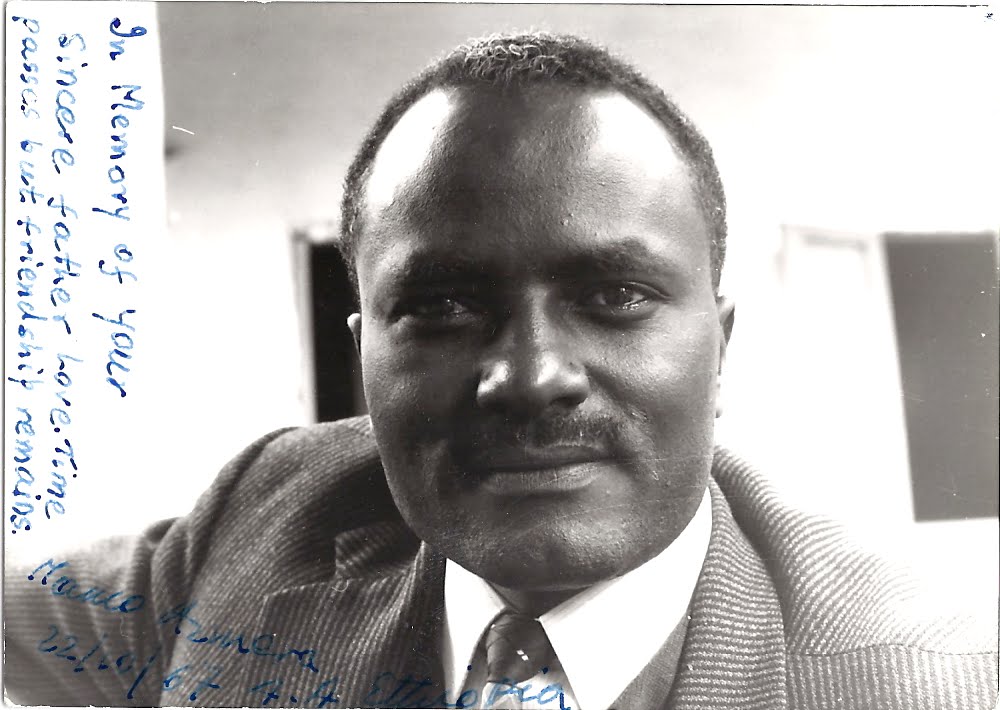
גם התמונה הזו שכבה אצלי כבר די הרבה זמן. מכיוון שאני עושה עכשיו מין סדרה של אלמונים, החלטתי שזמנו הגיע. הוא מוצא חן בעיניי... טוב, מן הסתם אני אומרת דברים כאלה די הרבה, כי בסך הכל, כשאני בוחרת את הגלויות או התמונות מתוך הערמה הגדולה בחנות הספרים המשומשים, בסופו של דבר זה תמיד מפני שמשהו בהן דיבר אליי - הן תמיד מוצאות חן בעיניי. בכל זאת, אני אוהבת כל אחת בצורה קצת אחרת, מסיבות קצת אחרות.

This is another photo that I had lying around for a long time now. Since I'm doing this series of anonymous people now, figured his time has come. I like him... I guess I end up saying this a lot, because after all, when I pick these postcards or photos from the big pile in the used book store, it's always because something in them speaks to me - it's always because I like them. Still, I like each one a little differently, for slightly different reasons.

והאיש הזה פשוט נראה ממש נחמד. הוא נראה רציני וידידותי וישר . אני לא יודעת אם הוא באמת היה משהו מכל אלה, אבל הפרצוף שלו פשוט נראה ממש נחמד, והוא מוצא חן בעיניי. הוא גם השאיר מסר מקסים.

This man, well, he just looks really nice. He looks serious and friendly and candid. I don't know if he really was any of these things, but he just has a really nice face, and I like him. He left a lovely message, too.


In Memory of your Sincere father Love. Time passes but friendship remains.
Mamo Azmera
22/10/67 A.A Ethiopia


לזכר אהבת-האב הכנה שלך. הזמן חולף אך הידידות נשמרת.
מאמו אזמרה
22/10/67 א.א אתיופיה

בהתחלה לא הייתי בטוחה אם כתוב שם 4.4 או A.A; ואז הסתכלתי על זה שוב, ופתאום קלטתי ש-אה, כן, זה בטח קיצור של אדיס אבבה, והרגשתי קצת אהבלה שלא קלטתי את זה קודם. גם לקח לי זמן עד שהצלחתי לקרוא כמו שצריך את השם שלו, כי כל הזמן ראיתי שם 'מאוקו', ולא הצלחתי להבין אם זה שם אמיתי או לא (העובדה שזה כנראה שם משפחה צרפתי, ושיש שתי עיירות בצרפת בשם Haut-Mauco ו-Bas-Mauco, וגם העובדה שיש איזה Mauco אחד שהוא שם של חברה ניגרית לעיצוב אתרים - כל זה לא ממש עזר לי להבין). בסופו של דבר מצאתי רשימה טובה של שמות אתיופיים נפוצים, ועברתי עליה, ונתקלתי בשם 'מאמו', והיה לי קליק בראש. ובכן, מאמו אזמרה. גוגל לא ממש מצא אף אחד, חוץ מאיזה אזמרה מאמו, קרוב משפחה של איש אריתראי מת בקנדה (תאורטית יכול להיות שזה הוא, אני משערת, אבל אני בספק אם כך הדבר), אבל גם לא ממש ציפיתי ליותר מדי.

For a while, I wasn't sure whether it said 4.4 or A.A; then I looked at it again, and suddenly realised that oh, of course, it must stand for Addis Ababa, and felt a bit silly for not realising it earlier. Also took me a while to read the man's name correctly, since I kept seeing it as 'Mauco', and couldn't figure out if that's a real name or not (the fact that apparently it's a French surname, and there are two French towns called Haut-Mauco and Bas-Mauco, as well as one Mauco which is some Nigerian web design company, didn't help). Eventually I found a good list of common Ethiopian names and went through it, and ran into 'Mamo', and it clicked. So, Mamo Azmera. Google didn't come up with anyone, except an Azmera Mamo, some family member of a dead Eritrean man in Canada (theoretically might be him, I suppose, but I doubt it), but I wasn't expecting much.

אבל נו, זו סדרה של אלמונים, בסופו של דבר. רק מפני שבמקרה יש לאיש הזה שם זה לא אומר שאני יכולה למצוא מידע עליו. הוא לא נעשה פחות אלמוני כהוא זה. וכמובן, אין לי מושג מי האיש שקיבל את התמונה הזו, עם ההקדשה המקסימה. אין לי מושג מה הוא עשה בשביל מר אזמרה, שזיכה אותו בהכרת התודה הזו. אין לי מושג אם הידידות אכן נשמרה, כשהזמן חלף.

Well, this is the series of anonyms, after all. Just because this man happens to be supplied with a name doesn't mean I can find out anything about him. It doesn't make him any less anonymous. And of course, I have no idea who is the person that was given this picture, with the lovely dedication. No idea what he did for Mr. Azmera to receive such gratitude. No idea if the friendship did indeed remain, when time passed.

אני מקווה שכן. הוא נראה איש כל כך נחמד.

I hope so. He seems like such a nice man.

Thursday, February 2, 2012

Beth Alpha - בית אלפא

בזמן שעבר מאז הרשומה הקודמת הייתי עסוקה בעיקר בענייני הגשת תזה, ולכן היה לי ברור לגמרי שכשאביא את עצמי לחזור לכתוב כאן, הגלויה שאציג תהיה גלויה אחת מסוימת שנחרטה לי בזכרון בזכות המשפט 'היום סוף סוף מסרתי את העבודה'. חשבתי שזה מתאים.

In the time since I wrote the last post I was mostly working on things relating to my thesis, so it was absolutely clear to me that when I bring myself to write here again, the postcard I will be showing will be the one specific card that remained in my memory thanks to the sentence 'Today I finally turned in that paper'. It felt fitting.

ובכן, הריהי לפניכם. התמונה שעל הגלויה היא מקטע קטן מהפסיפס של בית הכנסת בבית אלפא, ומתואר בה ארון קודש שלצידיו מנורות, ציפורים ואריות. כמו בשאר חלקי הפסיפס, הציורים הם פשוט... נו, אין מלה אחרת: הם חמודים נורא. יש בעולם (ובארץ) פסיפסים משוכללים יותר, ריאליסטיים יותר - אבל אני אוהבת את הפסיפס הזה דווקא מפני שהוא מזכיר קצת ציורי ילדים. הוא מקסים בעיניי (ויש לו כמובן חשיבות הסטורית וכו', אבל על זה אתם יכולים לקרוא אצל אנשים שמבינים יותר ממני).

Well, here it is. The picture on the front is a small part of the mosaic floor of the Beth Alpha synagogue, and it shows a Torah Shrine surrounded by menorahs, birds and lions. Like in the other parts of this mosaic, the pictures are just... well, there's no other way to say it: they are simply adorable. Elsewhere in the world (and here in Israel) there are fancier, more realistic mosaic works - but I like this one exactly because it looks a little like children's drawings. I think it's lovely (and of course it has historical significance and so on, but about that you can go read what people who know more than me wrote).

צד קדמי:
Front:

בכל אופן, הסיבה שרציתי את הגלויה הזו היא, כרגיל, בעיקר בגלל הצד האחורי. אפילו לפני שקראתי את הכל, אהבתי מאוד את צורת הכתיבה: כתב קטן וצפוף שמתפתל מסביב-סביב לגלויה, מנצל כל פיסת מקום להכניס עוד כמה מלים. גם אני כותבת כך (ויעידו כל מי שאי פעם ניסו לשאול ממני סיכומי שיעור), ואפילו רק בזכות זה כבר הרגשתי חיבור עם הכותבת. כשקראתי, אהבתי גם את הנימה שלה באופן כללי (איזה סטודנט לא מכיר את ההרגשה שאפשר להספיק הכל אם רק לא היה צריך להשחיל את שעות השינה האלה באמצע?), נימה אופטימית ופעלתנית מאוד. הרגשתי שאני יכולה כמעט לדמיין אותה, מתרוצצת בסמטאות העיר העתיקה, מטפסת במדרגות של כנסיית הגואל הגרמנית הלותרנית, נשארת ליד השולחן עד מאוחר כדי לגמור רק עוד משהו אחד... והיא מצאה חן בעיניי.

Anyway, the reason I wanted this card is, as usual, mainly because of what's on the back. Even before I read the whole thing, I loved the way it was written: in tiny crowded handwriting, crawling all around the card, using every little bit of space to squeeze in a few more words. I write like this, too (as anyone who ever tried to borrow class notes from me could testify), and even just this got me to feel a connection with the writer. When I read it, I also liked her tone in general (what student is not familiar with the feeling that you can do everything if only you didn't need to find room for sleep in the middle of it?), a very optimistic and bustling sort of tone. I felt I could almost imagine her, running around the alleys of the Old City, climbing the stairs of the German Lutheran Church of the Redeemer, staying up late at her desk to finish up just one more thing... and I liked her.

צד אחורי:

Back:


ירושלים, 30.6.68
שלום אמא, ואבא אם גם אתה בגרמניה זה טוב, לפחות בענין קריאת הגלויה.
היום סוף סוף מסרתי את העבודה. אני מקווה שלמרות המהירות שבה היא נעשתה, היא בסדר.
בסוף כבר לא יכולתי להסתכל על הביצורים למיניהם.
היום זה יום התארגנות וממחר רק יונית[?].
איך היה בחתונה, אני ממש מתה מסקרנות לשמוע. למרות המירוץ הגדול הספקתי בשבת להיות בעיר העתיקה על המגדל המרובע של הכנסיה הלותרנית - ממש יופי מפה חיה. כמו כן הייתי אצל איזה סוחר עתיקות עם נגב ורנטה ובדיוק הגיעו כל הפלחים עם הסחורה שלהם, מטבעות, חרסים כדים, חרבות עתיקות. היה ממש מרתק לראות איך המסחר הזה נעשה. ההספק שלי לאחרונה ממש מדהים אותי, אמנם אני ישנה מעט אבל בינתיים זה הולך. נקוה שיחזיק מעמד לפחות עד ה19.
ד"ש מברטה ומרוזלאר[?].
ביום רביעי טלי נוסעת לצרפת - כֵף.
ירשתי סלַיד פרוז'קטור, אם תמצאו שקופיות מענינות - אפשר יהיה לסדר ערב שקופיות בבית.
אני מקוה שתצליחו לקרוא.
שלכם, רות.
ד"ש לאולגה ושות'
Jerusalem, 30.6.68
Hello mum, and dad if you're in Germany as well that's good, at least as far as reading the postcard is concerned.
Today I finally turned in that paper. I hope that in spite of being done so quickly, it's okay.
Around the end I just couldn't look anymore at all sorts of fortifications.
Today is one day for getting organised, and starting tomorrow just Greek[?].
How was the wedding, I'm just dying of curiosity to hear about it. Despite the great race, I managed on Saturday to be in the Old City on that square tower of the Lutheran church - it's just lovely, a living map. In addition, I went to an antique seller with Negev and Renata just when all the local farmers came in with their wares, coins, pottery, jugs, ancient swords, it was just fascinating to see how this trade is being done. My capacity lately is simply astonishing me. It's true I don't sleep much, but in the meanwhile it's going fine. Let's hope it'll last at least until the 19th.
Berta and Roselaar[?] say hello.
On Wednesday Talli is going to France - fun.
I inherited a slide projector, if you find any interesting slides we could arrange a slide-show night at home.
I hope you can read this.
Yours, Ruth.
Say hello to Olga and co.

אבל עכשיו מגיע הקטע המגניב באמת. כשהתחלתי לכתוב את הרשומה, החלטתי לנסות לחפש את הכותבת. לרוב החיפושים האלה לא מעלים הרבה מידע (המקרה הזה היה די יוצא מן הכלל); לכל היותר, אני מוצאת איפשהו אזכור של מישהו עם שם דומה, אבל אין לי שום דרך לדעת אם זה אכן מי שבגלויה או לא. אז התחלתי את החיפושים בלי הרבה ציפיות. משום מה חיפשתי בהתחלה את השם באנגלית, Ruth Jacoby, ומצאתי כל מיני נשים מעניינות בשם זה (אחת דיפלומטית בכירה ב-OECD, למשל, ועוד אחת שעוסקת בחינוך), אבל הן לא נראו מתאימות. ואז חיפשתי בעברית, 'רות יעקבי', ומצאתי כמה ספרים שמישהי בשם זה כתבה בנושאים שקשורים לארכיאולוגיה ויודאיקה, וזה כבר התחיל לצלצל לי יותר טוב.

But now comes the really cool part. When I started writing this post, I decided to try and find the writer. Usually, these searches don't turn up a lot of information (this is a notable exception); at the most, I might find somewhere a mention of somebody with a similar name, but have no way of knowing if it's the person from the postcard or not. So I started searching with fairly low expectations. For some reason I started by looking for the name in English, and found a number of interesting women named Ruth Jacoby (one of them is some high-level diplomat at the OECD, for instance, and another works in education), but they didn't seem right. Then I looked for the name in Hebrew, and found a few books that someone of the same name wrote that were about subjects related to archaeology and Judaica, and that started sounding better already.

אחד הספרים האלה (בעצם, חוברת עזר לשיעור על הארכיאולוגיה של ירושלים) יצא באוניברסיטה העברית, וחשבתי לעצמי שהיי, אולי נבדוק ב'חיפוש אנשים' באתר האוניברסיטה ונראה אם היא מופיעה שם, ואם כן - אם יש לה כתובת דוא"ל. ולשמחתי, אכן מצאתי את הכתובת!
במקביל חיפשתי אותה גם בקטלוג הספריה, ושם הופיעה שנת הלידה 1942 - כלומר, היא היתה בת 26 כשהגלויה נכתבה - וגם זה התאים, אז כבר ממש הסתקרנתי. לא ידעתי אם היא עדיין מלמדת, וכמה סביר שהיא תענה לדוא"ל, אבל בסופו של דבר החלטתי לאזור אומץ ולנסות לכתוב.

One of these books (more of a textbook really, for a class about the archaeology of Jerusalem) was published by the Hebrew University, and I figured hey, let's try and check the Hebrew U staff directory, see if she's listed, and if so, whether she has an email address. And to my great joy, I did find an address!
At the same time, I also looked her up in the library catalogue, where her birth year was given as 1942 - meaning she was 26 when this card was written - and that fit as well, so I really got curious. I didn't know if she's still teaching, and how likely she would be to answer an email, but eventually I decided to muster the courage to try and drop her a note.

היא ענתה די בזריזות, ואישרה שאכן זו גלויה ששלחה להוריה, והוסיפה: 'נדמה לי שהתמונה היא מאוסף הגלויות הישן של המכון לארכיאולוגיה שחפר בזמנו בבית אלפא'. נחמד לדעת - לא חשבתי בכלל שזה פרט בסיפור, בעצם לא חשבתי הרבה על התמונה באופן כללי, ואני אוהבת שבחירת הגלויה גם היא קשורה, ולו בעקיפין, ללימודים שמוזכרים בחטף בטקסט. מכיוון שלא רציתי לפגוע בפרטיות שלה ביקשתי גם אישור מצידה לפרסם את הרשומה, ואחרי שתיארתי בקווים כלליים את מה שאני מתכוונת לכתוב היא הסכימה ברצון. בכל זאת, לא רציתי לתחקר אותה על פרטים נוספים (כמו השמות האחרים שמופיעים בגלויה), כי יש גבול כמה אפשר לנג'ס לבנאדם על גלויה שנכתבה לפני יותר מארבעים שנה. אני פשוט שמחה שהיא החזירה לי תשובה וחלקה איתי את פיסת ההיסטוריה הזו.

She replied pretty fast, confirming that this was, indeed, a postcard she sent to her parents, and added: 'I think the picture is from the old postcard collection of the Institute of Archaeology, that did some digging in Beth Alpha at the time'. And that's nice to know - I didn't think it's a part of the story, I actually didn't think all that much about the picture at all, and I like that the choice of postcard is also related, even if it's in a round-about sort of way, to the studies that are briefly mentioned in the text. Since I didn't want to be invading her privacy I asked for her approval to post this, and after I described the general outline of what I wanted to say she graciously agreed. Still, I didn't want to ask her about any further details (such as the other names mentioned in the card), because there's a limit to how much you can bug someone about a postcard written over forty years ago. I'm just very happy that she wrote me back and shared this bit of history with me.

וזהו. סיפור קטן על סטודנטית עסוקה אחת, שכותבת להורים שלה באמצע תקופת בחינות והגשות ומנסה לדחוס כמה שיותר חוויות לתוך גלויה אחת קטנה, לפני ארבעים-ומשהו שנה. ועל סטודנטית אחרת שמצאה את הגלויה, ועל ההזדהות שאפשר להרגיש גם מעבר למרחק השנים. ועל צירופי מקרים קטנים כמו זה שבזכותו הצלחתי למצוא את ד"ר יעקבי וליצור איתה קשר.
זה בדיוק מה שאני אוהבת בגלויות האלה. זו בדיוק הסיבה שאני כותבת כאן בבלוג.

And that's it. A little story about one busy student, who writes her parents in the middle of an exam period and paper deadlines, trying to squeeze as much as she can into one little postcard, forty-something years ago. And about another student who found the postcard, and about the way you can identify with someone even from the distance of years. And about little coincidences like the one that helped me find Dr. Jacoby and contact her.
That's just what I like about these postcards. That's just why I'm writing in this blog.

Tuesday, January 11, 2011

A Night Without Morals - לילה ללא מוסר

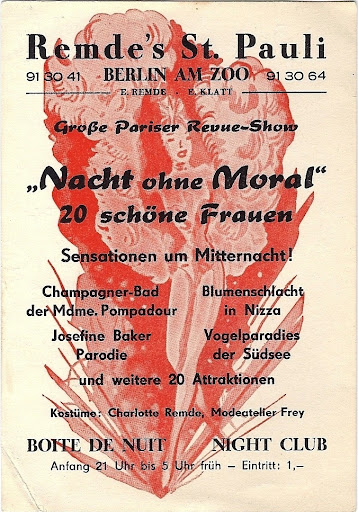
פוסט ראשון ל-2011, וחשבתי שראוי להתחיל בצלצלי תרועה. אז הנה משהו מעניין; זו לא גלויה, או תמונה, כמו רוב מה שיש לי, אלא סוג של פלייר פרסומי, או כרטיס, ממועדון לילה במערב ברלין. ויש פה גם סיפור מעניין למדי.

First post of 2011, and I thought we should start with a bang. So here is something interesting. It's not a postcard, or a photo, like most of the things I have, but a kind of commercial flier, or ticket, from a West Berlin nightclub. And there's quite an interesting story to it, too.

אבל את הסיפור לא ידעתי, כשקניתי את הדבר הזה. סתם חשבתי שזה מגניב. הנה, תסתכלו:

I didn't know the story when I bought it, though. I just thought it was cool. Take a look at this thing:

צד קדמי:
Front:


יאללה מסיבה!
בעזרת גוגל תרגום הצלחתי להבין מה מפורסם כאן: מופע בסגנון פריסאי בשם Nacht ohne Moral - 'לילה ללא מוסר' - מה שכבר נשמע, אממ, מעניין, אפילו לפני שמבטיחים שם '20 בחורות יפות', 'סנסציות בחצות', ואטרקציות כמו 'אמבט השמפניה של מאדאם פומפדור', 'קרב הפרחים בניס' (שקשור לאירוע אמיתי בקרנבל של ניס, דרך אגב), 'פרודיה על ג'וזפין בייקר' ו'ציפורי גן עדן של הים הדרומי' (ועוד 20 אטרקציות אחרות!). אפשר כבר לקבל מושג על איזה מין סוג של אירוע - ושל מקום - זה היה, ובעזרת קלישאות קולנועיות על מערב ברלין בתקופת תחילת המלחמה הקרה, התמונה מקבלת גם נפח: שמפניה ומרטיני ועשן סיגריות, ומרגלים כמובן. אפשר לדמיין את זה, לא? מרגלים לבושי טוקסידו שעושים חיים אבל לא שוכחים להעביר מבט חשדני על שאר החדר ולהחזיק אקדח בכיס נסתר; או מרגלים במעיל ארוך ומגבעת, יושבים בפינה אפלה ומעשנים בשרשרת, משרבטים משהו לעצמם וממלמלים בזעף מתחת לשפם המזויף בזמן שהם מחכים למרגלות יפהפיות שמדברות בלחישות צרודות ומסתוריות. כך כך קל לדמיין את כל זה; ראינו את זה כבר באינספור סרטים. ולכן כל כך התלהבתי כשהפכתי את הכרטיס (אני לא לגמרי בטוחה שזה כרטיס, אבל כתוב למטה 'כניסה לאחד', אז זה נראה סביר) וראיתי את השרבוטים מאחור. זה מתאים לתמונה הזו בדיוק.
[דרך אגב, אני עומדת לעשות משהו שלא עשיתי די מזמן, ולשים את כל הפרטים שמצאתי על המועדון - ועוד כמה דברים על ג'וזפין בייקר - בסוף הפוסט, אחרי ג'אמפ-קאט. אני חושבת שזה מרתק, אבל אם אתם רוצים לדבוק בסיפור המרגלים הדמיוני, אתם יכולים להתעלם מכל הקטע על מה שקרה באמת.]

Heyo, party time!
With the help of Google Translate, I figured out what it's advertising: a Parisian revue called Nacht ohne Moral - 'A Night Without Morals' - which already sounds, umm, interesting, even before it goes on to promise '20 pretty ladies', 'sensations at midnight', and attractions such as 'the champagne bath of Madame Pompadour', 'Flower Battle in Nice' (this is related to an actual event in the carnival in Nice, by the way), 'Josephine Baker parody' and 'birds of paradise of the South Sea' (and 20 other attractions!). Already, you get a picture of the kind of event, and the kind of place, this must have been - and with the help of some movie clichés about early-cold-war-era West Berlin, this picture gets fleshed out with champagne and martinis and cigarette smoke, and of course, spies. You can imagine it, can't you? Spies in tuxedos, having a grand old time, but keeping a watchful eye on the room and a pistol in a secret pocket; or spies in trenchcoats and fedoras, chain-smoking in a dark corner, scribbling something and muttering under their fake moustache as they wait for gorgeous lady-spies that speak in mysterious, hoarse whispers. It's so easy to imagine it; we've seen it in countless movies. Which is why I got all excited when I turned over the ticket (I'm not sure it actually was a ticket, but it does say 'admission: 1' at the bottom, so it seems likely) and saw the scribbles on the back - they fit into this image perfectly.
[By the way, I'm going to do something I haven't done in a long while, and put all the details I found about the club - plus some stuff about Josephine Baker - at the end of the post, after a jump cut. I think it's fascinating, but if you want to stick to the imaginary spy story, go ahead and ignore all the real-life stuff.]

צד אחורי:
Back:


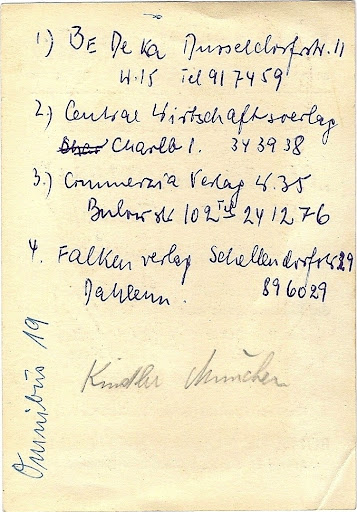
אז בעצם יש כאן שלושה דברים נפרדים - או בכל אופן, יש שלושה סגנונות של כתב יד ושלושה כלי כתיבה שונים. בעט כחול כהה יש רשימה של ארבעה מקומות ומספרי הטלפון שלהם; המלה verlag, שעל פי וויקיפדיה פירושה 'הוצאה לאור', חוזרת כמה פעמים (אולי יש כאן סופר מתחיל שמנסה למצוא מו"ל לכתב היד שלו?), ובפריטים מס' 1 ו-3 יש גם משהו שנראה כמו ציון שעה (4.15 ו-4.35, בהתאמה - אולי פגישות עם נציג ההוצאה?). למרבה הצער, לא הצלחתי למצוא אף אחד מהשמות האלה בחיפוש גוגל. בצד שמאל, בעט כחול בהיר יותר, ובכתב יד מחודד ואלגנטי קצת יותר, כתוב Omnibus 19, קו 19 באוטובוס, מן הסתם. ולמטה, בעפרון, שם של מישהו, כנראה (די קשה לי לקרוא את הכתב הזה).

Right, so we have three different things, basically - three different handwriting styles, and three different writing instruments, anyway. In a dark blue pen there's a list of four places and their phone numbers; the word verlag, which according to Wikipedia means 'publisher', recurs a few times (maybe we have a beginning author, trying to find someone to publish his manuscript?), and in items 1 and 3 there is also something that looks like a time (4.15 and 4.35, respectively - maybe meeting a representative of the publisher?). Unfortunately, I couldn't find any of those names on Google. On the left, in a lighter blue pen and a slightly more pointy and elegant handwriting, it says Omnibus 19, which is of course bus #19. And at the bottom, in pencil, something that looks like somebody's name (it's hard for me to read this handwriting).

כמובן שכל זה בהחלט יכול להיות חסר משמעות. זאת אומרת, זה בהחלט יומיומי למדי. מישהו היה צריך לרשום כמה דברים, לקח פיסת נייר ורשם אותם מאחורה; אחר כך נוספו עוד כמה רשימות לאותה פיסת נייר שימושית. פשוט מאוד.
אבל כמו שבזכות הקלישאות הקולנועיות קל מאוד לדמיין את מועדון הלילה האפלולי שאפוף בעשן סיגריות ואווירת שחיתות ושורץ מרגלים, כך גם קל לדמיין שיש מאחורי זה כל מיני ענייני ריגול. אולי זה צופן. אולי השמות של חברות הוצאה לאור הן רק כיסוי למשהו אחר, והשם בתחתית הדף הוא שם-המרגל המזויף של מישהו, וקו 19 הוא חלק מתכנית מפגש מסובכת ('תעלה על האוטובוס ברחוב X, וסע שלוש תחנות. אני אהיה בצד השני של הרחוב. אל תיצור קשר עין, פשוט לך אחריי'). אולי יש שלושה סגנונות כתב יד כי הכותב התאמן בזיוף! אפשר לדמיין כאן כל מיני עלילות, ברגע שמתחילים את קו המחשבה הזה.

Of course, this could all be meaningless. I mean, it's really quite mundane. Someone needed to write down some info, grabbed a piece of paper, and wrote on the back; then later, other notes were made on the same handy piece of paper. So very simple.
But just like all the movie clichés make it easy to imagine the dark, smoky nightclub teeming with debauchery and spies, it's also easy to imagine that there is some spy business behind this. Maybe it's coded. Maybe the names of publishing firms are just a cover for something else, and the name at the bottom is somebody's fake spy name, and bus #19 is part of a complicated meeting plan ('Take the bus at X Street, and travel three stops. I will be across the street. Don't make eye contact, just follow me'). Maybe there are three different handwriting styles because the guy was practising his forgery skills! There are all sorts of plots that can be imagined here, once you take this line of thought.

וכאן אפשר היה להניח לעניין. אבל אני נהנית ממחקרי-גוגל הקטנים שלי, כשיוצא לי לעשות אותם, אז אם מעניינים אתכם קצת פרטים אמיתיים על המקום ניתן למצוא אותם אחרי הג'אמפ-קאט.

And this could be where we leave it. But I like doing this little Google-based research, when I can, so if you're interested in some real details about the place, you can find them under the jump.

Wednesday, November 3, 2010

YMCA - ימק"א

No, no, stop singing. Seriously, this isn't funny. Stop it. The title is just because this postcard was written at the Jerusalem YMCA, and there's the picture, and...
Oh, fine. Go ahead. Get it out of your system and then we'll move on.

נו, די, תפסיקו לשיר. ברצינות, זה לא מצחיק. תפסיקו. הכותרת היא בגלל שהגלויה כאן נכתבה בימק"א בירושלים, ויש תמונה, ו...
טוב, בסדר. יאללה. תשחררו, תשתחררו, ואז נמשיך הלאה.


Are we good?
Great.
Right, so, basically, I thought of doing this card because the twisty story in the last post, with the hints of potential scandal, reminded me of the story here, which also has a hint of something a little out of the ordinary. You'll see.

הכל בסדר?
יופי.
אז ככה. בגדול, חשבתי להעלות את הגלויה הזו כי הסיפור הפתלתול ברשומה הקודמת, עם הרמזים לסקנדל פוטנציאלי, הזכיר לי את הסיפור שכאן, שגם בו יש רמז למשהו שקצת יוצא מגדר הרגיל. עוד תראו.

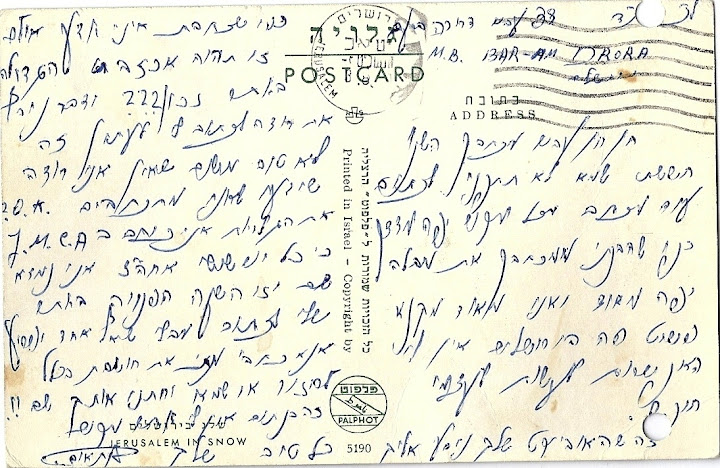
It begins, anyway, with the front of the card, showing a lovely, although kinda blurry (it was a bad picture in the original, too; scanning just enhanced how much so) picture of Jerusalem in snow, showing the YMCA building and the King David Hotel.

מתחילים, בכל אופן, עם הצד הקדמי של הגלויה, שעליו תמונה מקסימה גם אם מטושטשת (האיכות של התמונה היתה גרועה גם במקור; הסריקה רק הדגישה את זה) של ירושלים בשלג, שמתמקדת בבניין ימק"א ובמלון קינג דייוויד.

Front:
צד קדמי:

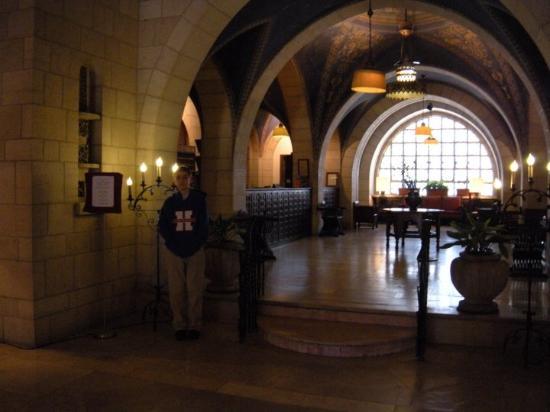
For those of you not familiar with my lovely city: while in many other places the Y is basically a boring square building with a gym, the one in Jerusalem is a fancy old building, right across from the very posh King David Hotel, and in addition to the customary gym, it also has has a gorgeous vaulted lobby and restaurant.

לאלה מכם שלא מכירים כ"כ טוב את עירי האהובה: בעוד שבהרבה מקומות אחרים ימק"א (או בכינויו הנפוץ 'ה-Y') זה פחות או יותר בניין מלבני משעמם עם חדר כושר, ימק"א ירושלים שוכן בבניין ישן ומפואר מול מלון קינג דייוויד, ובנוסף לחדר הכושר יש לו גם לובי יפהפה עם מסעדה ותקרה של קמרונות צולבים.

It also has a large tower with a rounded top, flanked by two smaller domed buildings, which of course gives rise to many unfortunate jokes.

יש לו גם מגדל גבוה עם ראש מעוגל, שבשני צדדיו בניינים קטנים עם כיפות, מה שכמובן מעלה מיידית כל מיני בדיחות מצערות למדי.

...Are you going to start singing again? Please don't. We have the back of the card to get to, and that's the really interesting part.

...בבקשה אל תתחילו לשיר עוד פעם. עדיין לא הגענו לצד האחורי של הגלויה, שהוא בכלל החלק המעניין באמת.

Back:
צד אחורי:

חן חן עבור מכתבך השני, חששתי שמא לא תתפני לכתוב עוד מכתב, מכל מקום יפה מצדך. כפי שהבנתי ממכתבך את מבלה יפה מאוד ואני מאוד מקנא, פשוט פה בירושלים אין לי האפשרות לעשות לעצמי חופש.
זה שהאובייקט שלך נוסע אליך כפי שכתבת איני יודע אולם זו תהיה אכזבתו הגדולה ביותר נכון??? ודבר נוסף, את רוצה לכתוב לי לעיתון, זה לא טוב משום שאין אני רוצה שידעו שאנו מתכתבים. O.K.?
את הגלויות אני כותב ב Y.M.C.A כי כל יום שישי אחה"צ אני נמצא שם וזו השעה הפנויה ביותר שלי לכתוב מבלי שאף אחד יפריע.
אנא כתבי מתי את חושבת בכלל לחזור או שמא יחתנו אותך שם!!
זה בנתים אין לי יותר מקום.
כל טוב. שלך, [חתימה]

Gracious thanks for your second letter, I was worried that perchance you will not have time to write another letter, at any rate it is nice of you. As I understand from your letter you are having a lovely time and I am very jealous, it is just that here in Jerusalem I do not have the possibility to give myself any time off.
That your Object is going to you as you have written, I do not know, but this will be his greatest disappointment, right??? And another thing, you want to write me at the newspaper, this is not good since I do not want others to know we are corresponding, O.K.?
I write the postcards at the Y.M.C.A because every Friday afternoon I am there and this is the freest time I have to write without any interruptions.
Please write me when you are thinking to come back at all, or if perchance they will marry you off over there!!
That's it for now I have no more room.
Best regards. Yours, [signature]

So, this seems interesting. If he's in Jerusalem, and she's away on vacation, why is he writing her to a P.O. box in Jerusalem? What paper does he work at, and why doesn't he want people there to know they're corresponding (that last bit, about not wanting people to know, fits quite well with writing to a P.O. box, at least)? Where is she? Who is the man only referred to as 'your Object', and why is he called that?
So many questions. There's a story, here.

וזה די מעניין. אם הוא בירושלים, והיא במקום אחר בחופשה, למה הוא כותב לה לתא דואר בירושלים? באיזה עיתון הוא עובד, ולמה הוא לא רוצה שהאנשים שם יידעו שהם מתכתבים (לגבי החלק האחרון, על זה שהוא לא רוצה שאחרים יידעו עליהם, זה מתאים לעובדה שהוא כותב לתא דואר, לפחות)? איפה היא נמצאת? מיהו הגבר שמכונה 'האובייקט שלך', ולמה הוא מכונה כך?
כל כך הרבה שאלות. יש פה סיפור.

I have to admit I don't really like this guy. I can't really put my finger on it, but something in his tone just bugs me. It's like he's trying to hide a possessive tendency by pretending he's just joking and nonchalant ('Haha, that other guy you're about to meet is going to be disappointed, right??? It's not like you're going to leave me. Haha. Ha.'). And again, I'm not sure why, but it feels like he's an older man, and like she's relatively young. Something about the whole thing feels a bit fishy. But there's a good chance I'm just reading too much into this. Making up a story and getting carried away in it. For all I know, there might be a much simpler explanation.

אני חייבת להודות שהאיש הזה לא כל כך מוצא חן בעיניי. קשה לי להגדיר את זה במדויק, אבל משהו בטון שלו פשוט מפריע לי. כאילו שהוא מנסה להסתיר נטייה לרכושניות מתחת מסווה של נונשלנטיות ובדיחות-דעת ('האהא, הבחור ההוא שבא לפגוש אותך הולך להתאכזב, נכון??? זה לא כאילו שתעזבי אותי. האהא. הא.'). ושוב, אני לא יודעת למה, אבל יש לי הרגשה שהוא גבר מבוגר ושהיא צעירה יחסית. משהו בכל הסיפור הזה מרגיש מפוקפק במקצת. אבל מצד שני, יש סיכוי לא רע שאני מייחסת לזה משמעות מוגזמת. ממציאה לי סיפור ואז נסחפת לתוכו. עד כמה שאני יודעת, יכול להיות הסבר הרבה יותר פשוט.

And that's it, really. Unlike the previous few inordinately long posts, here there wasn't really an option to do a lot of research and detective work. In Israel there are not so many documents available online, especially not from the late 60s (the card is from 1969), and googling the name didn't come up with much - while not an super-common name, 'Drora Bar-Am' is also not terribly extraordinary. Maybe if I could read the signature it would help, seeing as the writer worked in a newspaper (so there might be more mentions of him, especially if he was a reporter or an editor or something like this), but I can't read it.
But I wonder what happened to them, to the mystery man and the mystery Drora (and the Object), and how this story ended. If someday someone who knows Drora Bar-Am - or even Drora herself! It's only been 40 years, it's not unreasonable to assume she's still alive - reaches this post, maybe they'll be kind enough to tell us the ending.

זהו, בעצם. בניגוד לרשומות הקודמות הארוכות כאורך הגלות, כאן לא ממש יכלתי לחקור ולבלוש יותר מדי. אין כל כך הרבה מסמכים שזמינים אונליין בארץ, בטח שלא לגבי שנות השישים המאוחרות (הגלויה היא מתשכ"ט, או 1969 למתקשים), וחיפוש גוגל של השם לא מעלה הרבה - 'דרורה בר-עם' זה אמנם לא שם סופר-נפוץ, אבל גם לא יוצא דופן במיוחד. אולי אם הייתי מצליחה לקרוא את החתימה זה היה עוזר, בהתחשב בעובדה שהכותב עבד בעיתון (אז יש יותר סיכוי שיהיו אזכורים שלו, לפחות אם הוא היה כתב או עורך או משהו), אבל לא הצלחתי.
אבל אני תוהה מה קרה להם, לאיש המסתורין ולדרורת המסתורין (ולאובייקט), ואיך הסיפור הזה נגמר. אם ביום מן הימים יגיע לרשומה הזו מישהו שמכיר את דרורה בר-עם - או אפילו דרורה עצמה! עברו רק ארבעים שנה, לא בלתי-סביר להניח שהיא עדיין חיה - אולי הם יסכימו לגלות לנו את הסוף.

Friday, August 6, 2010

Two for One - שתיים במחיר אחת

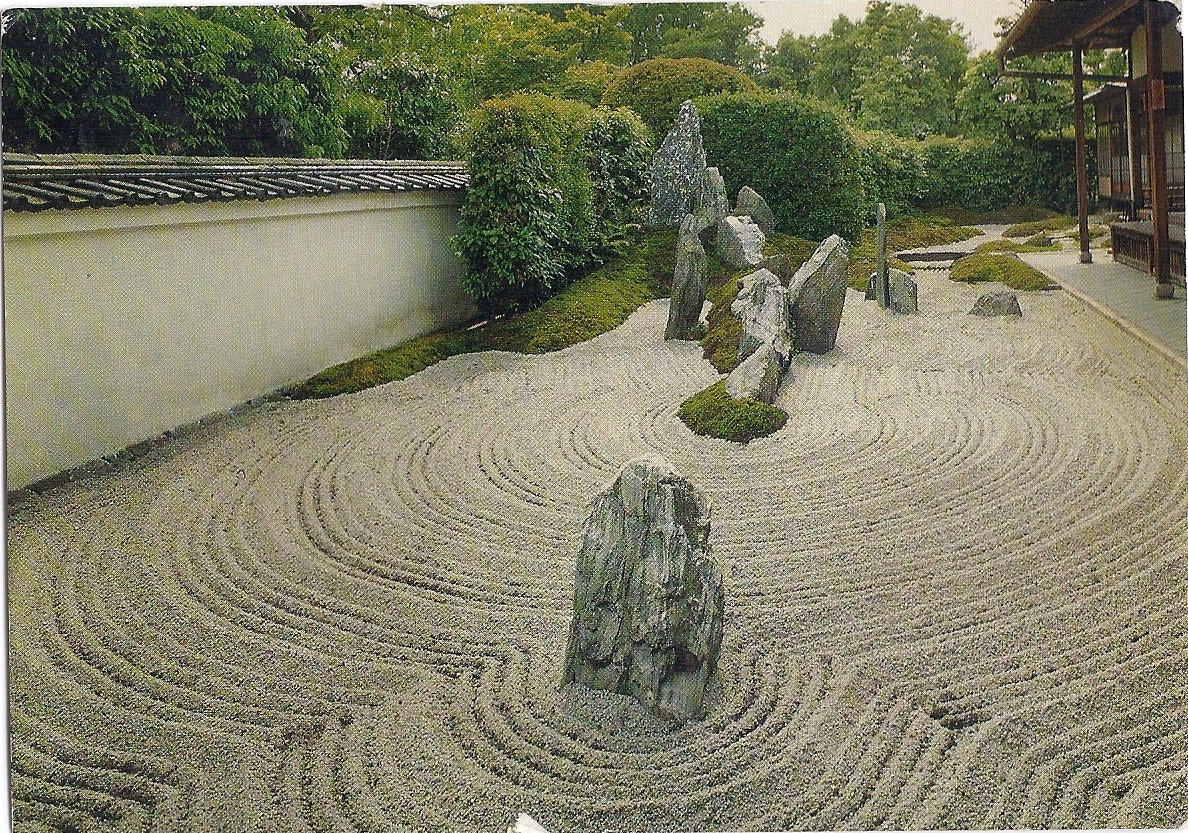
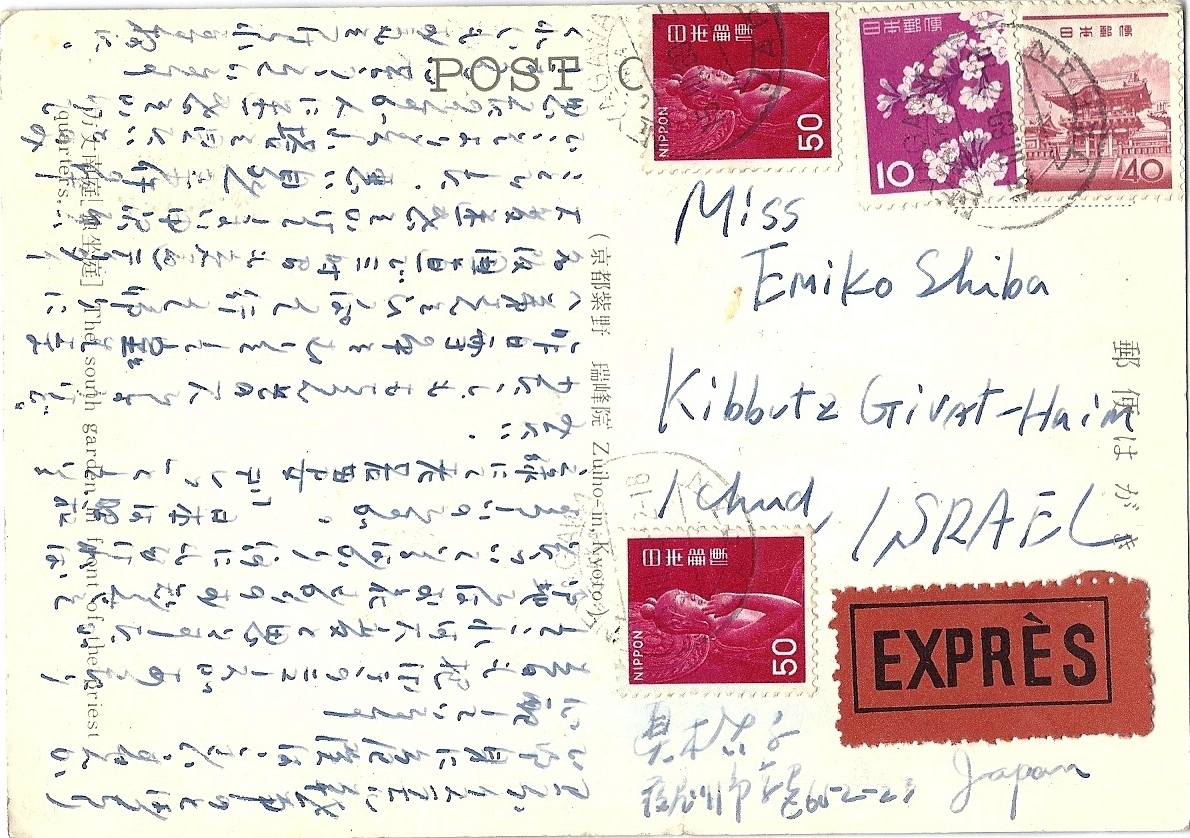
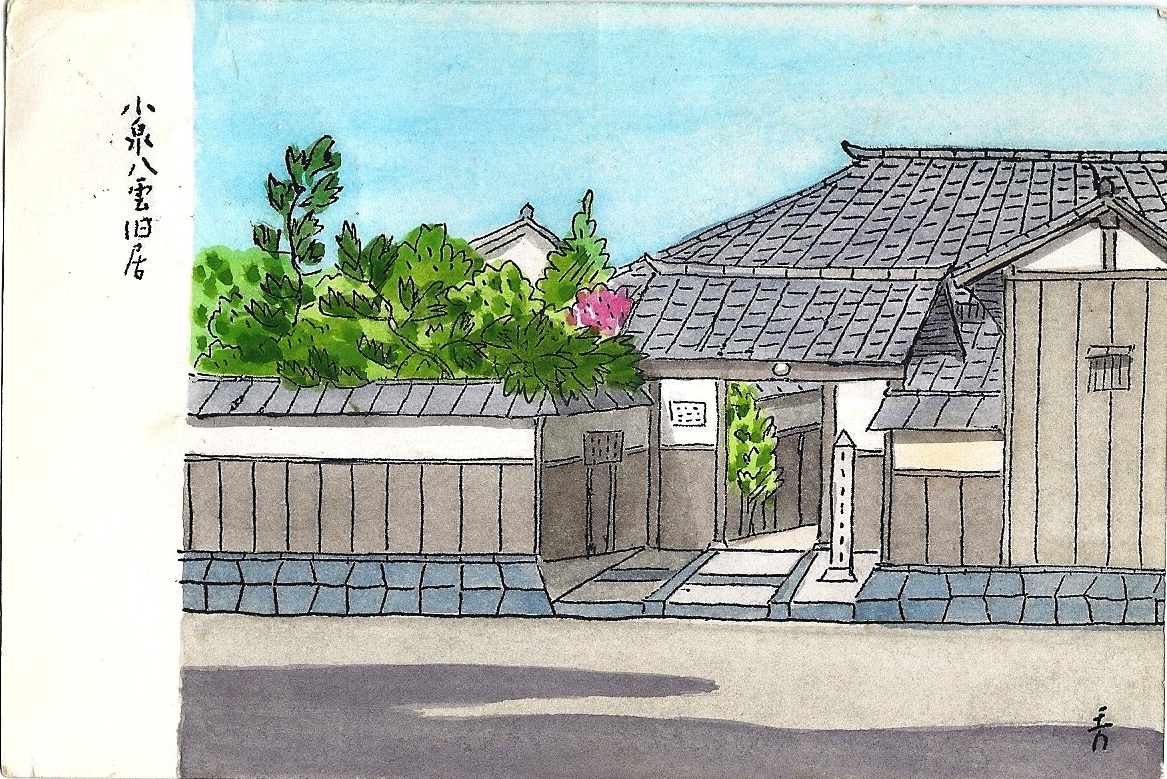
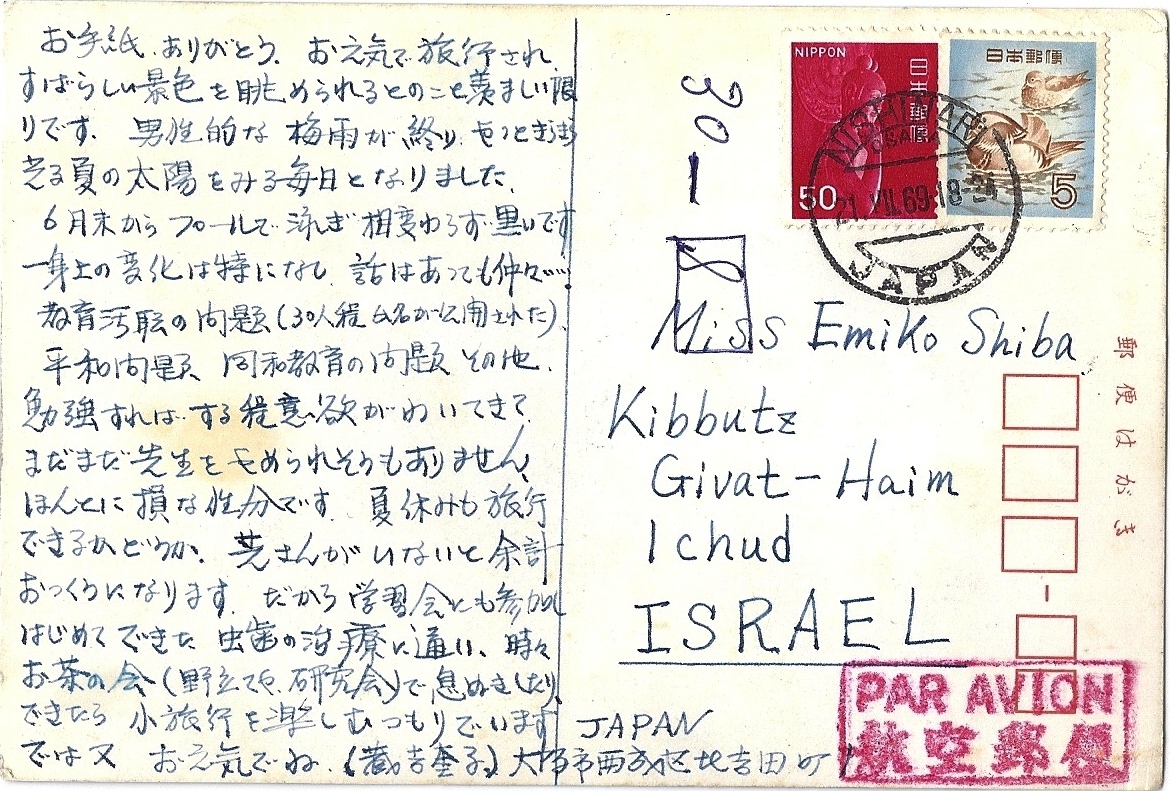
So, while we're on Japan, I actually have two more Japanese postcards - and since they were both sent to the same person, I figured it's better to lump them together. These were both sent to a Miss Emiko Shiba, at a kibbutz called Giv'at Haim Ichud, in 1969. It's possible she was a volunteer working there - after the Six Day War in '67 there was a wave of young volunteers coming to Israel from all over the world - although I find myself wondering how many Japanese volunteers there could have been (but that may only be due to stereotypes). There is also the Japanese Christian Makuya group, that has a few centers in Israel, so that might be why she came here. I don't know.
Anyway, both postcards are lovely; still very 'representative', as postcards are wont to be, but in a much gentler way than the previous one, I think - probably because they were sent by locals, rather than tourists. They were very obviously written by two different people, as the writing is vastly different. But I can't read them.

אם כבר ביפן עסקינן, יש לי עוד שתי גלויות יפניות - ומכיוון שהן נשלחו לאותה נמענת, חשבתי לצרף את שתיהן לרשומה אחת. שתי הגלויות נשלחו למישהי בשם אֶמִיקוֹ שִׁיבָּה, בקיבוץ גבעת חיים איחוד, בשנת 1969. יכול להיות שהיא התנדבה שם, במסגרת גל המתנדבים שהגיעו לארץ אחרי מלחמת ששת הימים, למרות שאני קצת תוהה כמה מתנדבים יפנים כבר היו (אבל אולי זה רק עניין של סטריאוטיפים?). ויש גם את כת המָקוּיָה, שיש לה כמה מרכזים בישראל, ואולי לכן היא באה. אני לא יודעת.
בכל אופן, שתי הגלויות מקסימות; הן עדיין מאוד 'ייצוגיות', כי ככה זה עם גלויות בדרך כלל, אבל בעיניי זה באופן הרבה יותר עדין מאשר הגלויה הקודמת - מן הסתם כי שלחו אותן תושבי המקום, ולא תיירים. מאוד ברור שיש כאן שני כותבים שונים, כי הכתב שונה לחלוטין. אבל אני לא יכולה לקרוא אותן.

Postcard 1, front:
גלויה 1, צד קדמי:


Back:
צד אחורי:


My guess is that this first postcard was written by an older person than the second - I think mostly because of the fact that the writing is from top to bottom, which is more traditional, while in the second one it's from left to right, which is a modern adaptation (actually, I think in the past you could write either way, but I know that modern Japanese writing is almost all left-to-right). The first postcard's writing is also much more 'freehand' and streaming in style, while the second one is more neat and round, but that might just be a matter of personal styles.

אני מנחשת שהכותבת של הגלויה הראשונה (אני לא יודעת למה יש לי הרגשה שמדובר בנשים, אולי רק בגלל שזו נמענת ולא נמען... בכל אופן, באנגלית אפשר להתחמק, אבל בעברית קשה יותר) היתה מבוגרת יותר מהכותבת של השנייה - אני חושבת שזה בעיקר מפני שהגלויה הראשונה כתובה מלמעלה למטה, שזו צורה מסורתית יותר, והשנייה כתובה משמאל לימין, שזה יותר מודרני (בעצם נדמה לי שבעבר אפשר היה לכתוב בשתי הצורות, אבל אני יודעת שכתיבה יפנית מודרנית היא כמעט תמיד משמאל לימין). הכתב בגלויה הראשונה גם 'חופשי' וזורם יותר בסגנון שלו, ולעומתו הכתב בגלויה השנייה נראה יותר מסודר ועגול, אבל יכול להיות שזה פשוט עניין של סגנון אישי.

Postcard 2, front:
גלויה 2, צד קדמי:


Back:
צד אחורי:


Actually, when I said I can't read this, it wasn't 100% accurate - I can read one word in the second postcard (no, not 'JAPAN', ya smartasses, one word in the Japanese). Through the little Japanese I learnt many many years ago I managed to make out the second word, arigatou, 'thank you'. I can recognise a few more Hiragana symbols here and there, but I can't connect any of them into words I know. And in the first postcard I really can't understand anything. So, this doesn't really count.

האמת היא שכשאמרתי שאני לא יכולה לקרוא אותן, זה לא היה מדויק ב-100% - אני יכולה לקרוא מלה אחת בגלויה השנייה (לא JAPAN, יא חוכמולוגים, מלה אחת ביפנית). בעזרת מעט היפנית שאני זוכרת ממה שלמדתי לפני שנים אני יכולה לזהות שהמלה השנייה היא אָרִיגַטוֹ, 'תודה'. אני מסוגלת לזהות עוד כמה סימני היראגאנה פה ושם, אבל הם לא מתחברים לי לשום דבר מוכר. ובגלויה הראשונה אני ממש לא יכולה להבין כלום. אז זה לא ממש נחשב.

But 'thank you' is still something. Probably thanks for a letter or a package. Or maybe for something else.
Anyone here can read Japanese? Skoshi dake Nihon-go ga dekimas kedo: I can only speak a little Japanese.

ובכל זאת, גם 'תודה' זה משהו. תודה על גלויה או חבילה, מן הסתם. או אולי על משהו אחר.
מישהו כאן קורא יפנית? סְקוֹשִׁי דַקֶה נִיהוֹן-גוֹ גָה דֶקִימַס קֶדוֹ: אני יודעת לדבר רק קצת יפנית.

Sunday, July 4, 2010

The March - הצעדה

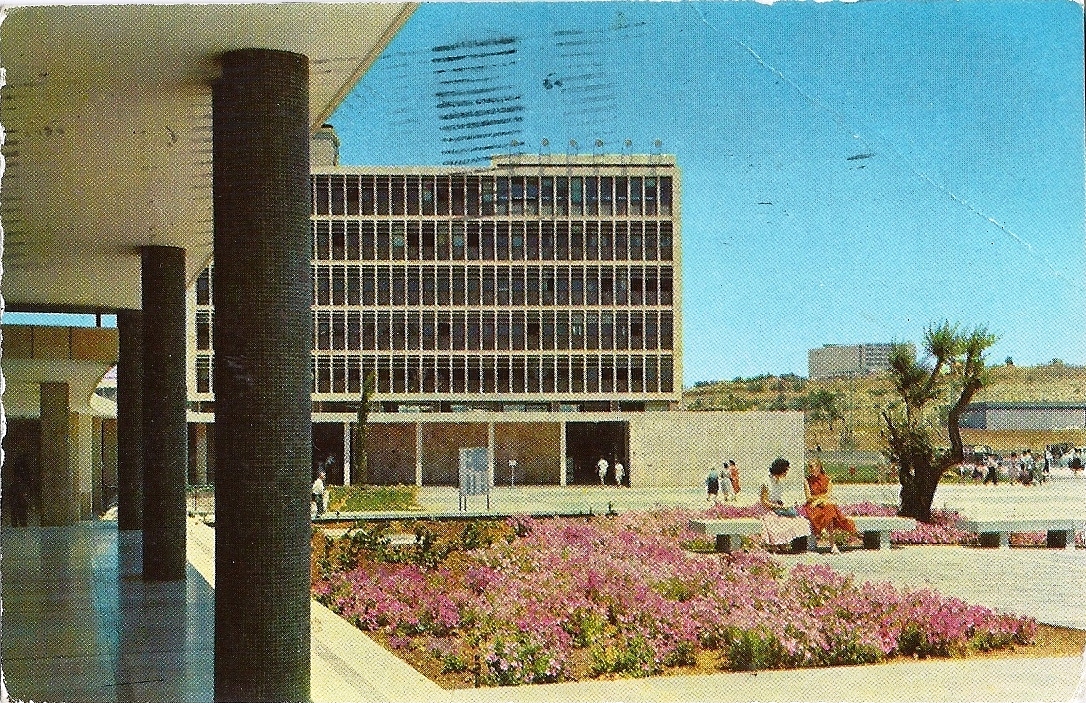
Short one this time. After the previous Mount Scopus postcard, I thought I'll put up this one as well. This one, however, is from the second Hebrew University campus in Jerusalem, Givat Ram - which, in 1966, was still the 'new campus'.
I don't really pass through Givat Ram that often, but I think the actual buildings didn't change much; the hill in the background is now built over with government buildings.

והפעם בקצרה. בעקבות הגלויה הקודמת, עם צילום האוניברסיטה בהר הצופים, החלטתי להעלות גם את הגלויה הזו. לעומת הקודמת, כאן מצולם הקמפוס השני של האוניברסיטה, גבעת רם - שב-1966 עדיין היה צורך לציין שהוא ה-new campus.
אני לא כ"כ עוברת בגבעת רם, אבל נדמה לי שהבניינים לא ממש השתנו; על הגבעה ברקע כבר בנו מאז את קריית הממשלה.


Front:
צד קדמי:


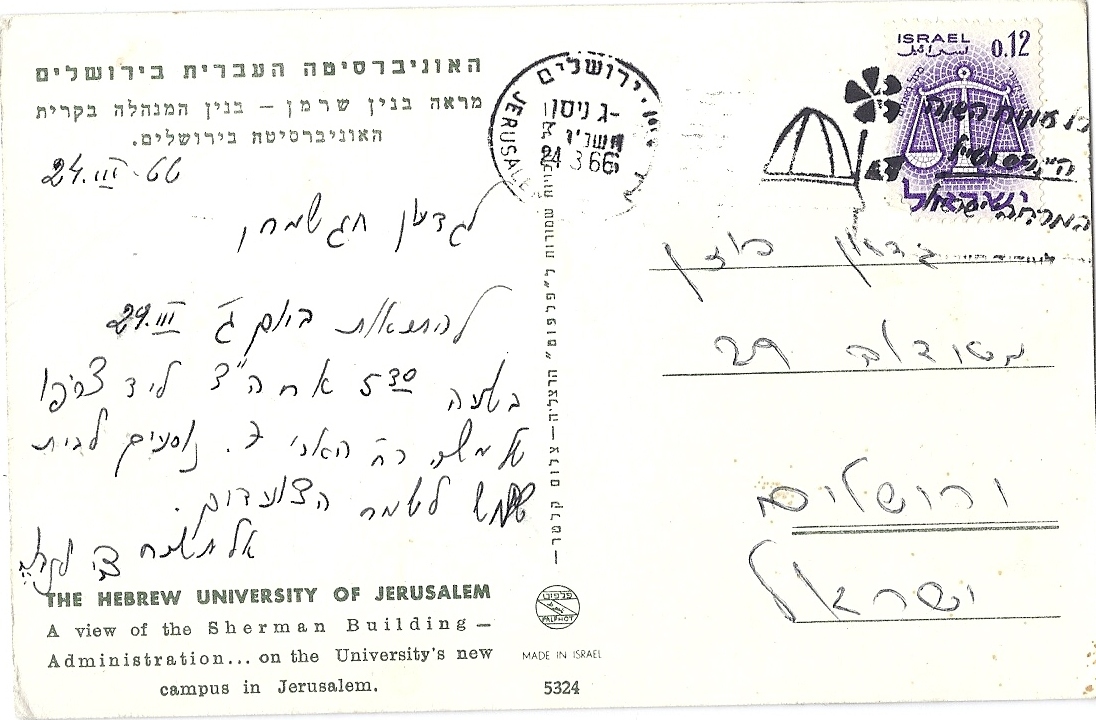
The message is short and to the point. Google wasn't much help this time, and I couldn't find out what this march was, which passed in Beit Shemesh in March of 1966; Zvi Landner, Gideon Rozen and Moshe (from the shed) also remained anonymous (there was a Gideon Rozen - Gidonchik - in the naval sabotage division of the Plamach, but I have no way of knowing if it's really the guy). The postal stamp is nice: In every season / vacation and tour / around Israel (in Hebrew it kinda rhymes).
המסר קצר וענייני. גוגל לא עזר במיוחד הפעם, ולא הצלחתי לגלות איזו צעדה עברה בבית שמש במארס 1966; גם צבי לנדנר, גדעון רוזן ומשה (ההוא מהצריף) נשארו אלמונים (היה גדעון רוזן אחד - גדעונצ'יק - בפלוגת החבלה הימית של הפלמ"ח, אבל אין לי דרך לדעת אם זה באמת הוא). אגב, שימו לב לחותמת הבול: 'כל עונות השנה / הינפש וטייל / במרחבי ישראל'. נחמד.

Back:
צד אחורי:


24.III.66
לגדעון חג שמח,
להתראות ביום ג' III.29 בשעה 5:30 אחה"צ ליד צריפו של משה רח' הארי 7. נוסעים לבית שמש לשמח הצועדים. אל תשכח
צבי לנדנֶר
24.III.66
To Gideon, have a happy holiday,
See you on Tuesday 29.III at 5:30 PM near Moshe's shed, 7 HaAri St. Going to Beit Shemesh to cheer the marchers.
Don't forget
Zvi Landner

And that's it, really. A quick peek at 60s-era Jerusalem (and Hebrew U), and one mysterious march. I'll update with something of a different ilk later this week.
וזהו, בעצם. עוד הצצה לירושלים (ולאוניברסיטה העברית) של שנות ה-60, וצעדה מסתורית אחת. בהמשך השבוע אעלה משהו קצת אחר.

Update: My dad, who was actually around in the 60s, suggested that this might have been the 'Four Day March', which was a kind of competitive march that ended in Jerusalem (the winning group went to the International Four Day March in Nijmegen,the Netherlands). Google helped us find that the 1961 Four Day March was in 20-23.3, and it looks like the 1962 and 1963 marches were around that general time frame as well, so it seems plausible that in 1966 it'd be passing through Beit Shemesh on 29.3. I suppose that solves a little bit of the mystery...

עדכון: אבא שלי, שהיה כאן בשנות ה-60, הציע שאולי מדובר ב'צעדת ארבעת הימים' - צעדה תחרותית שנגמרה בירושלים (הקבוצה המנצחת המשיכה לצעדת ארבעת הימים של ניימכן שבהולנד). בעזרת גוגל מצאנו שצעדת ארבעת הימים ב-1961 היתה בתאריכים 20-23.3, ועושה רושם שגם הצעדות של 1962 ו-1963 היו בסביבות אותו הזמן, אז נראה די הגיוני שהצעדה של 1966 עברה בבית שמש ב-29.3. אני חושבת שזה מפוגג לפחות חלק מהמסתורין...