Hello readers! - !שלום, קוראים

What is this? Read the introduction - מה זה הדבר הזה? הסבר בהקדמה
Showing posts with label German. Show all posts

Thursday, June 23, 2011

Cafe Walhalla - קפה ואלהאלה

Went downtown last week, and stopped for a while in one of my favourite old-stuff stores, Trionfo, to look at postcards (of course; why else would I mention it here?). Along with all sorts of neat postcards, some of which I ended up purchasing, there was this one picture that I was really torn about. It was more expensive than what I usually buy, but I really wanted it. There was just something about it, about the atmosphere and the look of it, that caught my eyes, and I ended up getting a little discount from the nice owner, and buying it after all (again, why else would I write about it?). So here it is now.

בשבוע שעבר הלכתי למרכז העיר, ושהיתי קצת באחת מחנויות הדברים-ישנים החביבות עלי, טריאונפו, כדי להסתכל על גלויות (כמובן; אחרת, למה שאציין את זה בכלל?). לצד כל מיני גלויות מגניבות, שאת חלקן רכשתי בסופו של דבר, היתה תמונה אחת שממש התלבטתי לגביה. היא היתה יקרה יותר ממה שאני קונה בד"כ, אבל נורא רציתי אותה. פשוט היה בה משהו, משהו באווירה ובמראה הכללי, ששבה אותי לגמרי, ובסוף קיבלתי הנחה מהאיש הנחמד בחנות וקניתי אותה (שוב, אחרת למה שאכתוב על זה?). אז הריהי עכשיו.

The owner also said that he thought it was from the 1920s, and he seems to know his stuff, so that's what I put in the tag. But other than that, and the fact that it was obviously taken in some German-speaking land (in the 20s, I guess this would be mostly Germany and Austria... okay, possibly also parts of Switzerland, or Lichtenstein or something; what other countries are largely German-speaking?) and in what appears to be a European town, I really don't know very much about it, and the details in the picture aren't easy to look up. I'll get to that in a bit.

האיש בחנות גם אמר שהוא חושב שהתמונה היא משנות ה-20, ועושה רושם שהוא יודע על מה הוא מדבר, אז זה מה שכתבתי בטאג. אבל מעבר לזה, ולעובדה שהיא בבירור צולמה במדינה דוברת גרמנית (בשנות ה-20 אני מניחה שמדובר בעיקר על גרמניה ואוסטריה... אוקי, אולי גם חלק משוויץ, או ליכטנשטיין או משהו; איפה עוד מדברים גרמנית?) ובמקום שנראה כמו עיר אירופאית, אני לא יודעת עליה הרבה, וקשה לחפש את כל הפרטים. אגיע לזה עוד מעט.

For now, just look at this thing. Isn't it marvelous?
[As usual, click to enlarge - it's highly recommended this time, though. I even took care to do a relatively high-resolution scan to make sure I don't lose too many details.]

בינתיים, רק תסתכלו על זה. נכון שהיא מופלאה?
[כרגיל, קליק להגדלה - והפעם זה מאוד מומלץ. אפילו דאגתי לסרוק את התמונה ברזולוציה גבוהה יחסית, כדי שלא יאבדו יותר מדי פרטים.]
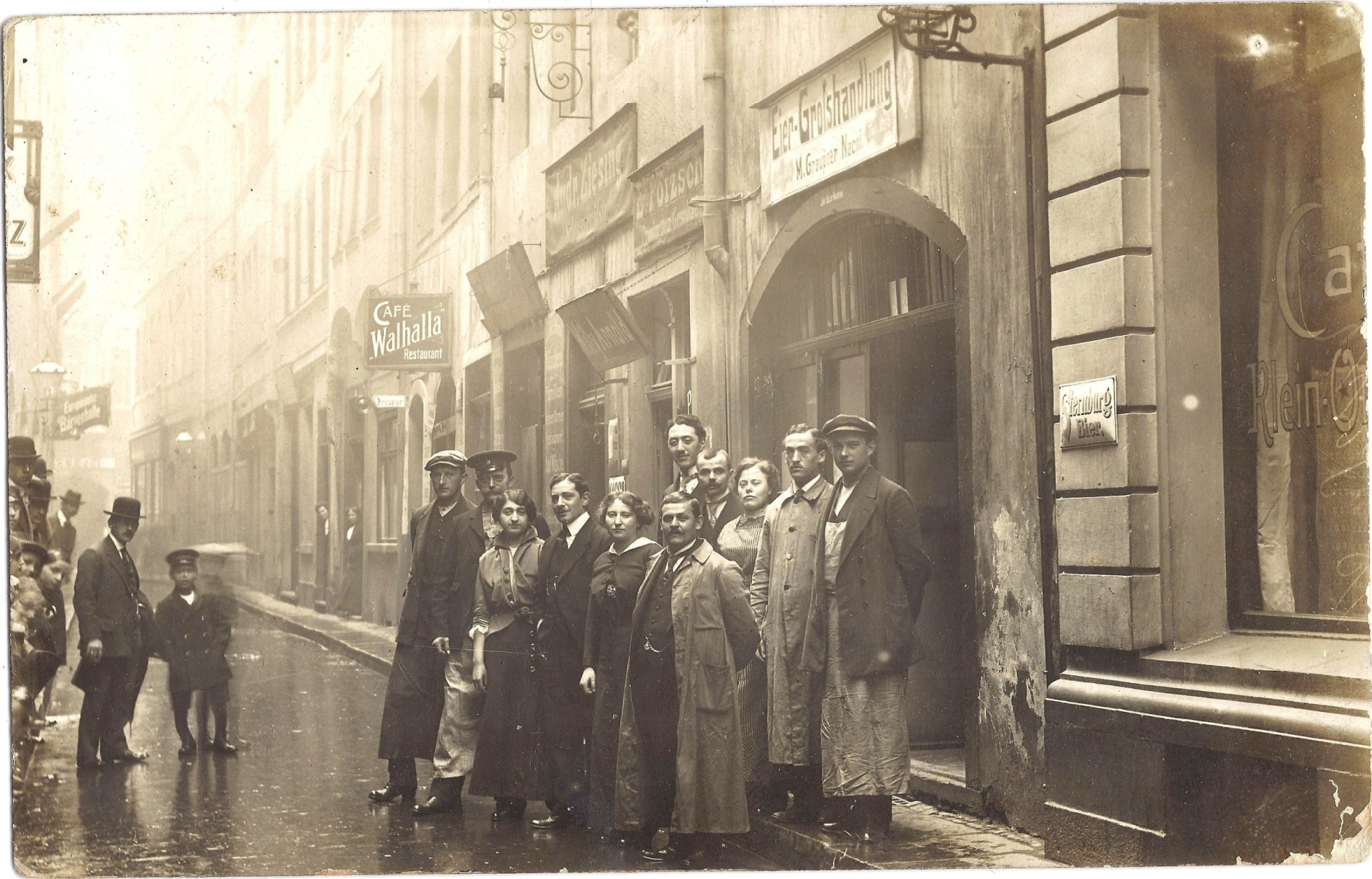

Alright, that's a pretty specific definition of 'marvelous' that I have here, but for me, there really is just something special about the picture (and no, not just because it has a midget in it). The way that group of people is standing for the picture, the way people from across the street - or a few doors down, or in the window above - are all leaning in to check out what must have still been a pretty unusual sight back then, the way the street fades into overexposure on the left, the reflections on the wet road, that shadow-figure that indicates the midget moved too much while the picture was taken, everyone's clothes and hats and... all of it. It's really quite wonderful.

אוקי, אז יש לי הגדרה די ספציפית של 'מופלאה', אבל מבחינתי באמת שפשוט יש משהו מיוחד בתמונה הזו (ולא, זה לא רק בגלל הגמד). איך שקבוצת האנשים הזו עמדה להצטלם, איך שהאנשים בצד השני של הכביש - או בהמשך הרחוב, או בחלון למעלה - כולם רוכנים להסתכל על מה שאז בטח עדיין היה עניין די נדיר, איך שהרחוב הולך ונמוג אל חשיפת-היתר בצד שמאל, ההשתקפויות על הכביש הרטוב, דמות-הצללים שמעידה שהגמד זז יותר מדי כשתמונה צולמה, והבגדים של כולם, והכובעים, ו... הכול. זה באמת פשוט נהדר.

And those people in the main group each seem to have their own unique character. The man at the front, with a watch-chain dangling over his stomach, must be some sort of boss, and he has the expression of one, too; the sheep-faced woman next to him also seems pretty affluent, with that brooch(?) on her dress, and is perhaps his wife; that other couple next to them is also pretty well-dressed (I love the big-nosed woman's jacket!), and she seems to have her arm in his, though it's hard to tell - since the man looks a bit like the boss and brooch-lady, my guess is that perhaps it's their son and his bride, though of course he could be a business partner, or a butler, or something, and they might all not be related in the slightest. I do like that slight smile on mister I-don't-need-a-coat's face, though, when almost everyone else got a serious face on. Then you have the other men in a variety of working-smocks and caps, and that stern-faced lady at the back which seems the very stereotype of a German housekeeper (Och, children, vill you keep off ze furniture?!), and the tall man looking at us with heavy-lidded amusement (you can just tell he has this sarcastic way of talking, like he always knows something that you don't), and... does that guy have his hair in a mohawk, or does he just have a very unusual greying pattern? He almost seems like he doesn't belong there.

ואני מרגישה שלכל אחד מהאנשים האלה בקבוצה המרכזית יש אופי משלו. האיש שבקדמת הקבוצה, עם שרשרת-השעון תלויה לרוחב הכרס, הוא בטח איזשהו בוס, ויש לו הבעה מתאימה; האשה עם הפרצוף הכבשתי לידו גם היא נראית די אמידה, עם הסיכה(?) הזו על השמלה, ואולי היא אשתו; גם הזוג שלצדם לבושים די יפה (אני ממש אוהבת את הז'קט של האשה החוטמנית!), ונראה כאילו הם שלובי זרועות, למרות שקצת קשה להבחין בדיוק - ומכיוון שהאיש נראה קצת כמו הבוס וגברת סיכה, אני מנחשת שאולי אלה הבן שלהם וכלתו, למרות שכמובן שהוא יכול להיות איזה שותף עסקי, או רב-המשרתים, או משהו, ויכול להיות שאין כאן בכלל שום קשרי משפחה. אבל אני בהחלט אוהבת את החיוך הקל על פניו של מר אני-לא-צריך-מעיל, בהשוואה לפרצופים הרציניים של כמעט כל השאר. ואז יש את כל שאר הגברים בתמונה, במגוון של חלוקי עבודה וכובעים, ואת הגברת חמורת-הסבר מאחורה שנראית בול כמו הסטראוטיפ של מנהלת משק הבית הגרמניה (אוך, ילדים, לרדת תיכף ומייט מיהרהיטים!), ואת האיש הגבוה שמביט עלינו בשעשוע כבד-עפעפיים (ממש אפשר לדעת איך הוא מדבר בנימה סרקסטית שכזו, כאילו הוא תמיד יודע משהו שאתה לא), ו... רגע, זו תסרוקת מוהוק על הראש של האיש הזה, או שהשיער שלו מאפיר בצורה ייחודית למדי? הוא כמעט נראה לא-שייך.

I can keep looking at this picture for a long time, and there's always something else interesting. I wish I could know more about these people.

אני יכולה להסתכל על התמונה הזו המון זמן, ותמיד יש עוד משהו מעניין. הלוואי ויכֹלתי לדעת קצת יותר על האנשים האלה.

But like I said, I couldn't really find anything, looking up the details in the picture. Cafe Walhalla, which gave the post its name despite just being a sign in the background, simply because I liked it, turned up a bunch of times on Google, in various spots in Germany, none of which seems to be right (disregarding the places in the US and Australia throwing me off the trail, there is, for example, this hotel in the small town of Donaustauf, or this Berlin spot which, well, even if I knew when it was established, it just doesn't look right... oh, who knows, it might be this restaurant in Potsdam, although I can't find a picture of the street to check it out, and once again have no idea if it could even have been around in the 20s; they do have an email address though, so I guess I could try writing them and asking. I'll update if this turns out to be the right place).

אבל כמו שאמרתי, כשחיפשתי את הפרטים השונים בתמונה, לא ממש הצלחתי למצוא משהו. קפה ואלהאלה, שנתן לרשומה הזו את שמה למרות שהוא סתם שלט ברקע, פשוט כי הוא מצא חן בעיניי, מופיע לא מעט בגוגל בכל מיני מקומות בגרמניה, אבל לא נראה שאף אחד מהם הוא המקום הנכון (אם נתעלם ממקומות בארה"ב ואוסטרליה שהפריעו לי בחיפוש, יש למשל את המלון הזה בעיירה קטנה בשם דוֹנָאוּשְׁטָאוּף, או את הפאב הזה בברלין, שאפילו לו ידעתי מתי הוא הוקם פשוט לא נראה נכון... נו, מי יודע, אולי זו המסעדה הזו בפוטסדאם, אבל אני לא מצליחה למצוא תמונה של הרחוב כדי שאוכל לבדוק, וגם כאן אין לי מושג אם היא בכלל היתה קיימת בשנות ה-20; עם זאת, יש להם כתובת אימייל, אז אולי אני יכולה לנסות לכתוב להם ולשאול. אעדכן אם יתברר שזה המקום הנכון).

That Eier-Grosshandlung sign had me hopeful for a while, until I found out it stands for 'egg salesman', so that's hardly anything specific. There are a bunch of names here, too - some of them a bit more readable in the original photo than in the scan - like the name under Eier-Grosshandlung, which appears to be 'M. Graupner Nachl' (not 100% sure about the last letter), or the signs of that place right between the egg-man and the Cafe Walhalla sign - there's 'L. Poizsch' (or 'Porzsch') and 'Andr. Ziesing' and even one distinctly non-German 'Milly Arnold', but none of these have any useful Google results. And the other words on the signs are too hard for me to make out. Same with that sign in the background on the left - I can read something that seems to be 'Birenhalle' or maybe 'Birestalle', but it's just too hard to figure out, and gets me no useful results.

השלט הזה שעליו כתוב Eier-Grosshandlung עורר בי תקווה לזמן קצר, עד שגיליתי שמשמעות המלים היא 'מוכר ביצים', אז זה לא ספציפי במיוחד. יש כאן עוד כל מיני שמות - את חלקם קל קצת יותר לקרוא בתמונה המקורית מאשר בגרסא הסרוקה - כמו למשל השם מתחת לEier-Grosshandlung, שנראה כמו 'M. Graupner Nachl' (אני לא סגורה ב-100% לגבי האות האחרונה), או השלטים על המקום שבין חנות הביצים לשלט של קפה ואלהאלה - יש שם איזה 'L. Poizsch' (או 'Porzsch'), ו-'Andr. Ziesing', ואפילו איזו 'Milly Arnold' בלתי-גרמנית בעליל אחת, אבל לא קיבלתי תוצאות מועילות כלשהן בגוגל על אף אחד מהם. ואת שאר המלים על השלטים מאוד קשה לי לקרוא. כנ"ל לגבי השלט ברקע בצד שמאל - אני יכולה לקרוא משהו שנראה כמו 'Birenhalle' או אולי 'Birestalle', אבל ממש קשה לי להבין מה יש שם בדיוק, ובכל אופן לא מתקבל בחיפוש שום דבר מועיל.

You know what's the only thing in that picture I managed to positively identify? The beer sign. See it, on that wall right at the front? Sternburg Bier. That's a relatively big brand, looks like, so while I have some vague hope that it could help me determine the city as Leipzig, it probably doesn't mean all that much. Still, that's cool.

יודעים מה הדבר היחיד בתמונה שהצלחתי לזהות בוודאות? השלט של הבירה. רואים אותו, בצד ימין בחזית התמונה? Sternburg Bier. נראה שזה מותג נפוץ יחסית, אז למרות שיש בי איזו תקווה מעומעמת שזה יכול לעזור לי לקבוע שהעיר היא לייפציג, סביר להניח שאין לזה יותר מדי משמעות. בכל זאת, מגניב.

So, after all that stuff, the final conclusion is, well, that there is no conclusion. I don't know where this picture was taken, or even when exactly. I don't know anything about any of these people, and with all probability will never find out. But that's okay. It's still a wonderful picture. And as usual, not having any details of the real story behind it only means that we can set loose our imagination, and make up our own stories.

אז אחרי כל זה, המסקנה הסופית היא, ובכן, שאין מסקנה סופית. אני לא יודעת איפה התמונה צולמה, או אפילו מתי בדיוק. אני לא יודעת שום דבר על האנשים האלה, וככל הנראה גם לא אדע אף פעם. אבל זה בסדר. זו עדיין תמונה נהדרת. וכרגיל, זה שאין לי פרטים על הסיפור האמיתי שמאחוריה פשוט אומר שאפשר לשחרר את הדמיון, ולהמציא סיפורים משלנו.

Go ahead. You know you want to.

אז קדימה. אתם יודעים שבא לכם.

Tuesday, January 11, 2011

A Night Without Morals - לילה ללא מוסר

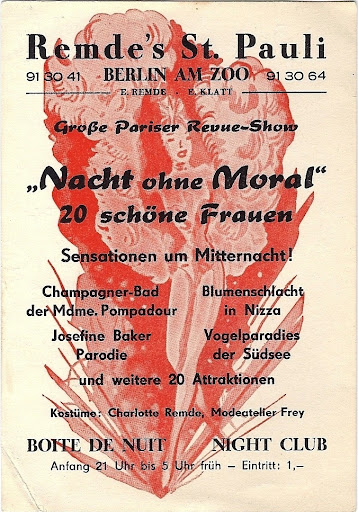
פוסט ראשון ל-2011, וחשבתי שראוי להתחיל בצלצלי תרועה. אז הנה משהו מעניין; זו לא גלויה, או תמונה, כמו רוב מה שיש לי, אלא סוג של פלייר פרסומי, או כרטיס, ממועדון לילה במערב ברלין. ויש פה גם סיפור מעניין למדי.

First post of 2011, and I thought we should start with a bang. So here is something interesting. It's not a postcard, or a photo, like most of the things I have, but a kind of commercial flier, or ticket, from a West Berlin nightclub. And there's quite an interesting story to it, too.

אבל את הסיפור לא ידעתי, כשקניתי את הדבר הזה. סתם חשבתי שזה מגניב. הנה, תסתכלו:

I didn't know the story when I bought it, though. I just thought it was cool. Take a look at this thing:

צד קדמי:
Front:


יאללה מסיבה!
בעזרת גוגל תרגום הצלחתי להבין מה מפורסם כאן: מופע בסגנון פריסאי בשם Nacht ohne Moral - 'לילה ללא מוסר' - מה שכבר נשמע, אממ, מעניין, אפילו לפני שמבטיחים שם '20 בחורות יפות', 'סנסציות בחצות', ואטרקציות כמו 'אמבט השמפניה של מאדאם פומפדור', 'קרב הפרחים בניס' (שקשור לאירוע אמיתי בקרנבל של ניס, דרך אגב), 'פרודיה על ג'וזפין בייקר' ו'ציפורי גן עדן של הים הדרומי' (ועוד 20 אטרקציות אחרות!). אפשר כבר לקבל מושג על איזה מין סוג של אירוע - ושל מקום - זה היה, ובעזרת קלישאות קולנועיות על מערב ברלין בתקופת תחילת המלחמה הקרה, התמונה מקבלת גם נפח: שמפניה ומרטיני ועשן סיגריות, ומרגלים כמובן. אפשר לדמיין את זה, לא? מרגלים לבושי טוקסידו שעושים חיים אבל לא שוכחים להעביר מבט חשדני על שאר החדר ולהחזיק אקדח בכיס נסתר; או מרגלים במעיל ארוך ומגבעת, יושבים בפינה אפלה ומעשנים בשרשרת, משרבטים משהו לעצמם וממלמלים בזעף מתחת לשפם המזויף בזמן שהם מחכים למרגלות יפהפיות שמדברות בלחישות צרודות ומסתוריות. כך כך קל לדמיין את כל זה; ראינו את זה כבר באינספור סרטים. ולכן כל כך התלהבתי כשהפכתי את הכרטיס (אני לא לגמרי בטוחה שזה כרטיס, אבל כתוב למטה 'כניסה לאחד', אז זה נראה סביר) וראיתי את השרבוטים מאחור. זה מתאים לתמונה הזו בדיוק.
[דרך אגב, אני עומדת לעשות משהו שלא עשיתי די מזמן, ולשים את כל הפרטים שמצאתי על המועדון - ועוד כמה דברים על ג'וזפין בייקר - בסוף הפוסט, אחרי ג'אמפ-קאט. אני חושבת שזה מרתק, אבל אם אתם רוצים לדבוק בסיפור המרגלים הדמיוני, אתם יכולים להתעלם מכל הקטע על מה שקרה באמת.]

Heyo, party time!
With the help of Google Translate, I figured out what it's advertising: a Parisian revue called Nacht ohne Moral - 'A Night Without Morals' - which already sounds, umm, interesting, even before it goes on to promise '20 pretty ladies', 'sensations at midnight', and attractions such as 'the champagne bath of Madame Pompadour', 'Flower Battle in Nice' (this is related to an actual event in the carnival in Nice, by the way), 'Josephine Baker parody' and 'birds of paradise of the South Sea' (and 20 other attractions!). Already, you get a picture of the kind of event, and the kind of place, this must have been - and with the help of some movie clichés about early-cold-war-era West Berlin, this picture gets fleshed out with champagne and martinis and cigarette smoke, and of course, spies. You can imagine it, can't you? Spies in tuxedos, having a grand old time, but keeping a watchful eye on the room and a pistol in a secret pocket; or spies in trenchcoats and fedoras, chain-smoking in a dark corner, scribbling something and muttering under their fake moustache as they wait for gorgeous lady-spies that speak in mysterious, hoarse whispers. It's so easy to imagine it; we've seen it in countless movies. Which is why I got all excited when I turned over the ticket (I'm not sure it actually was a ticket, but it does say 'admission: 1' at the bottom, so it seems likely) and saw the scribbles on the back - they fit into this image perfectly.
[By the way, I'm going to do something I haven't done in a long while, and put all the details I found about the club - plus some stuff about Josephine Baker - at the end of the post, after a jump cut. I think it's fascinating, but if you want to stick to the imaginary spy story, go ahead and ignore all the real-life stuff.]

צד אחורי:
Back:


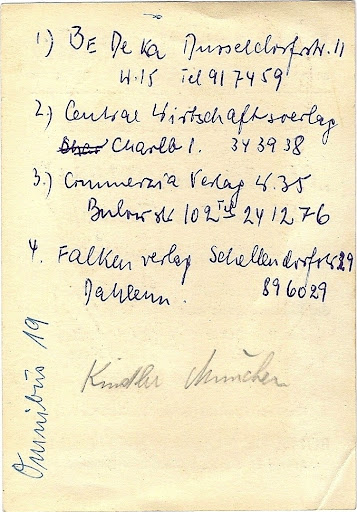
אז בעצם יש כאן שלושה דברים נפרדים - או בכל אופן, יש שלושה סגנונות של כתב יד ושלושה כלי כתיבה שונים. בעט כחול כהה יש רשימה של ארבעה מקומות ומספרי הטלפון שלהם; המלה verlag, שעל פי וויקיפדיה פירושה 'הוצאה לאור', חוזרת כמה פעמים (אולי יש כאן סופר מתחיל שמנסה למצוא מו"ל לכתב היד שלו?), ובפריטים מס' 1 ו-3 יש גם משהו שנראה כמו ציון שעה (4.15 ו-4.35, בהתאמה - אולי פגישות עם נציג ההוצאה?). למרבה הצער, לא הצלחתי למצוא אף אחד מהשמות האלה בחיפוש גוגל. בצד שמאל, בעט כחול בהיר יותר, ובכתב יד מחודד ואלגנטי קצת יותר, כתוב Omnibus 19, קו 19 באוטובוס, מן הסתם. ולמטה, בעפרון, שם של מישהו, כנראה (די קשה לי לקרוא את הכתב הזה).

Right, so we have three different things, basically - three different handwriting styles, and three different writing instruments, anyway. In a dark blue pen there's a list of four places and their phone numbers; the word verlag, which according to Wikipedia means 'publisher', recurs a few times (maybe we have a beginning author, trying to find someone to publish his manuscript?), and in items 1 and 3 there is also something that looks like a time (4.15 and 4.35, respectively - maybe meeting a representative of the publisher?). Unfortunately, I couldn't find any of those names on Google. On the left, in a lighter blue pen and a slightly more pointy and elegant handwriting, it says Omnibus 19, which is of course bus #19. And at the bottom, in pencil, something that looks like somebody's name (it's hard for me to read this handwriting).

כמובן שכל זה בהחלט יכול להיות חסר משמעות. זאת אומרת, זה בהחלט יומיומי למדי. מישהו היה צריך לרשום כמה דברים, לקח פיסת נייר ורשם אותם מאחורה; אחר כך נוספו עוד כמה רשימות לאותה פיסת נייר שימושית. פשוט מאוד.
אבל כמו שבזכות הקלישאות הקולנועיות קל מאוד לדמיין את מועדון הלילה האפלולי שאפוף בעשן סיגריות ואווירת שחיתות ושורץ מרגלים, כך גם קל לדמיין שיש מאחורי זה כל מיני ענייני ריגול. אולי זה צופן. אולי השמות של חברות הוצאה לאור הן רק כיסוי למשהו אחר, והשם בתחתית הדף הוא שם-המרגל המזויף של מישהו, וקו 19 הוא חלק מתכנית מפגש מסובכת ('תעלה על האוטובוס ברחוב X, וסע שלוש תחנות. אני אהיה בצד השני של הרחוב. אל תיצור קשר עין, פשוט לך אחריי'). אולי יש שלושה סגנונות כתב יד כי הכותב התאמן בזיוף! אפשר לדמיין כאן כל מיני עלילות, ברגע שמתחילים את קו המחשבה הזה.

Of course, this could all be meaningless. I mean, it's really quite mundane. Someone needed to write down some info, grabbed a piece of paper, and wrote on the back; then later, other notes were made on the same handy piece of paper. So very simple.
But just like all the movie clichés make it easy to imagine the dark, smoky nightclub teeming with debauchery and spies, it's also easy to imagine that there is some spy business behind this. Maybe it's coded. Maybe the names of publishing firms are just a cover for something else, and the name at the bottom is somebody's fake spy name, and bus #19 is part of a complicated meeting plan ('Take the bus at X Street, and travel three stops. I will be across the street. Don't make eye contact, just follow me'). Maybe there are three different handwriting styles because the guy was practising his forgery skills! There are all sorts of plots that can be imagined here, once you take this line of thought.

וכאן אפשר היה להניח לעניין. אבל אני נהנית ממחקרי-גוגל הקטנים שלי, כשיוצא לי לעשות אותם, אז אם מעניינים אתכם קצת פרטים אמיתיים על המקום ניתן למצוא אותם אחרי הג'אמפ-קאט.

And this could be where we leave it. But I like doing this little Google-based research, when I can, so if you're interested in some real details about the place, you can find them under the jump.

Friday, December 31, 2010

Collaborative writing - כתיבה קולבורטיבית

Looks like I'll get another post in before the year ends.
I got the idea to do this postcard when, in the last post, I said there being a lot of people mentioned. Because this postcard also has a lot of people, but in a somewhat unusual way - it was actually written by about six different people.

נראה לי שאצליח להשחיל עוד פוסט לפני סוף השנה.
חשבתי להעלות את הגלויה הזו כשציינתי, בפוסט הקודם, שהם מתייחסים לדי הרבה אנשים. כי בגלויה הזו באמת יש הרבה אנשים, אבל באופן קצת בלתי-רגיל - כתבו אותה כשישה אנשים שונים.

We begin with the front, which shows a view of the Chicago River (interesting side note: when looking for the Chicago River on Google Images, you run into a whole lot of pictures where it is dyed green, which, I realised after a while, is some odd St. Patrick's Day tradition, and not the result of comic-book-style pollution or gamma rays), with a lot of skyscrapers and bridges and other markers of a large metropolis.

נתחיל עם הצד הקדמי, ובו נוף של נהר שיקאגו (מאמר מוסגר מעניין: כשמחפשים את נהר שיקאגו בגוגל תמונות, נתקלים בלא מעט תמונות שלו צבוע בירוק; כפי שהבנתי אחרי זמן מה, זו איזו מסורת מוזרה של יום סנט פטריק, ולא תוצאה של זיהום או קרני גאמא כמו בחוברות קומיקס), עם הרבה גורדי שחקים וגשרים וכיוצא בזה סממנים מטרופוליניים.

Front:
צד קדמי:


Since I've never been to Chicago, I can't speak much about the accuracy of this portrayal, although the sky kind of has this fake-clement look that you sometimes get in postcards of places not known for clement weather (I have, for example, a postcard I bought in Ireland simply because it featured an accurately grey and overcast sky while all the other postcards had a clear blue sky like you almost never actually see). Anyway, it's quite a typical city-view picture, with nothing very special about it.

מכיוון שמימיי לא הייתי בשיקאגו, אני לא יכולה לומר עד כמה זה ייצוג מדויק שלה, אם כי יש לציין שהשמיים נראים קצת כמו הזיוף של מזג אוויר נאה שיש לפעמים בגלויות ממקומות שלא ממש ידועים במזג האוויר הנאה שלהם (יש לי, למשל, גלויה שקניתי באירלנד רק מפני שהשמיים בה היו אפורים ומעוננים כיאות, כשבכל שאר הגלויות היו שמיים כחולים כאלה שאף פעם לא רואים שם באמת). בכל אופן, זו תמונת נוף עירוני טיפוסית למדי, ואין בה כ"כ שום דבר מיוחד.

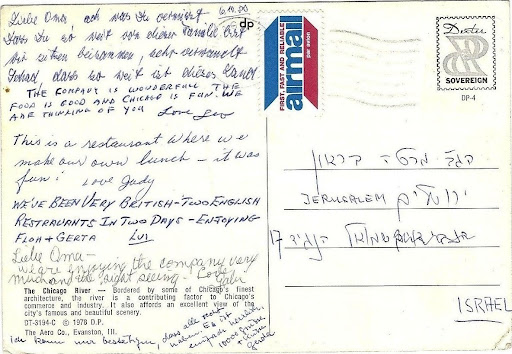
The special part of the postcard begins on the back, where apparently every member of the travelling family got to say a few words. [Note: Some of the messages are in English, and some are in German; the German ones were difficult for me to even read well enough to transcribe them, so I left them out, but will of course be very grateful to anyone who can supply a transcription and/or translation.]

החלק המיוחד בגלויה הזו מתחיל בצד האחורי, שם כנראה כל אחד מבני המשפחה המטיילת כתב כמה מלים. [הערה: כמה מהמסרים הם באנגלית, וכמה הם בגרמנית; את אלה שבגרמנית היה לי קשה אפילו לקרוא כדי לתעתק, אז דילגתי עליהם, אבל אהיה כמובן אסירת תודה לכל מי שיוכל לספק תעתיק ו/או תרגום.]

Back:
צד אחורי:

[German]

The company is wonderfull[sic!] the food is good and Chicago is fun. We are thinking of you.
Love, Leo

This is a restaurant where we make our own lunch - it was fun!
Love, Judy

We've been very British - two English restaurants in two days - enjoying Floh + Gerta
Zvi

Liebe Oma [dear grandma] -
We are enjoying the company very much and the sight seeing.
Love, Galia

[German]
[גרמנית]

החברה מצוייינת[כך במקור!] האוכל טוב וכיף בשיקגו. אנחנו חושבים עלייך.
באהבה, לאו

זו מסעדה שבה אנחנו מכינים את ארוחת הצהריים בעצמנו - זה היה כיף!
באהבה, ג'ודי

היינו ממש בריטים - שתי מסעדות אנגליות ביומיים - נהנים מפלו + גרטה
צבי

Liebe Oma [סבתא היקרה] -
אנחנו נהנים מאוד מהחברה ומהביקור באתרים.
באהבה, גליה

[גרמנית]

Something about this postcard is really fun. You have all the different people writing to the grandma, each with their own style and handwriting, each with their own highlights of the trip (food seems to be one main highlight, which I definitely approve of, although I must say that the concept of an English restaurant - and back in 1980, before any culinary renaissances or anything - is a bit scary, and going to two of them two days in a row is quite a feat). You can imagine them all sitting in the restaurant, passing the card around, chatting and joking. It's sweet.

יש משהו מאוד כיפי בגלויה הזו. כל האנשים השונים כותבים לסבתא, כל אחד עם הדגשים שלו מהטיול (לא מעט מדגישים את האוכל, מה שבהחלט מוצא חן בעיניי, אם כי יש לציין שהקונצפט של מסעדה אנגלית - ועוד ב-1980, לפני רנסאנסים קולינאריים למיניהם - קצת מעורר חשש, וללכת לשתי מסעדות כאלה ביומיים זה עניין מרשים למדי). אפשר לדמיין את כולם יושבים במסעדה, מעבירים את הגלויה ביניהם, מפטפטים ומתבדחים. זה מקסים.

Something interesting: if you look at the address, you can see that they started writing down one street, then realised it was the wrong one, crossed it and wrote the right address down. Did the grandma just move not long before? Both streets are fairly close to each other, in downtown Jerusalem, so if she did, it wasn't that big a move (by the way, here is a picture of the building at the address listed, 17 Shmuel HaNagid St. - that's pretty cool). Or maybe it was just a lapse of memory, like when you start writing and you realise you're writing your own address by mistake. Anyway, I suppose it made it to the right address, in the end.

משהו מעניין: אם מביטים על הכתובת, אפשר לראות שהם התחילו לכתוב רחוב אחד (הנביאים), ואז קלטו שזו הכתובת הלא נכונה, מחקו אותו וכתבו את השם הנכון (שמואל הנגיד). האם הסבתא עברה דירה לא הרבה זמן לפני כן? שני הרחובות האלה קרובים למדי זה לזה, במרכז העיר בירושלים, אז גם עם היא עברה דירה זה לא היה מעבר רציני במיוחד (דרך אגב, הנה תמונה של הכתובת שצוינה, ברח' שמואל הנגיד 17 - זה די מגניב). או שאולי זו סתם היתה פשלה קטנה של הזכרון, כמו כשמתחילים לכתוב ופתאום קולטים שבטעות כתבת את הכתובת של עצמך. בכל אופן, ניתן לשער שבסופו של דבר הגלויה הגיעה לכתובת הנכונה.

So, a nice bit of family togetherness to end the year with. Actually, some of these people kinda crop up in other postcards I got (I suppose they were all sold to the store in the same batch), but it'll be a while before we get to them, because I have a great idea for something to open the new year. What is it? You'll have to wait and see. Happy New Year, till then!

אז זהו, קצת ביחד משפחתי כדי לסגור את השנה האזרחית. למען האמת, כמה מהאנשים האלה צצים בגלויות אחרות שיש לי (אני משערת שכולן נמכרו לחנות באותה נגלה), אבל ייקח קצת זמן עד שאגיע אליהן, כי יש לי רעיון מצוין לגלויה שתפתח את השנה החדשה. ומהי? תצטרכו לחכות ולראות. שנה אזרחית טובה, עד אז!

Monday, July 26, 2010

The Alps - הרי האלפים

Another postcard from a faraway cold place, but not much detail for this one, so this will be a short post.

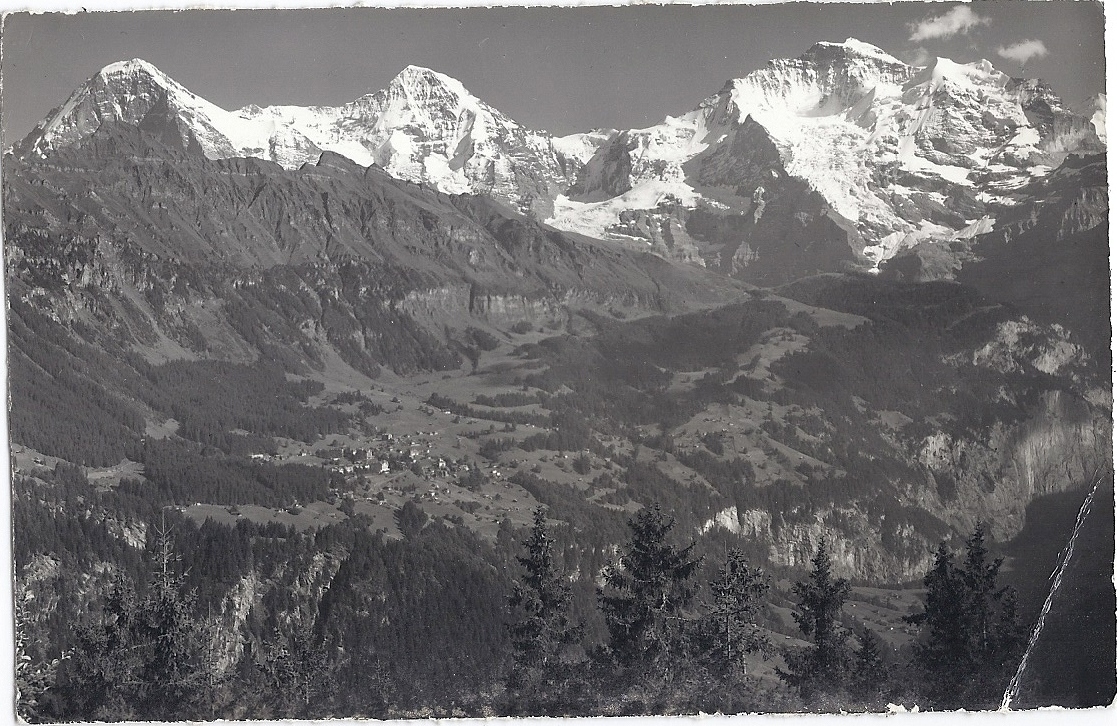
But really, what more do you need? Switzerland. Tall, snow-peaked mountains, with the black and white photograph making them look even colder. Some pines in the foreground, and the hint of a village on a slope. So peaceful.

עוד גלויה במסגרת המקומות הרחוקים והקרים, אבל הפעם אין הרבה פרטים, אז הרשומה הזו תהיה די קצרה.
אבל מה עוד צריך, בעצם? שווייץ. הרים גבוהים ועטויי שלג, שבגלל הצילום בשחור-לבן נראים צוננים עוד יותר. כמה אורנים בקדמת התמונה, ורמז של כפר על המדרון ממול. איזו שלווה.


There is no message written on the back, just the description: Eiger, Mönch, Jungfrau. Wengen von Sulwald ob Isenfluh.
Since out of these eight words six are place names, it wasn't too hard to figure this out: Eiger, Mönch and Jungfrau are the names of the mountain peaks; the second part explains that the village in the picture is Wengen, and that we are watching it from Sulwald or Isenfluh, which are two other places that are quite close to each other (okay, I am actually not 100% sure that I correctly interpreted that 'ob', so any German-readers who end up here are welcome to correct me, but it seems to make sense).

אין הודעה מאחורה, רק התיאור: Eiger, Mönch, Jungfrau. Wengen von Sulwald ob Isenfluh.
מכיוון שמתוך שמונה המלים האלה שש הן שמות מקומות, לא היה קשה לפענח את הכיתוב. אייגר, מונך ויונגפראו הם שמות הפסגות; החלק השני מסביר שהכפר הוא וונגן, ושאנחנו צופים בו מסולוולד או איזנפלו, שהם עוד שני מקומות שסמוכים זה לזה (טוב, אז אני לא בטוחה ב-100% שבאמת פירשתי נכונה את ה-'ob' הזה, אז אם מזדמנים לכאן קוראי גרמנית אשמח לתיקון, אבל זה נשמע לי הגיוני בכל אופן).

And one nice thing to finish with - thanks to the wonders of technology, you can now find the relevant places on Google Earth, and recreate the photo almost exactly. I'm putting a link this time, rather than embedding, both because it requires a plug-in for Google Maps that not everyone might be interested in, and because the embedded version makes everything run slow. But here, have a look. It's cool.

ומשהו אחד נחמד לסיום - בזכות פלאי הטכנולוגיה, אפשר למצוא ב-Google Earth את המקומות הנזכרים, ולשחזר את התמונה כמעט במדויק. אני מקשרת הפעם, ולא מטמיעה, גם כי זה דורש התקנה של פלאג-אין בשביל גוגל מפות, שאולי לא כולם מעונינים בו, וגם כי זה מאט מאוד את הגלישה. אבל הנה, תסתכלו. זה מגניב.

Update: Got a correction of the German from Peter, who explains: "'ob' by the way is old German for 'oberhalb' = upon or above, so Isenfluh may be a river or village below Sulwald". And since Sulwald is indeed a bit above the village of Isenfluh, it all makes sense now. Thank you!
עדכון: קיבלתי תיקון לגרמנית מפטר, שמסביר ש-ob הוא צורה ארכאית של oberhalb, 'מעל'. ומכיוון שסולוולד אכן נמצא קצת מעל הכפר איזנפלו, הכל הרבה יותר הגיוני עכשיו. תודה!