נחזור לאסקפיזם של ממש בקרוב, אבל קודם כל, משהו קצת שונה.
Some years ago, I decided to make a post about some things that used to belong to my grandfather, Sydney Chalmers, who died on 27.7.1955 in an El Al flight shot down over Bulgaria. In the time since I occasionally thought to continue with this - for a while I was slightly obsessed about finding details about his military service in the RAF (or maybe SAAF? I'm not 100% sure even about that) in WWII, which unit he served in and so on - but it got complicated, and I couldn't find any answers, and eventually I gave up.
לפני כמה שנים, החלטתי להעלות רשומה על כמה דברים שהיו שייכים לסבא שלי, סידני צ'למרס, שמת ב-27.7.1955 בטיסת אל-על שיורטה מעל בולגריה. בזמן שחלף מאז חשבתי מדי פעם אולי להמשיך את העניין - לזמן מה גם הייתה לי אובססיה מסוימת למצוא פרטים על השירות שלו בחיל האוויר הבריטי (או הדרום אפריקאי? אפילו לגבי זה אני לא בטוחה ב-100%) במלחמת העולם השנייה, באיזו יחידה שירת וכו' - אבל הסתבכתי עם זה, ולא קיבלתי תשובות, ובסוף ויתרתי.
Still, at my parents' place we have, in boxes containing a mess of family pictures from various times, a whole load of photos that grandpa Sydney took around the time of his military service, and they're rather interesting, so on the anniversary of his death I thought I could share some of them. Like in the previous post about him, it's sort of a way to get to know this grandfather that I never knew, through little details. The places he visited, the things he took photos of, the things he wrote on the back of the photos, they're all little fragments of his life back then, and it fascinates me to see all this. And since we really have quite a lot of photos, and I don't want to make one post that is too image-heavy, I'll make a series of them over the next days (or however long it takes me), and this, as you can glean from the title, is the first one.
(And if by any chance somebody reading this knows about these things better than I do, and can figure out how to recognise the specific unit, or any other information, or databases that might be helpful for my searches - because just looking online didn't work out that well so far - I'd love to hear about it. Thanks.)
ובכל זאת, יש לנו בבית של ההורים, בקופסאות מבולגנות עם המון תמונות משפחתיות מכל הזמנים, גם לא מעט תמונות שסבא סידני צילם בסביבות השירות הצבאי שלו, והן מעניינות מאוד, אז חשבתי שלרגל יום השנה לפטירתו אחלוק כאן כמה מהן. כמו ברשומה הקודמת שכתבתי עליו, זו מין דרך להתוודע לסבא הזה, שמעולם לא הכרתי, באמצעות פרטים קטנים. המקומות שבהם ביקר, הדברים שצילם, הדברים שכתב על התמונות, אלה רסיסים קטנים מתוך החיים שלו אז, ומרתק אותי לראות את כל זה. ומכיוון שיש די הרבה תמונות, ואני לא רוצה להעמיס את הכל על רשומה אחת, אעלה סדרת רשומות לאורך הימים הקרובים (או כמה זמן שייצא), וכפי שניתן להסיק מהכותרת זוהי הראשונה שבהן.
(ואם במקרה קורא כאן מישהו שמבין בעניינים כאלה יותר ממני ויודע איך לזהות את היחידה הספציפית, או כל מידע אחר, או יודע על מאגרי מידע שיוכלו לעזור לי בחיפושים - כי סתם בחיפוש באינטרנט לא ממש הצליח לי עד כה - אשמח לשמוע, תודה.)
(ואם במקרה קורא כאן מישהו שמבין בעניינים כאלה יותר ממני ויודע איך לזהות את היחידה הספציפית, או כל מידע אחר, או יודע על מאגרי מידע שיוכלו לעזור לי בחיפושים - כי סתם בחיפוש באינטרנט לא ממש הצליח לי עד כה - אשמח לשמוע, תודה.)
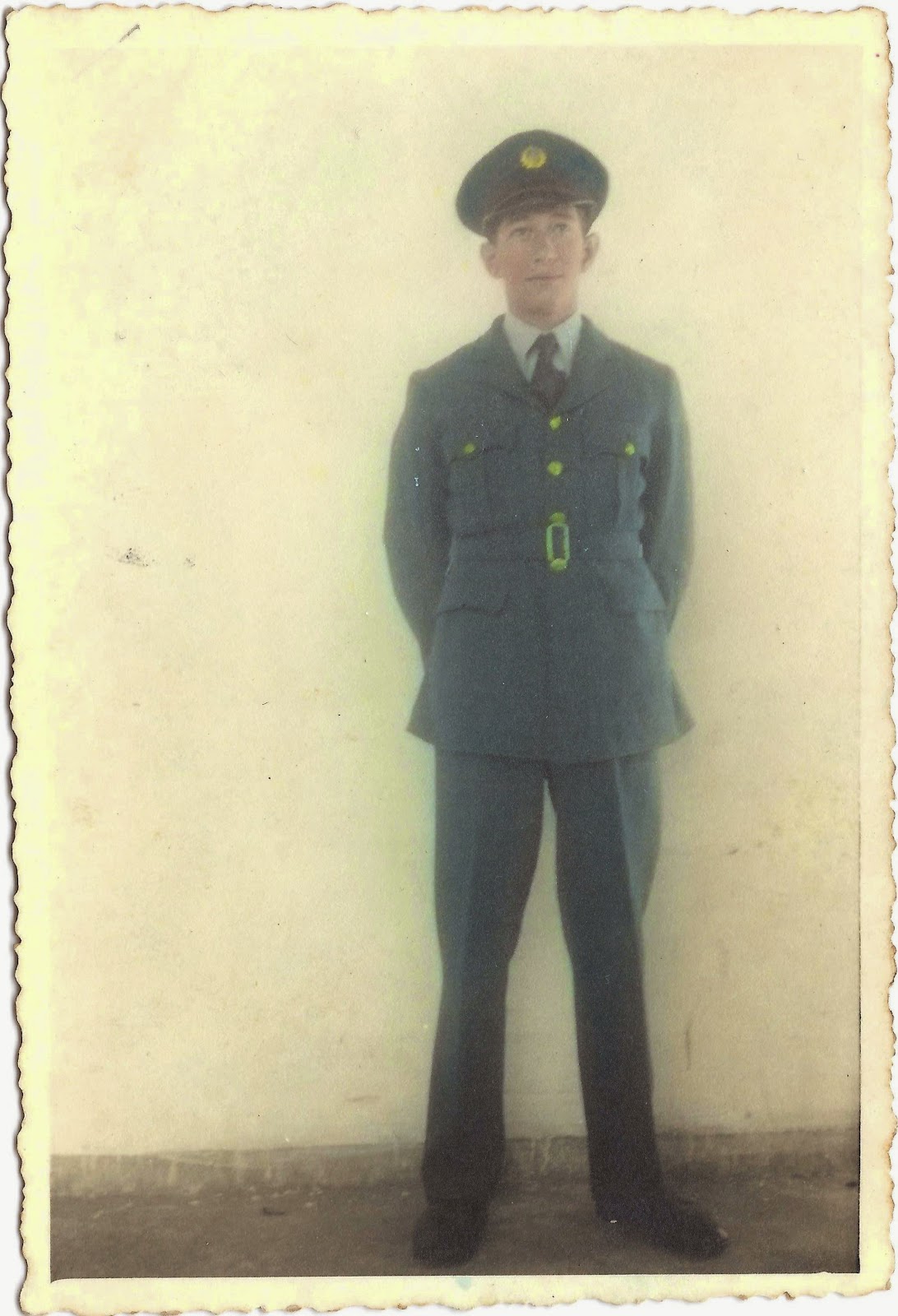
Let us begin with a colorised photo of the young flight engineer Sydney Chalmers, in a handsome blue uniform, looking optimistic. Hello, Syd!
נפתח בתמונה צבועה-ביד של מהנדס הטיסה סידני צ'למרס הצעיר, במדים כחולים ונאים ומבט אופטימי. שלום, סיד!
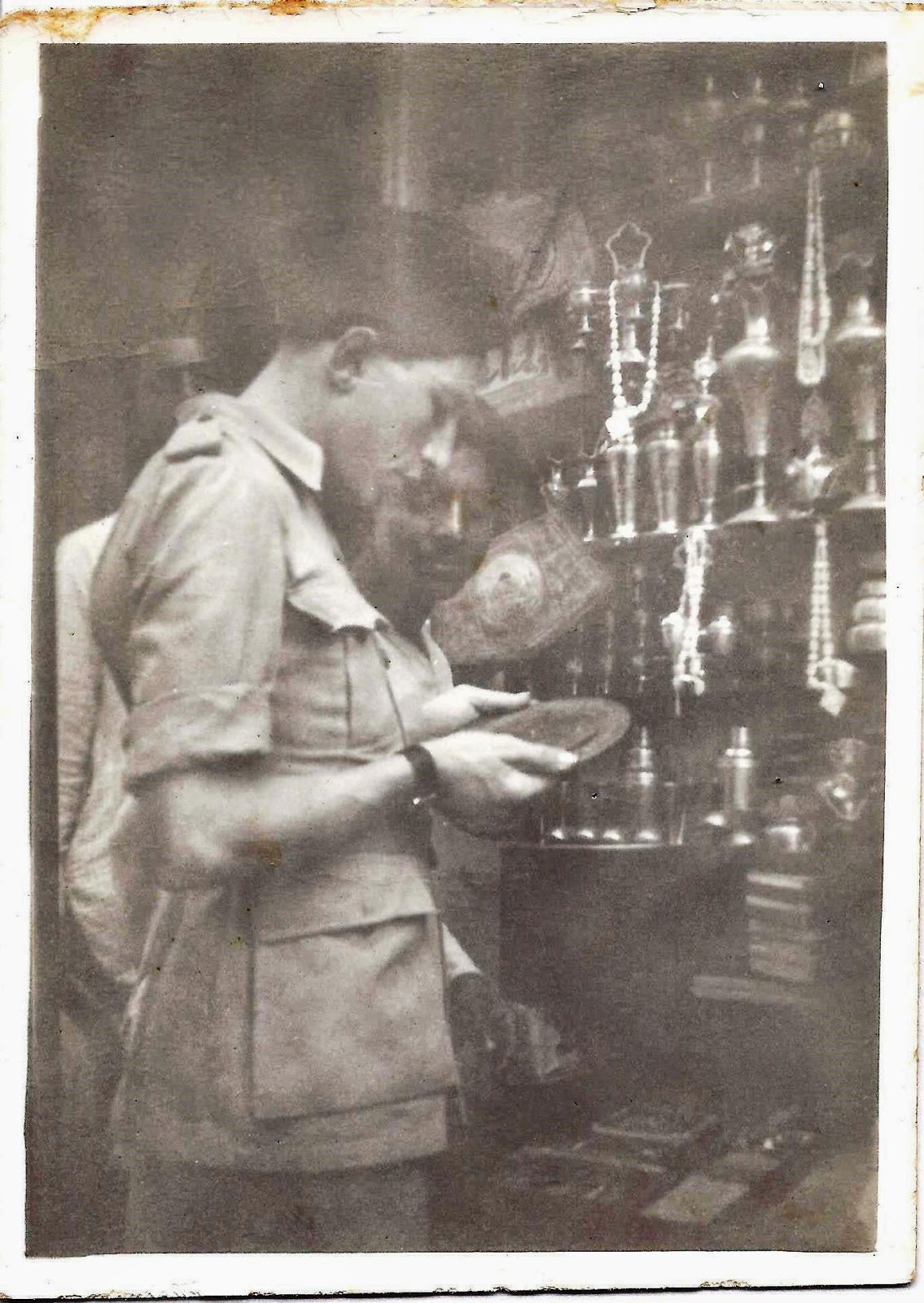
I also have a number of other photos of his in uniform, doing touristy things around India, such as buying souvenirs:
ויש גם כמה תמונות אחרות שלו במדים, עושה כל מיני דברים שתיירים עושים בהודו, כמו קניית מזכרות:
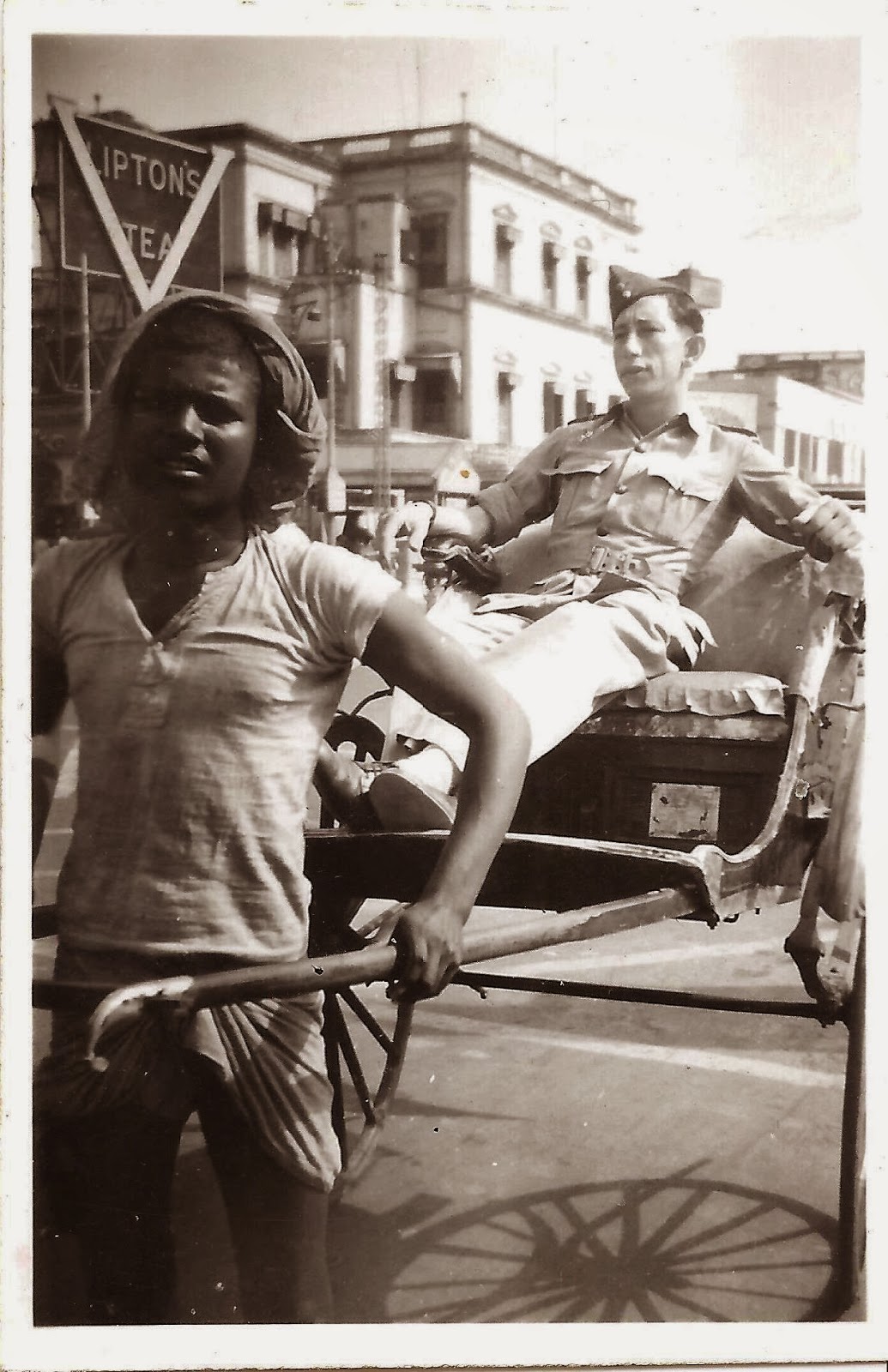
Riding a rickshaw (the writing on the back, which I didn't include here, says 'Calcutta' - the correct form of the name today is of course Kolkata - but I can't pinpoint the location):
נסיעה בריקשה (הכיתוב באחורי התמונה, שלא כללתי כאן, הוא 'כלכותה' - כיום הצורה הנכונה של השם היא כמובן קולקטה - אבל אני לא יכולה לזהות מיקום מדויק יותר):
Trying some local street food:
התנסות באוכל רחוב מקומי:
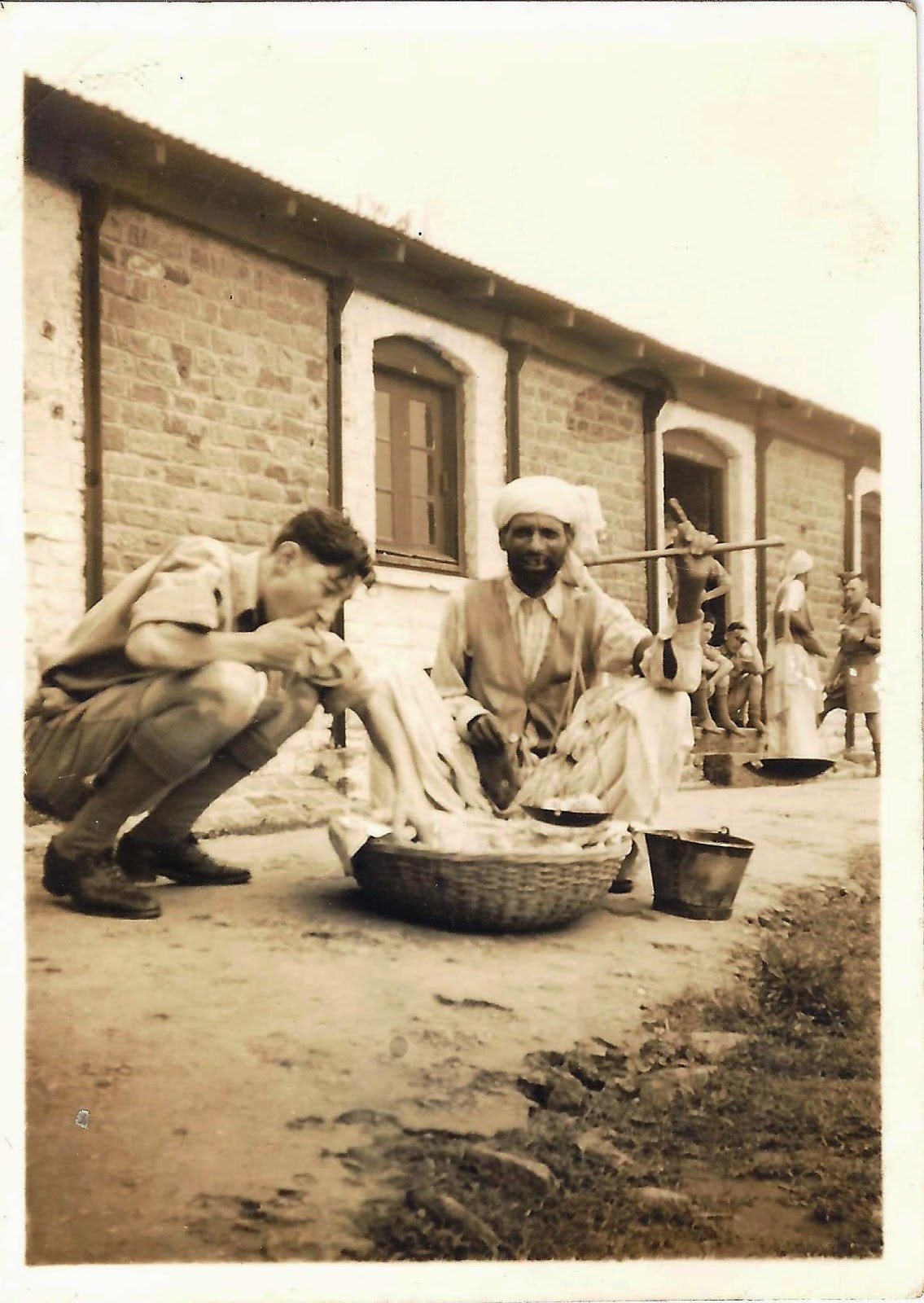

Tasting fruit fresh from seller
טעימת פירות טריים ישר מהמוכר
Horse-riding - although I suspect that might not have been a touristy thing as much as just a way to get places:
רכיבה על סוסים - אם כי אני חושבת שאולי זה לא היה כ"כ קטע של תיירים, אלא פשוט דרך להגיע ממקום למקום:


Taken at Dorothy's seat. I rode the horse up the hill-side for about 2000[?] ft. but had to walk down as it was too steep for the horse
צולם באוכף של דורותי. רכבתי על הסוסה כ-2000[?] רגל [600 מ'] במעלה הגבעה, אבל הייתי צריך לרדת ברגל כי זה היה תלול מדי בשביל הסוסה
[סליחה על ההנחה ש'דורותי' היא סוסה, אבל זה נשמע הגיוני מההקשר.]
[סליחה על ההנחה ש'דורותי' היא סוסה, אבל זה נשמע הגיוני מההקשר.]
And also fooling around with some local dress (improvised from a sheet? it has an improvised look about it), in a picture that really makes me think about my dad and his silliness:
וגם משתטה, עם לבוש מקומי (מאולתר מסדין? הוא נראה די מאולתר), בתמונה שממש מזכירה לי את אבא שלי עם האופי השטותניקי שלו:

But it wasn't all fun and games and playing tourist - after all, the reason he was in Asia in the first place was because of his military service, because of the War. I have some photos of his and his unit-mates, next to the airplanes they worked on:
אבל אי אפשר רק להשתטות ולתייר - בכל זאת, הסיבה שהוא היה באסיה בכלל היתה השירות הצבאי שלו, בגלל המלחמה. יש לי כמה תמונות שלו עם חברים ליחידה, ליד המטוסים שעליהם עבדו:
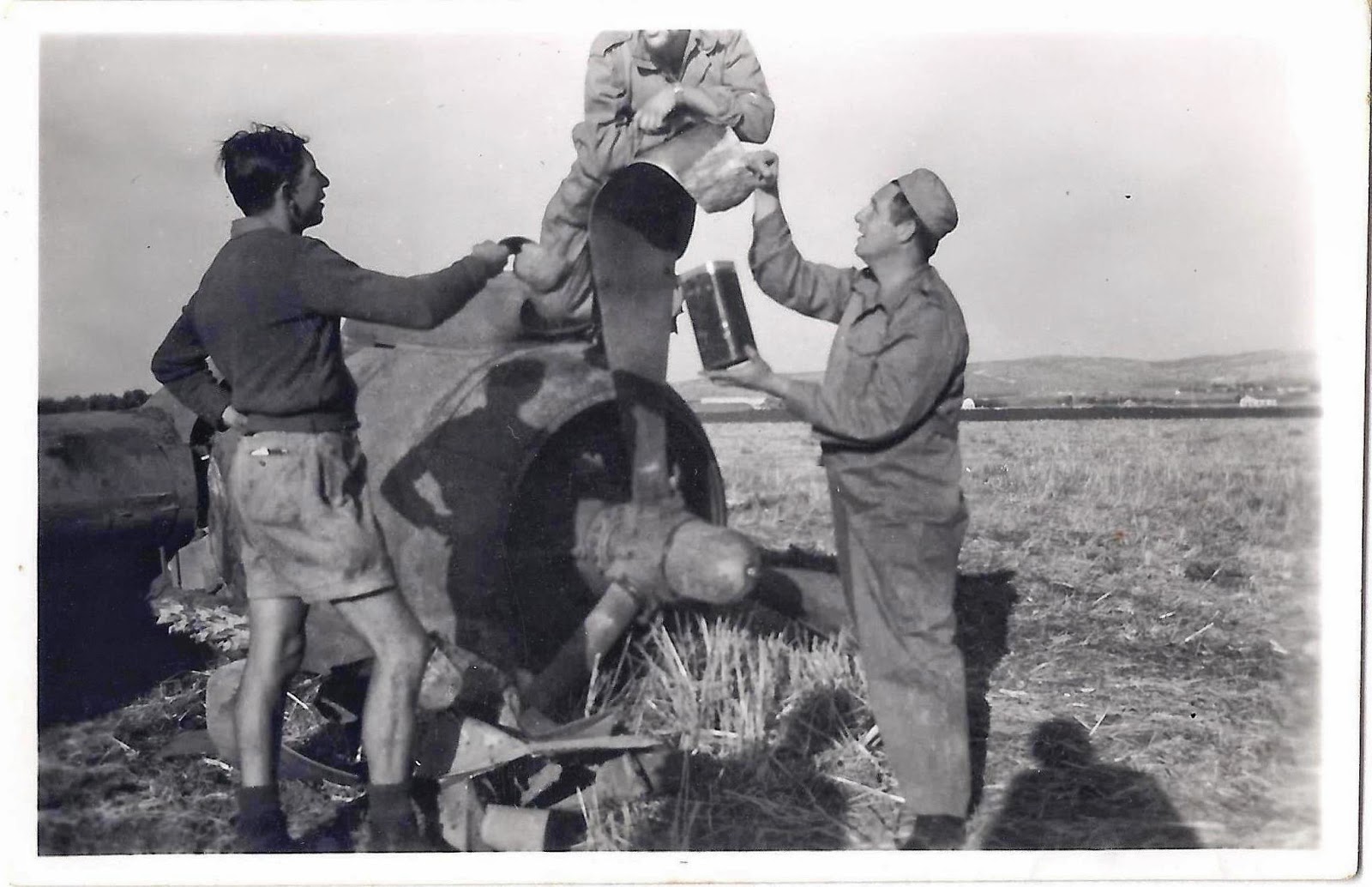
(I don't really understand what they're doing with the propeller here, can someone explain?)
(אני לא מבינה מה בדיוק הם עושים כאן עם הפרופלור, מישהו יכול להסביר?)

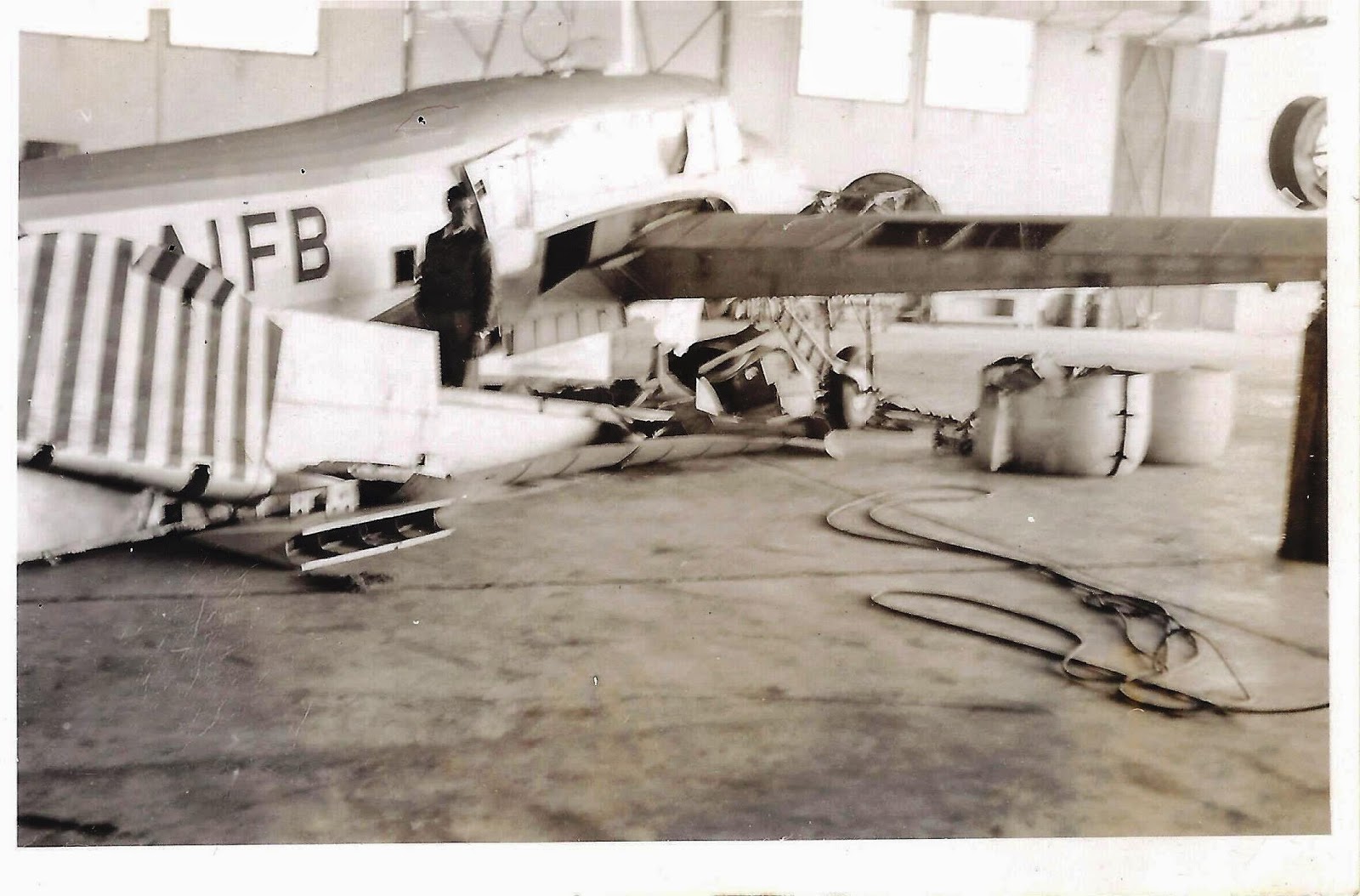
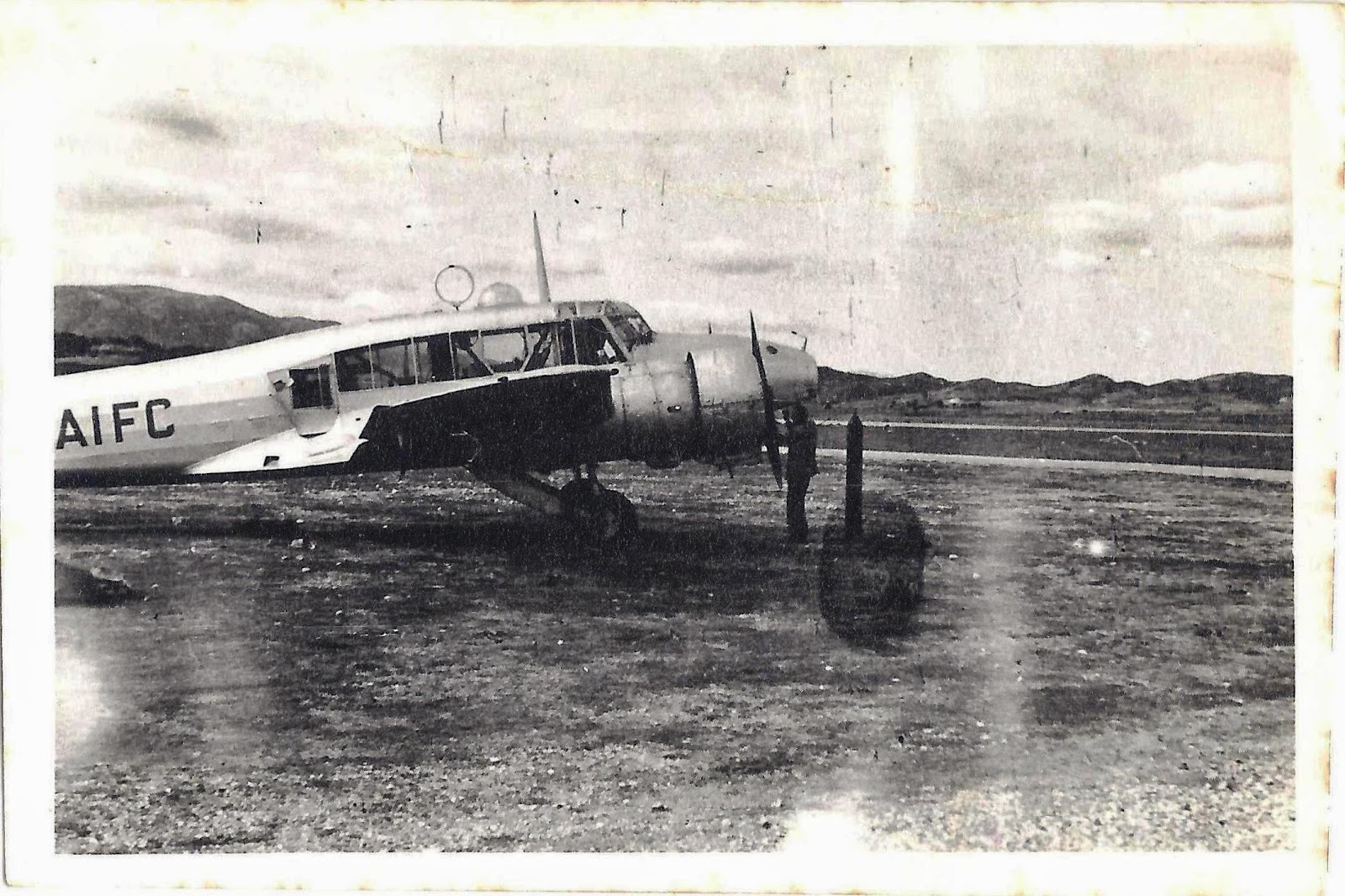
And also some pictures of airplanes, mostly Avro Ansons (to be precise, the model is Avro 652A Anson - which, from what I've seen, was also used by Israel in the Independence War in '48 [they call it 625A there, but that's probably a mistake], so there's some chance these photos are actually from that time, when grandpa Sydney came to Israel with Mahal and joined the IAF, also as a flight engineer... it's all a bit confusing), some of them on the ground:
וגם תמונות של המטוסים עצמם, בעיקר מדגם אוורו אנסון (או ליתר דיוק, אוורו 652A אנסון - שלפי מה שראיתי שימש גם את ישראל במלחמת העצמאות, כך שיש סיכוי מסוים שהתמונות הן בכלל מהתקופה ההיא, כשסבא סידני הגיע לישראל עם מח"ל והצטרף לחיל האוויר, גם כן כמהנדס טיסה... זה עניין קצת מבלבל), חלקם על הקרקע:

I think that's probably him next to the plane, but hard to see.
נראה לי שזה בטח הוא, ליד המטוס, אבל קשה לראות.


This one's definitely an RAF airplane, though - a De Havilland Mosquito, to be precise.
אבל כאן זה בטוח מטוס של ה-RAF - דה הבילנד מוסקיטו, ליתר דיוק.
And some pictures were taken in the air (again, I can't be 100% sure from when they actually are, it's hard to see details on the planes):
ויש גם תמונות שצולמו בזמן טיסה (שוב, אני לא בטוחה ב-100% ממתי הן בדיוק, קשה לראות פרטים על המטוסים):


Definitely not RAF, but what symbol is it? A star or a star-of-David? If it's the latter, this should be an IAF airplane, and thus clearly not from WWII. Can anyone help?
בוודאי לא RAF, אבל איזה סמל זה בדיוק? כוכב או מגן דוד? אם זה מגן דוד, זה מן הסתם מטוס של חה"א הישראלי, ולפיכך בטח לא ממלה"ע השנייה. מישהו יכול לעזור לי עם זה?
And back to the mates - a cute series of photos shows grandpa Sydney and some anonymous friend of his, just doing stuff (including sleeping) around the camp:
ובחזרה לחבר'ה - סדרת תמונות חמודה אחת מציגה את סבא סידני ועוד איזה חבר אלמוני שלו, סתם עושים כל מיני דברים (כולל שינה) במחנה:


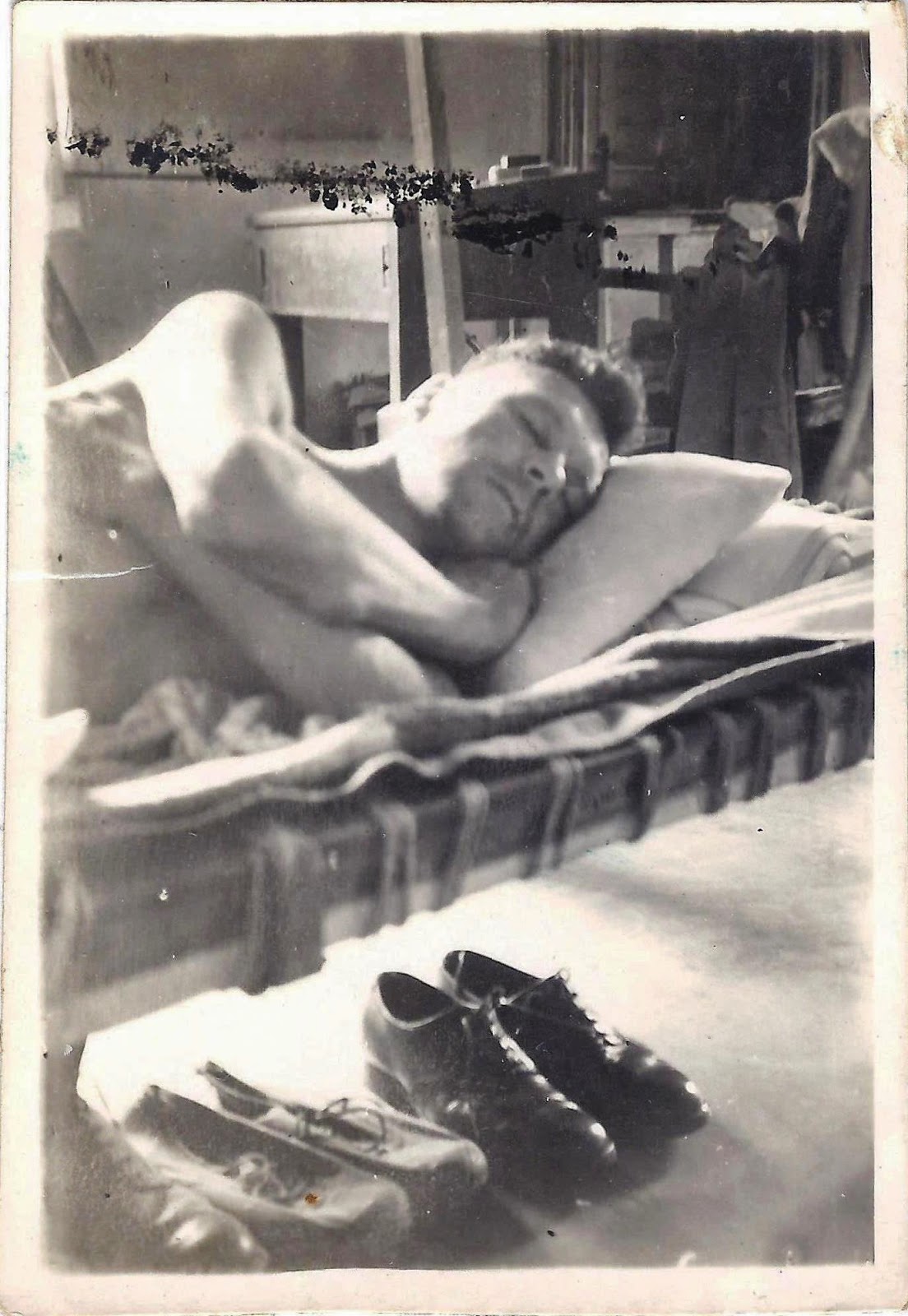
I mean, I'm not sure if it's actually a series of photos, I'm just guessing, because they're all stamped on the back with the official copyright mark of the British Air Ministry (which was a thing that existed back then). Since these are the only photos with this mark, I'm guessing that maybe there was some official photographer passing through the area, and my grandfather later purchased the photos where he and the anonymous friend appeared.
כלומר, אני לא בטוחה שזו אכן סדרת תמונות, אני רק מנחשת, כי כולן מסומנות באותה חותמת, בצד האחורי - חותמת זכויות יוצרים רשמית של משרד האוויר הבריטי (שאז עוד התקיים כישות עצמאית). מכיוון שאלה התמונות היחידות שנושאות את החותמת הזו, אני מניחה שאולי עבר באזור צלם רשמי כלשהו, וסבא שלי רכש ממנו אחר כך את התמונות שבהן הוא והחבר האלמוני הופיעו.
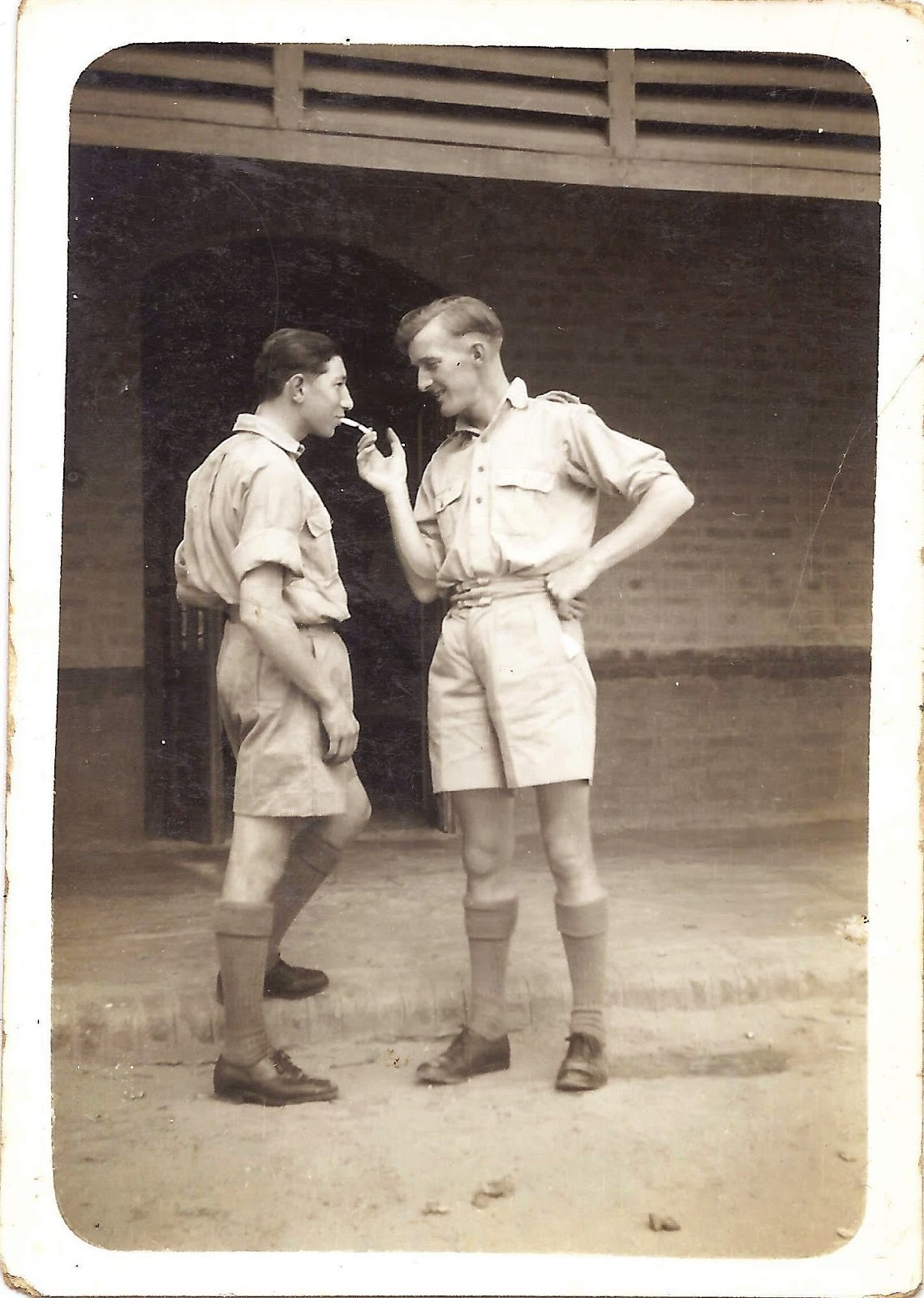
And here's another cute photo with one of his mates This one's also relatively important, because it's one of the only photos that give me some sort of a time frame - on the back it says 'April 1942 at Risal-Pur'. This gives me a bit of a lead, since the unit that was deployed in Risalpur during the War was RAF Squadron no. 31, but without any further details this is still not much more than a guess.
והנה עוד תמונה חמודה עם אחד החבר'ה שלו. זו גם תמונה חשובה יחסית, כי היא אחת היחידות שנותנות לי איזושהי מסגרת זמן - בצד האחורי כתוב 'אפריל 1942, בריסאל-פור'. זה נותן לי שביב של קצה חוט, כי היחידה שהייתה מוצבת בריסאלפור במהלך המלחמה היא טייסת 31 של חיל האוויר המלכותי, אבל בלי פרטים נוספים זה עדיין רק ברמת הניחוש.

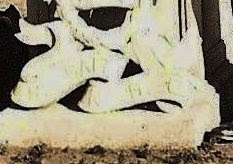
And something else that's confusing to me - the following photo, which includes some kind of unit insignia with an elephant. It's not very clear on the scan, even though I tried making a clearer close-up, but the scroll at the bottom also seems to say 'G [or perhaps B, or 6] Batt., N.M.C.' - I'm not sure what kind of battalion it is, and whose, or even what N.M.C. stands for (possibly Navy and Marine Corps?), and I tried searching but found no battalion with an elephant symbol, so yeah, no idea what this is about.
ועוד משהו שמבלבל אותי - התמונה הבאה, שכוללת סמל יחידה כלשהו עם פיל. לא רואים כ"כ טוב בסריקה, למרות שניסיתי לארגן תקריב ברור קצת יותר, אבל על המגילה למטרה כתוב G Batt., N.M.C [יכול להיות שזה לא G אלא B או 6] - אני לא בטוחה גדוד של מי ושל מה, או אפילו מה זה בדיוק N.M.C (אולי ר"ת של Navy and Marine Corps, חיל הים והנחתים?), וניסיתי לחפש ולא מצאתי גדוד שהסמל שלו הוא פיל, אז כן, אין לי מושג מה הסיפור.

And the writing on the back only adds to my confusion:
והכיתוב בצד האחורי רק מוסיף לבלבול שלי:

The Two Italian Prisoners and one of our officers
שני השבויים האיטלקים ואחד הקצינים שלנו
Italian prisoners? What? Were there even Italian troops at the Asian front? Or maybe this photo isn't even from Asia, and was taken somewhere else? I tried searching, but got kinda lost. I really can't figure any of it out.
שבויים איטלקים? מה? היו בכלל איטלקים שנלחמו בגזרת אסיה? או שאולי התמונה הזו היא כבר בכלל לא מאסיה אלא מאיפשהו אחר? ניסיתי לחפש, אבל די הלכתי לאיבוד. אני פשוט לא מבינה כאן כלום.
And on that confused note (seriously, if anyone can help solve this, I'd be grateful), that's it for now. The next post will have a bunch of photos from various places around the Indian subcontinent and Asia in general, so if that's your thing, stay tuned for the next installment!
ובנימה מבולבלת זו (באמת, אם מישהו יכול לעזור לי לפתור את העניין הזה, אהיה אסירת תודה), זהו לבינתיים. הרשומה הבאה תכלול המון תמונות מכל מיני מקומות סביב תת-היבשת ההודית, ואסיה באופן כללי, אז אם אתם בקטע, חכו לפרק הבא!
Update, 27.7.2015: I've neglected this blog for a year (because, well, because it happened that way) but today it is the anniversary again, and in fact it is the 60th anniversary of Grandpa Sydney's death, so it feels right to at least update this post with all the helpful information I got from people last year.
First, from the comments: Inbal added the information that (a) the star on the airplane in that last flying picture is definitely a star-of-david, so this is from his IAF service rather than from WWII; and more importantly (b) that the NMC were the Native Military Corps, a segregated corps of South African blacks, which served in various non-combatant roles during the War (you can read a little more about them here, and this article seems interesting as well, although I only skimmed it). And since the Italians were involved in some battles in East Africa, it seems likely this is at least the general area we're talking about. Very cool! Thanks, Inbal!
עדכון, 27.7.2015: הזנחתי את הבלוג בשנה האחרונה (כי, נו, ככה יצא), אבל הנה הגענו שוב ליום השנה, ולמעשה היום עברו שישים שנה בדיוק למוות של סבא סידני, אז חשבתי שכדאי לפחות לעדכן כאן ולהוסיף את כל המידע המועיל שקיבלתי מאנשים בזמנו.
אל"ף: רדו נא לתגובות, לקרוא את מה שהוסיפה ענבל, במיוחד לגבי ה-NMC, ה-Native Military Corps של צבא דרום אפריקה (אפשר גם לקרוא עליהם עוד כאן, וגם במאמר הזה שרק רפרפתי עליו אבל הוא נראה מרתק); ומכיוון שהאיטלקים היו מעורבים בכמה קרבות במזרח אפריקה, זה נותן לנו לפחות מושג כללי לגבי האזור המדובר. ממש מגניב! תודה, ענבל!
אל"ף: רדו נא לתגובות, לקרוא את מה שהוסיפה ענבל, במיוחד לגבי ה-NMC, ה-Native Military Corps של צבא דרום אפריקה (אפשר גם לקרוא עליהם עוד כאן, וגם במאמר הזה שרק רפרפתי עליו אבל הוא נראה מרתק); ומכיוון שהאיטלקים היו מעורבים בכמה קרבות במזרח אפריקה, זה נותן לנו לפחות מושג כללי לגבי האזור המדובר. ממש מגניב! תודה, ענבל!
Second, from Facebook: my friend Uri turned out to be a font of knowledge regarding WWII airplanes. Regarding the group picture, he first identified the plane as a Mosquito, and then added: "The skin of both engine nacelles is dismantled, which is the way to access engines for maintenance. The plane is on crutches but engines and weapons are still mounted so it's probably undergoing second-tier maintenance of some kind. There are 12 men on the photograph; they are dressed sloppily; one of them is a corporal. I assume therefore that they belong to a maintenance detail of some sort and are not crew (Mosquito crews consisted of two officers, a pilot and a navigator, who would be unlikely to be photographed with sloppily dressed enlisted men)."
Regarding the propeller picture, he said: "It looks like it's an engine from a crashed plane - the propeller appears to be bent beyond repair. The engine is radial. It is smaller than Wasps of the B17 and it does not have cowling like the engines of the Mosquito. It also has an air inlet above the engine. It is consistent with the Bristol Beaufighter, which was fairly ubiquitous, but I'm not sure."
Thanks, Uri!
[I couldn't find any WWII airplane named or nicknamed 'Wasp' - although it's a bit hard to search since the WASP were also the Women's Airforce Service Pilots - but later got a correction from my BF Dan that it was actually a type of (radial) engine, the Pratt & Whitney Wasp, so that makes more sense. Also, here are the B-17 (nicknamed The Flying Fortress) and the Bristol Beaufighter.]
בי"ת: בפייסבוק, ידידי אורי שפע ידע על מטוסי מלה"ע השנייה. לגבי התמונה הקבוצתית, הוא קודם כל זיהה את המטוס כמוסקיטו, ואז הוסיף: "המעטפת של שני קני המנוע מפורקת; כך היו מגיעים למנועים לצורך תחזוקה. המטוס מוחזק עם תמוכות אבל המנועים והנשק עדיין מורכבים עליו, אז נראה שהוא במהלך איזושהי תחזוקה בדרג ב'. יש בתמונה 12 איש; הלבוש שלהם מרושל; אחד מהם הוא בדרגת קורפורל [רב"ט]. לפיכך, אני מניח שהם שייכים ליחידת תחזוקה כלשהי ולא לצוות המטוס (צוותי המוסקיטו כללו שני קצינים, הטייס והנווט, ולא סביר שהם יהיו מוכנים להצטלם עם חוגרים בלבוש מרושל)."
לגבי התמונה עם הפרופלור, הוא כתב: "נראה שמדובר על מנוע של מטוס שהתרסק - הפרופלור נראה מעוקם באופן חסר תקנה. המנוע הוא רדיאלי. הוא קטן יותר מהוואספ של ה-B17, ואין לו כיסוי מנוע כמו של מטוסי מוסקיטו. יש גם פתח לכניסת אוויר מעל המנוע. הפרטים האלה מתאימים לבריסטול בופייטר, שהיה אז בכל מקום בערך, אבל אני לא בטוח."
תודה, אורי!
[לא הצלחתי למצוא מטוס ממלה"ע השנייה שנקרא או כונה 'וואספ' - אם כי קצת קשה לחפש מפני ש-WASP הם גם ראשי התיבות של ה-Women's Airforce Service Pilots, טייסות שירות חיל האוויר - אבל הבנזוג תיקן אותי אח"כ שהכוונה הייתה למעשה למנוע (רדיאלי) מדגם וואספ של חברת פראט & וויטני, אז זה יותר הגיוני. וחוץ מזה, הנה ה-B-17 (שכונה 'המבצר המעופף') והבריסטול בופייטר.]
לגבי התמונה עם הפרופלור, הוא כתב: "נראה שמדובר על מנוע של מטוס שהתרסק - הפרופלור נראה מעוקם באופן חסר תקנה. המנוע הוא רדיאלי. הוא קטן יותר מהוואספ של ה-B17, ואין לו כיסוי מנוע כמו של מטוסי מוסקיטו. יש גם פתח לכניסת אוויר מעל המנוע. הפרטים האלה מתאימים לבריסטול בופייטר, שהיה אז בכל מקום בערך, אבל אני לא בטוח."
תודה, אורי!
[לא הצלחתי למצוא מטוס ממלה"ע השנייה שנקרא או כונה 'וואספ' - אם כי קצת קשה לחפש מפני ש-WASP הם גם ראשי התיבות של ה-Women's Airforce Service Pilots, טייסות שירות חיל האוויר - אבל הבנזוג תיקן אותי אח"כ שהכוונה הייתה למעשה למנוע (רדיאלי) מדגם וואספ של חברת פראט & וויטני, אז זה יותר הגיוני. וחוץ מזה, הנה ה-B-17 (שכונה 'המבצר המעופף') והבריסטול בופייטר.]
And third, from email: Yuval talked about the IAF Avro Anson planes (which are described here [Hebrew link], including the two seen in the pictures I have, the G-AIFB and the G-AIFC):
"There's an Avro Anson plane that got to Israel in pieces (in 1949) and was assembled (by the Aero Club or maybe by the air force). You can see the plane being assembled, in silver paint in an airfield (I think Ramat David) and in IAF paint (twice, in low flight over a field, and over the sea, I think near Haifa).
There's an Avro Anson that "crashed" during landing - that's why it's sitting on the ground, with a bent propeller. I wonder who's the engineer that responsible for that."
[This is about the plane that Uri identified as (probably) a Beaufighter; Yuval doesn't insist about his own idea, and I of course have no way to judge which one is right, so as far as I'm concerned both are possible options.]
He also mentioned that Wikipedia tells about an attempt to smuggle some Avro Anson planes from the UK to Israel during the Independence War [the English Wikipedia entry doesn't have those details, but you can read about it here], one of which was forced into emergency landing near Milan, which caused him to come up with an interesting idea:
"Another theory about the crashed plane - all the places that talk about the failed smuggling of the planes only mention the pilots. But there were 11 crew members in 4 planes that arrived in Greece. Which means they also had flight engineers (that makes sense, they were flying tincans over a long distance.
Idea - the fifth plane, that had an emergency landing **in a tilled field near Milan** was flown by Arnold Ilowite and some engineer. It was fixed within 10 days and flown to the Urbe airfield near Rome.
Who was the engineer, was it Syd? And is it a photo of them with the plane after the emergency landing?"
Although later on, after looking at the picture attached below (in the Hebrew part), the conclusion was that it is not the same airplane, or at least not the same crash landing.
Anyway, this is all very cool and enlightening. Thanks, Yuval!
וגימ"ל: באימייל, יובל דיבר על מטוסי אוורו אנסון של חיל האוויר (שמתוארים כאן, וביניהם אפשר למצוא את השניים שמופיעים בתמונות אצלי, G-AIFB ו-G-AIFC):
"יש שם מטוס אוורו אנסן של חיל האויר שהגיע בחלקים לישראל (שנה 1949) והורכב (ע"י קלוב התעופה או אולי כבר חיל האויר). רואים את המטוס בהרכבה, בצבע כסף בשדה תעופה (רמת דוד לדעתי) ובצבעי חיל האויר הישראלי (פעמיים, בטיסה נמוכה מעל שדה ומעל הים סביבות חיפה לדעתי).
יש שם מטוס אוורו אנסן ש"התרסק" בנחיתה - לכן הוא יושב על הרצפה והמדחפים עקומים. מעניין מי היה המהנדס שאחראי לזה."
[זה אותו המטוס שאורי זיהה כבופייטר (כנראה); יובל לא מתעקש על הזיהוי שלו, ולי אין שום דרך לשפוט מי צודק כמובן, אז שתי האופציות תלויות ועומדות מבחינתי.]
הוא גם ציין שבוויקיפדיה מתואר נסיון הברחה של כמה מטוסי אוורו אנסון מאנגליה לישראל במלחמת העצמאות, שבה אחד מהם נאלץ לנחות נחיתת אונס ליד מילאנו, מה שהוביל אותו להעלות רעיון מעניין:
"תאוריה נוספת בקשר למטוס המרוסק - בכל המקומות שמדברים על ההברחה הכושלת של המטוסים מצויינים רק הטייסים. אבל 11 אנשי צוות ב-4 מטוסים הגיעו ליוון. משמע- היו איתם מהנדסי טיסה (הגיוני, הם הטיסו גרוטאות למרחק רב).
רעיון- את המטוס החמישי שנחת נחיתת אונס **בשדה חרוש ליד מילאנו** הטיס ארנולד אילווייט ועוד מהנדס כלשהו. הוא שופץ תוך 10 ימים והוטס לשדה התעופה אורבה ליד רומא.
מי המהנדס האם זה סיד? והאם זו התמונה שלהם עם המטוס אחרי נחיתת אונס?"
אם כי בהמשך, ולאחר שמצא את התמונה שלהלן, המסקנה הייתה שכנראה שלא מדובר על אותו המטוס, או לכל הפחות לא על אותה ההתרסקות:
 בכל אופן, כל זה מגניב ומחכים מאוד. תודה, יובל!
"יש שם מטוס אוורו אנסן של חיל האויר שהגיע בחלקים לישראל (שנה 1949) והורכב (ע"י קלוב התעופה או אולי כבר חיל האויר). רואים את המטוס בהרכבה, בצבע כסף בשדה תעופה (רמת דוד לדעתי) ובצבעי חיל האויר הישראלי (פעמיים, בטיסה נמוכה מעל שדה ומעל הים סביבות חיפה לדעתי).
יש שם מטוס אוורו אנסן ש"התרסק" בנחיתה - לכן הוא יושב על הרצפה והמדחפים עקומים. מעניין מי היה המהנדס שאחראי לזה."
[זה אותו המטוס שאורי זיהה כבופייטר (כנראה); יובל לא מתעקש על הזיהוי שלו, ולי אין שום דרך לשפוט מי צודק כמובן, אז שתי האופציות תלויות ועומדות מבחינתי.]
הוא גם ציין שבוויקיפדיה מתואר נסיון הברחה של כמה מטוסי אוורו אנסון מאנגליה לישראל במלחמת העצמאות, שבה אחד מהם נאלץ לנחות נחיתת אונס ליד מילאנו, מה שהוביל אותו להעלות רעיון מעניין:
"תאוריה נוספת בקשר למטוס המרוסק - בכל המקומות שמדברים על ההברחה הכושלת של המטוסים מצויינים רק הטייסים. אבל 11 אנשי צוות ב-4 מטוסים הגיעו ליוון. משמע- היו איתם מהנדסי טיסה (הגיוני, הם הטיסו גרוטאות למרחק רב).
רעיון- את המטוס החמישי שנחת נחיתת אונס **בשדה חרוש ליד מילאנו** הטיס ארנולד אילווייט ועוד מהנדס כלשהו. הוא שופץ תוך 10 ימים והוטס לשדה התעופה אורבה ליד רומא.
מי המהנדס האם זה סיד? והאם זו התמונה שלהם עם המטוס אחרי נחיתת אונס?"
אם כי בהמשך, ולאחר שמצא את התמונה שלהלן, המסקנה הייתה שכנראה שלא מדובר על אותו המטוס, או לכל הפחות לא על אותה ההתרסקות:

It is so awesome to have such knowledgeable friends, and I'm sorry I didn't get around to updating all this stuff sooner.
And what about the other posts I promised, with the rest of Grandpa Sydney's photos? I hope to get around to that later in the summer. We shall see...
כ"כ מעולה שיש לי חברים שיודעים כל כך הרבה, ואני מצטערת שלא יצא לי לעדכן עם כל הדברים האלה קודם.
ומה לגבי הפוסטים האחרים שהבטחתי, עם כל שאר התמונות של סבא סידני? אני מקווה להגיע אליהם מתישהו בהמשך הקיץ. נחיה ונראה...
ומה לגבי הפוסטים האחרים שהבטחתי, עם כל שאר התמונות של סבא סידני? אני מקווה להגיע אליהם מתישהו בהמשך הקיץ. נחיה ונראה...