Hello readers! - !שלום, קוראים

What is this? Read the introduction - מה זה הדבר הזה? הסבר בהקדמה
Showing posts with label Germany. Show all posts

Saturday, June 21, 2014

The Proud Grandfather - הסבא הגאה

זה הפוסט ה-50 שלי! הידד!
(וגם הפוסט הראשון ל-2014, אבל בזה אני פחות גאה...)

It's my 50th post! Hooray!
(It's also my first post in 2014, but I'm not as proud of that...)

לפעמים ממש יש לי מזל.
קניתי את הגלויה הזו בגלל משפט אחד במסר שבצד האחורי - ואז הצלחתי ליצור קשר עם הנמען המקורי, שהיה ידידותי וידען וסיפק לי המון מידע על הסיפור שמאחוריה, וזה היה פשוט נפלא.
...אבל אני מקדימה את המאוחר. בואו נביט קודם בתמונה.

Sometimes, I get awfully lucky.
I bought this postcard because of one sentence in the message on the back - and then I managed to contact the original recipient, who was friendly and knowledgeable and and gave a wealth of information about the story behind it. How incredible!
...But I'm getting ahead of myself. Let's have a look at the picture, first.

צד קדמי:

Front:

כפי שאפשר לראות, זו "תחנת גן החיות" המפורסמת (Bahnhof Zoo), הקרויה על שם גן החיות של ברלין שנמצא לא רחוק. אין לי הרבה מה לומר על התמונה הזו למען האמת; היא בהחלט נראית פיפטיז-ית מאוד, אבל זה בעיקר בגלל השחור-לבן והמכוניות המיושנות. המבנים עצמם, כפי שניתן לראות בצילום הרחוב בגוגל (או בצילומים אחרים), נשארו כמעט זהים:

As you can see, this is the famous Bahnhof Zoo train station (named for the nearby Berlin Zoo). I don't have much to say about this photo, actually; it definitely has a very fifties-y vibe, but that's mostly due to the black&white and the old cars. The actual structures,as you can see on Google Street View below (or in other photos), are virtually identical:


ועכשיו לסיבה האמיתית שקניתי את הגלויה הזו - המסר שכתב איש מבוגר חביב בנסיעת עסקים לברלין למשפחתו בארץ.

And now to the real reason I got this card - the message, written from a nice elderly man on business in Berlin to his family back in Israel.

צד אחורי:
Back:

ברלין 16 ביוני 1956
ילדי היקרים מאוד! היום יש ביכולתי לכתוב לכם ולהודות לכם על דרישות השלום, שנשלחו לי על ידיכם יחד עם יתר הקרובים בערב שבת. כפי שכתבתי כבר לאמה [=אמא - י.ב], שלומי הוא טוב מאוד ואינני מרגיש את לחץ הדם הגבוה. אני תקוה שגם אתם בריאים וכמו כן ילדיכם שהם נכדי. את התיק המכיל את תמונותיכם ואת תמונות הסבתה והנכדים אני מציג לכלם בלי להתחשב עם ענינם בתמונות. פרטים על שלומי כאן וגם על החיים,[הפסיק במקור] שאני מנהל, תוכלו לשמוע מאמה, שאני כותב לה בפרוטרוט. קר לי והיום הופתעתי ע"י גשם חריף והייתי רטוב עד לעור גופי. אני מתגעגע לבית ואני שמח כבר עכשיו על יום שובי. היום בקרתי אצל מרשי לוינשטיין וקבלתי ממנו את ידיעות חדשות [כך במקור] מיום 8 דנא. שם שמעתי גם את הידיעות מקול ישראל. נפתלי, שלח לי את העט הנובע שלך לתיקון. רציתי לקנות לך את הספר המשומש
Westostpassage להשתלמותך!!
נשיקות רבות ולבביות לכם והנכדים, אביכם
Berlin, June 16 1956
My dearest children! Today I am able to write to you and thank you for your warm wishes, which have been sent to me by you with the other relatives on Friday evening. As I have already written to muther [sic], I am doing very well and I do not feel the high blood pressure. It is my hope that you are also in good health as well as your children who are my grandchildren. The case containing your pictures and the pictures of the grandmuther and grandchildren I show to everyone with no consideration of their interest in the pictures. Details about how I am doing here and also about the life,[sic] I lead, you can hear from muther, to whom I write in great detail. I am cold and today I was surprised by a sharp rain and was wet to the skin of my body. I miss home and am already happy for the day I return. Today I visited my client Lewinstein and received from him a recent news [sic] from the 8th of this month. There I also heard the news from Kol Israel [radio]. Naftali, send me your fountain pen for repair. I wanted to buy you the used book
Westostpassage for your continuing education program!!
Many loving kisses for you and the grandchildren, your father
אתם יכולים מן הסתם לנחש מה המשפט הבודד שבגללו רציתי את הגלויה הזו, נכון?
"את התיק המכיל את תמונותיכם ואת תמונות הסבתה והנכדים אני מציג לכלם בלי להתחשב עם ענינם בתמונות".
זה פשוט נהדר - אני ממש אוהבת כמה שהוא מודע לעצמו. בדרך כלל, כשחושבים על הסבא שמראה לכולם בגאווה את תמונות המשפחה שלו, והאנשים שסביבו משלימים עם העניין בשקט ואולי קצת מגלגלים את העיניים, מדמיינים מישהו שהוא אולי קצת חסר-מודעות. אבל לא. האיש הזה היה כ"כ שמח, כ"כ גאה במשפחה שלו, שפשוט לא היה אכפת לו אם אנשים לא התעניינו בתמונות שהראה להם. ויודעים מה? כל הכבוד.
ואני אוהבת את הטון של הכתיבה באופן כללי. הכל פשוט מעולה.

You can probably guess what is that one sentence that made me want the postcard, right?
"The case containing your pictures and the pictures of the grandmuther and grandchildren I show to everyone with no consideration of their interest in the pictures".
That is just so wonderful - I love the self-awareness of it. Usually, when you think of the grandfather proudly showing family pictures to everyone, and the people around putting up with it and perhaps rolling their eyes, you imagine the guy to be a bit oblivious. But no. This man is so happy, so proud of his family, that he simply doesn't care if people aren't interested in the photos he shows them. And you know what, good on him.
I really love the tone of the whole thing in general, actually. It's all great.

ואז התחלתי לחפש פרטים על הגלויה, כרגיל - וכשחיפשתי את שם הנמען, מצאתי די בקלות את הביוגרפיה הקצרה של פרופסור נפתלי קדמון באתר של ארגון יוצאי מרכז אירופה, וגם את הראיון הביוגרפי הזה באתר של המרכז למיפוי ישראל, וחשבתי לעצמי שאל"ף, סיפור החיים שלו מרתק, ובי"ת, שאם הוא פרופסור באוניברסיטה העברית, יש מצב שכמו שכבר קרה בעבר אוכל למצוא את כתובת האימייל שלו באתר האוניברסיטה. ואכן, הצלחתי ליצור קשר עם פרופ' קדמון, שגם מצא זמן (על אף עיסוקיו הרבים) לענות לי, כפי שאמרתי בפתח הרשומה, בשמחה ובפירוט רב.

So I started looking for details about the postcard, as usual - and when I searched for the recipient's name, I quite quickly found the short biography for Professor Naftali Kadmon at the Association of Israelis of Central European Origin website, as well as this biographical interview at the Survey of Israel website [Hebrew-only links, sorry!], and thought to myself that first of all, he seems to have a fascinating life story, and secondly, that if he's a Hebrew University professor, there's a chance I'll be able to find his email address on the university website, as has happened before. And indeed, I managed to contact Prof. Kadmon, who actually find time in his busy schedule to reply, and as I said when I started this post did so graciously and in detail.

לנושא הגלויה הראשונה אני יכול להוסיף שהיא נכתבה אכן על ידי חותני עו"ד מרטין וולפסון בשעה ששהה בברלין לרגל טיפול בנושא השילומים מגרמניה, ביחד עם אשתו, חמותי רופאת העיניים ד"ר ארנה וולפסון לבית ג"ץ (Goetz). הייתי יכול להוסיף רבות, אבל אסתפק בזה. רק אוסיף שיש ברשותי ארכיון משפחתי גדול מאד, שאת עיקרו (אלפי תעודות) הפקדתי ב"ארכיון המרכזי לתולדות העם היהודי" באוניברסיטה העברית בירושלים. על סמך החומר הכלול בו ערכתי שני ספרים עם הסיפור המשפחתי משנת 1680 ועד 2004:    Vom Rheinland ins heilige Land(זכרונותיו של אבי המנוח) שיצא לאור בגרמניה, ו"אלה תולדות ומסעות – מהיכן הגעתם, נכדיי לבית קדמון" (עם 152 תצלומים מ-1870 ואילך!) בהוצאה פרטית.
Regarding the first postcard, I can add that it has indeed been written by my father-in-law, attorney Martin Wolfson, while he was staying in Berlin to take care of the reparations from Germany, along with his wife, my mother-in-law, the ophthalmologist Dr. Orna Wolfson, née Goetz. I could have added much more, but this will suffice. I will only add that I possess a very large family archive, most of which (thousands of documents) I have deposited in the Central Archives for the History of the Jewish People at the Hebrew University in Jerusalem. From the material in it I have compiled two books with the family story from 1680 until 2004: Vom Rheinland ins heilige Land (the memoirs of my late father) which was published in Germany, and History and Travels - Where Did You Come From, My Grandchildren of the Kadmon Family (with 152 photos from 1870 onwards!) which was self-published.

גם על עו"ד מרטין וולפסון אפשר לקרוא באתר של ארגון יוצאי מרכז אירופה (וגם בספר 'אלה תולדות ומסעות' המוזכר לעיל - אגב, הצצתי קצת בעותק שבספריה הלאומית, והוא מרתק בעיניי), ועל הספר הנזכר בגלויה סיפר לי פרופ' קדמון:

הספר הנזכר בגלויה של חותני מרטין וולפסון אינו ספר שלי, אלא של אחד משני חוקרי הארקטיקה הדגולים נורדנשלד ואמונדסן. יתר על כן, השם שגוי: נדמה לי שבגלויה כתוב Westostpassage או Ostwestpassage וזה רק תיאור של הנושא [...] הכוונה היא למעבר ממיצר ברינג לאורך החוף הצפוני של אסיה ועד לכף הצפוני (נורבגיה). לא זכור לי שביקשתי מחותני למצוא לי את הספר. זה כל מה שאני יכול להוסיף בשלב הנוכחי.

Atttorney Martin Wolfson also has a short biography at the Association of Israelis of Central European Origin website [again, Hebrew only, my apologies] (as well as in the aforementioned History and Travels book - I flipped through the copy at the National Library, and found it fascinating), and as for the book mentioned in the postcard, Prof. Kadmon said:
The book mentioned in the postcard by my father in law Martin Wolfson is not a book of mine, but of one of the great arctic explorers Nordenskiöld and Amundsen. Moreover, the name is wrong: I believe the postcard says Westostpassage or Ostwestpassage and this is just a description of the subject [...] It refers to the passage from the Bering Strait along the northern coast of Asia to the North Cape (Norway). I do not remember asking my father in law to find this book for me. This is all I can add at the current stage.

ואם אתם באמת רוצים לחקור הלאה, ובמקרה גם קוראים גרמנית, אתם יכולים לקרוא את מסמך ה-PDF הזה בארכיון המרכזי לתולדות העם היהודי בירושלים, שמתאר את עזבון יצחק קדמון (יוליוס קאופמן), ולהמשיך משם...

And if you really want to dig deeper, and happen to read German, you can check out this PDF at The Central Archives for the History of the Jewish People Jerusalem, which details the estate of Isaac Kadmon (Julius Kaufmann), and do more research from there...

אבל מן הסתם רוב הקוראים לא מתעניינים בדברים כאלה באותה המידה כמוני. אז בואו נפסיק כאן, עם הרמת כובע וירטואלית לסבא הגאה ההוא, לפני כמעט שישים שנה, שעבד קשה בברלין אבל בכל זאת מצא זמן לשוטט בחנויות ספרים משומשים ולהשוויץ בנכדים שלו לכל מיני אנשים זרים שלא ציפו לזה בכלל. העולם הוא מקום טוב יותר בזכות סבים כמוהו.

But of course, I suppose most readers aren't as fascinated by that stuff as I am. So let us leave here, with a tip of the virtual hat to that proud grandfather, almost sixty years ago, toiling away in Berlin but still taking time to wander around in used book stores and to show off his grandchildren to any unsuspecting stranger. Grandparents like that make the world a better place.


תודתי שלוחה לפרופ' קדמון על כל המידע.
Many thanks to Prof. Kadmon for all the information.

Saturday, May 28, 2011

Two Updates - שני עדכונים

While I'm working on a new post, I have two quick (and also pretty neat) updates about things culminating from some connections I ended up making through posts on this blog.

בזמן שאני עובדת על רשומה חדשה, יש לי שני עדכונים קצרים (וגם די מגניבים) על דברים שצמחו מתוך קשרים שיצרתי דרך רשומות בבלוג.

(1) One of my favourite cards is the one shown in the post 'The Lady from Skierniewice'. And I really like the story that I started to discover as I was researching what seemed, at first, like a tiny insignificant detail - the photographer's stamp. Some time after I posted it I was contacted by Waldemar Bronicz, a Polish photographer and amateur historian who has a website with a lot of old photographs and his attempts to trace their origins and such. He was writing about Lipman Karp at the time, and ran across my post, and contacted me looking for information on the family. While I could not help very much (except referring him to Yad vaShem), he used what little details I could give him for his own research, and ended up with a rather interesting article published in Głos Skierniewic i Okolicy (Voice of Skierniewice and Vicinity), #16 21.04.2011 - there is an English version online here. Yeah, I guess the translation isn't perfect (wish I could read it in the original Polish), and yeah, he kinda got my name wrong, but the story is fascinating. After some more correspondence I ended up looking at Varda Gilboa (originally: Rojza Karp)'s 'Pages of Testimony' again, and noticing some details I skipped before, which again, he's been able to research from his side - like the Karps' address in Skierniewice, in 1 Pamiencka St., which I could not find on a map both because I had no idea how to spell it (it's written in Hebrew transliteration on the forms) and also, as Mr. Bronicz explained after his own research, because the street name has been changed to Mszczonowska. Maybe in the future we could find out even more fragments of this story. I definitely hope so.
Update on the update (June 4 2012): I found out some more details about Varda Gilboa, and added them to the original post - you can read it all here.

(1) אחת הגלויות האהובות עלי היא זו שמופיעה ברשומה 'האדונית מסקערניעוויץ'. ואני גם מאוד אוהבת את הסיפור שהתחלתי לגלות כשחקרתי סביב מה שנראה בתחילה כמו פרט קטן וחסר-משמעות - החותמת של הצלם. זמן מה אחרי שפרסמתי את הרשומה יצר איתי קשר מר ואלדמאר ברוניץ' מפולין, צלם והסטוריון חובב עם אתר אינטרנט שמכיל הרבה תצלומים ישנים וגם את הנסיונות שלו לעקוב אחר המקור שלהם וכו'. הוא כתב באותו הזמן על ליפמן קארפ, ויתר איתי קשר בחיפוש אחר מידע על המשפחה. אמנם לא יכלתי לעזור לו הרבה (מלבד להפנות אותו ליד ושם), אבל הוא השתמש בפרטים המועטים שיכלתי לספק לו כדי לערוך מחקר משלו, ובסופו של דבר כתב מאמר מעניין למדי שפורסם ב-Głos Skierniewic i Okolicy (קול סקירנייוויצה והסביבה) #16, 21.04.2011 - יש גרסא אנגלית כאן. נכון, התרגום לא מדהים (הלוואי ויכלתי לקרוא את זה במקור הפולני), ונכון, השם שלי קצת התפקשש, אבל הסיפור עצמו מרתק. אחרי שהתכתבנו עוד קצת הסתכלתי שוב על 'דפי העדות' של ורדה גלבוע (במקור: רוזה קארפ) והבחנתי בכמה פרטים שלפני כן דילגתי עליהם, ושמר ברוניץ' יכול היה לחקור מהצד שלו - למשל הכתובת של משפחת קארפ ברחוב פאמיינצקה 1, שלא הצלחתי למצוא במפה גם כי לא ידעתי איך לכתוב את השם (שנכתב בטופס בתעתיק עברי) וגם כפי, כפי שהסביר לי מר ברוניץ' אחרי המחקר שעשה, כי שם הרחוב השתנה לרח' משצ'ונובסקה. אולי בעתיד נוכל אפילו למצוא עוד רסיסים של הסיפור הזה. אני בהחלט מקווה שנמצא.
עדכון לעדכון (4.6.2012): מצאתי עוד כמה פרטים על ורדה גלבוע, והוספתי אותם לרשומה המקורית - אפשר לקרוא את הכל כאן.

(2) You might remember that in one of my recent posts, 'A Night Without Morals', I got a lot of wonderful information about Emil Remde, and the Remde's St Pauli club, after contacting his grandson, Manuel Biedermann. Well, Mr. Biedermann recently contacted me again to tell me about a pretty great project - as part of the upcoming 125th anniversary of the Kurfürstendamm (or, as native Berliners apparently call it, Ku'damm) he will help organise a 'waiter derby', which was a tradition started by Emil Remde in the 50s (there is a good history on the website I linked to). Looks very fun. He also asked me to send him the Remde's St Pauli card, for an exhibition about Emil Remde - which I gladly did - and, as if all this on its own was not cool enough, he told me that the first prize trophy for the derby (update: I was confused; it's actually a special lifetime achievement trophy - see below) will be in the shape of the dancer from that card! So awesome.
Are there any readers here from Berlin? If so, will you be going to this event? And if so, could you send me pictures? I would love that (update: Don't think any of my few readers went to the event, but here's a report from someone who did).

(2) אולי אתם זוכרים שבאחת הרשומות האחרונות שלי, 'לילה ללא מוסר', קיבלתי יופי של מידע על אמיל רמדה, ועל מועדון Remde's St Pauli, אחרי שיצרתי קשר עם הנכד שלו, מנואל בידרמן. ובכן, לא מזמן מר בידרמן יצר איתי שוב קשר כדי לספר לי על פרויקט נהדר - כחלק מהחגיגות הממשמשות ובאות לציון 125 שנה לרחוב Kurfürstendamm (או, כפי שמסתבר שברלינאים אסלים קוראים לו, קו'דאם) הוא עוזר לארגן 'מרוץ מלצרים', שהיה מסורת שאמיל רמדה התחיל בשנות החמישים (באתר שאליו קישרתי יש הסטוריה טובה). נראה ממש כיף. הוא גם ביקש שאשלח לו את הכרטיס מ-Remde's St Pauli, לצורך תערוכה על אמיל רמדה - מה שכמובן עשיתי ברצון - וכאילו שכל זה לא מספיק מגניב, הוא סיפר לי שגביע הפרס הראשון של המרוץ (עדכון: התבלבלתי, זה בעצם גביע לפרס על מפעל חיים - ר' למטה) מעוצב לפי ציור הרקדנית שעל הכרטיס! שווה.
יש כאן במקרה קוראים מברלין? אם כן, האם אתם מתכוונים ללכת לאירוע הזה? ואם כן, תוכלו לשלוח לי תמונות? אני ממש אשמח (עדכון: אני לא חושבת שמישהו מבין קוראיי המעטים הלך לאירוע הזה, אבל הנה דיווח של מישהו שכן הלך).

Another Update! Got another email from Mr. Biedermann, to let me know the card got there alright, and he attached some pictures of the trophy. It's looking great! And, as I have corrected above, it's a lifetime achievement award for someone named Heinz Zellermeyer. Looking him up, this seems like a good option - although if he was Head of the Hotel and Catering Guild back in 1949, he must be quite old now. Good time for a lifetime achievement award, I guess. Anyway, very cool. Check it out:

עוד עדכון! קיבלתי עוד אימייל ממר בידרמן, שהודיע לי שהכרטיס הגיע אליו בשלום, והוא גם צירף תמונות של הגביע. נראה מצוין! וגם, כפי שכבר תיקנתי למעלה, זה פרס על מפעל חיים למישהו בשם היינץ צלרמאיר. חיפשתי אותו, ומצאתי את זה, ונראה שזו אפשרות מוצלחת - למרות שאם הוא היה ראש גילדת המלונאים והמסעדנים כבר ב-1949, הוא בטח כבר די זקן. נו, זמן טוב לפרס על מפעל חיים. בכל אופן, זה בהחלט מגניב. 'סתכלו:


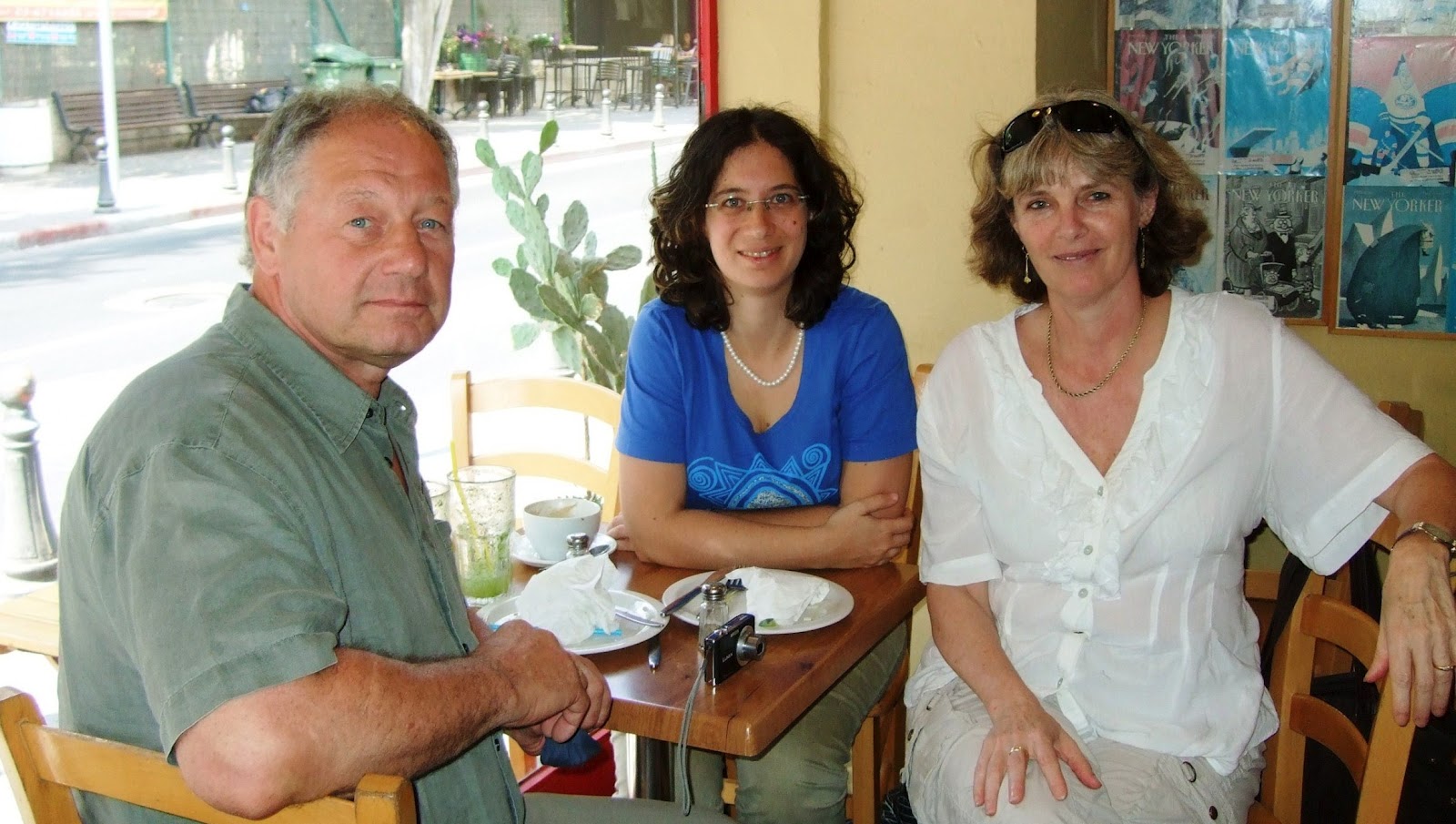
Update of the update (2/9/2012): Some time ago, Mr. Manuel Biedermann wrote me to let me know that he will be visiting some relatives in Israel, and will be happy to meet me and return the card I sent him. So I met him and his Israeli host Susi (who is related to Charlotte Remde) at a nice café in the German Colony (how fitting!), and while he actually forgot the card back home, that wasn't really what was important; it was still a form of closure, and it was just great to think that this sort of connection could come out of a piece of paper that I picked up at a book store one time. Here are the three of us:

עדכון לעדכון (2/9/2012): לפני זמן מה, מר מנואל בידרמן כתב לי ומסר שהוא עומד לבקר כמה קרובי משפחה בישראל, ושישמח לפגוש אותי ולהחזיר את הגלויה ששלחתי אליו. אז פגשתי אותו ואת המארחת שלו, סוזי (שהיא קרובת משפחה של שרלוטה רמדה) בבית קפה חביב במושבה הגרמנית (כמה הולם!), ואמנם הוא בסוף שכח את הגלויה בבית, זה לא היה באמת חשוב; עדיין הייתה שם סגירת מעגל כלשהי, ופשוט נהדר לחשוב איך שקשרים שכאלה יכולים לצמוח בעקבות חתיכת נייר שמצאתי פעם בחנות ספרים. הנה שלושתנו:

Sunday, April 10, 2011

The Awful German Language - השפה הגרמנית האיומה

Hey, new post.

הי, פוסט חדש.

Sometimes I have an organised plan - or at least semi-organised (I'm not a very organised sort of person) - about what my next updates would be, and then I suddenly run into something that works associatively with the last post, and decide to use that instead.

לפעמים יש לי תכנית מסודרת, או מסודרת-למחצה בכל אופן (אני לא בנאדם מסודר במיוחד), מה יהיו העדכונים הבאים - ואז אני נתקלת במשהו שמסתדר לי אסוציאטיבית עם הרשומה האחרונה, ומחליטה להעלות אותו במקום.

Which is what happened with this postcard - I was totally going to put here some of the Brown family postcards (you know, to sort of continue that Chicago postcard), but then I ran into this card in my favourite used book store, and I had to buy it and upload it here, because it is also from Berlin, and it dovetails nicely into the story from the previous post.

זה מה שקרה עם הגלויה הזו - לגמרי התכוונתי להעלות את הגלויות של משפחת בראון (נו, במעין המשך לגלויה משיקגו), אבל אז נתקלתי בגלויה הזו בחנות הספרים המשומשים החביבה עליי, והייתי חייבת לקנות אותה ולהעלות אותה כאן, כי גם היא מברלין, ומשתלבת כ"כ יפה בסיפור מהרשומה הקודמת.

Front:
צד קדמי:

So first of all, this is in Berlin - like the last card. One of the things I liked about this picture (apart from the grey, almost industrial atmosphere, so different from what you usually see in postcards) is the bombed church spire. At the time I thought that maybe they didn't get the chance to fix it since the war; but when I started researching a little about the places featured here, I found the explanation: the church was left that way on purpose, as a sort of memorial, and new structures were built next to it for the chapel and belfry (these are the two dark polygonal structures you can see in the picture to the right and left of the church spire).

אז קודם כל, זה בברלין - כמו הגלויה הקודמת. אחד הדברים שאהבתי בתמונה (חוץ מהאווירה האפרפרה, כמעט כמו של אזור תעשייה, שכל כך מנוגדת למה שמוצאים בגלויות בדרך כלל) הוא מגדל הכנסיה המופצץ. בזמנו, חשבתי שאולי לא הספיקו לתקן אותו מאז המלחמה; אבל כשהתחלתי לחקור קצת על המקומות המתוארים כאן, מצאתי את ההסבר: השאירו את הכנסיה כך בכוונה, כמעין אנדרטה, ולידה הקימו מבנים חדשים לאולם התפילה ולמגדל הפעמונים (אלה שני המבנים הרב-צלעיים הכהים שאפשר לראות בתמונה מימין ומשמאל לכנסיה).

Looking online, I  found a modern view of the place, from the exact same angle (I prefer to link rather than embed, since it's a stock photo), which is a great way to see what changed between then and now. But I also looked for that spot on Google maps, and that's where it gets interesting - if you look at the map below, you will notice this is right next door to 162 Kantsraße, where Remde's St Pauli used to be. Cool.

כשחיפשתי באינטרנט מצאתי תמונה עדכנית של המקום, מאותה זווית בדיוק (אני מעדיפה לקשר ולא להטמיע את התמונה, כי היא לשימוש מסחרי), וזו דרך טובה לראות מה השתנה בין אז לעכשיו. אבל אז גם חיפשתי את האזור בגוגל מפות, וכאן זה נעשה מעניין - אם תסתכלו במפה שלהלן, תוכלו לראות שזה ממש ליד קאנטשטראסה 162, לשעבר מקום משכנו של מועדון Remde's St Pauli. מגניב.


But beyond all this stuff, what I liked the best about this postcard - as often happens - is the message on the back. It has a great combination of funny and historical, plus that thing about people writing to their workplaces which always interests me (and has now become a tag).

אבל מעבר לכל זה, מה שהכי אהבתי בגלויה הוא בכלל המסר בצד האחורי. יש בו שילוב מצוין של המשעשע וההיסטורי, וגם הקטע הזה של אנשים שכותבים למקום העבודה שלהם, שתמיד מעניין אותי (ושעכשיו הפך גם לתגית).

Back:
צד אחורי:


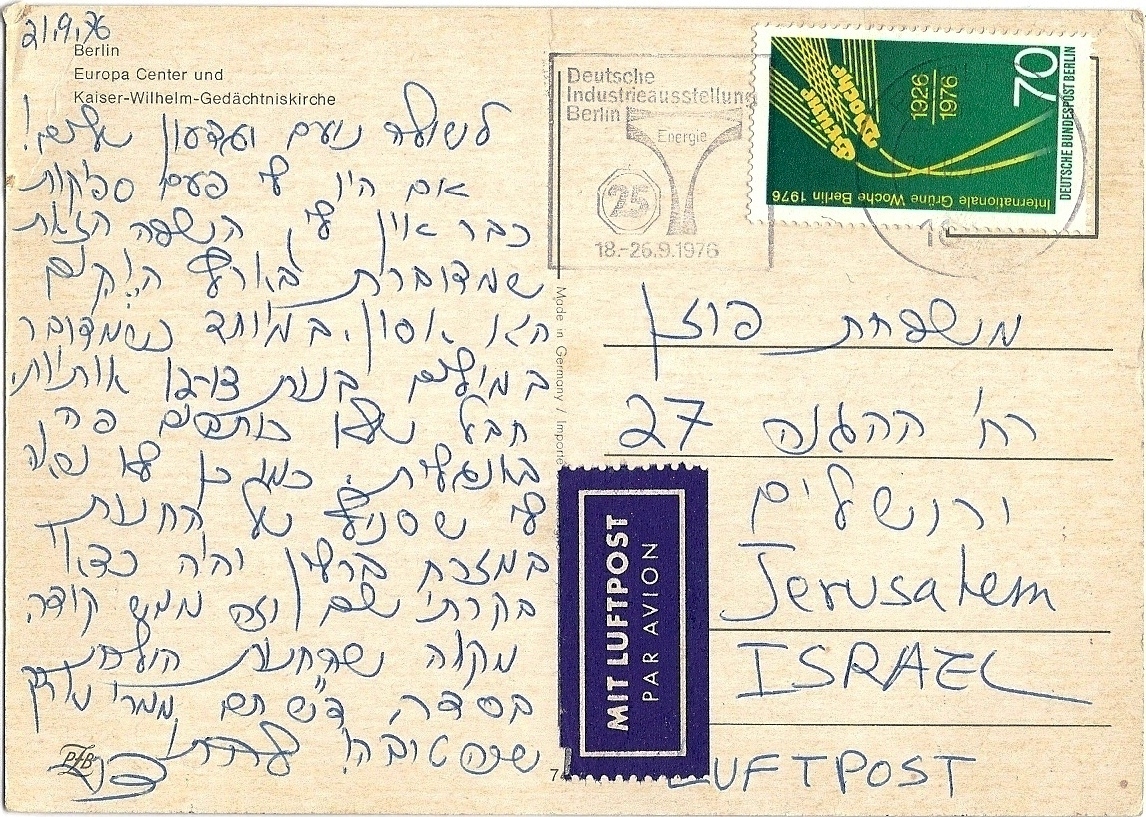
לשולה נועם וגדעון שלום!
אם היו לי פעם ספיקות [כך במקור] כבר אין לי, השפה הזאת שמדוברת בארץ היֶקִים היא אסון. במיוחד כשמדובר במילים בנות 12-13 אותיות. חבל שלא כותבים פה באנגלית. כמו כן לא נראה לי שסניף של החנות במזרח ברלין יהיה כדאי, בקרתי שם וזה ממש קודר.
מקווה שהחנות הולכת בסדר, ד"ש חם ממרי ואריק
שנה טובה!
להת', צור[?]
Hello Shula, Noam and Gideon!
If I ever had any doubtes [sic] I don't anymore, this language spoken in the land of yekkes is a disaster. Especially when it's words of 12-13 letters. Too bad they don't write in English here. In addition, I don't think that a branch of the store in East Berlin would be a good idea, I visited there and it's very bleak.
I hope the store is going alright, Mary and Erik send their warmest regards
Happy new year!
See ya, Tzur[?]

...And hence the title - because when I read his complaints about German I couldn't help but think of the famous Mark Twain piece.

...ומכאן הכותרת - כי כשקראתי איך הוא מתלונן על גרמנית לא יכלתי שלא לחשוב על הקטע המפורסם של מארק טווין.

I gotta admit that the thing about writing your workplace is not that outstanding here, since it seems he's the manager, and is writing partly on business, but the fact that he's writing from the 1976 Deutsche Industrueausstellung - German Industry Exhibition - makes up for it. Can't really tell you why I feel it makes up for it (couldn't even find much about this specific exhibition on Google), it just seems cool. Maybe because the word Industrieausstellung has 20 letters in it, which mashes quite well with the exasperation the writer expressed with the German language. What can I say, I'm a language nerd, I like odd stuff like that.

אני חייבת להודות שזה שהוא כותב למקום העבודה לא כ"כ יוצא דופן כאן, כי עושה רושם שהוא המנהל, והוא כותב בין השאר בענייני עבודה, אבל מצד שני הוא כותב מה-Deutsche Industrueausstellung - תערוכת התעשייה הגרמנית - של 1976, וזה סוג של פיצוי. אני לא ממש בטוחה למה אני מרגישה שזה פיצוי (אפילו לא הצלחתי למצוא הרבה על התערוכה הספציפית הזו בגוגל), אבל זה פשוט מגניב בעיניי. אולי מפני שבמלה Industrieausstellung יש 20 אותיות, וזה מתחבר יפה עם התסכול של הכותב מהשפה הגרמנית. מה לעשות, אני חנונית שאוהבת שפות, דברים מוזרים כאלה מוצאים חן בעיניי.

As for the historical aspect, the move from the humourous tone of the language complaint to the description of why it's probably not a good idea to open a branch of whatever store it is in East Berlin is quite abrupt (warning: TV Tropes link, could steal hours of your time without notice!).
Like with the previous post, a lot of the images I have about this are based on popular culture. I wasn't there. I was pretty young when the wall came down, so can't even say I directly remember it, and this was a huge event, unlike the mundane details of everyday life under the harsh Soviet regime. So all I have is the images from movies and such - and all these mental pictures are tinged with brown and grey. Perhaps not all movies about East Berlin are, like The Lives of Others, about the fear and oppression and people's almost hopeless attempts to subvert the regime,or at least to make it out, but even the more lighthearted movies, like Goodbye Lenin [by the way, apparently the whole thing is on YouTube now; you should watch it, if you haven't, it's good], have a lot of sadness in them.

מבחינת עניינים היסטוריים, בין הטון ההומוריסטי של התלונה על בעיות השפה לתיאור של למה כנראה לא כדאי לפתוח סניף של החנות במזרח ברלין יש מעבר חד למדי (זהירות: קישור לאתר TV Tropes, שעשוי לגזול שעות מזמנכם בלי שתשימו לב!).
כמו במקרה של הרשומה הקודמת, הרבה מהדימויים שיש לי בעניין הזה נובעים מהתרבות הפופולרית. לא הייתי שם. הייתי די צעירה כשנפלה חומת ברלין, אז אני אפילו לא יכולה לומר שאני זוכרת את זה במישרין - ומדובר על אירוע עם חשיבות עצומה, לעומת כל הפרטים היומיומיים של החיים תחת קשיי השלטון הסובייטי. אז כל מה שיש לי זה דימויים מסרטים וכיו"ב - וכל התמונות המנטליות האלה אפופות בגווני אפור וחום. אולי לא כל הסרטים על מזרח ברלין עוסקים, כמו חיים של אחרים, בפחד ובדיכוי ובנסיונות הכמעט נואשים של אנשים לחתור תחת המשטר, או לפחות לברוח משם, אבל אפילו בסרטים הקלילים יותר, כמו להתראות לנין, [אגב, מסתבר שהוא הועלה בשלמותו ליוטיוב עכשיו; אם לא צפיתם בו, הוא מומלץ מאוד], יש לא מעט עצבות.

And in this postcard, I think I can see it too, in the short and rather matter-of-fact description of this guy's visit to the GDR. I don't know what he imagined before he went to Germany, I don't know what sort of business options he and the rest of the store workers discussed, but eventually, it all came down to one conclusion: 'I don't think that a branch of the store in East Berlin would be a good idea, I visited there and it's very bleak'. And it's not like mid-70s Israel was such a cheery place - this was written only a few years after the big trauma of the Yom Kippur War, after all - and still, East Berlin was bleak. Very bleak, even.

ונדמה לי שבגלויה אפשר להבחין באותה עצבות, התיאור הקצר והענייני למדי של הביקור ב-DDR. אני לא יודעת מה הוא דמיין לפני שנסע לגרמניה, אני לא יודעת על אילו אופציות עסקיות הוא שוחח עם שאר עובדי החנות, אבל בסופו של דבר הכל הסתכם במסקנה אחת: 'לא נראה לי שסניף של החנות במזרח ברלין יהיה כדאי, בקרתי שם וזה ממש קודר'. וזה לא שישראל של אמצע שנות השבעים היתה כזה מקום עליז ושמח - סך הכל הגלויה הזו נכתבה שנים ספורות אחרי הטראומה הגדולה של מלחמת יום כיפור - ובכל זאת, במזרח ברלין היה קודר. ממש קודר, אפילו.

But it's a shame to finish on such a depressing note. Like everything in life, this bleakness does not stand on its own. It's surrounded by other things - by joking about the difficult language in the 'land of yekkes', by the warm regards from Mary and Erik, by business matters, by the lovely design of the stamp for 'International Green Day' (Internationale Grüne Woche; this logo design, by the way, remains to this day)... like the ruined church spire surrounded by its newer counterparts, by regular buildings and roads and people doing their everyday thing, like the blue sky over the yellowish-brown city view in the postcard. And there's a beauty in it.

אבל חבל לגמור את הרשומה במשהו כ"כ מדכא. כמו כל דבר בחיים, הקדרות הזו לא עומדת בפני עצמה. היא מוקפת בדברים אחרים - בהתבדחות על קשיי השפה ב'ארץ היקים', בד"ש חם ממרי ואריק, בענייני עסקים, בעיצוב החביב של בול 'השבוע הירוק הבינלאומי' (Internationale Grüne Woche; העיצוב הזה, אגב, נשמר בסמל גם כיום)... כמו צריח הכנסיה ההרוס, שמוקף במקביליו החדשים, בבניינים רגילים, בכבישים, בבני אדם שעסוקים בענייני היומיום שלהם,כמו השמיים התכולים מעל הנוף החום-צהבהב בגלויה. יש בזה יופי.

Tuesday, January 11, 2011

A Night Without Morals - לילה ללא מוסר

פוסט ראשון ל-2011, וחשבתי שראוי להתחיל בצלצלי תרועה. אז הנה משהו מעניין; זו לא גלויה, או תמונה, כמו רוב מה שיש לי, אלא סוג של פלייר פרסומי, או כרטיס, ממועדון לילה במערב ברלין. ויש פה גם סיפור מעניין למדי.

First post of 2011, and I thought we should start with a bang. So here is something interesting. It's not a postcard, or a photo, like most of the things I have, but a kind of commercial flier, or ticket, from a West Berlin nightclub. And there's quite an interesting story to it, too.

אבל את הסיפור לא ידעתי, כשקניתי את הדבר הזה. סתם חשבתי שזה מגניב. הנה, תסתכלו:

I didn't know the story when I bought it, though. I just thought it was cool. Take a look at this thing:

צד קדמי:
Front:


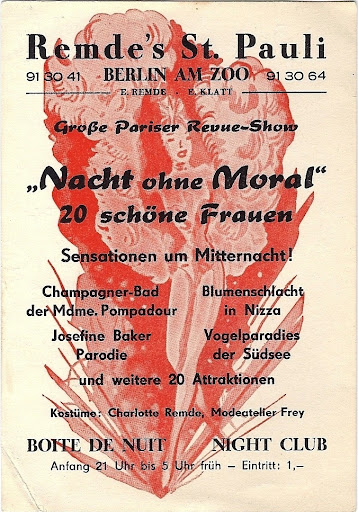
יאללה מסיבה!
בעזרת גוגל תרגום הצלחתי להבין מה מפורסם כאן: מופע בסגנון פריסאי בשם Nacht ohne Moral - 'לילה ללא מוסר' - מה שכבר נשמע, אממ, מעניין, אפילו לפני שמבטיחים שם '20 בחורות יפות', 'סנסציות בחצות', ואטרקציות כמו 'אמבט השמפניה של מאדאם פומפדור', 'קרב הפרחים בניס' (שקשור לאירוע אמיתי בקרנבל של ניס, דרך אגב), 'פרודיה על ג'וזפין בייקר' ו'ציפורי גן עדן של הים הדרומי' (ועוד 20 אטרקציות אחרות!). אפשר כבר לקבל מושג על איזה מין סוג של אירוע - ושל מקום - זה היה, ובעזרת קלישאות קולנועיות על מערב ברלין בתקופת תחילת המלחמה הקרה, התמונה מקבלת גם נפח: שמפניה ומרטיני ועשן סיגריות, ומרגלים כמובן. אפשר לדמיין את זה, לא? מרגלים לבושי טוקסידו שעושים חיים אבל לא שוכחים להעביר מבט חשדני על שאר החדר ולהחזיק אקדח בכיס נסתר; או מרגלים במעיל ארוך ומגבעת, יושבים בפינה אפלה ומעשנים בשרשרת, משרבטים משהו לעצמם וממלמלים בזעף מתחת לשפם המזויף בזמן שהם מחכים למרגלות יפהפיות שמדברות בלחישות צרודות ומסתוריות. כך כך קל לדמיין את כל זה; ראינו את זה כבר באינספור סרטים. ולכן כל כך התלהבתי כשהפכתי את הכרטיס (אני לא לגמרי בטוחה שזה כרטיס, אבל כתוב למטה 'כניסה לאחד', אז זה נראה סביר) וראיתי את השרבוטים מאחור. זה מתאים לתמונה הזו בדיוק.
[דרך אגב, אני עומדת לעשות משהו שלא עשיתי די מזמן, ולשים את כל הפרטים שמצאתי על המועדון - ועוד כמה דברים על ג'וזפין בייקר - בסוף הפוסט, אחרי ג'אמפ-קאט. אני חושבת שזה מרתק, אבל אם אתם רוצים לדבוק בסיפור המרגלים הדמיוני, אתם יכולים להתעלם מכל הקטע על מה שקרה באמת.]

Heyo, party time!
With the help of Google Translate, I figured out what it's advertising: a Parisian revue called Nacht ohne Moral - 'A Night Without Morals' - which already sounds, umm, interesting, even before it goes on to promise '20 pretty ladies', 'sensations at midnight', and attractions such as 'the champagne bath of Madame Pompadour', 'Flower Battle in Nice' (this is related to an actual event in the carnival in Nice, by the way), 'Josephine Baker parody' and 'birds of paradise of the South Sea' (and 20 other attractions!). Already, you get a picture of the kind of event, and the kind of place, this must have been - and with the help of some movie clichés about early-cold-war-era West Berlin, this picture gets fleshed out with champagne and martinis and cigarette smoke, and of course, spies. You can imagine it, can't you? Spies in tuxedos, having a grand old time, but keeping a watchful eye on the room and a pistol in a secret pocket; or spies in trenchcoats and fedoras, chain-smoking in a dark corner, scribbling something and muttering under their fake moustache as they wait for gorgeous lady-spies that speak in mysterious, hoarse whispers. It's so easy to imagine it; we've seen it in countless movies. Which is why I got all excited when I turned over the ticket (I'm not sure it actually was a ticket, but it does say 'admission: 1' at the bottom, so it seems likely) and saw the scribbles on the back - they fit into this image perfectly.
[By the way, I'm going to do something I haven't done in a long while, and put all the details I found about the club - plus some stuff about Josephine Baker - at the end of the post, after a jump cut. I think it's fascinating, but if you want to stick to the imaginary spy story, go ahead and ignore all the real-life stuff.]

צד אחורי:
Back:


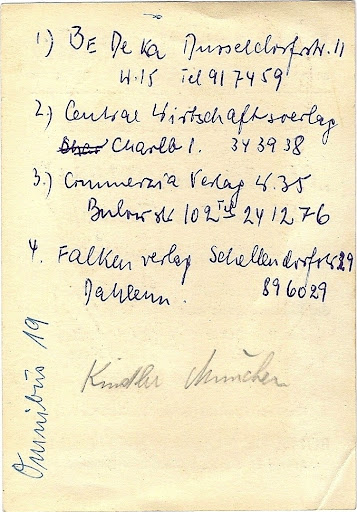
אז בעצם יש כאן שלושה דברים נפרדים - או בכל אופן, יש שלושה סגנונות של כתב יד ושלושה כלי כתיבה שונים. בעט כחול כהה יש רשימה של ארבעה מקומות ומספרי הטלפון שלהם; המלה verlag, שעל פי וויקיפדיה פירושה 'הוצאה לאור', חוזרת כמה פעמים (אולי יש כאן סופר מתחיל שמנסה למצוא מו"ל לכתב היד שלו?), ובפריטים מס' 1 ו-3 יש גם משהו שנראה כמו ציון שעה (4.15 ו-4.35, בהתאמה - אולי פגישות עם נציג ההוצאה?). למרבה הצער, לא הצלחתי למצוא אף אחד מהשמות האלה בחיפוש גוגל. בצד שמאל, בעט כחול בהיר יותר, ובכתב יד מחודד ואלגנטי קצת יותר, כתוב Omnibus 19, קו 19 באוטובוס, מן הסתם. ולמטה, בעפרון, שם של מישהו, כנראה (די קשה לי לקרוא את הכתב הזה).

Right, so we have three different things, basically - three different handwriting styles, and three different writing instruments, anyway. In a dark blue pen there's a list of four places and their phone numbers; the word verlag, which according to Wikipedia means 'publisher', recurs a few times (maybe we have a beginning author, trying to find someone to publish his manuscript?), and in items 1 and 3 there is also something that looks like a time (4.15 and 4.35, respectively - maybe meeting a representative of the publisher?). Unfortunately, I couldn't find any of those names on Google. On the left, in a lighter blue pen and a slightly more pointy and elegant handwriting, it says Omnibus 19, which is of course bus #19. And at the bottom, in pencil, something that looks like somebody's name (it's hard for me to read this handwriting).

כמובן שכל זה בהחלט יכול להיות חסר משמעות. זאת אומרת, זה בהחלט יומיומי למדי. מישהו היה צריך לרשום כמה דברים, לקח פיסת נייר ורשם אותם מאחורה; אחר כך נוספו עוד כמה רשימות לאותה פיסת נייר שימושית. פשוט מאוד.
אבל כמו שבזכות הקלישאות הקולנועיות קל מאוד לדמיין את מועדון הלילה האפלולי שאפוף בעשן סיגריות ואווירת שחיתות ושורץ מרגלים, כך גם קל לדמיין שיש מאחורי זה כל מיני ענייני ריגול. אולי זה צופן. אולי השמות של חברות הוצאה לאור הן רק כיסוי למשהו אחר, והשם בתחתית הדף הוא שם-המרגל המזויף של מישהו, וקו 19 הוא חלק מתכנית מפגש מסובכת ('תעלה על האוטובוס ברחוב X, וסע שלוש תחנות. אני אהיה בצד השני של הרחוב. אל תיצור קשר עין, פשוט לך אחריי'). אולי יש שלושה סגנונות כתב יד כי הכותב התאמן בזיוף! אפשר לדמיין כאן כל מיני עלילות, ברגע שמתחילים את קו המחשבה הזה.

Of course, this could all be meaningless. I mean, it's really quite mundane. Someone needed to write down some info, grabbed a piece of paper, and wrote on the back; then later, other notes were made on the same handy piece of paper. So very simple.
But just like all the movie clichés make it easy to imagine the dark, smoky nightclub teeming with debauchery and spies, it's also easy to imagine that there is some spy business behind this. Maybe it's coded. Maybe the names of publishing firms are just a cover for something else, and the name at the bottom is somebody's fake spy name, and bus #19 is part of a complicated meeting plan ('Take the bus at X Street, and travel three stops. I will be across the street. Don't make eye contact, just follow me'). Maybe there are three different handwriting styles because the guy was practising his forgery skills! There are all sorts of plots that can be imagined here, once you take this line of thought.

וכאן אפשר היה להניח לעניין. אבל אני נהנית ממחקרי-גוגל הקטנים שלי, כשיוצא לי לעשות אותם, אז אם מעניינים אתכם קצת פרטים אמיתיים על המקום ניתן למצוא אותם אחרי הג'אמפ-קאט.

And this could be where we leave it. But I like doing this little Google-based research, when I can, so if you're interested in some real details about the place, you can find them under the jump.