Hello readers! - !שלום, קוראים

What is this? Read the introduction - מה זה הדבר הזה? הסבר בהקדמה
Showing posts with label USA. Show all posts

Saturday, August 3, 2013

Tallman - טולמן

Sometimes I think to myself that I should do a quick blog post - pick one of the old pictures I bought in a US antique store, try to do some research about whatever's on there (I probably won't find much, because it's so old, right?) and post. And then I get wrapped up in this research, whether it's looking over dozens of portraits to try and determine, by the subject's clothes, when the picture was taken, or whether it's about finding some actual relevant information and trying to dig as deep as my limited resources allow...

לפעמים אני חושבת לעצמי שכדאי שאכתוב רשומה זריזה לבלוג - שאבחר אחת מהתמונות הישנות שקניתי בחנות עתיקות בארה"ב, אנסה לחקור קצת על מה שיש שם (ובטח לא אמצא הרבה, כי היא כ"כ ישנה, נכון?) ואפרסם את הרשומה. ואז אני נסחפת במחקרים שלי, לפעמים עוברת על עשרות פורטרטים כדי לנסות ולהבין, לפי הבגדים של המצולם, מתי התמונה צולמה, ולפעמים אני מוצאת מידע שהוא אשכרה רלוונטי ומנסה לחפור עמוק ככל שהמקורות המוגבלים שלי מאפשרים לי.

And the latter is the case here. See, the only reason I bought this picture in the first place was because the woman seems to be wearing a punk-y studded choker, which looks so out of place and anachronistic in that picture. And I thought that was really cool. I mean, look at her: she seems like a really pleasant, buttoned-up sort of lady. There's something about her face that I really like; it might not be especially beautiful, with her wide jaw and somewhat faded eyebrows, but she feels sensible, and nice. It wasn't common to smile in photographs, back then, but her expression is pretty close to a smile, and I find that lovely.
And then there's that choker, right out of some picture from the 1970s with a spiky-haired chick flipping off the Pigs. It's so odd.

וכאן מדובר על המקרה השני. תשמעו, הסיבה היחידה שקניתי את התמונה הזו מלכתחילה היא כי נראה שהאשה המצולמת לובשת מין צ'וקר פאנקיסטי עם ניטים, שנראה לחלוטין אנכרוניסטי ולא שייך לתמונה. זאת אומרת, תסתכלו עליה: היא נראית כמו גברת נעימה בהחלט, מכופתרת כזו. יש משהו בפנים שלה שאני ממש אוהבת; אולי הם לא בדיוק יפים, עם הלסת הרחבה שלה והגבות המחוקות במקצת, אבל אני מרגישה שהיא אשה חביבה, עם ראש על הכתפיים. לא היה נפוץ לחייך בתמונות, בזמנו, אבל ההבעה שלה די קרובה לחיוך, וזה מקסים בעיניי.
ואז הצ'וקר הזה, ישר מאיזו תמונה משנות ה-70 עם בחורה בשיער קוצים שעושה תנועה מגונה למנאייקים. זה כל כך מוזר.


Is there any explanation for this? I'm not exactly sure, because (not too surprisingly, I must say) I couldn't find  much about this nice lady. Unfortunately, I can't see much of her clothes (lace collar, lots of buttons along the front, interesting brooch, and perhaps striped fabric, although it might just be a defect in the photograph), so most of the resources for dating old photos by clothes didn't help me much - but her hair style seems to fit the fashion for curly/frizzy bangs that was fashionable around 1880s-1890s (hence the two tags; well, there are other reasons too, see later), although she kept it very simple, and the rest of the hair seems to just be drawn back, not held up. The ribbon/choker which drew my attention seems to also be part of the fashion of the time - I did see it mentioned that choker necklaces and jeweled collars were popular then - but I didn't find anything exactly like it in any of the pictures I've seen so far. Quite a mystery.

האם יש הסבר לעניין? אני לא לגמרי בטוחה, כי (כצפוי, למען האמת) לא מצאתי הרבה על הגברת החביבה הזו. למרבה הצער לא רואים הרבה מהבגדים שלה (צווארון תחרה, הרבה כפתורים מקדימה, סיכה מעניינת, ואריג שהוא אולי מפוספס, אם זה לא פשוט פגם בתמונה), כך שרוב מקורות המידע שמסייעים לתארך תמונות ישנות לפי הלבוש לא עזרו לי במיוחד - אבל התסרוקת שלה נראית קרובה למעין-פוני מתולתל או מקורזל שהיה אופנתי בשנות השמונים והתשעים של המאה ה-19 (ולכן תייגתי את שני העשורים; כלומר, יש עוד סיבות, ר' בהמשך), רק שהיא בחרה בסגנון פשוט מאוד, ושאר השיער נראה כאילו הוא פשוט אסוף אחורה, ולא למשל בפקעת גבוהה. הצ'וקר/סרט שעל הצוואר שלה, שמשך את תשומת הלב שלי לתמונה, כנראה היה גם הוא חלק מהאופנה באותה תקופה - ראיתי התייחסות לכך שצ'וקרים וענקים משובצים היו פופולריים אז - אבל לא ראיתי משהו ממש כמוהו באף אחת מהתמונות שמצאתי עד כה. תעלומה.

So that's the nice lady with the punk choker. But most of the information I have here is what I managed to find not about the woman in the picture (and as I said, that's not really surprising) but about the photographer: C.W. Tallman from Batavia, NY. And there was actually quite a lot of it.

אז זו הגברת החביבה עם הצ'וקר הפאנקיסטי. אבל את רוב המידע כאן הצלחתי למצוא לא על האשה המצולמת (וזה, כאמור, לא נורא מפתיע) אלא על הצלם: צ'.וו. טולמן מבאטוויה שבמדינת ניו יורק. ולמען האמת מצאתי לא מעט מידע.

To begin with, there are relatively a lot of photographs by him in various places on the web. The earliest ones, from between the late 1860s and the 1870s, seem to all be related to railroad construction projects, such as the Union Pacific Railroad's Dale Creek Bridge, The new railroad bridge in Portage NY, or a Union Pacific Railroad tunnel entrance (some of these photos have actually been taken by other photographers, and only published by Tallman, but that still counts as far as I'm concerned). Then some time after that you get a whole slew of portraits he did, like this soldier guy (link might not work properly, in which case you'll need to go to the main page here and do the search for Tallman yourselves, or to just give it up and move on because there's more interesting stuff coming up), or this grandmotherly lady (love the idea of that blog, by the way!), or the various eBay items that popped up when I searched there, a few examples of which are included below:

קודם כל, יש די הרבה תמונות שהוא צילם, בכל מיני מקודמות ברחבי הרשת. המוקדמות ביותר, בין שנות השישים לתחילת שנות השבעים של המאה ה-19, קשורות כולן, כך מסתמן, למפעלי בנייה של מסילות רכבת, כמו למשל גשר נחל דייל של חברת יוניון פסיפיק, גשר הרכבת החדש בפורטג' שבמדינת ניו-יורק, או כניסה למנהרה של חברת יוניון פסיפיק (בעצם חלק מהתמונות האלה צולמו על-ידי צלמים אחרים, וטולמן רק פירסם אותן, אבל זה בכל זאת נחשב לדעתי). קצת אחר כך עולים ברשת (גיחי) המון דיוקנאות שהוא צילם, כמו למשל החייל הזה (יכול להיות שהקישור לא יעבוד כיאות, ואז צריך ללכת לעמוד הראשי שכאן ולחפש Tallman בעצמכם, או פשוט לשכוח מהעניין ולעבור הלאה כי יש דברים יותר מעניינים בהמשך), או הגברת הסבתאית הזו (דרך אגב, אני ממש אוהבת את הרעיון של הבלוג הזה!), או כל הפריטים השונים שעלו בחיפוש שלי באיביי, שכמה דוגמאות מביניהם מצורפות להלן:

But that's not all!
Tallman is briefly mentioned in this transcript from Batavia Daily News (it only says that he took a photo of a Masonic temple; to be honest, I mostly include this because the ghost report amused me).
More transcripts from contemporary local newspapers can be found in this RootsWeb mailing list post, in reply to a query about Tallman - note especially the first quote, about Mr. Tallman successfully observing the passage of mercury. And this isn't a one-time thing. It appears that besides a photographer he was also an amateur astronomer. Check out the report titled 'The Wells Comet', here (it's the first title in the second column from the right; and by the way, my Whedonist friends might want to also check out the leftmost column, and note the second of 'Local Items', where it says that 'Seth Green has sent over 30,000 brook trout to Newport, Herkimer county'), where Tallman talks about, you guessed it, the Wells Comet.
What's the Wells Comet, you wonder? Actually, you might not wonder that, but I did, because as I said in the first paragraph of this post, I get carried away with that stuff. So I asked my friend Yoav Landsman (Hebrew link to his excellent blog) - geophysicist, space engineer, amateur astronomer and all-around awesome guy - and he helped me find it! It's mentioned on this International Comet Quarterly list of bright comets recorded throughout history (you'll have to scroll a little, or do a search for it), and also has its own page at the JPL Small-Body Database (try the orbit diagram, it's pretty neat), but is not to be confused with a different Wells Comet, first observed in 1944. While the second Wells Comet has an orbit of about five and a half years, the first one (which is the one Tallman was talking about) only passed by once, and is not predicted to return.
And with all this stargazing, it seems quite possible that he's also the one who wrote this book: Our Group of Worlds, Plain Facts in Plain Words and Figures (I kinda want to buy it, but really, $50 is a bit steep... well, if anyone happens to want to buy it for me, I won't say no). I find that very cool.

אבל זה לא הכל!
טולמן מוזכר בחטף בקטע שמועתק מהעיתון Batavia Daily News (אומרים שם רק שהוא צילם תמונה של לשכת הבונים החופשיים; למען האמת, בעצם צירפתי את זה בעיקר בגלל שהדיווח על רוח הרפאים שעשע אותי).
עוד קטעי עיתונים אפשר למצוא ברשומה מתוך רשימת דיוור של RootsWeb, שם משיבים לשאילתא של מישהו לגבי טולמן - ושימו לה במיוחד לציטוט הראשון, בו מסופר שמר טולמן הצליח לחזות במעבר כוכב חמה על פני השמש. וזה לא עניין חד פעמי. נראה שמלבד העבודה כצלם, הוא גם היה אסטרונום חובב. הנה, תציצו בידיעה שתחת הכותרת The Wells Comet כאן (זו הכותרת הראשונה בטור השני מימין; ודרך אגב, ידידיי הווידוניסטים אולי ירצו גם להציץ בטור השמאלי, בפריט השני שברשימה Local Items, שם מסופר שסת' גרין שלח יותר מ-30,000 דגי שמך [פורל] הנחלים לניופורט שבמחוז הרקימר), שבה טולמן מדבר על, ניחשתם נכון, השביט וולס.
מהו השביט וולס, אתם תוהים? טוב, אולי בעצם אתם לא, אבל אני תהֹה תהיתי, כי כמו שאמרתי בפסקת הפתיחה של הרשומה אני נורא נסחפת עם כל מיני דברים כאלה. אז שאלתי את ידידי יואב לנדסמן (הקישור הוא לבלוג המצוין שלו, שבהחלט שווה להכיר) - גאופיזיקאי, מהנדס חלל, אסטרונום חובב ואיש ממש מגניב באופן כללי - והוא עזר לי למצוא אותו! השביט מוזכר ברשימה הזו ב- International Comet Quarterly של שביטים בהירים שתועדו לאורך ההיסטוריה (צריך לגלול קצת, או לעשות חיפוש בדף), ויש לו גם עמוד משלו ב-JPL Small-Body Database (אני לא מתכוונת לנסות לתרגם את השם הזה, הוא ז'רגוני מדי, אבל בכל אופן, נסו את דיאגרמת המסלול כי זה ממש חביב), אם כי אין לבלבל אותו עם שביט וולס אחר, שנצפה לראשונה ב-1944. בעוד שלשביט וולס השני יש מסלול עם מחזור של כחמש וחצי שנים, השביט הראשון (שהוא זה שעליו דיבר טולמן) חלף בסביבתנו רק פעם אחת, ולא צפוי לחזור.
ועם כל הצפייה הזו בכוכבים, נראה לי שבהחלט סביר שהוא גם מי שכתב את הספר הזה: קבוצת העולמות שלנו, עובדות פשוטות במלים פשוטות עם איורים (קצת בא לי לקנות אותו, אבל מה לעשות, חמישים דולר זה הרבה כסף... נו, אם במקרה מישהו מכם רוצה לקנות לי אותו, אני לא אגיד לא). אני חושבת שזה מאוד מגניב.


So that was our astronomy break. But wait, there's more!
The internet is really incredible. I managed to find a few things in old records that I'm really happy about.
a. The Internet Archive has several 1870s issues of 'The Philadelphia Photographer' that include some mentions of Mr. Tallman (and some letters he wrote the magazine). Mostly technical stuff.
b. Even better, it also has a copy of Gazetteer and Biographical Record of Genesee County, N.Y., 1788-1890, which includes the following short biography of Mr. Tallman. Turns out he was Batavia's first photographer! Nice.
Charles W. Tallman, the oldest photographer in Batavia, is a native of Wyoming County. He was born in 1833, and learned the rudimentary details of his art in Buffalo. His life has been devoted to this valuable and pleasant profession, and he has kept pace with its marvelous advances and improvements. Mr. Tallman located in Batavia in 1869, and has since occupied the third floor over 80 and 82 East Main street. He has the latest facilities for all kinds of photographic, stereoscopic, and portrait work, and has established a reputation, for superior work and finish. His studio is centrally located and admirably adapted for his business.

c. And possibly even better, another source has a full copy of Batavia's 1880 city directory, where, if you check out page 57, you will find not only Tallman's studio address, but also his residence.
And of course, because the internet is incredible, I could also look for these addresses on Google Street View.

אז זו הייתה אתנחתא בענייני אסטרונומיה. אבל רגע, יש עוד!
האינטרנט זה דבר מדהים. הצלחתי למצוא בכל מיני מקורות ישנים כמה דברים שממש משמחים אותי.
א. בארכיון האינטרנטי יש כמה גליונות, כולם משנות ה-70 של המאה ה-19, של המגזין The Philadelphia Photographer שכוללים כמה אזכורים של מר טולמן (וכמה מכתבים שהוא כתב להם). עניינים טכניים, בעיקר.
ב. יותר טוב - יש שם עותק של הספר Gazetteer and Biographical Record of Genesee County, N.Y., 1788-1890, ובו מצאתי את הביוגרפיה הקצרה של מר טולמן שלהלן. מסתבר שהוא היה הצלם הראשון של באטוויה! נחמד.
צ'רלס וו. טולמן, הצלם הוותיק ביותר בבאטוויה, הוא יליד מחוז וויומינג. הוא נולד ב-1833, ולמד את יסודות אמנותו בעיר באפלו. את חייו הקדיש למקצוע הנעים ורב-הערך הזה, ודאג להדביק תמיד את קצב השיפורים והפיתוחים המופלאים החלים בו. מר טולמן התיישב בבאטוויה בשנת 1869, ומאז הריהו תופס את הקומה השלישית בבניין שבמס' 80 ו-82 ברחוב הראשי. ברשותו האמצעים החדישים ביותר לכל מיני עבודות הצילום, הסטריאוסקופיה והדיוקן, ויש לו מוניטין מבוסס של איכות עילאית בעבודה ובגימור. הצלמניה שלו מצויה במיקום מרכזי והיא מותאמת להפליא לצרכי עסקיו.
ג. ואולי עוד יותר טוב אפילו - במקור אחר מצאתי עותק מלא של מדריך התושבים של בטאוויה מ-1880, ואם תביטו בעמ' 57 שלו תוכלו למצוא לא רק את כתובת הסטודיו של טולמן, אלא גם את כתובת הבית שלו.
וכמובן, מפני שהאינטרנט זה דבר מדהים, שאת שתי הכתובות האלה אפשר למצוא בסטריט וויו של גוגל.

Here's where his studio was, at 80-82 Main Street, where now there appears to be a steakhouse and some ugly grey building:

כאן שכן הסטודיו שלו, בבניין מס' 80-82 ברחוב הראשי. כיום נראה שיש שם מסעדת סטייקים ואיזה בניין אפור מכוער:


And that's where he lived, which now appears to be a parking lot for the Genesee County Mall (well, part of it - it's quite a large parking lot):

וכאן הוא גר. נראה שכיום זה מגרש חניה של הקניון של מחוז ג'נסי (טוב, חלק ממנו - זה מגרש חניה די גדול):


And finally, I took off to findagrave.com and found this grave - and considering all we know so far, I think it's fair to say that it is probably his.
Rest in peace, Mr. Tallman. It was nice to get to know you a little.

ולסיום, קפצתי ל-findagrave.com ומצאתי שם את המצבה הזו - ובהתחשב כל מה שאנחנו יודעים עד כה, נראה לי סביר בהחלט לומר שזה כנראה הקבר שלו.
נוח על משכבך בשלום, מר טולמן. היה נחמד להכיר אותך קצת.

~*~

Just one last thing - a little update on an old post. Remember Mysterious Maria? Well, a commenter said the language on the back might be Czech, and a translator I know helped me read it. That was pretty neat.
Also, it was quite a while ago. And I'm sure you're all tired of getting reminders that the blog has a Facebook page, but once again, people who follow said Facebook page saw this update a whole lot sooner. It's quite a useful platform for that sort of stuff.

ומשהו אחד אחרון - עדכון קטן על רשומה ישנה. זוכרים את מריה המסתורית? אז באחת התגובות נאמר שאולי השפה שם היא צ'כית, ומתרגם שאני מכירה עזר לי לקרוא אותה. זה היה נחמד.
זה גם היה די מזמן. אני בטוחה שלכולכם נמאס כבר מהתזכורות על זה שלבלוג יש עמוד בפייסבוק, אבל שוב, האנשים שעוקבים אחר עמוד הפייסבוק הנ"ל ראו את העדכון הזה הרבה קודם. זו פלטפורמה די נוחה לעניינים כאלה.

Saturday, January 19, 2013

Brother Kapp - האח קאפ

The nice thing about antique stores in the US is that you can find there postcards and photos which are really old and really cool (not that I can't find any in Israel, and this for example is one I like a lot, but usually it's rather hard to find postcards from before the sixties or so, while in the States I've seen a whole lot which dated to the start of the century). So unsurprisingly, in my latest Stateside visit I made sure to go through several good antique stores, and hunt for all sorts of postcards and photos - and I think this gentleman might be my favourite find.

מה שנחמד בחנויות עתיקות בארה"ב זה שאפשר למצוא בהן גלויות ותמונות ישנות ממש ומגניבות (לא שבארץ אין בכלל, זו למשל דוגמא שאני מאוד אוהבת, אבל בדרך כלל לא מוצאים גלויות מלפני שנות השישים בערך, ובארה"ב כבר ראיתי המון שהן מתחילת המאה ממש). אז כמובן שגם בביקור האחרון שלי דאגתי לעבור בכמה חנויות עתיקות מוצלחות, ולדוג כל מיני גלויות ותמונות - ואני חושבת שהאדון הזה הוא המציאה החביבה עליי.

I mean, just look at him. You do not mess with this guy.

באמת, תסתכלו עליו. זה בן אדם שלא מתעסקים איתו.


Not saying he isn't a polite, affable man, but he just demands respect. Everything from the way he stands, through the polished bald head proudly on display, to that awe-inspiring moustache - Brother Kapp just exudes a sort of powerful respectability. I absolutely love this picture.

אני לא אומרת שהוא לא אדם מנומס וחביב, אבל הוא פשוט מישהו שחייבים לכבד. בכל פרט - מהיציבה שלו, דרך הקרחת המבהיקה המוצגת לראווה, ועד לשפם האימתני - האח קאפ משדר שילוב של מהוגנות ועוצמה. זו פשוט תמונה נהדרת בעיניי.

Ah, but why 'Brother Kapp'? Well, the 'brother' part is simple - if you click to magnify the picture you will see a lapel pin with such a distinct shape that even in this old blurry picture I could recognise the square-and-compass emblem of the Freemason fraternity. Unfortunately I have no way to identify any of the other pins (somebody get me a magic Enhance Button [warning, TV Tropes link] already!). 'Kapp' is also rather easy,since someone, probably at the antique store, wrote the name Jon Kapp (possibly Jonn, I'm not sure) on the back. Here's a close-up of the writing, maybe you can figure it out better.

אה, למה 'האח קאפ'? טוב, 'האח' זה פשוט - אם תקליקו על התמונה ותגדילו אותה, תוכלו לראות סיכת דש עם צורה כ"כ אופיינית שאפילו בתמונה ישנה ומטושטשת כזו יכלתי לזהות את סמל המחוגה ומד-הזווית של אחוות הבונים החופשיים. לצערי אין לי שום דרך לזהות את הסיכות האחרות שלו (שמישהו ישיג לי כבר את כפתור-הקסם שמחדד תמונות! [זהירות, לינק לטי-וי טרופס]). וגם השם 'קאפ' היה יחסית קל, פשוט כי בצד האחורי של התמונה מישהו, ככל הנראה בחנות העתיקות, כתב את השם Jon Kapp (אולי Jonn, אני לא בטוחה). הנה הכיתוב בהגדלה, אולי אתם תצליחו להבין יותר טוב ממני.


However, that didn't help me too much. Unlike the luck I had with the Keogans, when I found all sorts of scanned records from the Washington census, I couldn't find anything relevant online from Bozeman MT (in fact, I'm not even sure this guy really is from Bozeman, maybe he just took that picture there); or more precisely, there are a few records which might possibly be relevant on ancestry.com, but I can't see them without purchasing a membership. If any of my readers happens to have a membership already (or has free access through library computers, or something like that), and feels like searching for Jon Kapp for me, Godspeed.

אבל זה לא עזר לי יותר מדי. בניגוד למזל שהיה לי עם משפחת קיגן, כשמצאתי כל מיני רשומות סרוקות ממרשם התושבים של וושינגטון, לא הצלחתי למצוא ברשת משהו רלוונטי מבוזמן, מונטנה (ולמעשה, אני אפילו לא בטוחה שהוא אכן מבוזמן, יכול להיות שהוא סתם הצטלם שם); ליתר דיוק, באתר ancestry.com יש כמה רשומות שעשויות אולי להיות רלוונטיות, אבל אני לא יכולה לראות אותן בלי לעשות מנוי בתשלום. אם במקרה למישהו מהקוראים כבר יש מנוי (או גישה חופשית דרך שרתי ספרייה או משהו כזה), ובא לכם לחפש לי את ג'ון קאפ, תבוא עליכם הברכה.

What I did manage to find through free databases is pretty weak. There's a WWI draft record which includes two John Kapps, one of whom is from Lemhi, Idaho - which is not too far from Bozeman - and there are two South Dakota birth records where the father's name is John Kapp (or a variation on that, but it's obviously the same guy), which are from the wonderfully-named Minnehaha, a little bit further, but still not an awfully long way away. I suppose one or both of those might be him.

מה שהצלחתי למצוא במאגרים החינמיים הוא דל למדי. יש רשומת גיוס למלחמת העולם הראשונה שכוללת שני ג'ון קאפ, שאחד מהם הוא מלֶמְהַיי, איידהו - וזה לא רחוק במיוחד מבוזמן - ויש שתי רשומות לידה מדקוטה הדרומית שבהן שם האב הוא ג'והן קאפ (או וריאציה על השם, אבל זה בבירור אותו האיש), והן ממקום עם השם הנפלא מינֶהָאהָא, שהוא אולי רחוק קצת יותר, אבל עדיין לא מאוד. אני מניחה שאחת משתי הרשומות האלו, או שתיהן, עשויה להתייחס אליו.

Of course, it would have been easier if I had any way to date that photo, but I find that rather hard, since I know next to nothing about old fashion (or actually, fashion in general). I tried using the Victoria and Albert Museum resource, but it's rather low on men's clothes. I tried looking to see if there a specific era when pork-pie hats (like the one Mr. Kapp is holding in this photo) were especially popular, but while this little tidbit suggested the 30s, they seem to have been around for quite a long time - and as for other nuances of the outfit, such as jacket length and lapel size and the type of collar and tie... oof, it all gets very confusing to me after a while. I ended up on the Museum of the Rockies Photo Archive (a wonderful resource!) just trying to look at portraits of men from various years and trying to see if they look similar somehow. It was fun, but not very productive (I think this one is a little similar, but it's from the 1880s which feels like it'd be way too early; also, the hat is wrong).

כמובן שכל העניין היה קל יותר לו יכלתי לתארך את התמונה איכשהו, אבל זה די קשה לי, כי אני מבינה קטנה מאוד באופנה ישנה (או באופנה באופן כללי, תכל'ס). ניסיתי להשתמש במשאב התארוך של מוזיאון ויקטוריה ואלברט, אבל אין שם כ"כ מבחר של בגדי גברים. ניסיתי לחפש אם יש תקופה ספציפית שבה כובעי פורקפיי (מין מגבעת שטוחה, כמו זו שמר קאפ מחזיק בתמונה) היו פופולריים במיוחד, ואמנם המאמרצ'יק הזה כיוון אותי לשנות ה-30, אבל נראה שהם היו בסביבה לאורך די הרבה זמן - ובכל הנוגע לשאר הניואנסים של התלבושת, כמו אורך המקטורן ורוחב הדש וסוג הצווארון והעניבה... אוף, זה מתחיל כבר לבלבל אותי, אחרי זמן מה. בסופו של דבר מצאתי את ארכיון התצלומים של מוזיאון הרי הרוקי (משאב מצוין!) ושם פשוט עברתי על פורטרטים של גברים מכל מיני שנים וניסיתי לראות אם הם אולי דומים קצת. זה היה כיף, אבל לא הועיל במיוחד (אני חושבת שהתמונה הזו די דומה, אבל היא מסביבות 1880 ונדמה לי שזה כבר מוקדם מדי; חוץ מזה, הכובע לא מתאים).

I did find one cool thing - another photo taken at the Elite studio in Bozeman (had a pretty hard time looking for the place on Google). The guy even has a similar moustache! So, this is from around 1900 - mine might be from around that time, perhaps. The studio's logo is quite different, though, and I have a feeling that in my photo it's a later version, because it seems more stylised and less hand-written. Again, I'm far from an expert. Just guessing.

מה שכן, מצאתי משהו אחד מגניב - עוד תמונה שצולמה בסטודיו Elite בבוזמן (היה לי די קשה לחפש את המקום בגוגל). ואפילו יש לאיש שם שפם די דומה! ובכן, התמונה הזו היא מסביבות 1900 - יכול להיות ששלי היא מאותו הזמן בערך. אבל הלוגו של הצלמניה די שונה, ויש לי הרגשה שזה שבתמונה שלי הוא גרסא מאוחרת יותר, כי הוא נראה יותר מסוגנן ופחות כמו כתב-יד. אבל גם כאן, אני ממש לא מומחית. סתם מנחשת.

Maybe I'll write this photo archive, at some point. They might be able to help me date the picture, perhaps even find out something about Jon[n] Kapp. Might even want my photo for their archives, which would be pretty cool. I'll make sure to update here if I get any answer.

אולי אנסה לכתוב לארכיון התצלומים הזה, מתישהו. יכול להיות שהם יוכלו לעזור לי לתארך את התמונה, ואולי אפילו לגלות משהו על ג'ון קאפ. אולי הם אפילו ירצו להוסיף את התמונה שלי לארכיון שלהם, זה יהיה די מגניב. אדאג לעדכן כאן אם תתקבל מהם תשובה.

But for the time being, let us enjoy this glorious picture for what it is: Brother Kapp, standing confidently and nonchalantly, looking right at us from across the decades - and let's admit it, probably quietly disapproving. Doesn't he make you sit up a little straighter, just looking at him? Don't you imagine him sounding just a little bit like this (but maybe more old-timey)? What an awesome man. What an awesome picture.

אבל לעת עתה, הבה נהנה מהתמונה המרהיבה הזו בזכות מה שהיא: האח קאפ, עומד בבטחון עצמי ובנונשלנטיות, מסתכל ישר אלינו ממרחק העשורים שחלפו - ואם להודות על האמת, כנראה חש מורת רוח שקטה. אתם לא מיישרים קצת את הגב, כשאתם מסתכלים עליו? אתם לא מדמיינים אותו נשמע קצת ככה (אבל אולי יותר בסגנון של פעם)? איזה איש נהדר. איזו תמונה נהדרת.


Hoping to update faster this time - got a sort of election special planned, so (if I get around to it) there might actually be something here as soon as a little later this week. Stay tuned!

אני מקווה לעדכן מהר יותר, הפעם - יש לי תכנונים לעשות ספיישל בחירות, אז (אם אגיע לזה) יכול להיות שאשכרה יהיה כאן משהו כבר בהמשך השבוע הקרוב. השארו עימנו!


Update 26 Jan 2013: Sent a query to the Museum of the Rockies (via Facebook), and got an answer back pretty quickly:
Hello Yael - I forwarded your message to our photography curator and his best estimate on the date of the photo is circa 1880, based on the clothing the man is wearing. Unfortunately he does not have any other information on the Elite Photo Studio, or any leads on the name on the photo. Hope that helps you!
And as I wrote back, that is really awesome. I didn't realise this photo was so old - it's quite possibly the oldest photo I have. So, even if they couldn't find out any more info, even just this is very cool.
I also got corrected, by Tamar in the comments, about Mr. Kapp's name: she pointed out that it's quite likely 'Tom' rather than 'Jon', and I suspect that's right, I'm just terrible with cursive. So I tried a few more searches, mostly on RootsWeb; didn't come up with much for 'Tom Kapp', but Thomas Kapp was a bit better. There's a Thomas Kapp here, for example (you'll need to scroll a bit, or use the search function, but he's there), which is pretty good, although if he died in 1931 at age 69, that means he was born in 1862, and the man in the picture doesn't really look like he's in his twenties (I suppose it's possible he wore 1880s fashion after the 1880s, but that's too much speculation for me). There's also this list of other Thomas Kapps, with a few likely candidates (at least two of these people are definitely not from Montana, but of course, as I said earlier, getting his photo taken in Bozeman doesn't mean that's where he's from), but that's really as far as I can get. So the mystery is still a mystery. And Mr. Kapp is still very cool, and even more old-timey than I originally suspected.

עדכון, 26.1.2013: שלחתי שאילתא למוזיאון הרי הרוקי, ודי מהר גם קיבלתי תשובה חזרה:
שלום יעל - העברתי את המסר שלך לאוצֵר אגף הצילום שלנו, ולמיטב הבנתו אפשר להעריך את תאריך התמונה לסביבות שנות ה-80 של המאה ה-19, על פי הבגדים שהאיש לובש. למרבה הצער אין לו מידע נוסף על צלמניית Elite, או רמזים כלשהם בעניין השם שעל התמונה. מקווה שזה עוזר לך!
וכפי שעניתי להם, זה ממש מעולה. לא חשבתי שהתמונה ישנה עד כדי כך - סביר למדי שזו התמונה הכי עתיקה שיש לי. אז גם אם הם לא הצליחו למצוא שום מידע נוסף, אפילו המעט הזה מגניב מאוד.
כמו כן, תמר בתגובות תיקנה אותי לגבי השם של מר קאפ: היא ציינה שככל הנראה כתוב שם Tom ולא Jon, ונראה לי שהיא צודקת, אני פשוט די גרועה בכתב מחובר. אז ניסיתי לחפש עוד קצת, בעיקר ב-RootsWeb; השם 'טום קאפ' לא העלה הרבה, אבל 'תומאס קאפ' הצליח לי יותר. יש למשל תומס קאפ אחד כאן (צריך לגלול קצת למטה, או להשתמש בפונקציית חיפוש, אבל הוא שם), וזה לא רע, אם כי אם הוא מת ב-1931 בגיל 69 זאת אומרת שהוא נולד ב-1862, והאיש שבתמונה לא נראה כאילו הוא בשנות העשרים שלו (אני מניחה שיכול להיות שהוא לבש את אופנת שנות ה-1880 אחרי שנות ה-1880, אבל כאן כבר נכנסים ליותר מדי ספקולציות). והגעתי גם לרשימה הזו של כל מיני תומאס קאפים אחרים, שבה יש כמה מועמדים סבירים (לפחות שניים מהאנשים האלה הם בוודאות לא ממונטנה, אבל כמובן שכפי שציינתי קודם, רק מפני שהוא הצטלם בבוזמן זה לא אומר בהכרח שהוא משם), אבל לא נראה לי שאני יכולה להגיע מעבר מזה. אז התעלומה היא עדיין תעלומה. ומר קאפ עדיין מגניב מאוד, ואפילו יותר 'מפעם' מכפי שחשדתי בתחילה.

Tuesday, September 18, 2012

Absinthe and biscuits - אבסינת וביסקוויטים

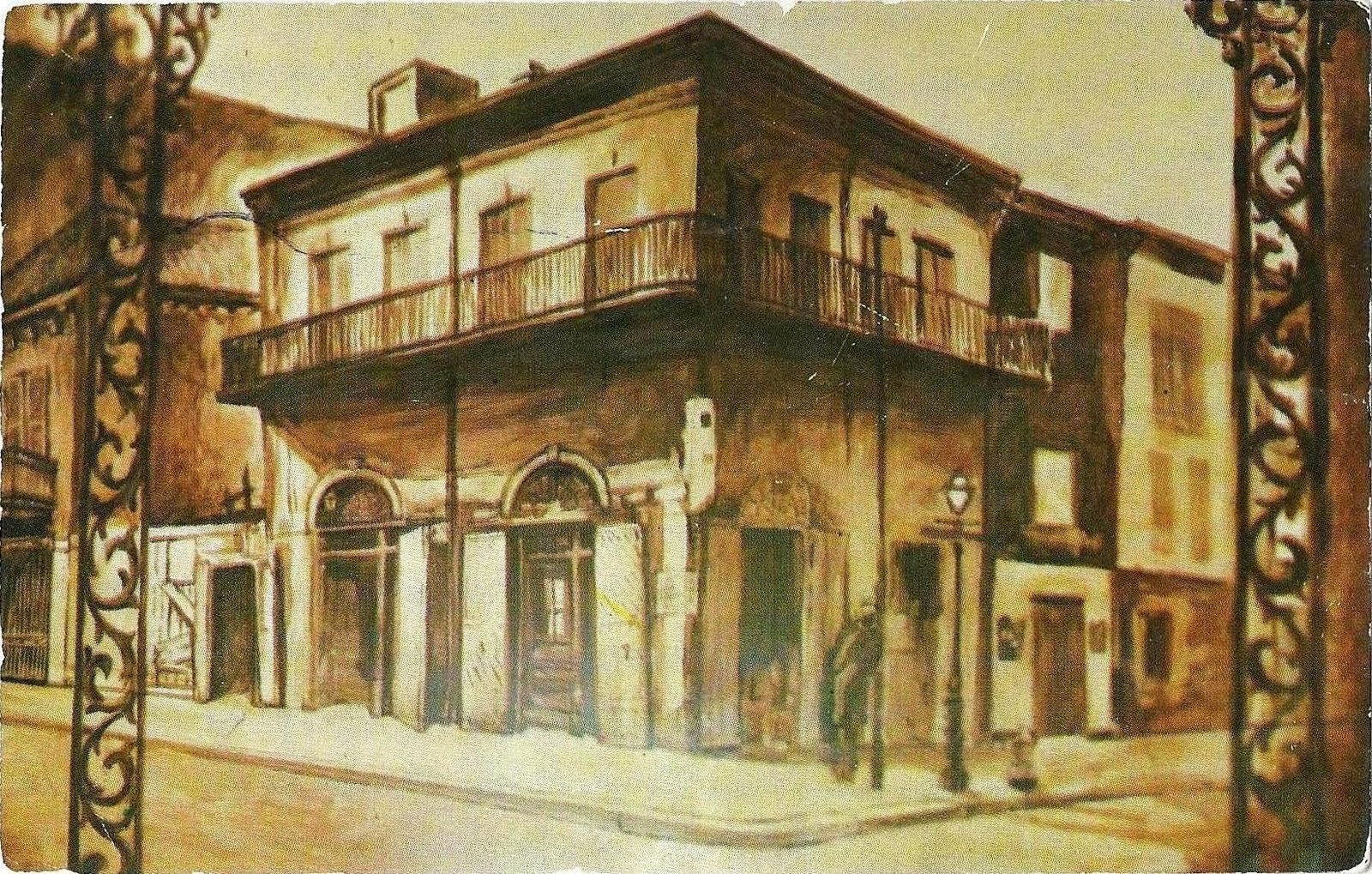
I've recently returned from a vacation in the US, but this is not the reason I chose this New York postcard (I actually chose it ages ago, but stuff - including being abroad - kept me from updating, as often happens). No, I chose it for the regular reasons: interesting picture, interesting little story in the message, and mainly one thing that sparked my interest: absinthe.

חזרתי לא מזמן מחופשה בארה"ב, אבל זו לא הסיבה שבחרתי את הגלויה הניו-יורקית הזו (למעשה, בחרתי אותה ממש מזמן, אבל היו כל מיני דברים - כולל הנסיעה לחו"ל - שבגללם לא עדכנתי, כרגיל). בחרתי אותה מהסיבות הרגילות: תמונה מעניינת, סיפור קטן ומעניין במסר הכתוב, ובעיקר בגלל דבר אחד שמשך את תשומת הלב שלי: אבסינת.

I remember some of the stories about artists and absinthe, back from when I studies some art history in highschool. And I've seen Heston Blumenthal getting a massive absinthe hangover during one of his culinary experiments. I know how alluring, and dangerous, it was - but I didn't know that in the 60s, there was an Absinthe House in New York City, and this is probably the main reason that I decided to get this card to begin with.

אני זוכרת את הסיפורים על אמנים ואבסינת, אי אז כשלמדתי תולדות האמנות בתיכון. וראיתי את הסטון בלומנטל מקבל האנגאובר נוראי מאבסינת במהלך אחד הניסויים הקולינריים שלו. אני יודעת על הקסם של המשקה הזה, והסכנה שבו - אבל לא ידעתי שבשנות ה-60 היה 'בית אבסינת' בניו יורק, וזו כנראה הסיבה העיקרית שבכלל החלטתי לקנות את הגלויה הזו.

Front:
צד קדמי:


The picture is a bit misleading, however: this is in fact not the NYC Absinthe House (which I'll get to, shortly), but the New Orleans establishment, which apparently still exists today. The picture in the website I just linked to is unmistakable. Did the New York place look like that? I suspect it didn't, but couldn't find out. I'll get to that later, as well.

מה שכן, התמונה קצת מטעה: זה בעצם לא 'בית האבסינת' בניו יורק (שאגיע אליו עוד מעט), אלא המוסד בניו אורלינס, שמסתבר שעדיין קיים כיום. התמונה באתר שבלינק היא ללא ספק אותה תמונה. האם גם המקום בניו יורק נראה כך? אני חושדת שלא, אבל לא הצלחתי לברר. גם לזה אגיע בהמשך.

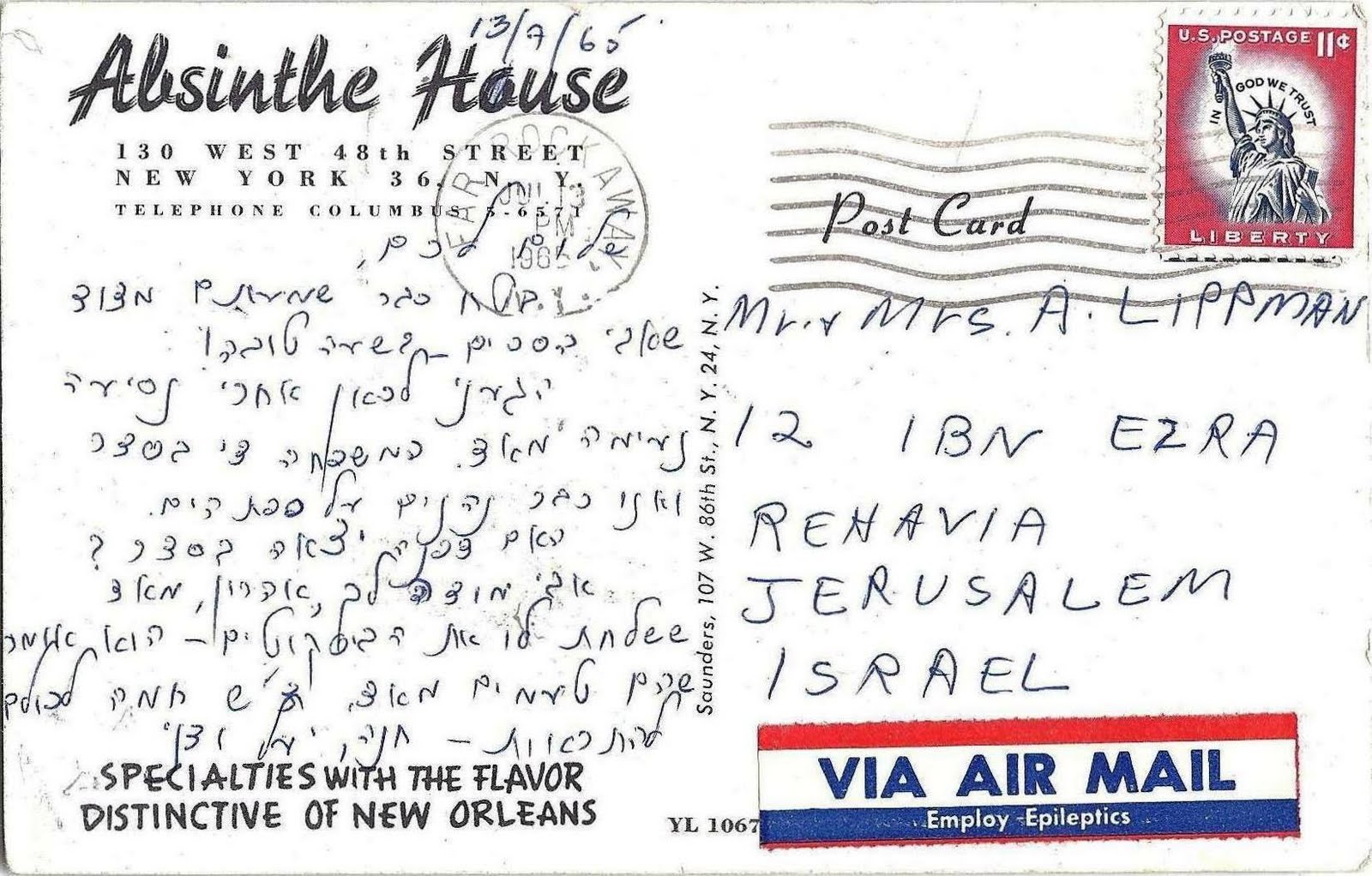
But first, the message on the back. This is where the biscuits from the post title come into the picture - as well as a little family story, most of which remainds pretty vague.

אבל קודם כל למסר שכתוב בצד האחורי. שם כבר נכנסים לתמונה גם הביסקוויטים מכותרת הפוסט - וגם סיפור משפחתי קטן, שרובו נשאר מעורפל למדי.

Back:
צד אחורי:

13/7/65
שלום לכם,
בטח כבר שמעתם מדוד שאבי הסכים - בשעה טובה!
הגענו לכאן אחרי נסיעה נעימה מאוד. המשפחה די בסדר ואנו כבר נהנים על ספת [כך במקור!] הים.
האם דפנה יצאה בסדר?
אבי מודה לך, אהרון, מאד ששלחת לו את הבסקוטים - הוא אומר שהם טעימים מאוד. ד"ש חמה לכולם
להתראות - חנה, יעל ודני
13/7/65
Hello everyone.
You probably already heard from David that Avi [/ my father (could be either in Hebrew, can't really tell from context)] agreed - congratulations!
We arrived here after a very pleasant ride. The family is quite alright, and we are already having a good time on the beech [sic!].
Did Daphna come out alright?
Avi [/ my father] thanks you, Aharon, very much for sending him the biscuits - he says they are delicious. Send a warm hello to everyone
See you - Hannah, Yael and Danny

The biscuit thing can be explained by the fact that Mr. Lippman is probably one of the Lippmans that owned the Hadar bakeries [Hebrew link! Sorry, couldn't find any English ones] in Jerusalem (their locally-famous biscuits are still being produced under the Hadar name, but from what I managed to understand, I think it's being done by another company, who bought the brand, or something like that). There's also something about shares in the Hadar Mall [Another Hebrew link, sorry again], and in case all this financial-pages talk hasn't bored you silly yet, there's a company called Lipman Electronic Engineering (or was, looks like they changed their name), and I think one of the owners might be the same Aharon Lipman/Lippman, maybe. So that's him, and those are probably the biscuits sent abroad, but that doesn't really tell me anything about Daphna, Hannah, Yael or Danny, and I couldn't really look them up. I assume they're family, or perhaps close friends - something about the tone of the writing suggests more than a casual acquaintance. And the handwriting is interesting: it's a bit crude and unpracticed, and with that misspelling in there it makes me think that the writer was either pretty young, or not a native speaker of Hebrew, but more probably the latter. There has to be a story there. I wish I knew it.

את עניין הביסקוויטים ניתן להסביר בכל שמר ליפמן הוא ככל הנראה אחד הליפמנים שהיו בעלי מגדניית הדר בירושלים (הביסקוויטים היחסית מפורסמים שלהם עדיין מיוצרים תחת השם 'הדר', אבל לפי מה שהצלחתי להבין נראה לי שחברה אחרת קנתה את המותג ומייצרת אותם עכשיו, או משהו כזה). יש גם משהו שקשור למניות בקניון הדר, ולמקרה שכל ידיעות המוספים הכלכליים האלה עוד לא שיעממו אתכם למוות, יש גם חברה בשם 'ליפמן הנדסה אלקטרונית' (טוב, הייתה, הם שינו את השם) ואני חושבת שהבעלים עשוי להיות אותו אהרון ליפמן מהגלויה, אולי. אז זה מה שיש לגביו, וכנראה שגם לגבי הביסקוויטים שנשלחו לחו"ל, אבל מכל זה לא גיליתי כלום לגבי דפנה, חנה, יעל או דני, ולא ממש הצלחתי לחפש אותם. אני משערת שהם קרובי משפחה, או חברים קרובים - יש משהו בטון של מה שנכתב שם שמעיד על יותר מהיכרות סתמית. וכתב היד די מעניין: הוא קצת פשוט, כמו של מישהו שלא מתורגל בכתיבה, וביחד עם שגיאת הכתיב שם יש לי הרגשה שהכותב היה או צעיר מאוד או לא דובר עברית כשפת אם, וסביר יותר שמדובר באפשרות השנייה. בטח יש פה סיפור. הלוואי וידעתי מהו.

As for the actual place - looking up the address quickly shows that the building that stood there back in the 60s is no longer there:

לגבי המקום עצמו - חיפוש של הכתובת מגלה שהבניין שהיה שם בשנות ה-60 כבר לא שם:


The building you're looking at, in the above Street View image, is the News Corp. Building (also known by the much less imaginative name 1211 Avenue of the Americas), built in the early 70s. I've been trying to find an earlier picture of that part of the street - hopefully one which might also show the Absinthe House - but to no avail. The closest I could get to 130 W 48th St. were this picture of a church at no. 143, and this picture of a theater (I thought at first it might be the Cort Theater at no. 138, which still stands today, but judging from the name 'Never Say Die' on the marquee, it's apparently the 48th Street Theater, further down the street at no. 157, which apparently was destroyed back in 1955 and is now a very ugly car park). Both pictures are from very early in the 20th century, anyway; nothing from the 60s. That's too bad.

הבניין שאתם רואים בתמונה שב-Street View לעיל הוא בניין ניוז קורפ (News Corp. Building, הידוע גם בשם הלא מקורי במיוחד 1211 Avenue of the Americas), שנבנה בתחילת שנות ה-70. ניסיתי למצוא תמונה מוקדמת יותר של הקטע הזה ברחוב - ואפילו קיוויתי למצוא תמונה שבה מופיע 'בית האבסינת' - אבל כל חיפושיי היו לשווא. הכי קרוב שהצלחתי להגיע לכתובת הדרושה, רח' 48 מערב מס' 130, היו התמונה הזו של כנסייה במס' 143, והתמונה הזו של אולם תיאטרון (חשבתי בהתחלה שמדובר בתיאטרון קוֹרְט במס' 138, שעדיין עומד על מכונו, אבל לפי שם המחזה שמופיע שם, Never Say Die, עולה שמדובר בתיאטרון רחוב 48, ששכן בהמשך הרחוב, מס' 157, ושנהרס ב-1955, ובמקומו עומד עכשיו חניון מכוער להפליא). בכל אופן, שתי התמונות הן ממש מתחילת המאה ה-20; אין לי כלום משנות ה-60. וזה חבל.

So out of all this long and link-heavy paragraph above, the bottom line is that I have no idea what the place really looked like. Actually, I barely know anything about it, except for the (lovely, mind you!) information in the paragraph below, taken from a New York restaurant guide from 1959 (I'm supplying a full quote - and translation - because the page I linked to has a long list of places and it takes a bit of scrolling to get to the Absinthe House, but it's a fun read for those who like that sort of stuff, or who have a time machine and are planning to drop by 1959 New York and grab some dinner):

אז מכל הפסקה הארוכה ועתירת-הלינקים הזו, מה שיצא זה שאין לי מושג איך המקום נראה באמת. למעשה, אני לא יודעת עליו כמעט שום דבר, מלבד המידע (המקסים, יש לציין) בפסקה שלהלן, מתוך מדריך מסעדות בניו יורק מ-1959 (אני מצטטת - ומתרגמת - כי בעמוד המקושר יש רשימה ארוכה של מקומות, וצריך לגלול די הרבה עד שמוצאים את 'בית האבסינת', אבל בהחלט נחמד לקרוא שם, למי שאוהבים דברים כאלה, או שיש ברשותם מכונת זמן ומתכננים לקפוץ לניו יורק של 1959 לאכול משהו):
Absinthe House, at 130 W. 48th St., gets its name from a famous old New Orleans institution, though there is no connection. It does feature New Orleans decoration and some French Creole dishes. Operated and co-hosted by Marc Reuben and his pretty wife Edith, who strikingly resembles Lauren Bacall. Favorite hangout for showfolks and newspapermen, TV executives, etc. Originally across the street, it became necessary to seek another location, so Marc financed it, as many Broadway shows are financed, with a group of 90 backers, all clients.

בית האבסינת, ברחוב 48 מערב מס' 130, קיבל את שמו מהמוסד הניו-אורלינסי הוותיק, אם כי אין ביניהם קשר. עם זאת, יש שם דקורציה בסגנון ניו-אורלינס וכמה מנות של המטבח הקריאולי-צרפתי. הבעלים והמארחים הם מארק רובן ואשתו אדית, הדומה באופן מפתיע ללורן באקול. זה מקום בילוי מועדף על אנשי תיאטרון ועיתונאים, בכירים בחברות הטלוויזיה, וכיו"ב. במקור המסעדה שכנה בצד השני של הרחוב, אבל היה צורך למצוא מקום חדש, ומארק מימן אותו באותה שיטה שבה ממומנות הרבה הצגות בברודוויי - בעזרת קבוצה של 90 משקיעים, כולם מלקוחות המקום.
And these few lines are enough to give some sort of picture of the place. Mid-sixties New York (I know some people who will get royally mad if I don't add a reference to that famous show that I don't watch), alcohol and cigarette smoke, a strange mix of buttoned-down or semi-buttoned-down businessmen and of beatnik theater-people, in a world that is just starting to change, a moment before the era of Counter Culture. I wonder if our Israeli tourists (and their biscuits) actually spent time in there, or just found the card somewhere else and used it without really thinking about it - and if they did spend time in there, I wonder what did they do, who did they see, what did they think. And just in general, how was their time in New York? Israel in the sixties was a pretty small place (in many ways), and it must have been pretty impressive to visit such a big cosmopolitan city. But maybe they were frequent fliers (and according to what they say in the card, they apparently visited family or friends in the States), and it was all routine for them. And I wonder if they drank absinthe, and if they noticed that Edith Reuben looks like Lauren Bacall, and if they whispered about it (and maybe also about the frog legs, if there were any in the French Creole menu) around the table, in Hebrew so that the people around can't understand. I wonder what they looked like, what they wore. I wonder about everything. As usual, I have no answers, and I probably never will, and as usual, it's nice to imagine the whole story out of the little piece I'm holding.
And as usual, I already have plans for the next post, but we'll see when I get to that. Until then, a happy new (Jewish) year and happy holidays to anyone celebrating, and one little necessary(?) reminder: the blog has a Facebook page. You should use it if you like using Facebook things.

והשורות הספורות האלה כבר מספיקות לצייר תמונה של המקום. ניו יורק של אמצע שנות השישים (אני מכירה כמה אנשים שיצלבו אותי אם לא אכניס כאן את הרפרנס המתבקש לסדרה המפורסמת שאני לא רואה), אלכוהול ועשן סיגריות, תערובת מוזרה של אנשי עסקים מכופתרים או מכופתרים-למחצה ושל אנשי תיאטרון ביטניקים, בעולם שבדיוק מתחיל להשתנות, רגע לפני התקופה של 'תרבות הנגד'. אני תוהה אם התיירים הישראלים שלנו (והביסקוויטים שלהם) אכן בילו בו, או שסתם מצאו גלויה במקום אחר והשתמשו בה בלי לחשוב יותר מדי - ואם בילו שם, אני תוהה מה עשו, את מי ראו, מה חשבו. ובכלל, איך היה בניו יורק? ישראל של שנות השישים הייתה מקום די קטן (בכל מיני מובנים), ובטח היה די מרשים לבקר בעיר גדולה וקוסמופוליטית שכזו. אבל אולי הם היו נוסעים מתמידים (ולפי המתואר בגלויה כנראה שהם ביקרו משפחה או חברים בארה"ב), ומבחינתם זה היה עניין שגרתי. ומעניין אם הם שתו אבסינת, ואם הם שמו לב שאדית רובן דומה ללורן באקול, ואם הם התלחשו על זה (ואולי גם על רגלי הצפרדעים, אם הייתה מנה כזו בתפריט הקריאולי-צרפתי) ליד השולחן, בעברית כדי שמי שמסביב לא יבין. מעניין איך הם נראו, ומה לבשו. הכל מעניין. כרגיל, אין לי תשובות, וכנראה שגם לא יהיו, וכרגיל, נחמד לדמיין את הסיפור מתוך הקטע הקטן שברשותי.
וכרגיל, יש לי כבר תכניות לרשומה הבאה, אבל נראה מתי אגיע אליה. עד אז, שנה טובה וחגים שמחים לכל החוגגים, וגם תזכורת קטנה ונדרשת(?): יש לבלוג עמוד פייסבוק. אתם מוזמנים להשתמש בו, אם אתם אוהבים להשתמש בדברים כאלה בפייסבוק.

Tuesday, June 7, 2011

A Book with a View - ספר עם נוף

זו תהיה רשומה קצרה, כי אין לי הרבה פרטים לחלוק. אבל אני חושבת שזה בכל זאת סיפור די נחמד.

This will be a short post, since I have very few details to share. But I think it's still a pretty nice story.

ובכן, אי שם בקיץ של השנים 2003 ו-2004 עבדתי כמדריכה במחנה קיץ בפנסילבניה, ומעוז הציוויליזציה הקרוב ביותר היה עיירה קטנה וציורית-במידה בשם הונסדייל (מקום משכנו של הקטר הראשון בארה"ב! טוב, ליתר דיוק, המקום שבו הקטר הראשון בארה"ב התגלה ככבד מדי לפסי הרכבת, ואז הושאר במחסן, אבל הי, הסטוריה זה הסטוריה). לא היה הרבה מה לעשות שם, בערבים או הימים החופשיים שלנו, אבל בין הדברים שכן היו שם היתה חנות ספרים משומשים חביבה, ואני אוהבת חנויות ספרים משומשים, אז כמובן שביליתי שם לא מעט.
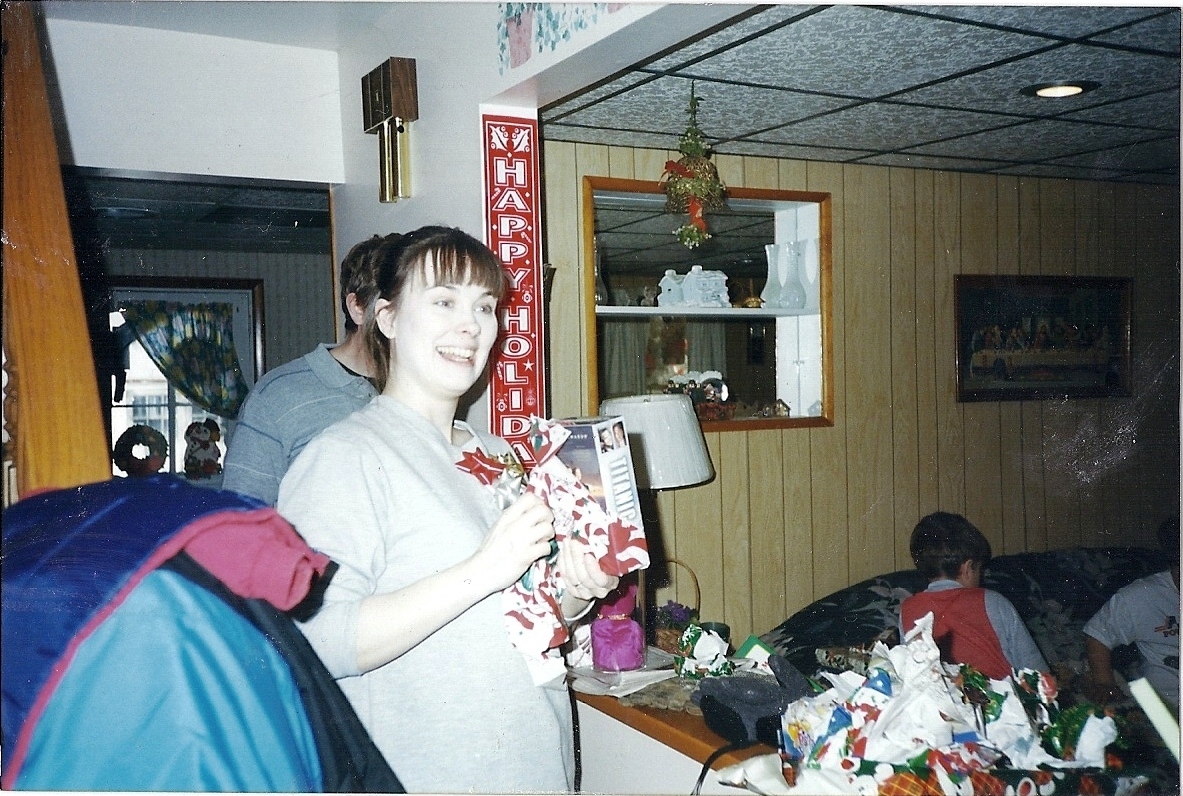
באחד הימים האלה הסתכלתי בארגזים של דברים בזול בחוץ ונתקלתי בעותק של 'חדר עם נוף' מאת א.מ. פורסטר, שבין דפיו - בין עמ' 32 ו-33 - היתה התמונה הזו:

See, back in the summers of 2003 and 2004 I worked as a counsellor in a summer camp in Pennsylvania, with the nearest outpost of civilization being the small, moderately-picturesque town of Honesdale (Home of the first locomotive in the US! Well, to be exact, the place where the first locomotive in the US was found to be too heavy for the rails and consequently left in storage, but hey, history is history). There wasn't a whole lot to do there, on evenings or days off, but among the things it did have was a nice used book store, and I love used book stores, so of course I spent some time there.
One of those days, I was looking through the cheap-stuff boxes outside when I ran into a copy of E. M. Forster's 'A Room with a View', and tucked within its pages - between pages 32 and 33 - was this picture:


אז קניתי אותו. כלומר, בסדר, השם נשמע לי מפורסם מספיק וחשבתי ששווה לבדוק אותו (קראתי אותו כמה שנים אח"כ וגיליתי שזה אחד מסיפורי ה'אמריקאים עשירים מהחברה הגבוהה מסתובבים באירופה ועושים דברים משעממים', כמו הרבה מהדברים של הנרי ג'יימס... אבל לא כדאי שאתחיל עכשיו עם הנרי ג'יימס וכמה שאני לא אוהבת את הכתיבה שלו) - אבל הסיבה האמיתית שקניתי את הספר היתה התמונה הזו. כי כמו עם כל שאר הגלויות והתמונות וכיו"ב שכאן, זו הצצה קטנה לסיפור על חיים של מישהו אחר, ואתם כבר יודעים שזה פיתוי שדי קשה לי לעמוד בו.

So I bought it. I mean, sure, the name sounded famous enough for me to figure I should check it out (I read it some years later and found out it's one of those 'rich American socialites wandering around Europe and being utterly boring' stories, like a lot of stuff by Henry James... but don't get me started about Henry James, and how much I dislike his writing) - but the real reason I bought it was because of that picture. Because, as with all of the cards and photos and whatnot here, it's a little glimpse into the story of someone else's life, which by now you know is pretty hard for me to resist.

אין הרבה מה להסיק מהתמונה הזו, למרות שבעזרת מתנת חג המולד שהגברת העליזה הזו בדיוק פתחה אפשר לקבוע את השנה המדוברת - סט הקלטות של 'טיטאניק' של ג'יימס קמרון יצא ב-1998, לפי מה שהצלחתי למצוא (היא באמת נראית ממש מרוצה מהמתנה; אני תוהה אם היא היתה אחת הנשים האלו שחזרו לראות את הסרט שוב ושוב כל עוד הוא עדיין הציג בקולנוע, ויצאו כל פעם בעיניים נפוחות ודומעות ובתחושת קתרזיס מספקת). גם מעילי הניילון הצבעוניים שהשתחלו לקדמת התמונה נראים מתאימים לתקופה של שנות התשעים המאוחרות. אבל מעבר לזה, אין יותר מדי מה לומר.

There isn't much that can be gleaned from this picture, even though the Christmas present that this cheerful lady has just opened helps in determining the year - the VHS set of James Cameron's 'Titanic' seems to have come out in 1998, from what I could find (she does seem very pleased to have been given it; I wonder if she was one of those women who went to see the movie again and again as long as it was in theatres, coming out with puffy, tear-stained eyes and a satisfying catharsis). Those colourful windbreakers that ended up in the foreground seem about right for the late 90s, too. But other than that, there's not much to say.

אני מניחה שיהיה נורא קל לצחוק על אווירת העיירה-הקטנה של כל העניין - השילוב המופרך של סיד (עם קצת שבלונות למעלה), טאפטים וכיסוי עץ (מזויף?), כל השמונצעס, תספורת הפטריה של הילד, מה שלא יהיה - אבל יודעים מה, אני לא רוצה. הם נראים שמחים. הם נראים כמו משפחה נחמדה שנהנית ביחד בחג המולד. אז אני פשוט אקווה שזה אכן מה שהיה, ותו לא. למה לקלקל את רוח החג, הא?

I guess it would be easy to make fun of the small-town feel of it all - that mismatched combination of white paint (with some stenciling at the top), wallpaper and (faux?) wood cover, the nicknacks, the kid's mushroom cut, or whatever - but you know what, I don't want to. They seem happy. They seem like a nice family having a good Christmas together. So I'm going to hope that they were, and leave it at that. Why spoil the holiday spirit, eh?

עברו כבר 13 שנה, והילדים האלה בטח כבר יצאו מהבית ועוסקים בענייניהם; אבל אולי הם עדיין חוזרים הביתה לחג המולד. אולי הם מסתכלים על הבית הקטן והנעים הזה, על כל שמונצעסיו, וזוכרים את ימי חג המולד כשהיו ילדים. אולי הגברת הזו עדיין שומרת את סט הקלטות הזה, איפשהו במחסן עם כל שאר קלטות הווידיאו שאף אחד כבר לא רואה. אבל מדי פעם היא נתקלת בו כשהיא עושה סדר, והיא זוכרת כשקיבלה אותו במתנה - זוכר איך הייתי משוגעת על הסרט הזה, מותק? והיא מחייכת, ונראית קצת כמו שנראתה בתמונה שכאן, לפני 13 שנה.

It's been about 13 years, now, and those kids are probably out of the house by now and doing their own things; but maybe they still come home for Christmas. Maybe they look at that cosy little home, tacky nicknacks and all, and remember the Christmases of their childhood. Maybe that lady even still have that VHS set, somewhere in the back room with the rest of the video tapes nobody watches anymore. But now and then she runs into it when she's doing some tidying up, and she thinks about when she got it as a present - Remember how crazy I was about that movie, honey? And she smiles, and looks a little like she did in this picture, 13 years ago.

ובכן, גברתי, מי שלא תהיי והיכן שלא תמָּצאי - זה בשבילך.

So lady, whoever you are, wherever you might be - this is for you.

(סליחה שזו גרסת כיסוי, אבל קצת קשה לי לסבול את השיר הזה אחרת. וחוץ מזה, יש בה משהו מאוד ניינטיזי, שהולם את ההקשר.)
(Sorry that it's a cover, but I find the song hard to tolerate otherwise. Besides, there's something very fittingly 90s about it.)

Friday, December 31, 2010

Collaborative writing - כתיבה קולבורטיבית

Looks like I'll get another post in before the year ends.
I got the idea to do this postcard when, in the last post, I said there being a lot of people mentioned. Because this postcard also has a lot of people, but in a somewhat unusual way - it was actually written by about six different people.

נראה לי שאצליח להשחיל עוד פוסט לפני סוף השנה.
חשבתי להעלות את הגלויה הזו כשציינתי, בפוסט הקודם, שהם מתייחסים לדי הרבה אנשים. כי בגלויה הזו באמת יש הרבה אנשים, אבל באופן קצת בלתי-רגיל - כתבו אותה כשישה אנשים שונים.

We begin with the front, which shows a view of the Chicago River (interesting side note: when looking for the Chicago River on Google Images, you run into a whole lot of pictures where it is dyed green, which, I realised after a while, is some odd St. Patrick's Day tradition, and not the result of comic-book-style pollution or gamma rays), with a lot of skyscrapers and bridges and other markers of a large metropolis.

נתחיל עם הצד הקדמי, ובו נוף של נהר שיקאגו (מאמר מוסגר מעניין: כשמחפשים את נהר שיקאגו בגוגל תמונות, נתקלים בלא מעט תמונות שלו צבוע בירוק; כפי שהבנתי אחרי זמן מה, זו איזו מסורת מוזרה של יום סנט פטריק, ולא תוצאה של זיהום או קרני גאמא כמו בחוברות קומיקס), עם הרבה גורדי שחקים וגשרים וכיוצא בזה סממנים מטרופוליניים.

Front:
צד קדמי:


Since I've never been to Chicago, I can't speak much about the accuracy of this portrayal, although the sky kind of has this fake-clement look that you sometimes get in postcards of places not known for clement weather (I have, for example, a postcard I bought in Ireland simply because it featured an accurately grey and overcast sky while all the other postcards had a clear blue sky like you almost never actually see). Anyway, it's quite a typical city-view picture, with nothing very special about it.

מכיוון שמימיי לא הייתי בשיקאגו, אני לא יכולה לומר עד כמה זה ייצוג מדויק שלה, אם כי יש לציין שהשמיים נראים קצת כמו הזיוף של מזג אוויר נאה שיש לפעמים בגלויות ממקומות שלא ממש ידועים במזג האוויר הנאה שלהם (יש לי, למשל, גלויה שקניתי באירלנד רק מפני שהשמיים בה היו אפורים ומעוננים כיאות, כשבכל שאר הגלויות היו שמיים כחולים כאלה שאף פעם לא רואים שם באמת). בכל אופן, זו תמונת נוף עירוני טיפוסית למדי, ואין בה כ"כ שום דבר מיוחד.

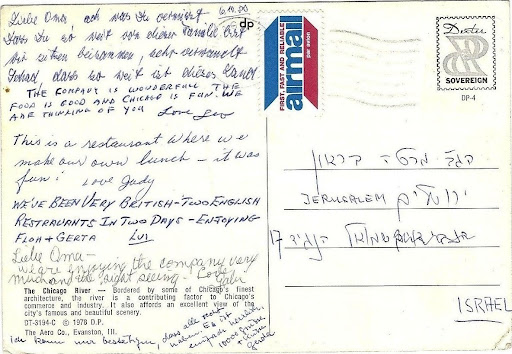
The special part of the postcard begins on the back, where apparently every member of the travelling family got to say a few words. [Note: Some of the messages are in English, and some are in German; the German ones were difficult for me to even read well enough to transcribe them, so I left them out, but will of course be very grateful to anyone who can supply a transcription and/or translation.]

החלק המיוחד בגלויה הזו מתחיל בצד האחורי, שם כנראה כל אחד מבני המשפחה המטיילת כתב כמה מלים. [הערה: כמה מהמסרים הם באנגלית, וכמה הם בגרמנית; את אלה שבגרמנית היה לי קשה אפילו לקרוא כדי לתעתק, אז דילגתי עליהם, אבל אהיה כמובן אסירת תודה לכל מי שיוכל לספק תעתיק ו/או תרגום.]

Back:
צד אחורי:

[German]

The company is wonderfull[sic!] the food is good and Chicago is fun. We are thinking of you.
Love, Leo

This is a restaurant where we make our own lunch - it was fun!
Love, Judy

We've been very British - two English restaurants in two days - enjoying Floh + Gerta
Zvi

Liebe Oma [dear grandma] -
We are enjoying the company very much and the sight seeing.
Love, Galia

[German]
[גרמנית]

החברה מצוייינת[כך במקור!] האוכל טוב וכיף בשיקגו. אנחנו חושבים עלייך.
באהבה, לאו

זו מסעדה שבה אנחנו מכינים את ארוחת הצהריים בעצמנו - זה היה כיף!
באהבה, ג'ודי

היינו ממש בריטים - שתי מסעדות אנגליות ביומיים - נהנים מפלו + גרטה
צבי

Liebe Oma [סבתא היקרה] -
אנחנו נהנים מאוד מהחברה ומהביקור באתרים.
באהבה, גליה

[גרמנית]

Something about this postcard is really fun. You have all the different people writing to the grandma, each with their own style and handwriting, each with their own highlights of the trip (food seems to be one main highlight, which I definitely approve of, although I must say that the concept of an English restaurant - and back in 1980, before any culinary renaissances or anything - is a bit scary, and going to two of them two days in a row is quite a feat). You can imagine them all sitting in the restaurant, passing the card around, chatting and joking. It's sweet.

יש משהו מאוד כיפי בגלויה הזו. כל האנשים השונים כותבים לסבתא, כל אחד עם הדגשים שלו מהטיול (לא מעט מדגישים את האוכל, מה שבהחלט מוצא חן בעיניי, אם כי יש לציין שהקונצפט של מסעדה אנגלית - ועוד ב-1980, לפני רנסאנסים קולינאריים למיניהם - קצת מעורר חשש, וללכת לשתי מסעדות כאלה ביומיים זה עניין מרשים למדי). אפשר לדמיין את כולם יושבים במסעדה, מעבירים את הגלויה ביניהם, מפטפטים ומתבדחים. זה מקסים.

Something interesting: if you look at the address, you can see that they started writing down one street, then realised it was the wrong one, crossed it and wrote the right address down. Did the grandma just move not long before? Both streets are fairly close to each other, in downtown Jerusalem, so if she did, it wasn't that big a move (by the way, here is a picture of the building at the address listed, 17 Shmuel HaNagid St. - that's pretty cool). Or maybe it was just a lapse of memory, like when you start writing and you realise you're writing your own address by mistake. Anyway, I suppose it made it to the right address, in the end.

משהו מעניין: אם מביטים על הכתובת, אפשר לראות שהם התחילו לכתוב רחוב אחד (הנביאים), ואז קלטו שזו הכתובת הלא נכונה, מחקו אותו וכתבו את השם הנכון (שמואל הנגיד). האם הסבתא עברה דירה לא הרבה זמן לפני כן? שני הרחובות האלה קרובים למדי זה לזה, במרכז העיר בירושלים, אז גם עם היא עברה דירה זה לא היה מעבר רציני במיוחד (דרך אגב, הנה תמונה של הכתובת שצוינה, ברח' שמואל הנגיד 17 - זה די מגניב). או שאולי זו סתם היתה פשלה קטנה של הזכרון, כמו כשמתחילים לכתוב ופתאום קולטים שבטעות כתבת את הכתובת של עצמך. בכל אופן, ניתן לשער שבסופו של דבר הגלויה הגיעה לכתובת הנכונה.

So, a nice bit of family togetherness to end the year with. Actually, some of these people kinda crop up in other postcards I got (I suppose they were all sold to the store in the same batch), but it'll be a while before we get to them, because I have a great idea for something to open the new year. What is it? You'll have to wait and see. Happy New Year, till then!

אז זהו, קצת ביחד משפחתי כדי לסגור את השנה האזרחית. למען האמת, כמה מהאנשים האלה צצים בגלויות אחרות שיש לי (אני משערת שכולן נמכרו לחנות באותה נגלה), אבל ייקח קצת זמן עד שאגיע אליהן, כי יש לי רעיון מצוין לגלויה שתפתח את השנה החדשה. ומהי? תצטרכו לחכות ולראות. שנה אזרחית טובה, עד אז!

Sunday, October 31, 2010

Plot Twists - פיתולים בעלילה

את הגלויות האלה שמרתי לפרק האחרון בסאגת קיגן, כי אני חושבת שהן מגניבות למדי. יש כל מיני פרטים מוזרים שקצת מסבכים את הסיפור שהצלחנו להרכיב עד כה, וכל מיני דברים אחרים שלמדתי על התקופה מתוך החיפושים שלי, ובסוף יש גם הפתעה, כמו שרמזתי קודם.

I saved these cards for the last installment of the Keogan Saga because I think they're pretty awesome. There are all sorts of weird details that slightly complicated the story as it's been constructed so far, and all sorts of other things that I learned about the era during my research, and in the end there is the surprise that I have alluded to before.

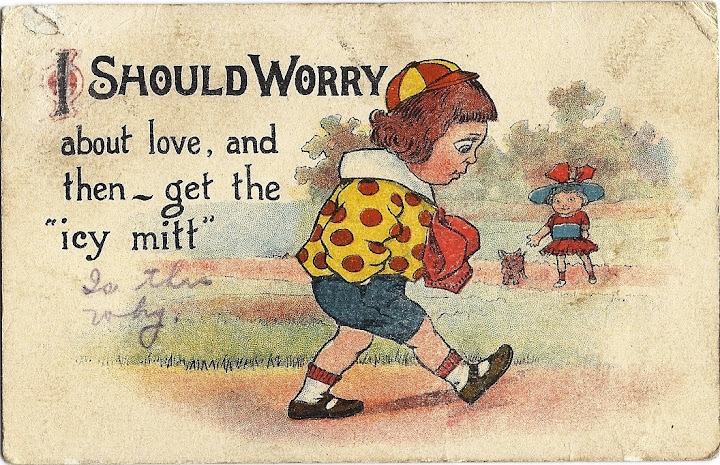
נתחיל עם הצד הקדמי של שתי הגלויות - ברור מייד ששתיהן חלק מאותה סדרה, וכשראיתי אותן בחנות הן נראו לי מוזרות ובלתי מובנות לחלוטין. אני לא יכלתי לראות בדבר הזה שום משמעות, אבל ידעתי שבטח היתה לו משמעות, אי אז.

We begin with the fronts of the two postcards - they obviously both belong to the same series, and when I saw them at the store they seemed incredibly weird and unintelligible. It didn't mean anything to me. But I knew that back then, it had to mean something.

גלויה 1, צד קדמי:
Postcard #1, front:

גלויה 2, צד קדמי:
Postcard #2, front:

אז... מה זה הדבר הזה? למה הילדים המוזרים האלה אומרים 'I should worry'? כאמור, בהתחלה לא הבנתי כלום.
ואז חיפשתי - אני לא זוכרת איך בדיוק, כי מן הסתם רק הצירוף 'I should worry' היה מניב הרבה תוצאות לא רלוונטיות - והגעתי לתיאור שכאן, וממנו לכאן, ולמדתי קצת יותר. בקצרה, מסתבר שזה היה מעין ביטוי סלנג, בתחילת המאה ה-20, והמשמעות שלו היא בעצם הפוכה לגמרי: 'למה שאדאג?', פחות או יותר. תחשבו על זה בניגון יידישאי, וזה נעשה קצת יותר מובן. היה שיר פופולרי למדי ב-1913, היה אפילו סרט בשם 'I Should Worry' ב-1915, למרות שלא הצלחתי למצוא עליו שום פרטים, אז אני לא יודעת אם הוא באמת קשור. בעצם זה היה סוג של מֶם (meme), או קאצ'פרייז (מילוניי טוענים בעיקשות שהתרגום התקני הוא 'אמרת כנף', אבל המשלב שונה לחלוטין, אז אאלץ להכנע ללעז גם הפעם), כמו שלפני כעשור אנשים היו מצטטים נונסטופ מסיינפלד, רק שכאן זה מלפני כמאה שנה... ובעצם, לא מזמן אפילו ראיתי קטע מסרט מ-1940 ופתאום זיהיתי שהשתמשו בו בביטוי הזה - בצורה 'you should worry', אמנם, אבל בבירור באותה משמעות הפוכה - מה שאומר שהוא כנראה החזיק מעמד לא מעט זמן.

So... what is this? Why are these strange kids saying 'I should worry'? Like I said, at first the whole thing seemed completely unintelligible.
So I looked it up - I don't remember how exactly, because obviously just searching for 'I should worry' would give me a whole lot of junk results - and I got to the description here, and from there to here, and I learned a bit more. In short, this turns out to be an early-20th-century slang expression, with a completely opposite meaning: more or less 'why should I worry?'. Think of it spoken in a Yiddish accent, and it becomes clearer. It was a popular song in 1913, and there was even a 1915 film called 'I Should Worry', although I couldn't find any details about it so can't be sure it's actually related. So actually, this was like a kind of meme, or catchphrase, like how about ten years ago people would quote Seinfeld nonstop, except here it's from about a century ago... In fact, I recently saw a short clip from a 1940s film and suddenly realised it used this phrase (in the form 'you should worry', but still, it was obviously the same opposite meaning), which means it must have lasted quite a while.

לגבי סדרת הגלויות הספציפית, היו לא מעט כאלה, מסתבר. בערך הוויקיפדיה שבקישור לעיל אפשר לראות אחת בסגנון די דומה, ומצאתי עוד כמה באוסף הזה (צריך לגלול עד CHN865 - ואני ממליצה לגלול מהר, או להשתמש בחיפוש, כי יש שם כמה גלויות די קריפיות) שבבירור שייכות לאותה סדרה.

As for this specific postcard series, there seem to have been quite a few of them. In the Wikipedia entry linked above you can see a card that is in similar style, and I found a bunch more in this collection (scroll down to CHN865 - and I recommend scrolling fast, or using the search function, because there are some pretty creepy postcards on there) that obviously belong to this same series.

אגב, אם במקרה תהיתם לגבי הביטוי 'get the icy mitt' שבגלויה 2, והאם המשמעות שלו היא כמו 'the cold shoulder', אז אכן, המשמעות בהחלט דומה, ולשמחתי אפילו מצאתי קטע שמסביר אותה בדיוק בספר מ-1910. שזה בהחלט מגניב.
(למה מישהו הוסיף על הגלויה בכתב יד את המלים 'האם זו הסיבה', ומה זה אמור להביע? אין לי שמץ של מושג.)

And if, perhaps, you were wondering about the phrase 'get the icy mitt' in postcard #2, and whether it means the same as 'the cold shoulder', then yes, it's definitely a very similar meaning, and I was happy to actually find a short paragraph explaining it exactly, in a book from 1910. Which is definitely cool.
(Why did somebody add on this card in handwriting the words 'Is this why', and what it's supposed to mean? No idea whatsoever.)

כל זה טוב ויפה, והיה מעניין מאוד לגלות את החלון הקטן הזה לתרבות הפופולרית של ראשית המאה ה-20, אבל החלק המרתק באמת, עם כל הפיתולים בעלילה של סאגת קיגן, מתחיל בצד האחורי של הגלויות, שהפעם דווקא לא נשלחו למיני קיגן...

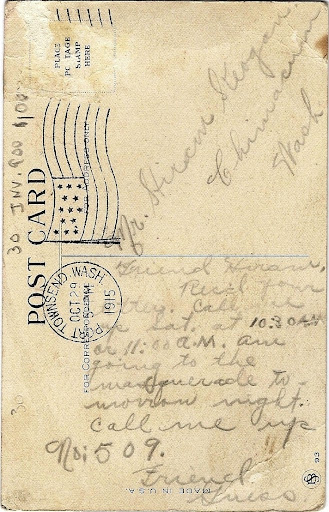
This is all well and good, and it was very interesting to discover this little window to popular culture in the early 20th century, but the really fascinating part, with all the Keogan Saga plot twists, begins with the back of the postcards, which this time were not sent to Minnie Keogan...

גלויה 1, צד אחורי:
Postcard #1, back:

Friend Hiram,
Received your letters. Call me up Sat. at 10:30 A.M. or 11:00 A.M. Am going to the masquerade to-morrow night. Call me up. No.: 509.
Friend Guess


ידידי היירם,
קיבלתי את מכתביך. צור איתי קשר בשבת ב-10:30 בבוקר או 11:00 בבוקר. אני הולכת[*] לנשף המסכות מחר בלילה. צור איתי קשר. המס': 509.
ידידתך, נַחֵשׁ מי

[*] יש סיבה שאני משתמשת בלשון נקבה; חכו ותראו בהמשך.

רגע רגע רגע. היירם קיגן? מאיפה הגיע פתאום היירם קיגן לסיפור? האם הוא קשור למיני? הכתובת שלו היא בצ'ימאקם, שכמו שאולי אתם זוכרים מהפרק הראשון בסאגה, ואולי לא, היא עיירה שקרובה מאוד לפורט האדלוק, שם מיני גרה. אבל עד כה הכרנו רק את קלארנס (למען האמת, אם קוראים את הרשומה הקודמת בעין ביקורתית אפשר לשים לב שהשתמשתי בעקביות בביטויים מסייגים נוסח 'ככל הידוע לנו' - וזו היתה הסיבה). אז... מה קורה כאן?

Wait wait wait. Hiram Keogan? Where did a Hiram Keogan come from? Is he related to Minnie? His address is in Chimacum, which, as you may or may not remember from the first installment, is very close to Port Hadlock, where Minnie lives. But so far, we've only known about Clarence (actually, if you look at the previous post with a critical eye, you will notice that I kept using phrases like 'as far as we know' - this is why). So... what's the deal here?

הפרט הראשון שמגלה את קיומו של היירם קיגן הוא מפקד התושבים הפדרלי מ-1910. אם אתם זוכרים, כשכתבתי על מיני שהיתה אלמנה ב-1910 הראיתי קטע קטן מאוד ממנו, מפני שהוא כולל את היירם, ולא רציתי להרוס את הפיתול הנחמד בעלילה. גם עכשיו אני מצרפת רק קטע, כי הדף המלא ענקי למדי, אבל הפעם הוא כולל את כל הפרטים הרלוונטיים לסיפור (קליק להגדלה):

The first item where we learn of Hiram's existence is the Federal Census of 1910. If you remember, back when I wrote about Minnie being a widow in 1910, I used a very small bit of it, because, well, it mentions Hiram, and I didn't want to spoil this lovely plot twist. I'm still only going to include a part of it here, because the whole page is pretty huge, but this time it has all the details relevant to our story (click to enlarge):


זה נראה קצת מוזר, כי חתכתי הכל חוץ מהשורה העליונה והשורות שמתייחסות למיני ומשפחתה. היחידה המשפחתית הזו בהחלט מסקרנת: מי שמוזכרת כראש המשפחה היא מרי רייטר, כובסת נשואה בת 35 (אבל איפה בעלה? כנראה בטאקומה, כי מצאתי את שניהם רשומים כתושבי טאקומה באותו מפקד תושבים בדיוק, אבל מכיוון שאני לא יודעת כמה זה מקובל שמישהו יירשם באותו מפקד פעמיים בשני מקומות שונים, קשה לי לדעת מה בדיוק קרה שם), ומיני רשומה כאחותה. אחריה רשומה גרטרוד רייטר, ביתה בת ה-15 של מרי, ואחריה היירם, חוטב עצים מובטל בן 17, שרשום כאחיין. כלומר, סביר להניח שהוא הבן של מיני. אם הוא בן 17, הוא נולד ב-1893, מה שמסביר למה הוא לא הופיע במפקד התושבים בטריטוריות מ-1891; ואם תסתכלו תראו גם שבסעיפים 10 ו-11 כתוב על מיני שיש לה שני ילדים (וששניהם בחיים). אז בסך הכל זה די מסתדר. אבל הנה פרט מעניין: סעיפים 12-14 הם מקום לידת הנרשם ומקומות הלידה של הוריו. אצל מיני ומרי, הן נולדו בוושינגטון, וגם אמא שלהן, והאב נולד בפינלנד - זה מתאים למה שאנחנו יודעים עד כה. אצל גרטרוד, האם (מרי) נולדה בוושינגטון והאב נולד בפנסילבניה (מפקד התושבים של טאקומה מאשר את זה). אצל היירם, האם (מיני) נולדה בוושינגטון, והאב הוא נורווגי. אבל אם תסתכלו רגע על הדף ממפקד התושבים שצירפתי לגבי קלארנס, בפעם הקודמת, תראו שאצלו מקום הלידה של האב הוא קליפורניה. אז מה בדיוק הסיפור כאן? מיני עדיין רשומה כאלמנה, וגם שם המשפחה שלה לא השתנה. גם שם המשפחה של היירם הוא עדיין קיגן. אבל האב אחר. יש כאן איזשהו רמז לסקנדל... האם היירם נולד מחוץ לנישואין?

It looks a bit weird, because I cropped away most of the page, except for the top and the lines about Minnie and her family. This family unit is definitely curious: the person listed as the head of the family is Mary Righter, a 35 year old married washer woman (so where is her husband? I guess he's in Tacoma, since I found both her and him listed in Tacoma in the exact same census, but since I don't know if it's usual for someone to be listed twice in two different places in the same census, I'm not sure what happened there), and Minnie is listed as her sister. Then there's Gertrude, Mary's 15 year old daughter, and then Hiram, a 17 year old out of work logger listed as a nephew. Which means he's probably Minnie's son. If he's 17, that means he was born in 1893, which explains why he wasn't in the 1891 Territorial Census; and if you look under sections 10 and 11, you'll see it says Minnie has two kids (both living). So all in all, it fits. But here's an interesting detail: sections 12-14 are the places of birth for the person listed and their parents. For Minnie and Mary, they were born in Washington, and so was their mother, and the father was born in Finland - which fits with what we know so far. With Gertrude, the mother (Mary) was born in Washington, the father in Pennsylvania (and the Tacoma census confirms this). With Hiram, the mother (Minnie) was born in Washington, and the father was Norwegian. But if you go and look at the census page I attached for Clarence, last time, you'll see that his father's place of birth was California. So what exactly is the story here? Minnie is still listed as widowed, and her last name is still unchanged. Hiram's last name is Keogan, too. But the father is different. There's a hint of a scandal, here... was Hiram born out of wedlock?

עוד פרט מעניין נמצא בסעיף 6, עם הכותרת 'צבע או גזע'. מרי ומיני הן HB, כלומר half-breed (אמא שלהן היתה משבט הסנוהומיש, כפי שכבר גילינו); גרטרוד והיירם זכו להיות רק QB, כלומר quarter-breed. בעיניי, גם הכינויים עצמם וגם ההקפדה לא רק על בני הכלאיים אלא גם על נכדי-הכלאיים מריחים גזעניים, ואפילו אאוגניים למדי. אבל בסך הכל, אנחנו מדברים על 1910, ולמרות כל השגשוג וההתקדמויות של תחילת המאה ה-20, זו עדיין היתה תקופה גזענית מאוד.
מה שהכי מעניין הוא שנראה כאילו הערכים האלה נרשמו מעל משהו אחר, שנמחק. האם פקיד הרישום הניח שהם לבנים, ואז גילה את הטעות וחזר לתקן אותה? האם הם אמרו לו שהם לבנים, ואז הוא חקר קצת יותר לעומק וגילה שזה לא מדויק לגמרי? האם הוא הביט בהם בבוז ואמר 'אה, אז אמך היתה אינדיאנית? המממ', ואז מחק בהפגנתיות את ה-W שרשם קודם, וכתב את האותיות הנכונות, ואמר בהטעמה 'Half-Breed'?
(אגב, שוב בדף שבו מופיע קלארנס, אצלו כתוב W. האם הפקיד שלו חקר פחות לעומק, או שלא ממש היה אכפת לו מדיוק של גזע בדור השלישי, או שפשוט נתנו לו את הפרטים של כל הדיירים והוא מילא את סעיף הגזע בברירת המחדל, שורה שלמה של W, כי למי אכפת בעצם? מי יודע מה באמת קרה.)

Another interesting detail is in section 6, titled 'Color or race'. Mary and Minnie are HB - Half-breed (their mother was full Snohomish, as we found out before); Gertrude and Hiram are only QB, quarter-breed. To me, both these titles and the strict observance of not only half but also quarter-breeds smell racist, and even pretty eugenicist. But we are, after all, talking about 1910, and despite all the wonderful advancements of the 20th century, it was still a very racist time.
The most interesting bit as that it looks like these were written on top of something else, that was deleted. Did the census clerk just assume they're white, and then found out he made a mistake and went back to fix it? Did they tell him they were white, and then he checked a bit more deeply and found out it wasn't completely accurate? Did he look at them scornfully, and said 'Ah, so your mother was an Indian? Hmmm', and then pointedly deleted the Ws he's written before, and wrote the correct abbreviations, and stressed it by saying out loud 'Half-Breed'?
(By the way, back on Clarence's page, he's listed as W. Was his clerk less inquisitive, or didn't really care about finding out the details of the race to the third generation, or maybe someone just gave him the main details for all the boarders and he just filled in the default race, a whole line of Ws, because who gives a crap? Who knows what really happened.)

לא מצאתי עוד הרבה על היירם, בחיפושים שלי. יש ב-ancestry.com רישום של היירם צ'ארלס קיגן ממחוז ג'פרסון בתעודות גיוס מ-1917-1918 (וזה סביר בהחלט שבחור בשנות ה-20 שלו יגויס ויישלח למלחמה הגדולה), והוא נמצא אצלם גם במפקד התושבים הפדרלי מ-1920, אבל זה אתר בתשלום אז אני לא יכולה לראות את המסמכים עצמם. בעקבות הגילוי הזה חיפשתי גם בארכיון הדיגיטלי של מדינת וושינגטון, ושם מצאתי תעודת פטירה של צ'ארלס היירם קיגן אחד שמת בפורט האדלוק ב-1926, אבל אני לא ממש בטוחה אם זה אותו אדם, כי (א) הגיל רשום כ-0, ואולי זה פשוט כי השאירו את זה ריק בטופס בטעות, אבל מכיוון שאין להם את המסמך המקורי סרוק, אין לי אפשרות לדעת את זה בוודאות, ו-(ב) שמות ההורים הם C J Keogan לאב, ו-Zeta Mary Williams לאם. שזה די מוזר. אולי אפשר להניח שמדובר בקלארנס וזיטה, שכזכור נישאו ב-1920 (ובמקרה הזה אפשר להניח שהילד מת בגיל צעיר מאוד, אולי אפילו בלידה), אבל מאיפה הגיעה לכאן מרי וויליאמס? זה היה שמה של אמה של מיני קיגן. שם הנעורים של זיטה היה בכלל גרדינר. מה קרה כאן? טעות במסמך? שוב, בלי לראות את המקור אני לא יכולה לדעת. אבל זה מוזר מאוד, כל הסיפור הזה.

I didn't find much more about Hiram in my research. On ancestry.com there's a listing of a Hiram Charles Keogan, from Jefferson County, in the World War I Draft Registration Cards from 1917-1918 (and it's pretty reasonable that a guy in his 20s would be drafted and sent to the Great War), and they also have him in the 1920 Federal census, but it's a paid subscription site so I can't see the actual documents. After discovering this, I tried looking in the Washington Digital Archives, and found a death certificate for a Charles Hiram Keogan who died in Port Hadlock in 1926, but I'm not really sure if it's the same person since (a) his age is listed as 0, and that might be just because they accidentally left it blank on the form, but since they don't have a scan of the original document, I can't know for sure, and (b) the parents names are C J Keogan for the father and Zeta Mary Williams as the mother. Which is odd. We can speculate that these are Clarence and Zeta, who as you remember married in 1920 (in this case we can assume the kid died very young, maybe even at birth), but where did Mary Williams get here? This was Minnie Keogan's mother's name. Zeta's maiden name was Gardiner. So what happened here? A mistake in the document? Again, without seeing the original, I have no way of knowing. This whole story is pretty weird.

אה, ודרך אגב, אפשר לראות על חותמת הדואר שהגלויה נשלחה ב-29 באוקטובר - ולמרבה הפלא, מסתבר שב-1915, אוקטובר היה בדיוק כמו השנה, כלומר התחיל ביום שישי ונגמר ביום ראשון - אז סביר להניח ש'נשף המסכות' שהוזכר, למחרת בלילה (שהיה שבת, ה-30 באוקטובר) היה אירוע לכבוד האלווין. נחמד.

Oh, by the way, you can see by the date stamp that this was sent on October 29 - and oddly enough, it turns out that in 1915, October was the same as this year, starting on a Friday and ending on a Sunday - so it's a fair assumption that the 'masquerade' mentioned as being on the next night (which was Saturday, October 30) is a Halloween event. Neat.

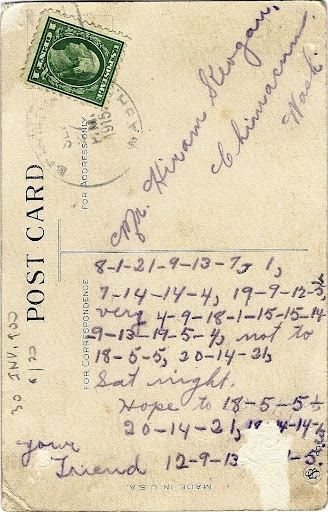
אבל עד כמה שכל הסיפור עד עכשיו היה די מוזר, זה עדיין לא החלק הכי מוזר. הגלויה השנייה היא החלק הכי מוזר - ולכן שמרתי אותה לסוף, למרות שכרונולוגית היא קודמת לגלויה שכיניתי 'גלויה 1' (אם מסתכלים היטב על חותמת הדואר אפשר לראות שהיא נשלחה ב-27 בספטמבר, וכזכור גלויה 1 נשלחה ב-29 באוקטובר). אבל... פשוט תסתכלו:

But as weird as everything so far has been, this is not the weirdest part. The second postcard is the weirdest part - which is why I left it till now, even though chronologically it came before what I called 'Postcard #1' (if you look closely at the date stamp you can see it was sent on September 27, while as you remember #1 was sent in October 29). But... well, take a look:

גלויה 2, צד אחורי:
Postcard #2, back:

8-1-21-9-13-7, 1, 7-14-14-4, 19-9-12-5, very 4-9-18-1-15-15-14-9-13-19-5-4, not to 18-5-5, 20-14-21, Sat night.
Hope to 18-5-5-20-14-21, [18]-14-14-13.
Your Friend 12-9-13[????]-5

זה כתוב בקוד.
הגלויה הזו בבירור נכתבה על-ידי אותו אדם מהגלויה השנייה, אבל הפעם היא נכתבה באיזשהו קידוד. עד כה נהניתי מהאופי הכמו-בלשי של מה שאני עושה כאן בבלוג, אבל עם הגלויה הזו פתאום הרגשתי שזה ממש כמו משהו מתוך סיפור בלשים.

It's in code.
It's quite obviously from the same person from the other postcard, but this time, it is written in some kind of code. I've been enjoying the somewhat detective-ish nature of what I do here on the blog, but with this card, it actually feels like something out of a detective story.

במקור, תכננתי להציב כאן אתגר, כי לא היה לי מושג מה כתוב בגלויה. הראיתי אותה לכמה אנשים, והגענו למסקנה שזה לא צופן החלפה פשוט של אות-למספר-התואם. ואז ניסיתי לבדוק אם המלה הראשונה היא 'friend', כי חשבתי שזה יכול להתאים, אבל אז המלה הבאה היתה צריכה להיות 'R', וזו לא באמת מלה, ובאופן כללי לא מתקבל משהו הגיוני במיוחד בהודעה. ובדרך כלל אני ממש גרועה בכל משחקי ההגיון האלה. אז התכנית היתה להשאיר את זה כאן בתקווה שאולי מתישהו יבוא קורא חכם ויפענח את הקוד.

This was originally meant to be posed as a challenge, since I had no idea what the card said. I showed it to a few people, and we managed to figure out that it's not a simple letter-to-respective-number substitution cipher. Then I tried checking if the first word was 'friend', since I thought it would fit, but that makes the second word 'R', which is not actually a word, and in general seems to make little sense of the whole message. And in general, I tend to be very bad with these logic puzzles. So this was going to be left here in the hopes some clever reader, someday, will figure it out.

אבל אז, אחרי שבהיתי בגלויה די הרבה כשכתבתי את הרשומה הזו, פתאום חשבתי שרגע, מה אם 18-5-5 זה S-E-E, וה-20-14-21 שאחריה זה Y-O-U? שתי המלים האלה חוזרות מייד אחר כך, ואז המשפט הבא הוא 'Hope to see you s...' - וזה soon, כמובן! ואז הכנסתי את האותיות שהיו לי למלים האחרות, ובהיתי בגלויה עוד קצת, ופתאום הכל נהיה הגיוני, והרגשתי ממש ממש חכמה.
אז אזהרת ספוילר; אם אתם רוצים לפענח את זה בעצמכם, אל תקראו הלאה.

But then, after staring at it for a long time while writing this very post, I suddenly thought hey, what if that 18-5-5 is S-E-E, and that 20-14-21 is Y-O-U? They repeat right after, and that'd make the next sentence 'Hope to see you s...' - soon, of course! And then I put these few letters in the other words, and stared at it a while more, and all of a sudden it all made sense, and I felt really really clever.
So, spoiler alert; if you want to figure it out yourself, don't read on.

Ha[v]ing a good time, very disappointed not to see you Sat. night.
Hope to see you soon.
Your Friend, Min[ni]e
אני נהנית כאן, אבל התאכזבתי מאוד לא לראות אותך ביום שבת בלילה.
מקווה לראות אותך בקרוב.
ידידתך, מיני

הופה.
מיני!? מה נסגר?
מצד אחד, הסיפור נעשה עכשיו הרבה פחות מלהיב. אין כאן שום הודעות סודיות על פגישות סודיות של הבונים החופשיים, או משהו; רק משחק קידוד קטן ומטופש (למעשה זה בעיקר צופן החלפה פשוט של אות-למספר-התואם, חוץ מאשר במקומות שזה לא כך). מצד שני, הכל נעשה הרבה יותר מוזר. אם מיני היא אמא של היירם, כמו ששיערתי קודם, למה היא שולחת לו הודעות כאלה? למה היא קוראת לו 'ידידי היירם'? אולי היא סתם שטותניקית. גם אמהות עושות שטויות לפעמים, ורק מפני שהיא אלמנה בת 54 זה לא אומר שהיא לא יכולה לשחק משחקים קטנים ומוזרים עם הבן שלה. או שאולי זו היתה מיני אחרת - בסך הכל, יכלה להיות יותר מאחת. או שאולי היא בעצם לא אמא שלו, וכל הסקנדל הקטן שדמיינתי לעצמי אף פעם לא קרה, והוא פשוט קרוב משפחה מצד איזשהו קיגן אחר. אין לי שמץ של מושג. תעלומה.

Whoa.
Minnie?! What the hell?
On one hand, this makes the story a bit less exciting. No secret messages about secret Masonic meeting places or something; just a silly little code game (which is mostly a simple letter-to-respective-number substitution cipher, except where it isn't). On the other hand, it just makes everything weirder. If Minnie is his mother, as I've assumed before, why would she send him messages like this? Why would she call him 'Friend Hiram'? Maybe she was just being silly. Mothers do that, sometimes, and just because she was a 54 year old widow doesn't mean she can't play weird little games with her son. Or maybe it was some other Minnie - there could have been more than one, after all. Or maybe she is not his mother, and this whole little scandal I imagined never happened, and he's related to some other Keogan. I simply do not know. It's a mystery.

ובעוד התעלומה הזו תלויה באוויר, הגענו לסוף של סאגת קיגן, ושל הגלויות שקניתי בחנות העתיקות בברמרטון. בפעם הבאה... נו, אני כבר אחשוב על משהו אחר.
למי שחוגגים האלווין, שיהיה לכם האלווין שמח ומסתורי. למי שלא, יום ראשון שמח! להתראות בפעם הבאה!

And with this mystery hanging in the air, this is the end of the Keogan Saga, and of my Bremerton antique store postcards. Next time... well, I'll have to think of something else.
To those who celebrate it, may you have a happy and mysterious Halloween. To those who don't, have a nice Sunday! See you next time!