Hello readers! - !שלום, קוראים

What is this? Read the introduction - מה זה הדבר הזה? הסבר בהקדמה
Showing posts with label drawings. Show all posts

Tuesday, September 18, 2012

Absinthe and biscuits - אבסינת וביסקוויטים

I've recently returned from a vacation in the US, but this is not the reason I chose this New York postcard (I actually chose it ages ago, but stuff - including being abroad - kept me from updating, as often happens). No, I chose it for the regular reasons: interesting picture, interesting little story in the message, and mainly one thing that sparked my interest: absinthe.

חזרתי לא מזמן מחופשה בארה"ב, אבל זו לא הסיבה שבחרתי את הגלויה הניו-יורקית הזו (למעשה, בחרתי אותה ממש מזמן, אבל היו כל מיני דברים - כולל הנסיעה לחו"ל - שבגללם לא עדכנתי, כרגיל). בחרתי אותה מהסיבות הרגילות: תמונה מעניינת, סיפור קטן ומעניין במסר הכתוב, ובעיקר בגלל דבר אחד שמשך את תשומת הלב שלי: אבסינת.

I remember some of the stories about artists and absinthe, back from when I studies some art history in highschool. And I've seen Heston Blumenthal getting a massive absinthe hangover during one of his culinary experiments. I know how alluring, and dangerous, it was - but I didn't know that in the 60s, there was an Absinthe House in New York City, and this is probably the main reason that I decided to get this card to begin with.

אני זוכרת את הסיפורים על אמנים ואבסינת, אי אז כשלמדתי תולדות האמנות בתיכון. וראיתי את הסטון בלומנטל מקבל האנגאובר נוראי מאבסינת במהלך אחד הניסויים הקולינריים שלו. אני יודעת על הקסם של המשקה הזה, והסכנה שבו - אבל לא ידעתי שבשנות ה-60 היה 'בית אבסינת' בניו יורק, וזו כנראה הסיבה העיקרית שבכלל החלטתי לקנות את הגלויה הזו.

Front:
צד קדמי:
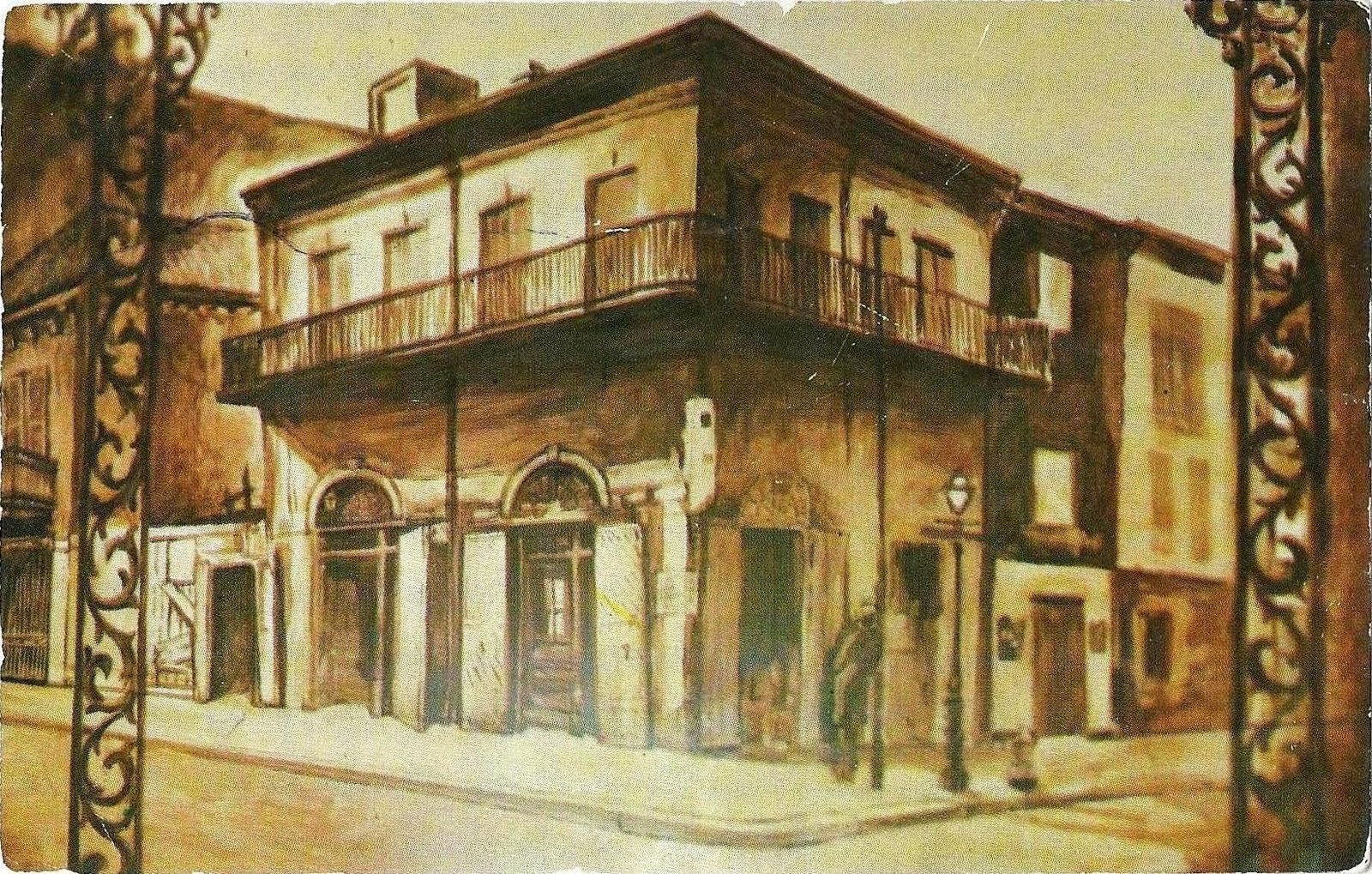

The picture is a bit misleading, however: this is in fact not the NYC Absinthe House (which I'll get to, shortly), but the New Orleans establishment, which apparently still exists today. The picture in the website I just linked to is unmistakable. Did the New York place look like that? I suspect it didn't, but couldn't find out. I'll get to that later, as well.

מה שכן, התמונה קצת מטעה: זה בעצם לא 'בית האבסינת' בניו יורק (שאגיע אליו עוד מעט), אלא המוסד בניו אורלינס, שמסתבר שעדיין קיים כיום. התמונה באתר שבלינק היא ללא ספק אותה תמונה. האם גם המקום בניו יורק נראה כך? אני חושדת שלא, אבל לא הצלחתי לברר. גם לזה אגיע בהמשך.

But first, the message on the back. This is where the biscuits from the post title come into the picture - as well as a little family story, most of which remainds pretty vague.

אבל קודם כל למסר שכתוב בצד האחורי. שם כבר נכנסים לתמונה גם הביסקוויטים מכותרת הפוסט - וגם סיפור משפחתי קטן, שרובו נשאר מעורפל למדי.

Back:
צד אחורי:
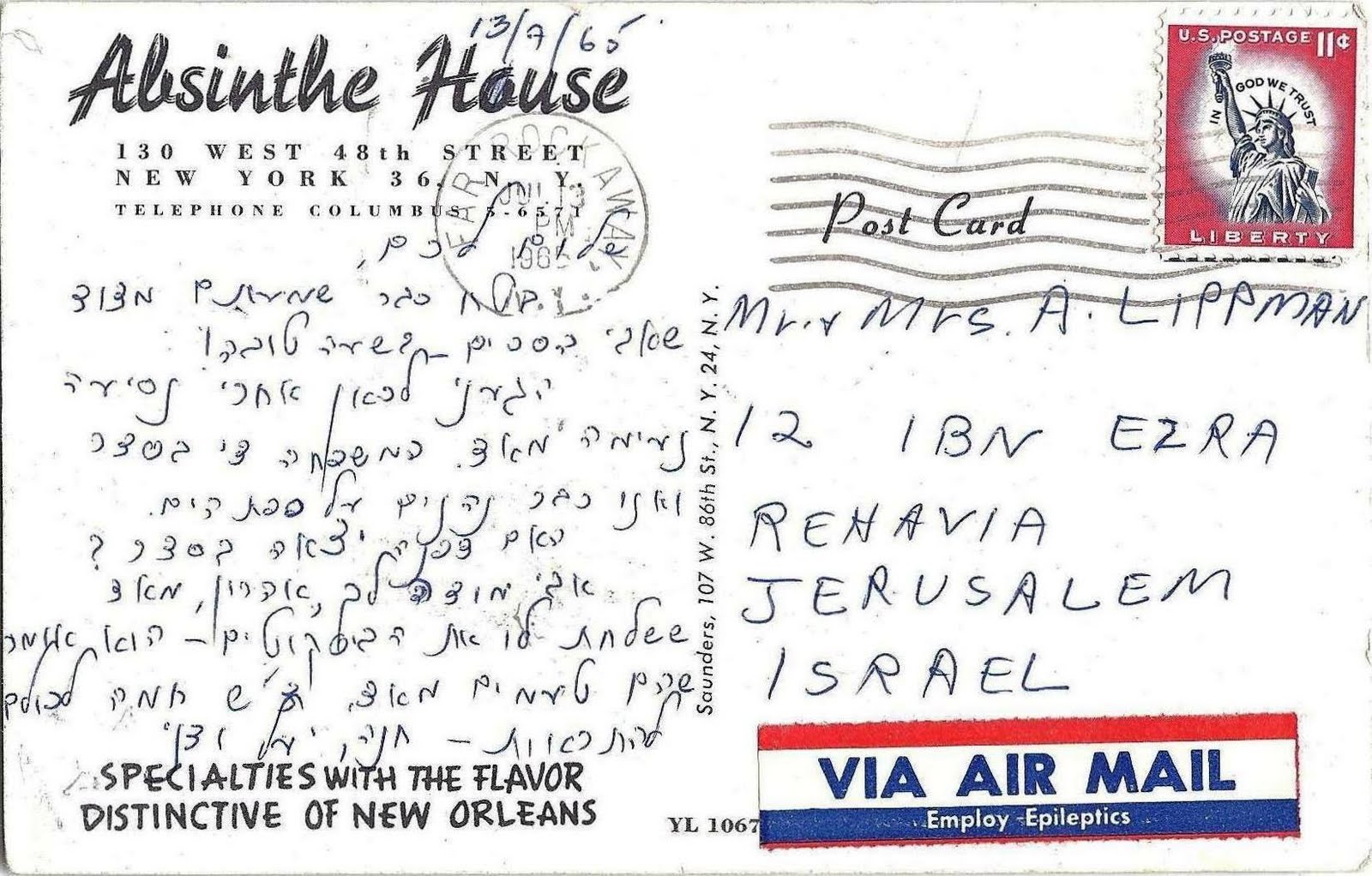
13/7/65
שלום לכם,
בטח כבר שמעתם מדוד שאבי הסכים - בשעה טובה!
הגענו לכאן אחרי נסיעה נעימה מאוד. המשפחה די בסדר ואנו כבר נהנים על ספת [כך במקור!] הים.
האם דפנה יצאה בסדר?
אבי מודה לך, אהרון, מאד ששלחת לו את הבסקוטים - הוא אומר שהם טעימים מאוד. ד"ש חמה לכולם
להתראות - חנה, יעל ודני
13/7/65
Hello everyone.
You probably already heard from David that Avi [/ my father (could be either in Hebrew, can't really tell from context)] agreed - congratulations!
We arrived here after a very pleasant ride. The family is quite alright, and we are already having a good time on the beech [sic!].
Did Daphna come out alright?
Avi [/ my father] thanks you, Aharon, very much for sending him the biscuits - he says they are delicious. Send a warm hello to everyone
See you - Hannah, Yael and Danny

The biscuit thing can be explained by the fact that Mr. Lippman is probably one of the Lippmans that owned the Hadar bakeries [Hebrew link! Sorry, couldn't find any English ones] in Jerusalem (their locally-famous biscuits are still being produced under the Hadar name, but from what I managed to understand, I think it's being done by another company, who bought the brand, or something like that). There's also something about shares in the Hadar Mall [Another Hebrew link, sorry again], and in case all this financial-pages talk hasn't bored you silly yet, there's a company called Lipman Electronic Engineering (or was, looks like they changed their name), and I think one of the owners might be the same Aharon Lipman/Lippman, maybe. So that's him, and those are probably the biscuits sent abroad, but that doesn't really tell me anything about Daphna, Hannah, Yael or Danny, and I couldn't really look them up. I assume they're family, or perhaps close friends - something about the tone of the writing suggests more than a casual acquaintance. And the handwriting is interesting: it's a bit crude and unpracticed, and with that misspelling in there it makes me think that the writer was either pretty young, or not a native speaker of Hebrew, but more probably the latter. There has to be a story there. I wish I knew it.

את עניין הביסקוויטים ניתן להסביר בכל שמר ליפמן הוא ככל הנראה אחד הליפמנים שהיו בעלי מגדניית הדר בירושלים (הביסקוויטים היחסית מפורסמים שלהם עדיין מיוצרים תחת השם 'הדר', אבל לפי מה שהצלחתי להבין נראה לי שחברה אחרת קנתה את המותג ומייצרת אותם עכשיו, או משהו כזה). יש גם משהו שקשור למניות בקניון הדר, ולמקרה שכל ידיעות המוספים הכלכליים האלה עוד לא שיעממו אתכם למוות, יש גם חברה בשם 'ליפמן הנדסה אלקטרונית' (טוב, הייתה, הם שינו את השם) ואני חושבת שהבעלים עשוי להיות אותו אהרון ליפמן מהגלויה, אולי. אז זה מה שיש לגביו, וכנראה שגם לגבי הביסקוויטים שנשלחו לחו"ל, אבל מכל זה לא גיליתי כלום לגבי דפנה, חנה, יעל או דני, ולא ממש הצלחתי לחפש אותם. אני משערת שהם קרובי משפחה, או חברים קרובים - יש משהו בטון של מה שנכתב שם שמעיד על יותר מהיכרות סתמית. וכתב היד די מעניין: הוא קצת פשוט, כמו של מישהו שלא מתורגל בכתיבה, וביחד עם שגיאת הכתיב שם יש לי הרגשה שהכותב היה או צעיר מאוד או לא דובר עברית כשפת אם, וסביר יותר שמדובר באפשרות השנייה. בטח יש פה סיפור. הלוואי וידעתי מהו.

As for the actual place - looking up the address quickly shows that the building that stood there back in the 60s is no longer there:

לגבי המקום עצמו - חיפוש של הכתובת מגלה שהבניין שהיה שם בשנות ה-60 כבר לא שם:


The building you're looking at, in the above Street View image, is the News Corp. Building (also known by the much less imaginative name 1211 Avenue of the Americas), built in the early 70s. I've been trying to find an earlier picture of that part of the street - hopefully one which might also show the Absinthe House - but to no avail. The closest I could get to 130 W 48th St. were this picture of a church at no. 143, and this picture of a theater (I thought at first it might be the Cort Theater at no. 138, which still stands today, but judging from the name 'Never Say Die' on the marquee, it's apparently the 48th Street Theater, further down the street at no. 157, which apparently was destroyed back in 1955 and is now a very ugly car park). Both pictures are from very early in the 20th century, anyway; nothing from the 60s. That's too bad.

הבניין שאתם רואים בתמונה שב-Street View לעיל הוא בניין ניוז קורפ (News Corp. Building, הידוע גם בשם הלא מקורי במיוחד 1211 Avenue of the Americas), שנבנה בתחילת שנות ה-70. ניסיתי למצוא תמונה מוקדמת יותר של הקטע הזה ברחוב - ואפילו קיוויתי למצוא תמונה שבה מופיע 'בית האבסינת' - אבל כל חיפושיי היו לשווא. הכי קרוב שהצלחתי להגיע לכתובת הדרושה, רח' 48 מערב מס' 130, היו התמונה הזו של כנסייה במס' 143, והתמונה הזו של אולם תיאטרון (חשבתי בהתחלה שמדובר בתיאטרון קוֹרְט במס' 138, שעדיין עומד על מכונו, אבל לפי שם המחזה שמופיע שם, Never Say Die, עולה שמדובר בתיאטרון רחוב 48, ששכן בהמשך הרחוב, מס' 157, ושנהרס ב-1955, ובמקומו עומד עכשיו חניון מכוער להפליא). בכל אופן, שתי התמונות הן ממש מתחילת המאה ה-20; אין לי כלום משנות ה-60. וזה חבל.

So out of all this long and link-heavy paragraph above, the bottom line is that I have no idea what the place really looked like. Actually, I barely know anything about it, except for the (lovely, mind you!) information in the paragraph below, taken from a New York restaurant guide from 1959 (I'm supplying a full quote - and translation - because the page I linked to has a long list of places and it takes a bit of scrolling to get to the Absinthe House, but it's a fun read for those who like that sort of stuff, or who have a time machine and are planning to drop by 1959 New York and grab some dinner):

אז מכל הפסקה הארוכה ועתירת-הלינקים הזו, מה שיצא זה שאין לי מושג איך המקום נראה באמת. למעשה, אני לא יודעת עליו כמעט שום דבר, מלבד המידע (המקסים, יש לציין) בפסקה שלהלן, מתוך מדריך מסעדות בניו יורק מ-1959 (אני מצטטת - ומתרגמת - כי בעמוד המקושר יש רשימה ארוכה של מקומות, וצריך לגלול די הרבה עד שמוצאים את 'בית האבסינת', אבל בהחלט נחמד לקרוא שם, למי שאוהבים דברים כאלה, או שיש ברשותם מכונת זמן ומתכננים לקפוץ לניו יורק של 1959 לאכול משהו):
Absinthe House, at 130 W. 48th St., gets its name from a famous old New Orleans institution, though there is no connection. It does feature New Orleans decoration and some French Creole dishes. Operated and co-hosted by Marc Reuben and his pretty wife Edith, who strikingly resembles Lauren Bacall. Favorite hangout for showfolks and newspapermen, TV executives, etc. Originally across the street, it became necessary to seek another location, so Marc financed it, as many Broadway shows are financed, with a group of 90 backers, all clients.

בית האבסינת, ברחוב 48 מערב מס' 130, קיבל את שמו מהמוסד הניו-אורלינסי הוותיק, אם כי אין ביניהם קשר. עם זאת, יש שם דקורציה בסגנון ניו-אורלינס וכמה מנות של המטבח הקריאולי-צרפתי. הבעלים והמארחים הם מארק רובן ואשתו אדית, הדומה באופן מפתיע ללורן באקול. זה מקום בילוי מועדף על אנשי תיאטרון ועיתונאים, בכירים בחברות הטלוויזיה, וכיו"ב. במקור המסעדה שכנה בצד השני של הרחוב, אבל היה צורך למצוא מקום חדש, ומארק מימן אותו באותה שיטה שבה ממומנות הרבה הצגות בברודוויי - בעזרת קבוצה של 90 משקיעים, כולם מלקוחות המקום.
And these few lines are enough to give some sort of picture of the place. Mid-sixties New York (I know some people who will get royally mad if I don't add a reference to that famous show that I don't watch), alcohol and cigarette smoke, a strange mix of buttoned-down or semi-buttoned-down businessmen and of beatnik theater-people, in a world that is just starting to change, a moment before the era of Counter Culture. I wonder if our Israeli tourists (and their biscuits) actually spent time in there, or just found the card somewhere else and used it without really thinking about it - and if they did spend time in there, I wonder what did they do, who did they see, what did they think. And just in general, how was their time in New York? Israel in the sixties was a pretty small place (in many ways), and it must have been pretty impressive to visit such a big cosmopolitan city. But maybe they were frequent fliers (and according to what they say in the card, they apparently visited family or friends in the States), and it was all routine for them. And I wonder if they drank absinthe, and if they noticed that Edith Reuben looks like Lauren Bacall, and if they whispered about it (and maybe also about the frog legs, if there were any in the French Creole menu) around the table, in Hebrew so that the people around can't understand. I wonder what they looked like, what they wore. I wonder about everything. As usual, I have no answers, and I probably never will, and as usual, it's nice to imagine the whole story out of the little piece I'm holding.
And as usual, I already have plans for the next post, but we'll see when I get to that. Until then, a happy new (Jewish) year and happy holidays to anyone celebrating, and one little necessary(?) reminder: the blog has a Facebook page. You should use it if you like using Facebook things.

והשורות הספורות האלה כבר מספיקות לצייר תמונה של המקום. ניו יורק של אמצע שנות השישים (אני מכירה כמה אנשים שיצלבו אותי אם לא אכניס כאן את הרפרנס המתבקש לסדרה המפורסמת שאני לא רואה), אלכוהול ועשן סיגריות, תערובת מוזרה של אנשי עסקים מכופתרים או מכופתרים-למחצה ושל אנשי תיאטרון ביטניקים, בעולם שבדיוק מתחיל להשתנות, רגע לפני התקופה של 'תרבות הנגד'. אני תוהה אם התיירים הישראלים שלנו (והביסקוויטים שלהם) אכן בילו בו, או שסתם מצאו גלויה במקום אחר והשתמשו בה בלי לחשוב יותר מדי - ואם בילו שם, אני תוהה מה עשו, את מי ראו, מה חשבו. ובכלל, איך היה בניו יורק? ישראל של שנות השישים הייתה מקום די קטן (בכל מיני מובנים), ובטח היה די מרשים לבקר בעיר גדולה וקוסמופוליטית שכזו. אבל אולי הם היו נוסעים מתמידים (ולפי המתואר בגלויה כנראה שהם ביקרו משפחה או חברים בארה"ב), ומבחינתם זה היה עניין שגרתי. ומעניין אם הם שתו אבסינת, ואם הם שמו לב שאדית רובן דומה ללורן באקול, ואם הם התלחשו על זה (ואולי גם על רגלי הצפרדעים, אם הייתה מנה כזו בתפריט הקריאולי-צרפתי) ליד השולחן, בעברית כדי שמי שמסביב לא יבין. מעניין איך הם נראו, ומה לבשו. הכל מעניין. כרגיל, אין לי תשובות, וכנראה שגם לא יהיו, וכרגיל, נחמד לדמיין את הסיפור מתוך הקטע הקטן שברשותי.
וכרגיל, יש לי כבר תכניות לרשומה הבאה, אבל נראה מתי אגיע אליה. עד אז, שנה טובה וחגים שמחים לכל החוגגים, וגם תזכורת קטנה ונדרשת(?): יש לבלוג עמוד פייסבוק. אתם מוזמנים להשתמש בו, אם אתם אוהבים להשתמש בדברים כאלה בפייסבוק.

Thursday, May 24, 2012

Be Prepared - היה נכון

It's not like I'm going to make a new tag just for 'I found this inside a book' or something, but, well, I found this inside a book. Was just reading some Agatha Christie novel I picked up in a use book store, and this piece of paper was inside.

זה לא שאני הולכת ליצור תגית חדשה רק לנושא 'מצאתי את זה בתוך ספר' או משהו כזה, אבל, נו, מצאתי את זה בתוך ספר. סתם קראתי לי איזה בלש של אגתה כריסטי שמצאתי בחנות ספרים משומשים, וחתיכת הנייר הזו היתה בפנים.

Of course, I got really excited about it, because it's so neat to me to think that it's just been sitting in a book since the early 60s (when it was probably used as a temporary bookmark by someone who just picked up the first piece of paper lying around, because he knew better than to leave the book open page-side down, because you do not do that to a book, dammit, but I'm getting carried away), with the book changing hands who knows how many times, until it ended up on my shelf. And I left it in the book, because someday in the future that book will move on again, and so will this thing. It might be used as a bookmark again; it might be noticed, and enjoyed, and maybe even treasured; it might be thrown away. For now, it's here, in the permanent temporary collection that is the internet. Have a look.

וכמובן שזה ממש הלהיב אותי, כי זה ממש מגניב בעיניי שדבר כזה פשוט ישב בתוך הספר מאז אי-אז בתחילת שנות ה-60 (כשמישהו בטח השתמש בו כסימניה זמנית, כי הוא היה מספיק חכם כדי לא להשאיר את הספר פתוח עם הדפים למטה, כי לא עושים דבר כזה לספר, לעזאזל, אבל אני נסחפת), ובינתיים הספר החליף ידיים מי יודע כמה פעמים, עד שבסופו של דבר מצא את עצמו על המדף שלי. ואני השארתי את הנייר בספר, כי מתישהו בעתיד הספר ימשיך את המסע שלו, והנייר ביחד איתו. אולי שוב ישתמשו בו כסימניה; אולי ישימו לב אליו, ויהנו ממנו, ואפילו ישמרו אותו; אולי יזרקו אותו לפח. בינתיים, הנה הוא כאן, באוסף הקבוע והזמני של האינטרנט. בואו תראו.

Front:
צד קדמי:


Okay, so it's a smiling Israeli kid (he actually looks kinda Aryan, but you can tell he's Israeli because if the tembel hat), with a... medal? First prize ribbon? Flower? What is that thing? Also, he appears to be signalling a semaphore P (or, assuming it's in Hebrew, a semaphore samekh). Or perhaps trying to say 'Halt! Look over there!' or 'He went that way!'. It's an odd piece of clip-art, and that enough would have been a reason to love this thing, even without what's on the back.

אוקי, אז זה ילד ישראלי מחייך (יש לו דווקא מראה די ארי, אבל רואים שהוא ישראלי, הוא חובש כובע טמבל), עם... מדליה? דבר כחול כזה [כמעט כתבתי 'סרט כחול', כי באנגלית זה ribbon. אבוי.] של מקום ראשון כמו בתחרויות עוגות אמריקאיות? פרח? מה זה הדבר הזה? אה, והוא כנראה גם מאותת P בסמאפור (או, בהנחה שהוא מאותת בעברית, ס בסמאפור). או שאולי הוא מנסה לומר 'עצור! תסתכל הצידה!' או 'הוא הלך לשם!'. זו פיסת קליפ-ארט מוזרה למדי, ורק היא כשלעצמה היתה יכולה להיות סיבה מצוינת לאהוב את הפתקה הזו, אפילו בלי מה שכתוב מאחורה.

Back:
צד אחורי:


לכב' דיירי הבית מס' __12__ ברח' __הגדוד העברי__

        מועדים לשמחה

בביקור שערכנו בביתכם מצאנו, כי
[א.] החצר אינה מוחזקת במצב תקין
[ב.] אין גינה מטופחת
ג. פחי אשפה אינם מכוסים
[ד.] השטח מסביב לפחי האשפה אינו נקי
ה. חדר המדרגות מוזנח

אנו בטוחים, כי תדאגו לבריאותכם וכי אתם מעונינים בסדר ובנקיון ולא תחכו שיבואו מפקחי העיריה ויטילו עליכם קנסות-ברירה בהתאם לחוק.
                                     צופי ירושלים

ירושלים, חול המועד סוכות תשכ"ג
For the residents of house no. __12__ on __HaGdud HaIvri__ St.

        Happy Holidays

On a visit to your house we have found, that
[a.] The yard is not properly maintained
[b.] No well-kept garden
c. Trash bins are not covered
[d.] The area around the trash bins is not clean
e. Stairwell is dilapidated

We are certain, that you will take care of your health and that you are interested in order and cleanliness and will not wait for the municipal inspectors to come and issue a fine or alternative penalty as required by law.
                                                  Jerusalem Scouts

Jerusalem, Chol HaMoed Sukkot, 1962

But the back, oh, it's marvellous. I think my favourite part is the phrasing in that last, underlined sentence, which kinda makes me think of a protection racket ('Now you're a nice guy, yaknow. We're sure you're a reasonable man, and you'll... take care of business, before some folks come around to give you trouble'). I'm sure they didn't mean it, because after all, they're just Scouts [Note to non-Israeli readers: the Israel Scouts are not divided into Boy/Girl Scouts, but it's basically sorta the same thing. I think. I wasn't in the Scouts]. They wanted to keep the neighbourhood pretty, so they patrolled the streets and left people notes, to let them know that - if I'm correct in reading the combination of circling and striking there - their yard is not properly maintained and the area around their trash bins isn't clean. With a nice picture of a smiling boy in a tembel hat. But still, there's something so disturbingly passive-aggressive about it.

אבל אוי, הצד האחורי פשוט מופלא. אני חושבת שהחלק שהכי מוצא חן בעיניי הוא הניסוח של המשפט האחרון, המודגש בקו, שקצת מזכיר לי פרוטקשן ('אתה דווקא נחמד, אתה. אנחנו בטוחים שאתה בן אדם הגיוני ושאתה... תטפל בעניינים, לפני שיבואו אנשים שיעשו לך בעיות'). אני בטוחה שלא זו היתה הכוונה, כי בכל זאת, סה"כ צופים. הם רצו לשמור על פני השכונה, אז הם סיירו ברחובות והשאירו לאנשים פתקים אינפורמטיביים כדי להודיע להם ש--אם הבנתי נכון את השילוב של הקפה בעיגול ומחיקה בקו שיש שם--החצר שלהם אינה מוחזקת במצב תקין והשטח מסביב לפחי האשפה שלהם אינו נקי. עם ציור חביב של ילד מחייך בכובע טמבל. אבל בכל זאת, יש בזה משהו כ"כ מטריד, פאסיבי-אגרסיבי כזה.

Well, it was a different time. To be honest, I can't imagine the Scouts nowadays walking around the streets and telling people they need to clean up. You can see it as a loss of community spirit and that feeling that we're all a part of society and have to pull together to make it work; or perhaps you can see it as higher awareness of people's right to privacy and to not have self-appointed committees telling them if their house is nice enough. Any way you choose to look at it, it definitely marks a different era.

טוב, זו היתה תקופה אחרת. למען האמת, אני לא יכולה לדמיין את הצופים כיום מסתובבים ברחובות ואומרים לאנשים לנקות את החצר. אפשר לראות בזה אובדן של הערבות ההדדית, של התחושה הזו שכולנו חלק מהחברה ואנחנו צריכים לעבוד ביחד כדי שהיא תצליח; או שאולי אפשר לראות בזה מודעות גבוהה יותר לזכותם של אנשים לפרטיות, ולזכות שלא יבואו כל מיני ועדות-מטעם-עצמן ויחליטו להם אם הבית שלהם נראה מספיק מטופח. איך שלא בוחרים להסתכל על זה, בהחלט מדובר כאן על סימן של עידן שחלף.

Now, how about taking a look at the place? I'm pretty sure this is the first post where I get to use Google Street View in Israel, and look, you can see the actual building this note has been talking about!

ועכשיו, בואו נסתכל על הבית. אני די בטוחה שזו הרשומה הראשונה שבה יוצא לי להשתמש ב-Google Street View בישראל, ותראו, אפשר לראות ממש את הבניין שמצוין בפתקה!


Actually, it's probably not the same building - looks a bit too new, to me, although I'm not a very good judge of that. I have no idea what it all looked like back in 1962. Perhaps a little less well-kept. It's a pretty nice place to live nowadays, anyway.

טוב, בעצם זה בטח לא ממש אותו הבניין - הוא נראה לי קצת חדש מדי, אם כי אני לא מבינה בזה יותר מדי. אין לי מושג איך האזור נראה בכלל בתשכ"ג. אולי קצת פחות מטופח. בכל אופן, כיום זה אזור שדי נחמד לגור בו.

Well, that's all for today. Next post, a return to postcards? Yeah, I think so. Been a while since I did a postcard.

וזהו להיום. ברשומה הבאה חוזרים לגלויות? נראה לי שכן. מזמן לא העליתי גלויות.

Tuesday, January 11, 2011

A Night Without Morals - לילה ללא מוסר

פוסט ראשון ל-2011, וחשבתי שראוי להתחיל בצלצלי תרועה. אז הנה משהו מעניין; זו לא גלויה, או תמונה, כמו רוב מה שיש לי, אלא סוג של פלייר פרסומי, או כרטיס, ממועדון לילה במערב ברלין. ויש פה גם סיפור מעניין למדי.

First post of 2011, and I thought we should start with a bang. So here is something interesting. It's not a postcard, or a photo, like most of the things I have, but a kind of commercial flier, or ticket, from a West Berlin nightclub. And there's quite an interesting story to it, too.

אבל את הסיפור לא ידעתי, כשקניתי את הדבר הזה. סתם חשבתי שזה מגניב. הנה, תסתכלו:

I didn't know the story when I bought it, though. I just thought it was cool. Take a look at this thing:

צד קדמי:
Front:


יאללה מסיבה!
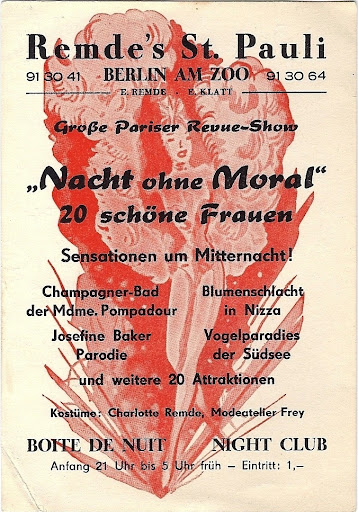
בעזרת גוגל תרגום הצלחתי להבין מה מפורסם כאן: מופע בסגנון פריסאי בשם Nacht ohne Moral - 'לילה ללא מוסר' - מה שכבר נשמע, אממ, מעניין, אפילו לפני שמבטיחים שם '20 בחורות יפות', 'סנסציות בחצות', ואטרקציות כמו 'אמבט השמפניה של מאדאם פומפדור', 'קרב הפרחים בניס' (שקשור לאירוע אמיתי בקרנבל של ניס, דרך אגב), 'פרודיה על ג'וזפין בייקר' ו'ציפורי גן עדן של הים הדרומי' (ועוד 20 אטרקציות אחרות!). אפשר כבר לקבל מושג על איזה מין סוג של אירוע - ושל מקום - זה היה, ובעזרת קלישאות קולנועיות על מערב ברלין בתקופת תחילת המלחמה הקרה, התמונה מקבלת גם נפח: שמפניה ומרטיני ועשן סיגריות, ומרגלים כמובן. אפשר לדמיין את זה, לא? מרגלים לבושי טוקסידו שעושים חיים אבל לא שוכחים להעביר מבט חשדני על שאר החדר ולהחזיק אקדח בכיס נסתר; או מרגלים במעיל ארוך ומגבעת, יושבים בפינה אפלה ומעשנים בשרשרת, משרבטים משהו לעצמם וממלמלים בזעף מתחת לשפם המזויף בזמן שהם מחכים למרגלות יפהפיות שמדברות בלחישות צרודות ומסתוריות. כך כך קל לדמיין את כל זה; ראינו את זה כבר באינספור סרטים. ולכן כל כך התלהבתי כשהפכתי את הכרטיס (אני לא לגמרי בטוחה שזה כרטיס, אבל כתוב למטה 'כניסה לאחד', אז זה נראה סביר) וראיתי את השרבוטים מאחור. זה מתאים לתמונה הזו בדיוק.
[דרך אגב, אני עומדת לעשות משהו שלא עשיתי די מזמן, ולשים את כל הפרטים שמצאתי על המועדון - ועוד כמה דברים על ג'וזפין בייקר - בסוף הפוסט, אחרי ג'אמפ-קאט. אני חושבת שזה מרתק, אבל אם אתם רוצים לדבוק בסיפור המרגלים הדמיוני, אתם יכולים להתעלם מכל הקטע על מה שקרה באמת.]

Heyo, party time!
With the help of Google Translate, I figured out what it's advertising: a Parisian revue called Nacht ohne Moral - 'A Night Without Morals' - which already sounds, umm, interesting, even before it goes on to promise '20 pretty ladies', 'sensations at midnight', and attractions such as 'the champagne bath of Madame Pompadour', 'Flower Battle in Nice' (this is related to an actual event in the carnival in Nice, by the way), 'Josephine Baker parody' and 'birds of paradise of the South Sea' (and 20 other attractions!). Already, you get a picture of the kind of event, and the kind of place, this must have been - and with the help of some movie clichés about early-cold-war-era West Berlin, this picture gets fleshed out with champagne and martinis and cigarette smoke, and of course, spies. You can imagine it, can't you? Spies in tuxedos, having a grand old time, but keeping a watchful eye on the room and a pistol in a secret pocket; or spies in trenchcoats and fedoras, chain-smoking in a dark corner, scribbling something and muttering under their fake moustache as they wait for gorgeous lady-spies that speak in mysterious, hoarse whispers. It's so easy to imagine it; we've seen it in countless movies. Which is why I got all excited when I turned over the ticket (I'm not sure it actually was a ticket, but it does say 'admission: 1' at the bottom, so it seems likely) and saw the scribbles on the back - they fit into this image perfectly.
[By the way, I'm going to do something I haven't done in a long while, and put all the details I found about the club - plus some stuff about Josephine Baker - at the end of the post, after a jump cut. I think it's fascinating, but if you want to stick to the imaginary spy story, go ahead and ignore all the real-life stuff.]

צד אחורי:
Back:


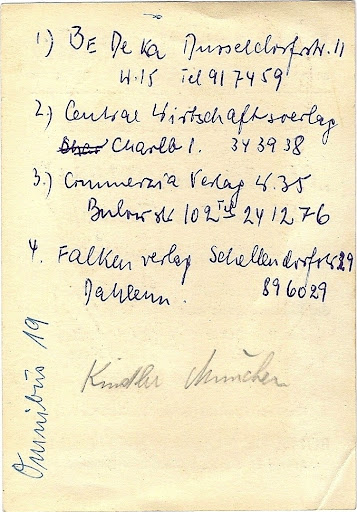
אז בעצם יש כאן שלושה דברים נפרדים - או בכל אופן, יש שלושה סגנונות של כתב יד ושלושה כלי כתיבה שונים. בעט כחול כהה יש רשימה של ארבעה מקומות ומספרי הטלפון שלהם; המלה verlag, שעל פי וויקיפדיה פירושה 'הוצאה לאור', חוזרת כמה פעמים (אולי יש כאן סופר מתחיל שמנסה למצוא מו"ל לכתב היד שלו?), ובפריטים מס' 1 ו-3 יש גם משהו שנראה כמו ציון שעה (4.15 ו-4.35, בהתאמה - אולי פגישות עם נציג ההוצאה?). למרבה הצער, לא הצלחתי למצוא אף אחד מהשמות האלה בחיפוש גוגל. בצד שמאל, בעט כחול בהיר יותר, ובכתב יד מחודד ואלגנטי קצת יותר, כתוב Omnibus 19, קו 19 באוטובוס, מן הסתם. ולמטה, בעפרון, שם של מישהו, כנראה (די קשה לי לקרוא את הכתב הזה).

Right, so we have three different things, basically - three different handwriting styles, and three different writing instruments, anyway. In a dark blue pen there's a list of four places and their phone numbers; the word verlag, which according to Wikipedia means 'publisher', recurs a few times (maybe we have a beginning author, trying to find someone to publish his manuscript?), and in items 1 and 3 there is also something that looks like a time (4.15 and 4.35, respectively - maybe meeting a representative of the publisher?). Unfortunately, I couldn't find any of those names on Google. On the left, in a lighter blue pen and a slightly more pointy and elegant handwriting, it says Omnibus 19, which is of course bus #19. And at the bottom, in pencil, something that looks like somebody's name (it's hard for me to read this handwriting).

כמובן שכל זה בהחלט יכול להיות חסר משמעות. זאת אומרת, זה בהחלט יומיומי למדי. מישהו היה צריך לרשום כמה דברים, לקח פיסת נייר ורשם אותם מאחורה; אחר כך נוספו עוד כמה רשימות לאותה פיסת נייר שימושית. פשוט מאוד.
אבל כמו שבזכות הקלישאות הקולנועיות קל מאוד לדמיין את מועדון הלילה האפלולי שאפוף בעשן סיגריות ואווירת שחיתות ושורץ מרגלים, כך גם קל לדמיין שיש מאחורי זה כל מיני ענייני ריגול. אולי זה צופן. אולי השמות של חברות הוצאה לאור הן רק כיסוי למשהו אחר, והשם בתחתית הדף הוא שם-המרגל המזויף של מישהו, וקו 19 הוא חלק מתכנית מפגש מסובכת ('תעלה על האוטובוס ברחוב X, וסע שלוש תחנות. אני אהיה בצד השני של הרחוב. אל תיצור קשר עין, פשוט לך אחריי'). אולי יש שלושה סגנונות כתב יד כי הכותב התאמן בזיוף! אפשר לדמיין כאן כל מיני עלילות, ברגע שמתחילים את קו המחשבה הזה.

Of course, this could all be meaningless. I mean, it's really quite mundane. Someone needed to write down some info, grabbed a piece of paper, and wrote on the back; then later, other notes were made on the same handy piece of paper. So very simple.
But just like all the movie clichés make it easy to imagine the dark, smoky nightclub teeming with debauchery and spies, it's also easy to imagine that there is some spy business behind this. Maybe it's coded. Maybe the names of publishing firms are just a cover for something else, and the name at the bottom is somebody's fake spy name, and bus #19 is part of a complicated meeting plan ('Take the bus at X Street, and travel three stops. I will be across the street. Don't make eye contact, just follow me'). Maybe there are three different handwriting styles because the guy was practising his forgery skills! There are all sorts of plots that can be imagined here, once you take this line of thought.

וכאן אפשר היה להניח לעניין. אבל אני נהנית ממחקרי-גוגל הקטנים שלי, כשיוצא לי לעשות אותם, אז אם מעניינים אתכם קצת פרטים אמיתיים על המקום ניתן למצוא אותם אחרי הג'אמפ-קאט.

And this could be where we leave it. But I like doing this little Google-based research, when I can, so if you're interested in some real details about the place, you can find them under the jump.

Sunday, October 31, 2010

Plot Twists - פיתולים בעלילה

את הגלויות האלה שמרתי לפרק האחרון בסאגת קיגן, כי אני חושבת שהן מגניבות למדי. יש כל מיני פרטים מוזרים שקצת מסבכים את הסיפור שהצלחנו להרכיב עד כה, וכל מיני דברים אחרים שלמדתי על התקופה מתוך החיפושים שלי, ובסוף יש גם הפתעה, כמו שרמזתי קודם.

I saved these cards for the last installment of the Keogan Saga because I think they're pretty awesome. There are all sorts of weird details that slightly complicated the story as it's been constructed so far, and all sorts of other things that I learned about the era during my research, and in the end there is the surprise that I have alluded to before.

נתחיל עם הצד הקדמי של שתי הגלויות - ברור מייד ששתיהן חלק מאותה סדרה, וכשראיתי אותן בחנות הן נראו לי מוזרות ובלתי מובנות לחלוטין. אני לא יכלתי לראות בדבר הזה שום משמעות, אבל ידעתי שבטח היתה לו משמעות, אי אז.

We begin with the fronts of the two postcards - they obviously both belong to the same series, and when I saw them at the store they seemed incredibly weird and unintelligible. It didn't mean anything to me. But I knew that back then, it had to mean something.

גלויה 1, צד קדמי:
Postcard #1, front:

גלויה 2, צד קדמי:
Postcard #2, front:

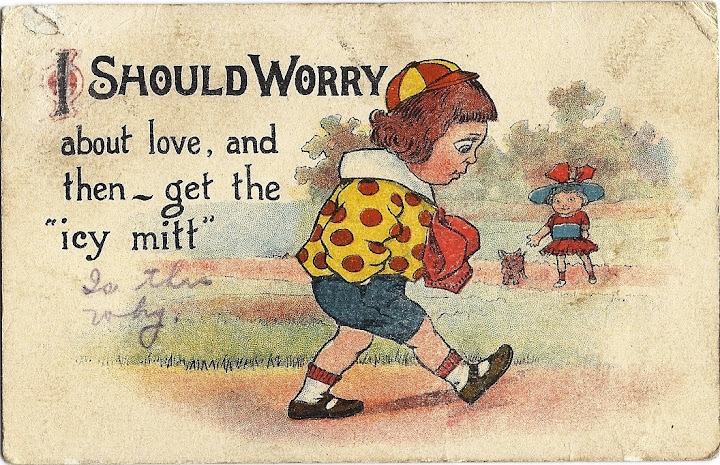
אז... מה זה הדבר הזה? למה הילדים המוזרים האלה אומרים 'I should worry'? כאמור, בהתחלה לא הבנתי כלום.
ואז חיפשתי - אני לא זוכרת איך בדיוק, כי מן הסתם רק הצירוף 'I should worry' היה מניב הרבה תוצאות לא רלוונטיות - והגעתי לתיאור שכאן, וממנו לכאן, ולמדתי קצת יותר. בקצרה, מסתבר שזה היה מעין ביטוי סלנג, בתחילת המאה ה-20, והמשמעות שלו היא בעצם הפוכה לגמרי: 'למה שאדאג?', פחות או יותר. תחשבו על זה בניגון יידישאי, וזה נעשה קצת יותר מובן. היה שיר פופולרי למדי ב-1913, היה אפילו סרט בשם 'I Should Worry' ב-1915, למרות שלא הצלחתי למצוא עליו שום פרטים, אז אני לא יודעת אם הוא באמת קשור. בעצם זה היה סוג של מֶם (meme), או קאצ'פרייז (מילוניי טוענים בעיקשות שהתרגום התקני הוא 'אמרת כנף', אבל המשלב שונה לחלוטין, אז אאלץ להכנע ללעז גם הפעם), כמו שלפני כעשור אנשים היו מצטטים נונסטופ מסיינפלד, רק שכאן זה מלפני כמאה שנה... ובעצם, לא מזמן אפילו ראיתי קטע מסרט מ-1940 ופתאום זיהיתי שהשתמשו בו בביטוי הזה - בצורה 'you should worry', אמנם, אבל בבירור באותה משמעות הפוכה - מה שאומר שהוא כנראה החזיק מעמד לא מעט זמן.

So... what is this? Why are these strange kids saying 'I should worry'? Like I said, at first the whole thing seemed completely unintelligible.
So I looked it up - I don't remember how exactly, because obviously just searching for 'I should worry' would give me a whole lot of junk results - and I got to the description here, and from there to here, and I learned a bit more. In short, this turns out to be an early-20th-century slang expression, with a completely opposite meaning: more or less 'why should I worry?'. Think of it spoken in a Yiddish accent, and it becomes clearer. It was a popular song in 1913, and there was even a 1915 film called 'I Should Worry', although I couldn't find any details about it so can't be sure it's actually related. So actually, this was like a kind of meme, or catchphrase, like how about ten years ago people would quote Seinfeld nonstop, except here it's from about a century ago... In fact, I recently saw a short clip from a 1940s film and suddenly realised it used this phrase (in the form 'you should worry', but still, it was obviously the same opposite meaning), which means it must have lasted quite a while.

לגבי סדרת הגלויות הספציפית, היו לא מעט כאלה, מסתבר. בערך הוויקיפדיה שבקישור לעיל אפשר לראות אחת בסגנון די דומה, ומצאתי עוד כמה באוסף הזה (צריך לגלול עד CHN865 - ואני ממליצה לגלול מהר, או להשתמש בחיפוש, כי יש שם כמה גלויות די קריפיות) שבבירור שייכות לאותה סדרה.

As for this specific postcard series, there seem to have been quite a few of them. In the Wikipedia entry linked above you can see a card that is in similar style, and I found a bunch more in this collection (scroll down to CHN865 - and I recommend scrolling fast, or using the search function, because there are some pretty creepy postcards on there) that obviously belong to this same series.

אגב, אם במקרה תהיתם לגבי הביטוי 'get the icy mitt' שבגלויה 2, והאם המשמעות שלו היא כמו 'the cold shoulder', אז אכן, המשמעות בהחלט דומה, ולשמחתי אפילו מצאתי קטע שמסביר אותה בדיוק בספר מ-1910. שזה בהחלט מגניב.
(למה מישהו הוסיף על הגלויה בכתב יד את המלים 'האם זו הסיבה', ומה זה אמור להביע? אין לי שמץ של מושג.)

And if, perhaps, you were wondering about the phrase 'get the icy mitt' in postcard #2, and whether it means the same as 'the cold shoulder', then yes, it's definitely a very similar meaning, and I was happy to actually find a short paragraph explaining it exactly, in a book from 1910. Which is definitely cool.
(Why did somebody add on this card in handwriting the words 'Is this why', and what it's supposed to mean? No idea whatsoever.)

כל זה טוב ויפה, והיה מעניין מאוד לגלות את החלון הקטן הזה לתרבות הפופולרית של ראשית המאה ה-20, אבל החלק המרתק באמת, עם כל הפיתולים בעלילה של סאגת קיגן, מתחיל בצד האחורי של הגלויות, שהפעם דווקא לא נשלחו למיני קיגן...

This is all well and good, and it was very interesting to discover this little window to popular culture in the early 20th century, but the really fascinating part, with all the Keogan Saga plot twists, begins with the back of the postcards, which this time were not sent to Minnie Keogan...

גלויה 1, צד אחורי:
Postcard #1, back:

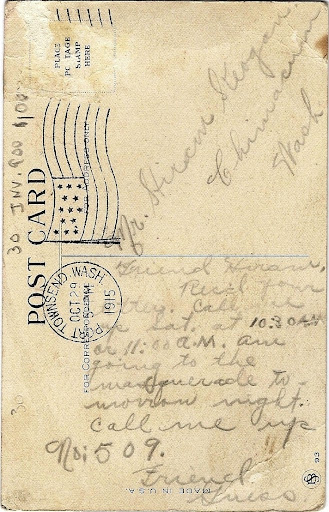
Friend Hiram,
Received your letters. Call me up Sat. at 10:30 A.M. or 11:00 A.M. Am going to the masquerade to-morrow night. Call me up. No.: 509.
Friend Guess


ידידי היירם,
קיבלתי את מכתביך. צור איתי קשר בשבת ב-10:30 בבוקר או 11:00 בבוקר. אני הולכת[*] לנשף המסכות מחר בלילה. צור איתי קשר. המס': 509.
ידידתך, נַחֵשׁ מי

[*] יש סיבה שאני משתמשת בלשון נקבה; חכו ותראו בהמשך.

רגע רגע רגע. היירם קיגן? מאיפה הגיע פתאום היירם קיגן לסיפור? האם הוא קשור למיני? הכתובת שלו היא בצ'ימאקם, שכמו שאולי אתם זוכרים מהפרק הראשון בסאגה, ואולי לא, היא עיירה שקרובה מאוד לפורט האדלוק, שם מיני גרה. אבל עד כה הכרנו רק את קלארנס (למען האמת, אם קוראים את הרשומה הקודמת בעין ביקורתית אפשר לשים לב שהשתמשתי בעקביות בביטויים מסייגים נוסח 'ככל הידוע לנו' - וזו היתה הסיבה). אז... מה קורה כאן?

Wait wait wait. Hiram Keogan? Where did a Hiram Keogan come from? Is he related to Minnie? His address is in Chimacum, which, as you may or may not remember from the first installment, is very close to Port Hadlock, where Minnie lives. But so far, we've only known about Clarence (actually, if you look at the previous post with a critical eye, you will notice that I kept using phrases like 'as far as we know' - this is why). So... what's the deal here?

הפרט הראשון שמגלה את קיומו של היירם קיגן הוא מפקד התושבים הפדרלי מ-1910. אם אתם זוכרים, כשכתבתי על מיני שהיתה אלמנה ב-1910 הראיתי קטע קטן מאוד ממנו, מפני שהוא כולל את היירם, ולא רציתי להרוס את הפיתול הנחמד בעלילה. גם עכשיו אני מצרפת רק קטע, כי הדף המלא ענקי למדי, אבל הפעם הוא כולל את כל הפרטים הרלוונטיים לסיפור (קליק להגדלה):

The first item where we learn of Hiram's existence is the Federal Census of 1910. If you remember, back when I wrote about Minnie being a widow in 1910, I used a very small bit of it, because, well, it mentions Hiram, and I didn't want to spoil this lovely plot twist. I'm still only going to include a part of it here, because the whole page is pretty huge, but this time it has all the details relevant to our story (click to enlarge):


זה נראה קצת מוזר, כי חתכתי הכל חוץ מהשורה העליונה והשורות שמתייחסות למיני ומשפחתה. היחידה המשפחתית הזו בהחלט מסקרנת: מי שמוזכרת כראש המשפחה היא מרי רייטר, כובסת נשואה בת 35 (אבל איפה בעלה? כנראה בטאקומה, כי מצאתי את שניהם רשומים כתושבי טאקומה באותו מפקד תושבים בדיוק, אבל מכיוון שאני לא יודעת כמה זה מקובל שמישהו יירשם באותו מפקד פעמיים בשני מקומות שונים, קשה לי לדעת מה בדיוק קרה שם), ומיני רשומה כאחותה. אחריה רשומה גרטרוד רייטר, ביתה בת ה-15 של מרי, ואחריה היירם, חוטב עצים מובטל בן 17, שרשום כאחיין. כלומר, סביר להניח שהוא הבן של מיני. אם הוא בן 17, הוא נולד ב-1893, מה שמסביר למה הוא לא הופיע במפקד התושבים בטריטוריות מ-1891; ואם תסתכלו תראו גם שבסעיפים 10 ו-11 כתוב על מיני שיש לה שני ילדים (וששניהם בחיים). אז בסך הכל זה די מסתדר. אבל הנה פרט מעניין: סעיפים 12-14 הם מקום לידת הנרשם ומקומות הלידה של הוריו. אצל מיני ומרי, הן נולדו בוושינגטון, וגם אמא שלהן, והאב נולד בפינלנד - זה מתאים למה שאנחנו יודעים עד כה. אצל גרטרוד, האם (מרי) נולדה בוושינגטון והאב נולד בפנסילבניה (מפקד התושבים של טאקומה מאשר את זה). אצל היירם, האם (מיני) נולדה בוושינגטון, והאב הוא נורווגי. אבל אם תסתכלו רגע על הדף ממפקד התושבים שצירפתי לגבי קלארנס, בפעם הקודמת, תראו שאצלו מקום הלידה של האב הוא קליפורניה. אז מה בדיוק הסיפור כאן? מיני עדיין רשומה כאלמנה, וגם שם המשפחה שלה לא השתנה. גם שם המשפחה של היירם הוא עדיין קיגן. אבל האב אחר. יש כאן איזשהו רמז לסקנדל... האם היירם נולד מחוץ לנישואין?

It looks a bit weird, because I cropped away most of the page, except for the top and the lines about Minnie and her family. This family unit is definitely curious: the person listed as the head of the family is Mary Righter, a 35 year old married washer woman (so where is her husband? I guess he's in Tacoma, since I found both her and him listed in Tacoma in the exact same census, but since I don't know if it's usual for someone to be listed twice in two different places in the same census, I'm not sure what happened there), and Minnie is listed as her sister. Then there's Gertrude, Mary's 15 year old daughter, and then Hiram, a 17 year old out of work logger listed as a nephew. Which means he's probably Minnie's son. If he's 17, that means he was born in 1893, which explains why he wasn't in the 1891 Territorial Census; and if you look under sections 10 and 11, you'll see it says Minnie has two kids (both living). So all in all, it fits. But here's an interesting detail: sections 12-14 are the places of birth for the person listed and their parents. For Minnie and Mary, they were born in Washington, and so was their mother, and the father was born in Finland - which fits with what we know so far. With Gertrude, the mother (Mary) was born in Washington, the father in Pennsylvania (and the Tacoma census confirms this). With Hiram, the mother (Minnie) was born in Washington, and the father was Norwegian. But if you go and look at the census page I attached for Clarence, last time, you'll see that his father's place of birth was California. So what exactly is the story here? Minnie is still listed as widowed, and her last name is still unchanged. Hiram's last name is Keogan, too. But the father is different. There's a hint of a scandal, here... was Hiram born out of wedlock?

עוד פרט מעניין נמצא בסעיף 6, עם הכותרת 'צבע או גזע'. מרי ומיני הן HB, כלומר half-breed (אמא שלהן היתה משבט הסנוהומיש, כפי שכבר גילינו); גרטרוד והיירם זכו להיות רק QB, כלומר quarter-breed. בעיניי, גם הכינויים עצמם וגם ההקפדה לא רק על בני הכלאיים אלא גם על נכדי-הכלאיים מריחים גזעניים, ואפילו אאוגניים למדי. אבל בסך הכל, אנחנו מדברים על 1910, ולמרות כל השגשוג וההתקדמויות של תחילת המאה ה-20, זו עדיין היתה תקופה גזענית מאוד.
מה שהכי מעניין הוא שנראה כאילו הערכים האלה נרשמו מעל משהו אחר, שנמחק. האם פקיד הרישום הניח שהם לבנים, ואז גילה את הטעות וחזר לתקן אותה? האם הם אמרו לו שהם לבנים, ואז הוא חקר קצת יותר לעומק וגילה שזה לא מדויק לגמרי? האם הוא הביט בהם בבוז ואמר 'אה, אז אמך היתה אינדיאנית? המממ', ואז מחק בהפגנתיות את ה-W שרשם קודם, וכתב את האותיות הנכונות, ואמר בהטעמה 'Half-Breed'?
(אגב, שוב בדף שבו מופיע קלארנס, אצלו כתוב W. האם הפקיד שלו חקר פחות לעומק, או שלא ממש היה אכפת לו מדיוק של גזע בדור השלישי, או שפשוט נתנו לו את הפרטים של כל הדיירים והוא מילא את סעיף הגזע בברירת המחדל, שורה שלמה של W, כי למי אכפת בעצם? מי יודע מה באמת קרה.)

Another interesting detail is in section 6, titled 'Color or race'. Mary and Minnie are HB - Half-breed (their mother was full Snohomish, as we found out before); Gertrude and Hiram are only QB, quarter-breed. To me, both these titles and the strict observance of not only half but also quarter-breeds smell racist, and even pretty eugenicist. But we are, after all, talking about 1910, and despite all the wonderful advancements of the 20th century, it was still a very racist time.
The most interesting bit as that it looks like these were written on top of something else, that was deleted. Did the census clerk just assume they're white, and then found out he made a mistake and went back to fix it? Did they tell him they were white, and then he checked a bit more deeply and found out it wasn't completely accurate? Did he look at them scornfully, and said 'Ah, so your mother was an Indian? Hmmm', and then pointedly deleted the Ws he's written before, and wrote the correct abbreviations, and stressed it by saying out loud 'Half-Breed'?
(By the way, back on Clarence's page, he's listed as W. Was his clerk less inquisitive, or didn't really care about finding out the details of the race to the third generation, or maybe someone just gave him the main details for all the boarders and he just filled in the default race, a whole line of Ws, because who gives a crap? Who knows what really happened.)

לא מצאתי עוד הרבה על היירם, בחיפושים שלי. יש ב-ancestry.com רישום של היירם צ'ארלס קיגן ממחוז ג'פרסון בתעודות גיוס מ-1917-1918 (וזה סביר בהחלט שבחור בשנות ה-20 שלו יגויס ויישלח למלחמה הגדולה), והוא נמצא אצלם גם במפקד התושבים הפדרלי מ-1920, אבל זה אתר בתשלום אז אני לא יכולה לראות את המסמכים עצמם. בעקבות הגילוי הזה חיפשתי גם בארכיון הדיגיטלי של מדינת וושינגטון, ושם מצאתי תעודת פטירה של צ'ארלס היירם קיגן אחד שמת בפורט האדלוק ב-1926, אבל אני לא ממש בטוחה אם זה אותו אדם, כי (א) הגיל רשום כ-0, ואולי זה פשוט כי השאירו את זה ריק בטופס בטעות, אבל מכיוון שאין להם את המסמך המקורי סרוק, אין לי אפשרות לדעת את זה בוודאות, ו-(ב) שמות ההורים הם C J Keogan לאב, ו-Zeta Mary Williams לאם. שזה די מוזר. אולי אפשר להניח שמדובר בקלארנס וזיטה, שכזכור נישאו ב-1920 (ובמקרה הזה אפשר להניח שהילד מת בגיל צעיר מאוד, אולי אפילו בלידה), אבל מאיפה הגיעה לכאן מרי וויליאמס? זה היה שמה של אמה של מיני קיגן. שם הנעורים של זיטה היה בכלל גרדינר. מה קרה כאן? טעות במסמך? שוב, בלי לראות את המקור אני לא יכולה לדעת. אבל זה מוזר מאוד, כל הסיפור הזה.

I didn't find much more about Hiram in my research. On ancestry.com there's a listing of a Hiram Charles Keogan, from Jefferson County, in the World War I Draft Registration Cards from 1917-1918 (and it's pretty reasonable that a guy in his 20s would be drafted and sent to the Great War), and they also have him in the 1920 Federal census, but it's a paid subscription site so I can't see the actual documents. After discovering this, I tried looking in the Washington Digital Archives, and found a death certificate for a Charles Hiram Keogan who died in Port Hadlock in 1926, but I'm not really sure if it's the same person since (a) his age is listed as 0, and that might be just because they accidentally left it blank on the form, but since they don't have a scan of the original document, I can't know for sure, and (b) the parents names are C J Keogan for the father and Zeta Mary Williams as the mother. Which is odd. We can speculate that these are Clarence and Zeta, who as you remember married in 1920 (in this case we can assume the kid died very young, maybe even at birth), but where did Mary Williams get here? This was Minnie Keogan's mother's name. Zeta's maiden name was Gardiner. So what happened here? A mistake in the document? Again, without seeing the original, I have no way of knowing. This whole story is pretty weird.

אה, ודרך אגב, אפשר לראות על חותמת הדואר שהגלויה נשלחה ב-29 באוקטובר - ולמרבה הפלא, מסתבר שב-1915, אוקטובר היה בדיוק כמו השנה, כלומר התחיל ביום שישי ונגמר ביום ראשון - אז סביר להניח ש'נשף המסכות' שהוזכר, למחרת בלילה (שהיה שבת, ה-30 באוקטובר) היה אירוע לכבוד האלווין. נחמד.

Oh, by the way, you can see by the date stamp that this was sent on October 29 - and oddly enough, it turns out that in 1915, October was the same as this year, starting on a Friday and ending on a Sunday - so it's a fair assumption that the 'masquerade' mentioned as being on the next night (which was Saturday, October 30) is a Halloween event. Neat.

אבל עד כמה שכל הסיפור עד עכשיו היה די מוזר, זה עדיין לא החלק הכי מוזר. הגלויה השנייה היא החלק הכי מוזר - ולכן שמרתי אותה לסוף, למרות שכרונולוגית היא קודמת לגלויה שכיניתי 'גלויה 1' (אם מסתכלים היטב על חותמת הדואר אפשר לראות שהיא נשלחה ב-27 בספטמבר, וכזכור גלויה 1 נשלחה ב-29 באוקטובר). אבל... פשוט תסתכלו:

But as weird as everything so far has been, this is not the weirdest part. The second postcard is the weirdest part - which is why I left it till now, even though chronologically it came before what I called 'Postcard #1' (if you look closely at the date stamp you can see it was sent on September 27, while as you remember #1 was sent in October 29). But... well, take a look:

גלויה 2, צד אחורי:
Postcard #2, back:

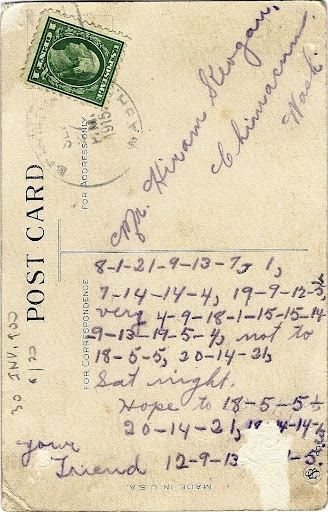
8-1-21-9-13-7, 1, 7-14-14-4, 19-9-12-5, very 4-9-18-1-15-15-14-9-13-19-5-4, not to 18-5-5, 20-14-21, Sat night.
Hope to 18-5-5-20-14-21, [18]-14-14-13.
Your Friend 12-9-13[????]-5

זה כתוב בקוד.
הגלויה הזו בבירור נכתבה על-ידי אותו אדם מהגלויה השנייה, אבל הפעם היא נכתבה באיזשהו קידוד. עד כה נהניתי מהאופי הכמו-בלשי של מה שאני עושה כאן בבלוג, אבל עם הגלויה הזו פתאום הרגשתי שזה ממש כמו משהו מתוך סיפור בלשים.

It's in code.
It's quite obviously from the same person from the other postcard, but this time, it is written in some kind of code. I've been enjoying the somewhat detective-ish nature of what I do here on the blog, but with this card, it actually feels like something out of a detective story.

במקור, תכננתי להציב כאן אתגר, כי לא היה לי מושג מה כתוב בגלויה. הראיתי אותה לכמה אנשים, והגענו למסקנה שזה לא צופן החלפה פשוט של אות-למספר-התואם. ואז ניסיתי לבדוק אם המלה הראשונה היא 'friend', כי חשבתי שזה יכול להתאים, אבל אז המלה הבאה היתה צריכה להיות 'R', וזו לא באמת מלה, ובאופן כללי לא מתקבל משהו הגיוני במיוחד בהודעה. ובדרך כלל אני ממש גרועה בכל משחקי ההגיון האלה. אז התכנית היתה להשאיר את זה כאן בתקווה שאולי מתישהו יבוא קורא חכם ויפענח את הקוד.

This was originally meant to be posed as a challenge, since I had no idea what the card said. I showed it to a few people, and we managed to figure out that it's not a simple letter-to-respective-number substitution cipher. Then I tried checking if the first word was 'friend', since I thought it would fit, but that makes the second word 'R', which is not actually a word, and in general seems to make little sense of the whole message. And in general, I tend to be very bad with these logic puzzles. So this was going to be left here in the hopes some clever reader, someday, will figure it out.

אבל אז, אחרי שבהיתי בגלויה די הרבה כשכתבתי את הרשומה הזו, פתאום חשבתי שרגע, מה אם 18-5-5 זה S-E-E, וה-20-14-21 שאחריה זה Y-O-U? שתי המלים האלה חוזרות מייד אחר כך, ואז המשפט הבא הוא 'Hope to see you s...' - וזה soon, כמובן! ואז הכנסתי את האותיות שהיו לי למלים האחרות, ובהיתי בגלויה עוד קצת, ופתאום הכל נהיה הגיוני, והרגשתי ממש ממש חכמה.
אז אזהרת ספוילר; אם אתם רוצים לפענח את זה בעצמכם, אל תקראו הלאה.

But then, after staring at it for a long time while writing this very post, I suddenly thought hey, what if that 18-5-5 is S-E-E, and that 20-14-21 is Y-O-U? They repeat right after, and that'd make the next sentence 'Hope to see you s...' - soon, of course! And then I put these few letters in the other words, and stared at it a while more, and all of a sudden it all made sense, and I felt really really clever.
So, spoiler alert; if you want to figure it out yourself, don't read on.

Ha[v]ing a good time, very disappointed not to see you Sat. night.
Hope to see you soon.
Your Friend, Min[ni]e
אני נהנית כאן, אבל התאכזבתי מאוד לא לראות אותך ביום שבת בלילה.
מקווה לראות אותך בקרוב.
ידידתך, מיני

הופה.
מיני!? מה נסגר?
מצד אחד, הסיפור נעשה עכשיו הרבה פחות מלהיב. אין כאן שום הודעות סודיות על פגישות סודיות של הבונים החופשיים, או משהו; רק משחק קידוד קטן ומטופש (למעשה זה בעיקר צופן החלפה פשוט של אות-למספר-התואם, חוץ מאשר במקומות שזה לא כך). מצד שני, הכל נעשה הרבה יותר מוזר. אם מיני היא אמא של היירם, כמו ששיערתי קודם, למה היא שולחת לו הודעות כאלה? למה היא קוראת לו 'ידידי היירם'? אולי היא סתם שטותניקית. גם אמהות עושות שטויות לפעמים, ורק מפני שהיא אלמנה בת 54 זה לא אומר שהיא לא יכולה לשחק משחקים קטנים ומוזרים עם הבן שלה. או שאולי זו היתה מיני אחרת - בסך הכל, יכלה להיות יותר מאחת. או שאולי היא בעצם לא אמא שלו, וכל הסקנדל הקטן שדמיינתי לעצמי אף פעם לא קרה, והוא פשוט קרוב משפחה מצד איזשהו קיגן אחר. אין לי שמץ של מושג. תעלומה.

Whoa.
Minnie?! What the hell?
On one hand, this makes the story a bit less exciting. No secret messages about secret Masonic meeting places or something; just a silly little code game (which is mostly a simple letter-to-respective-number substitution cipher, except where it isn't). On the other hand, it just makes everything weirder. If Minnie is his mother, as I've assumed before, why would she send him messages like this? Why would she call him 'Friend Hiram'? Maybe she was just being silly. Mothers do that, sometimes, and just because she was a 54 year old widow doesn't mean she can't play weird little games with her son. Or maybe it was some other Minnie - there could have been more than one, after all. Or maybe she is not his mother, and this whole little scandal I imagined never happened, and he's related to some other Keogan. I simply do not know. It's a mystery.

ובעוד התעלומה הזו תלויה באוויר, הגענו לסוף של סאגת קיגן, ושל הגלויות שקניתי בחנות העתיקות בברמרטון. בפעם הבאה... נו, אני כבר אחשוב על משהו אחר.
למי שחוגגים האלווין, שיהיה לכם האלווין שמח ומסתורי. למי שלא, יום ראשון שמח! להתראות בפעם הבאה!

And with this mystery hanging in the air, this is the end of the Keogan Saga, and of my Bremerton antique store postcards. Next time... well, I'll have to think of something else.
To those who celebrate it, may you have a happy and mysterious Halloween. To those who don't, have a nice Sunday! See you next time!

Tuesday, October 26, 2010

Clarence - קלארנס

You remember Clarence Keogan. In the previous installments we've seen a bit about his life - first in that 1891 census, when he was 6, and the marriage certificate from 1920, and last time we saw him mentioned in that apple tree postcard to Minnie Keogan. And today, we find out a little more. Possibly. I mean, it doesn't actually say his name anywhere on the postcard, but... well, you'll see.

אתם זוכרים את קלארנס קיגן. בפרקים הקודמים ראינו כמה רסיסים מהחיים שלו - בהתחלה במפקד התושבים מ-1891, כשהיה בן 6, ותעודת הנישואין מ-1920, ובפעם הקודמת הוא הוזכר בגלויה ההיא למיני קיגן, עם עץ התפוחים. היום נגלה עליו עוד קצת. כנראה. כלומר, השם שלו לא ממש מופיע בגלויה, אבל... טוב, תכף תראו.

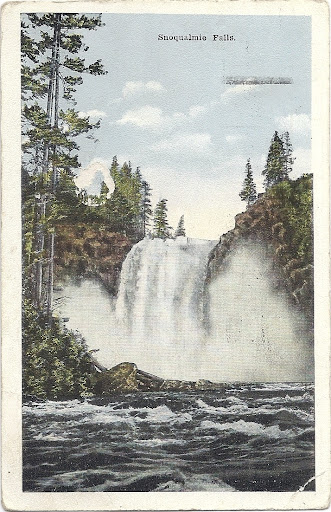
Anyway, we begin with the front of the postcard, which features a rather nice drawing of Snoqualmie Falls.

בכל אופן, מתחילים מהצד הקדמי של הגלויה, שעליו תמונה חביבה בהחלט של מפלי סנוקוואלמי.

Front:
צד קדמי:

Well, I don't have much to say about that. They're nice falls, but honestly there isn't really anything very interesting on this side of the postcard. The main reason I bought this (other than the strange and neat handwriting) was because the date stamp, on the back, said 'Rainier National Park Opens June 15', and I thought, wow, that's cool, is this postcard from back when Mount Rainier National Park first opened?

טוב, אין לי יותר מדי מה לומר עליהם. הם יופי של מפלים, אבל למען האמת הצד הזה של הגלויה לא מעניין במיוחד. הסיבה העיקרית שקניתי אותה (חוץ מכתב היד, שהוא מוזר ודי יפה) היתה שבחותמת הדואר נכתב 'הפארק הלאומי רייניר נפתח ב-15 ביוני', וחשבתי לעצמי וואו, זה ממש מגניב, יכול להיות שהגלויה הזו היא מהשנה שבה הפארק הלאומי מאונט רייניר נפתח לראשונה לקהל?

Back:
צד אחורי:

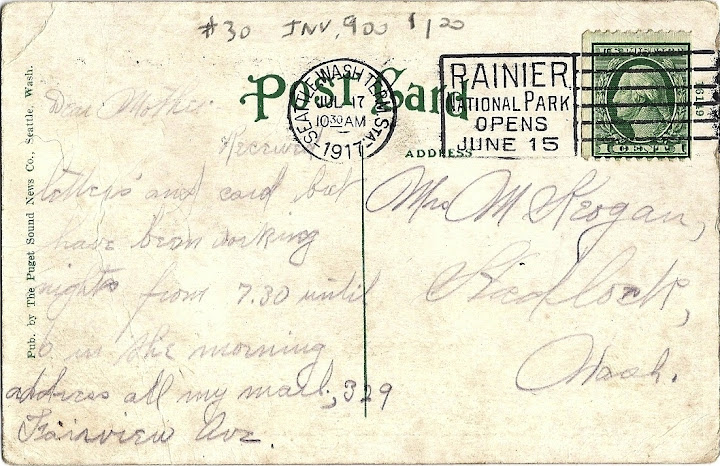
Dear Mother,
Received letters and card but have been working nights from 7.30 until 6 in the morning.
address all my mail: 329 Fairview Ave.

אמא יקרה,
קיבלתי את המכתבים והגלויה, אבל אני עובד במשמרות לילה לאחרונה, מ-7.30 עד 6 בבוקר.
שלחי את כל הדואר שלי לכתובת: שד' פיירוויו 329.

Long story short, my assumption was wrong; Mount Rainier was actually one of the first national parks opened in the US, back in 1899. I couldn't find anything special about June 15th, 1917, so I assume this is just when the park opened for summer - since weather conditions around there can be pretty bad in winter. Anyway, this non-story takes a back seat to something that now, within my little Keogan Saga thing, becomes a whole lot more interesting: the card, addressed to Minnie Keogan, begins 'dear mother'. So, this was from her son. Which, as far as we know, has to be Clarence.

בקצרה, טעיתי; מאונט רייניר היה אחד הפארקים הלאומיים הראשונים שנפתחו בארה"ב, וזה היה ב-1899. לא הצלחתי למצוא שום דבר מיוחד לגבי ה-15 ביוני 1917, אז אני משערת שאז הפארק פשוט נפתח למשך הקיץ - תנאי מזג האוויר באיזור יכולים להיות די גרועים בחורף. בכל אופן, הסיפור הזה הוא לא באמת סיפור, והוא תופס מקום הרבה יותר שולי לעומת משהו שעכשיו, במסגרת כל העניין הזה של 'סאגת קיגן', נראה הרבה יותר מעניין: הגלויה, שנשלחה למיני קיגן מיודעתנו, נפתחת במלים 'אמא יקרה'. כלומר, היא נשלחה מהבן שלה. ולפי כל מה שאנחנו כבר יודעים, זה צריך להיות קלארנס.

So there's Clarence, in July of 1917 (that's only a few months before Red October, over in Russia), working the night shift somewhere in Seattle (note the date stamp, marked 'Seattle Wash. Term. Sta.' - that'd be the train station, of course, back when trains were still important, and apparently there is still a post office right there). We can't really tell what his job is, but looking around, I found Clarence some years before that, in the 1910 Federal Census (click to enlarge; he's on line 78):

אז הנה קלארנס, ביולי של שנת 1917 (רק כמה חודשים לפני מהפכת אוקטובר ברוסיה), עובד במשמרת לילה איפשהו בסיאטל (שימו לב לחותמת, שעליה כתוב 'Seattle Wash. Term. Sta.' - זו תחנת הרכבת כמובן, בתקופה שבה לרכבות עדיין היתה חשיבות גדולה, ומסתבר שכיום עדיין יש שם סניף דואר). אי אפשר בעצם לדעת במה הוא עובד, אבל בחיפושים שלי מצאתי את קלארנס כמה שנים לפני כן, במפקד התושבים הפדרלי של 1910 (קליק להגדלה; הוא בשורה 78):


He was in King County back then, too, although it appears he didn't live in Seattle but in the area of Avondale, which nowadays is on the suburbs of Microsoft City, a.k.a Redmond.

גם אז הוא היה במחוז קינג, אבל נראה שאז הוא לא גר בסיאטל אלא באזור אבונדייל, שכיום נמצאת בפרברים של מייקרוסופט סיטי, הידועה בשם רדמונד.


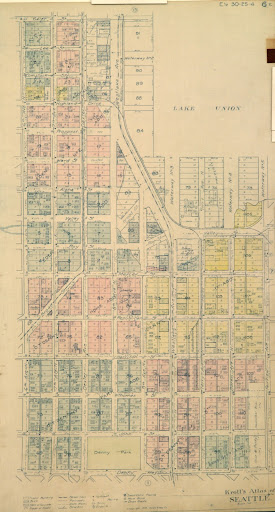
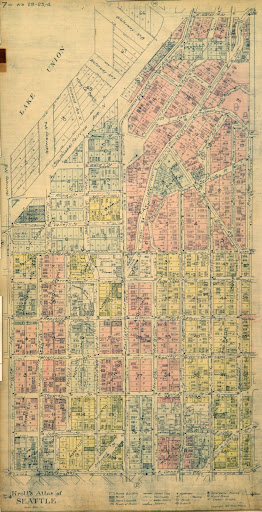
And he was one of a whole bunch of guys working mostly as laborers for a lumber company, all listed as boarders in the same place. I can imagine that must have been a hard life (workers rights weren't all that hot back then). And I can imagine that seven years later, when this card was written, he was still working as a laborer, the same hard work for long hours (this is a 10.5-hour shift he's talking about) with little pay, although this time it's probably in Seattle, since he gives his mother the address '329 Fairview Ave.' - which is a Seattle address, a little south of Lake Union. Below you can see the street on a map of the area from 1920 (in two halves, unfortunately; Fairview is basically the dividing line, so in the first half it's on the very right side of the map, and in the second half it's on the left), and 329 should be about a third of the way down from Harrison Street.

הוא היה אחד מתוך קבוצה של גברים שעבדו בעיקר כפועלים בחברת עץ, ושכולם רשומים כדיירים של אותו מקום. אני יכולה לנחש שאלו היו חיים די קשים (זכויות עובדים לא היו נושא אופנתי במיוחד אז). ואני יכולה גם לנחש ששבע שנים אחר כך, כשהגלויה הזו נכתבה, הוא עדיין עבד כפועל, עדיין בעבודה קשה למשך שעות ארוכות (שימו לב שהמשמרת שהוא מדבר עליה נמשכת 10.5 שעות) ובתשלום נמוך, אבל הפעם כנראה בסיאטל, כי הכתובת שהוא נותן היא 'שדרות פיירוויו 329' - וזו כתובת בסיאטל, קצת דרומית לאגם יוניון. להלן אפשר לראות את הרחוב במפה של האזור מ-1920 (בשני חלקים, למרבה הצער; פיירוויו הוא פחות או יותר על קו החצי, אז במפה הראשונה הוא נמצא בימין קיצון, ובמפה השנייה בשמאל קיצון), ומס' 329 צריך להיות בערך בשליש הדרך מתחת לרח' האריסון.

 
I don't think any of the original buildings are there anymore, today, although in this case I'm thinking it probably wasn't too much of a loss. It was an industrial area, a little way off the docks; usually not a place for pretty buildings (I am kinda interested, though, about some of the names - presumably of businesses, or maybe owners - that appear in the map, like Olive W Purdy or the something-I-can't-read-well-thal Frauenthal Bros. [Updated! see below], but I couldn't find anything about them on Google). Doesn't seem like there's anything very fancy there today, too. Right on 329 there's a little coffee shop, but the area in general doesn't look terribly inviting. Some large buildings and parking lots, a view of Queen Anne Hill, and if you stand on the right spot and look west, you get a half-obstructed view of the Space Needle, but that's about it, really:

אני לא חושבת שיש שם אף אחד מהבניינים המקוריים, כיום, למרות שבמקרה הזה נראה לי שזה לא כזה אובדן גדול. זה היה אזור מסחרי, לא רחוק מרציפי הנמל; בדרך כלל זה לא ממש מקום שטורחים לבנות בו בניינים יפים (מה שכן, מסקרנים אותי כמה מהשמות שמופיעים במפה - כנראה שמות של עסקים, או אולי של בעלי הבניין - כמו  אוליב וו. פּרדי, או האחים משהו-שאני-לא-מצליחה-לקרוא-כמו-שצריך-תַל פראונתל [עודכן! ר' למטה], אבל לא הצלחתי למצוא שום דבר עליהם בגוגל). לא נראה שיש שם משהו מפואר במיוחד גם כיום. בדיוק במס' 329 יש בית קפה קטן, אבל באופן כללי האזור לא נראה מזמין במיוחד. כמה בניינים גדולים ומגרשי חניה, נוף של גבעת קווין אן, ואם עומדים במקום הנכון ומסתכלים מערבה יש ראות חלקית של הספייס נידל, אבל זה פחות או יותר הכל:


That was probably where he lived. The Space Needle wasn't there yet, of course, so he probably didn't have much of a view at all. Just buildings and more buildings (and maybe some trees). And he probably mostly saw those in the dark, to boot. Still, Seattle was a pretty exciting place, back then. Growing and thriving and becoming an actual big city. I'd like to imagine that maybe there was opportunity in the air, and maybe even a simple laborer working nights could catch a whiff of it, now and then. That's the American Dream, isn't it?

כנראה ששם הוא גר. הספייס נידל עדיין לא היתה שם, כמובן, אז סביר להניח שלא היה נוף מיוחד. רק בניינים ועוד בניינים (ואולי קצת עצים). והוא בטח גם ראה אותם בעיקר בלילה, בנוסף לכל. אבל בכל זאת, סיאטל היתה אז מקום די מלהיב, משגשגת ומתפתחת והופכת עיר גדולה של ממש. נחמד לדמיין שאולי היה ריח של הזדמנות באוויר, ושאולי אפילו פועל פשוט שעובד במשמרות לילה יכול היה להריח אותו לפעמים. זה החלום האמריקאי, לא?


Oh, and one last little thing: the card was published by the Puget Sound News Company - not a big or important company or anything, as far as I know, but researching this card I found an picture of their building from 1900 and thought it was cool. So there you go.

אה, ועוד משהו קטן לסיום: את הגלויה הדפיסה ה-Puget Sound News Company - לא חברה גדולה או חשובה או משהו, למיטב ידיעתי, אבל בזמן שחקרתי את הגלויה מצאתי תמונה של הבניין שלהם מ-1900 וחשבתי שזה די מגניב. אז בבקשה.


Update (18 Aug 2011):
I was reading William Speidel's rather informative and enjoyable Sons of the Profits, which is about the early history of Seattle, and the idea that it might somehow intersect with this saga was always at the back of my mind, although I wasn't expecting much. Then, at some point near the end there was a list of important businessmen who went on a boat to Alaska, and it included one Jacob Frauenthal, merchant and building owner, and I decided to have another look at that 1920 map. And you know what, now that I looked at it again, it looked a lot like it said 'Frauenthal Bros."... so off to Google I went, and made some searches. The brothers themselves seem to still be listed as property owners (although mostly around Shoreline, quite a long way to the north from that map segment), but going back to more ancient history, you can find their shop listed in a few places, like the 1872 business directory or the 1883 phone(!) directory, and it even makes a guest appearance in two pictures from the same era (1, 2 - and do check the descriptions below!). None of these is on Fairview Ave., or from the relevant period of 1910-20 or so, but still, it's something. And that building on Fairview, right between John St. and Thomas St.? It's been the headquarters of the Seattle Times from about 1930 to earlier this year, apparently. So that another little mystery solved. Still nothing about Purdy, though.


עדכון (18 באוגוסט 2011):
לא מזמן קראתי בספר האינפורמטיבי והמהנה למדי של וויליאם ספיידל, 'Sons of the Profits', שמספר על ההסטוריה המוקדמת של סיאטל, וכל הזמן ישבה לי בראש המחשבה שאולי זה יתחבר איכשהו לסאגה הזו, למרות שלא ציפיתי ליותר מדי. ואז, מתישהו די לקראת הסוף היתה רשימה של כמה אנשי עסקים חשובים שעלו על ספינה לאלסקה, שכללה איש בשם ג'ייקוב פראונתל, סוחר ובעל-בתים, והחלטתי להסתכל שוב על המפה הזו מ-1920. ויודעים מה, כשהסתכלתי עליה שוב, ממש נראה כאילו כתוב שם 'האחים פראונתל'... אז קפצתי לגוגל והרצתי כמה חיפושים. נראה שהאחים פראונתל עדיין רשומים כבעלי נדל"ן (אם כי בעיקר בסביבות שכונת Shoreline, שהיא די הרבה צפונה מקטע המפה שלי), אבל אם נעבור להסטוריה קדומה יותר, אפשר למצוא רישומים של החנות שלהם בכמה מקומות, כמו במדריך העסקים מ-1872 או מדריך הטלפונים(!) מ-1883, ואפילו יש לה הופעת אורח בשתי תמונות מאותה התקופה (1, 2 - ושווה לבדוק את התיאורים מתחת לתמונות!).  אף אחד מהדברים האלה לא קשור לשד' פיירוויו, או לפרק הזמן הרלוונטי של סביבות 1910-1920, אבל גם זה משהו. אה, והבניין ההוא על שד' פיירוויו, בין רח' ג'ון ורח' תומס? הוא היה המשרד המרכזי של עיתון ה-Seattle Times מסביבות 1930 עד לתחילת השנה הנוכחית, מסתבר. אז הנה פתרנו עוד תעלומה קטנה. אם כי עדיין לא מצאתי כלום על פּרדי.

Friday, August 6, 2010

Two for One - שתיים במחיר אחת

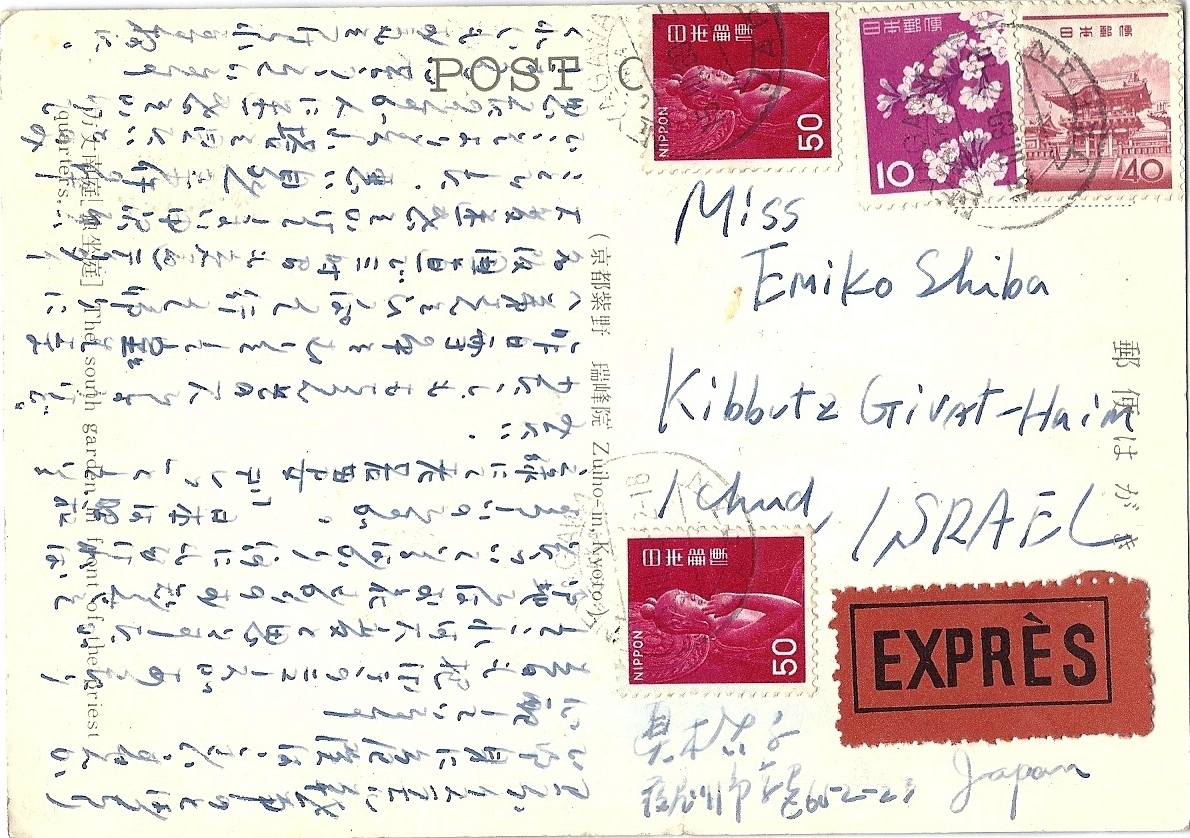
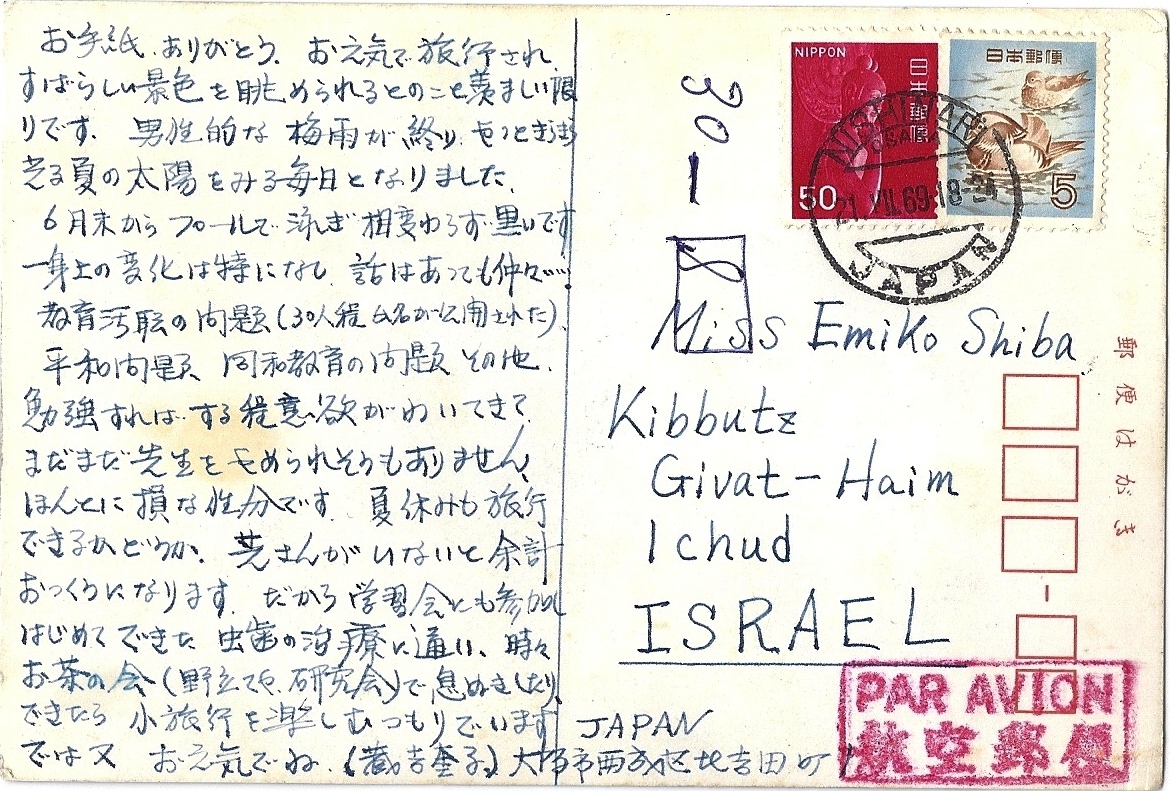
So, while we're on Japan, I actually have two more Japanese postcards - and since they were both sent to the same person, I figured it's better to lump them together. These were both sent to a Miss Emiko Shiba, at a kibbutz called Giv'at Haim Ichud, in 1969. It's possible she was a volunteer working there - after the Six Day War in '67 there was a wave of young volunteers coming to Israel from all over the world - although I find myself wondering how many Japanese volunteers there could have been (but that may only be due to stereotypes). There is also the Japanese Christian Makuya group, that has a few centers in Israel, so that might be why she came here. I don't know.
Anyway, both postcards are lovely; still very 'representative', as postcards are wont to be, but in a much gentler way than the previous one, I think - probably because they were sent by locals, rather than tourists. They were very obviously written by two different people, as the writing is vastly different. But I can't read them.

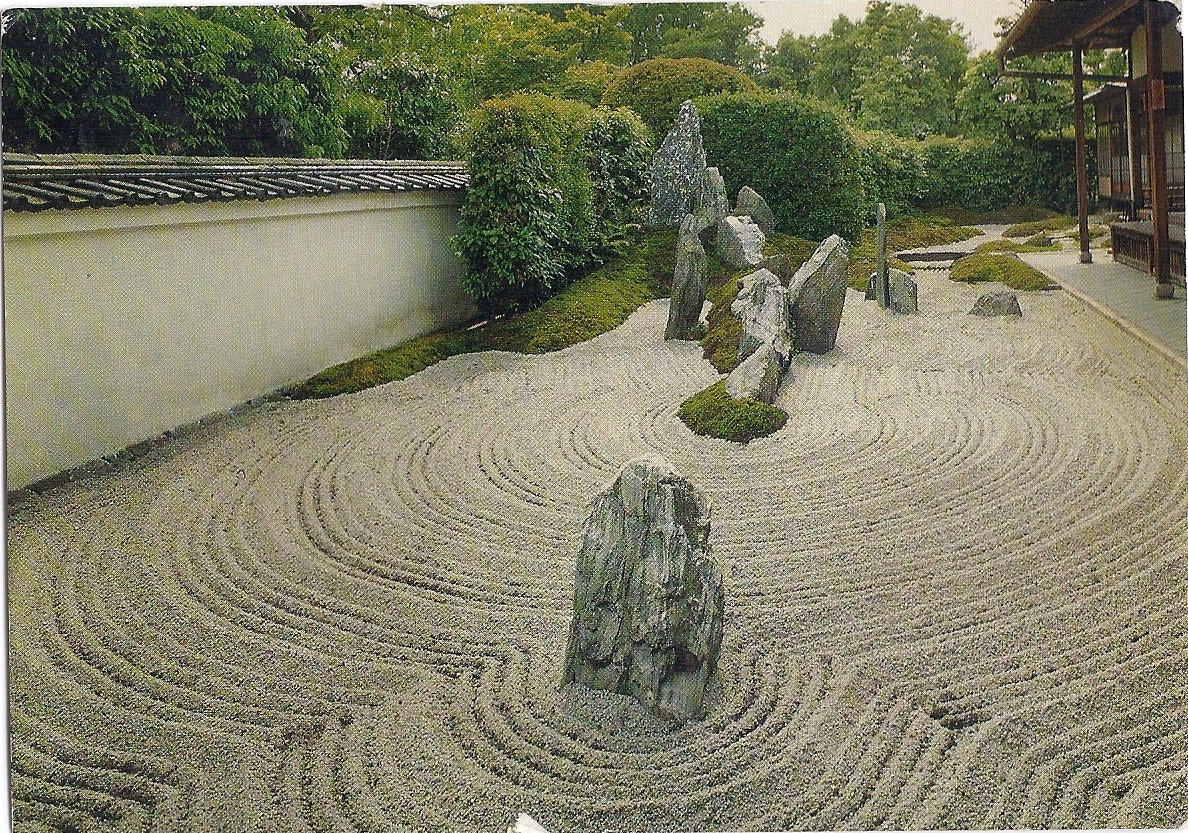
אם כבר ביפן עסקינן, יש לי עוד שתי גלויות יפניות - ומכיוון שהן נשלחו לאותה נמענת, חשבתי לצרף את שתיהן לרשומה אחת. שתי הגלויות נשלחו למישהי בשם אֶמִיקוֹ שִׁיבָּה, בקיבוץ גבעת חיים איחוד, בשנת 1969. יכול להיות שהיא התנדבה שם, במסגרת גל המתנדבים שהגיעו לארץ אחרי מלחמת ששת הימים, למרות שאני קצת תוהה כמה מתנדבים יפנים כבר היו (אבל אולי זה רק עניין של סטריאוטיפים?). ויש גם את כת המָקוּיָה, שיש לה כמה מרכזים בישראל, ואולי לכן היא באה. אני לא יודעת.
בכל אופן, שתי הגלויות מקסימות; הן עדיין מאוד 'ייצוגיות', כי ככה זה עם גלויות בדרך כלל, אבל בעיניי זה באופן הרבה יותר עדין מאשר הגלויה הקודמת - מן הסתם כי שלחו אותן תושבי המקום, ולא תיירים. מאוד ברור שיש כאן שני כותבים שונים, כי הכתב שונה לחלוטין. אבל אני לא יכולה לקרוא אותן.

Postcard 1, front:
גלויה 1, צד קדמי:


Back:
צד אחורי:


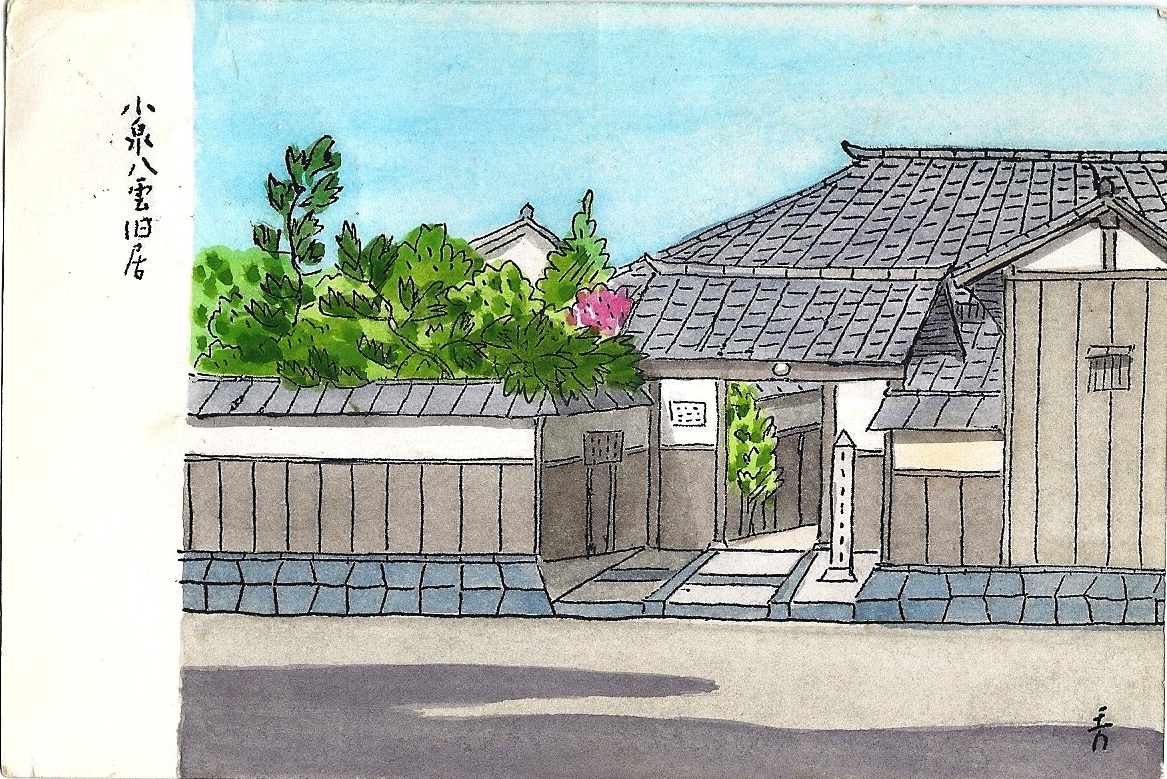
My guess is that this first postcard was written by an older person than the second - I think mostly because of the fact that the writing is from top to bottom, which is more traditional, while in the second one it's from left to right, which is a modern adaptation (actually, I think in the past you could write either way, but I know that modern Japanese writing is almost all left-to-right). The first postcard's writing is also much more 'freehand' and streaming in style, while the second one is more neat and round, but that might just be a matter of personal styles.

אני מנחשת שהכותבת של הגלויה הראשונה (אני לא יודעת למה יש לי הרגשה שמדובר בנשים, אולי רק בגלל שזו נמענת ולא נמען... בכל אופן, באנגלית אפשר להתחמק, אבל בעברית קשה יותר) היתה מבוגרת יותר מהכותבת של השנייה - אני חושבת שזה בעיקר מפני שהגלויה הראשונה כתובה מלמעלה למטה, שזו צורה מסורתית יותר, והשנייה כתובה משמאל לימין, שזה יותר מודרני (בעצם נדמה לי שבעבר אפשר היה לכתוב בשתי הצורות, אבל אני יודעת שכתיבה יפנית מודרנית היא כמעט תמיד משמאל לימין). הכתב בגלויה הראשונה גם 'חופשי' וזורם יותר בסגנון שלו, ולעומתו הכתב בגלויה השנייה נראה יותר מסודר ועגול, אבל יכול להיות שזה פשוט עניין של סגנון אישי.

Postcard 2, front:
גלויה 2, צד קדמי:


Back:
צד אחורי:


Actually, when I said I can't read this, it wasn't 100% accurate - I can read one word in the second postcard (no, not 'JAPAN', ya smartasses, one word in the Japanese). Through the little Japanese I learnt many many years ago I managed to make out the second word, arigatou, 'thank you'. I can recognise a few more Hiragana symbols here and there, but I can't connect any of them into words I know. And in the first postcard I really can't understand anything. So, this doesn't really count.

האמת היא שכשאמרתי שאני לא יכולה לקרוא אותן, זה לא היה מדויק ב-100% - אני יכולה לקרוא מלה אחת בגלויה השנייה (לא JAPAN, יא חוכמולוגים, מלה אחת ביפנית). בעזרת מעט היפנית שאני זוכרת ממה שלמדתי לפני שנים אני יכולה לזהות שהמלה השנייה היא אָרִיגַטוֹ, 'תודה'. אני מסוגלת לזהות עוד כמה סימני היראגאנה פה ושם, אבל הם לא מתחברים לי לשום דבר מוכר. ובגלויה הראשונה אני ממש לא יכולה להבין כלום. אז זה לא ממש נחשב.

But 'thank you' is still something. Probably thanks for a letter or a package. Or maybe for something else.
Anyone here can read Japanese? Skoshi dake Nihon-go ga dekimas kedo: I can only speak a little Japanese.

ובכל זאת, גם 'תודה' זה משהו. תודה על גלויה או חבילה, מן הסתם. או אולי על משהו אחר.
מישהו כאן קורא יפנית? סְקוֹשִׁי דַקֶה נִיהוֹן-גוֹ גָה דֶקִימַס קֶדוֹ: אני יודעת לדבר רק קצת יפנית.