Hello readers! - !שלום, קוראים

What is this? Read the introduction - מה זה הדבר הזה? הסבר בהקדמה
Showing posts with label city views. Show all posts

Saturday, June 21, 2014

The Proud Grandfather - הסבא הגאה

זה הפוסט ה-50 שלי! הידד!
(וגם הפוסט הראשון ל-2014, אבל בזה אני פחות גאה...)

It's my 50th post! Hooray!
(It's also my first post in 2014, but I'm not as proud of that...)

לפעמים ממש יש לי מזל.
קניתי את הגלויה הזו בגלל משפט אחד במסר שבצד האחורי - ואז הצלחתי ליצור קשר עם הנמען המקורי, שהיה ידידותי וידען וסיפק לי המון מידע על הסיפור שמאחוריה, וזה היה פשוט נפלא.
...אבל אני מקדימה את המאוחר. בואו נביט קודם בתמונה.

Sometimes, I get awfully lucky.
I bought this postcard because of one sentence in the message on the back - and then I managed to contact the original recipient, who was friendly and knowledgeable and and gave a wealth of information about the story behind it. How incredible!
...But I'm getting ahead of myself. Let's have a look at the picture, first.

צד קדמי:

Front:

כפי שאפשר לראות, זו "תחנת גן החיות" המפורסמת (Bahnhof Zoo), הקרויה על שם גן החיות של ברלין שנמצא לא רחוק. אין לי הרבה מה לומר על התמונה הזו למען האמת; היא בהחלט נראית פיפטיז-ית מאוד, אבל זה בעיקר בגלל השחור-לבן והמכוניות המיושנות. המבנים עצמם, כפי שניתן לראות בצילום הרחוב בגוגל (או בצילומים אחרים), נשארו כמעט זהים:

As you can see, this is the famous Bahnhof Zoo train station (named for the nearby Berlin Zoo). I don't have much to say about this photo, actually; it definitely has a very fifties-y vibe, but that's mostly due to the black&white and the old cars. The actual structures,as you can see on Google Street View below (or in other photos), are virtually identical:


ועכשיו לסיבה האמיתית שקניתי את הגלויה הזו - המסר שכתב איש מבוגר חביב בנסיעת עסקים לברלין למשפחתו בארץ.

And now to the real reason I got this card - the message, written from a nice elderly man on business in Berlin to his family back in Israel.

צד אחורי:
Back:

ברלין 16 ביוני 1956
ילדי היקרים מאוד! היום יש ביכולתי לכתוב לכם ולהודות לכם על דרישות השלום, שנשלחו לי על ידיכם יחד עם יתר הקרובים בערב שבת. כפי שכתבתי כבר לאמה [=אמא - י.ב], שלומי הוא טוב מאוד ואינני מרגיש את לחץ הדם הגבוה. אני תקוה שגם אתם בריאים וכמו כן ילדיכם שהם נכדי. את התיק המכיל את תמונותיכם ואת תמונות הסבתה והנכדים אני מציג לכלם בלי להתחשב עם ענינם בתמונות. פרטים על שלומי כאן וגם על החיים,[הפסיק במקור] שאני מנהל, תוכלו לשמוע מאמה, שאני כותב לה בפרוטרוט. קר לי והיום הופתעתי ע"י גשם חריף והייתי רטוב עד לעור גופי. אני מתגעגע לבית ואני שמח כבר עכשיו על יום שובי. היום בקרתי אצל מרשי לוינשטיין וקבלתי ממנו את ידיעות חדשות [כך במקור] מיום 8 דנא. שם שמעתי גם את הידיעות מקול ישראל. נפתלי, שלח לי את העט הנובע שלך לתיקון. רציתי לקנות לך את הספר המשומש
Westostpassage להשתלמותך!!
נשיקות רבות ולבביות לכם והנכדים, אביכם
Berlin, June 16 1956
My dearest children! Today I am able to write to you and thank you for your warm wishes, which have been sent to me by you with the other relatives on Friday evening. As I have already written to muther [sic], I am doing very well and I do not feel the high blood pressure. It is my hope that you are also in good health as well as your children who are my grandchildren. The case containing your pictures and the pictures of the grandmuther and grandchildren I show to everyone with no consideration of their interest in the pictures. Details about how I am doing here and also about the life,[sic] I lead, you can hear from muther, to whom I write in great detail. I am cold and today I was surprised by a sharp rain and was wet to the skin of my body. I miss home and am already happy for the day I return. Today I visited my client Lewinstein and received from him a recent news [sic] from the 8th of this month. There I also heard the news from Kol Israel [radio]. Naftali, send me your fountain pen for repair. I wanted to buy you the used book
Westostpassage for your continuing education program!!
Many loving kisses for you and the grandchildren, your father
אתם יכולים מן הסתם לנחש מה המשפט הבודד שבגללו רציתי את הגלויה הזו, נכון?
"את התיק המכיל את תמונותיכם ואת תמונות הסבתה והנכדים אני מציג לכלם בלי להתחשב עם ענינם בתמונות".
זה פשוט נהדר - אני ממש אוהבת כמה שהוא מודע לעצמו. בדרך כלל, כשחושבים על הסבא שמראה לכולם בגאווה את תמונות המשפחה שלו, והאנשים שסביבו משלימים עם העניין בשקט ואולי קצת מגלגלים את העיניים, מדמיינים מישהו שהוא אולי קצת חסר-מודעות. אבל לא. האיש הזה היה כ"כ שמח, כ"כ גאה במשפחה שלו, שפשוט לא היה אכפת לו אם אנשים לא התעניינו בתמונות שהראה להם. ויודעים מה? כל הכבוד.
ואני אוהבת את הטון של הכתיבה באופן כללי. הכל פשוט מעולה.

You can probably guess what is that one sentence that made me want the postcard, right?
"The case containing your pictures and the pictures of the grandmuther and grandchildren I show to everyone with no consideration of their interest in the pictures".
That is just so wonderful - I love the self-awareness of it. Usually, when you think of the grandfather proudly showing family pictures to everyone, and the people around putting up with it and perhaps rolling their eyes, you imagine the guy to be a bit oblivious. But no. This man is so happy, so proud of his family, that he simply doesn't care if people aren't interested in the photos he shows them. And you know what, good on him.
I really love the tone of the whole thing in general, actually. It's all great.

ואז התחלתי לחפש פרטים על הגלויה, כרגיל - וכשחיפשתי את שם הנמען, מצאתי די בקלות את הביוגרפיה הקצרה של פרופסור נפתלי קדמון באתר של ארגון יוצאי מרכז אירופה, וגם את הראיון הביוגרפי הזה באתר של המרכז למיפוי ישראל, וחשבתי לעצמי שאל"ף, סיפור החיים שלו מרתק, ובי"ת, שאם הוא פרופסור באוניברסיטה העברית, יש מצב שכמו שכבר קרה בעבר אוכל למצוא את כתובת האימייל שלו באתר האוניברסיטה. ואכן, הצלחתי ליצור קשר עם פרופ' קדמון, שגם מצא זמן (על אף עיסוקיו הרבים) לענות לי, כפי שאמרתי בפתח הרשומה, בשמחה ובפירוט רב.

So I started looking for details about the postcard, as usual - and when I searched for the recipient's name, I quite quickly found the short biography for Professor Naftali Kadmon at the Association of Israelis of Central European Origin website, as well as this biographical interview at the Survey of Israel website [Hebrew-only links, sorry!], and thought to myself that first of all, he seems to have a fascinating life story, and secondly, that if he's a Hebrew University professor, there's a chance I'll be able to find his email address on the university website, as has happened before. And indeed, I managed to contact Prof. Kadmon, who actually find time in his busy schedule to reply, and as I said when I started this post did so graciously and in detail.

לנושא הגלויה הראשונה אני יכול להוסיף שהיא נכתבה אכן על ידי חותני עו"ד מרטין וולפסון בשעה ששהה בברלין לרגל טיפול בנושא השילומים מגרמניה, ביחד עם אשתו, חמותי רופאת העיניים ד"ר ארנה וולפסון לבית ג"ץ (Goetz). הייתי יכול להוסיף רבות, אבל אסתפק בזה. רק אוסיף שיש ברשותי ארכיון משפחתי גדול מאד, שאת עיקרו (אלפי תעודות) הפקדתי ב"ארכיון המרכזי לתולדות העם היהודי" באוניברסיטה העברית בירושלים. על סמך החומר הכלול בו ערכתי שני ספרים עם הסיפור המשפחתי משנת 1680 ועד 2004:    Vom Rheinland ins heilige Land(זכרונותיו של אבי המנוח) שיצא לאור בגרמניה, ו"אלה תולדות ומסעות – מהיכן הגעתם, נכדיי לבית קדמון" (עם 152 תצלומים מ-1870 ואילך!) בהוצאה פרטית.
Regarding the first postcard, I can add that it has indeed been written by my father-in-law, attorney Martin Wolfson, while he was staying in Berlin to take care of the reparations from Germany, along with his wife, my mother-in-law, the ophthalmologist Dr. Orna Wolfson, née Goetz. I could have added much more, but this will suffice. I will only add that I possess a very large family archive, most of which (thousands of documents) I have deposited in the Central Archives for the History of the Jewish People at the Hebrew University in Jerusalem. From the material in it I have compiled two books with the family story from 1680 until 2004: Vom Rheinland ins heilige Land (the memoirs of my late father) which was published in Germany, and History and Travels - Where Did You Come From, My Grandchildren of the Kadmon Family (with 152 photos from 1870 onwards!) which was self-published.

גם על עו"ד מרטין וולפסון אפשר לקרוא באתר של ארגון יוצאי מרכז אירופה (וגם בספר 'אלה תולדות ומסעות' המוזכר לעיל - אגב, הצצתי קצת בעותק שבספריה הלאומית, והוא מרתק בעיניי), ועל הספר הנזכר בגלויה סיפר לי פרופ' קדמון:

הספר הנזכר בגלויה של חותני מרטין וולפסון אינו ספר שלי, אלא של אחד משני חוקרי הארקטיקה הדגולים נורדנשלד ואמונדסן. יתר על כן, השם שגוי: נדמה לי שבגלויה כתוב Westostpassage או Ostwestpassage וזה רק תיאור של הנושא [...] הכוונה היא למעבר ממיצר ברינג לאורך החוף הצפוני של אסיה ועד לכף הצפוני (נורבגיה). לא זכור לי שביקשתי מחותני למצוא לי את הספר. זה כל מה שאני יכול להוסיף בשלב הנוכחי.

Atttorney Martin Wolfson also has a short biography at the Association of Israelis of Central European Origin website [again, Hebrew only, my apologies] (as well as in the aforementioned History and Travels book - I flipped through the copy at the National Library, and found it fascinating), and as for the book mentioned in the postcard, Prof. Kadmon said:
The book mentioned in the postcard by my father in law Martin Wolfson is not a book of mine, but of one of the great arctic explorers Nordenskiöld and Amundsen. Moreover, the name is wrong: I believe the postcard says Westostpassage or Ostwestpassage and this is just a description of the subject [...] It refers to the passage from the Bering Strait along the northern coast of Asia to the North Cape (Norway). I do not remember asking my father in law to find this book for me. This is all I can add at the current stage.

ואם אתם באמת רוצים לחקור הלאה, ובמקרה גם קוראים גרמנית, אתם יכולים לקרוא את מסמך ה-PDF הזה בארכיון המרכזי לתולדות העם היהודי בירושלים, שמתאר את עזבון יצחק קדמון (יוליוס קאופמן), ולהמשיך משם...

And if you really want to dig deeper, and happen to read German, you can check out this PDF at The Central Archives for the History of the Jewish People Jerusalem, which details the estate of Isaac Kadmon (Julius Kaufmann), and do more research from there...

אבל מן הסתם רוב הקוראים לא מתעניינים בדברים כאלה באותה המידה כמוני. אז בואו נפסיק כאן, עם הרמת כובע וירטואלית לסבא הגאה ההוא, לפני כמעט שישים שנה, שעבד קשה בברלין אבל בכל זאת מצא זמן לשוטט בחנויות ספרים משומשים ולהשוויץ בנכדים שלו לכל מיני אנשים זרים שלא ציפו לזה בכלל. העולם הוא מקום טוב יותר בזכות סבים כמוהו.

But of course, I suppose most readers aren't as fascinated by that stuff as I am. So let us leave here, with a tip of the virtual hat to that proud grandfather, almost sixty years ago, toiling away in Berlin but still taking time to wander around in used book stores and to show off his grandchildren to any unsuspecting stranger. Grandparents like that make the world a better place.


תודתי שלוחה לפרופ' קדמון על כל המידע.
Many thanks to Prof. Kadmon for all the information.

Monday, December 3, 2012

The View of Notre Dame - הנוף מנוטרדאם

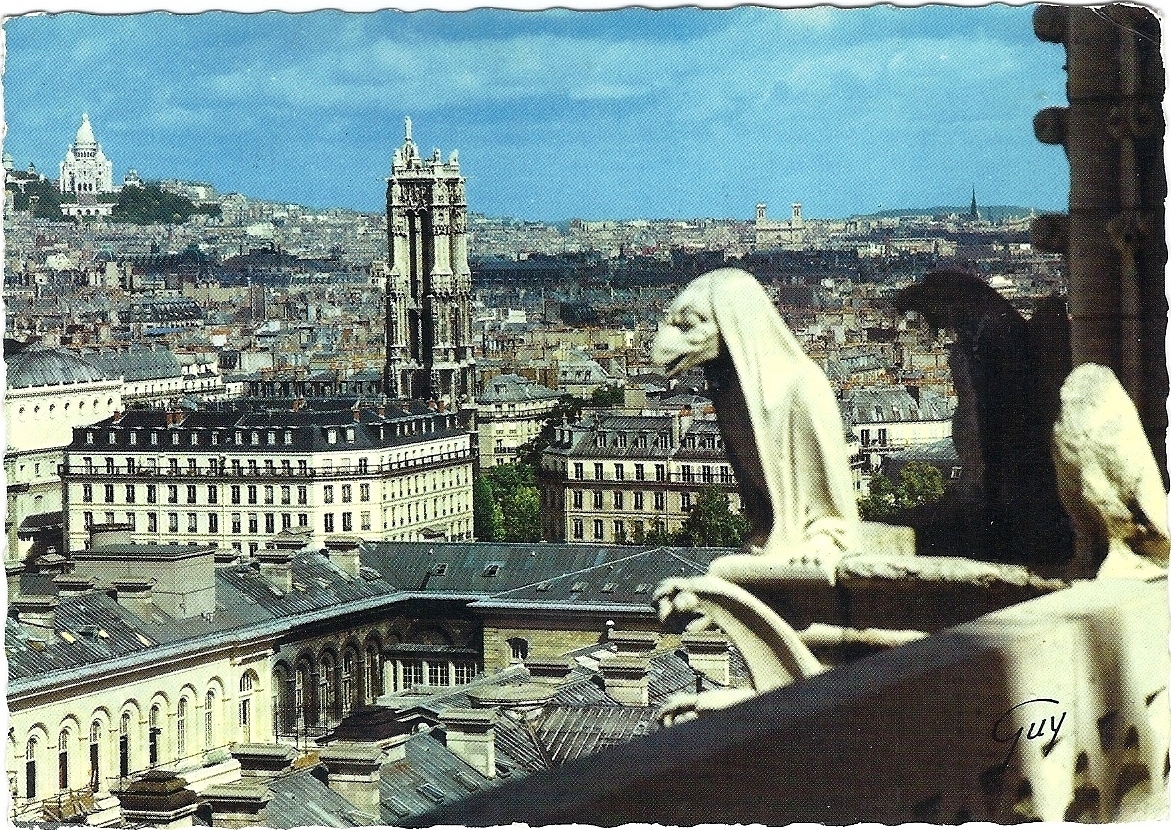
הרשומה הזו מוקדשת לידידתי הציירת המגניבה והמאבק שלה בקומפוזיציות משעממות, כי לא מזמן יצא לי לקרוא משהו מעניין על קומפוזיציה בציור, אז חשבתי עליה, וגם על הגלויה הזו. ובעצם, זה משהו שאני באופן כללי אוהבת בגלויות - כשלא הולכים על התמונה התיירותית הסטנדרטית אלא בוחרים זווית (או קומפוזיציה) לא שגרתית. ולמיטב זכרוני, זו אכן היתה הסיבה העיקרית שבחרתי את הגלויה הזו, בגלל הגרוטסקות (לא גרגוילים!) האלה שיושבות לא בפוקוס בקדמת התמונה והופכות אותה פתאום למשהו הרבה יותר מעניין מסתם נוף עירוני פריזאי רגיל.

This post is dedicated to my awesome artist friend and her struggle against boring composition, because I recently happened to read an interesting thing about composition in painting, so I thought about her, and about this postcard. And really, this is something that I like in postcards, in general - when they don't go for the standard touristy photo but choose an unusual angle (or composition). And as far as I remember, this really was the reason I picked this card, because of these grotesques (they're not gargoyles!) sitting out of focus in the foreground, which suddenly make it into something much more interesting than a regular city view of Paris.

צד קדמי:
Front:

הגרוטסקות האלה שייכות כמובן לקתדרלת נוטרדאם-דה-פארי - ואני אומרת 'כמובן' לא כי אני כזו מומחית לפאריס אלא כי הפרטים מופיעים בצד האחורי של הגלויה. אבל תכל'ס, נוטרדאם (והגרוטסקות שלה) באמת נורא מפורסמת, ויכול להיות שהייתי מנחשת בעצמי. אגב, אם כבר אני מספקת פרטים לפי הכיתוב בצד האחורי, ברקע אפשר לראות את גבעת מונמארטר ובזיליקת הסקרה קר, את מגדל סן ז'אק, ואת כנסיית סן-ונסן-דה-פול. סה מניפיק!
בכל אופן, מכיוון שכבר הזכרתי את הצד האחורי, הגיע הזמן לראות מה נכתב שם.

These grotesques belong, of course, to the cathedral of Notre Dame de Paris - and I say 'of course' not because I'm much of a Paris expert, but because the details are written on the back. But to be honest, Notre Dame (and its grotesques) really is very famous, so I probably would've guessed it on my own, too. By the way, since I'm telling you details from the caption on the back, in the background you can see the Sacré-Cœur Basilica on Montmartre hill, the Saint-Jacques Tower, and the Church of Saint-Vincent-de-Paul. C'est magnifique!
Anyway, since I've mentioned the back, it's about time to see what's written there.

צד אחורי:
Back:
פאריס, 5/6/70
עידית החמודה!
אני כותב מגן ציבורי נחמד ליד ה-Concorde. בפריס אני עושה חיים נפלאים ואפילו נהנה מהקורס אליו נשלחתי. מה נשמע אצלך? איך החיים בירושלים. אנא, כתבי לי מכתב ארוך ומעניין על הנעשה בי-ם.
שלך: עמוס

Paris, 5/6/70
Idit sweetie!
I am writing from a nice park near the Concorde. I am having a wonderful time in Paris, and even enjoying the course I was sent to. How are you doing? How's life in Jerusalem. Please write me a long interesting letter about all that's going on in Jlm.
Yours: Amos

הבילושים שלי לא עזרו הרבה, הפעם. חשבתי שהשם עמוס סופר מוכר לי, אבל כנראה שהתבלבלתי, כי לא מצאתי אף אחד שנראה רלוונטי בין כל העמוס-סופר-ים שעלו בגוגל (ביניהם אחד עם פרצוף רציני שמתעסק במשהו עם מחשבים, אבל רק גמר ב"א בשנות השמונים אז לא נראה לי שהוא זה שביקר בפריס ב-1970, יקיר העיר נתיבות בתחום המסחר והתעשייה לשנת 2012, שב-1970 בדיוק פתח נגריה בנתיבות - לא מוזכר קורס בפאריס, ובכלל, מטון הגלויה נשמע שעמוס סופר 'שלי' התגורר בירושלים -ועוד כמה שנראים צעירים מדי ו/או בלתי קשורים בעליל. בקיצור, אין לי מושג). לעומת זאת, גוגל כן מצא לי את "פקידת הסעד הגב' עידית נתנאל, מנהלת התחנה לטיפול בחיי המשפחה ונישואין, אזור דרום ירושלים" שנשמעת כמו אופציה הגיונית למדי. באתר עיריית ירושלים אפילו מצאתי את כתובת הדוא"ל שלה, וניסיתי לכתוב לה ולשאול על הגלויה, אבל לא קיבלתי תשובה (אני יכולה לשער שהיא עסוקה למדי). 
עדכון, 6.12.2012: כל כך מהר! איזה קוראים מגניבים יש לי. אחד מהם, יובל, קרא את השיחה בתגובות והחליט לעשות מעשה ולפנות לגיל חובב (שבילדותו - באותה התקופה בערך - גר גם הוא במבוא יורם, בבניין ממול) דרך האתר החדש שלו, FoodSpy (אגב, מסתבר שזה אתר כיפי ממש, שמזכיר את הימים הטובים של המדור[ים] של גיל חובב בעיתון, למי שמכיר והתגעגע). זו התשובה שקיבל:
שלום יובל,
עד כמה שזכור לי, עידית נתנאל אכן גרה בקומה האחרונה של מבוא יורם 7. אם זכרוני אינו מטעני (מדובר בלפני 40 שנה), היא הייתה רווקה ויפה.
אולי כדאי שתתעניין אצל משפחות גולן ושיינין שגרו בקומה הראשונה.
ברכות,
ג"ח
טוב, אז אני לא הולכת לבדוק את המשפחות מהקומה הראשונה (לא בזמן הקרוב, בכל אופן), אבל עדיין, איזה יופי!

My detective work didn't do much good, this time. The name Amos Sofer sounded kinda familiar, but I guess I was wrong, because I couldn't find anyone that seemed relevant among all the Amos-Sofer-s that came up on Google (including one serious-looking dude who does something with computers, but only finished his BA in the 80s so I doubt he was the guy who went to Paris in 1970, one 2012 Patron of the City of Netivot in the field of trade and industry [Hebrew link, sorry!], who in 1970 just opened his carpentry shop in Netivot - no course in Paris is mentioned, and besides, from the tone of the postcard it sounds like 'my' Amos Sofer lived in Jerusalem - and a few others who looked too young and/or totally unrelated. I have no idea, is what I'm saying). On the other hand, Google did find a welfare officer named Idit Netanel, head of the Center for Marriage and Family Life [my translation, because I couldn't find the official term; if I'm wrong, please let me know] in south Jerusalem, which sounds like a pretty logical option. I even found an email address for her, in the Jerusalem Municipality website, and I tried writing her to ask about the postcard, but got no answer (I can imagine she's a busy lady).
Update, Dec 6 2012: So soon! My readers are really cool. One of them, Yuval, read the conversation in the comments (where another reader, - translator and all-around awesome person Inbal Saggiv-Nakdimon - suggested asking Gil Hovav, who as a kid lived right across the street at around that time, if maybe he knew Idit, and I replied that if I ever meet him I might ask), and decided to do something about it. So he turned to Gil Hovav through his new website, FoodSpy (nothing in English as of time of writing, but you can read a bit about it, and other stuff in this interview). Here's a translation of the answer he got:
Hello Yuval,
As far as I remember, Idit did live on the top floor of Mevo Yoram 7. If I remember correctly (we are talking about 40 years ago), she was single and pretty.
You might want to check with the Golan and Scheinin families, who lived on the first floor.
Regards,
G.H.
Well, I don't intend to check with those families who lived on the first floor (not any time soon, anyway), but still, how lovely!

ואפילו את המלון לא הצלחתי למצוא (ובד"כ זה קל הרבה יותר). כתובת יש - ולמטה אפשר לראות גם את תמונת הבניין ב-Google Street View - אבל לא ראיתי שום דבר על 'מלון דורוק', רק דברים על מלונות בסביבה שמציינים שהם קרובים לתחנת המטרו 'דורוק' (שאכן נמצאת ממש שם ליד). בתי העסק היחידים שאני רואה בכתובת הזו כיום הם שני מכוני יופי, והמלון היחיד שנמצא כיום ברחוב הוא Hôtel Mayet במספר 3, ואני לא חושבת שזה זה. הדבר הכי קרוב שמצאתי הוא דירות הנופש האלה; מכיוון שאני בעצם לא בדיוק יודעת למה הכוונה בצירוף hotel residence, יכול להיות שזה העניין. אם כן, סחתיין למר סופר [יו, אולי בגלל זה השם שלו נשמע לי מוכר?!], כי הן נראות די מדהימות.

And I couldn't even find the hotel (which is usually much easier). I got the address - and below you can see a Google Street View of the building - but couldn't see anything about a Hotel Duroc, only stuff about hotels in the area which say they are close to the Duroc Metro station (which is indeed nearby). The only businesses I can see at this address today are a couple of beauty salons, and the only hotel on the street seems to be Hôtel Mayet at no. 3, but that's probably not the one. Closest I found is these holiday apartments; since I actually don't know what a 'hotel residence' is exactly, maybe that's what it is. If so, good on Mr. Sofer, because they look pretty amazing.


וזה הכל, בעצם. אני אפילו לא עד כדי כך מאוכזבת מכך שהחקירות שלי לא ממש הצליחו; כרגיל, הייתי שמחה לדעת את שאר הסיפור, אבל גם אם לא אדע, יש לי תמונה חביבה של פאריס (עם גרוטסקות), וגם קפסולת-זמן קטנה של מה שנשמע כמו רגע נעים מאוד: מישהו יושב בפארק, 'עושה חיים נפלאים' בעיר יפהפייה, ומשרבט כמה מלים לילדה אחת, שבטח ממש התרגשה כשקיבלה את הגלויה. זה ממש נחמד, כל זה.

So, that's all, really. I'm not even all that disappointed about the failed research; as always, I'd love to know the rest of the story, but even if I can't, I have a neat picture of Paris (with grotesques), and a little time capsule of what seems to be a really good moment: someone sitting out in a park, having a wonderful time in a beautiful city, and scribbling down a few words to a girl who must have been really excited to receive this card. That's all really nice.

~*~
ועכשיו, עדכוניאדה! יש כמה וכמה עדכונים, אז הפעם שמתי אותם בסוף ולא בהתחלה, אבל הם לא רעים בכלל אז אל תפספסו.
קודם כל, ידידתי צועניית המדרכות מצאה ברחוב רסיסים מהחיים של מישהי, וכתבה עליהם רשומה יפהפייה שמומלץ מאוד לקרוא. אגב, זה אולי המקום להבהיר שעד כמה שאני מעריכה אנשים שמוצאים גלויות משפחתיות ישנות, או חפצים אלמוניים, וישר חושבים עליי (וזה ממש נהדר מצדכם!), בבקשה אל תציעו לי אותם. הבלוג הזה הוא האוסף שלי - הדברים שמצאתי (בין אם זה בערימת גלויות משומשות בחנות ספרים או סתם ככה ברחוב) ושדיברו אליי ובחרתי בהם ספציפית. אולי זו תחושה לא כל כך רציונלית, אבל אם אלה דברים שמישהו אחר מצא, אני מרגישה שהם כבר לא שלי, מה שקצת הורס את כל הקטע של הבלוג. משהו כזה, בכל אופן. אבל תמיד אשמח לקשר לרשומות שמדברות עליהם - כמו זו הנהדרת של המרצדת, לעיל.

And now, update time! There's a bunch, so I put them at the end instead of the beginning, but they're good, so don't miss them.
First of all, my friend the Sidewalk Gipsy found fragments of someone's life out on the street and made a lovely post about them [Hebrew only, I'm afraid, but with photos], which you should check out. By the way, this is probably a good place to explain that as much as I appreciate it when people find old family postcards, or anonymous objects, and immediately think of me (and that's so wonderful of you!), please don't offer them to me. This blog is for my collection - for things I found (whether in the pile of old postcards in a book store, or just lying in the street) and had some sort of connection with, so I picked them specifically. It might not be very rational of me, but I feel that if it's stuff that somebody else found, then they aren't mine, which undermines the point of the blog. Something like that, anyway. However, I will always be delighted to link to other people's posts about that stuff - like that lovely one above.

עכשיו, כמה עדכוני בלוג, ובראש ובראשונה עדכון אחד מוצלח ממש - מישהו שלצערי לא הזדהה מצא לי את עלי בראון מהגלויה הקודמת והסיפור שלו פשוט נפלא. טיזר: מסתבר שהכתובת הזו ברחוב הנביאים קשורה לרחל המשוררת, ולשיר היפהפה שלה 'עץ אגס'. לכו לקרוא!

And now, some blog updates, starting with the best one - someone who unfortunately remains anonymous found Eli Brown from the previous postcard, and his story is simply marvelous. Teaser: it turns out that this address on HaNevi'im St. is related to the Hebrew poet Rachel, and one of her beautiful poems, 'Pear Tree'. Go read it!

וגם חזרתי לרשומה אחרת, ישנה יותר, ועדכנתי אותה עם כמה סרטונים וכד'.

I also went back to an older post, and updated with some videos and such.

כמו כן, הנה עוד תזכורת מדיה חברתית, בתקווה שלא נמאס לכם: הבלוג בפייסבוק.
יתרון אחד של פייסבוק, אגב, הוא שיותר נוח לי לפרסם שם עדכונים קטנים, ולכן מי שמנוי לעמוד הפייסבוק לא היה צריך לחכות חודשים עד שאגמור לכתוב רשומה, אלא ראה את שני העדכונים שלעיל מיד כשנשלמו.

And also, here's another social media reminder, and I do hope you're not tired of them yet: the blog on Facebook.
One advantage of Facebook, by the way, is that it's more convenient to post little updates there, so those who are subscribed to the page didn't have to wait for months until I'm done writing a new post, and just saw the two blog updates above as soon as they were done.

ובאמת באמת אחרון: אמרתי לאחד מידידיי שאעזור לפרסם את הכנס הגיקי הקטן והמגניב שיתרחש פה בירושלים ממש בקרוב, אז ששת קוראיי היקרים - אם לא ידעתם על העניין הזה, ואם אתם מתעניינים במדע ו/או מדע בדיוני, שווה להקליק על הקישור שלהלן ולקרוא על הכנס, וגם שווה ללכת אליו. יהיה כיף. אני אהיה שם.

Now really finally, I told a friend I'd help advertise this awesome little geek-con that's happening in Jerusalem very soon, so for the, like, six people who read this, if any of you was not aware of this thing, and if you're interested in science and/or science fiction, you should click the link below and check it out, and you should go. It'll be fun. I'll be there.

Friday, May 11, 2012

Don't talk to me about life - אל תספרו ל י על החיים


ראשית, הבהרה - הכותרת לא קשורה במישרין לתוכן הרשומה, מעבר לרמה הכללית, כלומר העובדה שבכל הרשומות כאן אני בעצם מספרת לכם על החיים של מישהו אחר (או לפחות על המעט שאני מצליחה לראות מהם במקרה בגלויה או בתמונה). הסיבה העיקרית לכותרת היא שמדובר בציטוט מ'מדריך הטרמפיסט לגלקסיה' (ציטוט של מרווין, כמובן), ושהיום ה-11 במאי - יום השנה למותו של דגלאס אדאמס - וזו הרשומה הארבעים ושתיים שלי [יכול להיות שעכשיו בלבלתי את חלקכם, כי כתבתי ברשומה הקודמת שהיא מס' 42, אבל זה מפני שהתבלבלתי בעצמי; היא הייתה מס' 41, וכשגיליתי את זה תזמנתי את הבאה בתור לתאריך המתאים] ורציתי לעשות מחווה קטנה לאחד הספרים האהובים עליי. זה הכל. לענייננו:

First, a clarification - the post title isn't directly related to the content, beside the general level, that is, the fact that in all the posts here I'm actually talking to you about somebody's life (or at least the bit of it I can maybe see in a postcard or a photo). The mainreason for this title is that this is a quote from the Hitchhiker's Guide to the Galaxy (said by Marvin, of course), and that today is May 11th - the anniversary of Douglas Adams' death - and this is my forty-second post [I might have just confused some of you, because I wrote in my previous post that it was no. 42, but this is because I was confused myself; it was no. 41, and once I realised that I made sure the next one is on a fitting date] and I wanted to make a little homage to one of my favourite books. That's all. Now to the matter at hand:


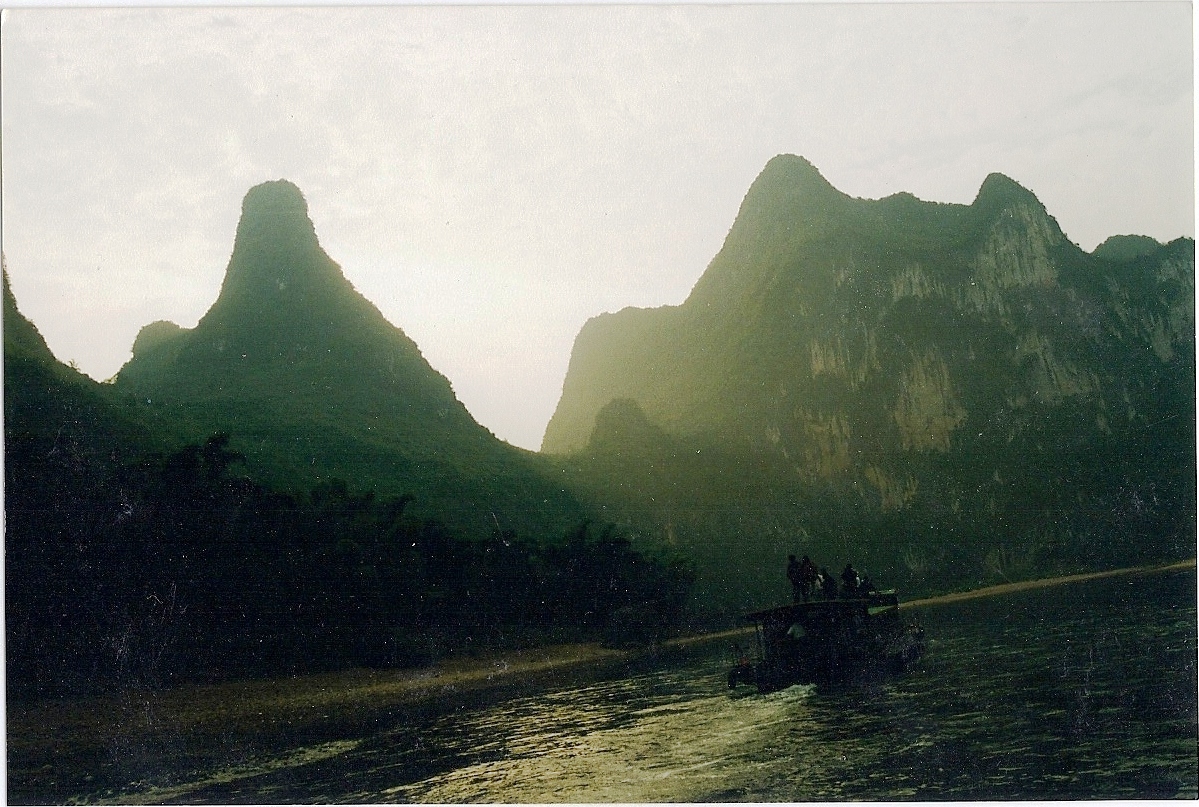
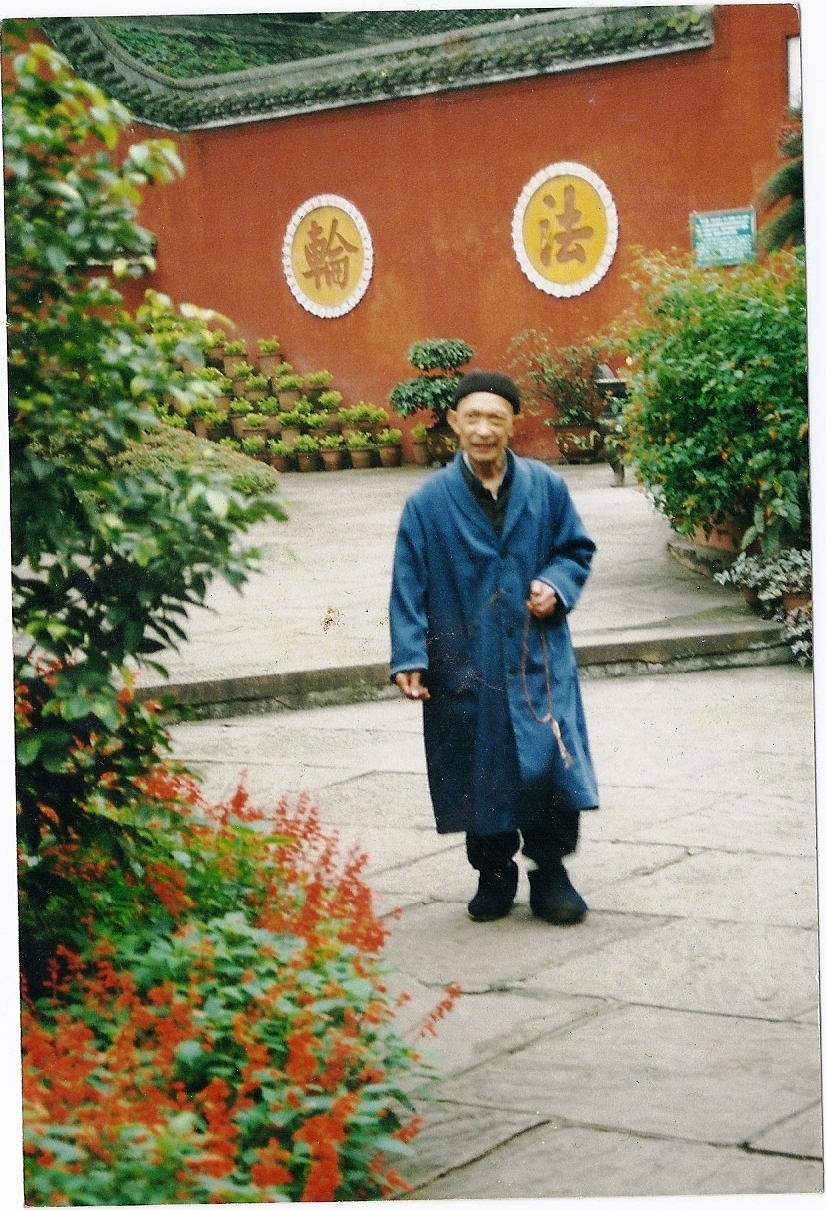
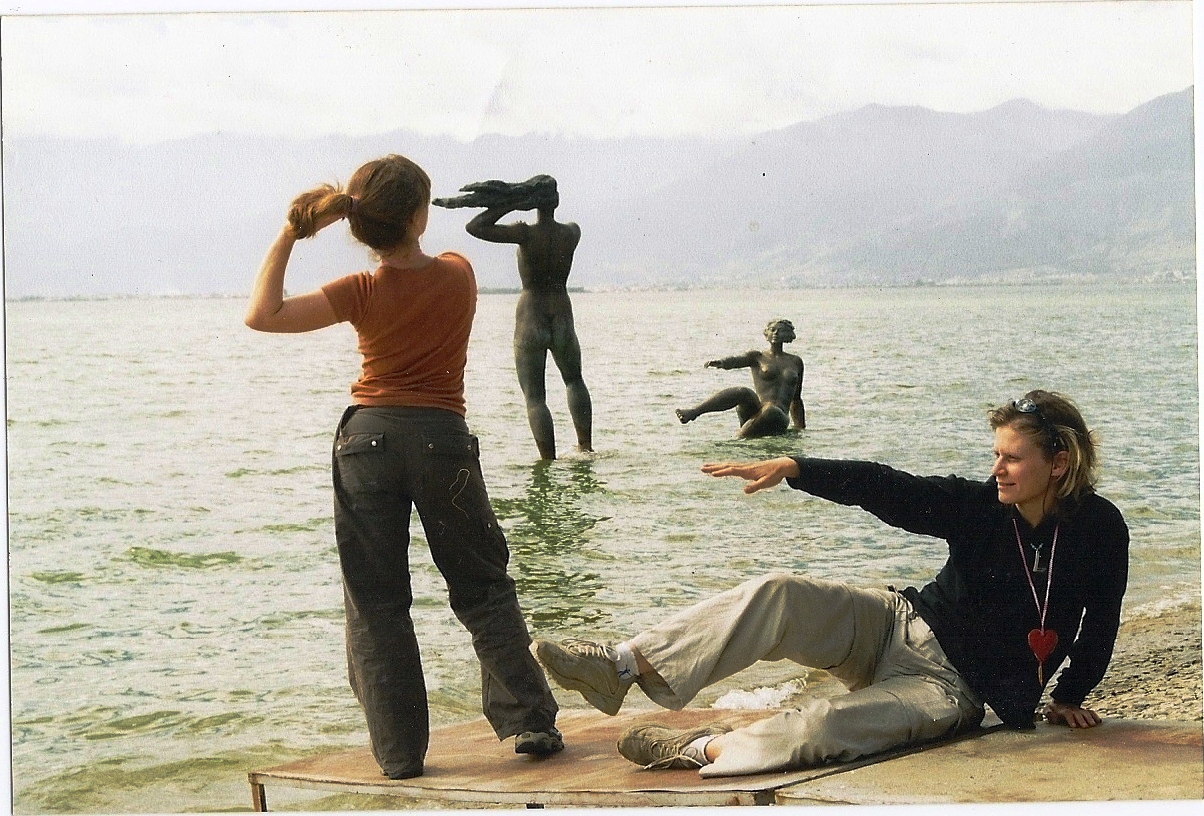
יש המון תמונות ברשומה הזו, אבל יש ביניהן קשר ישיר. זו בוחטה אחת של תצלומים - כולם בבירור מאותו טיול של כמה חברים בסין - שמצאתי לפני כמה שנים ברחוב, מונחים ליד פח אשפה. אני לא יודעת למה הם היו שם. אולי התברר שמדובר בתמונות כפולות, או סתם בגרסאות לא מוצלחות של תמונות אחרות (אוי, אני זוכרת כשהיינו מצלמים על פילם, ואז חיכינו שיפתחו את התמונות, ורק אז גילינו שחלקן לא משהו). אולי זה איזשהו הסבר יותר דרמטי: מערכת יחסים רומנטית שעלתה על שרטון, וגרמה לאחד מבני הזוג (ואוף עם השפה הסקס-מניאקית הזו שלא נותנת לי לנסח כאן משהו נטול מגדר מובהק כמו באנגלית...) לזרוק תמונות שעוררו זכרונות כואבים. אולי זו היתה איזו טעות מתסכלת, והם בכלל לא התכוונו לזרוק את התמונות, ואחר כך היו צריכים ללכת לעשות עותקים חדשים מהתשלילים, כי עד שהם קלטו שהם שמו את התמונות מהטיול בקופסא של 'להוציא לזבל', מישהו אסף אותן והלך. מי יודע? אני בטח שלא.

Got a whole bunch of pictures in this one, but they're all directly connected. It's a single batch of photos - all obviously from the same trip of some group of friends to China - which I found some years ago in the street, next to a trash bin. I don't know why they were there. Maybe they ended up being duplicates, or worse versions of other pictures in the batch (oh, I remember the times when we took photos on film, and waited to have them developed, and only then found out that some of them didn't turn out so great). Maybe it's some sort of more dramatic explanation: a romantic relationship that went sour, causing one person to throw out pictures that brought up painful memories. Maybe it was a really frustrating mistake, and they never meant to throw out the pictures, and later had to go and make new copies from the negative, because by the time they realised they put their vacation pictures in the 'out to the trash' box, somebody picked them up and left. Who knows? I sure don't.

אז אתם יכולים להמציא סיפור משלכם על מה שקרה שם; בכל אופן, הנה קבוצת אנשים (שני בחורים ובחורה אחת, נדמה לי) בטיול למקום זר ומופלא, שם בטח עברו כל מיני הרפתקאות. אני לא יודעת מי היו, או איפה הם עכשיו, או באופן כללי מה הסיפורים שלהם [דרך אגב, כרגיל - אם התרחש משהו בלתי-סביר ואת/ה, קורא/ת יקר/ה, בין האנשים שבתמונות, ובא לך לתת לי עוד מידע על הסיפור, אשמח מאוד; ואם נראה לך שעדיף שאוריד את התמונות מהבלוג, אשמח פחות, אבל אכבד את רצונך.], אבל זכיתי בהצצה קטנה להרפתקאות שלהם, וזה יופי מבחינתי.

So, make up your own story, about what happened there; anyway, here is a group of people (two guys and one girl, looks like) out on a trip to a strange and wondrous place, probably having all sorts of adventures. I don't know who they were, or where they are now, or generally what their stories are [by the way, as usual - if by some odd stroke of improbability you, dear reader, are one of these people in the photos, and would like to give me any more information about the story, I will be delighted; if you prefer that I remove them from the blog, I will be less delighted, but will respect that.], but I got a little glimpse of those adventures, and I'm happy with that.

אז מתחילים עם איזשהו בניין, או אולי מתחם, עם מין כיפה עתידנית כזו ועם דגל ישראל. אין לי מושג במה מדובר. ניסיתי את חיפוש התמונות ההפוך, אבל לא מצאתי כלום. שגרירות ישראל, אולי?

We begin with some sort of building, or perhaps a compound, with a futuristic dome and an Israeli flag. I have no idea what it is. I tried the reverse image search thing, but nothing came up. Israeli embassy, perhaps?


מכאן והלאה יש סדרת תמונות שנראות כמו שאפשר לצפות שתצלומי-חופשה ייראו: קצת נוף ותמונות טבע, קצת מקומיים, קצת תמונות 'הנה אנחנו במקום זה-וזה'. הן נחמדות בהחלט.

And from here on out, it's just a series of what you would expect vacation photos to look like: some scenery and nature, some locals, some 'here we are at this-and-that place' shots. They're pretty nice.


וזה כל מה שיש לי בעצם. כרגיל, אם מי מקוראיי יוכל להוסיף מידע, יופי. עד הפעם הבאה, סוף שבוע נעים, ואל תשכחו את המגבת שלכם.

And that's all I have, really. As usual, if any of you readers has any information to add, please do so. Until next time, have a good weekend, and don't forget your towel.

Thursday, August 18, 2011

Tel Aviv - תל אביב

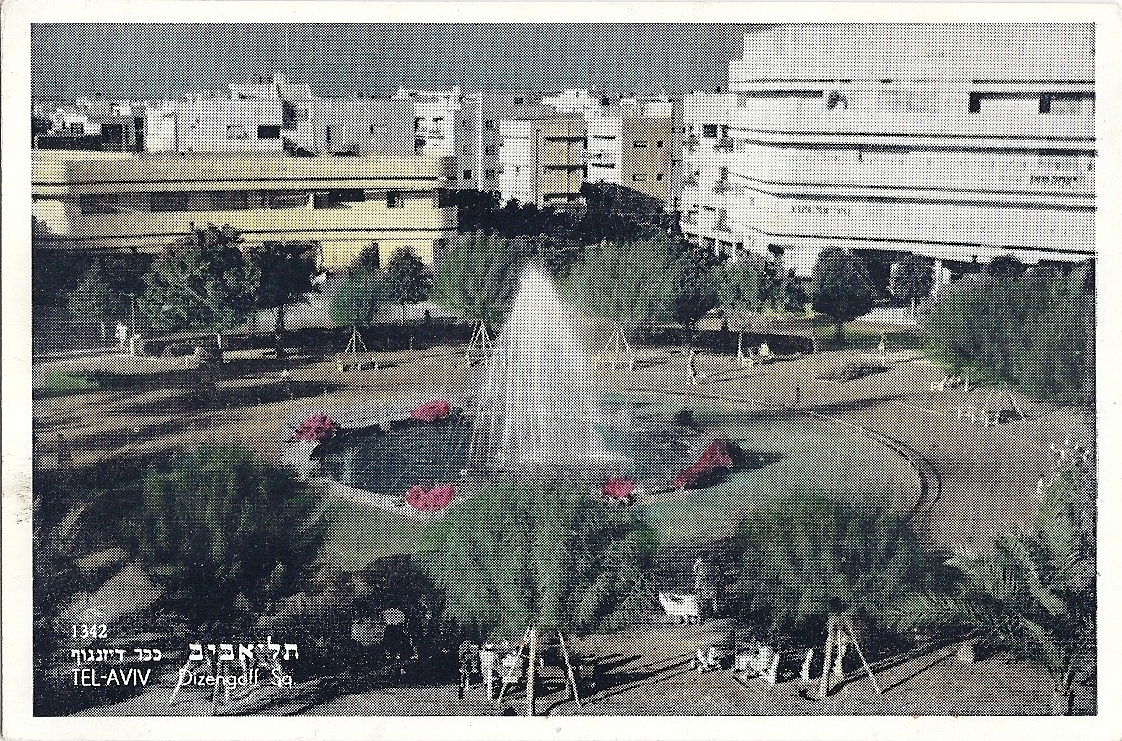
דברים מעניינים קורים עכשיו בתל אביב. לא רק בתל אביב כמובן, אבל המחאה הנוכחית לצדק חברתי התחילה שם, והמרכז עדיין שם. וזה די מגניב. כך שעל אף ירושלמיותי הגאה, החלטתי להקדיש רשומה אחת לתל אביב... טוב, וגם ממילא יש לי גלויה מתאימה (אולי לא של שדרות רוטשילד, שם יושב המאהל המרכזי, אבל כיכר דיזנגוף זה קרוב, נכון? בערך, לפחות? אוף, אין לי מושג).

There are interesting things happening in Tel Aviv at the moment. Not just in Tel Aviv, of course, but the recent social-justice protest started there, and is still centred there, and it's pretty cool. So despite being a proud Jerusalemian, I decided to dedicate one post to Tel Aviv... well, that, and I had a fitting postcard anyway (It might not feature Rothschild Boulevard, where the main tent city is located, but Dizengoff Square is nearby, right? At least sorta? Dang, I have no idea).

זו עוד אחת מהגלויות נטולות הטקסט, שבחרתי פשוט מפני שמשהו בהן מצא חן בעיניי. כאן מדובר היה בשני דברים בעיקר - הראשון הוא התמונה עצמה, עם כיכר דיזנגוף הישנה, ועם הצביעה ביד שנוספה על רקע שחור לבן, שנראית חביבה בהחלט.

This is another one of those blank postcards, that I picked up simply because I liked something about them. Here it was mainly two things - first was just the picture, with the old Dizengoff Square, and with the hand-colouring on top of the black-and-white, which is pretty neat-looking.

צד קדמי:
Front:


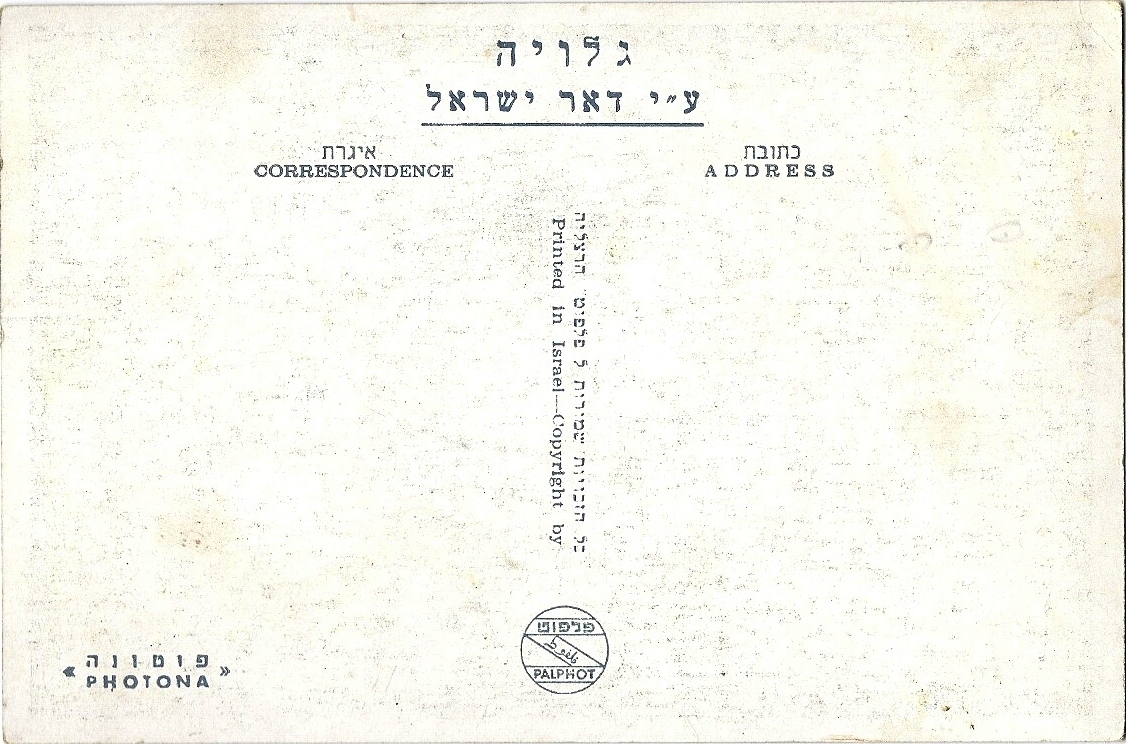
הדבר השני שסקרן אותי קצת בגלויה הוא בצד האחורי. פה ושם שמתי לב לגלויות ישנות - אלה תמיד גלויות ישנות - שבהן לכל אחד משני החצאים של הצד האחורי יש כותרת כדי להבהיר שכאן הכתובת וכאן המסר (או, במקרה של הגלויה הזו, ה'איגרת', מלה קצת ארכאית ומקסימה). זה סקרן אותי מפני שלמרות שהגלויות הן כאמור ישנות, הן בכל זאת נדפסו בתקופה שבה גלויות היו בסך הכל דבר נפוץ, וממש ממש לא חידוש (שאלתי את האינטרנט, ואנשים התחילו לשלוח גלויות כבר במחצית השנייה של המאה ה-19). אז למה צריך את הכותרות? זה לא אמור להיות עניין די ברור מאליו?
[מצד שני, לא כ"כ מזמן ראיתי בסטטיסטיקה שמישהו הגיע לבלוג בעקבות חיפוש של הצירוף 'איך לכתוב גלויה', אז לכו תדעו...]

And the second thing that made me curious about this postcard was on the back. Here and there I've noticed some old postcards - it's always old postcards - where each half of the back side has a title to make it clear that here you write the address and here the message (or, in the case of this postcard, the 'correspondence'; the Hebrew term has even more of a lovely archaic ring to it, being roughly the equivalent of the word 'epistle'). It made me curious because while the postcards are, as I said, old, they were still printed at a time when postcards were a pretty common thing, and really not a novelty at all (I asked the internet, and people have been sending postcards since the second half of the 19th century). So what are the titles for? Shouldn't this be fairly obvious?
[Then again, not long ago I saw on my statistics that someone got to the blog through searching 'how to write a postcard', so go figure...]

צד אחורי:
Back:


אין לי תשובה, למען האמת. זה סתם משהו שסקרן אותי. קונבנציה של אותה תקופה, יש להניח.

I have no answer for this, actually. It's just something I got curious about. A convention of the time, I suppose.

כשניסיתי לראות אם אני יכולה לתארך איכשהו את הגלויה, או לפחות את התמונה, נתקלתי בסופו של דבר בהודעה הזו בפורום אספנים בתפוז (כדאי אגב להציץ גם בהודעות אחרות בשרשור, יש שם תמונות נהדרות של תל אביב הישנה). כמו שאפשר לראות, הגלויה שמוצגת שם היא בעצם בדיוק אותה גלויה כמו שלי, כולל הכתובית בצד שמאל למטה, והמספר הסידורי שמופיע בה; עם זאת, כותב ההודעה מציין שהיצרן הוא 'פלפוט פלשתינה', ואצלי מדובר כבר על 'דאר ישראל', כך שיש כנראה הבדל בשנים.


While trying to see if I can somehow date this postcard, or at least the photo, I eventually ran into a post on a local collectors forum (Hebrew link, but you might still want to check out the posts on this thread for some lovely pictures of old Tel Aviv). As you can see, the postcard shown there is basically the same one as mine, down to the caption on the lower left side, and the serial number on it; however, the guy who wrote the post mentioned that the publisher was 'Palphot Palestine', and in my card it says 'Israel Post', so there seems to be a difference in the time period.

בכל אופן, החלטתי לפנות לאותו כותב, הדי אור, ולהתייעץ איתו. לשמחתי, מדובר לא רק באדם ידען להפליא בכל הנוגע לפריטי אספנות (בעיקר כאלה שקשורים לא"י של פעם), אלא שהוא גם שמח לעזור ולחלוק את הידע הזה. להלן התשובה הראשונה ששלח לי בעניין:

Anyway, I decided to turn to that person, Hadi Orr, and consult him about this. I was happy to find out that he is not only very knowledgeable about collectors' items (especially those related to old-time Israel), but he was also very happy to help and share his knowledge. Here's the first answer he sent me:
חברת פלפוט הוקמה באמצע שנות השלושים - אני חושב 1934 - והיתה בתחרות עם מספר חברות בארץ ישראל שהדפיסו גלויות
פלפוט גם יצרה ספרים לוחות שנה ועוד. מבחינה טכנולוגית למרות שהמתחרים עברו למכונות הדפסה צבע היא המשיכה עד סוף שנות החמישים להדפיס בשחור לבן ובחלק מהמקרים להכניס על הגלויות שחור לבן מה שנקרא לצבוע ביד
לא יודע בדיוק איך טכניקה הזו נעשתה אבל יש הרבה גלויות שכאלו ולטעמי הם יפיפיות
הגלויה הזו צריכה להיות מתחילת שנות החמישים עד אמצע שנות החמישים

Palphot [publication] company was established in the mid-30s - 1934, I think - and was in competition with a number of other companies in Israel that printed postcards.
Palphot also made books, calendars, and other things. Technologically, although their competitors moved to colour printing, they kept printing in black and white until the late 50s, and in some cases added on the black and white postcards what's called hand-colouring.
I don't know how exactly this technique was done, but there are plenty of postcards like that, and I think they're beautiful.
This postcard should be from the early- to mid-50s.
וגם אילו עצר כאן - דיינו. אבל הוא לא עצר כאן, ושלח לי עוד מידע בהמשך:

Even if he had stopped there, that would have been enough. But he hadn't, and sent more more information later on:
הסתכלתי בעיון על הגלויה שלך
ואני חושב שאני יודע איך עשו את הצביעה ביד
לקחו את בסיס הגלויה השחורה
ובאזור מסויים על נייר נפרד - כמו ניר פרגמנט אבל בטח זה היה פילם או צלולוייד - צבעו צבע אחד נניח ירוק את העצים ולקחו בסיס אחר ועליה צבעו צהוב שיכסה את הבית וכו
וכן היתה הדפסה שחור שזה הבסיס ואחרי חלק קטן של הירוק ואחרי זה חלק קטן של הצהוב
כלומר עשו הפרדת צבעים ידנית

I looked at your postcard carefully
and I think I know how they did the hand-colouring.
They took the black base of the postcard
and in a certain area on a separate piece of paper - like wax paper, but it was probably film or celluloid - they coloured in with one colour, say green for the trees, and then they took another base and on that coloured in yellow for the house and so on.
So there was a black print as the base, and then a small part with green and then a small part with yellow
So they did a manual colour separation.
ועוד:

And more:
בעיון מדוקדק נראה כי הצילום נראה שנות הארבעים ועל הבסיס שלו הדפיסו שוב באותם גלופות בשנות החמישים
וזה רק בהתלבטות ביני לבין עצמי
קשה להגיד

After careful perusal it appears that the photograph appears to be from the 40s and and on the base of that they printed again with the same moulds in the 50s.
This is just me debating with myself.
It's hard to say.

תודה מקרב לב למר הדי אור על שחלק את כל המידע הזה! אפשר לראות עוד דוגמאות מתוך האוספים שלו כאן, ואני חייבת לציין שלמרות שלי אישית אין את המוח המסודר שצריך כדי להיות אספן של ממש - אני סתם אוהבת דברים ישנים - אני באמת אסירת תודה על כך שיש אנשים כמוהו, שעוזרים לשמר פריטים היסטוריים מהזן בר-החלוף. כל החפצים היומיומיים הקטנים האלה אולי לא נכנסים לספרי ההיסטוריה, אבל הם כל כך חשובים, בעיניי, מפני שבזכותם אפשר לבנות את תמונת היומיום של התקופה, ולזכור איך נראו החיים האמיתיים של רוב האנשים.

Many thanks to Mr. Hadi Orr for sharing all this information! You can see some examples from his collections here (Hebrew, but lots of pictures), and I must say that while I don't have the kind of orderly mind that it takes to actually be a collector - I just like old stuff - I am very grateful that people like him that help preserve historical ephemera. Those little everyday items might not make it into the history books, but they are so important, I think, because through them you can build the picture of the everyday of an era, and to remember how real life looked like for most people.

והנה עוד משהו מגניב לסיום - סרטון קצר של תל אביב מסביבות שנות ה-40 (בצבע!), קצת מטושטש פה ושם ובכל זאת די מופלא. מכיוון שאני נורא ירושלמית, אני לא יכולה לזהות את כל המקומות שמופיעים שם, אבל אני מקווה שמישהו מבין קוראיי היושבים בלחות של השפלה יוכל לזהות אותם ולהנות.

And here's something cool to finish with - a short video of Tel Aviv from sometime around the 40s (in colour!), a bit blurry now and then but pretty great nonetheless. Being the Jerusalemite that I am, I don't know Tel Aviv very well, so can't recognise all the places seen there, but I'm hoping that some of my readers living over in that humid coastal plain will be able to recognise them, and enjoy it.

Sunday, April 10, 2011

The Awful German Language - השפה הגרמנית האיומה

Hey, new post.

הי, פוסט חדש.

Sometimes I have an organised plan - or at least semi-organised (I'm not a very organised sort of person) - about what my next updates would be, and then I suddenly run into something that works associatively with the last post, and decide to use that instead.

לפעמים יש לי תכנית מסודרת, או מסודרת-למחצה בכל אופן (אני לא בנאדם מסודר במיוחד), מה יהיו העדכונים הבאים - ואז אני נתקלת במשהו שמסתדר לי אסוציאטיבית עם הרשומה האחרונה, ומחליטה להעלות אותו במקום.

Which is what happened with this postcard - I was totally going to put here some of the Brown family postcards (you know, to sort of continue that Chicago postcard), but then I ran into this card in my favourite used book store, and I had to buy it and upload it here, because it is also from Berlin, and it dovetails nicely into the story from the previous post.

זה מה שקרה עם הגלויה הזו - לגמרי התכוונתי להעלות את הגלויות של משפחת בראון (נו, במעין המשך לגלויה משיקגו), אבל אז נתקלתי בגלויה הזו בחנות הספרים המשומשים החביבה עליי, והייתי חייבת לקנות אותה ולהעלות אותה כאן, כי גם היא מברלין, ומשתלבת כ"כ יפה בסיפור מהרשומה הקודמת.

Front:
צד קדמי:

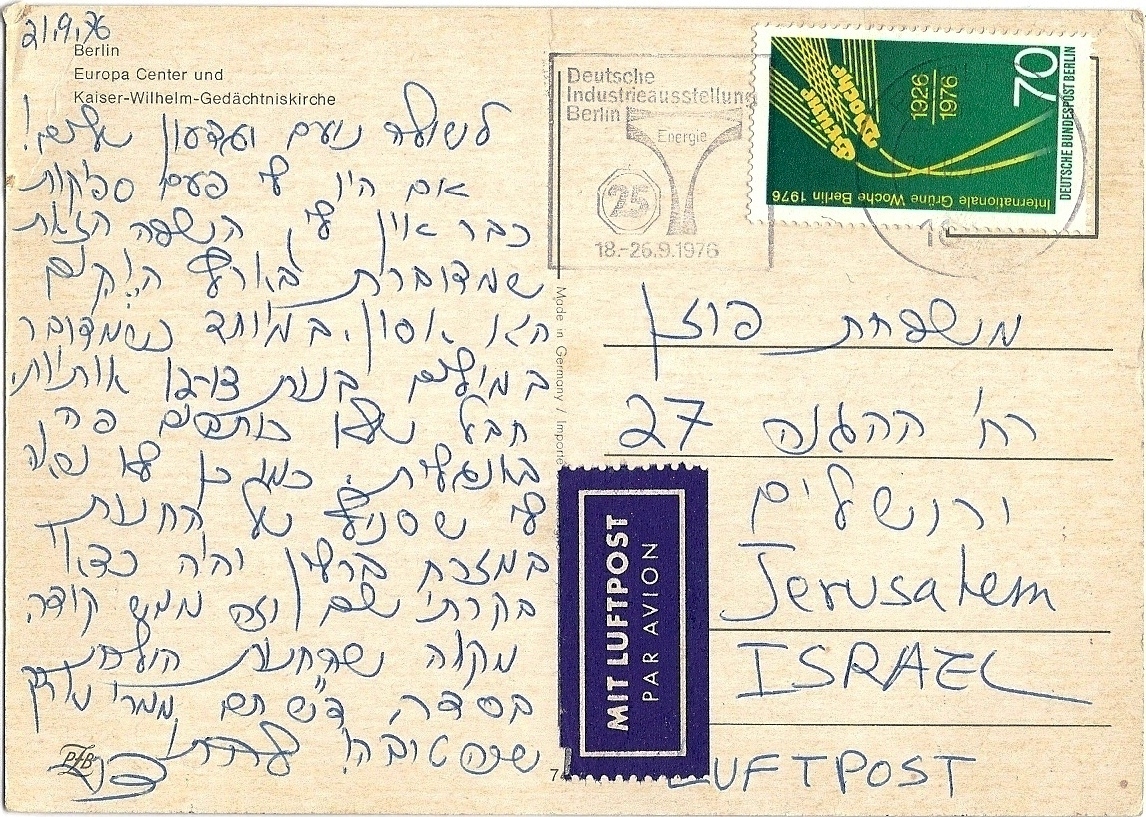
So first of all, this is in Berlin - like the last card. One of the things I liked about this picture (apart from the grey, almost industrial atmosphere, so different from what you usually see in postcards) is the bombed church spire. At the time I thought that maybe they didn't get the chance to fix it since the war; but when I started researching a little about the places featured here, I found the explanation: the church was left that way on purpose, as a sort of memorial, and new structures were built next to it for the chapel and belfry (these are the two dark polygonal structures you can see in the picture to the right and left of the church spire).

אז קודם כל, זה בברלין - כמו הגלויה הקודמת. אחד הדברים שאהבתי בתמונה (חוץ מהאווירה האפרפרה, כמעט כמו של אזור תעשייה, שכל כך מנוגדת למה שמוצאים בגלויות בדרך כלל) הוא מגדל הכנסיה המופצץ. בזמנו, חשבתי שאולי לא הספיקו לתקן אותו מאז המלחמה; אבל כשהתחלתי לחקור קצת על המקומות המתוארים כאן, מצאתי את ההסבר: השאירו את הכנסיה כך בכוונה, כמעין אנדרטה, ולידה הקימו מבנים חדשים לאולם התפילה ולמגדל הפעמונים (אלה שני המבנים הרב-צלעיים הכהים שאפשר לראות בתמונה מימין ומשמאל לכנסיה).

Looking online, I  found a modern view of the place, from the exact same angle (I prefer to link rather than embed, since it's a stock photo), which is a great way to see what changed between then and now. But I also looked for that spot on Google maps, and that's where it gets interesting - if you look at the map below, you will notice this is right next door to 162 Kantsraße, where Remde's St Pauli used to be. Cool.

כשחיפשתי באינטרנט מצאתי תמונה עדכנית של המקום, מאותה זווית בדיוק (אני מעדיפה לקשר ולא להטמיע את התמונה, כי היא לשימוש מסחרי), וזו דרך טובה לראות מה השתנה בין אז לעכשיו. אבל אז גם חיפשתי את האזור בגוגל מפות, וכאן זה נעשה מעניין - אם תסתכלו במפה שלהלן, תוכלו לראות שזה ממש ליד קאנטשטראסה 162, לשעבר מקום משכנו של מועדון Remde's St Pauli. מגניב.


But beyond all this stuff, what I liked the best about this postcard - as often happens - is the message on the back. It has a great combination of funny and historical, plus that thing about people writing to their workplaces which always interests me (and has now become a tag).

אבל מעבר לכל זה, מה שהכי אהבתי בגלויה הוא בכלל המסר בצד האחורי. יש בו שילוב מצוין של המשעשע וההיסטורי, וגם הקטע הזה של אנשים שכותבים למקום העבודה שלהם, שתמיד מעניין אותי (ושעכשיו הפך גם לתגית).

Back:
צד אחורי:


לשולה נועם וגדעון שלום!
אם היו לי פעם ספיקות [כך במקור] כבר אין לי, השפה הזאת שמדוברת בארץ היֶקִים היא אסון. במיוחד כשמדובר במילים בנות 12-13 אותיות. חבל שלא כותבים פה באנגלית. כמו כן לא נראה לי שסניף של החנות במזרח ברלין יהיה כדאי, בקרתי שם וזה ממש קודר.
מקווה שהחנות הולכת בסדר, ד"ש חם ממרי ואריק
שנה טובה!
להת', צור[?]
Hello Shula, Noam and Gideon!
If I ever had any doubtes [sic] I don't anymore, this language spoken in the land of yekkes is a disaster. Especially when it's words of 12-13 letters. Too bad they don't write in English here. In addition, I don't think that a branch of the store in East Berlin would be a good idea, I visited there and it's very bleak.
I hope the store is going alright, Mary and Erik send their warmest regards
Happy new year!
See ya, Tzur[?]

...And hence the title - because when I read his complaints about German I couldn't help but think of the famous Mark Twain piece.

...ומכאן הכותרת - כי כשקראתי איך הוא מתלונן על גרמנית לא יכלתי שלא לחשוב על הקטע המפורסם של מארק טווין.

I gotta admit that the thing about writing your workplace is not that outstanding here, since it seems he's the manager, and is writing partly on business, but the fact that he's writing from the 1976 Deutsche Industrueausstellung - German Industry Exhibition - makes up for it. Can't really tell you why I feel it makes up for it (couldn't even find much about this specific exhibition on Google), it just seems cool. Maybe because the word Industrieausstellung has 20 letters in it, which mashes quite well with the exasperation the writer expressed with the German language. What can I say, I'm a language nerd, I like odd stuff like that.

אני חייבת להודות שזה שהוא כותב למקום העבודה לא כ"כ יוצא דופן כאן, כי עושה רושם שהוא המנהל, והוא כותב בין השאר בענייני עבודה, אבל מצד שני הוא כותב מה-Deutsche Industrueausstellung - תערוכת התעשייה הגרמנית - של 1976, וזה סוג של פיצוי. אני לא ממש בטוחה למה אני מרגישה שזה פיצוי (אפילו לא הצלחתי למצוא הרבה על התערוכה הספציפית הזו בגוגל), אבל זה פשוט מגניב בעיניי. אולי מפני שבמלה Industrieausstellung יש 20 אותיות, וזה מתחבר יפה עם התסכול של הכותב מהשפה הגרמנית. מה לעשות, אני חנונית שאוהבת שפות, דברים מוזרים כאלה מוצאים חן בעיניי.

As for the historical aspect, the move from the humourous tone of the language complaint to the description of why it's probably not a good idea to open a branch of whatever store it is in East Berlin is quite abrupt (warning: TV Tropes link, could steal hours of your time without notice!).
Like with the previous post, a lot of the images I have about this are based on popular culture. I wasn't there. I was pretty young when the wall came down, so can't even say I directly remember it, and this was a huge event, unlike the mundane details of everyday life under the harsh Soviet regime. So all I have is the images from movies and such - and all these mental pictures are tinged with brown and grey. Perhaps not all movies about East Berlin are, like The Lives of Others, about the fear and oppression and people's almost hopeless attempts to subvert the regime,or at least to make it out, but even the more lighthearted movies, like Goodbye Lenin [by the way, apparently the whole thing is on YouTube now; you should watch it, if you haven't, it's good], have a lot of sadness in them.

מבחינת עניינים היסטוריים, בין הטון ההומוריסטי של התלונה על בעיות השפה לתיאור של למה כנראה לא כדאי לפתוח סניף של החנות במזרח ברלין יש מעבר חד למדי (זהירות: קישור לאתר TV Tropes, שעשוי לגזול שעות מזמנכם בלי שתשימו לב!).
כמו במקרה של הרשומה הקודמת, הרבה מהדימויים שיש לי בעניין הזה נובעים מהתרבות הפופולרית. לא הייתי שם. הייתי די צעירה כשנפלה חומת ברלין, אז אני אפילו לא יכולה לומר שאני זוכרת את זה במישרין - ומדובר על אירוע עם חשיבות עצומה, לעומת כל הפרטים היומיומיים של החיים תחת קשיי השלטון הסובייטי. אז כל מה שיש לי זה דימויים מסרטים וכיו"ב - וכל התמונות המנטליות האלה אפופות בגווני אפור וחום. אולי לא כל הסרטים על מזרח ברלין עוסקים, כמו חיים של אחרים, בפחד ובדיכוי ובנסיונות הכמעט נואשים של אנשים לחתור תחת המשטר, או לפחות לברוח משם, אבל אפילו בסרטים הקלילים יותר, כמו להתראות לנין, [אגב, מסתבר שהוא הועלה בשלמותו ליוטיוב עכשיו; אם לא צפיתם בו, הוא מומלץ מאוד], יש לא מעט עצבות.

And in this postcard, I think I can see it too, in the short and rather matter-of-fact description of this guy's visit to the GDR. I don't know what he imagined before he went to Germany, I don't know what sort of business options he and the rest of the store workers discussed, but eventually, it all came down to one conclusion: 'I don't think that a branch of the store in East Berlin would be a good idea, I visited there and it's very bleak'. And it's not like mid-70s Israel was such a cheery place - this was written only a few years after the big trauma of the Yom Kippur War, after all - and still, East Berlin was bleak. Very bleak, even.

ונדמה לי שבגלויה אפשר להבחין באותה עצבות, התיאור הקצר והענייני למדי של הביקור ב-DDR. אני לא יודעת מה הוא דמיין לפני שנסע לגרמניה, אני לא יודעת על אילו אופציות עסקיות הוא שוחח עם שאר עובדי החנות, אבל בסופו של דבר הכל הסתכם במסקנה אחת: 'לא נראה לי שסניף של החנות במזרח ברלין יהיה כדאי, בקרתי שם וזה ממש קודר'. וזה לא שישראל של אמצע שנות השבעים היתה כזה מקום עליז ושמח - סך הכל הגלויה הזו נכתבה שנים ספורות אחרי הטראומה הגדולה של מלחמת יום כיפור - ובכל זאת, במזרח ברלין היה קודר. ממש קודר, אפילו.

But it's a shame to finish on such a depressing note. Like everything in life, this bleakness does not stand on its own. It's surrounded by other things - by joking about the difficult language in the 'land of yekkes', by the warm regards from Mary and Erik, by business matters, by the lovely design of the stamp for 'International Green Day' (Internationale Grüne Woche; this logo design, by the way, remains to this day)... like the ruined church spire surrounded by its newer counterparts, by regular buildings and roads and people doing their everyday thing, like the blue sky over the yellowish-brown city view in the postcard. And there's a beauty in it.

אבל חבל לגמור את הרשומה במשהו כ"כ מדכא. כמו כל דבר בחיים, הקדרות הזו לא עומדת בפני עצמה. היא מוקפת בדברים אחרים - בהתבדחות על קשיי השפה ב'ארץ היקים', בד"ש חם ממרי ואריק, בענייני עסקים, בעיצוב החביב של בול 'השבוע הירוק הבינלאומי' (Internationale Grüne Woche; העיצוב הזה, אגב, נשמר בסמל גם כיום)... כמו צריח הכנסיה ההרוס, שמוקף במקביליו החדשים, בבניינים רגילים, בכבישים, בבני אדם שעסוקים בענייני היומיום שלהם,כמו השמיים התכולים מעל הנוף החום-צהבהב בגלויה. יש בזה יופי.

Friday, December 31, 2010

Collaborative writing - כתיבה קולבורטיבית

Looks like I'll get another post in before the year ends.
I got the idea to do this postcard when, in the last post, I said there being a lot of people mentioned. Because this postcard also has a lot of people, but in a somewhat unusual way - it was actually written by about six different people.

נראה לי שאצליח להשחיל עוד פוסט לפני סוף השנה.
חשבתי להעלות את הגלויה הזו כשציינתי, בפוסט הקודם, שהם מתייחסים לדי הרבה אנשים. כי בגלויה הזו באמת יש הרבה אנשים, אבל באופן קצת בלתי-רגיל - כתבו אותה כשישה אנשים שונים.

We begin with the front, which shows a view of the Chicago River (interesting side note: when looking for the Chicago River on Google Images, you run into a whole lot of pictures where it is dyed green, which, I realised after a while, is some odd St. Patrick's Day tradition, and not the result of comic-book-style pollution or gamma rays), with a lot of skyscrapers and bridges and other markers of a large metropolis.

נתחיל עם הצד הקדמי, ובו נוף של נהר שיקאגו (מאמר מוסגר מעניין: כשמחפשים את נהר שיקאגו בגוגל תמונות, נתקלים בלא מעט תמונות שלו צבוע בירוק; כפי שהבנתי אחרי זמן מה, זו איזו מסורת מוזרה של יום סנט פטריק, ולא תוצאה של זיהום או קרני גאמא כמו בחוברות קומיקס), עם הרבה גורדי שחקים וגשרים וכיוצא בזה סממנים מטרופוליניים.

Front:
צד קדמי:


Since I've never been to Chicago, I can't speak much about the accuracy of this portrayal, although the sky kind of has this fake-clement look that you sometimes get in postcards of places not known for clement weather (I have, for example, a postcard I bought in Ireland simply because it featured an accurately grey and overcast sky while all the other postcards had a clear blue sky like you almost never actually see). Anyway, it's quite a typical city-view picture, with nothing very special about it.

מכיוון שמימיי לא הייתי בשיקאגו, אני לא יכולה לומר עד כמה זה ייצוג מדויק שלה, אם כי יש לציין שהשמיים נראים קצת כמו הזיוף של מזג אוויר נאה שיש לפעמים בגלויות ממקומות שלא ממש ידועים במזג האוויר הנאה שלהם (יש לי, למשל, גלויה שקניתי באירלנד רק מפני שהשמיים בה היו אפורים ומעוננים כיאות, כשבכל שאר הגלויות היו שמיים כחולים כאלה שאף פעם לא רואים שם באמת). בכל אופן, זו תמונת נוף עירוני טיפוסית למדי, ואין בה כ"כ שום דבר מיוחד.

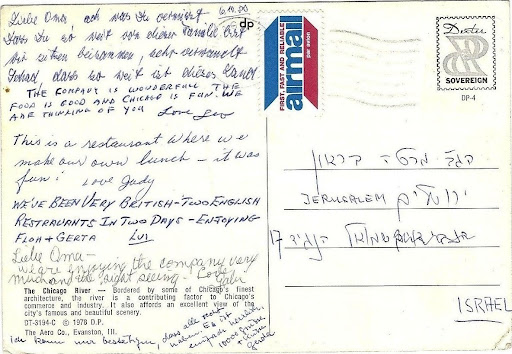
The special part of the postcard begins on the back, where apparently every member of the travelling family got to say a few words. [Note: Some of the messages are in English, and some are in German; the German ones were difficult for me to even read well enough to transcribe them, so I left them out, but will of course be very grateful to anyone who can supply a transcription and/or translation.]

החלק המיוחד בגלויה הזו מתחיל בצד האחורי, שם כנראה כל אחד מבני המשפחה המטיילת כתב כמה מלים. [הערה: כמה מהמסרים הם באנגלית, וכמה הם בגרמנית; את אלה שבגרמנית היה לי קשה אפילו לקרוא כדי לתעתק, אז דילגתי עליהם, אבל אהיה כמובן אסירת תודה לכל מי שיוכל לספק תעתיק ו/או תרגום.]

Back:
צד אחורי:

[German]

The company is wonderfull[sic!] the food is good and Chicago is fun. We are thinking of you.
Love, Leo

This is a restaurant where we make our own lunch - it was fun!
Love, Judy

We've been very British - two English restaurants in two days - enjoying Floh + Gerta
Zvi

Liebe Oma [dear grandma] -
We are enjoying the company very much and the sight seeing.
Love, Galia

[German]
[גרמנית]

החברה מצוייינת[כך במקור!] האוכל טוב וכיף בשיקגו. אנחנו חושבים עלייך.
באהבה, לאו

זו מסעדה שבה אנחנו מכינים את ארוחת הצהריים בעצמנו - זה היה כיף!
באהבה, ג'ודי

היינו ממש בריטים - שתי מסעדות אנגליות ביומיים - נהנים מפלו + גרטה
צבי

Liebe Oma [סבתא היקרה] -
אנחנו נהנים מאוד מהחברה ומהביקור באתרים.
באהבה, גליה

[גרמנית]

Something about this postcard is really fun. You have all the different people writing to the grandma, each with their own style and handwriting, each with their own highlights of the trip (food seems to be one main highlight, which I definitely approve of, although I must say that the concept of an English restaurant - and back in 1980, before any culinary renaissances or anything - is a bit scary, and going to two of them two days in a row is quite a feat). You can imagine them all sitting in the restaurant, passing the card around, chatting and joking. It's sweet.

יש משהו מאוד כיפי בגלויה הזו. כל האנשים השונים כותבים לסבתא, כל אחד עם הדגשים שלו מהטיול (לא מעט מדגישים את האוכל, מה שבהחלט מוצא חן בעיניי, אם כי יש לציין שהקונצפט של מסעדה אנגלית - ועוד ב-1980, לפני רנסאנסים קולינאריים למיניהם - קצת מעורר חשש, וללכת לשתי מסעדות כאלה ביומיים זה עניין מרשים למדי). אפשר לדמיין את כולם יושבים במסעדה, מעבירים את הגלויה ביניהם, מפטפטים ומתבדחים. זה מקסים.

Something interesting: if you look at the address, you can see that they started writing down one street, then realised it was the wrong one, crossed it and wrote the right address down. Did the grandma just move not long before? Both streets are fairly close to each other, in downtown Jerusalem, so if she did, it wasn't that big a move (by the way, here is a picture of the building at the address listed, 17 Shmuel HaNagid St. - that's pretty cool). Or maybe it was just a lapse of memory, like when you start writing and you realise you're writing your own address by mistake. Anyway, I suppose it made it to the right address, in the end.

משהו מעניין: אם מביטים על הכתובת, אפשר לראות שהם התחילו לכתוב רחוב אחד (הנביאים), ואז קלטו שזו הכתובת הלא נכונה, מחקו אותו וכתבו את השם הנכון (שמואל הנגיד). האם הסבתא עברה דירה לא הרבה זמן לפני כן? שני הרחובות האלה קרובים למדי זה לזה, במרכז העיר בירושלים, אז גם עם היא עברה דירה זה לא היה מעבר רציני במיוחד (דרך אגב, הנה תמונה של הכתובת שצוינה, ברח' שמואל הנגיד 17 - זה די מגניב). או שאולי זו סתם היתה פשלה קטנה של הזכרון, כמו כשמתחילים לכתוב ופתאום קולטים שבטעות כתבת את הכתובת של עצמך. בכל אופן, ניתן לשער שבסופו של דבר הגלויה הגיעה לכתובת הנכונה.

So, a nice bit of family togetherness to end the year with. Actually, some of these people kinda crop up in other postcards I got (I suppose they were all sold to the store in the same batch), but it'll be a while before we get to them, because I have a great idea for something to open the new year. What is it? You'll have to wait and see. Happy New Year, till then!

אז זהו, קצת ביחד משפחתי כדי לסגור את השנה האזרחית. למען האמת, כמה מהאנשים האלה צצים בגלויות אחרות שיש לי (אני משערת שכולן נמכרו לחנות באותה נגלה), אבל ייקח קצת זמן עד שאגיע אליהן, כי יש לי רעיון מצוין לגלויה שתפתח את השנה החדשה. ומהי? תצטרכו לחכות ולראות. שנה אזרחית טובה, עד אז!

Monday, November 29, 2010

Still Life - טבע דומם

לפעמים אני קונה גלויות ישנות, בין אם כתוב עליהן משהו ובין אם לאו, פשוט כי הן יפות בעיניי. או ליתר דיוק (שהרי 'יפה' זה מונח נרחב למדי) מפני שיש בתמונה משהו מרשים, שתופס את תשומת הלב שלי, וגורם לי להמשיך ולהביט בה.

Sometimes I buy old postcards, whether they have anything written on them or not, just because I think they're pretty. Or, rather (since 'pretty' is kind of a wide term), because there's something striking about the picture, something that catches my attention, and makes me keep looking at it.

הגלויה שלהלן היא מקרה שכזה - ולמרות שלעומת מה שמצוין בכותרת זה לא 'טבע דומם' קלאסי, יש בה טבע, ויש בה גם הרבה דממה. משהו שקט ויפהפה.

This postcard is one of those cases - and while not exactly a classic 'still life', as the title implies, it does have a lot of stillness in it. Something quiet and beautiful.


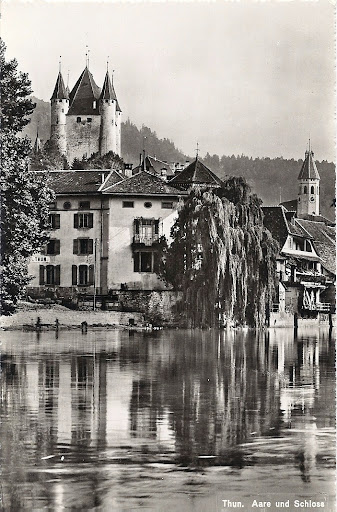
לגבי הכתובית בפינה, תון היא עיירה שווייצית, השוכנת על שפך הנהר אָרֶה לאגם תון. וכמו הרבה ערים ביניימיות אחרות (למען האמת היא היתה בסביבה עוד לפני ימי הביניים, אבל מילא), יש בה טירה, או בגרמנית: Schloss. אז זה די ברור, בעצם. הנה תון במפה:

Regarding the little caption, Thun is a town in Switzerland, on the spot where the river Aare (or Aar) flows into Lake Thun. And, like many medieval towns (it was actually around before medieval times, but still), it has a castle: or, in German, Schloss. Pretty straghitforward, really.
So, here's Thun on a map:


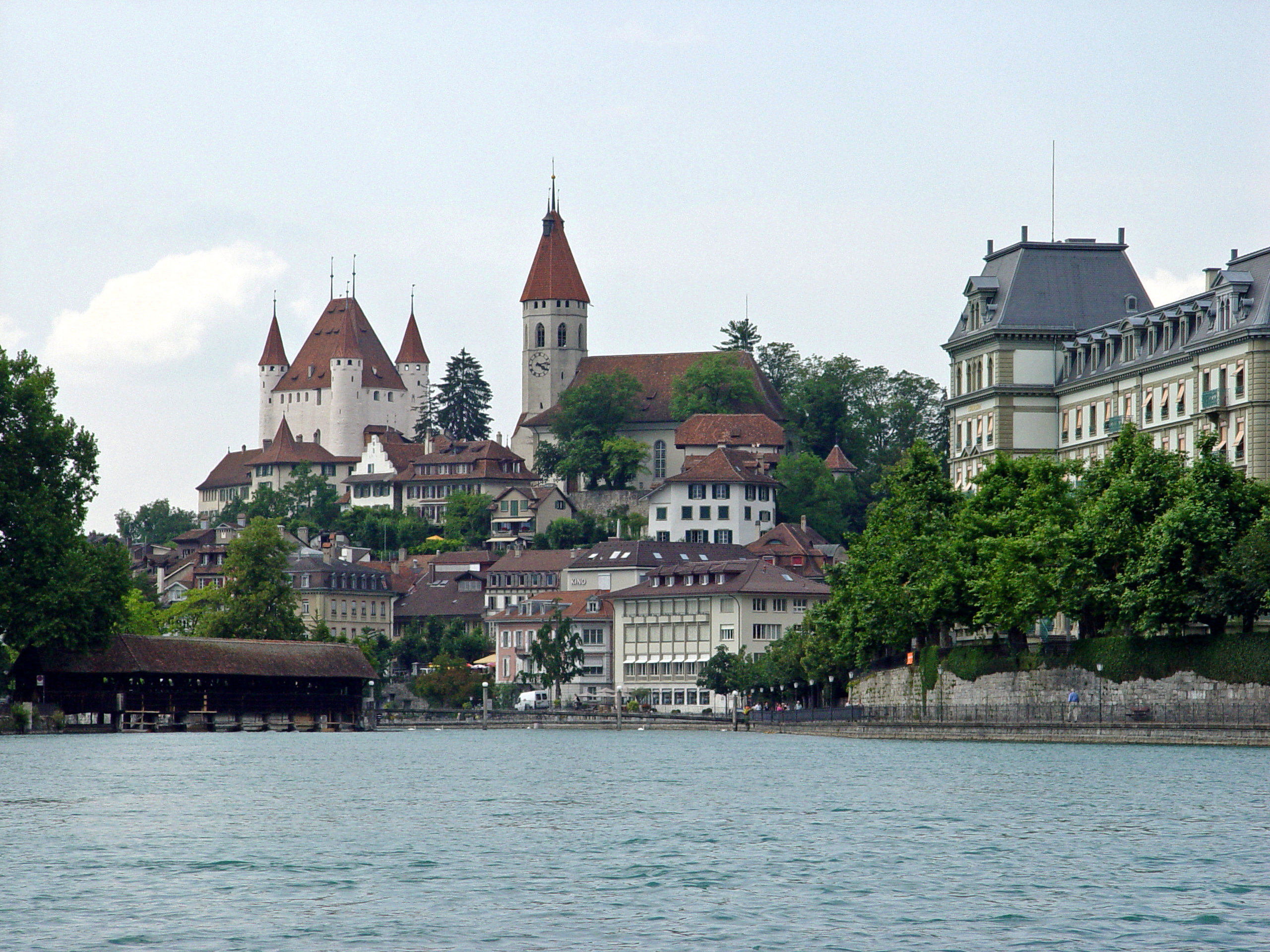
והנה תמונה מודרנית של ה-Aare und Schloss (לצערי לא הצלחתי למצוא תמונה עם קונפיגורציה זהה, אבל זה עדיין יפה:)

And here's a modern picture of the Aare und Schloss (unfortunately, I couldn't find anything with the same configuration, but it's still pretty):


וזהו, בסך הכל. לקחתי את הגלויה הזו פשוט כי אהבתי את התמונה. הדממה, ההשתקפות - שגם תופסת כמעט חצי מהחלל בפריים - היופי החד של השחור-לבן, הכל פשוט דיבר אלי, מבחינה אסתטית. הערבה והנהר נראים כאילו יצאו מציור אימפרסיוניסטי (אבל בשחור-לבן, כמובן). זו פשוט תמונה יפהפיה. אני יכולה להמשיך ולהביט בה הרבה זמן, ולמצוא כל מיני פרטים קטנים (עציצים על מרפסת; התגית 'Thun' שהודבקה משום מה על הבית הגדול, אולי למקרה שהכיתוב בפינה לא מספיק; איך שכל השפיצים על גגות הטירה ומגדל השעון והבתים מהדהדים את השפיצים של צמרות העצים ברקע...) וזה פשוט נפלא לגמרי.

So, that's about it. I just picked this card because I loved the picture. The stillness, the reflection - and the way the reflection takes almost half of the space in the frame - the stark black-and-white beauty of it, it all just spoke to me aesthetically. That willow, and the river, look like they came out of an impressionist painting (but in black-and-white of course). It's just beautiful. I can keep looking at it for a long time, and find all sorts of little details (flowerpots on a balcony; the label saying 'Thun' that was tacked on the big house for some reason, perhaps in case the caption wasn't enough; the way all those pointy tops on the castle and the clock tower and the houses seem to echo the pointed tops of the trees in the background...) and it's just absolutely wonderful.

אין סיפור, הפעם. רק רשומה קצרה על תמונה שאהבתי. אולי אעלה עוד כמה כאלה בקרוב, במקום כל הרשומות המסתבכות-להפליא על פיסות חיים. עד אז, היו שלום!

No story, this time. Just short post about a picture I enjoyed. Might do a few more of those soon, instead of all those surprisingly complicated piece-of-life posts. Till then, farewell!

Monday, November 15, 2010

Small World - עולם קטן

21.11.2010
Updated! See below ----- עדכון! ר' למטה

זה אחד מצירופי המקרים הכי מוזרים שנתקלתי בהם עד כה בכתיבת הבלוג (ואני כוללת גם צירוף מקרים מגניב אחד שעדיין לא סיפרתי לכם עליו, כי עוד לא גמרתי להתעסק בו, אבל כשיגיע זמנו זה הולך להיות עדכון ממש מגניב, חכו ותראו). תמיד יש בי תקווה שמישהו פתאום יזהה את האנשים שכתבו את הגלויה או קיבלו אותה, אבל נטיתי להניח שמה שיקרה הוא שמישהו ימצא את דרכו לבלוג ויאמר 'הי, אני יודע מי זה'; אף פעם לא ציפיתי לגלות שהמשפחה שלי מעורבת בסיפור.

This is one of the weirdest coincidences that happened to me, so far, while writing this blog (and this is including one awesome coincidence that I haven't told you about yet, because I'm not finished with it, but when I will it'll be the coolest update, you'll see). I always kinda hope to have someone suddenly recognise the people who wrote or received the postcard, but I usually assumed it will just be somebody stumbling upon the blog and saying 'Oh, I know who this is'; I never expected to actually have my family entwined in a story.

אז עכשיו שכולם סקרנים... כל העניין הזה התחיל בשבוע שעבר בערך, כשאמא שלי חזרה מביקור בברזיל. זה נתן לי את הרעיון להעלות פוסט עם הגלויה הזו מסאו פאולו, שם היא גדלה. למען האמת, זו בכלל היתה הסיבה המקורית שבחרתי את הגלויה הזו (טוב, גם כי אהבתי את כתב היד בצד האחורי, זו לעתים קרובות סיבה טובה לקחת גלויות בשפה שאני לא מבינה). אז הראיתי לה את הגלויה, כמובן.

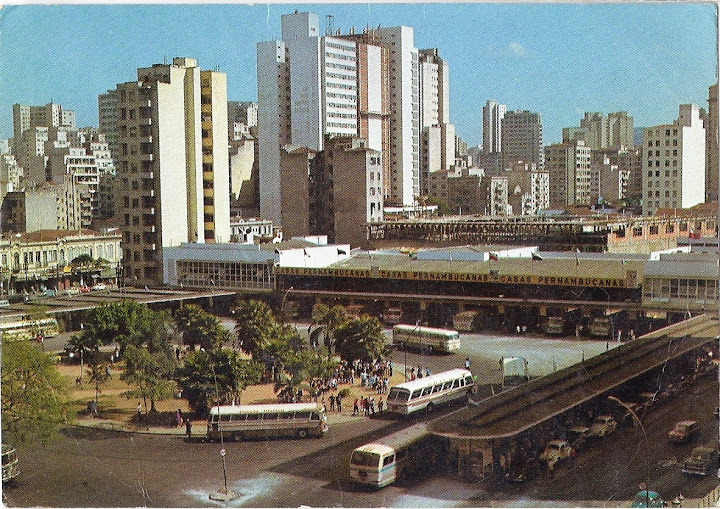
So, now that I got you all curious... this all started around last week when my mother returned from a visit to Brasil (I scoff at your squiggly red lines! I write 'Brasil' with an S because this is how it's written in Portuguese and because I think it looks nicer that 'Brazil' with a Z, so there). It gave me an idea to have the next post be this postcard from São Paulo, where my mother grew up. Actually, that was the original reason I picked this card (well, and I liked the handwriting on the back, which is often a reason I pick up postcards in a language I don't know). So I showed it to her, of course.

צד קדמי:
Front:


כמובן שהיא זיהתה את העיר מייד (זו גם תמונה מ-1971, כשהיא עדיין גרה שם), ואפילו סיפרה שהיא גרה אז לא רחוק, קצת משמאל לתמונה. היא הבטיחה לכתוב עוד על המקום הזה בתגובות. זו תמונה די עגמומית של חלק די משעמם בעיר, ומוזר שעשו מזה גלויה; אני מניחה שזו היתה עוד סיבה שבחרתי אותה, כי אני תמיד אוהבת תמונות שמציגות את החלקים הפחות-רגילים בעיר, יותר מאשר כאלה שמציגות אתרים מפורסמים מזוויות מוכרות. זה יותר מעניין.

Of course she recognised it immediately (this is also a picture from 1971, when she was still living there), and even pointed out that she lived not far away, a little to the left from the picture. She promised to write more about it in the comments. It is a rather dreary picture of a rather boring spot to have on a postcard, which I suppose was another reason for me to pick it, since I always like pictures of unusual spots of a city better than those featuring a well-known monument from an often-used angle. It's more interesting.

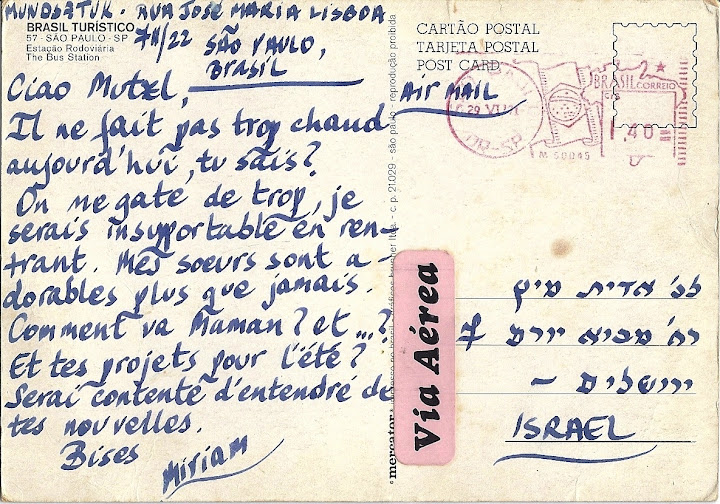
בכל אופן, אחרי שדיברנו על התמונה, הראיתי לה את הצד האחורי, כי הוא בצרפתית ורציתי שתעזור לי לתרגם אותו.

Anyway, after talking about the picture, I showed her the back of the card, because it is in French and I needed her help translating it.

צד אחורי:
Back:


Ciao Mutel,
Il ne fait pas trop chaud aujourd'hui, tu sais?
On me gate de trop, je serais insupportable en rentrant. Mes seurs sont adorables plus que jamais.
Comment va Maman? et...? Et tes projets pour l'ètè?
Serai contente d'entendrè de tes nouvelles.
Bises, Miriam

צ'או מוּטֶל,
לא כל כך חם כאן היום, את יודעת?
מפנקים אותי מאוד, אני אהיה בלתי-נסבלת כשאחזור לארץ. האחיות שלי מקסימות כמו תמיד.
מה שלום אמא שלך? ו...? והתכניות שלך לקיץ?
אני שמחה לשמוע חדשות ממך.
נשיקות, מרים
Ciao Mutel,
It's not very hot here today, you know?
I'm getting terribly spoiled, I will be insufferable when I come back. My sisters are as sweet as ever.
How's your mother? and...? And your plans for summer?
I'm happy to hear news from you.
Kisses, Miriam

תודה אמא!

Thanks, mum!

ואחרי שהיא הקריאה לי את המסר (ותרגומו), היא התחילה לחשוב בקול רם אם אולי היא מכירה את מי שכתבה אותו. נכון שסאו פאולו היא עיר בת כמה מיליוני תושבים, אבל מצד שני, מספר האנשים שהיו עשויים לשלוח גלויה לישראל בשנות ה-70 (ועוד בצרפתית) הוא מן הסתם מעט מזעיר מתוך כל המיליונים האלה.

So, after reading (and translating) it to me, she was thinking out loud whether it was written by someone she knew. Sure, São Paulo has a population of several million people, but then again, the number of people who might have written a postcard to Israel in the 70s (and in French to boot) is obviously quite a minuscule percentage of this population.

אז היא הסתכלה שוב על הגלויה. 'מרים', הרהרה לעצמה, ואז הסתכלה על כתובת השולח בפינה השמאלית העליונה וקראה: 'מרים מונדשטוק! בטח שאני מכירה אותה! היא היתה בבית הספר שלי!'.

So, she gives another look. 'Miriam', she ponders, and then looks at the writer's address on the top left corner, and exclaims 'Miriam Mundsztuk! Of course I know her! She went to my school!'.

כן. גלויה שקניתי באופן שרירותי למדי לפני כמה שנים בחנות ספרים משומשים נשלחה, לגמרי במקרה, על ידי מישהי שאמא שלי הכירה בצעירותה. למעשה, מרים היתה בשכבה עם דודה שלי. וכמו שתיהן, גם היא עלתה לישראל, ומסתבר שכיום היא חיה באפרת, התנחלות (או יישוב, תלוי בנטייתכם הסמנטו-פוליטית; אני ממש, אבל ממש, לא רוצה להכניס ענייני פוליטיקה לבלוג הזה) ליד ירושלים, אם כי אני משערת שהיא שינתה את השם מאז (בעצם יש בפייסבוק מרים מונדשטוק-אורבך אחת - אני לא לגמרי בטוחה שזו היא, אבל אשלח לה הודעה לגבי הרשומה הזו, ונראה).

Yes. A postcard that I arbitrarily picked up in a used book store a few years ago just happened to have been sent by someone my mother knew growing up. Miriam was in the same class as my aunt, actually. And like both, she also moved to Israel, and now lives in Efrat, a settlement near Jerusalem, although I guess she changed her name since (actually, there is a Mirjam Mundsztuk-Orbach on Facebook - I'm not sure if it's her, but I'll send her a message about this post, and we'll see).

אני חייבת לומר שזה פחות או יותר הפיל אותי מהכסא. אני לא יכולה לחשוב על עוד משהו להוסיף לסיפור הזה (אם כי כמובן שאשמח מאוד אם אמא או דודה שלי, או אפילו מרים עצמה, ירצו להוסיף משהו; ואגב, אם מרים מגיעה לכאן מתישהו, אני רוצה לומר לה שאשמח להחזיר לה את הגלויה אם היא רוצה בה). זה... עולם קטן, באמת. זה פשוט מדהים.

Honestly, this pretty much blew my mind. I can't think of that much more to add to this story (although of course I'll be happy if my mother, or my aunt, or even Miriam herself might want to add something; actually, if Miriam gets here at some point, I want to let her know I will be happy to return the postcard, if she wants it). It's just... small world, really. It's absolutely amazing.

אה, ולגבי הנמענת, אדית מיץ: לפי ספר הטלפון (כלומר, אתר 144) נראה שהיא עדיין גרה באותה כתובת, בירושלים. וגם זה די מגניב.

Oh, as for the recipient, Edith Mitz, it appears from an online phonebook search that she is still living at the same address, in Jerusalem. Which is also pretty cool.

עולם קטן, באמת. עולם קטן.

Small world, really. Small world.


21 בנובמבר - עדכון!
בשבוע שעבר, אחרי שפרסמתי את הרשומה הזו, יצרתי קשר עם מרים בפייסבוק (למרות שאני לא מהמשתמשים הנלהבים ביותר של האתר הזה, אני חייבת להודות שהוא שימושי), והיא בהחלט זוכרת את הגלויה. אדית מיץ, היא סיפרה לי, היתה חברה שלה בזמנו, גם אם לא חברה מאוד טובה; היא היתה בחורה בלגית שהיא הכירה דרך השותפה שלה (של מרים), שהיתה גם היא מבלגיה. היא עורכת דין, ובזמנו גם עסקה במקצוע כאן בישראל, והיתה נשואה לעורך דין (שהיה מאיטליה במקור). היתה לה בת אחת איתו, ואז הם התגרשו. היא עזבה את ישראל בסוף שנות ה-70 / תחילת שנות ה-80, אז כיום (בגיל שישים-ומשהו) היא צריכה להיות בבלגיה, וכנראה שהיא גם התחתנה שוב.

21 Nov - Update!
Last week, after publishing this post, I contacted Miriam on Facebook (I'm not one of the avid users, but I gotta admit, that site is useful), and she definitely remembers this postcard. Edith Mitz, she tells me, was her friend in the day, but hardly a best friend; she was a Belgian girl, introduced to Miriam through her (Miriam's) roommate, who was also from Belgium. She is a lawyer, and back then practised law in israel, was married to another lawyer (who was originally from Italy), had a girl, and later got divorced. She left Israel in the late 70s / early 80s, so should now (in her early 60s) be back in Belgium, and is apparently remarried.

אז זו אדית, ושוב תודה למרים על הסיפור הזה. העובדה שבסופו של דבר הגלויה שלה הגיעה אליי, למרות שהיא עצמה לא היתה בישראל כבר כשלושים שנה, עדיין מוזרה למדי; אבל העובדה שהיא עדיין מופיעה במאגר של בזק דווקא מאפשרת הסבר כלשהו - אני חושבת שיכול להיות שהיא עדיין בעלת הדירה שבה גרה אז, ושהיא משכירה אותה. אם היא השאירה שם את הגלויה, אני יכולה לדמיין שאיזה דייר נתקל בה והחליט למכור אותה לחנות הספרים המשומשים (לא משהו שאני אישית הייתי עושה, אבל כמו שאולי שמתם לב יש לי איזה קטע עם גלויות ישנות). זה בהחלט יכול להסביר איך זה שגלויה שנשלחה לפני ארבעים שנה מברזיל לבחורה בלגית שגרה בישראל הגיעה בסופו של דבר לידיי. אבל צירוף המקרים המוחלט של כל העניין הזה עדיין מופלא.

So, that's Edith, and I want to thank Miriam again for telling me this story. The fact that I ended up with her postcard, although she has not been in Israel for about 30 years, is still odd; the fact that she appears in the phone book, however, suggests some explanation - it is possible, I guess, that she still owns the apartment she lived in, but rents it. If she left this card behind, I can imagine a tenant running into it, and selling it to the used book store (not something I would have done, but I have this thing about old postcards, as you may have noticed). It definitely can explain how a postcard sent 40 years ago from Brasil to a Belgian girl living in Israel ended up in my hands. But the sheer coincidence of the whole story is still amazing.

נ"ב - מרים אמרה לי שתשמח לקבל את הגלויה בחזרה, אז אשלח אותה אליה. מין סגירת מעגל. חתיכת הקרטון הזו עברה מסע די ארוך.

PS - Miriam said she will be happy to have the postcard back, so I will be sending it her way. Closing that circle. It's been a long journey, for a little piece of cardboard.