Something a little out of the ordinary, this time - a collection of all kinds of little things that I found in Trionfo in one of my recent visits downtown. Trionfo always has interesting tidbits (this was where I found the pictures of the lady from Skierniewice and the gentelman who doesn't really look like Jabotinsky), and this time I found there, in one of the boxes, a bunch of little pictures - there were movie star headshots, and little pictures used to advertise cigarettes (I'm guessing that they might have come inside the cigarette boxes), and among those were also a few personal photos, about the size of a passport photo, showing some anonymous girl. After looking through them, and resisting the temptation to buy the whole lot, I picked a selection of the various kinds.
משהו קצת שונה מהרגיל, הפעם - אוסף של כל מיני דברים קטנים שמצאתי בטריאונפו באחד הביקורים האחרונים שלי במרכז העיר. בטריאונפו תמיד יש דברים מעניינים (שם גם מצאתי את התמונות של האדונית מסקערניעוויץ ושל האדון שלא באמת דומה לז'בוטינסקי), והפעם מצאתי שם, באחת הקופסאות, אסופה של תמונות קטנות - היו שם דיוקנאות של כוכבי קולנוע, תמונות קטנות שנועדו לפרסם סיגריות (ואני מנחשת שאולי באו עם קופסאות הסיגריות), וביניהן היו פזורות גם כמה תמונות אישיות, בגודל של תמונת פספורט פחות או יותר, שהציגו ילדה אלמונית כלשהי. אחרי שעיינתי בהן, והתגברתי על הפיתוי לקנות את כולן, אספתי מבחר מכל הסוגים.
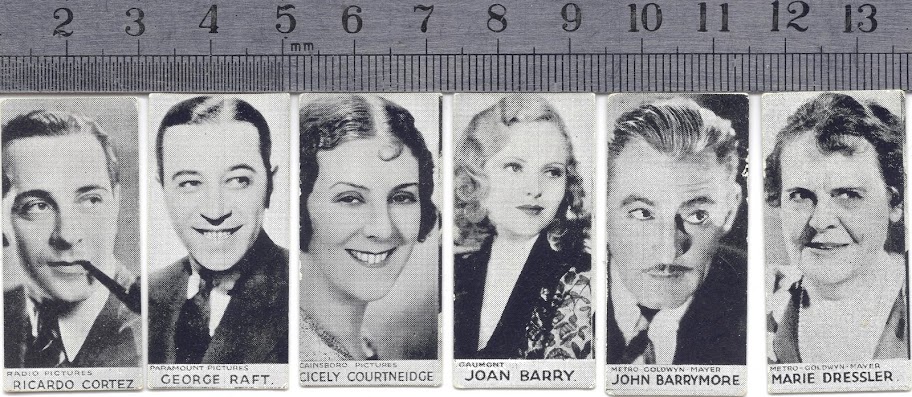
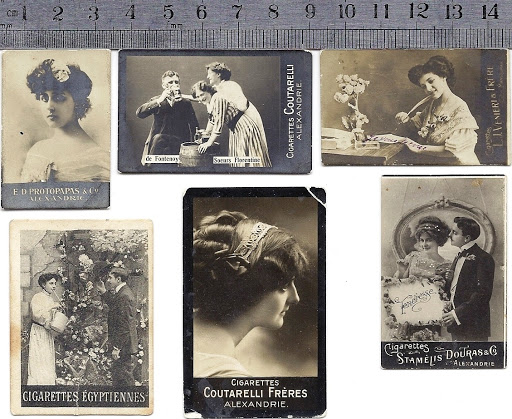
Since one of the things I liked about these pictures was how small they were, this time I scanned them next to a ruler, so you could also get an impression of their minuscule size. And since there are a lot of 'variations on a theme' here, I also put all pictures of the same kind together instead of dividing them to singles. Like I said, it's a bit different than the usual posts.
מכיוון שאחד הדברים שאהבתי בתמונות האלה הוא כמה שהן קטנות, הפעם סרקתי אותן ליד סרגל, כדי שתוכלו להתרשם גם אתם מגודלן הזערורי. ומכיוון שיש כאן הרבה 'וריאציות על נושא', גם שמתי את כל התמונות מאותו סוג יחד, ולא הפרדתי אותן לבודדות. כאמור, קצת שונה מהרשומות הרגילות.
Let's start with the movie stars. Most of the pictures were of actors I couldn't recognise (except for the one picture of Clark Gable, but I didn't take it, because I know who that is so it's not so interesting). Eventually I managed to narrow it down to just six, three actors and three actresses:
נתחיל משחקני הקולנוע. רוב התמונות שם היו של שחקנים שלא זיהיתי (מלבד תמונה אחת של קלארק גייבל, אבל לא לקחתי אותה, כי אני יודעת מיהו וזה לא כ"כ מעניין). בסופו של דבר הצלחתי לצמצם את הבחירה לשישה, שלושה שחקנים ושלוש שחקניות:
To any American readers (or wherever else they use those illogical Imperial measurements): these are centimetres. Make your own conversions if you need to.
Unlike in the knowledgeable writings of
James Lileks, which are a semi-direct influence on the style of this segment and perhaps of this blog in general (you should check out his website; not that I think he needs the few views I might direct his way, but if you enjoy what I do here, you will probably like a lot of his stuff as well), I have to admit my ignorance regarding early 20th century film stars - like I said, I had no idea who any of these people were. But I looked them up. Ah, Wikipedia, what would I do without you? (Also, YouTube; some wonderful old stuff on there, and this post is going to have a lot of links to videos.)
So, let's list them.
בניגוד לכתיבה הידענית של
ג'יימס ליילקס, שמהווה השפעה ישירה-למחצה על הקטע הזה ואולי גם על הבלוג באופן כללי (כדאי לכם להציץ באתר שלו; לא שנראה לי שהוא צריך את הקוראים הספורים שאני עשוייה להפנות אליו, אבל אם אתם נהנים ממה שאני עושה כאן סביר שתאהבו גם הרבה מהדברים שהוא עושה), אני חייבת להודות שאני די בורה לגבי כוכבי קולנוע מתחילת המאה ה-20 - כמו שאמרתי, לא הכרתי בכלל אף אחד מהאנשים האלה. אבל חיפשתי אותם. הו, וויקיפדיה, מה הייתי עושה בלעדייך? (וגם יוטיוב; יש שם כמה דברים ישנים נהדרים, וברשומה הזו יהיו די הרבה קישורים לקטעי וידיאו.)
ובכן, הבה נעבור עליהם.
The suave Ricardo Cortez was, as you may assume, quite a popular 'Latin Lover' actor for some time; the studio that employed him tried to push him as a competition for Valentino. He also played detective Sam Spade in the Maltese Falcon. No, not the one where Bogart plays Sam Spade,
the one made ten years earlier (you can see a short clip
here, and oh boy, Bogart was so much better - although apparently
some people disagree). Funnily enough, as I was looking him up I thought to myself 'Hm, Ricardo Cortez... probably born Ruben Kramer, or something'. Many actors changed their names back then, after all. Well, I was wrong.
Jacob Krantz. After he retired from the cinema he went to work as a stockbroker, and probably made his old Jewish mother very happy.
George Raft's picture made me think that he must have been a comedian, or a dancer; well, he
started as a dancer, turns out, but made his fame
playing gangsters. He's actually been in quite a lot of well-known films, including Some Like It Hot and Ocean's Eleven (the original, with Frank Sinatra and the Rat Pack), playing tough guys who wear fedoras and talk in that kinda-nasal gangster slang (
here he is with Marlene Dietrich, in a film from the era when hitting a woman - sorry a 'dame' who was 'out of line' - was an acceptable sort of thing to do in a movie). Doesn't look it, from this picture.
ריקארדו קורטז האלגנטי היה, כצפוי, שחקן די פופולרי של דמות המאהב הלטיני, והאולפן שבו עבד גם ניסה לקדם אותו כתחרות לוולנטינו (מי היה מאמין). הוא גם שיחק את הבלש סם ספייד בסרט 'הנץ ממלטה'. לא, לא הסרט שבו האמפרי בוגארט משחק את סם ספייד, אלא
הסרט שנעשה עשר שנים קודם (אפשר לראות קטע קצר
כאן, ובחיי, האמפרי בוגארט היה כל כך הרבה יותר טוב - אם כי מסתבר ש
יש אנשים שלא מסכימים עם הקביעה הזו). מה שמשעשע הוא שכשחיפשתי אותו חשבתי לעצמי 'המ, ריקארדו קורטז... בטח נולד בשם ראובן קרמר או משהו'. הרי הרבה שחקנים שינו את השם שלהם בתקופה ההיא. ובכן, טעיתי.
ג'ייקוב קרנץ. אחרי שהוא פרש מתחום הקולנוע הוא עבר לעבוד בבורסה, מה שבטח מאוד שימח את האמא הפולניה שלו.
מהתמונה של ג'ורג' ראפט הינחתי שהוא היה שחקן קומי, או רקדן; ובכן, הוא אכן
התחיל כרקדן, אבל מסתבר שהוא התפרסם כשחקן של
תפקידי גנגסטרים. הוא הופיע בדי הרבה סרטים מפורסמים, כמו 'חמים וטעים' ו'ה-11 של דני אושן' (המקורי, עם פרנק סינטרה וה'ראט פאק'), ושיחק בחורים קשוחים שחובשים מגבעת ומדברים בסלנג הגנגסטרי הזה, המאנפף-קמעה (
הנה הוא עם מרלן דיטריך, בסרט מהעידן שבו להכות אשה - סליחה, 'בחורה' שהתנהגה 'לא במקום' - נחשב משהו שבסדר לעשות בסרט). הוא לא נראה כזה, בתמונה.
, on the other hand,
was a comedian. And you can pretty much tell from the picture; she looks like the kind of actress that realised she doesn't have the looks to be a starlet, so she better be funny. And she was - I think she was brilliant. Looking for her on the mighty YouTube I found some movie clips of her, mostly song-and-dance numbers, and I highly recommend you look them up as well. My favourite has to be the Tiger Rag, embedded below - a highly amusing little ditty utilizing a bunch of different (mostly British) accents (and some pop culture references of the time that I don't get) - but she was also a very good slapstick dancer, which is something that takes a great deal of skill (check out her
Apache Dance - and no, it's not as racist as it sounds).
סיסלי קורטניג', לעומתו, כן היתה שחקנית קומית. ופחות או יותר אפשר לזהות את זה בתמונה שלה; היא נראית כמו שחקנית שהבינה שהיא לא נראית מספיק טוב בשביל להיות כוכבנית, אז כדאי שתהיה מצחיקה. והיא היתה מצחיקה - אני חושבת שהיא היתה נהדרת. כשחיפשתי אותה ביוטיוב מצאתי כל מיני קטעי סרטים, בעיקר של ריקודים ושירים, ואני ממליצה בחום שתחפשו אותם גם כן. אני חושבת שהחביב עליי, מבין כל אלה, הוא ה'טייגר ראג', שהטמעתי להלן - שיר משעשע ביותר שמשלב כל מיני מבטאים (בעיקר בריטיים) שונים (וגם רפרנסים של תרבות פופולרית שאני לא מבינה) - אבל היא גם היתה רקדנית סלאפסטיק מצוינת, שזה משהו שדורש הרבה מאוד כשרון (תבדקו למשל את '
הריקוד האפאצ'י' שלה - ולא, זה לא גזעני כמו שזה נשמע).
(By the way, if you end up watching this clip a bunch of times, as I have, you might eventually notice that the piano guy says, right at the end, 'as long as you've got your health and strength, you should worry about tigers!' - and here's that vernacular 'you should worry' that I talked about
a few posts ago. Cool!)
(דרך אגב, אם אתם צופים בקטע הזה הרבה פעמים, כמו שאני עשיתי, בסוף אולי תשימו לב שהפסנתרן אומר, ממש בסוף, 'as long as you've got your health and strength, you should worry about tigers!' - והנה השימוש הסלנגי בביטוי 'you should worry' שדיברתי עליו
לא מזמן. מגניב!)
Update 21.7.2011: Looks like the video has been taken down, which is a darn shame. The audio, at least, can be found here - not as funny as the whole thing, but still quite brilliant. Update of the update, 10 Nov 2012: During a conversation about Courtneidge I found out that the video is back up, and re-embedded it. I also discovered another beautiful video of her, a clip from the 1962 film 'The L-Shaped Room' - a dramatic role this time, and played in a subtle, touching way. I love it a lot, and if it weren't impossible to embed it would have put it right here (but I can't so there's just a link). Anyway, do check it out.]
[עדכון 21.7.2011: נראה שהורידו את הסרטון, שזה באמת חבל. את האודיו, לכל הפחות, אפשר למצוא כאן - לא מצחיק כמו הסרטון המלא, אבל עדיין נהדר. עדכון לעדכון, 10 בנובמבר 2012: בזמן שיחה על קורטנידג' גיליתי שהסרטון הועלה שוב, והטמעתי אותו מחדש. מצאתי גם עוד סרטון יפהפה שלה, קטע מתוך הסרט 'The L-Shaped Room' מ-1962 - תפקיד דרמטי, הפעם, והיא משחקת בו בצורה ממש עדינה ונוגעת ללב. אני אוהבת אותו מאוד, ולו היו מאפשרים להטמיע אותו הייתי מכניסה אותו לכאן (אבל אי אפשר, אז יש רק לינק). שווה לראות, בכל אופן.]
Starting to have to scroll up quite a lot for the picture, so let's round up the others quickly:
Joan Barry, unlike Cicely Courtneidge, had the looks to be a starlet, and I guess that's pretty much what she was. She was young and pretty, and she had roles in a couple of movies (including an early-ish Hitchcock called
Rich and Strange), and then she got married and retired from show business. At first, when I was researching, I had her confused with an
American actress of the same name, who mainly got famous - or rather, infamous - for having an affair with Charlie Chaplin, and then suing him for paternity of her child (blood tests ruled him out as the father, but they were inadmissible in court; after this trial, the law was changed to make blood tests admissible).
Then she went crazy, apparently. Seems like a sad story. Anyway, it's not her, so never mind that.
John Barrymore - with perhaps the most striking picture of the lot - was, in his time, a famous
Shakespearean and
film actor, nicknamed 'the Great Profile' (because he had one), as well as a well-known drunkard, although I suppose back then people might have thought it was manly and charming to drink yourself to death. He is also the father of John Drew Barrymore, who is the father of Drew Barrymore (not a lot of originality in the names, in this family).
And lastly,
Marie Dressler (whose picture I picked because she was the only one that didn't really have a movie-star look; she just kinda looks like someone's aunt) was a pretty big star in vaudeville, and managed to survive the move from silent films to talkies because she had an impressive rumbling voice; she won a best actress Oscar in 1932 - and remember, the Academy Awards started in 1929, so this is one of the very first Oscars - and is, apparently, also somewhat famous for
this lovely exchange with Jean Harlow (sorry for the bad quality, couldn't find a better version; however,
the whole film is available on the Tube, if you want to see it. John Barrymore's in it too, so it's like a 2-in-1 deal). Quite a lady.
אני כבר צריכה לגלול למעלה די הרבה כדי להגיע לתמונה, אז הנה כל השאר בזריזות:
ג'ואן בארי, לעומת סיסלי קורטניג', נראתה מספיק טוב כדי להיות כוכבנית, ואני חושבת שזה פחות או יותר מה שהיא עשתה. היא היתה צעירה ויפה, ושיחקה בכמה סרטים (כולל היצ'קוק מוקדם יחסית בשם '
Rich and Strange'), ואז היא התחתנה ופרשה מהשואו ביזנס. בהתחלה בזמן המחקר שלי בלבלתי אותה עם
שחקנית אמריקאית באותו שם, שבעיקר התפרסמה - לשמצה, למען האמת - כי היה לה רומן עם צ'רלי צ'פלין, ואז היא הגישה נגדו תביעת אבהות על התינוק שלה (בדיקת דם קבעה שהוא לא היה האב, אבל היא לא היתה קבילה כראיה; בעקבות המשפט הזה, שינו את החוק כך שבדיקות דם ייחשבו ראיה קבילה).
ואז היא השתגעה, כנראה. זה נשמע סיפור די עצוב. בכל אופן, זו לא היא, אז לא משנה.
ג'ון בארימור - עם תמונה שלדעתי היא המרשימה שבחבורה - היה בזמנו שחקן
שייקספירי (
ולא רק) מפורסם, שזכה לכינוי 'הפרופיל הגדול' (כי היה לו פרופיל גדול), והיה גם שיכור ידוע, אם כי אני משערת שאולי בזמנו חשבו שלהשתכר עד מוות זה גברי ושרמנטי. הוא גם אביו של ג'ון דרו בארימור, שהוא אביה של דרו בארימור (המשפחה הזו לא היתה בקטע של שמות מקוריים במיוחד).
ואחרונה חביבה,
מארי דרסלר (שאת התמונה שלה בחרתי כי היתה היחידה שלא ממש נראתה כמו כוכבת קולנוע; היא נראית קצת כמו דודה) היתה כוכבת וודוויל די גדולה, והצליחה לשרוד את המעבר מסרטים אלמים למדברים כי היה לה קול רועם ומרשים. היא זכתה באוסקר לשחקנית הטובה ביותר ב-1932 - וצריך לזכור שפרסי האוסקר רק התחילו ב-1929, אז זה היה אחד הראשונים - ומסתבר שבין הסצנות המפורסמות שלה נמנה
הדיאלוג החביב הזה עם ג'ין הארלו (סליחה על איכות הסרטון, לא יכלתי למצוא גרסא יותר מוצלחת; אבל
כל הסרט נמצא על יוטיוב, אם אתם רוצים לראות אותו. גם ג'ון בארימור משחק שם אז זה כמו שניים-במחיר-אחד). אכן גברת שבגברות.
I don't really have much to say about the cigarette advertisement photos. It's interesting to see that they don't show the actual cigarettes (and probably not due to health concerns like today), but mainly romantic 'atmosphere shots', most of them pictures of women. Those that I ended up picking represent quite a few cigarette producers, all of them from Egypt, or to be more precise, Alexandria.
על תמונות הפרסומת לסיגריות אין לי הרבה מה לומר, למען האמת. מעניין לראות שהן לא מציגות את הסיגריות עצמן (ומן הסתם לא מהשיקולים הבריאותיים של היום), אלא בעיקר 'תמונות אווירה' בסגנון רומנטי, הרבה מהן של נשים. אלה שבחרתי בסופו של דבר מייצגות לא מעט יצרני סיגריות, כולם ממצרים, וליתר דיוק מאלכסנדריה.
I tried searching for information on these producers, but didn't really find anything on Google; anyway, I'm fairly sure that these pictures are from about the first quarter of the 20th century (if only because the headshots are probably from around the 30s, since that's when all these actors were famous). I have a sort of feeling that the people in these pictures represent an earlier era - for example, look at the girl in the top right hand picture, writing with a quill (by the way, if you click to enlarge you can see that someone added in handwriting
je vous pense, I'm thinking about you) - but I don't know enough about the clothes and the writing styles and such to make an exact estimate. If that is indeed the case, I suppose it was meant to be somewhat nostalgic. Anyway, I like these pictures a lot, especially the lovely Coutarelli lass in the center bottom line, with the Greek nose and handsome tiara.
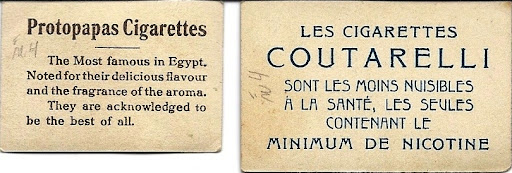
Some of the pictures also had a commercial message on the back:
ניסיתי לחפש מידע על היצרנים האלה, אבל לא מצאתי כמעט כלום בגוגל; בכל אופן, אני די בטוחה שהתמונות האלה הן מהרבע הראשון של המאה ה-20, בערך (ולו רק בגלל שהתמונות הקודמות הן כנראה מסביבות שנות ה-30, כי זו התקופה שבה כל המצולמים בהן היו מפורסמים). יש לי הרגשה שהאנשים שבתמונות מייצגים תקופה יותר מוקדמת - תסתכלו למשל על הבחורה בתמונה מצד ימין למעלה, שכותבת בעט נוצה (אגב, אם תלחצו להגדלה תוכלו לראות שמישהו הוסיף בכתב יד על המכתב שלה je vous pense, אני חושבת עליך) - אבל אני לא מבינה מספיק בבגדים ובסגנונות הכתב כדי לקבוע בדיוק. אם זה אכן כך, אני מניחה שזה נועד לשקף נוסטלגיה מסוימת. בכל אופן, אני מחבבת מאוד את התמונות האלה, ובייחוד את העלמה היפה של קוטארלי במרכז השורה התחתונה, עם האף היווני והנזר הנאה בשיער.
בכמה מהתמונות היה גם מסר פרסומי בצד האחורי:
(Interesting: the French one advertises the cigarettes as being healthier since they have a minimum of nicotine. I didn't realise it was known to be a health problem that far back.)
(מעניין: הטקסט הפרסומי בצרפתית אומר שהסיגריות בריאות יותר כי יש בהן מינימום של ניקוטין. לא קלטתי שכבר אז ידעו שזו בעיה בריאותית.)
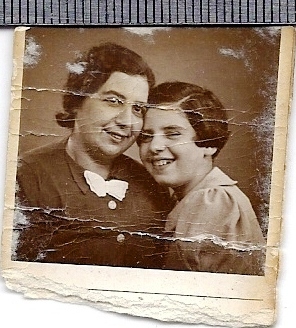
And that's about it on those pictures. The last picture is one of those personal photos I mentioned. I chose one where the girl appears with an older woman - her mother, grandmother, aunt, who knows. As you can see, it's in pretty bad shape, creased and with a torn bottom, but I still like it very much.
וזהו, לגבי התמונות האלה. התמונה האחרונה היא אחד התצלומים האישיים שהזכרתי. בחרתי את זה שבו הילדה הופיעה יחד עם אשה מבוגרת - אמא, סבתא, דודה, מי יודע. כמו שאפשר לראות, הוא לא במצב טוב במיוחד, מקומט וקרוע בתחתית, אבל אני בכל זאת מחבבת אותו מאוד.
I don't even know why I like it so much. It's just a nice family photo, is all. It kinda reminds me of similar photos we have of my mum and dad (and since the cigarette ads were from Egypt, and all these pictures were mixed together, it makes me feel like they are all from Egypt, which is where my mother was born, which makes me feel like there's some kind of a... connection, or something). A little piece of memory, completely out of context. That girl must be much older now. That woman is probably dead. But here they are, smiling awkwardly, in another place, in another time.
אני אפילו לא יודעת למה אני כל כך מחבבת אותו. זו פשוט תמונה משפחתית נחמדה, זה הכל. היא מזכירה לי תמונות דומות שיש לנו של אמא ואבא שלי (ומכיוון שהפרסומות לסיגריות היו ממצרים, ושכל התמונות היו מעורבבות יחד, זה גורם לי להרגיש שכולן ממצרים, ושם אמא שלי נולדה, אז אני מרגישה כאילו יש איזה... קשר, או משהו). פיסה קטנה של זכרון, נטולת הקשר לחלוטין. הילדה הזו בטח כבר מבוגרת בהרבה. האשה הזו בטח כבר מתה. אבל הנה הן, עם חיוכים נבוכים, במקום אחר ובזמן אחר.
It's actually the same with the movie stars (who are all dead as well), and even with those people posing in the cigarette ads. It's actually the same with a lot of the things I have on this blog. They're all just memories. I like the little personal things because it somehow feels closer, when they're regular people with stories that - barring the occasional
amazing coincidence - I will never fully know, but when you think about it, all people have stories. Those movie stars have their own stories; they were born somewhere, and had families, and lived, and did many things, and they had their moments of fame, or even years of fame, but it was all just a part of their big story, and in many ways, we only have a glimpse of that. Even those carefully-staged pictures of ladies and gentleman in the cigarette ads are all a part of some story, not just for the people who participated in them, but for another era and another place. And that's what I love about all these things. They give me little glimpses to these places, to these times, to these stories.
למען האמת, זה אותו דבר עם כוכבי הקולנוע (שגם הם כבר מתו כולם), ואפילו עם האנשים שמדגמנים בפרסומות לסיגריות. זה אותו דבר עם הרבה מהדברים שיש לי בבלוג הזה. כולם רק זכרונות. אני אוהבת את הדברים האישיים הקטנים כי הם נדמים לי קרובים יותר, כי הרי אלה אנשים רגילים עם סיפורים שלהוציא
צירופי מקרים מדהימים פה ושם, לעולם לא אוכל להכיר אותם במלואם - אבל כשחושבים על זה, לכולם יש סיפורים. לכוכבי הקולנוע היו סיפורים משלהם; הם נולדו איפשהו, והיתה להם משפחה, והם חיו ועשו כל מיני דברים, והיו להם גם רגעים של תהילה, או אפילו שנים של תהילה, אבל זה היה רק חלק מהסיפור הגדול שלהם, ובהרבה מובנים יש לנו רק מבט חטוף בסיפור הזה. אפילו התמונות המבוימות-להפליא של גבירות ואדונים בפרסומות לסיגריות הן רק חלק מאיזשהו סיפור, לא רק של האנשים שהשתתפו בהן, אלא של תקופה אחרת במקום אחר. וזה מה שאני אוהבת בכל הדברים האלה. הם מאפשרים לי מבט חטוף במקומות האלה, בזמנים האלה, בסיפורים האלה.
And to finish on a lighter note, here's a video of Marie Dressler, being regal and rumbling and funny and altogether awesome in the 1929 Hollywood Revue:
וכדי לסיים במשהו קליל יותר, הנה סרטון של מארי דרסלר, מלכותית ורועמת ומצחיקה ונפלאה באופן כללי, ב-Hollywood Revue מ-1929: