Hello readers! - !שלום, קוראים

What is this? Read the introduction - מה זה הדבר הזה? הסבר בהקדמה
Showing posts with label Switzerland. Show all posts

Wednesday, January 23, 2013

Election Special - ספיישל בחירות

הבטחתי פוסט מיוחד לבחירות, ונראה שאפילו אצליח לקיים. יש גלויה אחת, חביבה, שבערך מאז שמצאתי אותה תכננתי להעלות אותה אחרי הבחירות (מסיבות שתכף תראו בעצמכם), ויש גם בונוס קטן בסוף. קדימה לגלויה:

I promised a special post for the election, and looks like I'm actually going to keep that promise. There's one neat postcard that I've been planning, pretty much ever since I found it, to post after the election (for reasons that will soon be obvious), and there's also a little bonus at the end. To the postcard at hand:
צד קדמי:
Front:


זו תמונה די מוצלחת (אני חושבת שיש לי קטע עם תמונות שבהן צופים במושא התמונה דרך דלת או חלון - יש משהו בקומפוזיציה כזו שממש מוצא חן בעיניי), וכפי שמוסבר בצד האחורי של הגלויה, רואים בה את קתדרלת גרוסמונסטר בציריך דרך השער של כנסיית פראומונסטר (או, כפי שהוא נקרא שם, ה-Fraumünsterportal, מה שקצת גורם לי לחשוב על גברות-מפלצת בין-ממדיות, אבל נו, אני מוזרה). בכל אופן, כן כן, תמונה מוצלחת, אבל לא לשם כך נתכנסנו. נתכנסנו בשביל המסר בצד האחורי.

That's a very nice picture (I think I have a thing about pictures where the main object is viewed through a door or window - there's just something I really like about that sort of composition), and as the details on the back point out, it is a view of the Grossmünster church in Zurich, as seen from the gate of Fraumünster Abbey (or, as they call it, Fraumünsterportal, which kinda makes me think of interdimensional monster ladies, but, well, I'm weird). Anyway, yes yes, very nice, but it's not really what we're here for. We're here for the message on the back.

צד אחורי:
Back:


18.5.77
הילו, הילו,
הגעתי בשלום ועדיין מזועזע לגמרי מתוצאות הבחירות. א"י השלמה והכפייה הדתית ישתוללו כעת וסיכויי המלחמה גדֵלים.
מחר כאן חג והיום "עֵרב חג", מה שלא ידעתי, והכל נסגר ב-4. אך את רוב הדברים הספקתי.
מחר אני ממשיך לפריז, בה לא הייתי המון שנים. ציריך לא השתנתה, פרט למחירים. ד"ש לשמעון ופולט, מהם לא הספקתי להפרד.
[אני לא מצליחה לקרוא את שתי המלים האחרונות]
18.5.77
Hello, hello,
I made it safe and sound, and still reeling from the election results. Greater Israel and religious oppression will now go wild, and the probability of war is growing.
Tomorrow is a holiday here, and today is the 'holiday eve', which I was not aware of, and everything closes at 4. But I got most things done in time.
Tomorrow I'll be heading on to Paris, where I haven't been for ages. Zurich hasn't changed, except for the prices. Say hello from me to Shimon and Paulette, I never got the chance to tell them goodbye.
[I can't read the last two words]

כל כך דרמטי!
כפי שיהיה ברור לרובם ככולם של הקוראים הישראלים, אולי אפילו בלי להציץ בתאריך, מדובר כאן על המהפך של בחירות 1977, שאכן היה זעזוע די קשה להרבה אנשים אז, כפי שסיפרו לי מכרים שחיו באותו זמן. אגב, אני חושבת שבשלב זה כדאי לציין שאני כותבת את הפוסט לפני תום הבחירות הנוכחיות (ומתזמנת כך שיעלה רק ברביעי בבוקר), ואני לא יודעת מה יהיו התוצאות, אבל בכל אופן, סביר להניח שלא יקרה בהן זעזוע של ממש - ובוודאי שלא בסדר הגודל של 1977.

So dramatic!
This will probably be very clear to my Israeli readers, but for those who don't understand what this guy is so upset about, the date indicates the 1977 election, when the right wing took over after decades as the opposition party (Wikipedia insists on translating that as 'revolution', which is a rather terrible translation - something around the lines of 'overturning' would be more accurate - but I don't think I'll go fix it for fear of falling into some political edit war or something). It was a big shock for many people, as I was told by some folks I know who were alive back then. By the way, this is probably a good point to mention that I'm writing this post before the current election has ended (and queuing it to be posted Wednesday morning), so don't know what the results will be, but they're not likely to be shocking - not on this scale, anyway.

האם הדאגות של כותב הגלויה היו מוצדקות? קשה לי לומר, ואני גם רוצה לנסות להשאיר את המקום הזה נייטרלי ככל הניתן, ולפיכך רק אציין (אם כי מבחינת הקוראים הישראלים אני ככל הנראה מציינת את המובן מאליו) שהממשלה של מנחם בגין היתה זו שחתמה על הסכם השלום עם מצרים ב-1979, וגם זו שיצאה למלחמת לבנון ב-1982. ואם מפלגה אחרת היתה בשלטון, האם היה קורה משהו אחר? והאם זה היה לטובה או לרעה? אלה שאלות 'מה היה קורה אילו' מורכבות למדי, ואני לא יכולה לענות עליהן (ולא רוצה לנסות אפילו), ולמעשה אני לא יודעת אם בכלל אפשר לענות עליהן. בכל אופן, כפי שאמרתי, בלי קשר לדעות שלי-עצמי, אני משתדלת להשאיר את המקום הזה נייטרלי. כי כל העניין כאן הוא הגלויות הישנות.

So, was our writer right to be worried? I can't really say, and want to try and keep this place as neutral as possible. I'll just mention that Menachem Begin's government was the one who signed the peace treaty with Egypt in 1979, as well as the one that went into the Lebanon War in 1982. And under another government, would things have gone differently? And would it have been better or worse? These are fairly complex What-If questions, and I can't answer them (and don't want to even try), and in fact I doubt anyone can answer them for sure. And like I said, regardless of my own views, I want to try to keep this place neutral. Because this is all about the old postcards.

אז הבה נעבור לשאר מה שמסופר בגלויה. החג שהוא מדבר עליו הוא חג עלייתו של ישו לשמים, כפי שאפשר לראות כאן. ואיך היתה ציריך באותה תקופה? אין לי מושג. בערך שלה בוויקיפדיה האנגלית, החלק של 'היסטוריה מודרנית' מתייחס בעיקר למאה ה-19 (הערך בעברית מצומצם עוד יותר). כשניסיתי סתם חיפוש גוגל על 'ציריך ב-1977' מצאתי בעיקר אזכורים של הופעה של להקת ג'נסיס (אם אתם בקטע של פרוג רוק, אפשר לשמוע אותו כאן, אלא אם כן כמובן יוטיוב יחליטו להוריד אותו מתישהו) ומועדון כדורגל מקומי שעלה לחצי גמר אליפות אירופה (אם אתם בקטע של ספורט, הנה, מצאתי סרטון גם בשבילכם). וחוץ מזה לא נתקלתי במשהו מעניין במיוחד. כנראה שגם כותב הגלויה לא.

So let us go back to the rest of what the postcard says. The holiday mentioned is apparently the Ascension, as can be seen here. And what was Zurich like back then? No idea. In the Wikipedia article, the section on 'modern history' is mostly about the 19th century. Just trying to search for 'Zurich in 1977' on Google mostly finds me mentions of a Genesis concert (if you're into prog rock, here it is, unless YouTube takes it down at some point of course) and a local football club that got into the UEFA semi-finals (if you're into sports, here, there's a video for you too). Other than that, I didn't really see anything very interesting. I guess neither did the writer.

מה לגבי הנמענת? ניסיתי קצת לחפש, ומצאתי בגוגל כל מיני שולמית ברגר-יות, כולל אחת שהיא לא אופציה סבירה במיוחד אבל יש לה תפקיד מגניב: אוצרת האוספים המיוחדים בספריית ישיבה יוניברסיטי בניו יורק. למרבה הצער, האופציה הכי סבירה והכי עדכנית שמצאתי היא שולמית ברגר ז"ל, שמופיעה בשתי רשומות בענייני ירושה מ-2010. ולמה היא הכי סבירה? תסתכלו על הרשומה השנייה: שם המבקשת הוא פולט גורן. ופולט הוא לא שם נפוץ במיוחד, אז מיד חשבתי על שמעון ופולט, מהגלויה (חיפוש נוסף גם העלה שאכן יש שמעון ופולט גורן שגרים או התגוררו ברמת גן). זה לא הרבה, אבל זה משהו.
אגב, כשחיפשתי את פולט גורן גיליתי שהיא כתבה ספר - או ליתר דיוק, היא רשומה כמחברת של הספר הזה, שהוא אסופה של ציורים ורישומים שלה. למי שמתעניין אבל אין לו גישה לספר, מצאתי גם גלריה מקוונת. איזה יופי. אני לומדת כל מיני דברים מעניינים, מתוך החיפושים האלה.

What about the person this was sent to - Shulamit Berger? I tried doing some Google searches, and came up with a few Shulamit Bergers, including one which is not a likely option but has a cool job: Curator of Special Collections at the Yeshiva University library in New York. Unfortunately, the most likely and most recent option I saw was a late Shulamit Berger, who is mentioned in two records [Hebrew links] about inheritance matters from 2010. Why is this the most likely option? In the second record I linked to, the applicant is listed as Paulette Goren. And Paulette is not an especially common name, and it made me think about Shimon and Paulette from the postcard (another search found a Shimon and Paulette Goren who live, or used to live, in Ramat Gan). It isn't much, but it's something.
By the way, when I tried searching for Paulette Goren I found out she wrote a book - or rather, she is listed as the author of this book, which is a collection of her paintings and sketches. For those who might be interested but can't get the book, I also found an online gallery. How lovely. I learn all sorts of neat things, through these searches.

ואחרון חביב, הבונוס הקטן שצוין לעיל, וגם הוא קצת קשור לבחירות, אם כי די בעקיפין. בזמנו, כשהעליתי את סדרת האנונימים שלי, זו היתה אחת התמונות שחשבתי לכלול שם (אבל אז קצת נמאס לי והפסקתי את הסדרה). שני גברים, בתמונת שחור-לבן לא רעה:

And lastly, the little bonus I mentioned, which is also kinda election-related, although a bit less directly. Back when I was doing my anonym series, this was one of the photos I was going to use (but then I got a bit tired of doing the series and stopped it). Just two guys, in a rather nice black and white photo:
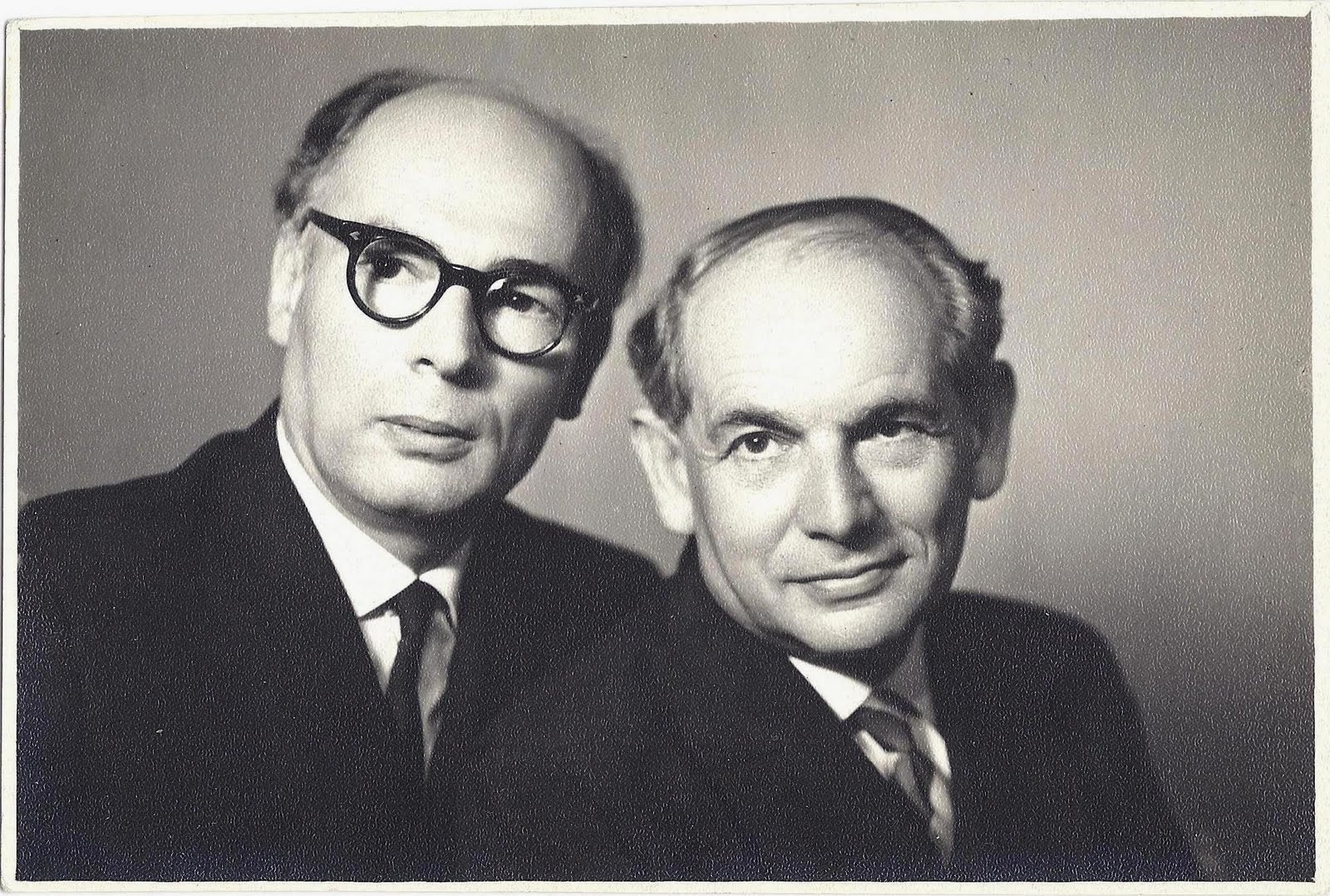

אין לי שום מידע עליהם - אין שמות, אין ארץ, אין תאריך. אבל משהו בתמונה הזו נראה לי קצת מוכר, וגרם לי לחשוב על פוליטיקאים. אולי הממושקף בצד שמאל הזכיר לי את בגין? המשקפיים שלו קצת דומים, אבל זה רחב מדי, ולא מספיק. זה לא זה. העניין הציק לי במשך זמן מה, עד שבסוף עליתי על זה:

Can't really know anything about them - no names, no nationalities, no date. But something about this photo seemed sorta familiar, and made me keep thinking about politicians. I couldn't figure it out, at first. Was the bespectacled guy on the left reminding me of Begin? Well, the glasses are sorta similar, but that's too wide, and really not enough. Can't be it. It was bugging me for a while, until finally I figured it out:
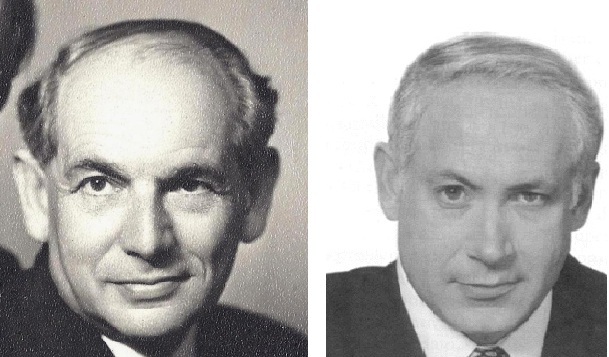

נכון? נכון?! זה ממש אותו פרצוף!
אני מקווה שזה משעשע אתכם כפי שזה משעשע אותי.
ובזאת נשלם ספיישל הבחירות הקטן שלי. עד הפעם הבאה (מתי שלא תהיה) - תישארו אופטימיים, אופטימיות זה חשוב.

Right? Right?! Practically the same face!
Hope you're as amused by that as I am.
And this concludes my little election special. Till next time (whenever that ends up being) - stay optimistic, optimism is important.

Wednesday, June 6, 2012

Out of principle - מתוך פרינציפ

ונפתח בשתי הודעות מנהלתיות:
א. לבלוג יש עכשיו גם עמוד פייסבוק. אז מי שמעדיף להתעדכן בפייסבוק - בבקשה. ולא אכחיש שקצת צומי (בדמות לייק, שייר וחבריהם) תעשה לי טוב על הלב. [הערה: חשבתי לעשות איזה וידג'ט כזה עם קישור רשמי-למראה לפייסבוק, אבל לא הצלחתי למצוא איך עושים את זה בלי מה שנראה לי כמו המון ווג'ערא'ס. אם אתם מכירים דרך קלה ופשוטה לארגן את העניין, אשמח לשמוע. עד אז, פשוט הוספתי עוד קישור לרשימת הקישורים.]
ב. כפי שכבר עדכנתי בעמוד הנ"ל, הוספתי לאחרונה כמה פרטי מידע מגניבים למדי לרשומה 'האדונית מסקערניעוויץ', אותם תוכלו למצוא כאן.
ועכשיו, גלויה! האח!

To start, two administrative announcements:
1. The blog now has a Facebook page. So those who prefer to get their updates that way - go ahead. Also, I will not deny that a certain amount of gratuitous attention (in the form of likes, shares, and all that stuff) will be rather nice. [Note: I thought of making one of those official-looking Facebook button side widget things, but couldn't find a way to do it without what looks like a lot of hassle. If you find a quick and simple way, let me know. Until then, it's just another link on my link list.]
2. As has already been updated in the aforementioned page, I recently added a few pretty cool details to the post 'The Lady from Skierniewice', which you can find here.
And now, a postcard! Hurrah!

אני לא בטוחה אם שמתי לב לראשונה לגלויה הזו בגלל התמונה או בגלל מה שכתוב בה, אבל התמונה באמת נחמדה. די יוצאת דופן - לא רואים כ"כ הרבה גלויות שמציגות אמצעי תחבורה יומיומיים.

I'm not sure if I first noticed it because of the picture or the writing, but the picture is nice. Sort of unusual - you don't see that many postcards depicting mundane means of transportation.

צד קדמי:
Front:


הכתובית בתחתית התמונה (Rorschach-Heiden Bergbahn: מסילת הרכבת ההררית רורשאך-היידן, וזה גם שם של חברת רכבות ישנה, כפי שאפשר לראות בראשי התיבות RHB על קרון הרכבת עצמו - אפשר לקרוא קצת על החברה באנגלית כאן, או, למי שקורא גרמנית, אפשר לקרוא ערך הרבה יותר מפורט כאן) מביאה אותנו היישר אל הפינה הצפון-מזרחית של שווייץ, על שפת ימת קונסטנץ, היא ה-Bodensee (ר' מפה למטה). נראה כמו מקום חביב למדי, ובכלל, נראה לי שמתאים לחזור להרים הקרירים של שווייץ עכשיו כשבחוץ נהיה כבר קיץ וחם.

The caption at the bottom (Rorschach-Heiden Bergbahn: the Rorschach-Heiden mountain railway, and also the name of an old railway company, as seen in the initials RHB on the actual train car - you can read about it here, or, if you read German, there seems to be a much more detailed entry here) places us right in the northeastern corner of Switzerland, on the shore of Lake Constance, or Bodensee (see map below). Seems like a rather lovely place, and it kinda feels right to return to the cool mountains of Switzerland now that it is getting hot and summery out again.


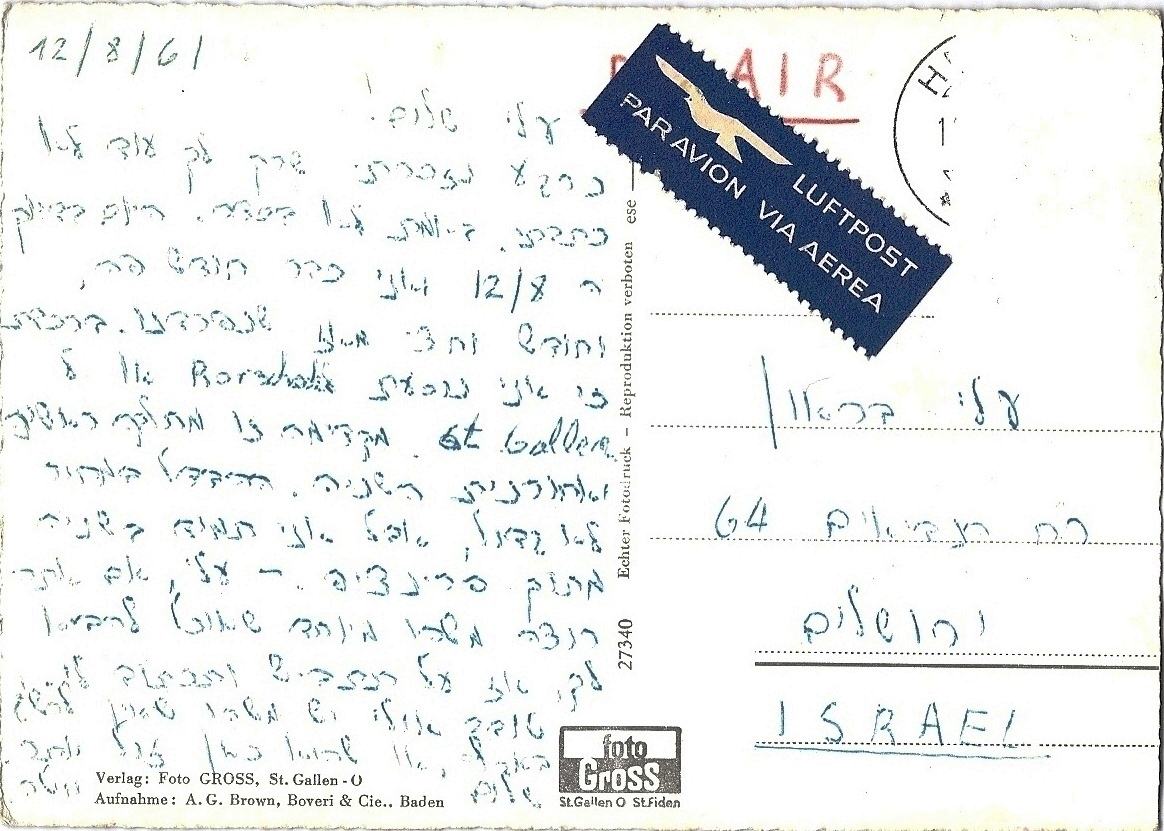
אבל כמו שקורה לעתים קרובות, החלק החביב עליי הוא מה שכתוב בצד האחורי. חוששתני שהסריקה לא יצאה משהו, אבל כרגיל צירפתי תעתיק ותרגום מתחת.

But as is often the case, my favourite part is on the back. The scan isn't great, I'm afraid, but as usual I got the transcription and translation right below.

צד אחורי:
Back:


12/8/61
עלי שלום!
כרגע נזכרתי שרק לך עוד לא כתבתי. באמת לא בסדר. היום בדיוק ה 12/8 ואני כבר חודש פה, וחודש וחצי מאז שנפרדנו. ברכבת זו אני נוסעת לRorschach או ל St Gallen. מקדימה זו מחלקה ראשונה ואחורנית השניה. ההבדל במחיר לא גדול, אבל אני תמיד בשניה מתוך פרינציפ. - עלי, אם אתה רוצה משהו מיוחד שאוכל להביא לך, אז על [כך במקור!] תתביש ותכתוב לי, טוב? אולי יש משהו שאין להשיג בארץ, או שהוא כאן זול יותר.
שלום, ויטה[?]

12/8/61
Hello, Eli!
I just remembered now that you are the only one I have not written yet. How dreadful of me. Today is exactly 12/8 [for any American readers: that means August 12, not December 8] and I am already here a month, and it's been a month and a half since we said goodbye. This is the train that I take to Rorschach or to St Gallen. At the front is the first class, at the back the second. The price difference isn't very big, but I am always in the second, out of principle. - Eli, if you want anything special that I can bring you, then dont [sic!] be shy and write me, alright? Perhaps there is something that can't be found back home, or that is cheaper here.
Goodbye, Vita[?]

ניסיתי לחפש את עלי בראון, אבל לא מצאתי שום דבר שנראה כמו זיהוי מוחלט של הבנאדם. יהיה קשה עוד יותר לחפש את הכותבת, כי אני אפילו לא בטוחה שאני מצליחה לקרוא את השם שלה כמו שצריך. בכל אופן, זה לא ממש משנה; העיקר כאן הוא הסיפור, מה שנאמר כאן, ואיך הוא נאמר. ותכל'ס, נכון שזה מגניב? יש כאן איזה טון דיבור שעולה מהכתיבה די בבירור - אפשר ממש לדמיין אותה, לא? יש פה משהו חמור-סבר כזה, שגורם לי לחשוב על אישה קצת מבוגרת, קצת דודתית או מורתית, מאלה שתמיד יודעות מה הן רוצות ולמה, שיש להן סיבות ספציפיות ותכניות מסודרות (קצת מזכיר לי את האמא מ'להתראות לנין', ואם לא ראיתם את הסרט הזה כדאי שתראו כי הוא נהדר). מה היא עושה בשווייץ, לתקופה של לפחות חודש, ואולי יותר? ועוד בתחילת שנות ה-60, כשנסיעות לחו"ל לא היו עניין נפוץ במיוחד פה בארץ? האם היא נסעה לאיזה בית הבראה, או אולי ללימודים (יש אוניברסיטה בסנט גאלן)? בכל אופן, אני משערת שהיא נהנתה שם, ושגם אם היא בסך הכל היתה שם בחופשה נינוחה, היא בכל זאת הלכה לכל מקום בקצב נמרץ, תמיד עם מטרה ברורה לפניה, כי היא פשוט היתה בנאדם כזה.

I tried looking for Eli Brown/Braun/Bar-On, but didn't come up with anything that feels like it might definitely be the guy. Would be even harder to search for the writer, since I'm not even sure I'm reading her name right. Anyway, this doesn't really matter; it all about the story, all about what is being told, and how. And really, isn't it neat? There's a certain tone of voice that comes so clearly through the writing - you can just imagine her, can't you? (At least, I tried to capture in the translation what she sounded like to me.) There's a sort of severity about it that makes me think of a somewhat older woman, a little like a teacher, the kind who always knows what she wants and why, the kind who has specific reasons and orderly plans (it sort of makes me think about the mother from Goodbye Lenin, which you should see if you haven't because it's a lovely film). What is she doing in Switzerland, for at least a month, and possibly longer? And back in the early 60s, when trips abroad weren't very common around here? Is she there for her health, or maybe for study (there's a university in St. Gallen)? Anyway, I'm assuming she enjoyed herself, and that even if she was there on a leisurely vacation, she walked briskly everywhere, always with a clear purpose, just because that's the sort of person she is.

אבל כמובן, זה רק הדמיון שלי - זה רק מה שאני רואה, כשאני מסתכלת על הגלויה. אנשים אחרים אולי יראו דברים אחרים. אם יש לכם סיפורים משלכם, אתם מוזמנים לחלוק.

But of course, that's just my imagination - just what I see, when I look at this card. Other people might see other things. If you have your own stories, go ahead and share them.


עדכון (12 באוקטובר 2012): תגובה אנונימית אחת מצאה לי את עלי בראון מהגלויה - ואני ממש שמחה על זה, כי זה סיפור נפלא. הנה הקישור שקיבלתי שם, ואתם יכולים פשוט ללכת ולקרוא, אבלאם לא בא לכם, התקציר הוא כזה: בבית שבכתובת הזו, ברחוב הנביאים 64, התגוררה רחל המשוררת אחרי שנאלצה לעזוב את קיבוץ דגניה בגלל השחפת שלה. את השיר הלירי העצוב-אך-אופטימי והיפהפה שלה 'עץ אגס' - אחד השירים העבריים האהובים עליי (בקישור אפשר לקרוא גם את התרגום האנגלי החיוור שלו) - היא כתבה שם, על עץ האגס שגדל בחצר מחוץ לחלונה.
אז מה לכל זה ולעלי בראון, מלבד הכתובת המשותפת? ובכן, אחרי שרחל עברה לתל אביב, אבא של עלי, וולפגנג בראון (אני די בטוחה שהוא מופיע בעוד כמה גלויות שהעליתי פעם; אבדוק את העניין אחר כך) התגורר בבית במשך הרבה שנים. למעשה, הוא מת שם ב-2009, בגיל 94. הוא היה מאוד קשור לסיפור של רחל, וכשעץ האגס שהונצח בשיר מת לפני כמה שנים, הוא ובנו עלי נטעו עץ אגס חדש במקומו. מקסים, לא?

Update (Oct 12 2012): Some anonymous in the comments found me the Eli Braun from the postcard - and I'm so glad s/he did, because it's a  wonderful story. The link there is to an article in Hebrew (and I suppose most of the story will speak more to the Hebrew-speakers, but it's still wonderful), but the gist of it is that the house at this address, 64 HaNevi'im Street, was for a while the home of one of the most famous Hebrew women poets, Rachel. She moved there from the kibbutz after she was diagnosed with tuberculosis and was no longer allowed to work with children (a work she loved, by all accounts). Yes, she basically fulfilled the stereotype of the frail, lonely poet dying from consumption. But she wrote beautiful poetry. During the time she spent in Jerusalem she also wrote one of my favourite poems, the lyrical, sad-yet-optimistic Pear Tree (alas, so much is lost in this translation - you'll just have to trust me that in the original Hebrew it's just beautiful), about an actual pear tree growing in the courtyard, outside her window.
But while all this introduction was probably necessary for my non-Hebrew readers, at this point you are probably asking yourselves what it all has to do with Eli Braun, except for that address. Well, after Rachel moved to Tel Aviv, Eli's father, Wolfgang Braun (who I'm pretty sure appeared in some previous postcards I had here; I'll look it up later) lived in that house for many years. In fact, he died there in 2009, at the age of 94. He cared a lot about the story of Rachel, and when the pear tree immortalised in the poem died some years ago, he and Eli planted a new pear tree in its place. Isn't that sweet?
Thank you, Anonymous!

והנה המקום עכשיו - או לפחות, פיסת הגינה שאפשר לראות כשמסתכלים מהרחוב:

And here's the place now - or at least, the bit of the garden you can see from the street:

Monday, November 29, 2010

Still Life - טבע דומם

לפעמים אני קונה גלויות ישנות, בין אם כתוב עליהן משהו ובין אם לאו, פשוט כי הן יפות בעיניי. או ליתר דיוק (שהרי 'יפה' זה מונח נרחב למדי) מפני שיש בתמונה משהו מרשים, שתופס את תשומת הלב שלי, וגורם לי להמשיך ולהביט בה.

Sometimes I buy old postcards, whether they have anything written on them or not, just because I think they're pretty. Or, rather (since 'pretty' is kind of a wide term), because there's something striking about the picture, something that catches my attention, and makes me keep looking at it.

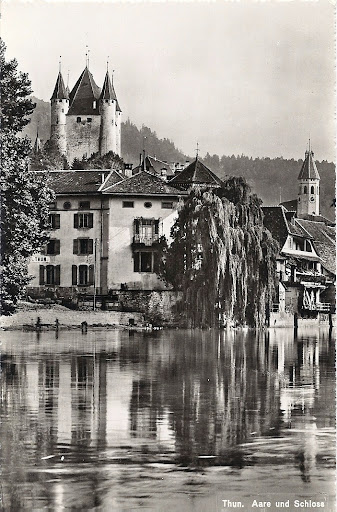
הגלויה שלהלן היא מקרה שכזה - ולמרות שלעומת מה שמצוין בכותרת זה לא 'טבע דומם' קלאסי, יש בה טבע, ויש בה גם הרבה דממה. משהו שקט ויפהפה.

This postcard is one of those cases - and while not exactly a classic 'still life', as the title implies, it does have a lot of stillness in it. Something quiet and beautiful.


לגבי הכתובית בפינה, תון היא עיירה שווייצית, השוכנת על שפך הנהר אָרֶה לאגם תון. וכמו הרבה ערים ביניימיות אחרות (למען האמת היא היתה בסביבה עוד לפני ימי הביניים, אבל מילא), יש בה טירה, או בגרמנית: Schloss. אז זה די ברור, בעצם. הנה תון במפה:

Regarding the little caption, Thun is a town in Switzerland, on the spot where the river Aare (or Aar) flows into Lake Thun. And, like many medieval towns (it was actually around before medieval times, but still), it has a castle: or, in German, Schloss. Pretty straghitforward, really.
So, here's Thun on a map:


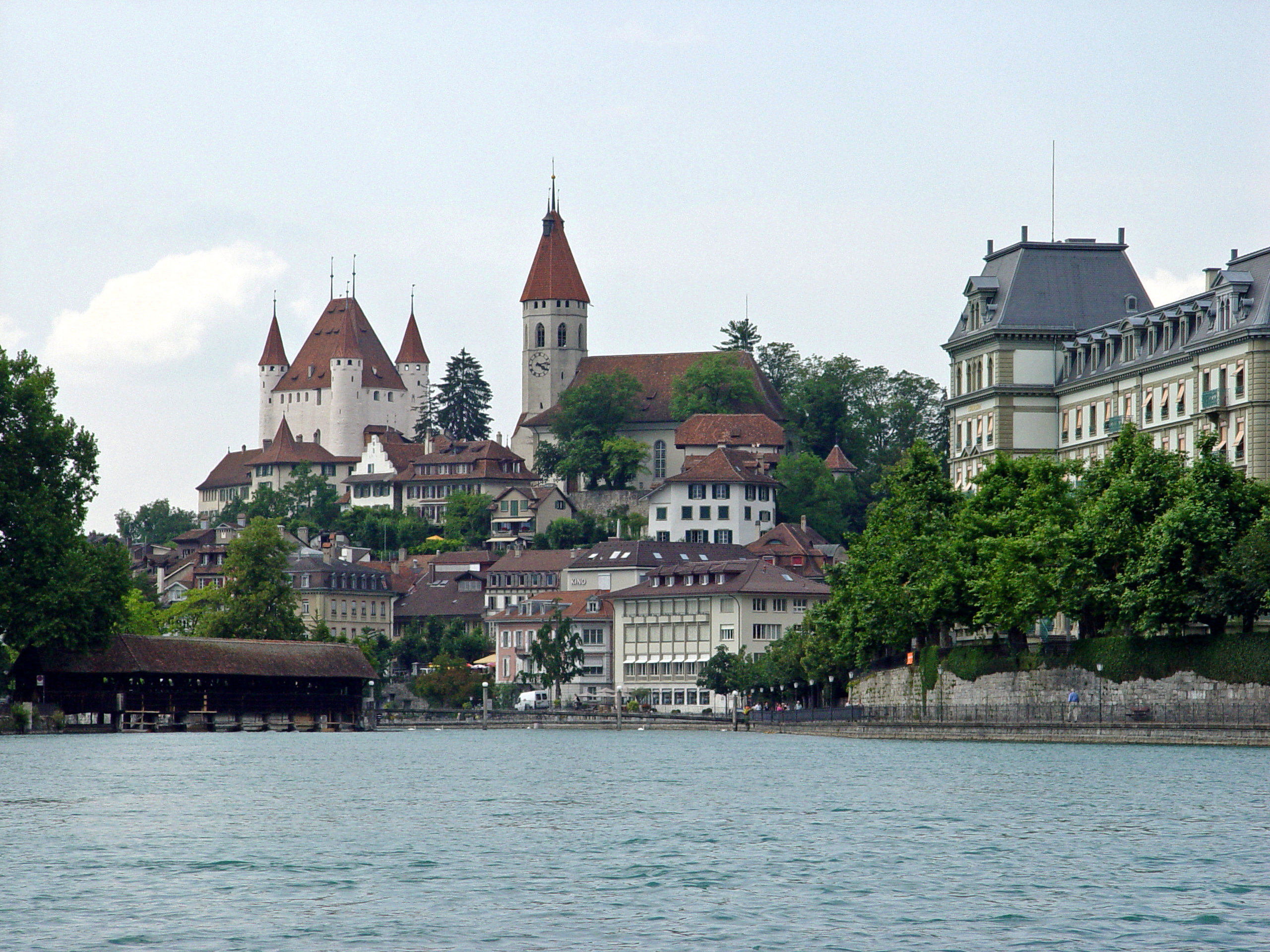
והנה תמונה מודרנית של ה-Aare und Schloss (לצערי לא הצלחתי למצוא תמונה עם קונפיגורציה זהה, אבל זה עדיין יפה:)

And here's a modern picture of the Aare und Schloss (unfortunately, I couldn't find anything with the same configuration, but it's still pretty):


וזהו, בסך הכל. לקחתי את הגלויה הזו פשוט כי אהבתי את התמונה. הדממה, ההשתקפות - שגם תופסת כמעט חצי מהחלל בפריים - היופי החד של השחור-לבן, הכל פשוט דיבר אלי, מבחינה אסתטית. הערבה והנהר נראים כאילו יצאו מציור אימפרסיוניסטי (אבל בשחור-לבן, כמובן). זו פשוט תמונה יפהפיה. אני יכולה להמשיך ולהביט בה הרבה זמן, ולמצוא כל מיני פרטים קטנים (עציצים על מרפסת; התגית 'Thun' שהודבקה משום מה על הבית הגדול, אולי למקרה שהכיתוב בפינה לא מספיק; איך שכל השפיצים על גגות הטירה ומגדל השעון והבתים מהדהדים את השפיצים של צמרות העצים ברקע...) וזה פשוט נפלא לגמרי.

So, that's about it. I just picked this card because I loved the picture. The stillness, the reflection - and the way the reflection takes almost half of the space in the frame - the stark black-and-white beauty of it, it all just spoke to me aesthetically. That willow, and the river, look like they came out of an impressionist painting (but in black-and-white of course). It's just beautiful. I can keep looking at it for a long time, and find all sorts of little details (flowerpots on a balcony; the label saying 'Thun' that was tacked on the big house for some reason, perhaps in case the caption wasn't enough; the way all those pointy tops on the castle and the clock tower and the houses seem to echo the pointed tops of the trees in the background...) and it's just absolutely wonderful.

אין סיפור, הפעם. רק רשומה קצרה על תמונה שאהבתי. אולי אעלה עוד כמה כאלה בקרוב, במקום כל הרשומות המסתבכות-להפליא על פיסות חיים. עד אז, היו שלום!

No story, this time. Just short post about a picture I enjoyed. Might do a few more of those soon, instead of all those surprisingly complicated piece-of-life posts. Till then, farewell!

Monday, July 26, 2010

The Alps - הרי האלפים

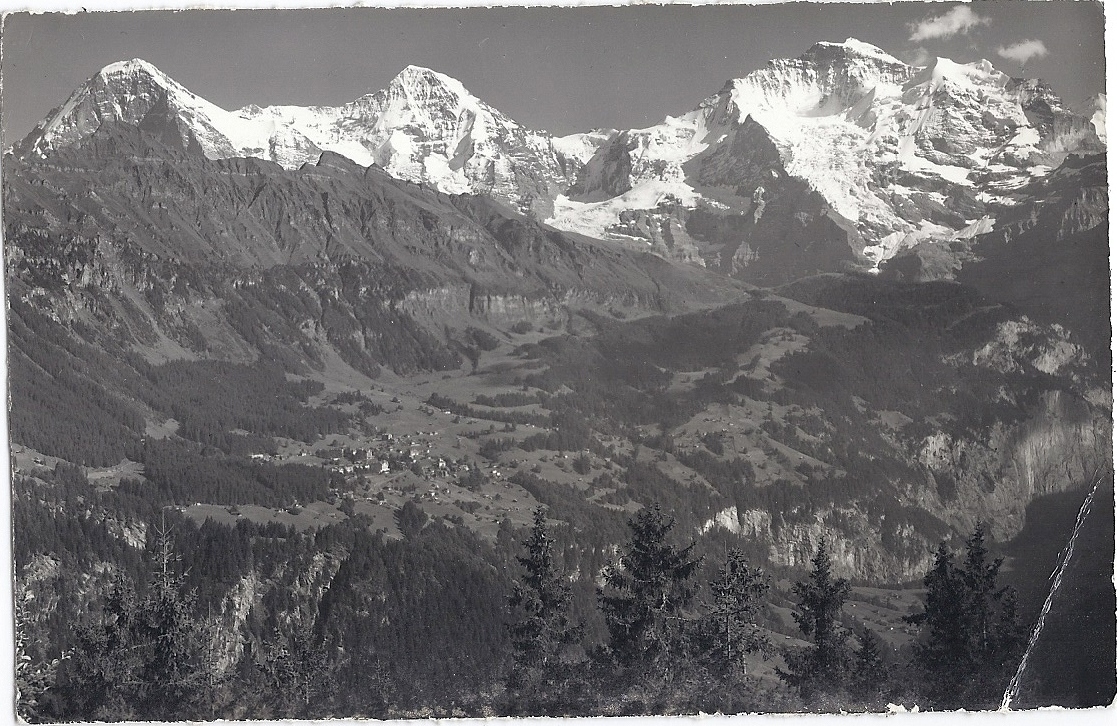
Another postcard from a faraway cold place, but not much detail for this one, so this will be a short post.

But really, what more do you need? Switzerland. Tall, snow-peaked mountains, with the black and white photograph making them look even colder. Some pines in the foreground, and the hint of a village on a slope. So peaceful.

עוד גלויה במסגרת המקומות הרחוקים והקרים, אבל הפעם אין הרבה פרטים, אז הרשומה הזו תהיה די קצרה.
אבל מה עוד צריך, בעצם? שווייץ. הרים גבוהים ועטויי שלג, שבגלל הצילום בשחור-לבן נראים צוננים עוד יותר. כמה אורנים בקדמת התמונה, ורמז של כפר על המדרון ממול. איזו שלווה.


There is no message written on the back, just the description: Eiger, Mönch, Jungfrau. Wengen von Sulwald ob Isenfluh.
Since out of these eight words six are place names, it wasn't too hard to figure this out: Eiger, Mönch and Jungfrau are the names of the mountain peaks; the second part explains that the village in the picture is Wengen, and that we are watching it from Sulwald or Isenfluh, which are two other places that are quite close to each other (okay, I am actually not 100% sure that I correctly interpreted that 'ob', so any German-readers who end up here are welcome to correct me, but it seems to make sense).

אין הודעה מאחורה, רק התיאור: Eiger, Mönch, Jungfrau. Wengen von Sulwald ob Isenfluh.
מכיוון שמתוך שמונה המלים האלה שש הן שמות מקומות, לא היה קשה לפענח את הכיתוב. אייגר, מונך ויונגפראו הם שמות הפסגות; החלק השני מסביר שהכפר הוא וונגן, ושאנחנו צופים בו מסולוולד או איזנפלו, שהם עוד שני מקומות שסמוכים זה לזה (טוב, אז אני לא בטוחה ב-100% שבאמת פירשתי נכונה את ה-'ob' הזה, אז אם מזדמנים לכאן קוראי גרמנית אשמח לתיקון, אבל זה נשמע לי הגיוני בכל אופן).

And one nice thing to finish with - thanks to the wonders of technology, you can now find the relevant places on Google Earth, and recreate the photo almost exactly. I'm putting a link this time, rather than embedding, both because it requires a plug-in for Google Maps that not everyone might be interested in, and because the embedded version makes everything run slow. But here, have a look. It's cool.

ומשהו אחד נחמד לסיום - בזכות פלאי הטכנולוגיה, אפשר למצוא ב-Google Earth את המקומות הנזכרים, ולשחזר את התמונה כמעט במדויק. אני מקשרת הפעם, ולא מטמיעה, גם כי זה דורש התקנה של פלאג-אין בשביל גוגל מפות, שאולי לא כולם מעונינים בו, וגם כי זה מאט מאוד את הגלישה. אבל הנה, תסתכלו. זה מגניב.

Update: Got a correction of the German from Peter, who explains: "'ob' by the way is old German for 'oberhalb' = upon or above, so Isenfluh may be a river or village below Sulwald". And since Sulwald is indeed a bit above the village of Isenfluh, it all makes sense now. Thank you!
עדכון: קיבלתי תיקון לגרמנית מפטר, שמסביר ש-ob הוא צורה ארכאית של oberhalb, 'מעל'. ומכיוון שסולוולד אכן נמצא קצת מעל הכפר איזנפלו, הכל הרבה יותר הגיוני עכשיו. תודה!