Hello readers! - !שלום, קוראים

What is this? Read the introduction - מה זה הדבר הזה? הסבר בהקדמה
Showing posts with label thank you Google. Show all posts

Saturday, June 21, 2014

The Proud Grandfather - הסבא הגאה

זה הפוסט ה-50 שלי! הידד!
(וגם הפוסט הראשון ל-2014, אבל בזה אני פחות גאה...)

It's my 50th post! Hooray!
(It's also my first post in 2014, but I'm not as proud of that...)

לפעמים ממש יש לי מזל.
קניתי את הגלויה הזו בגלל משפט אחד במסר שבצד האחורי - ואז הצלחתי ליצור קשר עם הנמען המקורי, שהיה ידידותי וידען וסיפק לי המון מידע על הסיפור שמאחוריה, וזה היה פשוט נפלא.
...אבל אני מקדימה את המאוחר. בואו נביט קודם בתמונה.

Sometimes, I get awfully lucky.
I bought this postcard because of one sentence in the message on the back - and then I managed to contact the original recipient, who was friendly and knowledgeable and and gave a wealth of information about the story behind it. How incredible!
...But I'm getting ahead of myself. Let's have a look at the picture, first.

צד קדמי:

Front:

כפי שאפשר לראות, זו "תחנת גן החיות" המפורסמת (Bahnhof Zoo), הקרויה על שם גן החיות של ברלין שנמצא לא רחוק. אין לי הרבה מה לומר על התמונה הזו למען האמת; היא בהחלט נראית פיפטיז-ית מאוד, אבל זה בעיקר בגלל השחור-לבן והמכוניות המיושנות. המבנים עצמם, כפי שניתן לראות בצילום הרחוב בגוגל (או בצילומים אחרים), נשארו כמעט זהים:

As you can see, this is the famous Bahnhof Zoo train station (named for the nearby Berlin Zoo). I don't have much to say about this photo, actually; it definitely has a very fifties-y vibe, but that's mostly due to the black&white and the old cars. The actual structures,as you can see on Google Street View below (or in other photos), are virtually identical:


ועכשיו לסיבה האמיתית שקניתי את הגלויה הזו - המסר שכתב איש מבוגר חביב בנסיעת עסקים לברלין למשפחתו בארץ.

And now to the real reason I got this card - the message, written from a nice elderly man on business in Berlin to his family back in Israel.

צד אחורי:
Back:

ברלין 16 ביוני 1956
ילדי היקרים מאוד! היום יש ביכולתי לכתוב לכם ולהודות לכם על דרישות השלום, שנשלחו לי על ידיכם יחד עם יתר הקרובים בערב שבת. כפי שכתבתי כבר לאמה [=אמא - י.ב], שלומי הוא טוב מאוד ואינני מרגיש את לחץ הדם הגבוה. אני תקוה שגם אתם בריאים וכמו כן ילדיכם שהם נכדי. את התיק המכיל את תמונותיכם ואת תמונות הסבתה והנכדים אני מציג לכלם בלי להתחשב עם ענינם בתמונות. פרטים על שלומי כאן וגם על החיים,[הפסיק במקור] שאני מנהל, תוכלו לשמוע מאמה, שאני כותב לה בפרוטרוט. קר לי והיום הופתעתי ע"י גשם חריף והייתי רטוב עד לעור גופי. אני מתגעגע לבית ואני שמח כבר עכשיו על יום שובי. היום בקרתי אצל מרשי לוינשטיין וקבלתי ממנו את ידיעות חדשות [כך במקור] מיום 8 דנא. שם שמעתי גם את הידיעות מקול ישראל. נפתלי, שלח לי את העט הנובע שלך לתיקון. רציתי לקנות לך את הספר המשומש
Westostpassage להשתלמותך!!
נשיקות רבות ולבביות לכם והנכדים, אביכם
Berlin, June 16 1956
My dearest children! Today I am able to write to you and thank you for your warm wishes, which have been sent to me by you with the other relatives on Friday evening. As I have already written to muther [sic], I am doing very well and I do not feel the high blood pressure. It is my hope that you are also in good health as well as your children who are my grandchildren. The case containing your pictures and the pictures of the grandmuther and grandchildren I show to everyone with no consideration of their interest in the pictures. Details about how I am doing here and also about the life,[sic] I lead, you can hear from muther, to whom I write in great detail. I am cold and today I was surprised by a sharp rain and was wet to the skin of my body. I miss home and am already happy for the day I return. Today I visited my client Lewinstein and received from him a recent news [sic] from the 8th of this month. There I also heard the news from Kol Israel [radio]. Naftali, send me your fountain pen for repair. I wanted to buy you the used book
Westostpassage for your continuing education program!!
Many loving kisses for you and the grandchildren, your father
אתם יכולים מן הסתם לנחש מה המשפט הבודד שבגללו רציתי את הגלויה הזו, נכון?
"את התיק המכיל את תמונותיכם ואת תמונות הסבתה והנכדים אני מציג לכלם בלי להתחשב עם ענינם בתמונות".
זה פשוט נהדר - אני ממש אוהבת כמה שהוא מודע לעצמו. בדרך כלל, כשחושבים על הסבא שמראה לכולם בגאווה את תמונות המשפחה שלו, והאנשים שסביבו משלימים עם העניין בשקט ואולי קצת מגלגלים את העיניים, מדמיינים מישהו שהוא אולי קצת חסר-מודעות. אבל לא. האיש הזה היה כ"כ שמח, כ"כ גאה במשפחה שלו, שפשוט לא היה אכפת לו אם אנשים לא התעניינו בתמונות שהראה להם. ויודעים מה? כל הכבוד.
ואני אוהבת את הטון של הכתיבה באופן כללי. הכל פשוט מעולה.

You can probably guess what is that one sentence that made me want the postcard, right?
"The case containing your pictures and the pictures of the grandmuther and grandchildren I show to everyone with no consideration of their interest in the pictures".
That is just so wonderful - I love the self-awareness of it. Usually, when you think of the grandfather proudly showing family pictures to everyone, and the people around putting up with it and perhaps rolling their eyes, you imagine the guy to be a bit oblivious. But no. This man is so happy, so proud of his family, that he simply doesn't care if people aren't interested in the photos he shows them. And you know what, good on him.
I really love the tone of the whole thing in general, actually. It's all great.

ואז התחלתי לחפש פרטים על הגלויה, כרגיל - וכשחיפשתי את שם הנמען, מצאתי די בקלות את הביוגרפיה הקצרה של פרופסור נפתלי קדמון באתר של ארגון יוצאי מרכז אירופה, וגם את הראיון הביוגרפי הזה באתר של המרכז למיפוי ישראל, וחשבתי לעצמי שאל"ף, סיפור החיים שלו מרתק, ובי"ת, שאם הוא פרופסור באוניברסיטה העברית, יש מצב שכמו שכבר קרה בעבר אוכל למצוא את כתובת האימייל שלו באתר האוניברסיטה. ואכן, הצלחתי ליצור קשר עם פרופ' קדמון, שגם מצא זמן (על אף עיסוקיו הרבים) לענות לי, כפי שאמרתי בפתח הרשומה, בשמחה ובפירוט רב.

So I started looking for details about the postcard, as usual - and when I searched for the recipient's name, I quite quickly found the short biography for Professor Naftali Kadmon at the Association of Israelis of Central European Origin website, as well as this biographical interview at the Survey of Israel website [Hebrew-only links, sorry!], and thought to myself that first of all, he seems to have a fascinating life story, and secondly, that if he's a Hebrew University professor, there's a chance I'll be able to find his email address on the university website, as has happened before. And indeed, I managed to contact Prof. Kadmon, who actually find time in his busy schedule to reply, and as I said when I started this post did so graciously and in detail.

לנושא הגלויה הראשונה אני יכול להוסיף שהיא נכתבה אכן על ידי חותני עו"ד מרטין וולפסון בשעה ששהה בברלין לרגל טיפול בנושא השילומים מגרמניה, ביחד עם אשתו, חמותי רופאת העיניים ד"ר ארנה וולפסון לבית ג"ץ (Goetz). הייתי יכול להוסיף רבות, אבל אסתפק בזה. רק אוסיף שיש ברשותי ארכיון משפחתי גדול מאד, שאת עיקרו (אלפי תעודות) הפקדתי ב"ארכיון המרכזי לתולדות העם היהודי" באוניברסיטה העברית בירושלים. על סמך החומר הכלול בו ערכתי שני ספרים עם הסיפור המשפחתי משנת 1680 ועד 2004:    Vom Rheinland ins heilige Land(זכרונותיו של אבי המנוח) שיצא לאור בגרמניה, ו"אלה תולדות ומסעות – מהיכן הגעתם, נכדיי לבית קדמון" (עם 152 תצלומים מ-1870 ואילך!) בהוצאה פרטית.
Regarding the first postcard, I can add that it has indeed been written by my father-in-law, attorney Martin Wolfson, while he was staying in Berlin to take care of the reparations from Germany, along with his wife, my mother-in-law, the ophthalmologist Dr. Orna Wolfson, née Goetz. I could have added much more, but this will suffice. I will only add that I possess a very large family archive, most of which (thousands of documents) I have deposited in the Central Archives for the History of the Jewish People at the Hebrew University in Jerusalem. From the material in it I have compiled two books with the family story from 1680 until 2004: Vom Rheinland ins heilige Land (the memoirs of my late father) which was published in Germany, and History and Travels - Where Did You Come From, My Grandchildren of the Kadmon Family (with 152 photos from 1870 onwards!) which was self-published.

גם על עו"ד מרטין וולפסון אפשר לקרוא באתר של ארגון יוצאי מרכז אירופה (וגם בספר 'אלה תולדות ומסעות' המוזכר לעיל - אגב, הצצתי קצת בעותק שבספריה הלאומית, והוא מרתק בעיניי), ועל הספר הנזכר בגלויה סיפר לי פרופ' קדמון:

הספר הנזכר בגלויה של חותני מרטין וולפסון אינו ספר שלי, אלא של אחד משני חוקרי הארקטיקה הדגולים נורדנשלד ואמונדסן. יתר על כן, השם שגוי: נדמה לי שבגלויה כתוב Westostpassage או Ostwestpassage וזה רק תיאור של הנושא [...] הכוונה היא למעבר ממיצר ברינג לאורך החוף הצפוני של אסיה ועד לכף הצפוני (נורבגיה). לא זכור לי שביקשתי מחותני למצוא לי את הספר. זה כל מה שאני יכול להוסיף בשלב הנוכחי.

Atttorney Martin Wolfson also has a short biography at the Association of Israelis of Central European Origin website [again, Hebrew only, my apologies] (as well as in the aforementioned History and Travels book - I flipped through the copy at the National Library, and found it fascinating), and as for the book mentioned in the postcard, Prof. Kadmon said:
The book mentioned in the postcard by my father in law Martin Wolfson is not a book of mine, but of one of the great arctic explorers Nordenskiöld and Amundsen. Moreover, the name is wrong: I believe the postcard says Westostpassage or Ostwestpassage and this is just a description of the subject [...] It refers to the passage from the Bering Strait along the northern coast of Asia to the North Cape (Norway). I do not remember asking my father in law to find this book for me. This is all I can add at the current stage.

ואם אתם באמת רוצים לחקור הלאה, ובמקרה גם קוראים גרמנית, אתם יכולים לקרוא את מסמך ה-PDF הזה בארכיון המרכזי לתולדות העם היהודי בירושלים, שמתאר את עזבון יצחק קדמון (יוליוס קאופמן), ולהמשיך משם...

And if you really want to dig deeper, and happen to read German, you can check out this PDF at The Central Archives for the History of the Jewish People Jerusalem, which details the estate of Isaac Kadmon (Julius Kaufmann), and do more research from there...

אבל מן הסתם רוב הקוראים לא מתעניינים בדברים כאלה באותה המידה כמוני. אז בואו נפסיק כאן, עם הרמת כובע וירטואלית לסבא הגאה ההוא, לפני כמעט שישים שנה, שעבד קשה בברלין אבל בכל זאת מצא זמן לשוטט בחנויות ספרים משומשים ולהשוויץ בנכדים שלו לכל מיני אנשים זרים שלא ציפו לזה בכלל. העולם הוא מקום טוב יותר בזכות סבים כמוהו.

But of course, I suppose most readers aren't as fascinated by that stuff as I am. So let us leave here, with a tip of the virtual hat to that proud grandfather, almost sixty years ago, toiling away in Berlin but still taking time to wander around in used book stores and to show off his grandchildren to any unsuspecting stranger. Grandparents like that make the world a better place.


תודתי שלוחה לפרופ' קדמון על כל המידע.
Many thanks to Prof. Kadmon for all the information.

Saturday, August 3, 2013

Tallman - טולמן

Sometimes I think to myself that I should do a quick blog post - pick one of the old pictures I bought in a US antique store, try to do some research about whatever's on there (I probably won't find much, because it's so old, right?) and post. And then I get wrapped up in this research, whether it's looking over dozens of portraits to try and determine, by the subject's clothes, when the picture was taken, or whether it's about finding some actual relevant information and trying to dig as deep as my limited resources allow...

לפעמים אני חושבת לעצמי שכדאי שאכתוב רשומה זריזה לבלוג - שאבחר אחת מהתמונות הישנות שקניתי בחנות עתיקות בארה"ב, אנסה לחקור קצת על מה שיש שם (ובטח לא אמצא הרבה, כי היא כ"כ ישנה, נכון?) ואפרסם את הרשומה. ואז אני נסחפת במחקרים שלי, לפעמים עוברת על עשרות פורטרטים כדי לנסות ולהבין, לפי הבגדים של המצולם, מתי התמונה צולמה, ולפעמים אני מוצאת מידע שהוא אשכרה רלוונטי ומנסה לחפור עמוק ככל שהמקורות המוגבלים שלי מאפשרים לי.

And the latter is the case here. See, the only reason I bought this picture in the first place was because the woman seems to be wearing a punk-y studded choker, which looks so out of place and anachronistic in that picture. And I thought that was really cool. I mean, look at her: she seems like a really pleasant, buttoned-up sort of lady. There's something about her face that I really like; it might not be especially beautiful, with her wide jaw and somewhat faded eyebrows, but she feels sensible, and nice. It wasn't common to smile in photographs, back then, but her expression is pretty close to a smile, and I find that lovely.
And then there's that choker, right out of some picture from the 1970s with a spiky-haired chick flipping off the Pigs. It's so odd.

וכאן מדובר על המקרה השני. תשמעו, הסיבה היחידה שקניתי את התמונה הזו מלכתחילה היא כי נראה שהאשה המצולמת לובשת מין צ'וקר פאנקיסטי עם ניטים, שנראה לחלוטין אנכרוניסטי ולא שייך לתמונה. זאת אומרת, תסתכלו עליה: היא נראית כמו גברת נעימה בהחלט, מכופתרת כזו. יש משהו בפנים שלה שאני ממש אוהבת; אולי הם לא בדיוק יפים, עם הלסת הרחבה שלה והגבות המחוקות במקצת, אבל אני מרגישה שהיא אשה חביבה, עם ראש על הכתפיים. לא היה נפוץ לחייך בתמונות, בזמנו, אבל ההבעה שלה די קרובה לחיוך, וזה מקסים בעיניי.
ואז הצ'וקר הזה, ישר מאיזו תמונה משנות ה-70 עם בחורה בשיער קוצים שעושה תנועה מגונה למנאייקים. זה כל כך מוזר.


Is there any explanation for this? I'm not exactly sure, because (not too surprisingly, I must say) I couldn't find  much about this nice lady. Unfortunately, I can't see much of her clothes (lace collar, lots of buttons along the front, interesting brooch, and perhaps striped fabric, although it might just be a defect in the photograph), so most of the resources for dating old photos by clothes didn't help me much - but her hair style seems to fit the fashion for curly/frizzy bangs that was fashionable around 1880s-1890s (hence the two tags; well, there are other reasons too, see later), although she kept it very simple, and the rest of the hair seems to just be drawn back, not held up. The ribbon/choker which drew my attention seems to also be part of the fashion of the time - I did see it mentioned that choker necklaces and jeweled collars were popular then - but I didn't find anything exactly like it in any of the pictures I've seen so far. Quite a mystery.

האם יש הסבר לעניין? אני לא לגמרי בטוחה, כי (כצפוי, למען האמת) לא מצאתי הרבה על הגברת החביבה הזו. למרבה הצער לא רואים הרבה מהבגדים שלה (צווארון תחרה, הרבה כפתורים מקדימה, סיכה מעניינת, ואריג שהוא אולי מפוספס, אם זה לא פשוט פגם בתמונה), כך שרוב מקורות המידע שמסייעים לתארך תמונות ישנות לפי הלבוש לא עזרו לי במיוחד - אבל התסרוקת שלה נראית קרובה למעין-פוני מתולתל או מקורזל שהיה אופנתי בשנות השמונים והתשעים של המאה ה-19 (ולכן תייגתי את שני העשורים; כלומר, יש עוד סיבות, ר' בהמשך), רק שהיא בחרה בסגנון פשוט מאוד, ושאר השיער נראה כאילו הוא פשוט אסוף אחורה, ולא למשל בפקעת גבוהה. הצ'וקר/סרט שעל הצוואר שלה, שמשך את תשומת הלב שלי לתמונה, כנראה היה גם הוא חלק מהאופנה באותה תקופה - ראיתי התייחסות לכך שצ'וקרים וענקים משובצים היו פופולריים אז - אבל לא ראיתי משהו ממש כמוהו באף אחת מהתמונות שמצאתי עד כה. תעלומה.

So that's the nice lady with the punk choker. But most of the information I have here is what I managed to find not about the woman in the picture (and as I said, that's not really surprising) but about the photographer: C.W. Tallman from Batavia, NY. And there was actually quite a lot of it.

אז זו הגברת החביבה עם הצ'וקר הפאנקיסטי. אבל את רוב המידע כאן הצלחתי למצוא לא על האשה המצולמת (וזה, כאמור, לא נורא מפתיע) אלא על הצלם: צ'.וו. טולמן מבאטוויה שבמדינת ניו יורק. ולמען האמת מצאתי לא מעט מידע.

To begin with, there are relatively a lot of photographs by him in various places on the web. The earliest ones, from between the late 1860s and the 1870s, seem to all be related to railroad construction projects, such as the Union Pacific Railroad's Dale Creek Bridge, The new railroad bridge in Portage NY, or a Union Pacific Railroad tunnel entrance (some of these photos have actually been taken by other photographers, and only published by Tallman, but that still counts as far as I'm concerned). Then some time after that you get a whole slew of portraits he did, like this soldier guy (link might not work properly, in which case you'll need to go to the main page here and do the search for Tallman yourselves, or to just give it up and move on because there's more interesting stuff coming up), or this grandmotherly lady (love the idea of that blog, by the way!), or the various eBay items that popped up when I searched there, a few examples of which are included below:

קודם כל, יש די הרבה תמונות שהוא צילם, בכל מיני מקודמות ברחבי הרשת. המוקדמות ביותר, בין שנות השישים לתחילת שנות השבעים של המאה ה-19, קשורות כולן, כך מסתמן, למפעלי בנייה של מסילות רכבת, כמו למשל גשר נחל דייל של חברת יוניון פסיפיק, גשר הרכבת החדש בפורטג' שבמדינת ניו-יורק, או כניסה למנהרה של חברת יוניון פסיפיק (בעצם חלק מהתמונות האלה צולמו על-ידי צלמים אחרים, וטולמן רק פירסם אותן, אבל זה בכל זאת נחשב לדעתי). קצת אחר כך עולים ברשת (גיחי) המון דיוקנאות שהוא צילם, כמו למשל החייל הזה (יכול להיות שהקישור לא יעבוד כיאות, ואז צריך ללכת לעמוד הראשי שכאן ולחפש Tallman בעצמכם, או פשוט לשכוח מהעניין ולעבור הלאה כי יש דברים יותר מעניינים בהמשך), או הגברת הסבתאית הזו (דרך אגב, אני ממש אוהבת את הרעיון של הבלוג הזה!), או כל הפריטים השונים שעלו בחיפוש שלי באיביי, שכמה דוגמאות מביניהם מצורפות להלן:

But that's not all!
Tallman is briefly mentioned in this transcript from Batavia Daily News (it only says that he took a photo of a Masonic temple; to be honest, I mostly include this because the ghost report amused me).
More transcripts from contemporary local newspapers can be found in this RootsWeb mailing list post, in reply to a query about Tallman - note especially the first quote, about Mr. Tallman successfully observing the passage of mercury. And this isn't a one-time thing. It appears that besides a photographer he was also an amateur astronomer. Check out the report titled 'The Wells Comet', here (it's the first title in the second column from the right; and by the way, my Whedonist friends might want to also check out the leftmost column, and note the second of 'Local Items', where it says that 'Seth Green has sent over 30,000 brook trout to Newport, Herkimer county'), where Tallman talks about, you guessed it, the Wells Comet.
What's the Wells Comet, you wonder? Actually, you might not wonder that, but I did, because as I said in the first paragraph of this post, I get carried away with that stuff. So I asked my friend Yoav Landsman (Hebrew link to his excellent blog) - geophysicist, space engineer, amateur astronomer and all-around awesome guy - and he helped me find it! It's mentioned on this International Comet Quarterly list of bright comets recorded throughout history (you'll have to scroll a little, or do a search for it), and also has its own page at the JPL Small-Body Database (try the orbit diagram, it's pretty neat), but is not to be confused with a different Wells Comet, first observed in 1944. While the second Wells Comet has an orbit of about five and a half years, the first one (which is the one Tallman was talking about) only passed by once, and is not predicted to return.
And with all this stargazing, it seems quite possible that he's also the one who wrote this book: Our Group of Worlds, Plain Facts in Plain Words and Figures (I kinda want to buy it, but really, $50 is a bit steep... well, if anyone happens to want to buy it for me, I won't say no). I find that very cool.

אבל זה לא הכל!
טולמן מוזכר בחטף בקטע שמועתק מהעיתון Batavia Daily News (אומרים שם רק שהוא צילם תמונה של לשכת הבונים החופשיים; למען האמת, בעצם צירפתי את זה בעיקר בגלל שהדיווח על רוח הרפאים שעשע אותי).
עוד קטעי עיתונים אפשר למצוא ברשומה מתוך רשימת דיוור של RootsWeb, שם משיבים לשאילתא של מישהו לגבי טולמן - ושימו לה במיוחד לציטוט הראשון, בו מסופר שמר טולמן הצליח לחזות במעבר כוכב חמה על פני השמש. וזה לא עניין חד פעמי. נראה שמלבד העבודה כצלם, הוא גם היה אסטרונום חובב. הנה, תציצו בידיעה שתחת הכותרת The Wells Comet כאן (זו הכותרת הראשונה בטור השני מימין; ודרך אגב, ידידיי הווידוניסטים אולי ירצו גם להציץ בטור השמאלי, בפריט השני שברשימה Local Items, שם מסופר שסת' גרין שלח יותר מ-30,000 דגי שמך [פורל] הנחלים לניופורט שבמחוז הרקימר), שבה טולמן מדבר על, ניחשתם נכון, השביט וולס.
מהו השביט וולס, אתם תוהים? טוב, אולי בעצם אתם לא, אבל אני תהֹה תהיתי, כי כמו שאמרתי בפסקת הפתיחה של הרשומה אני נורא נסחפת עם כל מיני דברים כאלה. אז שאלתי את ידידי יואב לנדסמן (הקישור הוא לבלוג המצוין שלו, שבהחלט שווה להכיר) - גאופיזיקאי, מהנדס חלל, אסטרונום חובב ואיש ממש מגניב באופן כללי - והוא עזר לי למצוא אותו! השביט מוזכר ברשימה הזו ב- International Comet Quarterly של שביטים בהירים שתועדו לאורך ההיסטוריה (צריך לגלול קצת, או לעשות חיפוש בדף), ויש לו גם עמוד משלו ב-JPL Small-Body Database (אני לא מתכוונת לנסות לתרגם את השם הזה, הוא ז'רגוני מדי, אבל בכל אופן, נסו את דיאגרמת המסלול כי זה ממש חביב), אם כי אין לבלבל אותו עם שביט וולס אחר, שנצפה לראשונה ב-1944. בעוד שלשביט וולס השני יש מסלול עם מחזור של כחמש וחצי שנים, השביט הראשון (שהוא זה שעליו דיבר טולמן) חלף בסביבתנו רק פעם אחת, ולא צפוי לחזור.
ועם כל הצפייה הזו בכוכבים, נראה לי שבהחלט סביר שהוא גם מי שכתב את הספר הזה: קבוצת העולמות שלנו, עובדות פשוטות במלים פשוטות עם איורים (קצת בא לי לקנות אותו, אבל מה לעשות, חמישים דולר זה הרבה כסף... נו, אם במקרה מישהו מכם רוצה לקנות לי אותו, אני לא אגיד לא). אני חושבת שזה מאוד מגניב.


So that was our astronomy break. But wait, there's more!
The internet is really incredible. I managed to find a few things in old records that I'm really happy about.
a. The Internet Archive has several 1870s issues of 'The Philadelphia Photographer' that include some mentions of Mr. Tallman (and some letters he wrote the magazine). Mostly technical stuff.
b. Even better, it also has a copy of Gazetteer and Biographical Record of Genesee County, N.Y., 1788-1890, which includes the following short biography of Mr. Tallman. Turns out he was Batavia's first photographer! Nice.
Charles W. Tallman, the oldest photographer in Batavia, is a native of Wyoming County. He was born in 1833, and learned the rudimentary details of his art in Buffalo. His life has been devoted to this valuable and pleasant profession, and he has kept pace with its marvelous advances and improvements. Mr. Tallman located in Batavia in 1869, and has since occupied the third floor over 80 and 82 East Main street. He has the latest facilities for all kinds of photographic, stereoscopic, and portrait work, and has established a reputation, for superior work and finish. His studio is centrally located and admirably adapted for his business.

c. And possibly even better, another source has a full copy of Batavia's 1880 city directory, where, if you check out page 57, you will find not only Tallman's studio address, but also his residence.
And of course, because the internet is incredible, I could also look for these addresses on Google Street View.

אז זו הייתה אתנחתא בענייני אסטרונומיה. אבל רגע, יש עוד!
האינטרנט זה דבר מדהים. הצלחתי למצוא בכל מיני מקורות ישנים כמה דברים שממש משמחים אותי.
א. בארכיון האינטרנטי יש כמה גליונות, כולם משנות ה-70 של המאה ה-19, של המגזין The Philadelphia Photographer שכוללים כמה אזכורים של מר טולמן (וכמה מכתבים שהוא כתב להם). עניינים טכניים, בעיקר.
ב. יותר טוב - יש שם עותק של הספר Gazetteer and Biographical Record of Genesee County, N.Y., 1788-1890, ובו מצאתי את הביוגרפיה הקצרה של מר טולמן שלהלן. מסתבר שהוא היה הצלם הראשון של באטוויה! נחמד.
צ'רלס וו. טולמן, הצלם הוותיק ביותר בבאטוויה, הוא יליד מחוז וויומינג. הוא נולד ב-1833, ולמד את יסודות אמנותו בעיר באפלו. את חייו הקדיש למקצוע הנעים ורב-הערך הזה, ודאג להדביק תמיד את קצב השיפורים והפיתוחים המופלאים החלים בו. מר טולמן התיישב בבאטוויה בשנת 1869, ומאז הריהו תופס את הקומה השלישית בבניין שבמס' 80 ו-82 ברחוב הראשי. ברשותו האמצעים החדישים ביותר לכל מיני עבודות הצילום, הסטריאוסקופיה והדיוקן, ויש לו מוניטין מבוסס של איכות עילאית בעבודה ובגימור. הצלמניה שלו מצויה במיקום מרכזי והיא מותאמת להפליא לצרכי עסקיו.
ג. ואולי עוד יותר טוב אפילו - במקור אחר מצאתי עותק מלא של מדריך התושבים של בטאוויה מ-1880, ואם תביטו בעמ' 57 שלו תוכלו למצוא לא רק את כתובת הסטודיו של טולמן, אלא גם את כתובת הבית שלו.
וכמובן, מפני שהאינטרנט זה דבר מדהים, שאת שתי הכתובות האלה אפשר למצוא בסטריט וויו של גוגל.

Here's where his studio was, at 80-82 Main Street, where now there appears to be a steakhouse and some ugly grey building:

כאן שכן הסטודיו שלו, בבניין מס' 80-82 ברחוב הראשי. כיום נראה שיש שם מסעדת סטייקים ואיזה בניין אפור מכוער:


And that's where he lived, which now appears to be a parking lot for the Genesee County Mall (well, part of it - it's quite a large parking lot):

וכאן הוא גר. נראה שכיום זה מגרש חניה של הקניון של מחוז ג'נסי (טוב, חלק ממנו - זה מגרש חניה די גדול):


And finally, I took off to findagrave.com and found this grave - and considering all we know so far, I think it's fair to say that it is probably his.
Rest in peace, Mr. Tallman. It was nice to get to know you a little.

ולסיום, קפצתי ל-findagrave.com ומצאתי שם את המצבה הזו - ובהתחשב כל מה שאנחנו יודעים עד כה, נראה לי סביר בהחלט לומר שזה כנראה הקבר שלו.
נוח על משכבך בשלום, מר טולמן. היה נחמד להכיר אותך קצת.

~*~

Just one last thing - a little update on an old post. Remember Mysterious Maria? Well, a commenter said the language on the back might be Czech, and a translator I know helped me read it. That was pretty neat.
Also, it was quite a while ago. And I'm sure you're all tired of getting reminders that the blog has a Facebook page, but once again, people who follow said Facebook page saw this update a whole lot sooner. It's quite a useful platform for that sort of stuff.

ומשהו אחד אחרון - עדכון קטן על רשומה ישנה. זוכרים את מריה המסתורית? אז באחת התגובות נאמר שאולי השפה שם היא צ'כית, ומתרגם שאני מכירה עזר לי לקרוא אותה. זה היה נחמד.
זה גם היה די מזמן. אני בטוחה שלכולכם נמאס כבר מהתזכורות על זה שלבלוג יש עמוד בפייסבוק, אבל שוב, האנשים שעוקבים אחר עמוד הפייסבוק הנ"ל ראו את העדכון הזה הרבה קודם. זו פלטפורמה די נוחה לעניינים כאלה.

Thursday, February 2, 2012

Beth Alpha - בית אלפא

בזמן שעבר מאז הרשומה הקודמת הייתי עסוקה בעיקר בענייני הגשת תזה, ולכן היה לי ברור לגמרי שכשאביא את עצמי לחזור לכתוב כאן, הגלויה שאציג תהיה גלויה אחת מסוימת שנחרטה לי בזכרון בזכות המשפט 'היום סוף סוף מסרתי את העבודה'. חשבתי שזה מתאים.

In the time since I wrote the last post I was mostly working on things relating to my thesis, so it was absolutely clear to me that when I bring myself to write here again, the postcard I will be showing will be the one specific card that remained in my memory thanks to the sentence 'Today I finally turned in that paper'. It felt fitting.

ובכן, הריהי לפניכם. התמונה שעל הגלויה היא מקטע קטן מהפסיפס של בית הכנסת בבית אלפא, ומתואר בה ארון קודש שלצידיו מנורות, ציפורים ואריות. כמו בשאר חלקי הפסיפס, הציורים הם פשוט... נו, אין מלה אחרת: הם חמודים נורא. יש בעולם (ובארץ) פסיפסים משוכללים יותר, ריאליסטיים יותר - אבל אני אוהבת את הפסיפס הזה דווקא מפני שהוא מזכיר קצת ציורי ילדים. הוא מקסים בעיניי (ויש לו כמובן חשיבות הסטורית וכו', אבל על זה אתם יכולים לקרוא אצל אנשים שמבינים יותר ממני).

Well, here it is. The picture on the front is a small part of the mosaic floor of the Beth Alpha synagogue, and it shows a Torah Shrine surrounded by menorahs, birds and lions. Like in the other parts of this mosaic, the pictures are just... well, there's no other way to say it: they are simply adorable. Elsewhere in the world (and here in Israel) there are fancier, more realistic mosaic works - but I like this one exactly because it looks a little like children's drawings. I think it's lovely (and of course it has historical significance and so on, but about that you can go read what people who know more than me wrote).

צד קדמי:
Front:

בכל אופן, הסיבה שרציתי את הגלויה הזו היא, כרגיל, בעיקר בגלל הצד האחורי. אפילו לפני שקראתי את הכל, אהבתי מאוד את צורת הכתיבה: כתב קטן וצפוף שמתפתל מסביב-סביב לגלויה, מנצל כל פיסת מקום להכניס עוד כמה מלים. גם אני כותבת כך (ויעידו כל מי שאי פעם ניסו לשאול ממני סיכומי שיעור), ואפילו רק בזכות זה כבר הרגשתי חיבור עם הכותבת. כשקראתי, אהבתי גם את הנימה שלה באופן כללי (איזה סטודנט לא מכיר את ההרגשה שאפשר להספיק הכל אם רק לא היה צריך להשחיל את שעות השינה האלה באמצע?), נימה אופטימית ופעלתנית מאוד. הרגשתי שאני יכולה כמעט לדמיין אותה, מתרוצצת בסמטאות העיר העתיקה, מטפסת במדרגות של כנסיית הגואל הגרמנית הלותרנית, נשארת ליד השולחן עד מאוחר כדי לגמור רק עוד משהו אחד... והיא מצאה חן בעיניי.

Anyway, the reason I wanted this card is, as usual, mainly because of what's on the back. Even before I read the whole thing, I loved the way it was written: in tiny crowded handwriting, crawling all around the card, using every little bit of space to squeeze in a few more words. I write like this, too (as anyone who ever tried to borrow class notes from me could testify), and even just this got me to feel a connection with the writer. When I read it, I also liked her tone in general (what student is not familiar with the feeling that you can do everything if only you didn't need to find room for sleep in the middle of it?), a very optimistic and bustling sort of tone. I felt I could almost imagine her, running around the alleys of the Old City, climbing the stairs of the German Lutheran Church of the Redeemer, staying up late at her desk to finish up just one more thing... and I liked her.

צד אחורי:

Back:


ירושלים, 30.6.68
שלום אמא, ואבא אם גם אתה בגרמניה זה טוב, לפחות בענין קריאת הגלויה.
היום סוף סוף מסרתי את העבודה. אני מקווה שלמרות המהירות שבה היא נעשתה, היא בסדר.
בסוף כבר לא יכולתי להסתכל על הביצורים למיניהם.
היום זה יום התארגנות וממחר רק יונית[?].
איך היה בחתונה, אני ממש מתה מסקרנות לשמוע. למרות המירוץ הגדול הספקתי בשבת להיות בעיר העתיקה על המגדל המרובע של הכנסיה הלותרנית - ממש יופי מפה חיה. כמו כן הייתי אצל איזה סוחר עתיקות עם נגב ורנטה ובדיוק הגיעו כל הפלחים עם הסחורה שלהם, מטבעות, חרסים כדים, חרבות עתיקות. היה ממש מרתק לראות איך המסחר הזה נעשה. ההספק שלי לאחרונה ממש מדהים אותי, אמנם אני ישנה מעט אבל בינתיים זה הולך. נקוה שיחזיק מעמד לפחות עד ה19.
ד"ש מברטה ומרוזלאר[?].
ביום רביעי טלי נוסעת לצרפת - כֵף.
ירשתי סלַיד פרוז'קטור, אם תמצאו שקופיות מענינות - אפשר יהיה לסדר ערב שקופיות בבית.
אני מקוה שתצליחו לקרוא.
שלכם, רות.
ד"ש לאולגה ושות'
Jerusalem, 30.6.68
Hello mum, and dad if you're in Germany as well that's good, at least as far as reading the postcard is concerned.
Today I finally turned in that paper. I hope that in spite of being done so quickly, it's okay.
Around the end I just couldn't look anymore at all sorts of fortifications.
Today is one day for getting organised, and starting tomorrow just Greek[?].
How was the wedding, I'm just dying of curiosity to hear about it. Despite the great race, I managed on Saturday to be in the Old City on that square tower of the Lutheran church - it's just lovely, a living map. In addition, I went to an antique seller with Negev and Renata just when all the local farmers came in with their wares, coins, pottery, jugs, ancient swords, it was just fascinating to see how this trade is being done. My capacity lately is simply astonishing me. It's true I don't sleep much, but in the meanwhile it's going fine. Let's hope it'll last at least until the 19th.
Berta and Roselaar[?] say hello.
On Wednesday Talli is going to France - fun.
I inherited a slide projector, if you find any interesting slides we could arrange a slide-show night at home.
I hope you can read this.
Yours, Ruth.
Say hello to Olga and co.

אבל עכשיו מגיע הקטע המגניב באמת. כשהתחלתי לכתוב את הרשומה, החלטתי לנסות לחפש את הכותבת. לרוב החיפושים האלה לא מעלים הרבה מידע (המקרה הזה היה די יוצא מן הכלל); לכל היותר, אני מוצאת איפשהו אזכור של מישהו עם שם דומה, אבל אין לי שום דרך לדעת אם זה אכן מי שבגלויה או לא. אז התחלתי את החיפושים בלי הרבה ציפיות. משום מה חיפשתי בהתחלה את השם באנגלית, Ruth Jacoby, ומצאתי כל מיני נשים מעניינות בשם זה (אחת דיפלומטית בכירה ב-OECD, למשל, ועוד אחת שעוסקת בחינוך), אבל הן לא נראו מתאימות. ואז חיפשתי בעברית, 'רות יעקבי', ומצאתי כמה ספרים שמישהי בשם זה כתבה בנושאים שקשורים לארכיאולוגיה ויודאיקה, וזה כבר התחיל לצלצל לי יותר טוב.

But now comes the really cool part. When I started writing this post, I decided to try and find the writer. Usually, these searches don't turn up a lot of information (this is a notable exception); at the most, I might find somewhere a mention of somebody with a similar name, but have no way of knowing if it's the person from the postcard or not. So I started searching with fairly low expectations. For some reason I started by looking for the name in English, and found a number of interesting women named Ruth Jacoby (one of them is some high-level diplomat at the OECD, for instance, and another works in education), but they didn't seem right. Then I looked for the name in Hebrew, and found a few books that someone of the same name wrote that were about subjects related to archaeology and Judaica, and that started sounding better already.

אחד הספרים האלה (בעצם, חוברת עזר לשיעור על הארכיאולוגיה של ירושלים) יצא באוניברסיטה העברית, וחשבתי לעצמי שהיי, אולי נבדוק ב'חיפוש אנשים' באתר האוניברסיטה ונראה אם היא מופיעה שם, ואם כן - אם יש לה כתובת דוא"ל. ולשמחתי, אכן מצאתי את הכתובת!
במקביל חיפשתי אותה גם בקטלוג הספריה, ושם הופיעה שנת הלידה 1942 - כלומר, היא היתה בת 26 כשהגלויה נכתבה - וגם זה התאים, אז כבר ממש הסתקרנתי. לא ידעתי אם היא עדיין מלמדת, וכמה סביר שהיא תענה לדוא"ל, אבל בסופו של דבר החלטתי לאזור אומץ ולנסות לכתוב.

One of these books (more of a textbook really, for a class about the archaeology of Jerusalem) was published by the Hebrew University, and I figured hey, let's try and check the Hebrew U staff directory, see if she's listed, and if so, whether she has an email address. And to my great joy, I did find an address!
At the same time, I also looked her up in the library catalogue, where her birth year was given as 1942 - meaning she was 26 when this card was written - and that fit as well, so I really got curious. I didn't know if she's still teaching, and how likely she would be to answer an email, but eventually I decided to muster the courage to try and drop her a note.

היא ענתה די בזריזות, ואישרה שאכן זו גלויה ששלחה להוריה, והוסיפה: 'נדמה לי שהתמונה היא מאוסף הגלויות הישן של המכון לארכיאולוגיה שחפר בזמנו בבית אלפא'. נחמד לדעת - לא חשבתי בכלל שזה פרט בסיפור, בעצם לא חשבתי הרבה על התמונה באופן כללי, ואני אוהבת שבחירת הגלויה גם היא קשורה, ולו בעקיפין, ללימודים שמוזכרים בחטף בטקסט. מכיוון שלא רציתי לפגוע בפרטיות שלה ביקשתי גם אישור מצידה לפרסם את הרשומה, ואחרי שתיארתי בקווים כלליים את מה שאני מתכוונת לכתוב היא הסכימה ברצון. בכל זאת, לא רציתי לתחקר אותה על פרטים נוספים (כמו השמות האחרים שמופיעים בגלויה), כי יש גבול כמה אפשר לנג'ס לבנאדם על גלויה שנכתבה לפני יותר מארבעים שנה. אני פשוט שמחה שהיא החזירה לי תשובה וחלקה איתי את פיסת ההיסטוריה הזו.

She replied pretty fast, confirming that this was, indeed, a postcard she sent to her parents, and added: 'I think the picture is from the old postcard collection of the Institute of Archaeology, that did some digging in Beth Alpha at the time'. And that's nice to know - I didn't think it's a part of the story, I actually didn't think all that much about the picture at all, and I like that the choice of postcard is also related, even if it's in a round-about sort of way, to the studies that are briefly mentioned in the text. Since I didn't want to be invading her privacy I asked for her approval to post this, and after I described the general outline of what I wanted to say she graciously agreed. Still, I didn't want to ask her about any further details (such as the other names mentioned in the card), because there's a limit to how much you can bug someone about a postcard written over forty years ago. I'm just very happy that she wrote me back and shared this bit of history with me.

וזהו. סיפור קטן על סטודנטית עסוקה אחת, שכותבת להורים שלה באמצע תקופת בחינות והגשות ומנסה לדחוס כמה שיותר חוויות לתוך גלויה אחת קטנה, לפני ארבעים-ומשהו שנה. ועל סטודנטית אחרת שמצאה את הגלויה, ועל ההזדהות שאפשר להרגיש גם מעבר למרחק השנים. ועל צירופי מקרים קטנים כמו זה שבזכותו הצלחתי למצוא את ד"ר יעקבי וליצור איתה קשר.
זה בדיוק מה שאני אוהבת בגלויות האלה. זו בדיוק הסיבה שאני כותבת כאן בבלוג.

And that's it. A little story about one busy student, who writes her parents in the middle of an exam period and paper deadlines, trying to squeeze as much as she can into one little postcard, forty-something years ago. And about another student who found the postcard, and about the way you can identify with someone even from the distance of years. And about little coincidences like the one that helped me find Dr. Jacoby and contact her.
That's just what I like about these postcards. That's just why I'm writing in this blog.

Thursday, May 12, 2011

Under the name of Sanders - בשם סנדרס

עדכון (19/5): אחרי שהרשומה נמחקה במשבר הבלוגר הגדול של שבוע שעבר, הצלחתי סוף סוף לשחזר אותה - בעזרתה האדיבה של ידידתי איה (שגם זכתה בדרך בעוגיה וירטואלית אחת, הידד) וקורא ה-RSS שלה. תודה, איה!
Update (19/5): After the post was deleted in last week's Great Blogger Crisis, I finally managed to recreate it, with the gracious help of my friend Aya (who also got one virtual cookie, hooray) and her RSS reader. Thanks, Aya!

האם אתם מזהים את הרפרנס בכותרת, או שזו סתם בדיחה שלי עם עצמי? מי שיציין נכונה את מקור הכותרת יזכה בעוגיה וירטואלית (שתי עוגיות לציטוט המלא)!
Do you recognise the reference in the title, or am I just making jokes with myself? One virtual cookie to whoever points out what the title is about (two cookies for the full quote)!

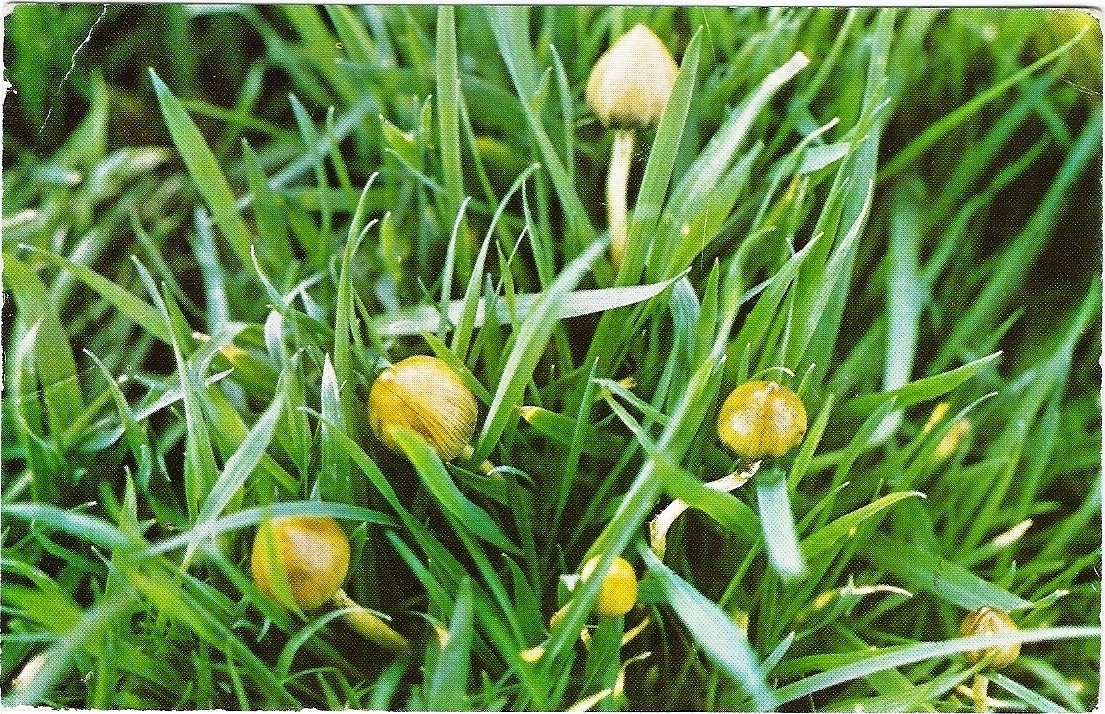
זוכרים את הגלויה ההיא משיקגו, עם כמה שורות מכל אחד מבני המשפחה לסבתא בירושלים? הזכרתי אז שיש לי עוד גלויות שקשורות לאנשים האלה, למרות שבעצם הייתי צריכה לומר 'גלויה', כי מסתבר שיש לי רק אחת (תיקון 19/5: במחשבה שנייה, יכול להיות בעצם שיש עוד אחת. נו מילא). בכל אופן, הנה הגענו אליה.

Do you remember that Chicago postcard, where each member of a family wrote a few lines to their grandmother in Jerusalem? I mentioned there that I have some more postcards concerning these people, although I should have said 'one', because it turns out that's all I have (correction 19/5: On second thought, I actually might have another one. Ah well). Anyway, here it is now.

כמו עם הרבה מהגלויות האחרות שלי, בחרתי אותה כי מצא חן בעיניי כתב היד שבצד האחורי. במבט חטוף התמונה בצד הקדמי נראתה לי כמו סתם איזה צילום טבע. קצת דשא, וכמה ניצני פרחים או פטריות. תמונה סבירה, אבל לא משהו מיוחד.

As with many of my other postcards, I picked it mostly because I liked the writing on the back. The picture on the front seemed, at first glance, to be just some kind of nature photo. Some grass, with few buds or mushrooms in it. It's an alright picture, but nothing special.

צד קדמי:
Front:

רק אחר כך הבטתי בתיאור שבצד האחורי, ואז גיליתי שמדובר ב-'psilocybe semilanceata: liberty cap, common british hallucinogenic mushroom' (זן אירופי של פטריית הזיה מסוג קְרוּחָה [כן, זה השם העברי של psilocybe, על פי האנציקלופדיה לחי ולצומח של ארץ ישראל, אם כי אין לו זכר בגוגל; השארתי הערה בעניין בוויקיפדיה העברית, לשיקול העורכים]). שזו בחירה... מעניינת. אני תוהה אם כותב הגלויה שם לב על מה מדובר בכלל - אם אולי יש לזה קשר לחותמת עם המוטו Look After Yourself (קמפיין בריאות בריטי ממושך למדי שהתחיל ב-1978; ר' למשל כאן [PDF!], בעמ' 3), או שאולי זו בדיחה פנימית שלו ושל הנמען, אפילו - או אם גם הוא חשב שזה סתם צילום טבע, אם סתם לקח גלויה אקראית מהמדף כי מה שהיה חשוב לו היה מה שרצה לכתוב ולא על מה הוא כותב.

I later looked at the photo description on the back, however, and found out that these are psilocybe semilanceata: liberty cap, common british hallucinogenic mushroom. Which seems an... interesting choice. I wonder if the writer noticed what it is at all - if maybe it has anything to do with that stamp with the motto 'Look After Yourself' (a pretty long-running British health campaign, launched in 1978; see for example here [PDF!], on page 3), or maybe it's even an inside joke between him and the recipient - or if he also just thought it was some nature photo, if he just picked a random postcard from the shelf because what was important to him was the message he wanted to write, not what he would write it on.

צד אחורי:
Back:


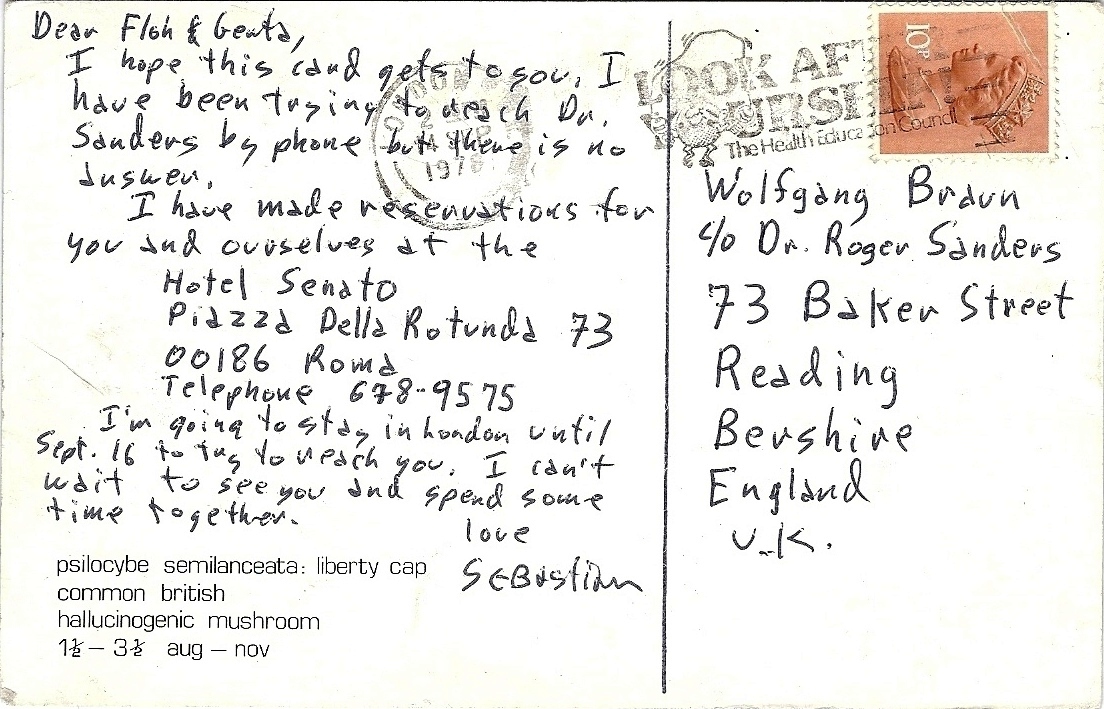
Dear Floh & Gerta,
I hope this card gets to you, I have been trying to reach Dr. Sanders by phone but there is no answer.
I have made reservations for you and ourselves at the

Hotel Senato
Piazza Della Rotunda 73
00186 Roma
Telephone 678-9575
I'm going to stay in London until Sept. 16 to try to reach you. I can't wait to see you and spend some time together.
Love, Sebastian

פלוֹ וגרטה היקרים,
אני מקווה שהגלויה הזו תגיע אליכם, ניסיתי להשיג את ד"ר סנדרס בטלפון אבל אין תשובה.
הזמנתי חדרים לכם ולנו ב:

Hotel Senato
Piazza Della Rotunda 73
00186 Roma
Telephone 678-9575
אשאר בלונדון עד ה-16 בספטמבר כדי לנסות להשיג אתכם. אני מצפה בקוצר רוח לראות אתכם ולבלות קצת זמן יחד.
באהבה, סבסטיאן

המסר, בסך הכול, מאוד פשוט ופרקטי - אחרי הכל, מדובר בתקופה שלפני אימיילים או טלפונים סלולריים. אם הוא ניסה לתפוס אותם בבית שבו הם מתארחים ולא הצליח, והוא חייב לשלוח להם את כתובת המלון שבו הזמין כבר חדרים, זו פחות או יותר הברירה היחידה. זו דוגמא קטנה, ומקסימה בעיניי, של השינויים בתקשורת בינאישית בעשורים האחרונים.

The message is, in general, very simple and practical - after all, we're talking about a time before email or mobile phones. If he tried to catch them at the house where they're staying, and failed, and he has to send them the address of the hotel in which he already booked some rooms, this was more or less his only choice. It's a small - and, I think, lovely - example of the changes in inter-personal communications over the last few decades.

בכל אופן, מכיוון שהזכרתי את כתובת המלון, הגיע הזמן לקצת בלשות. חיפשתי את שתי הכתובות שמוזכרות בגלויה - המען וכתובת המלון. על המען לא מצאתי הרבה; את ד"ר סנדרס לא מצאתי בכלל (טוב, יש כל מיני ד"ר רוג'ר סנדרס-ים, אבל אין לי מושג אם זה אותו בן אדם), ועל הבית שבכתובת מצאתי רק כמה פרטים נדל"ניים (הוא נמכר לאחרונה ב-2003, במחיר לא רע בכלל), משהו היסטורי על איש אחד שגר שם בסוף המאה ה-19 ותחילת המאה ה-20 (מגניב בפני עצמו, אבל לא ממש קשור לגלויה), וכמובן, תמונה של הבית, ברחוב בריטי קטן וחביב, באדיבות גוגל:

Anyway, since I mentioned the address of the hotel, it's time for playing detective. I looked for the two addresses mentioned in the postcard - the recipient's and the hotel. About the recipient's address there wasn't too much to find; I couldn't find Dr. Sanders at all (well, there are all sorts of Dr. Roger Sanders-es, but I have no idea if it's the same person), and about the house in that address I only found a little real-estate info (it was last sold in 2003, for a pretty good price), something historical about a guy that lived there in the end of the 19th century and the beginning of the 20th (cool on its own behalf, but not really related to the postcard), and of course a picture of that house, in a nice little British street, courtesy of Google:


(גוגל גם טוען שיש בכתובת הזו בית-עסק בשם MilesToGo - ומצאתי תיאור שלהם כאן - אבל נראה שכתובת האינטרנט שלהם לא עובדת, אז אני לא יודעת אם הם עדיין קיימים בכלל.)

(Google also claims that there's some business called MilesToGo at that address - and I found a description here - but the URL seems to be defunct, so I don't know if it's still around or not.)

אבל המלון? או, זה הקטע הכי מגניב. הוא עדיין קיים, באותה הכתובת בדיוק. יש לו אתר, כמובן. אפשר להזמין חדרים אונליין (במחירים שקצת גבוהים מדי לתקציב שלי, אבל עושים רושם יחסית סביר למלון במיקום מרכזי ברומא), ומן הסתם הם שולחים אימייל אישור עם מס' ההזמנה, ואם צריך להודיע לאנשים נוספים אפשר פשוט לעשות לו פורוורד. לא צריך לחפש אנשים בטלפון בבית שבו הם במקרה שוהים באותו הזמן, ואז לשלוח להם גלויה עם הפרטים, שביום מן הימים תמצא את דרכה לחנות ספרים משומשים ותהפוך לתעלומה מעניינת למישהו מהעתיד שימצא אותה.

But the hotel? Oh, that's the coolest part. It still exists, at the exact same address. It has a website, of course. You can book a room online (the prices are a bit too high for my budget, but seem relatively alright for a hotel at such a central location in Rome), and they probably send you a confirmation email with the order number, and if you need to notify any other people you can just forward that. You don't have to look for people on the phone at the house where they happen to be staying at the time, and then send them a postcard with the details, which will one day find its way to a used book store and become an interesting mystery for some future person who comes upon it.

קצת חבל, לא?

And that's a bit too bad, isn't it?

Tuesday, January 11, 2011

A Night Without Morals - לילה ללא מוסר

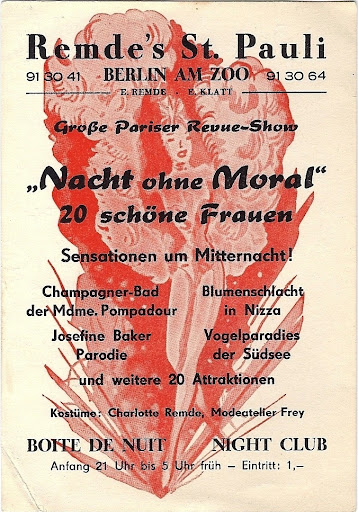
פוסט ראשון ל-2011, וחשבתי שראוי להתחיל בצלצלי תרועה. אז הנה משהו מעניין; זו לא גלויה, או תמונה, כמו רוב מה שיש לי, אלא סוג של פלייר פרסומי, או כרטיס, ממועדון לילה במערב ברלין. ויש פה גם סיפור מעניין למדי.

First post of 2011, and I thought we should start with a bang. So here is something interesting. It's not a postcard, or a photo, like most of the things I have, but a kind of commercial flier, or ticket, from a West Berlin nightclub. And there's quite an interesting story to it, too.

אבל את הסיפור לא ידעתי, כשקניתי את הדבר הזה. סתם חשבתי שזה מגניב. הנה, תסתכלו:

I didn't know the story when I bought it, though. I just thought it was cool. Take a look at this thing:

צד קדמי:
Front:


יאללה מסיבה!
בעזרת גוגל תרגום הצלחתי להבין מה מפורסם כאן: מופע בסגנון פריסאי בשם Nacht ohne Moral - 'לילה ללא מוסר' - מה שכבר נשמע, אממ, מעניין, אפילו לפני שמבטיחים שם '20 בחורות יפות', 'סנסציות בחצות', ואטרקציות כמו 'אמבט השמפניה של מאדאם פומפדור', 'קרב הפרחים בניס' (שקשור לאירוע אמיתי בקרנבל של ניס, דרך אגב), 'פרודיה על ג'וזפין בייקר' ו'ציפורי גן עדן של הים הדרומי' (ועוד 20 אטרקציות אחרות!). אפשר כבר לקבל מושג על איזה מין סוג של אירוע - ושל מקום - זה היה, ובעזרת קלישאות קולנועיות על מערב ברלין בתקופת תחילת המלחמה הקרה, התמונה מקבלת גם נפח: שמפניה ומרטיני ועשן סיגריות, ומרגלים כמובן. אפשר לדמיין את זה, לא? מרגלים לבושי טוקסידו שעושים חיים אבל לא שוכחים להעביר מבט חשדני על שאר החדר ולהחזיק אקדח בכיס נסתר; או מרגלים במעיל ארוך ומגבעת, יושבים בפינה אפלה ומעשנים בשרשרת, משרבטים משהו לעצמם וממלמלים בזעף מתחת לשפם המזויף בזמן שהם מחכים למרגלות יפהפיות שמדברות בלחישות צרודות ומסתוריות. כך כך קל לדמיין את כל זה; ראינו את זה כבר באינספור סרטים. ולכן כל כך התלהבתי כשהפכתי את הכרטיס (אני לא לגמרי בטוחה שזה כרטיס, אבל כתוב למטה 'כניסה לאחד', אז זה נראה סביר) וראיתי את השרבוטים מאחור. זה מתאים לתמונה הזו בדיוק.
[דרך אגב, אני עומדת לעשות משהו שלא עשיתי די מזמן, ולשים את כל הפרטים שמצאתי על המועדון - ועוד כמה דברים על ג'וזפין בייקר - בסוף הפוסט, אחרי ג'אמפ-קאט. אני חושבת שזה מרתק, אבל אם אתם רוצים לדבוק בסיפור המרגלים הדמיוני, אתם יכולים להתעלם מכל הקטע על מה שקרה באמת.]

Heyo, party time!
With the help of Google Translate, I figured out what it's advertising: a Parisian revue called Nacht ohne Moral - 'A Night Without Morals' - which already sounds, umm, interesting, even before it goes on to promise '20 pretty ladies', 'sensations at midnight', and attractions such as 'the champagne bath of Madame Pompadour', 'Flower Battle in Nice' (this is related to an actual event in the carnival in Nice, by the way), 'Josephine Baker parody' and 'birds of paradise of the South Sea' (and 20 other attractions!). Already, you get a picture of the kind of event, and the kind of place, this must have been - and with the help of some movie clichés about early-cold-war-era West Berlin, this picture gets fleshed out with champagne and martinis and cigarette smoke, and of course, spies. You can imagine it, can't you? Spies in tuxedos, having a grand old time, but keeping a watchful eye on the room and a pistol in a secret pocket; or spies in trenchcoats and fedoras, chain-smoking in a dark corner, scribbling something and muttering under their fake moustache as they wait for gorgeous lady-spies that speak in mysterious, hoarse whispers. It's so easy to imagine it; we've seen it in countless movies. Which is why I got all excited when I turned over the ticket (I'm not sure it actually was a ticket, but it does say 'admission: 1' at the bottom, so it seems likely) and saw the scribbles on the back - they fit into this image perfectly.
[By the way, I'm going to do something I haven't done in a long while, and put all the details I found about the club - plus some stuff about Josephine Baker - at the end of the post, after a jump cut. I think it's fascinating, but if you want to stick to the imaginary spy story, go ahead and ignore all the real-life stuff.]

צד אחורי:
Back:


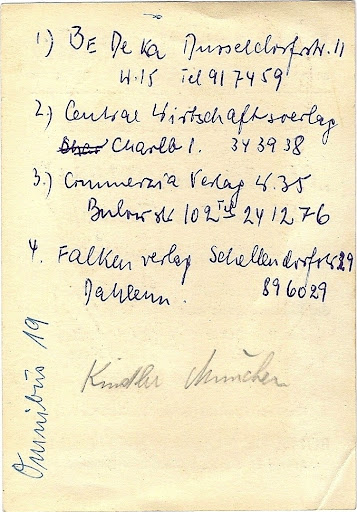
אז בעצם יש כאן שלושה דברים נפרדים - או בכל אופן, יש שלושה סגנונות של כתב יד ושלושה כלי כתיבה שונים. בעט כחול כהה יש רשימה של ארבעה מקומות ומספרי הטלפון שלהם; המלה verlag, שעל פי וויקיפדיה פירושה 'הוצאה לאור', חוזרת כמה פעמים (אולי יש כאן סופר מתחיל שמנסה למצוא מו"ל לכתב היד שלו?), ובפריטים מס' 1 ו-3 יש גם משהו שנראה כמו ציון שעה (4.15 ו-4.35, בהתאמה - אולי פגישות עם נציג ההוצאה?). למרבה הצער, לא הצלחתי למצוא אף אחד מהשמות האלה בחיפוש גוגל. בצד שמאל, בעט כחול בהיר יותר, ובכתב יד מחודד ואלגנטי קצת יותר, כתוב Omnibus 19, קו 19 באוטובוס, מן הסתם. ולמטה, בעפרון, שם של מישהו, כנראה (די קשה לי לקרוא את הכתב הזה).

Right, so we have three different things, basically - three different handwriting styles, and three different writing instruments, anyway. In a dark blue pen there's a list of four places and their phone numbers; the word verlag, which according to Wikipedia means 'publisher', recurs a few times (maybe we have a beginning author, trying to find someone to publish his manuscript?), and in items 1 and 3 there is also something that looks like a time (4.15 and 4.35, respectively - maybe meeting a representative of the publisher?). Unfortunately, I couldn't find any of those names on Google. On the left, in a lighter blue pen and a slightly more pointy and elegant handwriting, it says Omnibus 19, which is of course bus #19. And at the bottom, in pencil, something that looks like somebody's name (it's hard for me to read this handwriting).

כמובן שכל זה בהחלט יכול להיות חסר משמעות. זאת אומרת, זה בהחלט יומיומי למדי. מישהו היה צריך לרשום כמה דברים, לקח פיסת נייר ורשם אותם מאחורה; אחר כך נוספו עוד כמה רשימות לאותה פיסת נייר שימושית. פשוט מאוד.
אבל כמו שבזכות הקלישאות הקולנועיות קל מאוד לדמיין את מועדון הלילה האפלולי שאפוף בעשן סיגריות ואווירת שחיתות ושורץ מרגלים, כך גם קל לדמיין שיש מאחורי זה כל מיני ענייני ריגול. אולי זה צופן. אולי השמות של חברות הוצאה לאור הן רק כיסוי למשהו אחר, והשם בתחתית הדף הוא שם-המרגל המזויף של מישהו, וקו 19 הוא חלק מתכנית מפגש מסובכת ('תעלה על האוטובוס ברחוב X, וסע שלוש תחנות. אני אהיה בצד השני של הרחוב. אל תיצור קשר עין, פשוט לך אחריי'). אולי יש שלושה סגנונות כתב יד כי הכותב התאמן בזיוף! אפשר לדמיין כאן כל מיני עלילות, ברגע שמתחילים את קו המחשבה הזה.

Of course, this could all be meaningless. I mean, it's really quite mundane. Someone needed to write down some info, grabbed a piece of paper, and wrote on the back; then later, other notes were made on the same handy piece of paper. So very simple.
But just like all the movie clichés make it easy to imagine the dark, smoky nightclub teeming with debauchery and spies, it's also easy to imagine that there is some spy business behind this. Maybe it's coded. Maybe the names of publishing firms are just a cover for something else, and the name at the bottom is somebody's fake spy name, and bus #19 is part of a complicated meeting plan ('Take the bus at X Street, and travel three stops. I will be across the street. Don't make eye contact, just follow me'). Maybe there are three different handwriting styles because the guy was practising his forgery skills! There are all sorts of plots that can be imagined here, once you take this line of thought.

וכאן אפשר היה להניח לעניין. אבל אני נהנית ממחקרי-גוגל הקטנים שלי, כשיוצא לי לעשות אותם, אז אם מעניינים אתכם קצת פרטים אמיתיים על המקום ניתן למצוא אותם אחרי הג'אמפ-קאט.

And this could be where we leave it. But I like doing this little Google-based research, when I can, so if you're interested in some real details about the place, you can find them under the jump.

Sunday, October 31, 2010

Plot Twists - פיתולים בעלילה

את הגלויות האלה שמרתי לפרק האחרון בסאגת קיגן, כי אני חושבת שהן מגניבות למדי. יש כל מיני פרטים מוזרים שקצת מסבכים את הסיפור שהצלחנו להרכיב עד כה, וכל מיני דברים אחרים שלמדתי על התקופה מתוך החיפושים שלי, ובסוף יש גם הפתעה, כמו שרמזתי קודם.

I saved these cards for the last installment of the Keogan Saga because I think they're pretty awesome. There are all sorts of weird details that slightly complicated the story as it's been constructed so far, and all sorts of other things that I learned about the era during my research, and in the end there is the surprise that I have alluded to before.

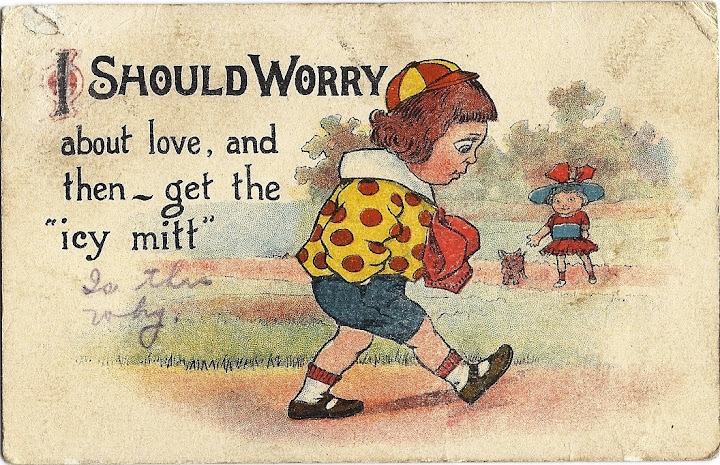
נתחיל עם הצד הקדמי של שתי הגלויות - ברור מייד ששתיהן חלק מאותה סדרה, וכשראיתי אותן בחנות הן נראו לי מוזרות ובלתי מובנות לחלוטין. אני לא יכלתי לראות בדבר הזה שום משמעות, אבל ידעתי שבטח היתה לו משמעות, אי אז.

We begin with the fronts of the two postcards - they obviously both belong to the same series, and when I saw them at the store they seemed incredibly weird and unintelligible. It didn't mean anything to me. But I knew that back then, it had to mean something.

גלויה 1, צד קדמי:
Postcard #1, front:

גלויה 2, צד קדמי:
Postcard #2, front:

אז... מה זה הדבר הזה? למה הילדים המוזרים האלה אומרים 'I should worry'? כאמור, בהתחלה לא הבנתי כלום.
ואז חיפשתי - אני לא זוכרת איך בדיוק, כי מן הסתם רק הצירוף 'I should worry' היה מניב הרבה תוצאות לא רלוונטיות - והגעתי לתיאור שכאן, וממנו לכאן, ולמדתי קצת יותר. בקצרה, מסתבר שזה היה מעין ביטוי סלנג, בתחילת המאה ה-20, והמשמעות שלו היא בעצם הפוכה לגמרי: 'למה שאדאג?', פחות או יותר. תחשבו על זה בניגון יידישאי, וזה נעשה קצת יותר מובן. היה שיר פופולרי למדי ב-1913, היה אפילו סרט בשם 'I Should Worry' ב-1915, למרות שלא הצלחתי למצוא עליו שום פרטים, אז אני לא יודעת אם הוא באמת קשור. בעצם זה היה סוג של מֶם (meme), או קאצ'פרייז (מילוניי טוענים בעיקשות שהתרגום התקני הוא 'אמרת כנף', אבל המשלב שונה לחלוטין, אז אאלץ להכנע ללעז גם הפעם), כמו שלפני כעשור אנשים היו מצטטים נונסטופ מסיינפלד, רק שכאן זה מלפני כמאה שנה... ובעצם, לא מזמן אפילו ראיתי קטע מסרט מ-1940 ופתאום זיהיתי שהשתמשו בו בביטוי הזה - בצורה 'you should worry', אמנם, אבל בבירור באותה משמעות הפוכה - מה שאומר שהוא כנראה החזיק מעמד לא מעט זמן.

So... what is this? Why are these strange kids saying 'I should worry'? Like I said, at first the whole thing seemed completely unintelligible.
So I looked it up - I don't remember how exactly, because obviously just searching for 'I should worry' would give me a whole lot of junk results - and I got to the description here, and from there to here, and I learned a bit more. In short, this turns out to be an early-20th-century slang expression, with a completely opposite meaning: more or less 'why should I worry?'. Think of it spoken in a Yiddish accent, and it becomes clearer. It was a popular song in 1913, and there was even a 1915 film called 'I Should Worry', although I couldn't find any details about it so can't be sure it's actually related. So actually, this was like a kind of meme, or catchphrase, like how about ten years ago people would quote Seinfeld nonstop, except here it's from about a century ago... In fact, I recently saw a short clip from a 1940s film and suddenly realised it used this phrase (in the form 'you should worry', but still, it was obviously the same opposite meaning), which means it must have lasted quite a while.

לגבי סדרת הגלויות הספציפית, היו לא מעט כאלה, מסתבר. בערך הוויקיפדיה שבקישור לעיל אפשר לראות אחת בסגנון די דומה, ומצאתי עוד כמה באוסף הזה (צריך לגלול עד CHN865 - ואני ממליצה לגלול מהר, או להשתמש בחיפוש, כי יש שם כמה גלויות די קריפיות) שבבירור שייכות לאותה סדרה.

As for this specific postcard series, there seem to have been quite a few of them. In the Wikipedia entry linked above you can see a card that is in similar style, and I found a bunch more in this collection (scroll down to CHN865 - and I recommend scrolling fast, or using the search function, because there are some pretty creepy postcards on there) that obviously belong to this same series.

אגב, אם במקרה תהיתם לגבי הביטוי 'get the icy mitt' שבגלויה 2, והאם המשמעות שלו היא כמו 'the cold shoulder', אז אכן, המשמעות בהחלט דומה, ולשמחתי אפילו מצאתי קטע שמסביר אותה בדיוק בספר מ-1910. שזה בהחלט מגניב.
(למה מישהו הוסיף על הגלויה בכתב יד את המלים 'האם זו הסיבה', ומה זה אמור להביע? אין לי שמץ של מושג.)

And if, perhaps, you were wondering about the phrase 'get the icy mitt' in postcard #2, and whether it means the same as 'the cold shoulder', then yes, it's definitely a very similar meaning, and I was happy to actually find a short paragraph explaining it exactly, in a book from 1910. Which is definitely cool.
(Why did somebody add on this card in handwriting the words 'Is this why', and what it's supposed to mean? No idea whatsoever.)

כל זה טוב ויפה, והיה מעניין מאוד לגלות את החלון הקטן הזה לתרבות הפופולרית של ראשית המאה ה-20, אבל החלק המרתק באמת, עם כל הפיתולים בעלילה של סאגת קיגן, מתחיל בצד האחורי של הגלויות, שהפעם דווקא לא נשלחו למיני קיגן...

This is all well and good, and it was very interesting to discover this little window to popular culture in the early 20th century, but the really fascinating part, with all the Keogan Saga plot twists, begins with the back of the postcards, which this time were not sent to Minnie Keogan...

גלויה 1, צד אחורי:
Postcard #1, back:

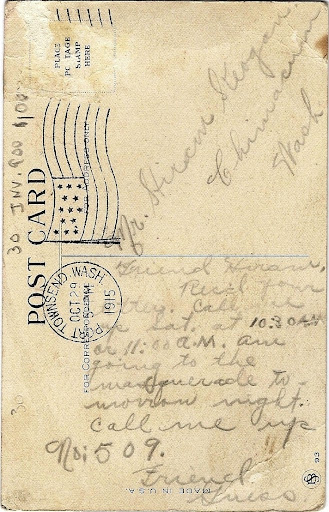
Friend Hiram,
Received your letters. Call me up Sat. at 10:30 A.M. or 11:00 A.M. Am going to the masquerade to-morrow night. Call me up. No.: 509.
Friend Guess


ידידי היירם,
קיבלתי את מכתביך. צור איתי קשר בשבת ב-10:30 בבוקר או 11:00 בבוקר. אני הולכת[*] לנשף המסכות מחר בלילה. צור איתי קשר. המס': 509.
ידידתך, נַחֵשׁ מי

[*] יש סיבה שאני משתמשת בלשון נקבה; חכו ותראו בהמשך.

רגע רגע רגע. היירם קיגן? מאיפה הגיע פתאום היירם קיגן לסיפור? האם הוא קשור למיני? הכתובת שלו היא בצ'ימאקם, שכמו שאולי אתם זוכרים מהפרק הראשון בסאגה, ואולי לא, היא עיירה שקרובה מאוד לפורט האדלוק, שם מיני גרה. אבל עד כה הכרנו רק את קלארנס (למען האמת, אם קוראים את הרשומה הקודמת בעין ביקורתית אפשר לשים לב שהשתמשתי בעקביות בביטויים מסייגים נוסח 'ככל הידוע לנו' - וזו היתה הסיבה). אז... מה קורה כאן?

Wait wait wait. Hiram Keogan? Where did a Hiram Keogan come from? Is he related to Minnie? His address is in Chimacum, which, as you may or may not remember from the first installment, is very close to Port Hadlock, where Minnie lives. But so far, we've only known about Clarence (actually, if you look at the previous post with a critical eye, you will notice that I kept using phrases like 'as far as we know' - this is why). So... what's the deal here?

הפרט הראשון שמגלה את קיומו של היירם קיגן הוא מפקד התושבים הפדרלי מ-1910. אם אתם זוכרים, כשכתבתי על מיני שהיתה אלמנה ב-1910 הראיתי קטע קטן מאוד ממנו, מפני שהוא כולל את היירם, ולא רציתי להרוס את הפיתול הנחמד בעלילה. גם עכשיו אני מצרפת רק קטע, כי הדף המלא ענקי למדי, אבל הפעם הוא כולל את כל הפרטים הרלוונטיים לסיפור (קליק להגדלה):

The first item where we learn of Hiram's existence is the Federal Census of 1910. If you remember, back when I wrote about Minnie being a widow in 1910, I used a very small bit of it, because, well, it mentions Hiram, and I didn't want to spoil this lovely plot twist. I'm still only going to include a part of it here, because the whole page is pretty huge, but this time it has all the details relevant to our story (click to enlarge):


זה נראה קצת מוזר, כי חתכתי הכל חוץ מהשורה העליונה והשורות שמתייחסות למיני ומשפחתה. היחידה המשפחתית הזו בהחלט מסקרנת: מי שמוזכרת כראש המשפחה היא מרי רייטר, כובסת נשואה בת 35 (אבל איפה בעלה? כנראה בטאקומה, כי מצאתי את שניהם רשומים כתושבי טאקומה באותו מפקד תושבים בדיוק, אבל מכיוון שאני לא יודעת כמה זה מקובל שמישהו יירשם באותו מפקד פעמיים בשני מקומות שונים, קשה לי לדעת מה בדיוק קרה שם), ומיני רשומה כאחותה. אחריה רשומה גרטרוד רייטר, ביתה בת ה-15 של מרי, ואחריה היירם, חוטב עצים מובטל בן 17, שרשום כאחיין. כלומר, סביר להניח שהוא הבן של מיני. אם הוא בן 17, הוא נולד ב-1893, מה שמסביר למה הוא לא הופיע במפקד התושבים בטריטוריות מ-1891; ואם תסתכלו תראו גם שבסעיפים 10 ו-11 כתוב על מיני שיש לה שני ילדים (וששניהם בחיים). אז בסך הכל זה די מסתדר. אבל הנה פרט מעניין: סעיפים 12-14 הם מקום לידת הנרשם ומקומות הלידה של הוריו. אצל מיני ומרי, הן נולדו בוושינגטון, וגם אמא שלהן, והאב נולד בפינלנד - זה מתאים למה שאנחנו יודעים עד כה. אצל גרטרוד, האם (מרי) נולדה בוושינגטון והאב נולד בפנסילבניה (מפקד התושבים של טאקומה מאשר את זה). אצל היירם, האם (מיני) נולדה בוושינגטון, והאב הוא נורווגי. אבל אם תסתכלו רגע על הדף ממפקד התושבים שצירפתי לגבי קלארנס, בפעם הקודמת, תראו שאצלו מקום הלידה של האב הוא קליפורניה. אז מה בדיוק הסיפור כאן? מיני עדיין רשומה כאלמנה, וגם שם המשפחה שלה לא השתנה. גם שם המשפחה של היירם הוא עדיין קיגן. אבל האב אחר. יש כאן איזשהו רמז לסקנדל... האם היירם נולד מחוץ לנישואין?

It looks a bit weird, because I cropped away most of the page, except for the top and the lines about Minnie and her family. This family unit is definitely curious: the person listed as the head of the family is Mary Righter, a 35 year old married washer woman (so where is her husband? I guess he's in Tacoma, since I found both her and him listed in Tacoma in the exact same census, but since I don't know if it's usual for someone to be listed twice in two different places in the same census, I'm not sure what happened there), and Minnie is listed as her sister. Then there's Gertrude, Mary's 15 year old daughter, and then Hiram, a 17 year old out of work logger listed as a nephew. Which means he's probably Minnie's son. If he's 17, that means he was born in 1893, which explains why he wasn't in the 1891 Territorial Census; and if you look under sections 10 and 11, you'll see it says Minnie has two kids (both living). So all in all, it fits. But here's an interesting detail: sections 12-14 are the places of birth for the person listed and their parents. For Minnie and Mary, they were born in Washington, and so was their mother, and the father was born in Finland - which fits with what we know so far. With Gertrude, the mother (Mary) was born in Washington, the father in Pennsylvania (and the Tacoma census confirms this). With Hiram, the mother (Minnie) was born in Washington, and the father was Norwegian. But if you go and look at the census page I attached for Clarence, last time, you'll see that his father's place of birth was California. So what exactly is the story here? Minnie is still listed as widowed, and her last name is still unchanged. Hiram's last name is Keogan, too. But the father is different. There's a hint of a scandal, here... was Hiram born out of wedlock?

עוד פרט מעניין נמצא בסעיף 6, עם הכותרת 'צבע או גזע'. מרי ומיני הן HB, כלומר half-breed (אמא שלהן היתה משבט הסנוהומיש, כפי שכבר גילינו); גרטרוד והיירם זכו להיות רק QB, כלומר quarter-breed. בעיניי, גם הכינויים עצמם וגם ההקפדה לא רק על בני הכלאיים אלא גם על נכדי-הכלאיים מריחים גזעניים, ואפילו אאוגניים למדי. אבל בסך הכל, אנחנו מדברים על 1910, ולמרות כל השגשוג וההתקדמויות של תחילת המאה ה-20, זו עדיין היתה תקופה גזענית מאוד.
מה שהכי מעניין הוא שנראה כאילו הערכים האלה נרשמו מעל משהו אחר, שנמחק. האם פקיד הרישום הניח שהם לבנים, ואז גילה את הטעות וחזר לתקן אותה? האם הם אמרו לו שהם לבנים, ואז הוא חקר קצת יותר לעומק וגילה שזה לא מדויק לגמרי? האם הוא הביט בהם בבוז ואמר 'אה, אז אמך היתה אינדיאנית? המממ', ואז מחק בהפגנתיות את ה-W שרשם קודם, וכתב את האותיות הנכונות, ואמר בהטעמה 'Half-Breed'?
(אגב, שוב בדף שבו מופיע קלארנס, אצלו כתוב W. האם הפקיד שלו חקר פחות לעומק, או שלא ממש היה אכפת לו מדיוק של גזע בדור השלישי, או שפשוט נתנו לו את הפרטים של כל הדיירים והוא מילא את סעיף הגזע בברירת המחדל, שורה שלמה של W, כי למי אכפת בעצם? מי יודע מה באמת קרה.)

Another interesting detail is in section 6, titled 'Color or race'. Mary and Minnie are HB - Half-breed (their mother was full Snohomish, as we found out before); Gertrude and Hiram are only QB, quarter-breed. To me, both these titles and the strict observance of not only half but also quarter-breeds smell racist, and even pretty eugenicist. But we are, after all, talking about 1910, and despite all the wonderful advancements of the 20th century, it was still a very racist time.
The most interesting bit as that it looks like these were written on top of something else, that was deleted. Did the census clerk just assume they're white, and then found out he made a mistake and went back to fix it? Did they tell him they were white, and then he checked a bit more deeply and found out it wasn't completely accurate? Did he look at them scornfully, and said 'Ah, so your mother was an Indian? Hmmm', and then pointedly deleted the Ws he's written before, and wrote the correct abbreviations, and stressed it by saying out loud 'Half-Breed'?
(By the way, back on Clarence's page, he's listed as W. Was his clerk less inquisitive, or didn't really care about finding out the details of the race to the third generation, or maybe someone just gave him the main details for all the boarders and he just filled in the default race, a whole line of Ws, because who gives a crap? Who knows what really happened.)

לא מצאתי עוד הרבה על היירם, בחיפושים שלי. יש ב-ancestry.com רישום של היירם צ'ארלס קיגן ממחוז ג'פרסון בתעודות גיוס מ-1917-1918 (וזה סביר בהחלט שבחור בשנות ה-20 שלו יגויס ויישלח למלחמה הגדולה), והוא נמצא אצלם גם במפקד התושבים הפדרלי מ-1920, אבל זה אתר בתשלום אז אני לא יכולה לראות את המסמכים עצמם. בעקבות הגילוי הזה חיפשתי גם בארכיון הדיגיטלי של מדינת וושינגטון, ושם מצאתי תעודת פטירה של צ'ארלס היירם קיגן אחד שמת בפורט האדלוק ב-1926, אבל אני לא ממש בטוחה אם זה אותו אדם, כי (א) הגיל רשום כ-0, ואולי זה פשוט כי השאירו את זה ריק בטופס בטעות, אבל מכיוון שאין להם את המסמך המקורי סרוק, אין לי אפשרות לדעת את זה בוודאות, ו-(ב) שמות ההורים הם C J Keogan לאב, ו-Zeta Mary Williams לאם. שזה די מוזר. אולי אפשר להניח שמדובר בקלארנס וזיטה, שכזכור נישאו ב-1920 (ובמקרה הזה אפשר להניח שהילד מת בגיל צעיר מאוד, אולי אפילו בלידה), אבל מאיפה הגיעה לכאן מרי וויליאמס? זה היה שמה של אמה של מיני קיגן. שם הנעורים של זיטה היה בכלל גרדינר. מה קרה כאן? טעות במסמך? שוב, בלי לראות את המקור אני לא יכולה לדעת. אבל זה מוזר מאוד, כל הסיפור הזה.

I didn't find much more about Hiram in my research. On ancestry.com there's a listing of a Hiram Charles Keogan, from Jefferson County, in the World War I Draft Registration Cards from 1917-1918 (and it's pretty reasonable that a guy in his 20s would be drafted and sent to the Great War), and they also have him in the 1920 Federal census, but it's a paid subscription site so I can't see the actual documents. After discovering this, I tried looking in the Washington Digital Archives, and found a death certificate for a Charles Hiram Keogan who died in Port Hadlock in 1926, but I'm not really sure if it's the same person since (a) his age is listed as 0, and that might be just because they accidentally left it blank on the form, but since they don't have a scan of the original document, I can't know for sure, and (b) the parents names are C J Keogan for the father and Zeta Mary Williams as the mother. Which is odd. We can speculate that these are Clarence and Zeta, who as you remember married in 1920 (in this case we can assume the kid died very young, maybe even at birth), but where did Mary Williams get here? This was Minnie Keogan's mother's name. Zeta's maiden name was Gardiner. So what happened here? A mistake in the document? Again, without seeing the original, I have no way of knowing. This whole story is pretty weird.

אה, ודרך אגב, אפשר לראות על חותמת הדואר שהגלויה נשלחה ב-29 באוקטובר - ולמרבה הפלא, מסתבר שב-1915, אוקטובר היה בדיוק כמו השנה, כלומר התחיל ביום שישי ונגמר ביום ראשון - אז סביר להניח ש'נשף המסכות' שהוזכר, למחרת בלילה (שהיה שבת, ה-30 באוקטובר) היה אירוע לכבוד האלווין. נחמד.

Oh, by the way, you can see by the date stamp that this was sent on October 29 - and oddly enough, it turns out that in 1915, October was the same as this year, starting on a Friday and ending on a Sunday - so it's a fair assumption that the 'masquerade' mentioned as being on the next night (which was Saturday, October 30) is a Halloween event. Neat.

אבל עד כמה שכל הסיפור עד עכשיו היה די מוזר, זה עדיין לא החלק הכי מוזר. הגלויה השנייה היא החלק הכי מוזר - ולכן שמרתי אותה לסוף, למרות שכרונולוגית היא קודמת לגלויה שכיניתי 'גלויה 1' (אם מסתכלים היטב על חותמת הדואר אפשר לראות שהיא נשלחה ב-27 בספטמבר, וכזכור גלויה 1 נשלחה ב-29 באוקטובר). אבל... פשוט תסתכלו:

But as weird as everything so far has been, this is not the weirdest part. The second postcard is the weirdest part - which is why I left it till now, even though chronologically it came before what I called 'Postcard #1' (if you look closely at the date stamp you can see it was sent on September 27, while as you remember #1 was sent in October 29). But... well, take a look:

גלויה 2, צד אחורי:
Postcard #2, back:

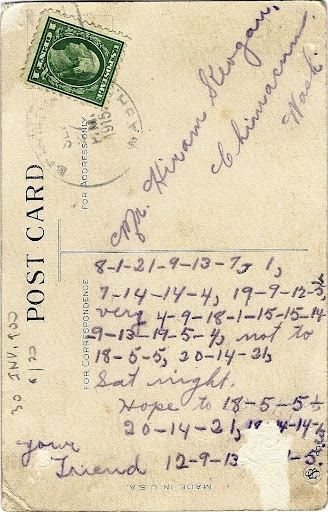
8-1-21-9-13-7, 1, 7-14-14-4, 19-9-12-5, very 4-9-18-1-15-15-14-9-13-19-5-4, not to 18-5-5, 20-14-21, Sat night.
Hope to 18-5-5-20-14-21, [18]-14-14-13.
Your Friend 12-9-13[????]-5

זה כתוב בקוד.
הגלויה הזו בבירור נכתבה על-ידי אותו אדם מהגלויה השנייה, אבל הפעם היא נכתבה באיזשהו קידוד. עד כה נהניתי מהאופי הכמו-בלשי של מה שאני עושה כאן בבלוג, אבל עם הגלויה הזו פתאום הרגשתי שזה ממש כמו משהו מתוך סיפור בלשים.

It's in code.
It's quite obviously from the same person from the other postcard, but this time, it is written in some kind of code. I've been enjoying the somewhat detective-ish nature of what I do here on the blog, but with this card, it actually feels like something out of a detective story.

במקור, תכננתי להציב כאן אתגר, כי לא היה לי מושג מה כתוב בגלויה. הראיתי אותה לכמה אנשים, והגענו למסקנה שזה לא צופן החלפה פשוט של אות-למספר-התואם. ואז ניסיתי לבדוק אם המלה הראשונה היא 'friend', כי חשבתי שזה יכול להתאים, אבל אז המלה הבאה היתה צריכה להיות 'R', וזו לא באמת מלה, ובאופן כללי לא מתקבל משהו הגיוני במיוחד בהודעה. ובדרך כלל אני ממש גרועה בכל משחקי ההגיון האלה. אז התכנית היתה להשאיר את זה כאן בתקווה שאולי מתישהו יבוא קורא חכם ויפענח את הקוד.

This was originally meant to be posed as a challenge, since I had no idea what the card said. I showed it to a few people, and we managed to figure out that it's not a simple letter-to-respective-number substitution cipher. Then I tried checking if the first word was 'friend', since I thought it would fit, but that makes the second word 'R', which is not actually a word, and in general seems to make little sense of the whole message. And in general, I tend to be very bad with these logic puzzles. So this was going to be left here in the hopes some clever reader, someday, will figure it out.

אבל אז, אחרי שבהיתי בגלויה די הרבה כשכתבתי את הרשומה הזו, פתאום חשבתי שרגע, מה אם 18-5-5 זה S-E-E, וה-20-14-21 שאחריה זה Y-O-U? שתי המלים האלה חוזרות מייד אחר כך, ואז המשפט הבא הוא 'Hope to see you s...' - וזה soon, כמובן! ואז הכנסתי את האותיות שהיו לי למלים האחרות, ובהיתי בגלויה עוד קצת, ופתאום הכל נהיה הגיוני, והרגשתי ממש ממש חכמה.
אז אזהרת ספוילר; אם אתם רוצים לפענח את זה בעצמכם, אל תקראו הלאה.

But then, after staring at it for a long time while writing this very post, I suddenly thought hey, what if that 18-5-5 is S-E-E, and that 20-14-21 is Y-O-U? They repeat right after, and that'd make the next sentence 'Hope to see you s...' - soon, of course! And then I put these few letters in the other words, and stared at it a while more, and all of a sudden it all made sense, and I felt really really clever.
So, spoiler alert; if you want to figure it out yourself, don't read on.

Ha[v]ing a good time, very disappointed not to see you Sat. night.
Hope to see you soon.
Your Friend, Min[ni]e
אני נהנית כאן, אבל התאכזבתי מאוד לא לראות אותך ביום שבת בלילה.
מקווה לראות אותך בקרוב.
ידידתך, מיני

הופה.
מיני!? מה נסגר?
מצד אחד, הסיפור נעשה עכשיו הרבה פחות מלהיב. אין כאן שום הודעות סודיות על פגישות סודיות של הבונים החופשיים, או משהו; רק משחק קידוד קטן ומטופש (למעשה זה בעיקר צופן החלפה פשוט של אות-למספר-התואם, חוץ מאשר במקומות שזה לא כך). מצד שני, הכל נעשה הרבה יותר מוזר. אם מיני היא אמא של היירם, כמו ששיערתי קודם, למה היא שולחת לו הודעות כאלה? למה היא קוראת לו 'ידידי היירם'? אולי היא סתם שטותניקית. גם אמהות עושות שטויות לפעמים, ורק מפני שהיא אלמנה בת 54 זה לא אומר שהיא לא יכולה לשחק משחקים קטנים ומוזרים עם הבן שלה. או שאולי זו היתה מיני אחרת - בסך הכל, יכלה להיות יותר מאחת. או שאולי היא בעצם לא אמא שלו, וכל הסקנדל הקטן שדמיינתי לעצמי אף פעם לא קרה, והוא פשוט קרוב משפחה מצד איזשהו קיגן אחר. אין לי שמץ של מושג. תעלומה.

Whoa.
Minnie?! What the hell?
On one hand, this makes the story a bit less exciting. No secret messages about secret Masonic meeting places or something; just a silly little code game (which is mostly a simple letter-to-respective-number substitution cipher, except where it isn't). On the other hand, it just makes everything weirder. If Minnie is his mother, as I've assumed before, why would she send him messages like this? Why would she call him 'Friend Hiram'? Maybe she was just being silly. Mothers do that, sometimes, and just because she was a 54 year old widow doesn't mean she can't play weird little games with her son. Or maybe it was some other Minnie - there could have been more than one, after all. Or maybe she is not his mother, and this whole little scandal I imagined never happened, and he's related to some other Keogan. I simply do not know. It's a mystery.

ובעוד התעלומה הזו תלויה באוויר, הגענו לסוף של סאגת קיגן, ושל הגלויות שקניתי בחנות העתיקות בברמרטון. בפעם הבאה... נו, אני כבר אחשוב על משהו אחר.
למי שחוגגים האלווין, שיהיה לכם האלווין שמח ומסתורי. למי שלא, יום ראשון שמח! להתראות בפעם הבאה!

And with this mystery hanging in the air, this is the end of the Keogan Saga, and of my Bremerton antique store postcards. Next time... well, I'll have to think of something else.
To those who celebrate it, may you have a happy and mysterious Halloween. To those who don't, have a nice Sunday! See you next time!