Hello readers! - !שלום, קוראים

What is this? Read the introduction - מה זה הדבר הזה? הסבר בהקדמה
Showing posts with label history lesson. Show all posts

Wednesday, June 6, 2012

Out of principle - מתוך פרינציפ

ונפתח בשתי הודעות מנהלתיות:
א. לבלוג יש עכשיו גם עמוד פייסבוק. אז מי שמעדיף להתעדכן בפייסבוק - בבקשה. ולא אכחיש שקצת צומי (בדמות לייק, שייר וחבריהם) תעשה לי טוב על הלב. [הערה: חשבתי לעשות איזה וידג'ט כזה עם קישור רשמי-למראה לפייסבוק, אבל לא הצלחתי למצוא איך עושים את זה בלי מה שנראה לי כמו המון ווג'ערא'ס. אם אתם מכירים דרך קלה ופשוטה לארגן את העניין, אשמח לשמוע. עד אז, פשוט הוספתי עוד קישור לרשימת הקישורים.]
ב. כפי שכבר עדכנתי בעמוד הנ"ל, הוספתי לאחרונה כמה פרטי מידע מגניבים למדי לרשומה 'האדונית מסקערניעוויץ', אותם תוכלו למצוא כאן.
ועכשיו, גלויה! האח!

To start, two administrative announcements:
1. The blog now has a Facebook page. So those who prefer to get their updates that way - go ahead. Also, I will not deny that a certain amount of gratuitous attention (in the form of likes, shares, and all that stuff) will be rather nice. [Note: I thought of making one of those official-looking Facebook button side widget things, but couldn't find a way to do it without what looks like a lot of hassle. If you find a quick and simple way, let me know. Until then, it's just another link on my link list.]
2. As has already been updated in the aforementioned page, I recently added a few pretty cool details to the post 'The Lady from Skierniewice', which you can find here.
And now, a postcard! Hurrah!

אני לא בטוחה אם שמתי לב לראשונה לגלויה הזו בגלל התמונה או בגלל מה שכתוב בה, אבל התמונה באמת נחמדה. די יוצאת דופן - לא רואים כ"כ הרבה גלויות שמציגות אמצעי תחבורה יומיומיים.

I'm not sure if I first noticed it because of the picture or the writing, but the picture is nice. Sort of unusual - you don't see that many postcards depicting mundane means of transportation.

צד קדמי:
Front:


הכתובית בתחתית התמונה (Rorschach-Heiden Bergbahn: מסילת הרכבת ההררית רורשאך-היידן, וזה גם שם של חברת רכבות ישנה, כפי שאפשר לראות בראשי התיבות RHB על קרון הרכבת עצמו - אפשר לקרוא קצת על החברה באנגלית כאן, או, למי שקורא גרמנית, אפשר לקרוא ערך הרבה יותר מפורט כאן) מביאה אותנו היישר אל הפינה הצפון-מזרחית של שווייץ, על שפת ימת קונסטנץ, היא ה-Bodensee (ר' מפה למטה). נראה כמו מקום חביב למדי, ובכלל, נראה לי שמתאים לחזור להרים הקרירים של שווייץ עכשיו כשבחוץ נהיה כבר קיץ וחם.

The caption at the bottom (Rorschach-Heiden Bergbahn: the Rorschach-Heiden mountain railway, and also the name of an old railway company, as seen in the initials RHB on the actual train car - you can read about it here, or, if you read German, there seems to be a much more detailed entry here) places us right in the northeastern corner of Switzerland, on the shore of Lake Constance, or Bodensee (see map below). Seems like a rather lovely place, and it kinda feels right to return to the cool mountains of Switzerland now that it is getting hot and summery out again.


אבל כמו שקורה לעתים קרובות, החלק החביב עליי הוא מה שכתוב בצד האחורי. חוששתני שהסריקה לא יצאה משהו, אבל כרגיל צירפתי תעתיק ותרגום מתחת.

But as is often the case, my favourite part is on the back. The scan isn't great, I'm afraid, but as usual I got the transcription and translation right below.

צד אחורי:
Back:


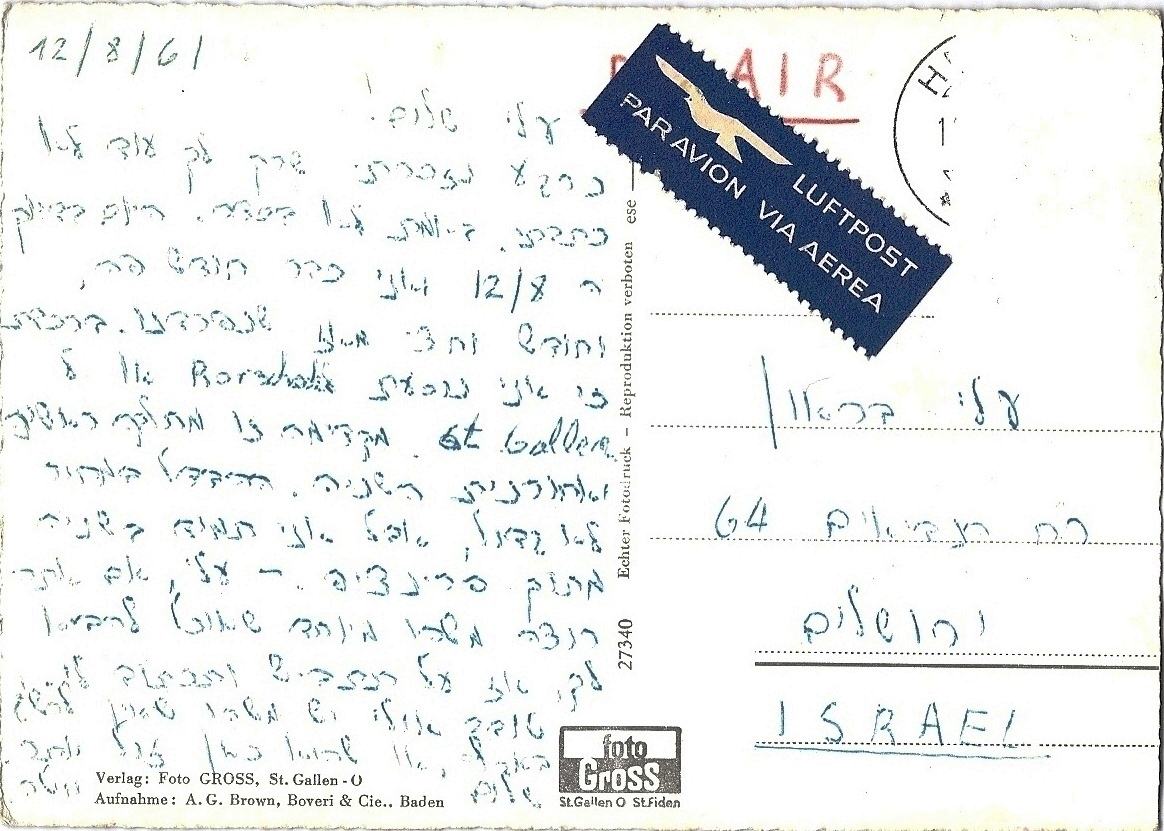
12/8/61
עלי שלום!
כרגע נזכרתי שרק לך עוד לא כתבתי. באמת לא בסדר. היום בדיוק ה 12/8 ואני כבר חודש פה, וחודש וחצי מאז שנפרדנו. ברכבת זו אני נוסעת לRorschach או ל St Gallen. מקדימה זו מחלקה ראשונה ואחורנית השניה. ההבדל במחיר לא גדול, אבל אני תמיד בשניה מתוך פרינציפ. - עלי, אם אתה רוצה משהו מיוחד שאוכל להביא לך, אז על [כך במקור!] תתביש ותכתוב לי, טוב? אולי יש משהו שאין להשיג בארץ, או שהוא כאן זול יותר.
שלום, ויטה[?]

12/8/61
Hello, Eli!
I just remembered now that you are the only one I have not written yet. How dreadful of me. Today is exactly 12/8 [for any American readers: that means August 12, not December 8] and I am already here a month, and it's been a month and a half since we said goodbye. This is the train that I take to Rorschach or to St Gallen. At the front is the first class, at the back the second. The price difference isn't very big, but I am always in the second, out of principle. - Eli, if you want anything special that I can bring you, then dont [sic!] be shy and write me, alright? Perhaps there is something that can't be found back home, or that is cheaper here.
Goodbye, Vita[?]

ניסיתי לחפש את עלי בראון, אבל לא מצאתי שום דבר שנראה כמו זיהוי מוחלט של הבנאדם. יהיה קשה עוד יותר לחפש את הכותבת, כי אני אפילו לא בטוחה שאני מצליחה לקרוא את השם שלה כמו שצריך. בכל אופן, זה לא ממש משנה; העיקר כאן הוא הסיפור, מה שנאמר כאן, ואיך הוא נאמר. ותכל'ס, נכון שזה מגניב? יש כאן איזה טון דיבור שעולה מהכתיבה די בבירור - אפשר ממש לדמיין אותה, לא? יש פה משהו חמור-סבר כזה, שגורם לי לחשוב על אישה קצת מבוגרת, קצת דודתית או מורתית, מאלה שתמיד יודעות מה הן רוצות ולמה, שיש להן סיבות ספציפיות ותכניות מסודרות (קצת מזכיר לי את האמא מ'להתראות לנין', ואם לא ראיתם את הסרט הזה כדאי שתראו כי הוא נהדר). מה היא עושה בשווייץ, לתקופה של לפחות חודש, ואולי יותר? ועוד בתחילת שנות ה-60, כשנסיעות לחו"ל לא היו עניין נפוץ במיוחד פה בארץ? האם היא נסעה לאיזה בית הבראה, או אולי ללימודים (יש אוניברסיטה בסנט גאלן)? בכל אופן, אני משערת שהיא נהנתה שם, ושגם אם היא בסך הכל היתה שם בחופשה נינוחה, היא בכל זאת הלכה לכל מקום בקצב נמרץ, תמיד עם מטרה ברורה לפניה, כי היא פשוט היתה בנאדם כזה.

I tried looking for Eli Brown/Braun/Bar-On, but didn't come up with anything that feels like it might definitely be the guy. Would be even harder to search for the writer, since I'm not even sure I'm reading her name right. Anyway, this doesn't really matter; it all about the story, all about what is being told, and how. And really, isn't it neat? There's a certain tone of voice that comes so clearly through the writing - you can just imagine her, can't you? (At least, I tried to capture in the translation what she sounded like to me.) There's a sort of severity about it that makes me think of a somewhat older woman, a little like a teacher, the kind who always knows what she wants and why, the kind who has specific reasons and orderly plans (it sort of makes me think about the mother from Goodbye Lenin, which you should see if you haven't because it's a lovely film). What is she doing in Switzerland, for at least a month, and possibly longer? And back in the early 60s, when trips abroad weren't very common around here? Is she there for her health, or maybe for study (there's a university in St. Gallen)? Anyway, I'm assuming she enjoyed herself, and that even if she was there on a leisurely vacation, she walked briskly everywhere, always with a clear purpose, just because that's the sort of person she is.

אבל כמובן, זה רק הדמיון שלי - זה רק מה שאני רואה, כשאני מסתכלת על הגלויה. אנשים אחרים אולי יראו דברים אחרים. אם יש לכם סיפורים משלכם, אתם מוזמנים לחלוק.

But of course, that's just my imagination - just what I see, when I look at this card. Other people might see other things. If you have your own stories, go ahead and share them.


עדכון (12 באוקטובר 2012): תגובה אנונימית אחת מצאה לי את עלי בראון מהגלויה - ואני ממש שמחה על זה, כי זה סיפור נפלא. הנה הקישור שקיבלתי שם, ואתם יכולים פשוט ללכת ולקרוא, אבלאם לא בא לכם, התקציר הוא כזה: בבית שבכתובת הזו, ברחוב הנביאים 64, התגוררה רחל המשוררת אחרי שנאלצה לעזוב את קיבוץ דגניה בגלל השחפת שלה. את השיר הלירי העצוב-אך-אופטימי והיפהפה שלה 'עץ אגס' - אחד השירים העבריים האהובים עליי (בקישור אפשר לקרוא גם את התרגום האנגלי החיוור שלו) - היא כתבה שם, על עץ האגס שגדל בחצר מחוץ לחלונה.
אז מה לכל זה ולעלי בראון, מלבד הכתובת המשותפת? ובכן, אחרי שרחל עברה לתל אביב, אבא של עלי, וולפגנג בראון (אני די בטוחה שהוא מופיע בעוד כמה גלויות שהעליתי פעם; אבדוק את העניין אחר כך) התגורר בבית במשך הרבה שנים. למעשה, הוא מת שם ב-2009, בגיל 94. הוא היה מאוד קשור לסיפור של רחל, וכשעץ האגס שהונצח בשיר מת לפני כמה שנים, הוא ובנו עלי נטעו עץ אגס חדש במקומו. מקסים, לא?

Update (Oct 12 2012): Some anonymous in the comments found me the Eli Braun from the postcard - and I'm so glad s/he did, because it's a  wonderful story. The link there is to an article in Hebrew (and I suppose most of the story will speak more to the Hebrew-speakers, but it's still wonderful), but the gist of it is that the house at this address, 64 HaNevi'im Street, was for a while the home of one of the most famous Hebrew women poets, Rachel. She moved there from the kibbutz after she was diagnosed with tuberculosis and was no longer allowed to work with children (a work she loved, by all accounts). Yes, she basically fulfilled the stereotype of the frail, lonely poet dying from consumption. But she wrote beautiful poetry. During the time she spent in Jerusalem she also wrote one of my favourite poems, the lyrical, sad-yet-optimistic Pear Tree (alas, so much is lost in this translation - you'll just have to trust me that in the original Hebrew it's just beautiful), about an actual pear tree growing in the courtyard, outside her window.
But while all this introduction was probably necessary for my non-Hebrew readers, at this point you are probably asking yourselves what it all has to do with Eli Braun, except for that address. Well, after Rachel moved to Tel Aviv, Eli's father, Wolfgang Braun (who I'm pretty sure appeared in some previous postcards I had here; I'll look it up later) lived in that house for many years. In fact, he died there in 2009, at the age of 94. He cared a lot about the story of Rachel, and when the pear tree immortalised in the poem died some years ago, he and Eli planted a new pear tree in its place. Isn't that sweet?
Thank you, Anonymous!

והנה המקום עכשיו - או לפחות, פיסת הגינה שאפשר לראות כשמסתכלים מהרחוב:

And here's the place now - or at least, the bit of the garden you can see from the street:

Wednesday, July 27, 2011

In Memory of Flight 402 - לזכר טיסה 402

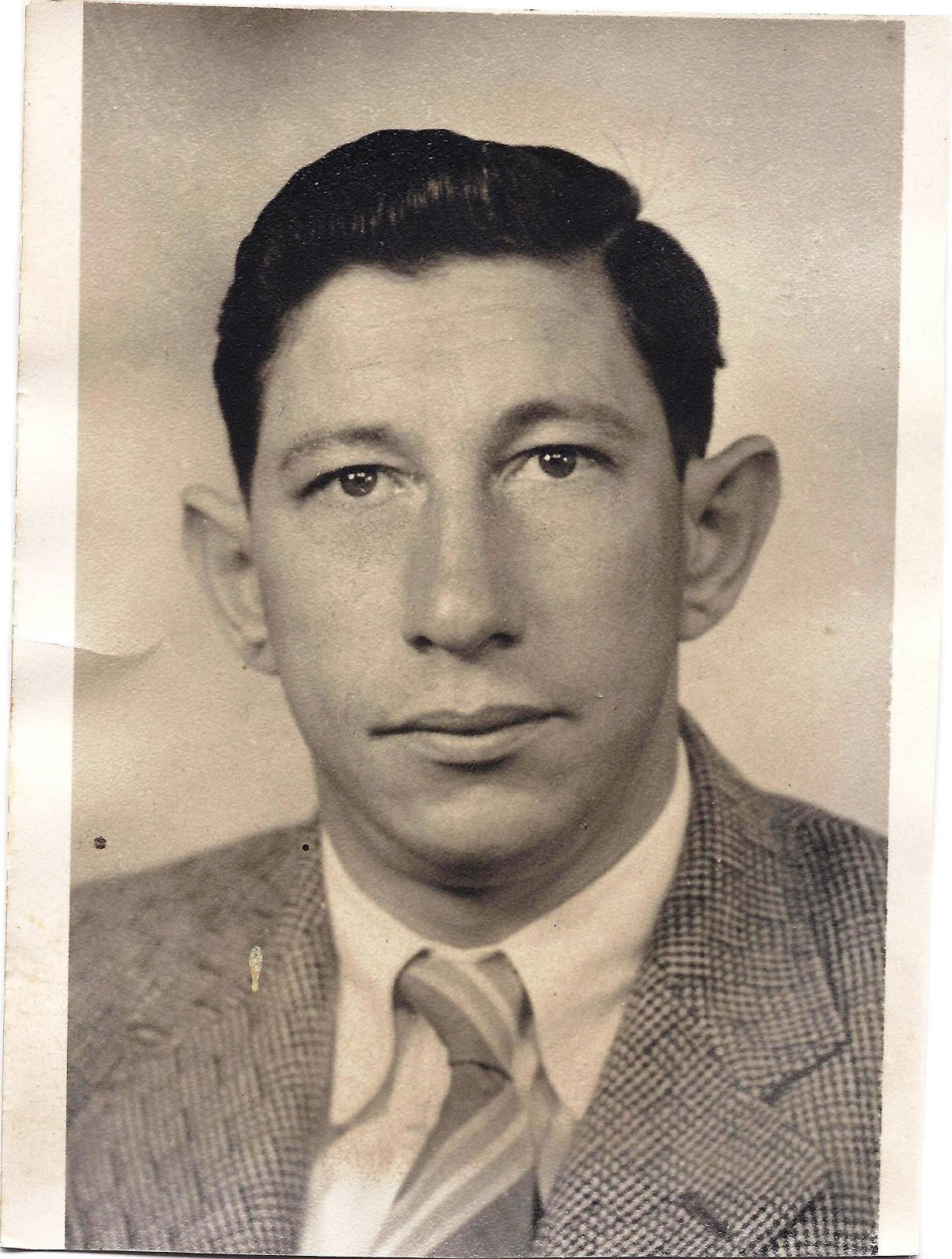
I want to do something a little different, today. In this post, there are - as always - some fragments of a bigger story, but it this case, there isn't so much guessing about what the story is, because it is one that comes from my own family. It is the story of my grandfather, Sydney Chalmers, who was born in South Africa in 1921, served in the RAF in WWII, came to Israel as a volunteer shortly afterwards, met my future grandma in 1950, had my dad, and died on July 27th 1955, when the El Al plane on which he was the flight engineer was shot down over Bulgaria.
Nowadays he's buried in a mass grave with the rest of the victims in the Kiryat Shaul cemetery near Tel Aviv. We used to visit there every year; we don't, anymore.

קצת אחרת, היום. הרשומה הזו כוללת - כמו תמיד - כמה רסיסים מתוך סיפור גדול יותר, אבל הפעם אין כ"כ ניחושים על מה אולי היה הסיפור הזה, מפני שהוא מגיע מהמשפחה שלי. זה הסיפור של סבי, סידני צ'למרס, שנולד בדרום אפריקה, שירת בחיל האוויר הבריטי במלה"ע השנייה, הגיע לישראל עם המח"ל לא הרבה זמן אחר כך, פגש את מי שתהיה סבתא שלי ב-1950, הוליד את אבא שלי, ומת ב-27 ביולי 1955, כשמטוס אל-על שעליו שירת כמהנדס טיסה יורט מעל בולגריה.
כיום הוא קבור בקבר אחים עם שאר הנספים בבית הקברות קריית שאול שליד תל אביב. פעם היינו מבקרים שם כל שנה; עכשיו כבר לא.

Anyway, we have a few remnants of grandpa Sydney, at home - mostly the regular things, like old photographs (a few videos, even). My dad looks a lot like him. Just... older, now. Natural, of course, but still feels strange.

בכל אופן, יש לנו כמה דברים של סבא סידני בבית - בעיקר דברים רגילים, כמו תמונות ישנות (אפילו כמה סרטים). אבא שלי ממש דומה לו. רק... כבר יותר מבוגר. מה שטבעי כמובן, אבל עדיין מרגיש קצת משונה.

Sydney Chalmers - 1921-1955 - סידני צ'למרס

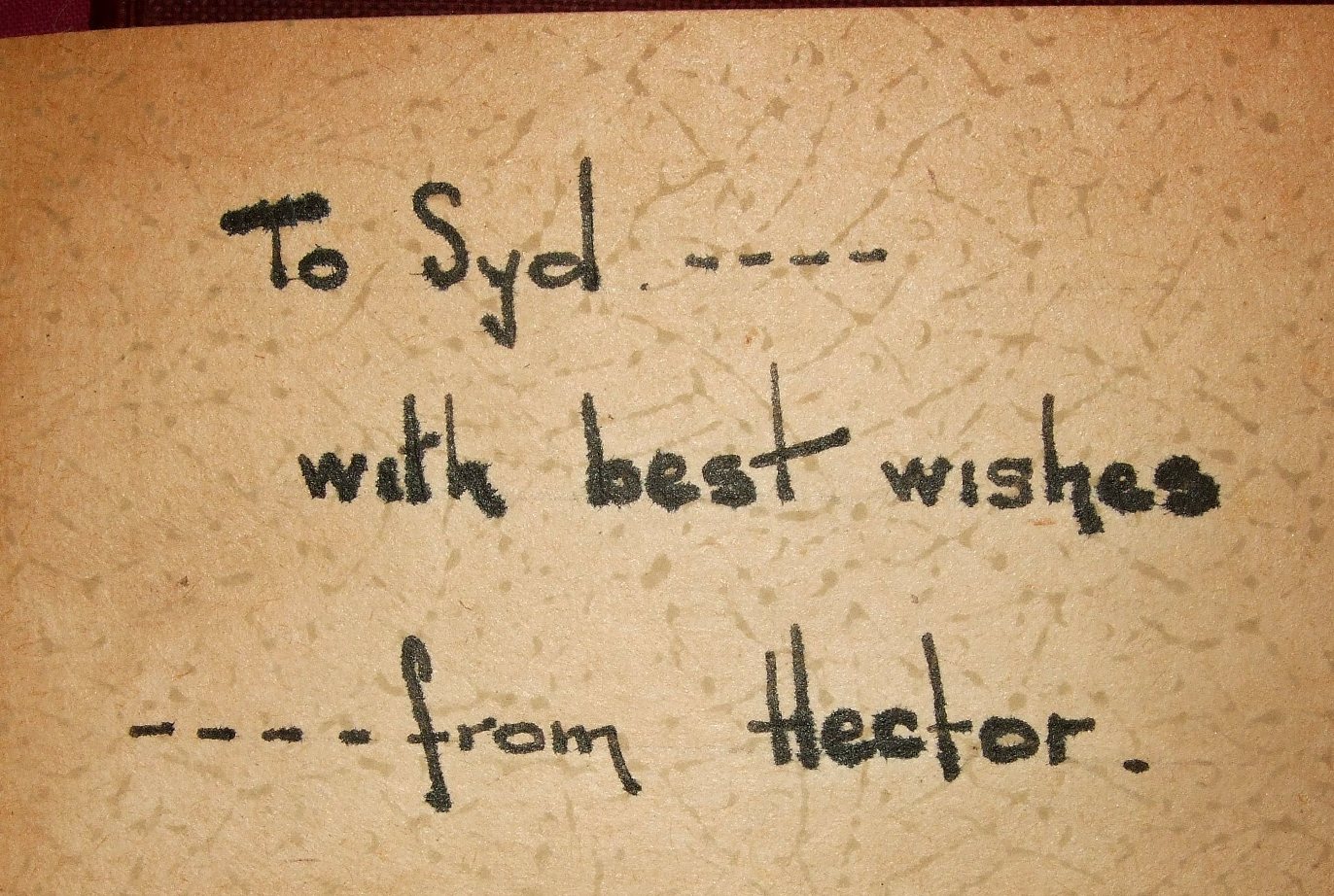
And then - getting to the heart of this post - we also have a few books with inscriptions written to him by friends. I don't know who these friends were; I guess I could ask my dad, or one of dad's older cousins who might remember a bit about them, but it doesn't really matter. I just like the window these books open to the life of the grandfather I never knew.

ויש לנו - וכאן אנחנו מגיעים אל לב הרשומה הזו - גם כמה ספרים עם הקדשות שכתבו לו חברים. אני לא יודעת מי היו החברים האלה; אני מניחה שאני יכולה לשאול את אבא שלי, או את אחד מבני הדודים היותר מבוגרים שלו, שעשויים אולי לזכור משהו לגביהם, אבל זה לא באמת משנה. אני פשוט אוהבת את החלון שהספרים האלה פותחים לחייו של הסבא שלא הכרתי.

[I would like to apologise in advance about the pictures below being even more crooked than usual - I took pictures with my camera because I didn't want to put the poor old books through the scanner.]

[אגב, אני רוצה להתנצל מראש על זה שהתמונות שלהלן עקומות אפילו יותר מבד"כ - צילמתי אותן עם המצלמה שלי כי לא רציתי להעביר את הספרים המסכנים בסורק.]

First, there are two books from a friend named Hector:

קודם כל, יש לנו שני ספרים מידיד בשם הקטור:

(1)


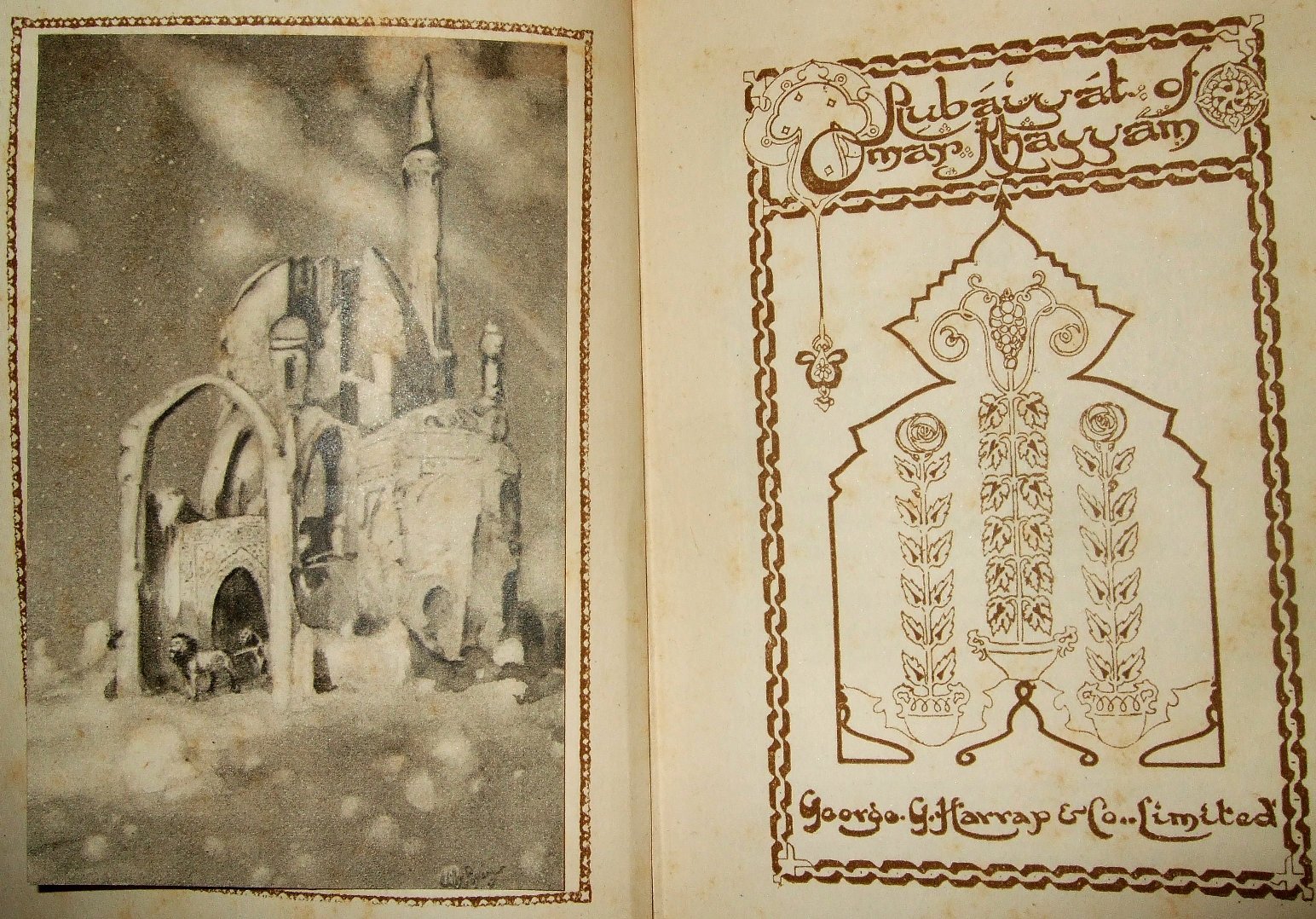
This is from this book:
מתוך הספר הזה:


A small book of the Rubaiyat of Omar Khayyam, in Fitzgerald's famous translation. That's a very nice title page, by the way.

קובץ קטן של ה'מרובעים' של עומָר ח'יאם, בתרגום המפורסם של פיצג'רלד. דף הכותרת חביב בהחלט, דרך אגב.

(2)


This is from this book:
מתוך הספר הזה:


Gibran's The Prophet, also with a nice title page.
Pretty fascinating, all in all - says something either about this Hector guy, or about Sydney, or about both. I have no idea what Grandpa Sydney's taste in books was like; I have no idea if Hector bought these two for him because he himself appreciated them and wanted his friend to read them as well, or because he knew that Sydney was interested in this sort of thing, or what.

'הנביא' של ג'בראן, גם הוא עם דף כותרת חביב.
זה די מרתק בסך הכל - אני חושבת שזה אומר משהו או על ההקטור הזה, או על סידני, או אולי על שניהם. אין לי מושג מה היה הטעם של סבא סידני בספרים; אין לי מושג אם הקטור קנה לו את שני הספרים האלה כי הוא עצמו העריך אותם, ורצה להכיר אותם לחבר, או מפני שהוא ידע שזה תחום שעניין את סידני, או מה.

But with all due respect to Gibran, Khayyam and Fitzgerald, and to their literary works, this is what I personally consider the best of the three, for several reasons:

אבל עם כל הכבוד לג'בראן, ח'יאם ופיצג'רלד וליצירותיהם הספרותיות, הנה הספר שאני אישית חושבת לטוב שבחבורה, מכמה סיבות:


First of all, because it was a birthday present for him, on the same year that he died. By the way, he was 34, Penny. Not that it matters now, so many years after that birthday, so many years after his death.

קודם כל, כי הוא קיבל אותו כמתנת יום הולדת, באותה שנה שבה נהרג. דרך אגב, פני, הוא היה בן 34. לא שזה משנה עכשיו, כל כך הרבה שנים אחרי יום ההולדת ההוא, כל כך הרבה שנים אחרי שמת.

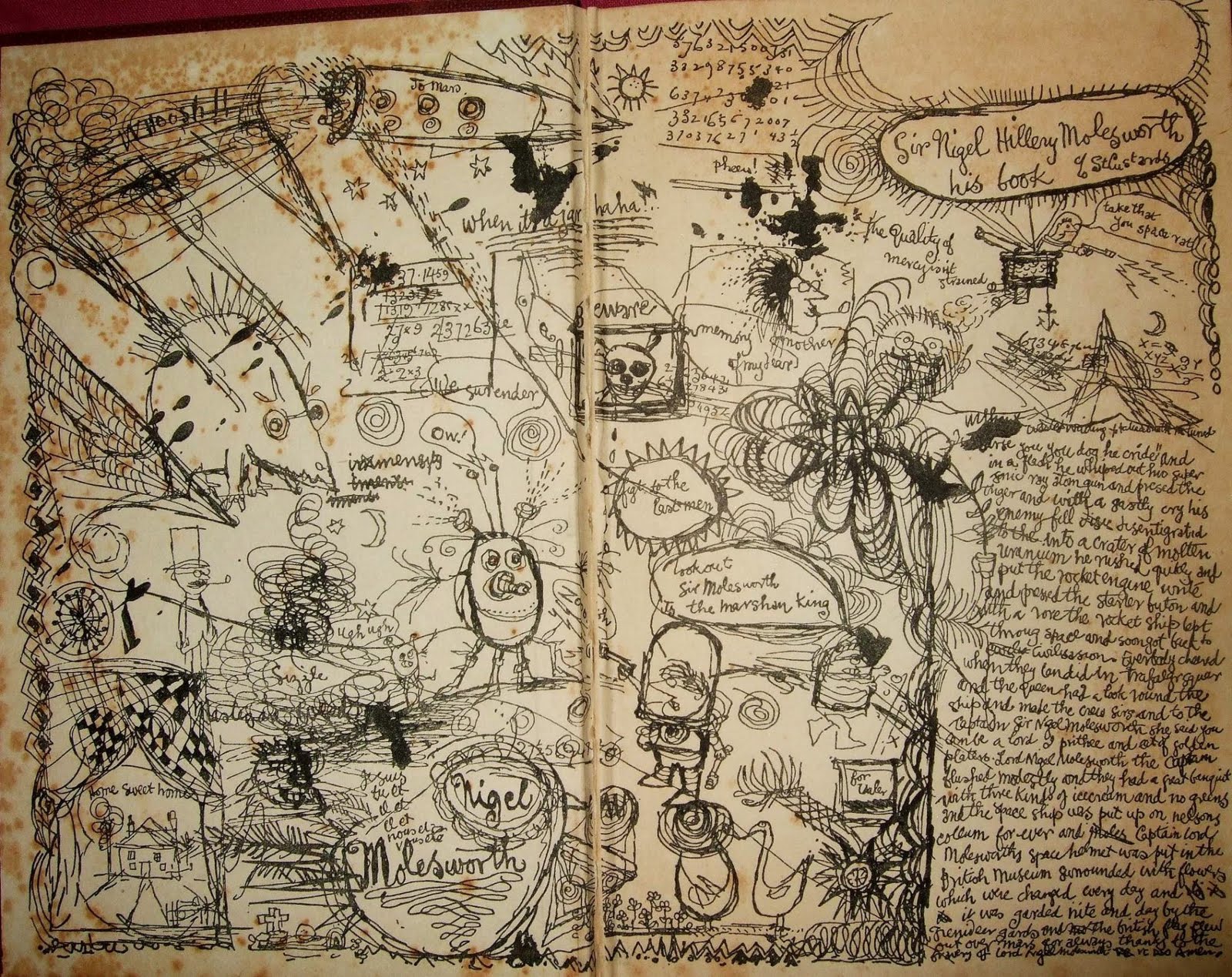
And in a bit of a mood whiplash, the second reason why this is my favourite is because of the book it's on - a book that I decided to read solely because of this dedication, and was thus happily introduced to one of the funniest things I ever read:

ובשינוי חד של האווירה, הסיבה השנייה שבגללה הספר הזה הוא האהוב עליי משלושתם היא בעצם הספר עצמו - ספר שהחלטתי לקרוא אך ורק בזכות ההקדשה, ולשמחתי כך למדתי להכיר את אחד הדברים הכי מצחיקים שקראתי אי פעם:

(Click to enlarge - קליק להגדלה)

No wait, sorry, this is just the inside cover, right before the title page. But it does give you a bit of an idea of the awesome mayhem to come. Here's the title page:

רגע, סליחה, זו רק הכריכה הפנימית, ממש לפני עמוד הכותרת. אבל זה בהחלט נותן רמז מסוים על הבלגן המופלא שבדרך. הנה עמוד הכותרת:


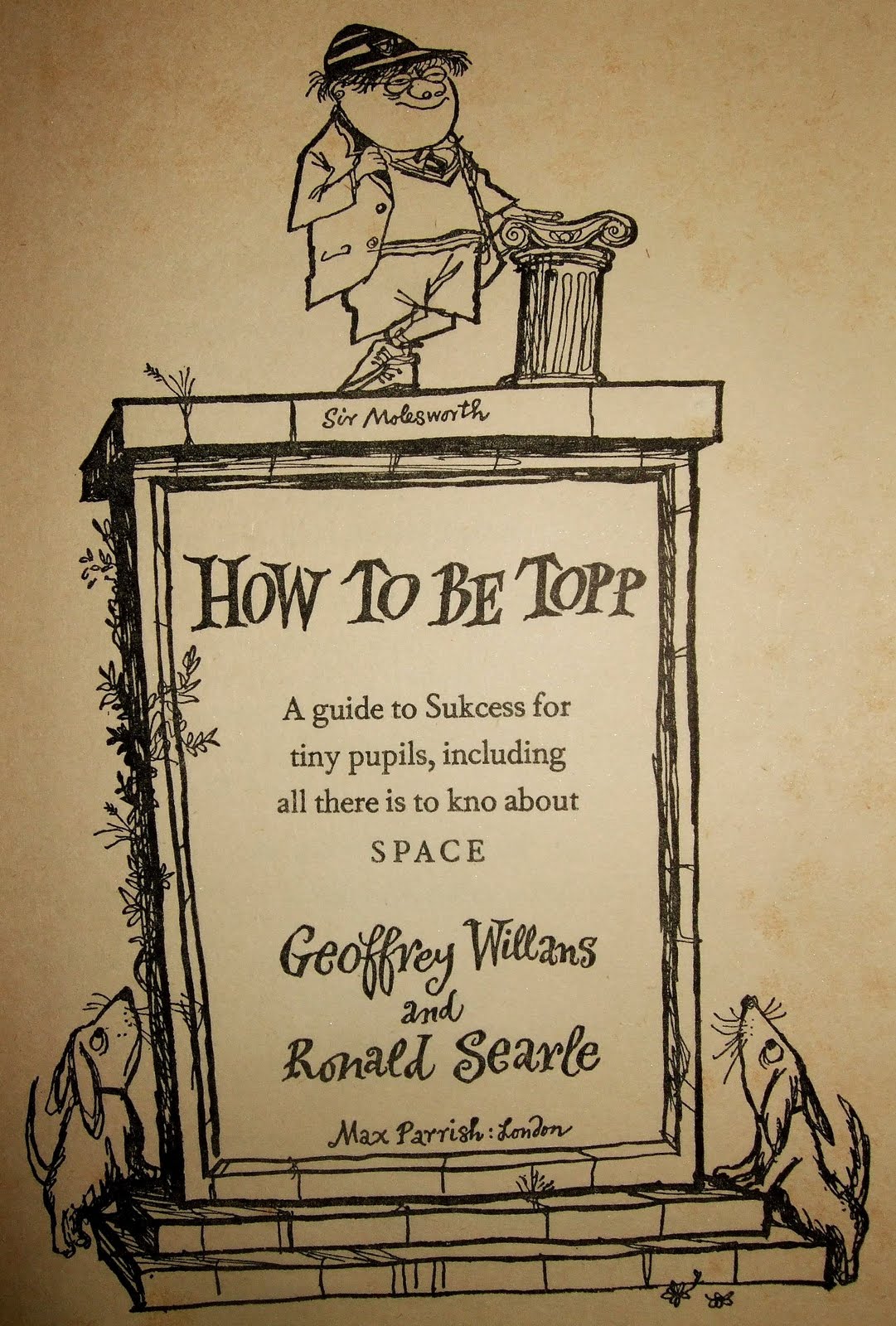
Molesworth!
Most people reading this will have no idea what this is. Neither did I. I only looked it up (first on h2g2 - my go-to source of knowledge at the time, and still a wonderful one by the way - and only recently on Wikipedia as well) after I read and loved it. I think maybe the best way to explain Molesworth to modern readers is to ask you to imagine what if Calvin, from Calvin and Hobbes, was a British boarding-schoolboy in the 1950s. Minus the tiger unfortunately, but with a best friend - sorry, 'grate frend' - named Peason, and an annoying little brother nicknamed Molesworth 2, instead. Got it? Good. Now imagine he wrote a book.
It has the sort of atrocious spelling that some people like to blame on the internet; it has a great disdain to all things school-related, with horror stories of every class from Latin (yes, they still studied Latin in school back then) to English to cricket; it has wonderful flights of fancy, especially about spaceships and aliens; and, at least from my subjective perspective, it is incredibly, roaringly funny.

מולסוורת'!
רוב האנשים שקוראים את הרשומה הזו ככל הנראה לא יידעו במי מדובר. גם אני לא ידעתי. חיפשתי את הספר, (בהתחלה באתר h2g2 - שהיה מקור הידע הראשון שאליו פניתי בזמנו, והוא בעצם עדיין מקור נהדר - ורק לאחרונה גם בוויקיפדיה) רק אחרי שקראתי ואהבתי אותו. אני חושבת שאולי הדרך הטובה ביותר להסביר מהו מולסוורת' לקוראים מודרניים היא לבקש מכם לדמיין מה אם קלווין, מהקומיקס 'קלווין והובס', היה ילד בריטי בפנימיה בשנות החמישים. מינוס הטיגריס, למרבה הצער, אבל במקום זה עם חבר טוב - סליחה, 'חוור נֶמן' - בשם פיסון, ואח קטן ומעצבן המכונה מולסוורת' 2. יש? יופי. עכשיו תדמיינו שהוא כתב ספר.
יש שם כתיב מזעזע, מהסוג שאנשים אוהבים להשליך על 'דור האינטרנט'; יש שם בוז גדול לכל מה שקשור לבית הספר, עם סיפורי אימה על כל שיעור, מלטינית (כן, אז עוד למדו לטינית בבי"ס) דרך אנגלית ועד קריקט; יש שם מסעות על כנפי הדמיון, בעיקר על חלליות וחייזרים; ויש שם הומור מלוא הדלי, שאותי אישית פשוט הצחיק עד דמעות.

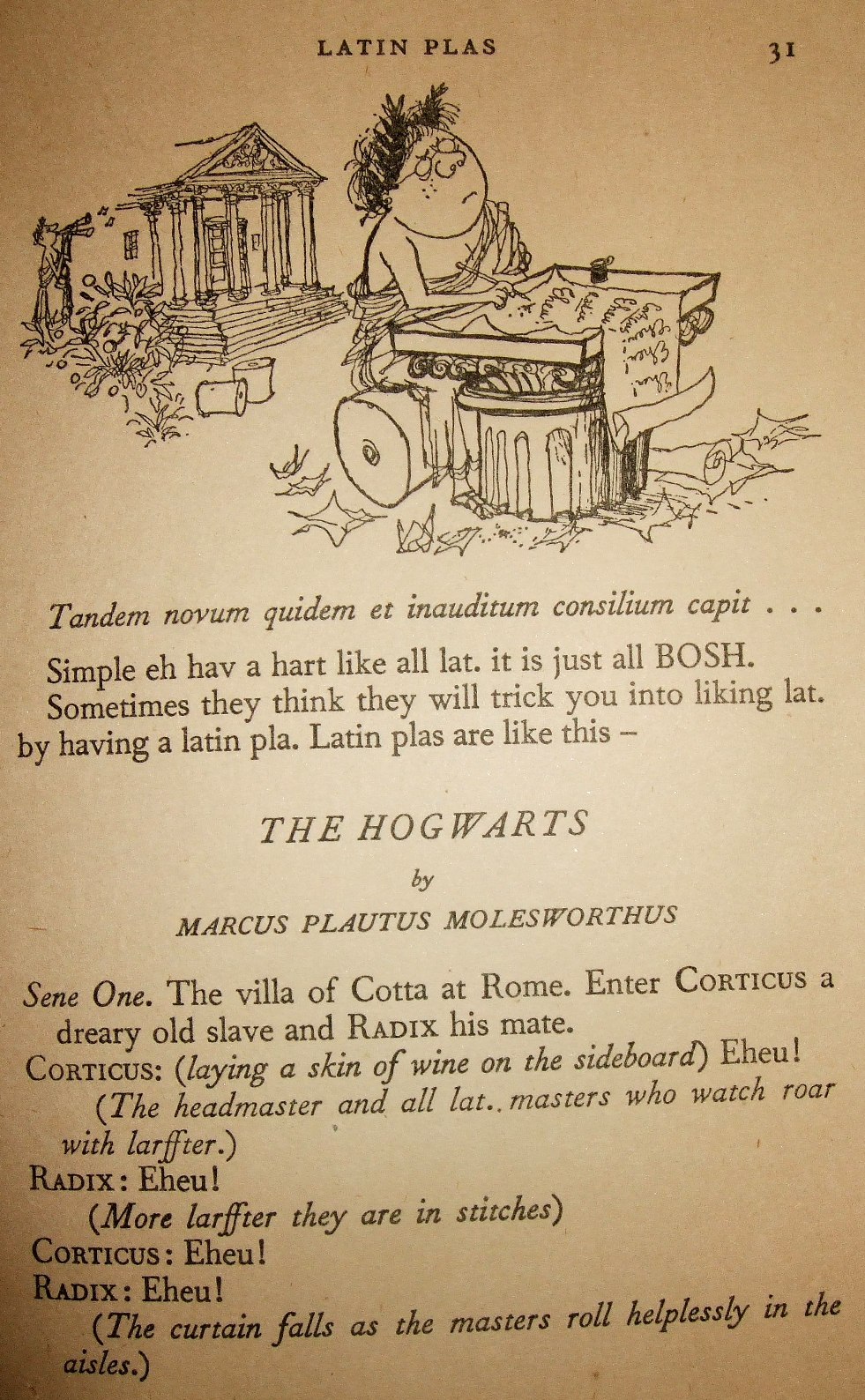
Here's one example of the text, which I would like to dedicate to everyone who saw 'British boarding-school' and thought of Harry Potter (and/or to anyone who happens to be studying Latin):
הנה דוגמית קטנה מהטקסט, שמוקדשת לכל מי שראה 'פנימיה בריטית' וישר חשב על הארי פוטר (ו/או לכל מי שבמקרה לומד לטינית):


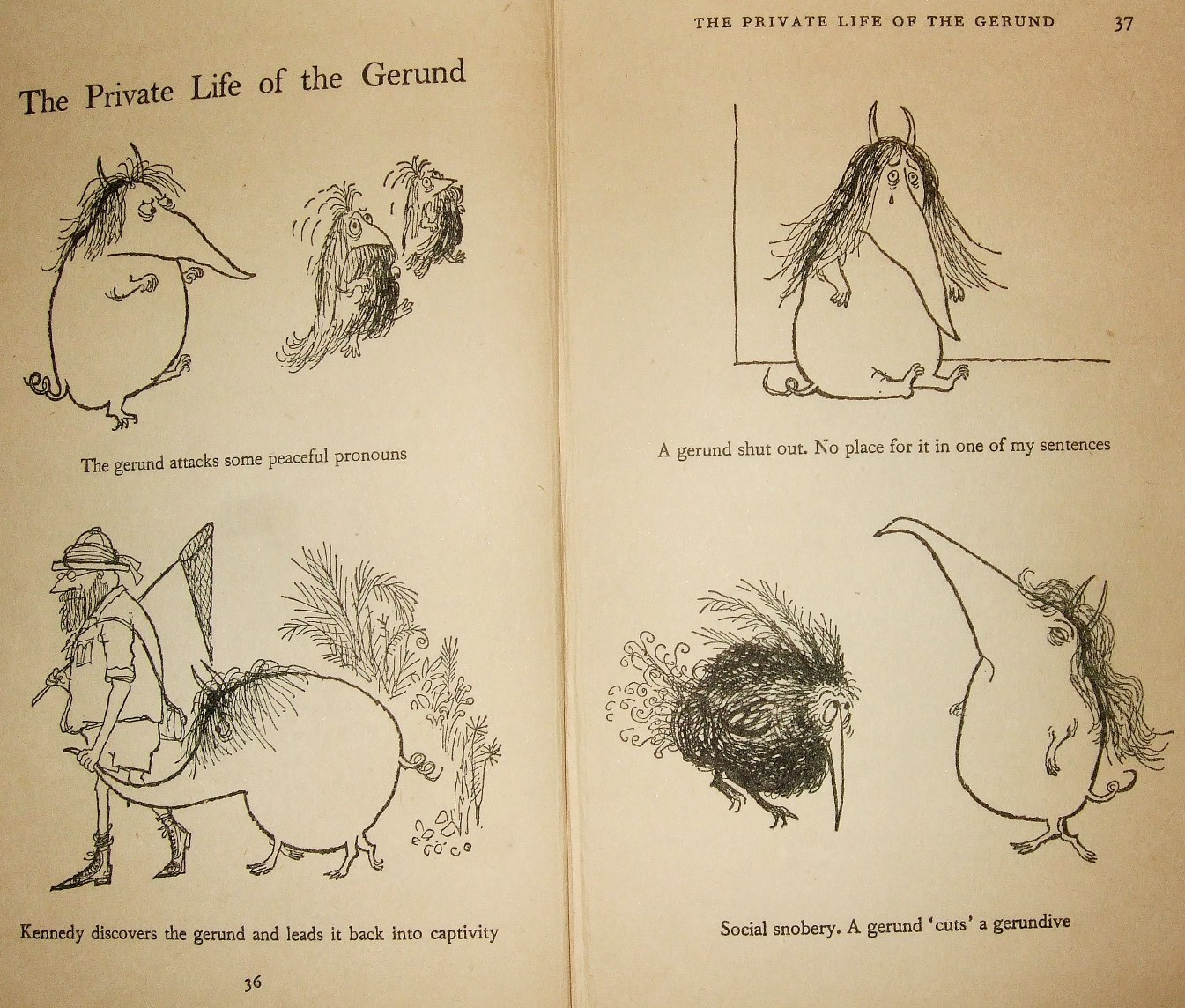
And one more example - this time more specifically of the illustration style (by the inimitable Ronald Searle, who also made the more famous British boarding-school series St. Trinian's, and did some work for the New Yorker), but also showing (again) how generally awesome this book is. And I dedicate this one to all my linguist friends:

ועוד דוגמית אחת - הפעם באופן יותר ספציפי כדוגמא לסגנון האיור (של רונלד סירל היחיד במינו, שגם יצר את סדרת הפנימיה-הבריטית הידועה קצת יותר 'סיינט טריניאן', וגם אייר בניו יורקר פה ושם), אבל גם כדי להראות (שוב) כמה שהספר הזה מעולה באופן כללי. מוקדש לידידיי הבלשנים:

"But what is a gerund, sir?"

It's wonderful (I am seriously restraining the urge to just scan or photo all of it, page after page).
I wonder if Grandpa Sydney liked it. I wonder if he even got to read it, or if maybe he put it aside for another time, which never came. Yeah, the mood whiplash again. I guess it's odd, going from talking about death to gushing about how hilarious this book is, and then right back to death, but what can you do? Life is full of odd contradictions like that.
Personally, even though I never met my grandfather, I'm happy to remember him this way - not just in pictures, not just in the occasional stories, but in these little things like the books his friends gave him. I'm happy that he introduced me, even in such a round-about way, to a book I enjoyed so much. And I'm happy to share this with all of you.

הוא נהדר (אני אשכרה מרסנת את עצמי שלא פשוט לסרוק או לצלם את כולו, עמוד אחר עמוד).
אני תוהה אם סבא סידני אהב אותו. אני תוהה אם בכלל יצא לו לקרוא אותו, או שאולי שם אותו בצד להזדמנות אחרת, שאף פעם לא הגיעה. כן, שוב שינוי חד באווירה. אני מניחה שזה קצת מוזר, לקפוץ ככה מאזכורי מוות להשתפכות על כמה שהספר הזה מבדר, ואז בחזרה למוות. אבל מה לעשות? בחיים יש המון סתירות מוזרות שכאלה.
אישית, אפילו שמעולם לא פגשתי את סבי, אני שמחה לזכור אותו כך - לא רק בתמונות, לא רק בסיפורים פה ושם, אלא גם בדברים הקטנים האלה, כמו הספרים שקיבל מידידיו. אני שמחה שהוא הכיר לי, ולו בצורה עקיפה שכזו, ספר שכל כך נהניתי ממנו. ואני שמחה לחלוק את זה עם כולכם.

Next time, back to the regular stuff. And by the way, if any Polish-speakers are reading this, I would love to talk to you for some help with a planned future post.

בפעם הבאה, בחזרה לשגרה. ודרך אגב, אם יש לי קוראים שיודעים פולנית, אשמח לדבר איתכם, אני צריכה קצת עזרה עם רשומה עתידית.


Felt like I need to do a quick update, having just found out that Ronald Searle - who illustrated the Molesworth books - passed away recently (30.12.2011), at age 91. Seems he was not just a wonderful illustrator but also led quite an interesting life. RIP, Mr. Searle.

הרגשתי צורך לעדכן בזריזות, כי גיליתי עכשיו שרונלד סירל - שאייר את ספרי מולסוורת' - נפטר לאחרונה (30.12.2011), בן 91. נראה שלא רק שהוא היה מאייר נהדר, גם היו לו חיים די מעניינים. יהא זכרו ברוך.

Sunday, April 10, 2011

The Awful German Language - השפה הגרמנית האיומה

Hey, new post.

הי, פוסט חדש.

Sometimes I have an organised plan - or at least semi-organised (I'm not a very organised sort of person) - about what my next updates would be, and then I suddenly run into something that works associatively with the last post, and decide to use that instead.

לפעמים יש לי תכנית מסודרת, או מסודרת-למחצה בכל אופן (אני לא בנאדם מסודר במיוחד), מה יהיו העדכונים הבאים - ואז אני נתקלת במשהו שמסתדר לי אסוציאטיבית עם הרשומה האחרונה, ומחליטה להעלות אותו במקום.

Which is what happened with this postcard - I was totally going to put here some of the Brown family postcards (you know, to sort of continue that Chicago postcard), but then I ran into this card in my favourite used book store, and I had to buy it and upload it here, because it is also from Berlin, and it dovetails nicely into the story from the previous post.

זה מה שקרה עם הגלויה הזו - לגמרי התכוונתי להעלות את הגלויות של משפחת בראון (נו, במעין המשך לגלויה משיקגו), אבל אז נתקלתי בגלויה הזו בחנות הספרים המשומשים החביבה עליי, והייתי חייבת לקנות אותה ולהעלות אותה כאן, כי גם היא מברלין, ומשתלבת כ"כ יפה בסיפור מהרשומה הקודמת.

Front:
צד קדמי:

So first of all, this is in Berlin - like the last card. One of the things I liked about this picture (apart from the grey, almost industrial atmosphere, so different from what you usually see in postcards) is the bombed church spire. At the time I thought that maybe they didn't get the chance to fix it since the war; but when I started researching a little about the places featured here, I found the explanation: the church was left that way on purpose, as a sort of memorial, and new structures were built next to it for the chapel and belfry (these are the two dark polygonal structures you can see in the picture to the right and left of the church spire).

אז קודם כל, זה בברלין - כמו הגלויה הקודמת. אחד הדברים שאהבתי בתמונה (חוץ מהאווירה האפרפרה, כמעט כמו של אזור תעשייה, שכל כך מנוגדת למה שמוצאים בגלויות בדרך כלל) הוא מגדל הכנסיה המופצץ. בזמנו, חשבתי שאולי לא הספיקו לתקן אותו מאז המלחמה; אבל כשהתחלתי לחקור קצת על המקומות המתוארים כאן, מצאתי את ההסבר: השאירו את הכנסיה כך בכוונה, כמעין אנדרטה, ולידה הקימו מבנים חדשים לאולם התפילה ולמגדל הפעמונים (אלה שני המבנים הרב-צלעיים הכהים שאפשר לראות בתמונה מימין ומשמאל לכנסיה).

Looking online, I  found a modern view of the place, from the exact same angle (I prefer to link rather than embed, since it's a stock photo), which is a great way to see what changed between then and now. But I also looked for that spot on Google maps, and that's where it gets interesting - if you look at the map below, you will notice this is right next door to 162 Kantsraße, where Remde's St Pauli used to be. Cool.

כשחיפשתי באינטרנט מצאתי תמונה עדכנית של המקום, מאותה זווית בדיוק (אני מעדיפה לקשר ולא להטמיע את התמונה, כי היא לשימוש מסחרי), וזו דרך טובה לראות מה השתנה בין אז לעכשיו. אבל אז גם חיפשתי את האזור בגוגל מפות, וכאן זה נעשה מעניין - אם תסתכלו במפה שלהלן, תוכלו לראות שזה ממש ליד קאנטשטראסה 162, לשעבר מקום משכנו של מועדון Remde's St Pauli. מגניב.


But beyond all this stuff, what I liked the best about this postcard - as often happens - is the message on the back. It has a great combination of funny and historical, plus that thing about people writing to their workplaces which always interests me (and has now become a tag).

אבל מעבר לכל זה, מה שהכי אהבתי בגלויה הוא בכלל המסר בצד האחורי. יש בו שילוב מצוין של המשעשע וההיסטורי, וגם הקטע הזה של אנשים שכותבים למקום העבודה שלהם, שתמיד מעניין אותי (ושעכשיו הפך גם לתגית).

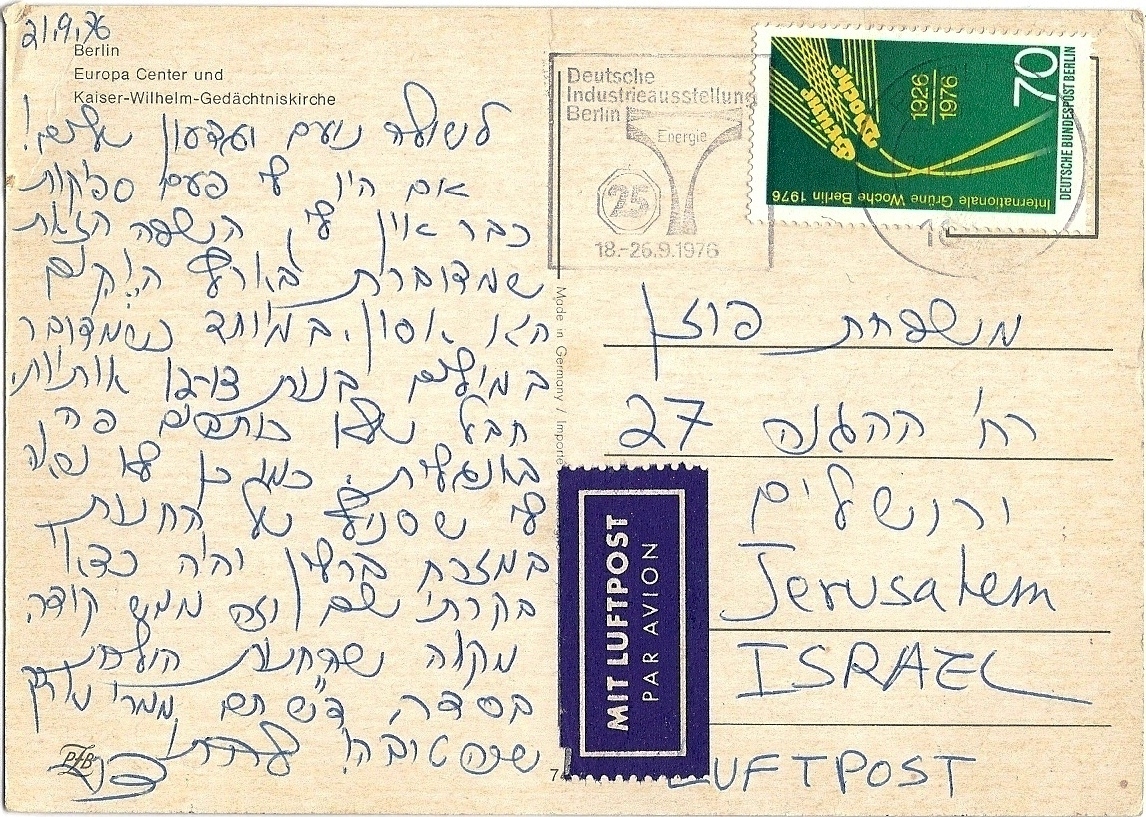
Back:
צד אחורי:


לשולה נועם וגדעון שלום!
אם היו לי פעם ספיקות [כך במקור] כבר אין לי, השפה הזאת שמדוברת בארץ היֶקִים היא אסון. במיוחד כשמדובר במילים בנות 12-13 אותיות. חבל שלא כותבים פה באנגלית. כמו כן לא נראה לי שסניף של החנות במזרח ברלין יהיה כדאי, בקרתי שם וזה ממש קודר.
מקווה שהחנות הולכת בסדר, ד"ש חם ממרי ואריק
שנה טובה!
להת', צור[?]
Hello Shula, Noam and Gideon!
If I ever had any doubtes [sic] I don't anymore, this language spoken in the land of yekkes is a disaster. Especially when it's words of 12-13 letters. Too bad they don't write in English here. In addition, I don't think that a branch of the store in East Berlin would be a good idea, I visited there and it's very bleak.
I hope the store is going alright, Mary and Erik send their warmest regards
Happy new year!
See ya, Tzur[?]

...And hence the title - because when I read his complaints about German I couldn't help but think of the famous Mark Twain piece.

...ומכאן הכותרת - כי כשקראתי איך הוא מתלונן על גרמנית לא יכלתי שלא לחשוב על הקטע המפורסם של מארק טווין.

I gotta admit that the thing about writing your workplace is not that outstanding here, since it seems he's the manager, and is writing partly on business, but the fact that he's writing from the 1976 Deutsche Industrueausstellung - German Industry Exhibition - makes up for it. Can't really tell you why I feel it makes up for it (couldn't even find much about this specific exhibition on Google), it just seems cool. Maybe because the word Industrieausstellung has 20 letters in it, which mashes quite well with the exasperation the writer expressed with the German language. What can I say, I'm a language nerd, I like odd stuff like that.

אני חייבת להודות שזה שהוא כותב למקום העבודה לא כ"כ יוצא דופן כאן, כי עושה רושם שהוא המנהל, והוא כותב בין השאר בענייני עבודה, אבל מצד שני הוא כותב מה-Deutsche Industrueausstellung - תערוכת התעשייה הגרמנית - של 1976, וזה סוג של פיצוי. אני לא ממש בטוחה למה אני מרגישה שזה פיצוי (אפילו לא הצלחתי למצוא הרבה על התערוכה הספציפית הזו בגוגל), אבל זה פשוט מגניב בעיניי. אולי מפני שבמלה Industrieausstellung יש 20 אותיות, וזה מתחבר יפה עם התסכול של הכותב מהשפה הגרמנית. מה לעשות, אני חנונית שאוהבת שפות, דברים מוזרים כאלה מוצאים חן בעיניי.

As for the historical aspect, the move from the humourous tone of the language complaint to the description of why it's probably not a good idea to open a branch of whatever store it is in East Berlin is quite abrupt (warning: TV Tropes link, could steal hours of your time without notice!).
Like with the previous post, a lot of the images I have about this are based on popular culture. I wasn't there. I was pretty young when the wall came down, so can't even say I directly remember it, and this was a huge event, unlike the mundane details of everyday life under the harsh Soviet regime. So all I have is the images from movies and such - and all these mental pictures are tinged with brown and grey. Perhaps not all movies about East Berlin are, like The Lives of Others, about the fear and oppression and people's almost hopeless attempts to subvert the regime,or at least to make it out, but even the more lighthearted movies, like Goodbye Lenin [by the way, apparently the whole thing is on YouTube now; you should watch it, if you haven't, it's good], have a lot of sadness in them.

מבחינת עניינים היסטוריים, בין הטון ההומוריסטי של התלונה על בעיות השפה לתיאור של למה כנראה לא כדאי לפתוח סניף של החנות במזרח ברלין יש מעבר חד למדי (זהירות: קישור לאתר TV Tropes, שעשוי לגזול שעות מזמנכם בלי שתשימו לב!).
כמו במקרה של הרשומה הקודמת, הרבה מהדימויים שיש לי בעניין הזה נובעים מהתרבות הפופולרית. לא הייתי שם. הייתי די צעירה כשנפלה חומת ברלין, אז אני אפילו לא יכולה לומר שאני זוכרת את זה במישרין - ומדובר על אירוע עם חשיבות עצומה, לעומת כל הפרטים היומיומיים של החיים תחת קשיי השלטון הסובייטי. אז כל מה שיש לי זה דימויים מסרטים וכיו"ב - וכל התמונות המנטליות האלה אפופות בגווני אפור וחום. אולי לא כל הסרטים על מזרח ברלין עוסקים, כמו חיים של אחרים, בפחד ובדיכוי ובנסיונות הכמעט נואשים של אנשים לחתור תחת המשטר, או לפחות לברוח משם, אבל אפילו בסרטים הקלילים יותר, כמו להתראות לנין, [אגב, מסתבר שהוא הועלה בשלמותו ליוטיוב עכשיו; אם לא צפיתם בו, הוא מומלץ מאוד], יש לא מעט עצבות.

And in this postcard, I think I can see it too, in the short and rather matter-of-fact description of this guy's visit to the GDR. I don't know what he imagined before he went to Germany, I don't know what sort of business options he and the rest of the store workers discussed, but eventually, it all came down to one conclusion: 'I don't think that a branch of the store in East Berlin would be a good idea, I visited there and it's very bleak'. And it's not like mid-70s Israel was such a cheery place - this was written only a few years after the big trauma of the Yom Kippur War, after all - and still, East Berlin was bleak. Very bleak, even.

ונדמה לי שבגלויה אפשר להבחין באותה עצבות, התיאור הקצר והענייני למדי של הביקור ב-DDR. אני לא יודעת מה הוא דמיין לפני שנסע לגרמניה, אני לא יודעת על אילו אופציות עסקיות הוא שוחח עם שאר עובדי החנות, אבל בסופו של דבר הכל הסתכם במסקנה אחת: 'לא נראה לי שסניף של החנות במזרח ברלין יהיה כדאי, בקרתי שם וזה ממש קודר'. וזה לא שישראל של אמצע שנות השבעים היתה כזה מקום עליז ושמח - סך הכל הגלויה הזו נכתבה שנים ספורות אחרי הטראומה הגדולה של מלחמת יום כיפור - ובכל זאת, במזרח ברלין היה קודר. ממש קודר, אפילו.

But it's a shame to finish on such a depressing note. Like everything in life, this bleakness does not stand on its own. It's surrounded by other things - by joking about the difficult language in the 'land of yekkes', by the warm regards from Mary and Erik, by business matters, by the lovely design of the stamp for 'International Green Day' (Internationale Grüne Woche; this logo design, by the way, remains to this day)... like the ruined church spire surrounded by its newer counterparts, by regular buildings and roads and people doing their everyday thing, like the blue sky over the yellowish-brown city view in the postcard. And there's a beauty in it.

אבל חבל לגמור את הרשומה במשהו כ"כ מדכא. כמו כל דבר בחיים, הקדרות הזו לא עומדת בפני עצמה. היא מוקפת בדברים אחרים - בהתבדחות על קשיי השפה ב'ארץ היקים', בד"ש חם ממרי ואריק, בענייני עסקים, בעיצוב החביב של בול 'השבוע הירוק הבינלאומי' (Internationale Grüne Woche; העיצוב הזה, אגב, נשמר בסמל גם כיום)... כמו צריח הכנסיה ההרוס, שמוקף במקביליו החדשים, בבניינים רגילים, בכבישים, בבני אדם שעסוקים בענייני היומיום שלהם,כמו השמיים התכולים מעל הנוף החום-צהבהב בגלויה. יש בזה יופי.

Tuesday, January 11, 2011

A Night Without Morals - לילה ללא מוסר

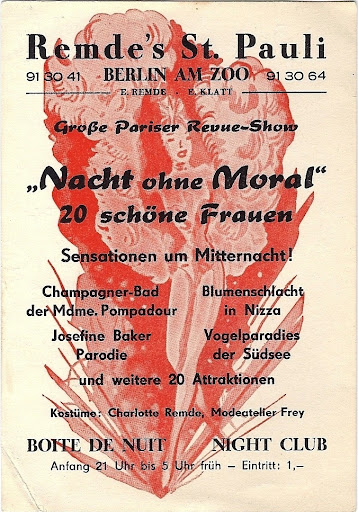
פוסט ראשון ל-2011, וחשבתי שראוי להתחיל בצלצלי תרועה. אז הנה משהו מעניין; זו לא גלויה, או תמונה, כמו רוב מה שיש לי, אלא סוג של פלייר פרסומי, או כרטיס, ממועדון לילה במערב ברלין. ויש פה גם סיפור מעניין למדי.

First post of 2011, and I thought we should start with a bang. So here is something interesting. It's not a postcard, or a photo, like most of the things I have, but a kind of commercial flier, or ticket, from a West Berlin nightclub. And there's quite an interesting story to it, too.

אבל את הסיפור לא ידעתי, כשקניתי את הדבר הזה. סתם חשבתי שזה מגניב. הנה, תסתכלו:

I didn't know the story when I bought it, though. I just thought it was cool. Take a look at this thing:

צד קדמי:
Front:


יאללה מסיבה!
בעזרת גוגל תרגום הצלחתי להבין מה מפורסם כאן: מופע בסגנון פריסאי בשם Nacht ohne Moral - 'לילה ללא מוסר' - מה שכבר נשמע, אממ, מעניין, אפילו לפני שמבטיחים שם '20 בחורות יפות', 'סנסציות בחצות', ואטרקציות כמו 'אמבט השמפניה של מאדאם פומפדור', 'קרב הפרחים בניס' (שקשור לאירוע אמיתי בקרנבל של ניס, דרך אגב), 'פרודיה על ג'וזפין בייקר' ו'ציפורי גן עדן של הים הדרומי' (ועוד 20 אטרקציות אחרות!). אפשר כבר לקבל מושג על איזה מין סוג של אירוע - ושל מקום - זה היה, ובעזרת קלישאות קולנועיות על מערב ברלין בתקופת תחילת המלחמה הקרה, התמונה מקבלת גם נפח: שמפניה ומרטיני ועשן סיגריות, ומרגלים כמובן. אפשר לדמיין את זה, לא? מרגלים לבושי טוקסידו שעושים חיים אבל לא שוכחים להעביר מבט חשדני על שאר החדר ולהחזיק אקדח בכיס נסתר; או מרגלים במעיל ארוך ומגבעת, יושבים בפינה אפלה ומעשנים בשרשרת, משרבטים משהו לעצמם וממלמלים בזעף מתחת לשפם המזויף בזמן שהם מחכים למרגלות יפהפיות שמדברות בלחישות צרודות ומסתוריות. כך כך קל לדמיין את כל זה; ראינו את זה כבר באינספור סרטים. ולכן כל כך התלהבתי כשהפכתי את הכרטיס (אני לא לגמרי בטוחה שזה כרטיס, אבל כתוב למטה 'כניסה לאחד', אז זה נראה סביר) וראיתי את השרבוטים מאחור. זה מתאים לתמונה הזו בדיוק.
[דרך אגב, אני עומדת לעשות משהו שלא עשיתי די מזמן, ולשים את כל הפרטים שמצאתי על המועדון - ועוד כמה דברים על ג'וזפין בייקר - בסוף הפוסט, אחרי ג'אמפ-קאט. אני חושבת שזה מרתק, אבל אם אתם רוצים לדבוק בסיפור המרגלים הדמיוני, אתם יכולים להתעלם מכל הקטע על מה שקרה באמת.]

Heyo, party time!
With the help of Google Translate, I figured out what it's advertising: a Parisian revue called Nacht ohne Moral - 'A Night Without Morals' - which already sounds, umm, interesting, even before it goes on to promise '20 pretty ladies', 'sensations at midnight', and attractions such as 'the champagne bath of Madame Pompadour', 'Flower Battle in Nice' (this is related to an actual event in the carnival in Nice, by the way), 'Josephine Baker parody' and 'birds of paradise of the South Sea' (and 20 other attractions!). Already, you get a picture of the kind of event, and the kind of place, this must have been - and with the help of some movie clichés about early-cold-war-era West Berlin, this picture gets fleshed out with champagne and martinis and cigarette smoke, and of course, spies. You can imagine it, can't you? Spies in tuxedos, having a grand old time, but keeping a watchful eye on the room and a pistol in a secret pocket; or spies in trenchcoats and fedoras, chain-smoking in a dark corner, scribbling something and muttering under their fake moustache as they wait for gorgeous lady-spies that speak in mysterious, hoarse whispers. It's so easy to imagine it; we've seen it in countless movies. Which is why I got all excited when I turned over the ticket (I'm not sure it actually was a ticket, but it does say 'admission: 1' at the bottom, so it seems likely) and saw the scribbles on the back - they fit into this image perfectly.
[By the way, I'm going to do something I haven't done in a long while, and put all the details I found about the club - plus some stuff about Josephine Baker - at the end of the post, after a jump cut. I think it's fascinating, but if you want to stick to the imaginary spy story, go ahead and ignore all the real-life stuff.]

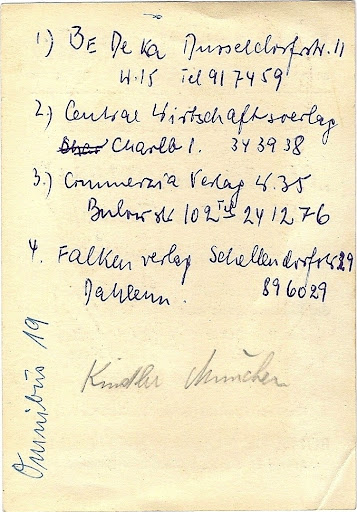
צד אחורי:
Back:


אז בעצם יש כאן שלושה דברים נפרדים - או בכל אופן, יש שלושה סגנונות של כתב יד ושלושה כלי כתיבה שונים. בעט כחול כהה יש רשימה של ארבעה מקומות ומספרי הטלפון שלהם; המלה verlag, שעל פי וויקיפדיה פירושה 'הוצאה לאור', חוזרת כמה פעמים (אולי יש כאן סופר מתחיל שמנסה למצוא מו"ל לכתב היד שלו?), ובפריטים מס' 1 ו-3 יש גם משהו שנראה כמו ציון שעה (4.15 ו-4.35, בהתאמה - אולי פגישות עם נציג ההוצאה?). למרבה הצער, לא הצלחתי למצוא אף אחד מהשמות האלה בחיפוש גוגל. בצד שמאל, בעט כחול בהיר יותר, ובכתב יד מחודד ואלגנטי קצת יותר, כתוב Omnibus 19, קו 19 באוטובוס, מן הסתם. ולמטה, בעפרון, שם של מישהו, כנראה (די קשה לי לקרוא את הכתב הזה).

Right, so we have three different things, basically - three different handwriting styles, and three different writing instruments, anyway. In a dark blue pen there's a list of four places and their phone numbers; the word verlag, which according to Wikipedia means 'publisher', recurs a few times (maybe we have a beginning author, trying to find someone to publish his manuscript?), and in items 1 and 3 there is also something that looks like a time (4.15 and 4.35, respectively - maybe meeting a representative of the publisher?). Unfortunately, I couldn't find any of those names on Google. On the left, in a lighter blue pen and a slightly more pointy and elegant handwriting, it says Omnibus 19, which is of course bus #19. And at the bottom, in pencil, something that looks like somebody's name (it's hard for me to read this handwriting).

כמובן שכל זה בהחלט יכול להיות חסר משמעות. זאת אומרת, זה בהחלט יומיומי למדי. מישהו היה צריך לרשום כמה דברים, לקח פיסת נייר ורשם אותם מאחורה; אחר כך נוספו עוד כמה רשימות לאותה פיסת נייר שימושית. פשוט מאוד.
אבל כמו שבזכות הקלישאות הקולנועיות קל מאוד לדמיין את מועדון הלילה האפלולי שאפוף בעשן סיגריות ואווירת שחיתות ושורץ מרגלים, כך גם קל לדמיין שיש מאחורי זה כל מיני ענייני ריגול. אולי זה צופן. אולי השמות של חברות הוצאה לאור הן רק כיסוי למשהו אחר, והשם בתחתית הדף הוא שם-המרגל המזויף של מישהו, וקו 19 הוא חלק מתכנית מפגש מסובכת ('תעלה על האוטובוס ברחוב X, וסע שלוש תחנות. אני אהיה בצד השני של הרחוב. אל תיצור קשר עין, פשוט לך אחריי'). אולי יש שלושה סגנונות כתב יד כי הכותב התאמן בזיוף! אפשר לדמיין כאן כל מיני עלילות, ברגע שמתחילים את קו המחשבה הזה.

Of course, this could all be meaningless. I mean, it's really quite mundane. Someone needed to write down some info, grabbed a piece of paper, and wrote on the back; then later, other notes were made on the same handy piece of paper. So very simple.
But just like all the movie clichés make it easy to imagine the dark, smoky nightclub teeming with debauchery and spies, it's also easy to imagine that there is some spy business behind this. Maybe it's coded. Maybe the names of publishing firms are just a cover for something else, and the name at the bottom is somebody's fake spy name, and bus #19 is part of a complicated meeting plan ('Take the bus at X Street, and travel three stops. I will be across the street. Don't make eye contact, just follow me'). Maybe there are three different handwriting styles because the guy was practising his forgery skills! There are all sorts of plots that can be imagined here, once you take this line of thought.

וכאן אפשר היה להניח לעניין. אבל אני נהנית ממחקרי-גוגל הקטנים שלי, כשיוצא לי לעשות אותם, אז אם מעניינים אתכם קצת פרטים אמיתיים על המקום ניתן למצוא אותם אחרי הג'אמפ-קאט.

And this could be where we leave it. But I like doing this little Google-based research, when I can, so if you're interested in some real details about the place, you can find them under the jump.

Sunday, October 31, 2010

Plot Twists - פיתולים בעלילה

את הגלויות האלה שמרתי לפרק האחרון בסאגת קיגן, כי אני חושבת שהן מגניבות למדי. יש כל מיני פרטים מוזרים שקצת מסבכים את הסיפור שהצלחנו להרכיב עד כה, וכל מיני דברים אחרים שלמדתי על התקופה מתוך החיפושים שלי, ובסוף יש גם הפתעה, כמו שרמזתי קודם.

I saved these cards for the last installment of the Keogan Saga because I think they're pretty awesome. There are all sorts of weird details that slightly complicated the story as it's been constructed so far, and all sorts of other things that I learned about the era during my research, and in the end there is the surprise that I have alluded to before.

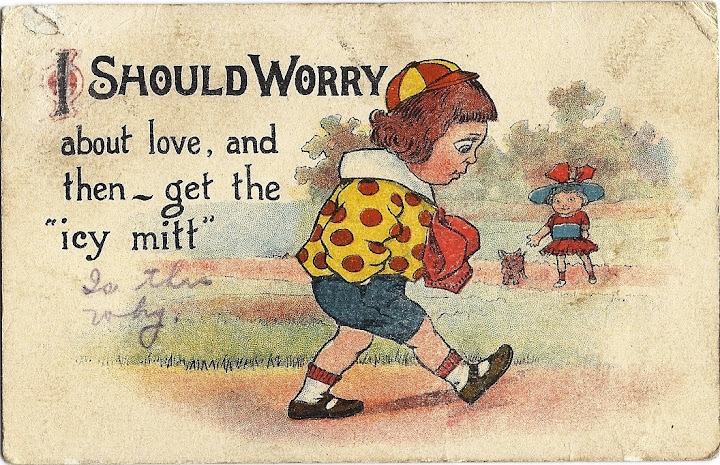
נתחיל עם הצד הקדמי של שתי הגלויות - ברור מייד ששתיהן חלק מאותה סדרה, וכשראיתי אותן בחנות הן נראו לי מוזרות ובלתי מובנות לחלוטין. אני לא יכלתי לראות בדבר הזה שום משמעות, אבל ידעתי שבטח היתה לו משמעות, אי אז.

We begin with the fronts of the two postcards - they obviously both belong to the same series, and when I saw them at the store they seemed incredibly weird and unintelligible. It didn't mean anything to me. But I knew that back then, it had to mean something.

גלויה 1, צד קדמי:
Postcard #1, front:

גלויה 2, צד קדמי:
Postcard #2, front:

אז... מה זה הדבר הזה? למה הילדים המוזרים האלה אומרים 'I should worry'? כאמור, בהתחלה לא הבנתי כלום.
ואז חיפשתי - אני לא זוכרת איך בדיוק, כי מן הסתם רק הצירוף 'I should worry' היה מניב הרבה תוצאות לא רלוונטיות - והגעתי לתיאור שכאן, וממנו לכאן, ולמדתי קצת יותר. בקצרה, מסתבר שזה היה מעין ביטוי סלנג, בתחילת המאה ה-20, והמשמעות שלו היא בעצם הפוכה לגמרי: 'למה שאדאג?', פחות או יותר. תחשבו על זה בניגון יידישאי, וזה נעשה קצת יותר מובן. היה שיר פופולרי למדי ב-1913, היה אפילו סרט בשם 'I Should Worry' ב-1915, למרות שלא הצלחתי למצוא עליו שום פרטים, אז אני לא יודעת אם הוא באמת קשור. בעצם זה היה סוג של מֶם (meme), או קאצ'פרייז (מילוניי טוענים בעיקשות שהתרגום התקני הוא 'אמרת כנף', אבל המשלב שונה לחלוטין, אז אאלץ להכנע ללעז גם הפעם), כמו שלפני כעשור אנשים היו מצטטים נונסטופ מסיינפלד, רק שכאן זה מלפני כמאה שנה... ובעצם, לא מזמן אפילו ראיתי קטע מסרט מ-1940 ופתאום זיהיתי שהשתמשו בו בביטוי הזה - בצורה 'you should worry', אמנם, אבל בבירור באותה משמעות הפוכה - מה שאומר שהוא כנראה החזיק מעמד לא מעט זמן.

So... what is this? Why are these strange kids saying 'I should worry'? Like I said, at first the whole thing seemed completely unintelligible.
So I looked it up - I don't remember how exactly, because obviously just searching for 'I should worry' would give me a whole lot of junk results - and I got to the description here, and from there to here, and I learned a bit more. In short, this turns out to be an early-20th-century slang expression, with a completely opposite meaning: more or less 'why should I worry?'. Think of it spoken in a Yiddish accent, and it becomes clearer. It was a popular song in 1913, and there was even a 1915 film called 'I Should Worry', although I couldn't find any details about it so can't be sure it's actually related. So actually, this was like a kind of meme, or catchphrase, like how about ten years ago people would quote Seinfeld nonstop, except here it's from about a century ago... In fact, I recently saw a short clip from a 1940s film and suddenly realised it used this phrase (in the form 'you should worry', but still, it was obviously the same opposite meaning), which means it must have lasted quite a while.

לגבי סדרת הגלויות הספציפית, היו לא מעט כאלה, מסתבר. בערך הוויקיפדיה שבקישור לעיל אפשר לראות אחת בסגנון די דומה, ומצאתי עוד כמה באוסף הזה (צריך לגלול עד CHN865 - ואני ממליצה לגלול מהר, או להשתמש בחיפוש, כי יש שם כמה גלויות די קריפיות) שבבירור שייכות לאותה סדרה.

As for this specific postcard series, there seem to have been quite a few of them. In the Wikipedia entry linked above you can see a card that is in similar style, and I found a bunch more in this collection (scroll down to CHN865 - and I recommend scrolling fast, or using the search function, because there are some pretty creepy postcards on there) that obviously belong to this same series.

אגב, אם במקרה תהיתם לגבי הביטוי 'get the icy mitt' שבגלויה 2, והאם המשמעות שלו היא כמו 'the cold shoulder', אז אכן, המשמעות בהחלט דומה, ולשמחתי אפילו מצאתי קטע שמסביר אותה בדיוק בספר מ-1910. שזה בהחלט מגניב.
(למה מישהו הוסיף על הגלויה בכתב יד את המלים 'האם זו הסיבה', ומה זה אמור להביע? אין לי שמץ של מושג.)

And if, perhaps, you were wondering about the phrase 'get the icy mitt' in postcard #2, and whether it means the same as 'the cold shoulder', then yes, it's definitely a very similar meaning, and I was happy to actually find a short paragraph explaining it exactly, in a book from 1910. Which is definitely cool.
(Why did somebody add on this card in handwriting the words 'Is this why', and what it's supposed to mean? No idea whatsoever.)

כל זה טוב ויפה, והיה מעניין מאוד לגלות את החלון הקטן הזה לתרבות הפופולרית של ראשית המאה ה-20, אבל החלק המרתק באמת, עם כל הפיתולים בעלילה של סאגת קיגן, מתחיל בצד האחורי של הגלויות, שהפעם דווקא לא נשלחו למיני קיגן...

This is all well and good, and it was very interesting to discover this little window to popular culture in the early 20th century, but the really fascinating part, with all the Keogan Saga plot twists, begins with the back of the postcards, which this time were not sent to Minnie Keogan...

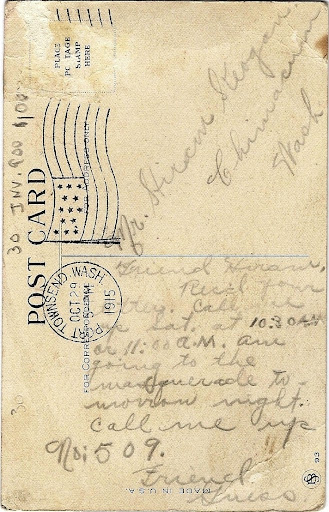
גלויה 1, צד אחורי:
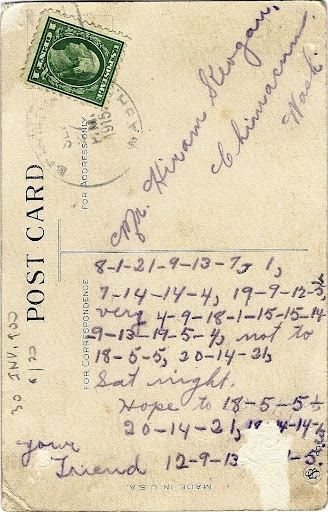
Postcard #1, back:

Friend Hiram,
Received your letters. Call me up Sat. at 10:30 A.M. or 11:00 A.M. Am going to the masquerade to-morrow night. Call me up. No.: 509.
Friend Guess


ידידי היירם,
קיבלתי את מכתביך. צור איתי קשר בשבת ב-10:30 בבוקר או 11:00 בבוקר. אני הולכת[*] לנשף המסכות מחר בלילה. צור איתי קשר. המס': 509.
ידידתך, נַחֵשׁ מי

[*] יש סיבה שאני משתמשת בלשון נקבה; חכו ותראו בהמשך.

רגע רגע רגע. היירם קיגן? מאיפה הגיע פתאום היירם קיגן לסיפור? האם הוא קשור למיני? הכתובת שלו היא בצ'ימאקם, שכמו שאולי אתם זוכרים מהפרק הראשון בסאגה, ואולי לא, היא עיירה שקרובה מאוד לפורט האדלוק, שם מיני גרה. אבל עד כה הכרנו רק את קלארנס (למען האמת, אם קוראים את הרשומה הקודמת בעין ביקורתית אפשר לשים לב שהשתמשתי בעקביות בביטויים מסייגים נוסח 'ככל הידוע לנו' - וזו היתה הסיבה). אז... מה קורה כאן?

Wait wait wait. Hiram Keogan? Where did a Hiram Keogan come from? Is he related to Minnie? His address is in Chimacum, which, as you may or may not remember from the first installment, is very close to Port Hadlock, where Minnie lives. But so far, we've only known about Clarence (actually, if you look at the previous post with a critical eye, you will notice that I kept using phrases like 'as far as we know' - this is why). So... what's the deal here?

הפרט הראשון שמגלה את קיומו של היירם קיגן הוא מפקד התושבים הפדרלי מ-1910. אם אתם זוכרים, כשכתבתי על מיני שהיתה אלמנה ב-1910 הראיתי קטע קטן מאוד ממנו, מפני שהוא כולל את היירם, ולא רציתי להרוס את הפיתול הנחמד בעלילה. גם עכשיו אני מצרפת רק קטע, כי הדף המלא ענקי למדי, אבל הפעם הוא כולל את כל הפרטים הרלוונטיים לסיפור (קליק להגדלה):

The first item where we learn of Hiram's existence is the Federal Census of 1910. If you remember, back when I wrote about Minnie being a widow in 1910, I used a very small bit of it, because, well, it mentions Hiram, and I didn't want to spoil this lovely plot twist. I'm still only going to include a part of it here, because the whole page is pretty huge, but this time it has all the details relevant to our story (click to enlarge):


זה נראה קצת מוזר, כי חתכתי הכל חוץ מהשורה העליונה והשורות שמתייחסות למיני ומשפחתה. היחידה המשפחתית הזו בהחלט מסקרנת: מי שמוזכרת כראש המשפחה היא מרי רייטר, כובסת נשואה בת 35 (אבל איפה בעלה? כנראה בטאקומה, כי מצאתי את שניהם רשומים כתושבי טאקומה באותו מפקד תושבים בדיוק, אבל מכיוון שאני לא יודעת כמה זה מקובל שמישהו יירשם באותו מפקד פעמיים בשני מקומות שונים, קשה לי לדעת מה בדיוק קרה שם), ומיני רשומה כאחותה. אחריה רשומה גרטרוד רייטר, ביתה בת ה-15 של מרי, ואחריה היירם, חוטב עצים מובטל בן 17, שרשום כאחיין. כלומר, סביר להניח שהוא הבן של מיני. אם הוא בן 17, הוא נולד ב-1893, מה שמסביר למה הוא לא הופיע במפקד התושבים בטריטוריות מ-1891; ואם תסתכלו תראו גם שבסעיפים 10 ו-11 כתוב על מיני שיש לה שני ילדים (וששניהם בחיים). אז בסך הכל זה די מסתדר. אבל הנה פרט מעניין: סעיפים 12-14 הם מקום לידת הנרשם ומקומות הלידה של הוריו. אצל מיני ומרי, הן נולדו בוושינגטון, וגם אמא שלהן, והאב נולד בפינלנד - זה מתאים למה שאנחנו יודעים עד כה. אצל גרטרוד, האם (מרי) נולדה בוושינגטון והאב נולד בפנסילבניה (מפקד התושבים של טאקומה מאשר את זה). אצל היירם, האם (מיני) נולדה בוושינגטון, והאב הוא נורווגי. אבל אם תסתכלו רגע על הדף ממפקד התושבים שצירפתי לגבי קלארנס, בפעם הקודמת, תראו שאצלו מקום הלידה של האב הוא קליפורניה. אז מה בדיוק הסיפור כאן? מיני עדיין רשומה כאלמנה, וגם שם המשפחה שלה לא השתנה. גם שם המשפחה של היירם הוא עדיין קיגן. אבל האב אחר. יש כאן איזשהו רמז לסקנדל... האם היירם נולד מחוץ לנישואין?

It looks a bit weird, because I cropped away most of the page, except for the top and the lines about Minnie and her family. This family unit is definitely curious: the person listed as the head of the family is Mary Righter, a 35 year old married washer woman (so where is her husband? I guess he's in Tacoma, since I found both her and him listed in Tacoma in the exact same census, but since I don't know if it's usual for someone to be listed twice in two different places in the same census, I'm not sure what happened there), and Minnie is listed as her sister. Then there's Gertrude, Mary's 15 year old daughter, and then Hiram, a 17 year old out of work logger listed as a nephew. Which means he's probably Minnie's son. If he's 17, that means he was born in 1893, which explains why he wasn't in the 1891 Territorial Census; and if you look under sections 10 and 11, you'll see it says Minnie has two kids (both living). So all in all, it fits. But here's an interesting detail: sections 12-14 are the places of birth for the person listed and their parents. For Minnie and Mary, they were born in Washington, and so was their mother, and the father was born in Finland - which fits with what we know so far. With Gertrude, the mother (Mary) was born in Washington, the father in Pennsylvania (and the Tacoma census confirms this). With Hiram, the mother (Minnie) was born in Washington, and the father was Norwegian. But if you go and look at the census page I attached for Clarence, last time, you'll see that his father's place of birth was California. So what exactly is the story here? Minnie is still listed as widowed, and her last name is still unchanged. Hiram's last name is Keogan, too. But the father is different. There's a hint of a scandal, here... was Hiram born out of wedlock?

עוד פרט מעניין נמצא בסעיף 6, עם הכותרת 'צבע או גזע'. מרי ומיני הן HB, כלומר half-breed (אמא שלהן היתה משבט הסנוהומיש, כפי שכבר גילינו); גרטרוד והיירם זכו להיות רק QB, כלומר quarter-breed. בעיניי, גם הכינויים עצמם וגם ההקפדה לא רק על בני הכלאיים אלא גם על נכדי-הכלאיים מריחים גזעניים, ואפילו אאוגניים למדי. אבל בסך הכל, אנחנו מדברים על 1910, ולמרות כל השגשוג וההתקדמויות של תחילת המאה ה-20, זו עדיין היתה תקופה גזענית מאוד.
מה שהכי מעניין הוא שנראה כאילו הערכים האלה נרשמו מעל משהו אחר, שנמחק. האם פקיד הרישום הניח שהם לבנים, ואז גילה את הטעות וחזר לתקן אותה? האם הם אמרו לו שהם לבנים, ואז הוא חקר קצת יותר לעומק וגילה שזה לא מדויק לגמרי? האם הוא הביט בהם בבוז ואמר 'אה, אז אמך היתה אינדיאנית? המממ', ואז מחק בהפגנתיות את ה-W שרשם קודם, וכתב את האותיות הנכונות, ואמר בהטעמה 'Half-Breed'?
(אגב, שוב בדף שבו מופיע קלארנס, אצלו כתוב W. האם הפקיד שלו חקר פחות לעומק, או שלא ממש היה אכפת לו מדיוק של גזע בדור השלישי, או שפשוט נתנו לו את הפרטים של כל הדיירים והוא מילא את סעיף הגזע בברירת המחדל, שורה שלמה של W, כי למי אכפת בעצם? מי יודע מה באמת קרה.)

Another interesting detail is in section 6, titled 'Color or race'. Mary and Minnie are HB - Half-breed (their mother was full Snohomish, as we found out before); Gertrude and Hiram are only QB, quarter-breed. To me, both these titles and the strict observance of not only half but also quarter-breeds smell racist, and even pretty eugenicist. But we are, after all, talking about 1910, and despite all the wonderful advancements of the 20th century, it was still a very racist time.
The most interesting bit as that it looks like these were written on top of something else, that was deleted. Did the census clerk just assume they're white, and then found out he made a mistake and went back to fix it? Did they tell him they were white, and then he checked a bit more deeply and found out it wasn't completely accurate? Did he look at them scornfully, and said 'Ah, so your mother was an Indian? Hmmm', and then pointedly deleted the Ws he's written before, and wrote the correct abbreviations, and stressed it by saying out loud 'Half-Breed'?
(By the way, back on Clarence's page, he's listed as W. Was his clerk less inquisitive, or didn't really care about finding out the details of the race to the third generation, or maybe someone just gave him the main details for all the boarders and he just filled in the default race, a whole line of Ws, because who gives a crap? Who knows what really happened.)

לא מצאתי עוד הרבה על היירם, בחיפושים שלי. יש ב-ancestry.com רישום של היירם צ'ארלס קיגן ממחוז ג'פרסון בתעודות גיוס מ-1917-1918 (וזה סביר בהחלט שבחור בשנות ה-20 שלו יגויס ויישלח למלחמה הגדולה), והוא נמצא אצלם גם במפקד התושבים הפדרלי מ-1920, אבל זה אתר בתשלום אז אני לא יכולה לראות את המסמכים עצמם. בעקבות הגילוי הזה חיפשתי גם בארכיון הדיגיטלי של מדינת וושינגטון, ושם מצאתי תעודת פטירה של צ'ארלס היירם קיגן אחד שמת בפורט האדלוק ב-1926, אבל אני לא ממש בטוחה אם זה אותו אדם, כי (א) הגיל רשום כ-0, ואולי זה פשוט כי השאירו את זה ריק בטופס בטעות, אבל מכיוון שאין להם את המסמך המקורי סרוק, אין לי אפשרות לדעת את זה בוודאות, ו-(ב) שמות ההורים הם C J Keogan לאב, ו-Zeta Mary Williams לאם. שזה די מוזר. אולי אפשר להניח שמדובר בקלארנס וזיטה, שכזכור נישאו ב-1920 (ובמקרה הזה אפשר להניח שהילד מת בגיל צעיר מאוד, אולי אפילו בלידה), אבל מאיפה הגיעה לכאן מרי וויליאמס? זה היה שמה של אמה של מיני קיגן. שם הנעורים של זיטה היה בכלל גרדינר. מה קרה כאן? טעות במסמך? שוב, בלי לראות את המקור אני לא יכולה לדעת. אבל זה מוזר מאוד, כל הסיפור הזה.

I didn't find much more about Hiram in my research. On ancestry.com there's a listing of a Hiram Charles Keogan, from Jefferson County, in the World War I Draft Registration Cards from 1917-1918 (and it's pretty reasonable that a guy in his 20s would be drafted and sent to the Great War), and they also have him in the 1920 Federal census, but it's a paid subscription site so I can't see the actual documents. After discovering this, I tried looking in the Washington Digital Archives, and found a death certificate for a Charles Hiram Keogan who died in Port Hadlock in 1926, but I'm not really sure if it's the same person since (a) his age is listed as 0, and that might be just because they accidentally left it blank on the form, but since they don't have a scan of the original document, I can't know for sure, and (b) the parents names are C J Keogan for the father and Zeta Mary Williams as the mother. Which is odd. We can speculate that these are Clarence and Zeta, who as you remember married in 1920 (in this case we can assume the kid died very young, maybe even at birth), but where did Mary Williams get here? This was Minnie Keogan's mother's name. Zeta's maiden name was Gardiner. So what happened here? A mistake in the document? Again, without seeing the original, I have no way of knowing. This whole story is pretty weird.

אה, ודרך אגב, אפשר לראות על חותמת הדואר שהגלויה נשלחה ב-29 באוקטובר - ולמרבה הפלא, מסתבר שב-1915, אוקטובר היה בדיוק כמו השנה, כלומר התחיל ביום שישי ונגמר ביום ראשון - אז סביר להניח ש'נשף המסכות' שהוזכר, למחרת בלילה (שהיה שבת, ה-30 באוקטובר) היה אירוע לכבוד האלווין. נחמד.

Oh, by the way, you can see by the date stamp that this was sent on October 29 - and oddly enough, it turns out that in 1915, October was the same as this year, starting on a Friday and ending on a Sunday - so it's a fair assumption that the 'masquerade' mentioned as being on the next night (which was Saturday, October 30) is a Halloween event. Neat.

אבל עד כמה שכל הסיפור עד עכשיו היה די מוזר, זה עדיין לא החלק הכי מוזר. הגלויה השנייה היא החלק הכי מוזר - ולכן שמרתי אותה לסוף, למרות שכרונולוגית היא קודמת לגלויה שכיניתי 'גלויה 1' (אם מסתכלים היטב על חותמת הדואר אפשר לראות שהיא נשלחה ב-27 בספטמבר, וכזכור גלויה 1 נשלחה ב-29 באוקטובר). אבל... פשוט תסתכלו:

But as weird as everything so far has been, this is not the weirdest part. The second postcard is the weirdest part - which is why I left it till now, even though chronologically it came before what I called 'Postcard #1' (if you look closely at the date stamp you can see it was sent on September 27, while as you remember #1 was sent in October 29). But... well, take a look:

גלויה 2, צד אחורי:
Postcard #2, back:

8-1-21-9-13-7, 1, 7-14-14-4, 19-9-12-5, very 4-9-18-1-15-15-14-9-13-19-5-4, not to 18-5-5, 20-14-21, Sat night.
Hope to 18-5-5-20-14-21, [18]-14-14-13.
Your Friend 12-9-13[????]-5

זה כתוב בקוד.
הגלויה הזו בבירור נכתבה על-ידי אותו אדם מהגלויה השנייה, אבל הפעם היא נכתבה באיזשהו קידוד. עד כה נהניתי מהאופי הכמו-בלשי של מה שאני עושה כאן בבלוג, אבל עם הגלויה הזו פתאום הרגשתי שזה ממש כמו משהו מתוך סיפור בלשים.

It's in code.
It's quite obviously from the same person from the other postcard, but this time, it is written in some kind of code. I've been enjoying the somewhat detective-ish nature of what I do here on the blog, but with this card, it actually feels like something out of a detective story.

במקור, תכננתי להציב כאן אתגר, כי לא היה לי מושג מה כתוב בגלויה. הראיתי אותה לכמה אנשים, והגענו למסקנה שזה לא צופן החלפה פשוט של אות-למספר-התואם. ואז ניסיתי לבדוק אם המלה הראשונה היא 'friend', כי חשבתי שזה יכול להתאים, אבל אז המלה הבאה היתה צריכה להיות 'R', וזו לא באמת מלה, ובאופן כללי לא מתקבל משהו הגיוני במיוחד בהודעה. ובדרך כלל אני ממש גרועה בכל משחקי ההגיון האלה. אז התכנית היתה להשאיר את זה כאן בתקווה שאולי מתישהו יבוא קורא חכם ויפענח את הקוד.

This was originally meant to be posed as a challenge, since I had no idea what the card said. I showed it to a few people, and we managed to figure out that it's not a simple letter-to-respective-number substitution cipher. Then I tried checking if the first word was 'friend', since I thought it would fit, but that makes the second word 'R', which is not actually a word, and in general seems to make little sense of the whole message. And in general, I tend to be very bad with these logic puzzles. So this was going to be left here in the hopes some clever reader, someday, will figure it out.

אבל אז, אחרי שבהיתי בגלויה די הרבה כשכתבתי את הרשומה הזו, פתאום חשבתי שרגע, מה אם 18-5-5 זה S-E-E, וה-20-14-21 שאחריה זה Y-O-U? שתי המלים האלה חוזרות מייד אחר כך, ואז המשפט הבא הוא 'Hope to see you s...' - וזה soon, כמובן! ואז הכנסתי את האותיות שהיו לי למלים האחרות, ובהיתי בגלויה עוד קצת, ופתאום הכל נהיה הגיוני, והרגשתי ממש ממש חכמה.
אז אזהרת ספוילר; אם אתם רוצים לפענח את זה בעצמכם, אל תקראו הלאה.

But then, after staring at it for a long time while writing this very post, I suddenly thought hey, what if that 18-5-5 is S-E-E, and that 20-14-21 is Y-O-U? They repeat right after, and that'd make the next sentence 'Hope to see you s...' - soon, of course! And then I put these few letters in the other words, and stared at it a while more, and all of a sudden it all made sense, and I felt really really clever.
So, spoiler alert; if you want to figure it out yourself, don't read on.

Ha[v]ing a good time, very disappointed not to see you Sat. night.
Hope to see you soon.
Your Friend, Min[ni]e
אני נהנית כאן, אבל התאכזבתי מאוד לא לראות אותך ביום שבת בלילה.
מקווה לראות אותך בקרוב.
ידידתך, מיני

הופה.
מיני!? מה נסגר?
מצד אחד, הסיפור נעשה עכשיו הרבה פחות מלהיב. אין כאן שום הודעות סודיות על פגישות סודיות של הבונים החופשיים, או משהו; רק משחק קידוד קטן ומטופש (למעשה זה בעיקר צופן החלפה פשוט של אות-למספר-התואם, חוץ מאשר במקומות שזה לא כך). מצד שני, הכל נעשה הרבה יותר מוזר. אם מיני היא אמא של היירם, כמו ששיערתי קודם, למה היא שולחת לו הודעות כאלה? למה היא קוראת לו 'ידידי היירם'? אולי היא סתם שטותניקית. גם אמהות עושות שטויות לפעמים, ורק מפני שהיא אלמנה בת 54 זה לא אומר שהיא לא יכולה לשחק משחקים קטנים ומוזרים עם הבן שלה. או שאולי זו היתה מיני אחרת - בסך הכל, יכלה להיות יותר מאחת. או שאולי היא בעצם לא אמא שלו, וכל הסקנדל הקטן שדמיינתי לעצמי אף פעם לא קרה, והוא פשוט קרוב משפחה מצד איזשהו קיגן אחר. אין לי שמץ של מושג. תעלומה.

Whoa.
Minnie?! What the hell?
On one hand, this makes the story a bit less exciting. No secret messages about secret Masonic meeting places or something; just a silly little code game (which is mostly a simple letter-to-respective-number substitution cipher, except where it isn't). On the other hand, it just makes everything weirder. If Minnie is his mother, as I've assumed before, why would she send him messages like this? Why would she call him 'Friend Hiram'? Maybe she was just being silly. Mothers do that, sometimes, and just because she was a 54 year old widow doesn't mean she can't play weird little games with her son. Or maybe it was some other Minnie - there could have been more than one, after all. Or maybe she is not his mother, and this whole little scandal I imagined never happened, and he's related to some other Keogan. I simply do not know. It's a mystery.

ובעוד התעלומה הזו תלויה באוויר, הגענו לסוף של סאגת קיגן, ושל הגלויות שקניתי בחנות העתיקות בברמרטון. בפעם הבאה... נו, אני כבר אחשוב על משהו אחר.
למי שחוגגים האלווין, שיהיה לכם האלווין שמח ומסתורי. למי שלא, יום ראשון שמח! להתראות בפעם הבאה!

And with this mystery hanging in the air, this is the end of the Keogan Saga, and of my Bremerton antique store postcards. Next time... well, I'll have to think of something else.
To those who celebrate it, may you have a happy and mysterious Halloween. To those who don't, have a nice Sunday! See you next time!

Wednesday, September 22, 2010

101 Years Ago - לפני 101 שנה

Another stand-alone postcard, from the same Bremerton antique store. The next bunch I'll post here are all kinda part of one story, but we'll get there in due time...

עוד גלויה שעומדת בפני עצמה, מאותה חנות עתיקות בעיר ברמרטון. הגלויות הבאות שאעלה כאן שייכות כולן לסיפור אחד, פחות או יותר, אבל עוד נגיע לשם, בבוא היום...

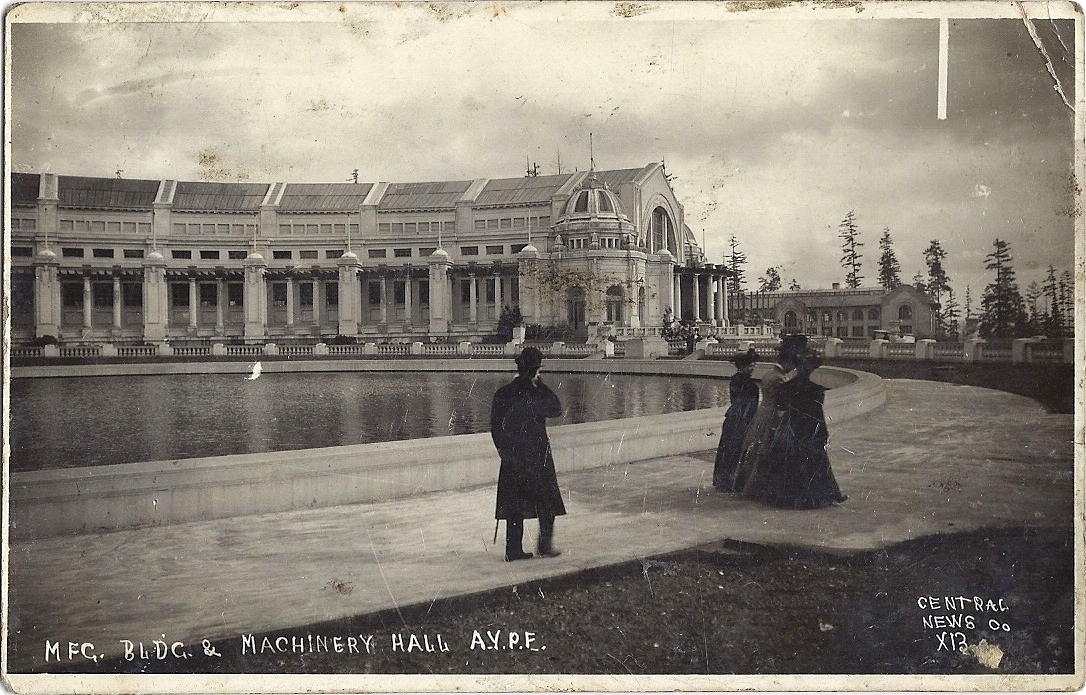
Anyway, when I picked this one up it was because it looked pretty old (probably just because it wasn't kept in very good conditions; on the back there is the same AZO stamp box as in the previous postcard, but of course, at the time I didn't know I can use it to date the card), and I liked the building in the background and how the people are dressed - the man with a hat and a cane, the ladies in big cumbersome dresses. Couldn't really tell where or when it was from, and the caption didn't seem like it'd be much help. MFG (manufacturing) building and machinery hall? Was this some kind of factory? I figured I should look it up online, but wasn't really hoping to find anything very useful.

בכל אופן, בחרתי את הגלויה הזו כי היא נראתה ישנה (כנראה פשוט בגלל שנשמרה בתנאים לא כ"כ טובים; בצד האחורי מודפסת אותה stamp box של AZO כמו בגלויה הקודמת, אם כי בזמנו כמובן לא ידעתי שאפשר להשתמש בה לתארוך), וכי הבניין שברקע מצא חן בעיני, וגם התלבושות של האנשים - הגבר עם מקל וכובע, והנשים בשמלות גדולות ומסורבלות. לא ידעתי מאיפה או ממתי היא, וגם הכיתוב לא עשה רושם של משהו שיעזור לי במיוחד. MFG building & machinery hall - בניין הייצור ואולם המכונות - אולי זה היה איזשהו בית חרושת? חשבתי שאנסה לבדוק את העניין באינטרנט, אבל לא באמת ציפיתי למצוא משהו שימושי.


Boy, was I wrong.
Just googling 'AYPE' was enough. The inscrutable initials (which at first I took to be the name of the photographer, or maybe the building) turn out to stand for one of the biggest events in the burgeoning Seattle of the early 20th century: The Alaska-Yukon-Pacific Exposition in 1909. The site linked might have a terrible colour scheme (green over pink, really?), but it supplies a whole lot of interesting information about the exposition, and is highly recommended reading for anyone who is interested in life in the US a century ago.

הו, כמה טעיתי.
חיפוש של AYPE בגוגל הספיק. מסתבר שראשי התיבות הסתומים האלה (בהתחלה הנחתי שזה השם של הצלם, או אולי של הבניין שבתמונה) שייכים לאחד האירועים החשובים ביותר בסיאטל המשגשגת של ראשית המאה ה-20: תערוכת אלסקה-יוקון-ומדינות האוקיינוס השקט (The Alaska-Yukon-Pacific Exposition) ב-1909. האתר שבקישור אולי מעוצב בצבעים מזעזעים (ירוק על ורוד, באמת?), אבל יש בו הרבה אינפורמציה מעניינת מאוד על התערוכה, והוא בהחלט מהווה קריאה מומלצת לכל מי שמתעניין בחיים בארה"ב לפני מאה שנה.

On this map, from the same website, you can also see the Manufactures Building (large building to the right of the Arctic Circle) and the Machinery Hall, below it and slightly to the right (between the King County and the Foundry buildings). And I think just looking at the names on the map can give us a pretty good idea of the huge scope of this exposition: a combination of Wonders-of Technology exhibits, local and state-related exhibits, cultural exhibits about various Pacific Rim peoples, and carnival-like amusements (along the Pay Streak avenue, mostly, although that's not exactly on the map, mostly back on the site). Something for everyone. And I can imagine that everyone did go there, from all over the area, and probably even from further away. AYPE seems to be in about the same line as the various World Fairs of later years; I'm not sure if there are expos this big and diverse, nowadays.

במפה הזו, מהאתר הנ"ל, אפשר לראות את בניין התעשייה (Manufactures Building, המבנה הגדול מצד ימין של ה-Arctic Circle) ואת אולם המכונות, באלכסון למטה וימינה (בין בנייני King County ו-Foundry). אני חושבת שמספיק להביט בשמות שעל המפה כדי לקבל מושג לא רע על ההיקף העצום שך התערוכה הזו: שילוב של מוצגי פלאי-הטכנולוגיה למיניהם, מוצגים שקשורים לאיזור ולמדינות אחרות בארה"ב, מוצגים על תרבויות אחרות במדינות האוקיינוס השקט, ושעשועים קרנבליים (בעיקר לאורך שדרת ה-Pay Streak, למרות שאת זה פחות רואים במפה, ויותר באתר). יש משהו לכל אחד. ואני משערת שבאמת כולם הגיעו לשם, מכל האזור, ובטח גם ממקומות רחוקים יותר. עושה רושם ש-AYPE היתה באותו סגנון כמו תערוכות 'היריד העולמי' (World Fair) המאוחרות יותר; אני לא בטוחה אם כיום כבר יש תערוכות כל כך גדולות ומגוונות.

Another good link is to this collection, both because it contains a lot of photos from AYPE, and because it allows you to compare the map from 1909 with a current map (also, check the links supplied there for even more info about AYPE). The expo was built on some (then-)empty grounds belonging to the University of Washington, and after the area was developed the university used it for its own needs.

עוד קישור מוצלח הוא לאוסף הזה, גם כי יש בו הרבה תמונות מ-AYPE וגם כי הוא מאפשר לעשות השוואה בין המפה מ-1909 למפה בת זמננו (וכדאי גם לדגום את הקישורים שיש שם בשביל עוד הרבה אינפורמציה על AYPE). התערוכה נבנתה על שטחים ריקים (בזמנו) של אוניברסיטת וושינגטון, ואחרי שהם פיתחו את השטח האוניברסיטה השתמשה בו לצרכיה-שלה.

Unfortunately, that meant that many of these old buildings are gone now. The march of progress seems to have dictated demolishing these grandiose halls, and constructing new buildings. With lots of bricks. Bricks seem to be very popular.
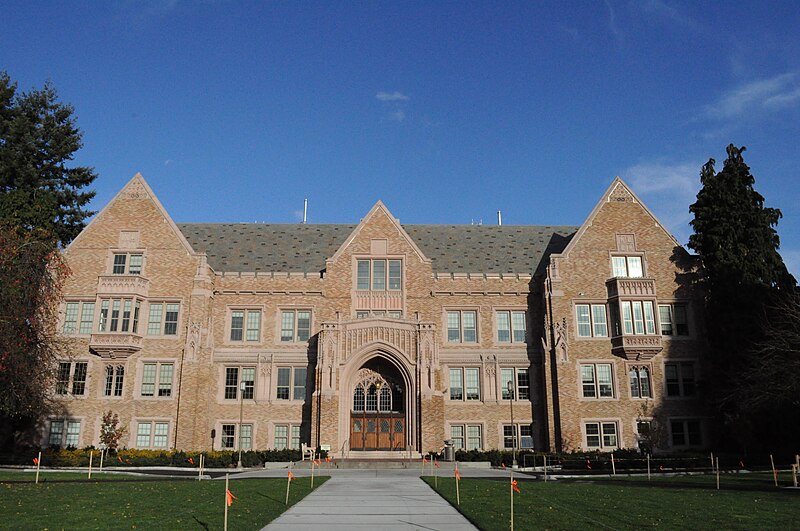
The Arctic Circle is now called the Drumheller Fountain, and to the right of it, where the Manufactures Building stood until 1918, is an empty space, with the Guggenheim Hall (built in 1929 - of bricks, of course - and actually rather nice-looking) behind it:

למרבה הצער, פירוש הדבר הוא שרוב הבניינים הישנים האלה כבר אינם איתנו. בשם 'מצעד הקדמה' כנראה שהיה צורך להרוס את האולמות הראוותניים ולבנות במקומם בניינים אחרים. עם הרבה לבֵנים. עושה רושם שלבנים היו חומר מאוד פופולרי.
'החוג הארקטי' הוא כיום מזרקת דרמהלר, ומימינו, במקום שם עמד בניין התעשייה עד 1918, יש שטח ריק, שמאחוריו אולם גוגנהיים (שנבנה ב-1929 - מלבנים, כמובן - ודווקא נראה לא רע):

Photo by Joe Mabel - צילום: ג'ו מייבל

Where the Machinery Hall used to stand is now the Mechanical Engineering building, built in the 1950s - and while the content is definitely fitting, the building itself is nothing but a boring square pile of bricks:

במקום שבו עמד אז אולם המכונות נמצא כיום בניין הנדסת מכונות, שנבנה בשנות ה-50 - ואמנם התוכן שלו בהחלט הולם, אבל הבניין עצמו הוא סתם ערימת לבנים מרובעת ומשמימה:


Yay, progress.
Anyway, that's the story behind the postcard. I still have no idea who purchased it originally, and how it got to the antique store where I found it, but I had the chance to peer through a window to a different era, and I'm happy for that. It's been a fascinating journey.

נו, תחי הקדמה.
בכל אופן, זה הסיפור שמאחורי הגלויה. עדיין אין לי מושג מי קנה אותה במקור, ואיך היא הגיעה לחנות העתיקות שבה מצאתי אותה, אבל קיבלתי הזדמנות להציץ באשנב לתקופה אחרת, וזה משמח אותי. זה היה מסע מרתק.