Hello readers! - !שלום, קוראים

What is this? Read the introduction - מה זה הדבר הזה? הסבר בהקדמה

Saturday, May 28, 2011

Two Updates - שני עדכונים

While I'm working on a new post, I have two quick (and also pretty neat) updates about things culminating from some connections I ended up making through posts on this blog.

בזמן שאני עובדת על רשומה חדשה, יש לי שני עדכונים קצרים (וגם די מגניבים) על דברים שצמחו מתוך קשרים שיצרתי דרך רשומות בבלוג.

(1) One of my favourite cards is the one shown in the post 'The Lady from Skierniewice'. And I really like the story that I started to discover as I was researching what seemed, at first, like a tiny insignificant detail - the photographer's stamp. Some time after I posted it I was contacted by Waldemar Bronicz, a Polish photographer and amateur historian who has a website with a lot of old photographs and his attempts to trace their origins and such. He was writing about Lipman Karp at the time, and ran across my post, and contacted me looking for information on the family. While I could not help very much (except referring him to Yad vaShem), he used what little details I could give him for his own research, and ended up with a rather interesting article published in Głos Skierniewic i Okolicy (Voice of Skierniewice and Vicinity), #16 21.04.2011 - there is an English version online here. Yeah, I guess the translation isn't perfect (wish I could read it in the original Polish), and yeah, he kinda got my name wrong, but the story is fascinating. After some more correspondence I ended up looking at Varda Gilboa (originally: Rojza Karp)'s 'Pages of Testimony' again, and noticing some details I skipped before, which again, he's been able to research from his side - like the Karps' address in Skierniewice, in 1 Pamiencka St., which I could not find on a map both because I had no idea how to spell it (it's written in Hebrew transliteration on the forms) and also, as Mr. Bronicz explained after his own research, because the street name has been changed to Mszczonowska. Maybe in the future we could find out even more fragments of this story. I definitely hope so.
Update on the update (June 4 2012): I found out some more details about Varda Gilboa, and added them to the original post - you can read it all here.

(1) אחת הגלויות האהובות עלי היא זו שמופיעה ברשומה 'האדונית מסקערניעוויץ'. ואני גם מאוד אוהבת את הסיפור שהתחלתי לגלות כשחקרתי סביב מה שנראה בתחילה כמו פרט קטן וחסר-משמעות - החותמת של הצלם. זמן מה אחרי שפרסמתי את הרשומה יצר איתי קשר מר ואלדמאר ברוניץ' מפולין, צלם והסטוריון חובב עם אתר אינטרנט שמכיל הרבה תצלומים ישנים וגם את הנסיונות שלו לעקוב אחר המקור שלהם וכו'. הוא כתב באותו הזמן על ליפמן קארפ, ויתר איתי קשר בחיפוש אחר מידע על המשפחה. אמנם לא יכלתי לעזור לו הרבה (מלבד להפנות אותו ליד ושם), אבל הוא השתמש בפרטים המועטים שיכלתי לספק לו כדי לערוך מחקר משלו, ובסופו של דבר כתב מאמר מעניין למדי שפורסם ב-Głos Skierniewic i Okolicy (קול סקירנייוויצה והסביבה) #16, 21.04.2011 - יש גרסא אנגלית כאן. נכון, התרגום לא מדהים (הלוואי ויכלתי לקרוא את זה במקור הפולני), ונכון, השם שלי קצת התפקשש, אבל הסיפור עצמו מרתק. אחרי שהתכתבנו עוד קצת הסתכלתי שוב על 'דפי העדות' של ורדה גלבוע (במקור: רוזה קארפ) והבחנתי בכמה פרטים שלפני כן דילגתי עליהם, ושמר ברוניץ' יכול היה לחקור מהצד שלו - למשל הכתובת של משפחת קארפ ברחוב פאמיינצקה 1, שלא הצלחתי למצוא במפה גם כי לא ידעתי איך לכתוב את השם (שנכתב בטופס בתעתיק עברי) וגם כפי, כפי שהסביר לי מר ברוניץ' אחרי המחקר שעשה, כי שם הרחוב השתנה לרח' משצ'ונובסקה. אולי בעתיד נוכל אפילו למצוא עוד רסיסים של הסיפור הזה. אני בהחלט מקווה שנמצא.
עדכון לעדכון (4.6.2012): מצאתי עוד כמה פרטים על ורדה גלבוע, והוספתי אותם לרשומה המקורית - אפשר לקרוא את הכל כאן.

(2) You might remember that in one of my recent posts, 'A Night Without Morals', I got a lot of wonderful information about Emil Remde, and the Remde's St Pauli club, after contacting his grandson, Manuel Biedermann. Well, Mr. Biedermann recently contacted me again to tell me about a pretty great project - as part of the upcoming 125th anniversary of the Kurfürstendamm (or, as native Berliners apparently call it, Ku'damm) he will help organise a 'waiter derby', which was a tradition started by Emil Remde in the 50s (there is a good history on the website I linked to). Looks very fun. He also asked me to send him the Remde's St Pauli card, for an exhibition about Emil Remde - which I gladly did - and, as if all this on its own was not cool enough, he told me that the first prize trophy for the derby (update: I was confused; it's actually a special lifetime achievement trophy - see below) will be in the shape of the dancer from that card! So awesome.
Are there any readers here from Berlin? If so, will you be going to this event? And if so, could you send me pictures? I would love that (update: Don't think any of my few readers went to the event, but here's a report from someone who did).

(2) אולי אתם זוכרים שבאחת הרשומות האחרונות שלי, 'לילה ללא מוסר', קיבלתי יופי של מידע על אמיל רמדה, ועל מועדון Remde's St Pauli, אחרי שיצרתי קשר עם הנכד שלו, מנואל בידרמן. ובכן, לא מזמן מר בידרמן יצר איתי שוב קשר כדי לספר לי על פרויקט נהדר - כחלק מהחגיגות הממשמשות ובאות לציון 125 שנה לרחוב Kurfürstendamm (או, כפי שמסתבר שברלינאים אסלים קוראים לו, קו'דאם) הוא עוזר לארגן 'מרוץ מלצרים', שהיה מסורת שאמיל רמדה התחיל בשנות החמישים (באתר שאליו קישרתי יש הסטוריה טובה). נראה ממש כיף. הוא גם ביקש שאשלח לו את הכרטיס מ-Remde's St Pauli, לצורך תערוכה על אמיל רמדה - מה שכמובן עשיתי ברצון - וכאילו שכל זה לא מספיק מגניב, הוא סיפר לי שגביע הפרס הראשון של המרוץ (עדכון: התבלבלתי, זה בעצם גביע לפרס על מפעל חיים - ר' למטה) מעוצב לפי ציור הרקדנית שעל הכרטיס! שווה.
יש כאן במקרה קוראים מברלין? אם כן, האם אתם מתכוונים ללכת לאירוע הזה? ואם כן, תוכלו לשלוח לי תמונות? אני ממש אשמח (עדכון: אני לא חושבת שמישהו מבין קוראיי המעטים הלך לאירוע הזה, אבל הנה דיווח של מישהו שכן הלך).

Another Update! Got another email from Mr. Biedermann, to let me know the card got there alright, and he attached some pictures of the trophy. It's looking great! And, as I have corrected above, it's a lifetime achievement award for someone named Heinz Zellermeyer. Looking him up, this seems like a good option - although if he was Head of the Hotel and Catering Guild back in 1949, he must be quite old now. Good time for a lifetime achievement award, I guess. Anyway, very cool. Check it out:

עוד עדכון! קיבלתי עוד אימייל ממר בידרמן, שהודיע לי שהכרטיס הגיע אליו בשלום, והוא גם צירף תמונות של הגביע. נראה מצוין! וגם, כפי שכבר תיקנתי למעלה, זה פרס על מפעל חיים למישהו בשם היינץ צלרמאיר. חיפשתי אותו, ומצאתי את זה, ונראה שזו אפשרות מוצלחת - למרות שאם הוא היה ראש גילדת המלונאים והמסעדנים כבר ב-1949, הוא בטח כבר די זקן. נו, זמן טוב לפרס על מפעל חיים. בכל אופן, זה בהחלט מגניב. 'סתכלו:


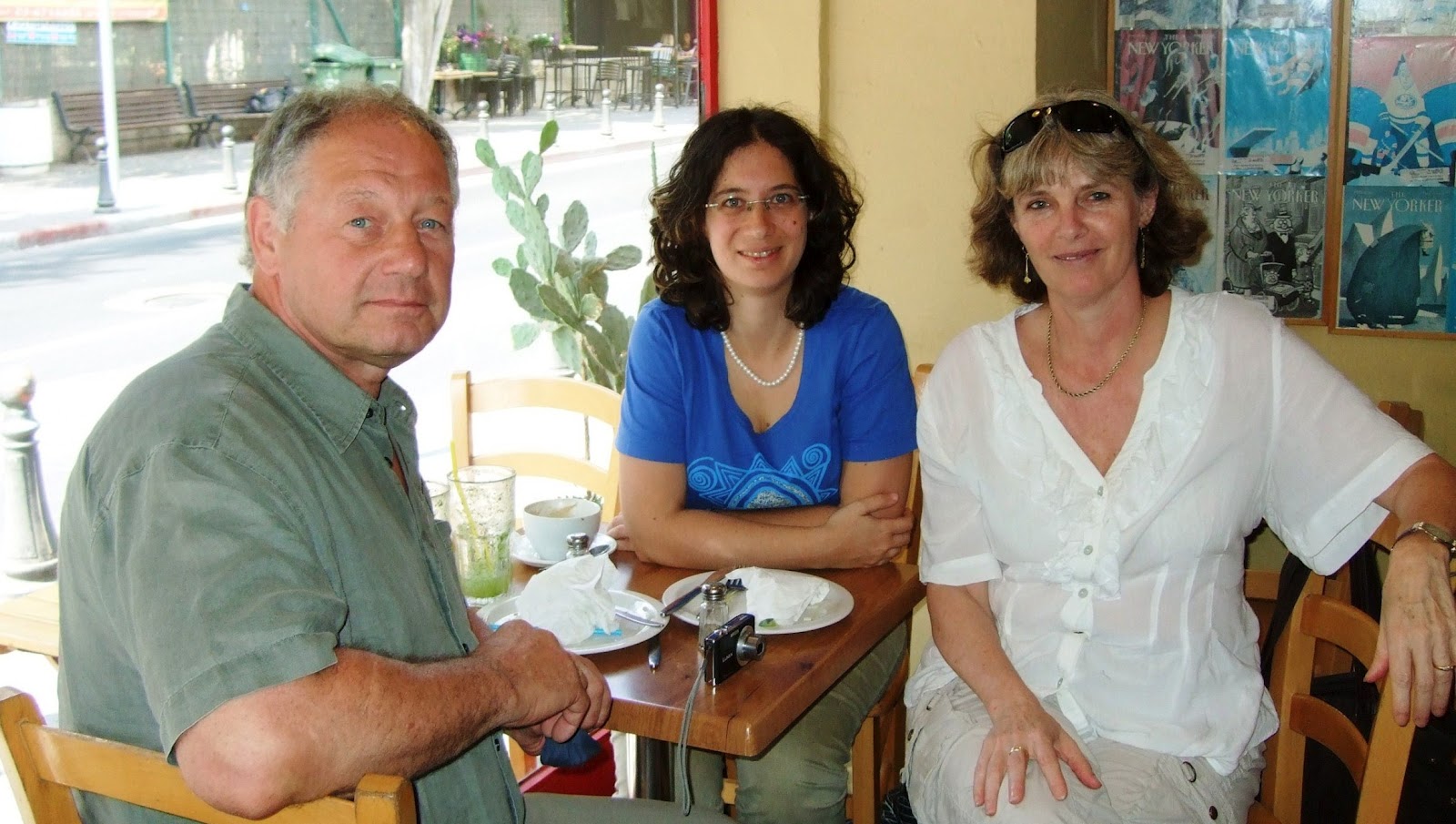
Update of the update (2/9/2012): Some time ago, Mr. Manuel Biedermann wrote me to let me know that he will be visiting some relatives in Israel, and will be happy to meet me and return the card I sent him. So I met him and his Israeli host Susi (who is related to Charlotte Remde) at a nice café in the German Colony (how fitting!), and while he actually forgot the card back home, that wasn't really what was important; it was still a form of closure, and it was just great to think that this sort of connection could come out of a piece of paper that I picked up at a book store one time. Here are the three of us:

עדכון לעדכון (2/9/2012): לפני זמן מה, מר מנואל בידרמן כתב לי ומסר שהוא עומד לבקר כמה קרובי משפחה בישראל, ושישמח לפגוש אותי ולהחזיר את הגלויה ששלחתי אליו. אז פגשתי אותו ואת המארחת שלו, סוזי (שהיא קרובת משפחה של שרלוטה רמדה) בבית קפה חביב במושבה הגרמנית (כמה הולם!), ואמנם הוא בסוף שכח את הגלויה בבית, זה לא היה באמת חשוב; עדיין הייתה שם סגירת מעגל כלשהי, ופשוט נהדר לחשוב איך שקשרים שכאלה יכולים לצמוח בעקבות חתיכת נייר שמצאתי פעם בחנות ספרים. הנה שלושתנו:
Thursday, May 12, 2011

Under the name of Sanders - בשם סנדרס

עדכון (19/5): אחרי שהרשומה נמחקה במשבר הבלוגר הגדול של שבוע שעבר, הצלחתי סוף סוף לשחזר אותה - בעזרתה האדיבה של ידידתי איה (שגם זכתה בדרך בעוגיה וירטואלית אחת, הידד) וקורא ה-RSS שלה. תודה, איה!
Update (19/5): After the post was deleted in last week's Great Blogger Crisis, I finally managed to recreate it, with the gracious help of my friend Aya (who also got one virtual cookie, hooray) and her RSS reader. Thanks, Aya!

האם אתם מזהים את הרפרנס בכותרת, או שזו סתם בדיחה שלי עם עצמי? מי שיציין נכונה את מקור הכותרת יזכה בעוגיה וירטואלית (שתי עוגיות לציטוט המלא)!
Do you recognise the reference in the title, or am I just making jokes with myself? One virtual cookie to whoever points out what the title is about (two cookies for the full quote)!

זוכרים את הגלויה ההיא משיקגו, עם כמה שורות מכל אחד מבני המשפחה לסבתא בירושלים? הזכרתי אז שיש לי עוד גלויות שקשורות לאנשים האלה, למרות שבעצם הייתי צריכה לומר 'גלויה', כי מסתבר שיש לי רק אחת (תיקון 19/5: במחשבה שנייה, יכול להיות בעצם שיש עוד אחת. נו מילא). בכל אופן, הנה הגענו אליה.

Do you remember that Chicago postcard, where each member of a family wrote a few lines to their grandmother in Jerusalem? I mentioned there that I have some more postcards concerning these people, although I should have said 'one', because it turns out that's all I have (correction 19/5: On second thought, I actually might have another one. Ah well). Anyway, here it is now.

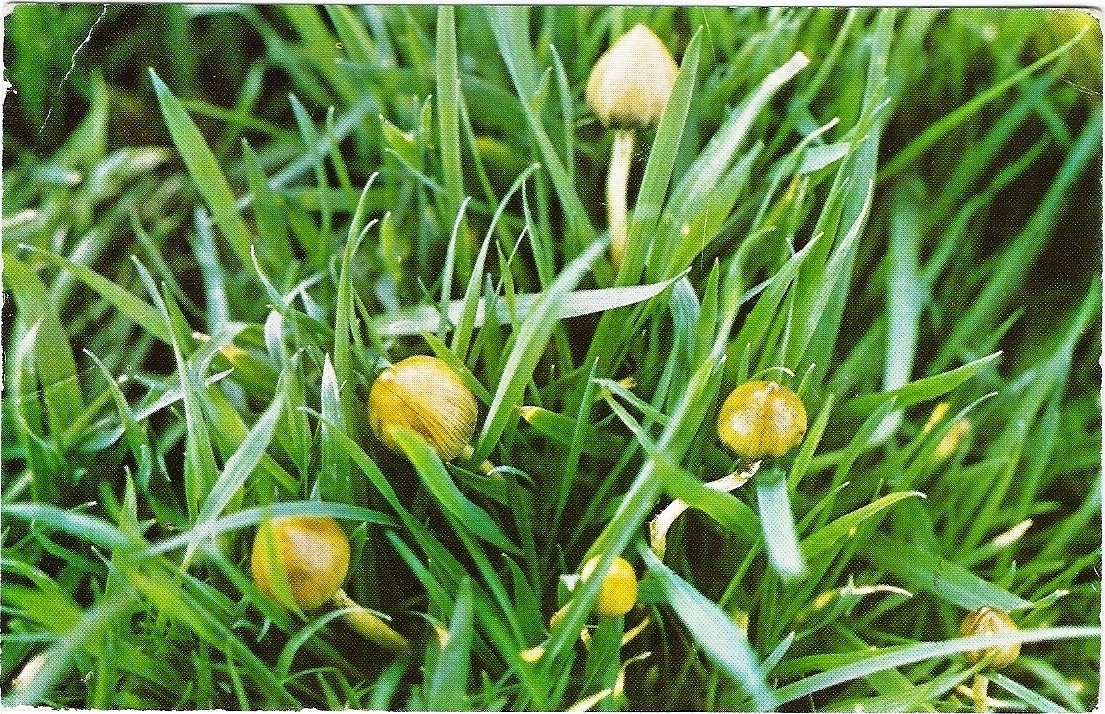
כמו עם הרבה מהגלויות האחרות שלי, בחרתי אותה כי מצא חן בעיניי כתב היד שבצד האחורי. במבט חטוף התמונה בצד הקדמי נראתה לי כמו סתם איזה צילום טבע. קצת דשא, וכמה ניצני פרחים או פטריות. תמונה סבירה, אבל לא משהו מיוחד.

As with many of my other postcards, I picked it mostly because I liked the writing on the back. The picture on the front seemed, at first glance, to be just some kind of nature photo. Some grass, with few buds or mushrooms in it. It's an alright picture, but nothing special.

צד קדמי:
Front:

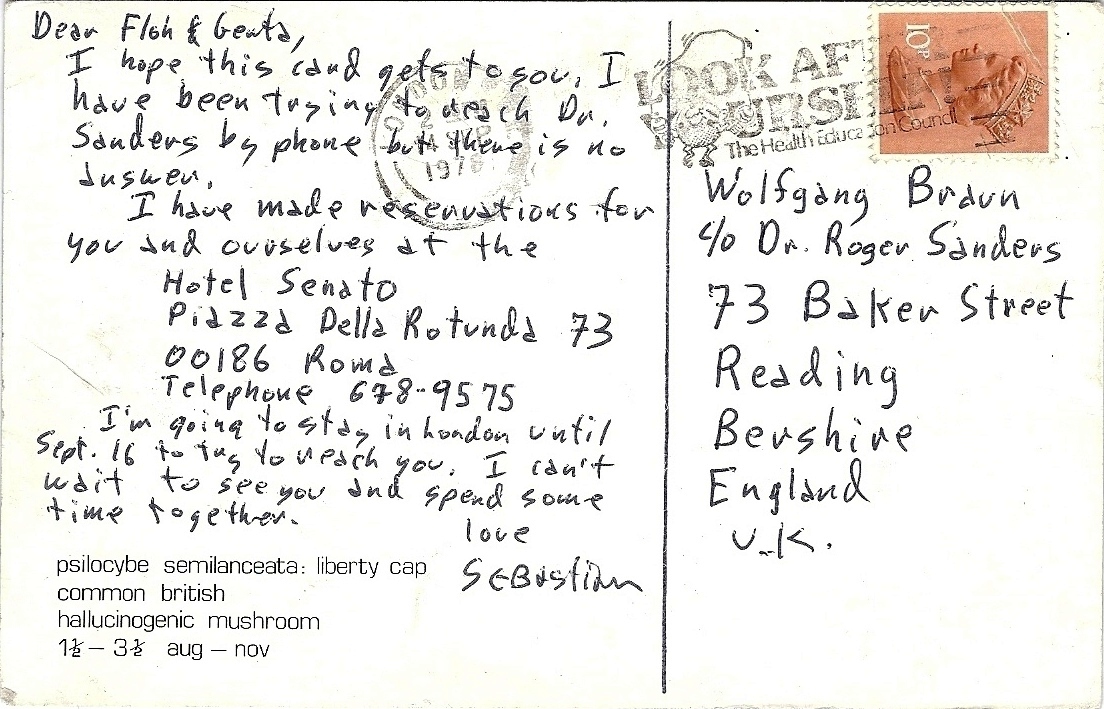
רק אחר כך הבטתי בתיאור שבצד האחורי, ואז גיליתי שמדובר ב-'psilocybe semilanceata: liberty cap, common british hallucinogenic mushroom' (זן אירופי של פטריית הזיה מסוג קְרוּחָה [כן, זה השם העברי של psilocybe, על פי האנציקלופדיה לחי ולצומח של ארץ ישראל, אם כי אין לו זכר בגוגל; השארתי הערה בעניין בוויקיפדיה העברית, לשיקול העורכים]). שזו בחירה... מעניינת. אני תוהה אם כותב הגלויה שם לב על מה מדובר בכלל - אם אולי יש לזה קשר לחותמת עם המוטו Look After Yourself (קמפיין בריאות בריטי ממושך למדי שהתחיל ב-1978; ר' למשל כאן [PDF!], בעמ' 3), או שאולי זו בדיחה פנימית שלו ושל הנמען, אפילו - או אם גם הוא חשב שזה סתם צילום טבע, אם סתם לקח גלויה אקראית מהמדף כי מה שהיה חשוב לו היה מה שרצה לכתוב ולא על מה הוא כותב.

I later looked at the photo description on the back, however, and found out that these are psilocybe semilanceata: liberty cap, common british hallucinogenic mushroom. Which seems an... interesting choice. I wonder if the writer noticed what it is at all - if maybe it has anything to do with that stamp with the motto 'Look After Yourself' (a pretty long-running British health campaign, launched in 1978; see for example here [PDF!], on page 3), or maybe it's even an inside joke between him and the recipient - or if he also just thought it was some nature photo, if he just picked a random postcard from the shelf because what was important to him was the message he wanted to write, not what he would write it on.

צד אחורי:
Back:


Dear Floh & Gerta,
I hope this card gets to you, I have been trying to reach Dr. Sanders by phone but there is no answer.
I have made reservations for you and ourselves at the

Hotel Senato
Piazza Della Rotunda 73
00186 Roma
Telephone 678-9575
I'm going to stay in London until Sept. 16 to try to reach you. I can't wait to see you and spend some time together.
Love, Sebastian

פלוֹ וגרטה היקרים,
אני מקווה שהגלויה הזו תגיע אליכם, ניסיתי להשיג את ד"ר סנדרס בטלפון אבל אין תשובה.
הזמנתי חדרים לכם ולנו ב:

Hotel Senato
Piazza Della Rotunda 73
00186 Roma
Telephone 678-9575
אשאר בלונדון עד ה-16 בספטמבר כדי לנסות להשיג אתכם. אני מצפה בקוצר רוח לראות אתכם ולבלות קצת זמן יחד.
באהבה, סבסטיאן

המסר, בסך הכול, מאוד פשוט ופרקטי - אחרי הכל, מדובר בתקופה שלפני אימיילים או טלפונים סלולריים. אם הוא ניסה לתפוס אותם בבית שבו הם מתארחים ולא הצליח, והוא חייב לשלוח להם את כתובת המלון שבו הזמין כבר חדרים, זו פחות או יותר הברירה היחידה. זו דוגמא קטנה, ומקסימה בעיניי, של השינויים בתקשורת בינאישית בעשורים האחרונים.

The message is, in general, very simple and practical - after all, we're talking about a time before email or mobile phones. If he tried to catch them at the house where they're staying, and failed, and he has to send them the address of the hotel in which he already booked some rooms, this was more or less his only choice. It's a small - and, I think, lovely - example of the changes in inter-personal communications over the last few decades.

בכל אופן, מכיוון שהזכרתי את כתובת המלון, הגיע הזמן לקצת בלשות. חיפשתי את שתי הכתובות שמוזכרות בגלויה - המען וכתובת המלון. על המען לא מצאתי הרבה; את ד"ר סנדרס לא מצאתי בכלל (טוב, יש כל מיני ד"ר רוג'ר סנדרס-ים, אבל אין לי מושג אם זה אותו בן אדם), ועל הבית שבכתובת מצאתי רק כמה פרטים נדל"ניים (הוא נמכר לאחרונה ב-2003, במחיר לא רע בכלל), משהו היסטורי על איש אחד שגר שם בסוף המאה ה-19 ותחילת המאה ה-20 (מגניב בפני עצמו, אבל לא ממש קשור לגלויה), וכמובן, תמונה של הבית, ברחוב בריטי קטן וחביב, באדיבות גוגל:

Anyway, since I mentioned the address of the hotel, it's time for playing detective. I looked for the two addresses mentioned in the postcard - the recipient's and the hotel. About the recipient's address there wasn't too much to find; I couldn't find Dr. Sanders at all (well, there are all sorts of Dr. Roger Sanders-es, but I have no idea if it's the same person), and about the house in that address I only found a little real-estate info (it was last sold in 2003, for a pretty good price), something historical about a guy that lived there in the end of the 19th century and the beginning of the 20th (cool on its own behalf, but not really related to the postcard), and of course a picture of that house, in a nice little British street, courtesy of Google:


(גוגל גם טוען שיש בכתובת הזו בית-עסק בשם MilesToGo - ומצאתי תיאור שלהם כאן - אבל נראה שכתובת האינטרנט שלהם לא עובדת, אז אני לא יודעת אם הם עדיין קיימים בכלל.)

(Google also claims that there's some business called MilesToGo at that address - and I found a description here - but the URL seems to be defunct, so I don't know if it's still around or not.)

אבל המלון? או, זה הקטע הכי מגניב. הוא עדיין קיים, באותה הכתובת בדיוק. יש לו אתר, כמובן. אפשר להזמין חדרים אונליין (במחירים שקצת גבוהים מדי לתקציב שלי, אבל עושים רושם יחסית סביר למלון במיקום מרכזי ברומא), ומן הסתם הם שולחים אימייל אישור עם מס' ההזמנה, ואם צריך להודיע לאנשים נוספים אפשר פשוט לעשות לו פורוורד. לא צריך לחפש אנשים בטלפון בבית שבו הם במקרה שוהים באותו הזמן, ואז לשלוח להם גלויה עם הפרטים, שביום מן הימים תמצא את דרכה לחנות ספרים משומשים ותהפוך לתעלומה מעניינת למישהו מהעתיד שימצא אותה.

But the hotel? Oh, that's the coolest part. It still exists, at the exact same address. It has a website, of course. You can book a room online (the prices are a bit too high for my budget, but seem relatively alright for a hotel at such a central location in Rome), and they probably send you a confirmation email with the order number, and if you need to notify any other people you can just forward that. You don't have to look for people on the phone at the house where they happen to be staying at the time, and then send them a postcard with the details, which will one day find its way to a used book store and become an interesting mystery for some future person who comes upon it.

קצת חבל, לא?

And that's a bit too bad, isn't it?

Sunday, April 10, 2011

The Awful German Language - השפה הגרמנית האיומה

Hey, new post.

הי, פוסט חדש.

Sometimes I have an organised plan - or at least semi-organised (I'm not a very organised sort of person) - about what my next updates would be, and then I suddenly run into something that works associatively with the last post, and decide to use that instead.

לפעמים יש לי תכנית מסודרת, או מסודרת-למחצה בכל אופן (אני לא בנאדם מסודר במיוחד), מה יהיו העדכונים הבאים - ואז אני נתקלת במשהו שמסתדר לי אסוציאטיבית עם הרשומה האחרונה, ומחליטה להעלות אותו במקום.

Which is what happened with this postcard - I was totally going to put here some of the Brown family postcards (you know, to sort of continue that Chicago postcard), but then I ran into this card in my favourite used book store, and I had to buy it and upload it here, because it is also from Berlin, and it dovetails nicely into the story from the previous post.

זה מה שקרה עם הגלויה הזו - לגמרי התכוונתי להעלות את הגלויות של משפחת בראון (נו, במעין המשך לגלויה משיקגו), אבל אז נתקלתי בגלויה הזו בחנות הספרים המשומשים החביבה עליי, והייתי חייבת לקנות אותה ולהעלות אותה כאן, כי גם היא מברלין, ומשתלבת כ"כ יפה בסיפור מהרשומה הקודמת.

Front:
צד קדמי:

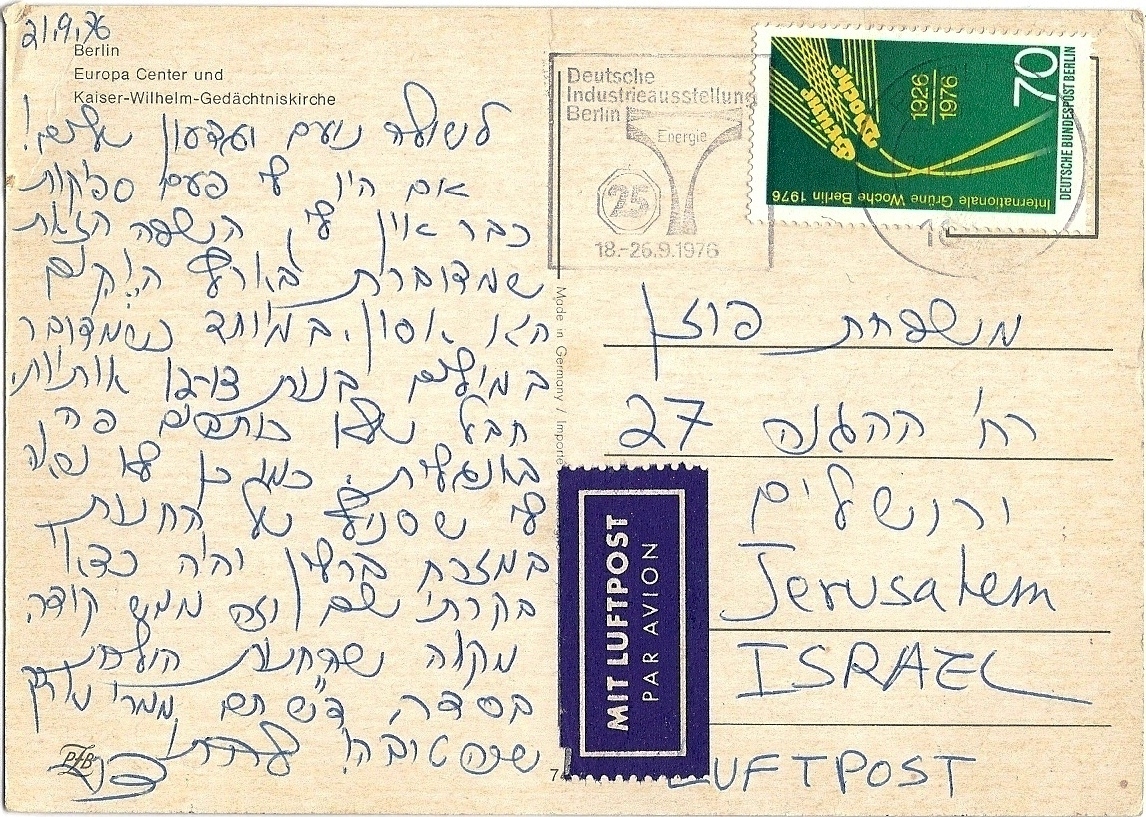
So first of all, this is in Berlin - like the last card. One of the things I liked about this picture (apart from the grey, almost industrial atmosphere, so different from what you usually see in postcards) is the bombed church spire. At the time I thought that maybe they didn't get the chance to fix it since the war; but when I started researching a little about the places featured here, I found the explanation: the church was left that way on purpose, as a sort of memorial, and new structures were built next to it for the chapel and belfry (these are the two dark polygonal structures you can see in the picture to the right and left of the church spire).

אז קודם כל, זה בברלין - כמו הגלויה הקודמת. אחד הדברים שאהבתי בתמונה (חוץ מהאווירה האפרפרה, כמעט כמו של אזור תעשייה, שכל כך מנוגדת למה שמוצאים בגלויות בדרך כלל) הוא מגדל הכנסיה המופצץ. בזמנו, חשבתי שאולי לא הספיקו לתקן אותו מאז המלחמה; אבל כשהתחלתי לחקור קצת על המקומות המתוארים כאן, מצאתי את ההסבר: השאירו את הכנסיה כך בכוונה, כמעין אנדרטה, ולידה הקימו מבנים חדשים לאולם התפילה ולמגדל הפעמונים (אלה שני המבנים הרב-צלעיים הכהים שאפשר לראות בתמונה מימין ומשמאל לכנסיה).

Looking online, I  found a modern view of the place, from the exact same angle (I prefer to link rather than embed, since it's a stock photo), which is a great way to see what changed between then and now. But I also looked for that spot on Google maps, and that's where it gets interesting - if you look at the map below, you will notice this is right next door to 162 Kantsraße, where Remde's St Pauli used to be. Cool.

כשחיפשתי באינטרנט מצאתי תמונה עדכנית של המקום, מאותה זווית בדיוק (אני מעדיפה לקשר ולא להטמיע את התמונה, כי היא לשימוש מסחרי), וזו דרך טובה לראות מה השתנה בין אז לעכשיו. אבל אז גם חיפשתי את האזור בגוגל מפות, וכאן זה נעשה מעניין - אם תסתכלו במפה שלהלן, תוכלו לראות שזה ממש ליד קאנטשטראסה 162, לשעבר מקום משכנו של מועדון Remde's St Pauli. מגניב.


But beyond all this stuff, what I liked the best about this postcard - as often happens - is the message on the back. It has a great combination of funny and historical, plus that thing about people writing to their workplaces which always interests me (and has now become a tag).

אבל מעבר לכל זה, מה שהכי אהבתי בגלויה הוא בכלל המסר בצד האחורי. יש בו שילוב מצוין של המשעשע וההיסטורי, וגם הקטע הזה של אנשים שכותבים למקום העבודה שלהם, שתמיד מעניין אותי (ושעכשיו הפך גם לתגית).

Back:
צד אחורי:


לשולה נועם וגדעון שלום!
אם היו לי פעם ספיקות [כך במקור] כבר אין לי, השפה הזאת שמדוברת בארץ היֶקִים היא אסון. במיוחד כשמדובר במילים בנות 12-13 אותיות. חבל שלא כותבים פה באנגלית. כמו כן לא נראה לי שסניף של החנות במזרח ברלין יהיה כדאי, בקרתי שם וזה ממש קודר.
מקווה שהחנות הולכת בסדר, ד"ש חם ממרי ואריק
שנה טובה!
להת', צור[?]
Hello Shula, Noam and Gideon!
If I ever had any doubtes [sic] I don't anymore, this language spoken in the land of yekkes is a disaster. Especially when it's words of 12-13 letters. Too bad they don't write in English here. In addition, I don't think that a branch of the store in East Berlin would be a good idea, I visited there and it's very bleak.
I hope the store is going alright, Mary and Erik send their warmest regards
Happy new year!
See ya, Tzur[?]

...And hence the title - because when I read his complaints about German I couldn't help but think of the famous Mark Twain piece.

...ומכאן הכותרת - כי כשקראתי איך הוא מתלונן על גרמנית לא יכלתי שלא לחשוב על הקטע המפורסם של מארק טווין.

I gotta admit that the thing about writing your workplace is not that outstanding here, since it seems he's the manager, and is writing partly on business, but the fact that he's writing from the 1976 Deutsche Industrueausstellung - German Industry Exhibition - makes up for it. Can't really tell you why I feel it makes up for it (couldn't even find much about this specific exhibition on Google), it just seems cool. Maybe because the word Industrieausstellung has 20 letters in it, which mashes quite well with the exasperation the writer expressed with the German language. What can I say, I'm a language nerd, I like odd stuff like that.

אני חייבת להודות שזה שהוא כותב למקום העבודה לא כ"כ יוצא דופן כאן, כי עושה רושם שהוא המנהל, והוא כותב בין השאר בענייני עבודה, אבל מצד שני הוא כותב מה-Deutsche Industrueausstellung - תערוכת התעשייה הגרמנית - של 1976, וזה סוג של פיצוי. אני לא ממש בטוחה למה אני מרגישה שזה פיצוי (אפילו לא הצלחתי למצוא הרבה על התערוכה הספציפית הזו בגוגל), אבל זה פשוט מגניב בעיניי. אולי מפני שבמלה Industrieausstellung יש 20 אותיות, וזה מתחבר יפה עם התסכול של הכותב מהשפה הגרמנית. מה לעשות, אני חנונית שאוהבת שפות, דברים מוזרים כאלה מוצאים חן בעיניי.

As for the historical aspect, the move from the humourous tone of the language complaint to the description of why it's probably not a good idea to open a branch of whatever store it is in East Berlin is quite abrupt (warning: TV Tropes link, could steal hours of your time without notice!).
Like with the previous post, a lot of the images I have about this are based on popular culture. I wasn't there. I was pretty young when the wall came down, so can't even say I directly remember it, and this was a huge event, unlike the mundane details of everyday life under the harsh Soviet regime. So all I have is the images from movies and such - and all these mental pictures are tinged with brown and grey. Perhaps not all movies about East Berlin are, like The Lives of Others, about the fear and oppression and people's almost hopeless attempts to subvert the regime,or at least to make it out, but even the more lighthearted movies, like Goodbye Lenin [by the way, apparently the whole thing is on YouTube now; you should watch it, if you haven't, it's good], have a lot of sadness in them.

מבחינת עניינים היסטוריים, בין הטון ההומוריסטי של התלונה על בעיות השפה לתיאור של למה כנראה לא כדאי לפתוח סניף של החנות במזרח ברלין יש מעבר חד למדי (זהירות: קישור לאתר TV Tropes, שעשוי לגזול שעות מזמנכם בלי שתשימו לב!).
כמו במקרה של הרשומה הקודמת, הרבה מהדימויים שיש לי בעניין הזה נובעים מהתרבות הפופולרית. לא הייתי שם. הייתי די צעירה כשנפלה חומת ברלין, אז אני אפילו לא יכולה לומר שאני זוכרת את זה במישרין - ומדובר על אירוע עם חשיבות עצומה, לעומת כל הפרטים היומיומיים של החיים תחת קשיי השלטון הסובייטי. אז כל מה שיש לי זה דימויים מסרטים וכיו"ב - וכל התמונות המנטליות האלה אפופות בגווני אפור וחום. אולי לא כל הסרטים על מזרח ברלין עוסקים, כמו חיים של אחרים, בפחד ובדיכוי ובנסיונות הכמעט נואשים של אנשים לחתור תחת המשטר, או לפחות לברוח משם, אבל אפילו בסרטים הקלילים יותר, כמו להתראות לנין, [אגב, מסתבר שהוא הועלה בשלמותו ליוטיוב עכשיו; אם לא צפיתם בו, הוא מומלץ מאוד], יש לא מעט עצבות.

And in this postcard, I think I can see it too, in the short and rather matter-of-fact description of this guy's visit to the GDR. I don't know what he imagined before he went to Germany, I don't know what sort of business options he and the rest of the store workers discussed, but eventually, it all came down to one conclusion: 'I don't think that a branch of the store in East Berlin would be a good idea, I visited there and it's very bleak'. And it's not like mid-70s Israel was such a cheery place - this was written only a few years after the big trauma of the Yom Kippur War, after all - and still, East Berlin was bleak. Very bleak, even.

ונדמה לי שבגלויה אפשר להבחין באותה עצבות, התיאור הקצר והענייני למדי של הביקור ב-DDR. אני לא יודעת מה הוא דמיין לפני שנסע לגרמניה, אני לא יודעת על אילו אופציות עסקיות הוא שוחח עם שאר עובדי החנות, אבל בסופו של דבר הכל הסתכם במסקנה אחת: 'לא נראה לי שסניף של החנות במזרח ברלין יהיה כדאי, בקרתי שם וזה ממש קודר'. וזה לא שישראל של אמצע שנות השבעים היתה כזה מקום עליז ושמח - סך הכל הגלויה הזו נכתבה שנים ספורות אחרי הטראומה הגדולה של מלחמת יום כיפור - ובכל זאת, במזרח ברלין היה קודר. ממש קודר, אפילו.

But it's a shame to finish on such a depressing note. Like everything in life, this bleakness does not stand on its own. It's surrounded by other things - by joking about the difficult language in the 'land of yekkes', by the warm regards from Mary and Erik, by business matters, by the lovely design of the stamp for 'International Green Day' (Internationale Grüne Woche; this logo design, by the way, remains to this day)... like the ruined church spire surrounded by its newer counterparts, by regular buildings and roads and people doing their everyday thing, like the blue sky over the yellowish-brown city view in the postcard. And there's a beauty in it.

אבל חבל לגמור את הרשומה במשהו כ"כ מדכא. כמו כל דבר בחיים, הקדרות הזו לא עומדת בפני עצמה. היא מוקפת בדברים אחרים - בהתבדחות על קשיי השפה ב'ארץ היקים', בד"ש חם ממרי ואריק, בענייני עסקים, בעיצוב החביב של בול 'השבוע הירוק הבינלאומי' (Internationale Grüne Woche; העיצוב הזה, אגב, נשמר בסמל גם כיום)... כמו צריח הכנסיה ההרוס, שמוקף במקביליו החדשים, בבניינים רגילים, בכבישים, בבני אדם שעסוקים בענייני היומיום שלהם,כמו השמיים התכולים מעל הנוף החום-צהבהב בגלויה. יש בזה יופי.

Tuesday, January 11, 2011

A Night Without Morals - לילה ללא מוסר

פוסט ראשון ל-2011, וחשבתי שראוי להתחיל בצלצלי תרועה. אז הנה משהו מעניין; זו לא גלויה, או תמונה, כמו רוב מה שיש לי, אלא סוג של פלייר פרסומי, או כרטיס, ממועדון לילה במערב ברלין. ויש פה גם סיפור מעניין למדי.

First post of 2011, and I thought we should start with a bang. So here is something interesting. It's not a postcard, or a photo, like most of the things I have, but a kind of commercial flier, or ticket, from a West Berlin nightclub. And there's quite an interesting story to it, too.

אבל את הסיפור לא ידעתי, כשקניתי את הדבר הזה. סתם חשבתי שזה מגניב. הנה, תסתכלו:

I didn't know the story when I bought it, though. I just thought it was cool. Take a look at this thing:

צד קדמי:
Front:


יאללה מסיבה!
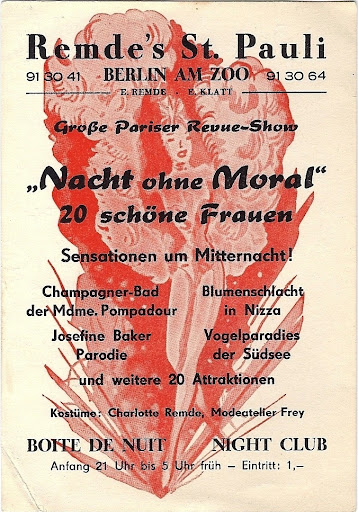
בעזרת גוגל תרגום הצלחתי להבין מה מפורסם כאן: מופע בסגנון פריסאי בשם Nacht ohne Moral - 'לילה ללא מוסר' - מה שכבר נשמע, אממ, מעניין, אפילו לפני שמבטיחים שם '20 בחורות יפות', 'סנסציות בחצות', ואטרקציות כמו 'אמבט השמפניה של מאדאם פומפדור', 'קרב הפרחים בניס' (שקשור לאירוע אמיתי בקרנבל של ניס, דרך אגב), 'פרודיה על ג'וזפין בייקר' ו'ציפורי גן עדן של הים הדרומי' (ועוד 20 אטרקציות אחרות!). אפשר כבר לקבל מושג על איזה מין סוג של אירוע - ושל מקום - זה היה, ובעזרת קלישאות קולנועיות על מערב ברלין בתקופת תחילת המלחמה הקרה, התמונה מקבלת גם נפח: שמפניה ומרטיני ועשן סיגריות, ומרגלים כמובן. אפשר לדמיין את זה, לא? מרגלים לבושי טוקסידו שעושים חיים אבל לא שוכחים להעביר מבט חשדני על שאר החדר ולהחזיק אקדח בכיס נסתר; או מרגלים במעיל ארוך ומגבעת, יושבים בפינה אפלה ומעשנים בשרשרת, משרבטים משהו לעצמם וממלמלים בזעף מתחת לשפם המזויף בזמן שהם מחכים למרגלות יפהפיות שמדברות בלחישות צרודות ומסתוריות. כך כך קל לדמיין את כל זה; ראינו את זה כבר באינספור סרטים. ולכן כל כך התלהבתי כשהפכתי את הכרטיס (אני לא לגמרי בטוחה שזה כרטיס, אבל כתוב למטה 'כניסה לאחד', אז זה נראה סביר) וראיתי את השרבוטים מאחור. זה מתאים לתמונה הזו בדיוק.
[דרך אגב, אני עומדת לעשות משהו שלא עשיתי די מזמן, ולשים את כל הפרטים שמצאתי על המועדון - ועוד כמה דברים על ג'וזפין בייקר - בסוף הפוסט, אחרי ג'אמפ-קאט. אני חושבת שזה מרתק, אבל אם אתם רוצים לדבוק בסיפור המרגלים הדמיוני, אתם יכולים להתעלם מכל הקטע על מה שקרה באמת.]

Heyo, party time!
With the help of Google Translate, I figured out what it's advertising: a Parisian revue called Nacht ohne Moral - 'A Night Without Morals' - which already sounds, umm, interesting, even before it goes on to promise '20 pretty ladies', 'sensations at midnight', and attractions such as 'the champagne bath of Madame Pompadour', 'Flower Battle in Nice' (this is related to an actual event in the carnival in Nice, by the way), 'Josephine Baker parody' and 'birds of paradise of the South Sea' (and 20 other attractions!). Already, you get a picture of the kind of event, and the kind of place, this must have been - and with the help of some movie clichés about early-cold-war-era West Berlin, this picture gets fleshed out with champagne and martinis and cigarette smoke, and of course, spies. You can imagine it, can't you? Spies in tuxedos, having a grand old time, but keeping a watchful eye on the room and a pistol in a secret pocket; or spies in trenchcoats and fedoras, chain-smoking in a dark corner, scribbling something and muttering under their fake moustache as they wait for gorgeous lady-spies that speak in mysterious, hoarse whispers. It's so easy to imagine it; we've seen it in countless movies. Which is why I got all excited when I turned over the ticket (I'm not sure it actually was a ticket, but it does say 'admission: 1' at the bottom, so it seems likely) and saw the scribbles on the back - they fit into this image perfectly.
[By the way, I'm going to do something I haven't done in a long while, and put all the details I found about the club - plus some stuff about Josephine Baker - at the end of the post, after a jump cut. I think it's fascinating, but if you want to stick to the imaginary spy story, go ahead and ignore all the real-life stuff.]

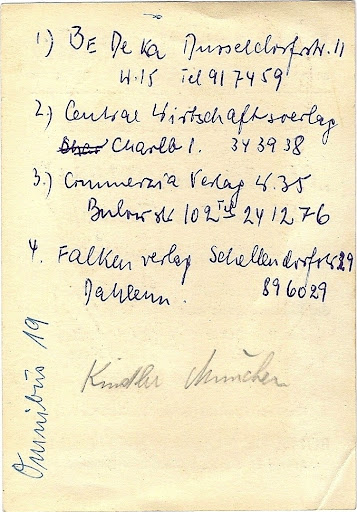
צד אחורי:
Back:


אז בעצם יש כאן שלושה דברים נפרדים - או בכל אופן, יש שלושה סגנונות של כתב יד ושלושה כלי כתיבה שונים. בעט כחול כהה יש רשימה של ארבעה מקומות ומספרי הטלפון שלהם; המלה verlag, שעל פי וויקיפדיה פירושה 'הוצאה לאור', חוזרת כמה פעמים (אולי יש כאן סופר מתחיל שמנסה למצוא מו"ל לכתב היד שלו?), ובפריטים מס' 1 ו-3 יש גם משהו שנראה כמו ציון שעה (4.15 ו-4.35, בהתאמה - אולי פגישות עם נציג ההוצאה?). למרבה הצער, לא הצלחתי למצוא אף אחד מהשמות האלה בחיפוש גוגל. בצד שמאל, בעט כחול בהיר יותר, ובכתב יד מחודד ואלגנטי קצת יותר, כתוב Omnibus 19, קו 19 באוטובוס, מן הסתם. ולמטה, בעפרון, שם של מישהו, כנראה (די קשה לי לקרוא את הכתב הזה).

Right, so we have three different things, basically - three different handwriting styles, and three different writing instruments, anyway. In a dark blue pen there's a list of four places and their phone numbers; the word verlag, which according to Wikipedia means 'publisher', recurs a few times (maybe we have a beginning author, trying to find someone to publish his manuscript?), and in items 1 and 3 there is also something that looks like a time (4.15 and 4.35, respectively - maybe meeting a representative of the publisher?). Unfortunately, I couldn't find any of those names on Google. On the left, in a lighter blue pen and a slightly more pointy and elegant handwriting, it says Omnibus 19, which is of course bus #19. And at the bottom, in pencil, something that looks like somebody's name (it's hard for me to read this handwriting).

כמובן שכל זה בהחלט יכול להיות חסר משמעות. זאת אומרת, זה בהחלט יומיומי למדי. מישהו היה צריך לרשום כמה דברים, לקח פיסת נייר ורשם אותם מאחורה; אחר כך נוספו עוד כמה רשימות לאותה פיסת נייר שימושית. פשוט מאוד.
אבל כמו שבזכות הקלישאות הקולנועיות קל מאוד לדמיין את מועדון הלילה האפלולי שאפוף בעשן סיגריות ואווירת שחיתות ושורץ מרגלים, כך גם קל לדמיין שיש מאחורי זה כל מיני ענייני ריגול. אולי זה צופן. אולי השמות של חברות הוצאה לאור הן רק כיסוי למשהו אחר, והשם בתחתית הדף הוא שם-המרגל המזויף של מישהו, וקו 19 הוא חלק מתכנית מפגש מסובכת ('תעלה על האוטובוס ברחוב X, וסע שלוש תחנות. אני אהיה בצד השני של הרחוב. אל תיצור קשר עין, פשוט לך אחריי'). אולי יש שלושה סגנונות כתב יד כי הכותב התאמן בזיוף! אפשר לדמיין כאן כל מיני עלילות, ברגע שמתחילים את קו המחשבה הזה.

Of course, this could all be meaningless. I mean, it's really quite mundane. Someone needed to write down some info, grabbed a piece of paper, and wrote on the back; then later, other notes were made on the same handy piece of paper. So very simple.
But just like all the movie clichés make it easy to imagine the dark, smoky nightclub teeming with debauchery and spies, it's also easy to imagine that there is some spy business behind this. Maybe it's coded. Maybe the names of publishing firms are just a cover for something else, and the name at the bottom is somebody's fake spy name, and bus #19 is part of a complicated meeting plan ('Take the bus at X Street, and travel three stops. I will be across the street. Don't make eye contact, just follow me'). Maybe there are three different handwriting styles because the guy was practising his forgery skills! There are all sorts of plots that can be imagined here, once you take this line of thought.

וכאן אפשר היה להניח לעניין. אבל אני נהנית ממחקרי-גוגל הקטנים שלי, כשיוצא לי לעשות אותם, אז אם מעניינים אתכם קצת פרטים אמיתיים על המקום ניתן למצוא אותם אחרי הג'אמפ-קאט.

And this could be where we leave it. But I like doing this little Google-based research, when I can, so if you're interested in some real details about the place, you can find them under the jump.

Friday, December 31, 2010

Collaborative writing - כתיבה קולבורטיבית

Looks like I'll get another post in before the year ends.
I got the idea to do this postcard when, in the last post, I said there being a lot of people mentioned. Because this postcard also has a lot of people, but in a somewhat unusual way - it was actually written by about six different people.

נראה לי שאצליח להשחיל עוד פוסט לפני סוף השנה.
חשבתי להעלות את הגלויה הזו כשציינתי, בפוסט הקודם, שהם מתייחסים לדי הרבה אנשים. כי בגלויה הזו באמת יש הרבה אנשים, אבל באופן קצת בלתי-רגיל - כתבו אותה כשישה אנשים שונים.

We begin with the front, which shows a view of the Chicago River (interesting side note: when looking for the Chicago River on Google Images, you run into a whole lot of pictures where it is dyed green, which, I realised after a while, is some odd St. Patrick's Day tradition, and not the result of comic-book-style pollution or gamma rays), with a lot of skyscrapers and bridges and other markers of a large metropolis.

נתחיל עם הצד הקדמי, ובו נוף של נהר שיקאגו (מאמר מוסגר מעניין: כשמחפשים את נהר שיקאגו בגוגל תמונות, נתקלים בלא מעט תמונות שלו צבוע בירוק; כפי שהבנתי אחרי זמן מה, זו איזו מסורת מוזרה של יום סנט פטריק, ולא תוצאה של זיהום או קרני גאמא כמו בחוברות קומיקס), עם הרבה גורדי שחקים וגשרים וכיוצא בזה סממנים מטרופוליניים.

Front:
צד קדמי:


Since I've never been to Chicago, I can't speak much about the accuracy of this portrayal, although the sky kind of has this fake-clement look that you sometimes get in postcards of places not known for clement weather (I have, for example, a postcard I bought in Ireland simply because it featured an accurately grey and overcast sky while all the other postcards had a clear blue sky like you almost never actually see). Anyway, it's quite a typical city-view picture, with nothing very special about it.

מכיוון שמימיי לא הייתי בשיקאגו, אני לא יכולה לומר עד כמה זה ייצוג מדויק שלה, אם כי יש לציין שהשמיים נראים קצת כמו הזיוף של מזג אוויר נאה שיש לפעמים בגלויות ממקומות שלא ממש ידועים במזג האוויר הנאה שלהם (יש לי, למשל, גלויה שקניתי באירלנד רק מפני שהשמיים בה היו אפורים ומעוננים כיאות, כשבכל שאר הגלויות היו שמיים כחולים כאלה שאף פעם לא רואים שם באמת). בכל אופן, זו תמונת נוף עירוני טיפוסית למדי, ואין בה כ"כ שום דבר מיוחד.

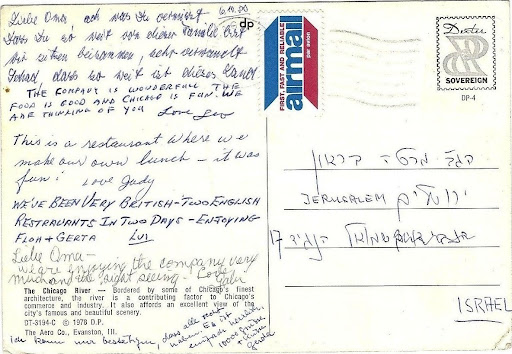
The special part of the postcard begins on the back, where apparently every member of the travelling family got to say a few words. [Note: Some of the messages are in English, and some are in German; the German ones were difficult for me to even read well enough to transcribe them, so I left them out, but will of course be very grateful to anyone who can supply a transcription and/or translation.]

החלק המיוחד בגלויה הזו מתחיל בצד האחורי, שם כנראה כל אחד מבני המשפחה המטיילת כתב כמה מלים. [הערה: כמה מהמסרים הם באנגלית, וכמה הם בגרמנית; את אלה שבגרמנית היה לי קשה אפילו לקרוא כדי לתעתק, אז דילגתי עליהם, אבל אהיה כמובן אסירת תודה לכל מי שיוכל לספק תעתיק ו/או תרגום.]

Back:
צד אחורי:

[German]

The company is wonderfull[sic!] the food is good and Chicago is fun. We are thinking of you.
Love, Leo

This is a restaurant where we make our own lunch - it was fun!
Love, Judy

We've been very British - two English restaurants in two days - enjoying Floh + Gerta
Zvi

Liebe Oma [dear grandma] -
We are enjoying the company very much and the sight seeing.
Love, Galia

[German]
[גרמנית]

החברה מצוייינת[כך במקור!] האוכל טוב וכיף בשיקגו. אנחנו חושבים עלייך.
באהבה, לאו

זו מסעדה שבה אנחנו מכינים את ארוחת הצהריים בעצמנו - זה היה כיף!
באהבה, ג'ודי

היינו ממש בריטים - שתי מסעדות אנגליות ביומיים - נהנים מפלו + גרטה
צבי

Liebe Oma [סבתא היקרה] -
אנחנו נהנים מאוד מהחברה ומהביקור באתרים.
באהבה, גליה

[גרמנית]

Something about this postcard is really fun. You have all the different people writing to the grandma, each with their own style and handwriting, each with their own highlights of the trip (food seems to be one main highlight, which I definitely approve of, although I must say that the concept of an English restaurant - and back in 1980, before any culinary renaissances or anything - is a bit scary, and going to two of them two days in a row is quite a feat). You can imagine them all sitting in the restaurant, passing the card around, chatting and joking. It's sweet.

יש משהו מאוד כיפי בגלויה הזו. כל האנשים השונים כותבים לסבתא, כל אחד עם הדגשים שלו מהטיול (לא מעט מדגישים את האוכל, מה שבהחלט מוצא חן בעיניי, אם כי יש לציין שהקונצפט של מסעדה אנגלית - ועוד ב-1980, לפני רנסאנסים קולינאריים למיניהם - קצת מעורר חשש, וללכת לשתי מסעדות כאלה ביומיים זה עניין מרשים למדי). אפשר לדמיין את כולם יושבים במסעדה, מעבירים את הגלויה ביניהם, מפטפטים ומתבדחים. זה מקסים.

Something interesting: if you look at the address, you can see that they started writing down one street, then realised it was the wrong one, crossed it and wrote the right address down. Did the grandma just move not long before? Both streets are fairly close to each other, in downtown Jerusalem, so if she did, it wasn't that big a move (by the way, here is a picture of the building at the address listed, 17 Shmuel HaNagid St. - that's pretty cool). Or maybe it was just a lapse of memory, like when you start writing and you realise you're writing your own address by mistake. Anyway, I suppose it made it to the right address, in the end.

משהו מעניין: אם מביטים על הכתובת, אפשר לראות שהם התחילו לכתוב רחוב אחד (הנביאים), ואז קלטו שזו הכתובת הלא נכונה, מחקו אותו וכתבו את השם הנכון (שמואל הנגיד). האם הסבתא עברה דירה לא הרבה זמן לפני כן? שני הרחובות האלה קרובים למדי זה לזה, במרכז העיר בירושלים, אז גם עם היא עברה דירה זה לא היה מעבר רציני במיוחד (דרך אגב, הנה תמונה של הכתובת שצוינה, ברח' שמואל הנגיד 17 - זה די מגניב). או שאולי זו סתם היתה פשלה קטנה של הזכרון, כמו כשמתחילים לכתוב ופתאום קולטים שבטעות כתבת את הכתובת של עצמך. בכל אופן, ניתן לשער שבסופו של דבר הגלויה הגיעה לכתובת הנכונה.

So, a nice bit of family togetherness to end the year with. Actually, some of these people kinda crop up in other postcards I got (I suppose they were all sold to the store in the same batch), but it'll be a while before we get to them, because I have a great idea for something to open the new year. What is it? You'll have to wait and see. Happy New Year, till then!

אז זהו, קצת ביחד משפחתי כדי לסגור את השנה האזרחית. למען האמת, כמה מהאנשים האלה צצים בגלויות אחרות שיש לי (אני משערת שכולן נמכרו לחנות באותה נגלה), אבל ייקח קצת זמן עד שאגיע אליהן, כי יש לי רעיון מצוין לגלויה שתפתח את השנה החדשה. ומהי? תצטרכו לחכות ולראות. שנה אזרחית טובה, עד אז!

Wednesday, December 15, 2010

Oxford - אוקספורד

הרשומה הזו מוקדשת לאחי, שאוהב מאוד את אוקספורד (וגם בילה שם כמה חודשים יפים). אני אישית לא הייתי באנגליה מאז טיול משפחתי קצר כשהייתי בת 12, אבל אשמח לחזור יום אחד. ולכשאחזור, אני חושבת שאשמח לשהות לזמן מה באוקספורד, שנראית כמו עיר יפה ומעניינת.

This post is dedicated to my brother, who loves Oxford (and spent a number of lovely months there). Personally, I haven't been to the UK ever since we visited on a short family trip when I was 12, but I'll be happy to go back someday. And when I do, I think I'd be happy to spend some in Oxford, which looks like a gorgeous and fascinating town.

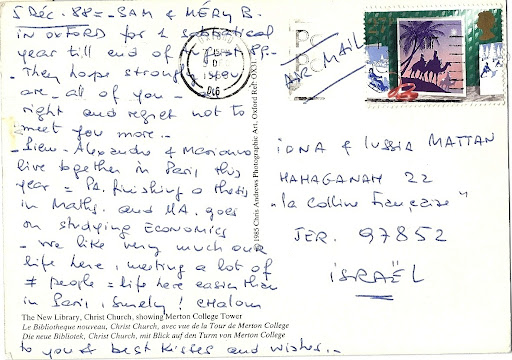
הגלויה הזו היא גם קישור טוב בין הרשומות הקודמות, שהתמקדו בתמונות שבחרתי בגלל היופי שלהן, לרשומות ה'רגילות' יותר שמתמקדות בסיפורים שעל הגלויות. כי בעצם יש כאן גם וגם: בצד האחורי יש אנשים ויש איזשהו סיפור, אבל התמונה שבצד הקדמי יפהפייה בעיניי. הנה, תראו בעצמכם.

This postcard is also a good segue from the previous posts, that were focused on pictures I chose because I thought they were pretty, to the more 'regular' posts that focus on the stories that the postcards tell. Because here we happen to have both things: on the back, we have people, and some kind of story, but I think the picture on the front is just beautiful. Here, have a look.

צד קדמי:
Front:

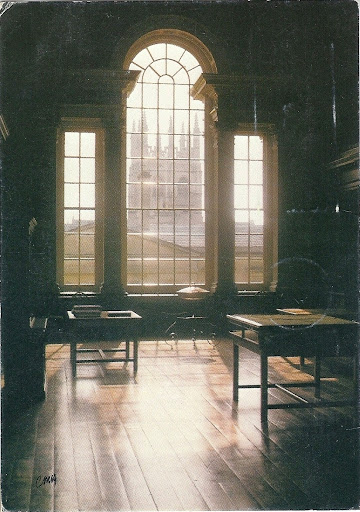
ברגע הראשון שמים לב רק לחלון הגדול הזה במרכז התמונה - כתם של אור בחדר חשוך. אחר כך אפשר להתבונן בפרטים בחדר עצמו, רצפת העץ הממורקת, השולחנות... ואז אפשר להביט דרך החלון, ולראות את מה שבגלויות רגילות יותר היה המרכז: בניין גבוה ועטור-מגדלים. זהו מגדל הכנסייה במרטון קולג' שבאוקספורד. הנה הוא ב-Street View:

At first, you only notice the large window at the centre of the picture - a patch of light in a dark room. Then you can look at details inside the room, the polished hardwood floor, the desks... and then you can look through the window, and see what in regular postcards would be the main focus: a tall, be-turreted building. This is the chapel tower in Merton College, Oxford. Here it is on Street View:


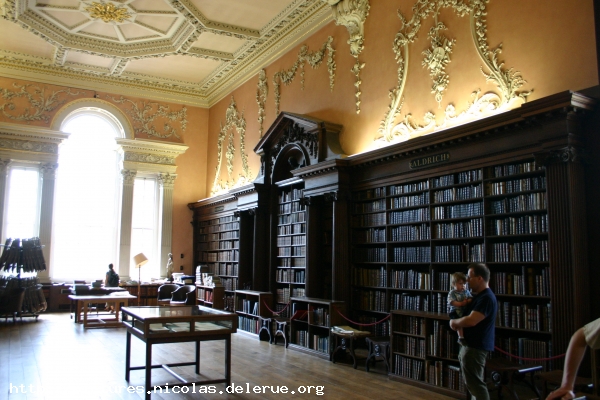
על הגלויה, אנחנו מביטים בו מהספרייה בכרייסט צ'רץ', אבל בגוגל מפות לא יכלתי למצוא נקודת מבט טובה באזור. מה שכן, יש הרבה תמונות יפהפיות של הספרייה. אלוהים אדירים, אני רוצה ללכת לשם. אני כל כך רוצה ללכת לשם.

In the card, it's viewed from the library at Christ Church, but I couldn't find a good view from around there, on Google maps. Lots of beautiful pictures of that library, though. Goodness, I want to go there. I really want to go there.


אהמ. איפה הייתי?
כן. בפינה השמאלית התחתונה של הגלויה אפשר לראות את ראשי התיבות של הצלם, CMA, שהוא, כפי שגיליתי בצד האחורי, כריס אנדרוז (נדמה לי ששמו המלא הוא כריס מיי-אנדרוז, ומכאן ה-M, אבל יש גם אמן אחר שנקרא כך אז אולי אני מתבלבלת). הוא פעיל גם כיום, וגם כיום יש לו הרבה תמונות יפות של אוקספורד.
ובצד האחורי של הגלויה, יש סיפור.

Ahem. Where was I?
Right. In the bottom left corner of the card you can see the photographer's initials, CMA - which as I discovered on the back is Chris Andrews (I think his full name is Chris Meigh-Andrews, hence the M, but there's also another artist with that name so I might have gotten confused). He is still active today, and he still has many beautiful pictures of Oxford.
And on the back of the card, there's a story.

צד אחורי:
Back:

5 Dec 88 - Sam & Méry B. in Oxford for 1 sabbatical year till end of August 89. They hope strongly you are - all of you - all right and regret not to meet you more.
Pierre, Alexandre and Marianno live together in Paris this year. PA finishing a thesis in Maths and MA goes on studying Economics.
We like very much our life here, meeting a lot of people - life here easier than in Paris. Surely! Chalom to you & best kisses and wishes.

5 בדצמבר 88 - סאם ומרי ב. באוקספורד לשנת שבתון אחת, עד סוף אוגוסט 89. הם מקווים בתוקף שאתם - כולכם - בסדר, ומצטערים שלא פוגשים אתכם יותר.
פייר, אלכסנדר ומריאנו חיים יחד בפריס השנה. פ.א. גומר תזה במתמטיקה ומ.א. ממשיך ללמוד כלכלה.
אנחנו אוהבים במאוד את חיינו כאן, פוגשים הרבה אנשים - החיים כאן קלים יותר מאשר בפאריס. בוודאי! שלום לכם ומיטב הנשיקות והאיחולים.

יש כאן בעצם לא מעט אנשים. מלבד הכותבים, שכנראה שעברו לאוקספורד מפאריס (ומרוצים מכך), יש גם את הזוג ב. שהגיע לשנת שבתון, ואת שלושת הסטודנטים שחיים בפאריס, ואת צמד הנמענות בירושלים (לא רחוק מהבית שלי, למען האמת, אם כי על פי ספר הטלפונים הן כבר לא גרות שם). די בלתי אפשרי לחפש אף אחד מהאנשים האלה ( או לפחות, זה מצריך יותר מאמצים ממה שאני מוכנה להשקיע), אבל היה יכול להיות נחמד לדעת מה קרה להם עם הזמן.

That's actually quite a lot of people. Beside the writers, who apparently moved to Oxford from Paris (and are happy about that), there are also the B.'s who came over for a sabbatical, and the three students living in Paris, and the two recipients in Jerusalem (not far away from my home, actually; although, according to the phone book, they are no longer there). It's not really possible to search for any of those people, though (or at least, it would take more effort than I'm willing to expand on this). Would have been cool to know what happened to them, over time.

בכל אופן, יש בזה איזו אווירה בוהמית. כלומר, לא שאני חושבת שאקדמאים באוקספורד (או סטודנטים לכלכלה ולמתמטיקה, לצורך העניין) הם בהכרח בוהמיינים, אבל בכל זאת, יש בזה משהו - האנשים האלה שחיים בפאריס, ואלה שעברו לאוקספורד, ושמות כמו אלכסנדְר ומריאנו ו-Méry (בתעתיקים העבריים קשה קצת יותר להעביר את השונות האירופית של השמות האלו) - שפשוט גורם לי לדמיין משהו מתוך סרט, עם מסיבות קוקטייל אינטלקטואליות, וטוויד וקורדרוי ואש באח ובניינים ישנים ונשגבים. אני מניחה שהחיים האמיתיים שלהם בבריטניה של 1988 (או צרפת, או ישראל) היו בעצם הרבה יותר יומיומיים ומשעממים, אבל מן הסתם לעולם לא אדע באמת, וכל עוד אני לא יודעת, אני יכולה לדמיין מה שאני רוצה.

There's a sort of Bohemian atmosphere to this, though. Not that I think Oxford academics (or math and economics students, for that matter) are really Bohemian, but still, something about it - those people living in Paris, those moving to Oxford, and names like Alexandre and Marianno and Méry - just makes me imagine something from a movie, with intellectual cocktail parties, and tweed and corduroy and fireplaces and grand old buildings. I suppose their real lives in 1988 Britain (or France, or Israel) were actually a lot more mundane, but I'll probably never really know, and as long as I don't know, I can imagine it any way I like.

אז אני מביטה שוב בתמונה שעל הגלויה, באור השמש שנשפך אל האפלולית השקטה של חדר בן מאות שנים, מבהיק על רצפת העץ הכהה, ואני מדמיינת כמה קריר ודומם בוודאי בחדר הזה, ואני מדמיינת את האנשים שבחרו את הגלויה ושלחו אותה, ואני מדמיינת את הבית שלהם, ואת החברים שלהם, ואת הסיפורים שלהם. וזה טוב כמעט כמו לדעת מה קרה באמת.

So I look at the picture on the card again, at the sunlight streaming into the silent darkness of a centuries-old room, shining on the dark wooden floor, and I imagine how cool and still this room must be, and I imagine the people who chose this card and sent it, and I imagine their house, and their friends, and their stories. And that's almost as good as knowing what really happened.

Sunday, December 5, 2010

Rosace - רוזטה

Another just-like-it-aesthetically post. Looking through my scans, I think that most of the (admittedly few) postcards that I chose just because of the picture have black-and-white photos on them. I'm not sure what it is exactly, but there's something about black-and-white photos that really brings out a different sort of beauty in pictures of beautiful things. And this small picture is a great example.

עוד רשומה במסגרת פשוט-אהבתי-את-זה-מבחינה-אסתטית. כשאני בוחנת את התמונות שסרקתי, נדמה לי שברוב הגלויות (המועטות, יש לציין) שבחרתי רק בזכות התמונה שעליהן מדובר בצילום שחור-לבן. אני לא בטוחה מה העניין בדיוק, אבל יש משהו בצילומי שחור-לבן שמדגיש סוג אחר של יופי בתמונות של דברים יפים. והתמונה הקטנה שכאן היא דוגמא מצוינת.

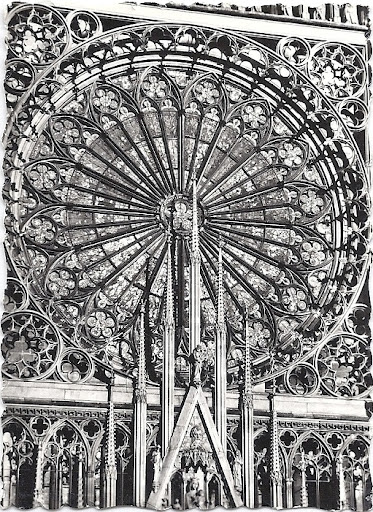
I think that I always tend to like pictures that focus on a small detail of a larger object. Often, these things, taken out of context, get a life of their own... sort of like what this blog is all about. Here, we see a gorgeous piece of architecture: a rosace, more commonly known as a 'rose window' (my spellchecker might not recognise the word 'rosace', but my Oxford Concise does, defining it as 'an ornamentation resembling a rose, in particular a rose window' - and I have a reason for wanting to use this specific word, as you'll soon see), and some spikes rising from a pediment, or a gable, or whatever the right architectural term is for that triangular thing. Also, some Gothic windows, and if you look hard at the top right there is what appears to be the feet of some statues. The use of black-and-white accentuates the lines and details of all this, the repeated forms, the very Gothic grandeur that you know the whole building must have just by looking at this small part. Kinda like a fractal, where every segment represents the whole.

אני חושבת שאני נוטה לאהוב תמונות שמתמקדות בפרט קטן של משהו גדול יותר. הרבה פעמים הדברים האלה, כשהם מחוץ להקשר המקורי, מקבלים מין חיים משלהם... שזה בערך כל הקטע של הבלוג, בעצם. כאן, אפשר לראות פריט ארכיטקטוני יפהפה: רוזטה, עם כמה שפיצים שצצים מגמלון (או, אם כמו שנדמה לי גמלון זה רק המשולש שמתחת לגג, מה שלא יהיה המינוח הארכיטקטוני המדויק של הדבר המשולש הזה שמגיח מתחתית התמונה). יש גם כמה חלונות גותיים, ואם מסתכלים היטב בפינה הימנית העליונה יש גם מה שנראה כמו רגלים של כמה פסלים. השחור-לבן מדגיש את הקווים והפרטים של הכל, את הצורות החוזרות, את הפאר הגותי שאפשר לדעת שמאפיין את הבניין כולו גם כשמסתכלים רק על החלק הקטן הזה. קצת כמו פרקטלים, כל מקטע מייצג את השלם.


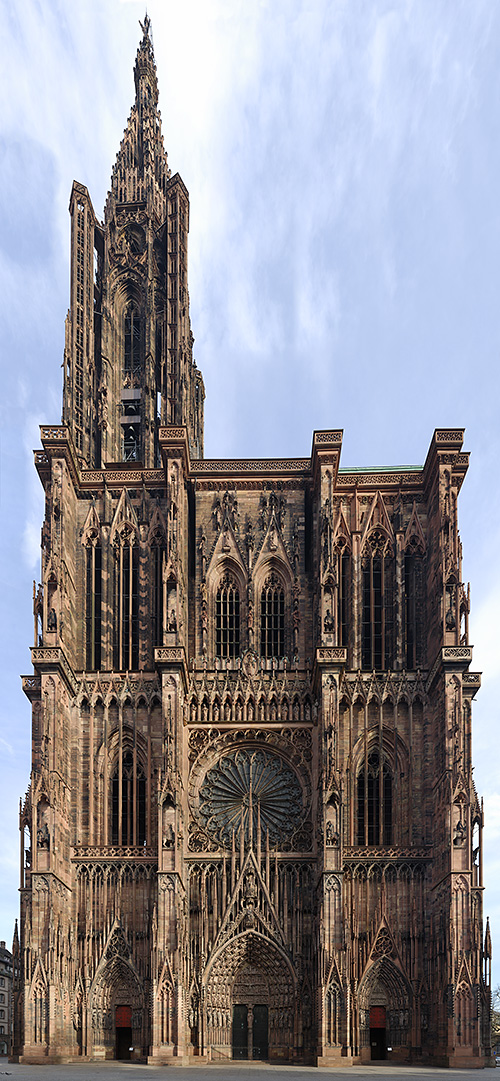
The back of the picture (not presented here, because it's not very interesting) explains what we are actually looking at: La Cathédrale de Strasbourg; La Rosace de la Façade principale. The rose window on the main front of the Strasbourg Cathedral (and here is where the word 'rosace' came from; I just thought 'rosace' sounded better than 'rose window', as a post title). So, now that we've had a good look at the detail, let's check out the whole. The Strasbourge Notre Dame Cathedral is, as the all-mighty Wikipedia tells us, 'widely considered to be among the finest examples of high, or late, Gothic architecture'. And it is indeed a marvelous structure. To get an impression of what it looks like, here's a modern picture of the cathedral:

בצד האחורי של התמונה (שאני לא מביאה כאן, כי הוא לא מעניין במיוחד) מסבירים לנו על מה בעצם אנחנו מסתכלים: La Cathédrale de Strasbourg; La Rosace de la Façade principale. הרוזטה בחזית המרכזית של הקתדרלה בשטראסבורג. אז עכשיו שהסתכלנו יפה יפה על הפרט, אפשר לבחון את השלם. קתדרלת נוטר-דאם בשטראסבורג, כפי שמספרת לנו וויקיפדיה המהוללת, 'נחשבת אחת הדוגמאות הטובות ביותר לאדריכלות הגותית המאוחרת' (תרגום חופשי שלי, כי לא אהבתי את הניסוח של הדף העברי, שגם החליט משום מה שהקתדרלה לא הושלמה [אני די בטוחה שזה לא נכון, אבל לא מספיק בטוחה כדי לתקן]). וזה אכן מבנה מרהיב. כדי לקבל רושם כללי לגביו, הנה תמונה מודרנית של הקתדרלה:


Wow, right?
Actually, this is not a regular picture but an orthoscopic image, which, as far as I can understand from the original page (which is not much, because it is written in French) means that it is a sort of super-detailed image comprised from a lot of smaller images of the details of the building. You should really look at this page even if you don't know French, since they have pictures explaining the process, and it's all pretty cool.

וואו, נכון?
למען האמת, זו לא תמונה רגילה אלא תמונה אורתוסקופית; עד כמה שהצלחתי להבין מהעמוד המקורי (שזה לא הרבה, כי הוא בצרפתית) זאת מין תמונה סופר-מפורטת שמורכבת מהמון תמונות קטנות של פרטי הבניין. כדאי להציץ בעמוד הזה אפילו אם אתם לא יודעים צרפתית, כי יש להם תמונות שמסבירות את התהליך, וזה די מגניב.

And this actually relates to what has become the theme of this post, about viewing the little details of a larger thing (I would say something about the fractal-esque quality of it and surmising the whole from the parts, but some of the people who read this actually have quite a good understanding of math and physics and will probably not like that I keep referring to fractals when this picture is, in fact, not a fractal except in a very loose metaphorical sense - because it is not an exact representation of the whole - and I'm pretty sure that math and physics tend to dislike metaphorical senses of concrete things). I wish there were a way to zoom in on the large picture, and examine the details, but that's not possible on the site where I found it; I'm sure that the original picture, wherever it is, is much more impressive, judging by the example they have of one of the smaller images it is made of. And of course, it must be amazing to stand by the real building and look up at it (even if you don't get to see all the details that way).

וזה בעצם מתקשר למה שהפך להיות הנושא הכללי של הרשומה, על הפרטים הקטנים של משהו גדול (הייתי אומרת משהו על האופי הפרקטלי של העניין הזה ואיך שאפשר להסיק על הכלל מתוך פרטיו, אבל חלק מהקוראים של הבלוג אשכרה מבינים מתמטיקה ופיזיקה ובטח לא יהיו מרוצים מזה שאני כל הזמן מתייחסת לפרקטלים כשהתמונה הזו היא בעצם לא פרקטל חוץ מאשר בצורה מטאפורית רופפת למדי - כי היא לא ייצוג מדויק של השלם - ואני די בטוחה שמתמטיקה ופיזיקה לא כל כך אוהבות התייחסויות מטאפוריות לדברים קונקרטיים). הלוואי שהיתה אפשרות לעשות זום על התמונה הגדולה ולבחון את הפרטים, אבל זה לא אפשרי באתר שבו מצאתי אותה; אני בטוחה שהתמונה המקורית, היכן שלא תהיה, הרבה יותר מרשימה, בהתחשב בדוגמא שיש באתר לאחת התמונות הקטנות שמהן היא מורכבת. וכמובן שזו בטח חוויה מדהימה לעמוד ליד הבניין האמיתי ולהביט למעלה (אפילו אם ככה אי אפשר לראות את כל הפרטים הקטנים).

Anyway, it gives some context to the small picture we had before. In fact, it makes you realise that the picture of the rose window alone is almost misleading - while it's certainly a central feature, the rose window is also pretty much the only part in the main front where you have a wide circular form. Pretty much everything else is narrow and pointed, drawing your eyes up, higher and higher, all the way to the top of the intricate roof of the tower (and then even higher, seeing as the main point of Gothic cathedrals was to make you look up and think of God and feel small and unimportant). Everything wants you to be looking up, except for this big round window, where all the points draw your eye to the centre. And this is the one part that our original picture emphasizes. Sure, you get some spires, but within that limited context, even they seem to be pointing at the circle, not away from it. And if you look at the windows below, you notice even they have circles and rosettes inside them. If you compare the effect of the two pictures, the difference is striking.

בכל אופן, התמונה הזו נותנת הקשר לתמונה הקטנה שראינו קודם. למעשה, היא מבהירה עד כמה התמונה של הרוזטה לבדה היא כמעט מטעה - כי אמנם זה אלמנט מרכזי בחזית הבניין, אבל הרוזטה היא פחות או יותר החלק היחיד שם שבו יש צורות עגולות ורחבות. כמעט כל השאר מורכב מדברים צרים ומחודדים, שמושכים את העין למעלה, גבוה יותר ויותר, עד לקצה סבך הגג שבראש המגדל (ואז אפילו יותר גבוה, בהתחשב בעובדה שהמטרה העיקרית של האדריכלות הגותית היא לגרום לאדם להביט למעלה ולחשוב על אלוהים ולהרגיש קטן וחסר-חשיבות). הכל מבקש ממך להביט למעלה, מלבד החלון העגול הגדול הזה, שבו כל החודים מושכים את העין למרכז. ודווקא זה החלק שהתמונה המקורית מדגישה. נכון, יש שם כמה שפיצים, אבל בתוך ההקשר המוגבל הזה אפילו הם נדמים כאילו הם מצביעים אל המעגל, ולא הלאה ממנו. ואם מסתכלים על החלונות שבתחתית התמונה, שמים לב שגם בהם יש מעגלים ורוזטות קטנות. אם משווים את האפקט של שתי התמונות, ההבדל ביניהן בולט מאוד.

I think I got a bit carried away with the artsy-speak. Sometimes my past as a student of art history rears its rusty head... and since one of the important things I studied back then was how to look at the details of a larger picture, and learn their significance, I can now tie it to the whole theme I kinda have going on, and call it a day, because really, there's a limit to how much I can blabber on about a single little picture.

אני חושבת שקצת נסחפתי עם התקשקשויות האמנות. לפעמים העבר שלי כתלמידת תולדות האמנות מרים את ראשו השחוק... ומכיוון שאחד הדברים החשובים שלמדתי אז היה איך להביט בפרטים של תמונה גדולה וללמוד את המשמעות שלהם, אני יכולה עכשיו לקשר את זה לנושא הכללי שיצא לי כאן, ולסגור את הבסטה להיום, כי באמת, יש גבול כמה אפשר ללהג על תמונה אחת קטנה.

Next time - back to postcards with stories. I already have one in mind.

בפעם הבאה - חזרה לגלויות עם סיפור. כבר יש לי רעיון לגלויה.