Hello readers! - !שלום, קוראים

What is this? Read the introduction - מה זה הדבר הזה? הסבר בהקדמה

Friday, December 31, 2010

Collaborative writing - כתיבה קולבורטיבית

Looks like I'll get another post in before the year ends.
I got the idea to do this postcard when, in the last post, I said there being a lot of people mentioned. Because this postcard also has a lot of people, but in a somewhat unusual way - it was actually written by about six different people.

נראה לי שאצליח להשחיל עוד פוסט לפני סוף השנה.
חשבתי להעלות את הגלויה הזו כשציינתי, בפוסט הקודם, שהם מתייחסים לדי הרבה אנשים. כי בגלויה הזו באמת יש הרבה אנשים, אבל באופן קצת בלתי-רגיל - כתבו אותה כשישה אנשים שונים.

We begin with the front, which shows a view of the Chicago River (interesting side note: when looking for the Chicago River on Google Images, you run into a whole lot of pictures where it is dyed green, which, I realised after a while, is some odd St. Patrick's Day tradition, and not the result of comic-book-style pollution or gamma rays), with a lot of skyscrapers and bridges and other markers of a large metropolis.

נתחיל עם הצד הקדמי, ובו נוף של נהר שיקאגו (מאמר מוסגר מעניין: כשמחפשים את נהר שיקאגו בגוגל תמונות, נתקלים בלא מעט תמונות שלו צבוע בירוק; כפי שהבנתי אחרי זמן מה, זו איזו מסורת מוזרה של יום סנט פטריק, ולא תוצאה של זיהום או קרני גאמא כמו בחוברות קומיקס), עם הרבה גורדי שחקים וגשרים וכיוצא בזה סממנים מטרופוליניים.

Front:
צד קדמי:


Since I've never been to Chicago, I can't speak much about the accuracy of this portrayal, although the sky kind of has this fake-clement look that you sometimes get in postcards of places not known for clement weather (I have, for example, a postcard I bought in Ireland simply because it featured an accurately grey and overcast sky while all the other postcards had a clear blue sky like you almost never actually see). Anyway, it's quite a typical city-view picture, with nothing very special about it.

מכיוון שמימיי לא הייתי בשיקאגו, אני לא יכולה לומר עד כמה זה ייצוג מדויק שלה, אם כי יש לציין שהשמיים נראים קצת כמו הזיוף של מזג אוויר נאה שיש לפעמים בגלויות ממקומות שלא ממש ידועים במזג האוויר הנאה שלהם (יש לי, למשל, גלויה שקניתי באירלנד רק מפני שהשמיים בה היו אפורים ומעוננים כיאות, כשבכל שאר הגלויות היו שמיים כחולים כאלה שאף פעם לא רואים שם באמת). בכל אופן, זו תמונת נוף עירוני טיפוסית למדי, ואין בה כ"כ שום דבר מיוחד.

The special part of the postcard begins on the back, where apparently every member of the travelling family got to say a few words. [Note: Some of the messages are in English, and some are in German; the German ones were difficult for me to even read well enough to transcribe them, so I left them out, but will of course be very grateful to anyone who can supply a transcription and/or translation.]

החלק המיוחד בגלויה הזו מתחיל בצד האחורי, שם כנראה כל אחד מבני המשפחה המטיילת כתב כמה מלים. [הערה: כמה מהמסרים הם באנגלית, וכמה הם בגרמנית; את אלה שבגרמנית היה לי קשה אפילו לקרוא כדי לתעתק, אז דילגתי עליהם, אבל אהיה כמובן אסירת תודה לכל מי שיוכל לספק תעתיק ו/או תרגום.]

Back:
צד אחורי:

[German]

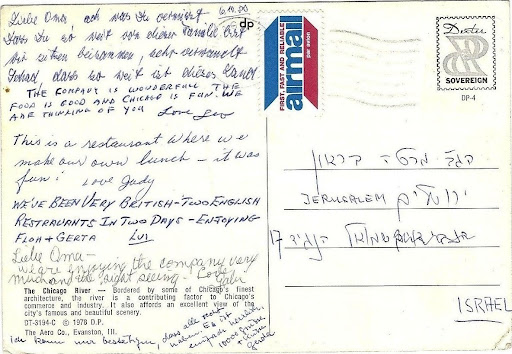
The company is wonderfull[sic!] the food is good and Chicago is fun. We are thinking of you.
Love, Leo

This is a restaurant where we make our own lunch - it was fun!
Love, Judy

We've been very British - two English restaurants in two days - enjoying Floh + Gerta
Zvi

Liebe Oma [dear grandma] -
We are enjoying the company very much and the sight seeing.
Love, Galia

[German]
[גרמנית]

החברה מצוייינת[כך במקור!] האוכל טוב וכיף בשיקגו. אנחנו חושבים עלייך.
באהבה, לאו

זו מסעדה שבה אנחנו מכינים את ארוחת הצהריים בעצמנו - זה היה כיף!
באהבה, ג'ודי

היינו ממש בריטים - שתי מסעדות אנגליות ביומיים - נהנים מפלו + גרטה
צבי

Liebe Oma [סבתא היקרה] -
אנחנו נהנים מאוד מהחברה ומהביקור באתרים.
באהבה, גליה

[גרמנית]

Something about this postcard is really fun. You have all the different people writing to the grandma, each with their own style and handwriting, each with their own highlights of the trip (food seems to be one main highlight, which I definitely approve of, although I must say that the concept of an English restaurant - and back in 1980, before any culinary renaissances or anything - is a bit scary, and going to two of them two days in a row is quite a feat). You can imagine them all sitting in the restaurant, passing the card around, chatting and joking. It's sweet.

יש משהו מאוד כיפי בגלויה הזו. כל האנשים השונים כותבים לסבתא, כל אחד עם הדגשים שלו מהטיול (לא מעט מדגישים את האוכל, מה שבהחלט מוצא חן בעיניי, אם כי יש לציין שהקונצפט של מסעדה אנגלית - ועוד ב-1980, לפני רנסאנסים קולינאריים למיניהם - קצת מעורר חשש, וללכת לשתי מסעדות כאלה ביומיים זה עניין מרשים למדי). אפשר לדמיין את כולם יושבים במסעדה, מעבירים את הגלויה ביניהם, מפטפטים ומתבדחים. זה מקסים.

Something interesting: if you look at the address, you can see that they started writing down one street, then realised it was the wrong one, crossed it and wrote the right address down. Did the grandma just move not long before? Both streets are fairly close to each other, in downtown Jerusalem, so if she did, it wasn't that big a move (by the way, here is a picture of the building at the address listed, 17 Shmuel HaNagid St. - that's pretty cool). Or maybe it was just a lapse of memory, like when you start writing and you realise you're writing your own address by mistake. Anyway, I suppose it made it to the right address, in the end.

משהו מעניין: אם מביטים על הכתובת, אפשר לראות שהם התחילו לכתוב רחוב אחד (הנביאים), ואז קלטו שזו הכתובת הלא נכונה, מחקו אותו וכתבו את השם הנכון (שמואל הנגיד). האם הסבתא עברה דירה לא הרבה זמן לפני כן? שני הרחובות האלה קרובים למדי זה לזה, במרכז העיר בירושלים, אז גם עם היא עברה דירה זה לא היה מעבר רציני במיוחד (דרך אגב, הנה תמונה של הכתובת שצוינה, ברח' שמואל הנגיד 17 - זה די מגניב). או שאולי זו סתם היתה פשלה קטנה של הזכרון, כמו כשמתחילים לכתוב ופתאום קולטים שבטעות כתבת את הכתובת של עצמך. בכל אופן, ניתן לשער שבסופו של דבר הגלויה הגיעה לכתובת הנכונה.

So, a nice bit of family togetherness to end the year with. Actually, some of these people kinda crop up in other postcards I got (I suppose they were all sold to the store in the same batch), but it'll be a while before we get to them, because I have a great idea for something to open the new year. What is it? You'll have to wait and see. Happy New Year, till then!

אז זהו, קצת ביחד משפחתי כדי לסגור את השנה האזרחית. למען האמת, כמה מהאנשים האלה צצים בגלויות אחרות שיש לי (אני משערת שכולן נמכרו לחנות באותה נגלה), אבל ייקח קצת זמן עד שאגיע אליהן, כי יש לי רעיון מצוין לגלויה שתפתח את השנה החדשה. ומהי? תצטרכו לחכות ולראות. שנה אזרחית טובה, עד אז!

Wednesday, December 15, 2010

Oxford - אוקספורד

הרשומה הזו מוקדשת לאחי, שאוהב מאוד את אוקספורד (וגם בילה שם כמה חודשים יפים). אני אישית לא הייתי באנגליה מאז טיול משפחתי קצר כשהייתי בת 12, אבל אשמח לחזור יום אחד. ולכשאחזור, אני חושבת שאשמח לשהות לזמן מה באוקספורד, שנראית כמו עיר יפה ומעניינת.

This post is dedicated to my brother, who loves Oxford (and spent a number of lovely months there). Personally, I haven't been to the UK ever since we visited on a short family trip when I was 12, but I'll be happy to go back someday. And when I do, I think I'd be happy to spend some in Oxford, which looks like a gorgeous and fascinating town.

הגלויה הזו היא גם קישור טוב בין הרשומות הקודמות, שהתמקדו בתמונות שבחרתי בגלל היופי שלהן, לרשומות ה'רגילות' יותר שמתמקדות בסיפורים שעל הגלויות. כי בעצם יש כאן גם וגם: בצד האחורי יש אנשים ויש איזשהו סיפור, אבל התמונה שבצד הקדמי יפהפייה בעיניי. הנה, תראו בעצמכם.

This postcard is also a good segue from the previous posts, that were focused on pictures I chose because I thought they were pretty, to the more 'regular' posts that focus on the stories that the postcards tell. Because here we happen to have both things: on the back, we have people, and some kind of story, but I think the picture on the front is just beautiful. Here, have a look.

צד קדמי:
Front:

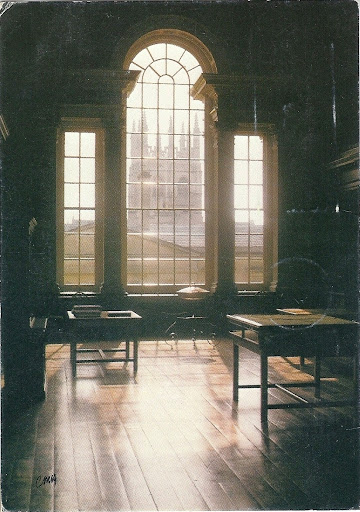
ברגע הראשון שמים לב רק לחלון הגדול הזה במרכז התמונה - כתם של אור בחדר חשוך. אחר כך אפשר להתבונן בפרטים בחדר עצמו, רצפת העץ הממורקת, השולחנות... ואז אפשר להביט דרך החלון, ולראות את מה שבגלויות רגילות יותר היה המרכז: בניין גבוה ועטור-מגדלים. זהו מגדל הכנסייה במרטון קולג' שבאוקספורד. הנה הוא ב-Street View:

At first, you only notice the large window at the centre of the picture - a patch of light in a dark room. Then you can look at details inside the room, the polished hardwood floor, the desks... and then you can look through the window, and see what in regular postcards would be the main focus: a tall, be-turreted building. This is the chapel tower in Merton College, Oxford. Here it is on Street View:


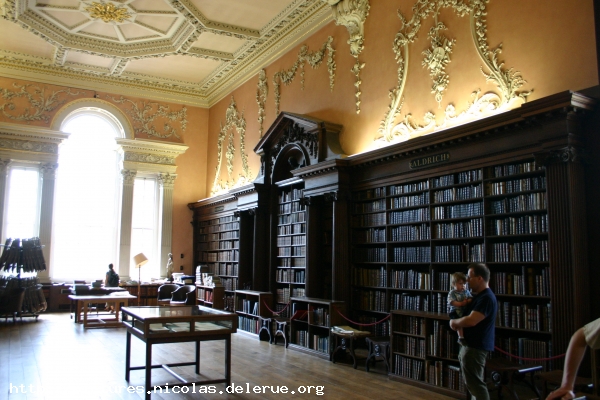
על הגלויה, אנחנו מביטים בו מהספרייה בכרייסט צ'רץ', אבל בגוגל מפות לא יכלתי למצוא נקודת מבט טובה באזור. מה שכן, יש הרבה תמונות יפהפיות של הספרייה. אלוהים אדירים, אני רוצה ללכת לשם. אני כל כך רוצה ללכת לשם.

In the card, it's viewed from the library at Christ Church, but I couldn't find a good view from around there, on Google maps. Lots of beautiful pictures of that library, though. Goodness, I want to go there. I really want to go there.


אהמ. איפה הייתי?
כן. בפינה השמאלית התחתונה של הגלויה אפשר לראות את ראשי התיבות של הצלם, CMA, שהוא, כפי שגיליתי בצד האחורי, כריס אנדרוז (נדמה לי ששמו המלא הוא כריס מיי-אנדרוז, ומכאן ה-M, אבל יש גם אמן אחר שנקרא כך אז אולי אני מתבלבלת). הוא פעיל גם כיום, וגם כיום יש לו הרבה תמונות יפות של אוקספורד.
ובצד האחורי של הגלויה, יש סיפור.

Ahem. Where was I?
Right. In the bottom left corner of the card you can see the photographer's initials, CMA - which as I discovered on the back is Chris Andrews (I think his full name is Chris Meigh-Andrews, hence the M, but there's also another artist with that name so I might have gotten confused). He is still active today, and he still has many beautiful pictures of Oxford.
And on the back of the card, there's a story.

צד אחורי:
Back:

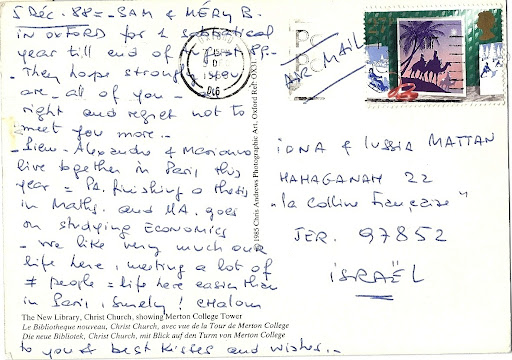
5 Dec 88 - Sam & Méry B. in Oxford for 1 sabbatical year till end of August 89. They hope strongly you are - all of you - all right and regret not to meet you more.
Pierre, Alexandre and Marianno live together in Paris this year. PA finishing a thesis in Maths and MA goes on studying Economics.
We like very much our life here, meeting a lot of people - life here easier than in Paris. Surely! Chalom to you & best kisses and wishes.

5 בדצמבר 88 - סאם ומרי ב. באוקספורד לשנת שבתון אחת, עד סוף אוגוסט 89. הם מקווים בתוקף שאתם - כולכם - בסדר, ומצטערים שלא פוגשים אתכם יותר.
פייר, אלכסנדר ומריאנו חיים יחד בפריס השנה. פ.א. גומר תזה במתמטיקה ומ.א. ממשיך ללמוד כלכלה.
אנחנו אוהבים במאוד את חיינו כאן, פוגשים הרבה אנשים - החיים כאן קלים יותר מאשר בפאריס. בוודאי! שלום לכם ומיטב הנשיקות והאיחולים.

יש כאן בעצם לא מעט אנשים. מלבד הכותבים, שכנראה שעברו לאוקספורד מפאריס (ומרוצים מכך), יש גם את הזוג ב. שהגיע לשנת שבתון, ואת שלושת הסטודנטים שחיים בפאריס, ואת צמד הנמענות בירושלים (לא רחוק מהבית שלי, למען האמת, אם כי על פי ספר הטלפונים הן כבר לא גרות שם). די בלתי אפשרי לחפש אף אחד מהאנשים האלה ( או לפחות, זה מצריך יותר מאמצים ממה שאני מוכנה להשקיע), אבל היה יכול להיות נחמד לדעת מה קרה להם עם הזמן.

That's actually quite a lot of people. Beside the writers, who apparently moved to Oxford from Paris (and are happy about that), there are also the B.'s who came over for a sabbatical, and the three students living in Paris, and the two recipients in Jerusalem (not far away from my home, actually; although, according to the phone book, they are no longer there). It's not really possible to search for any of those people, though (or at least, it would take more effort than I'm willing to expand on this). Would have been cool to know what happened to them, over time.

בכל אופן, יש בזה איזו אווירה בוהמית. כלומר, לא שאני חושבת שאקדמאים באוקספורד (או סטודנטים לכלכלה ולמתמטיקה, לצורך העניין) הם בהכרח בוהמיינים, אבל בכל זאת, יש בזה משהו - האנשים האלה שחיים בפאריס, ואלה שעברו לאוקספורד, ושמות כמו אלכסנדְר ומריאנו ו-Méry (בתעתיקים העבריים קשה קצת יותר להעביר את השונות האירופית של השמות האלו) - שפשוט גורם לי לדמיין משהו מתוך סרט, עם מסיבות קוקטייל אינטלקטואליות, וטוויד וקורדרוי ואש באח ובניינים ישנים ונשגבים. אני מניחה שהחיים האמיתיים שלהם בבריטניה של 1988 (או צרפת, או ישראל) היו בעצם הרבה יותר יומיומיים ומשעממים, אבל מן הסתם לעולם לא אדע באמת, וכל עוד אני לא יודעת, אני יכולה לדמיין מה שאני רוצה.

There's a sort of Bohemian atmosphere to this, though. Not that I think Oxford academics (or math and economics students, for that matter) are really Bohemian, but still, something about it - those people living in Paris, those moving to Oxford, and names like Alexandre and Marianno and Méry - just makes me imagine something from a movie, with intellectual cocktail parties, and tweed and corduroy and fireplaces and grand old buildings. I suppose their real lives in 1988 Britain (or France, or Israel) were actually a lot more mundane, but I'll probably never really know, and as long as I don't know, I can imagine it any way I like.

אז אני מביטה שוב בתמונה שעל הגלויה, באור השמש שנשפך אל האפלולית השקטה של חדר בן מאות שנים, מבהיק על רצפת העץ הכהה, ואני מדמיינת כמה קריר ודומם בוודאי בחדר הזה, ואני מדמיינת את האנשים שבחרו את הגלויה ושלחו אותה, ואני מדמיינת את הבית שלהם, ואת החברים שלהם, ואת הסיפורים שלהם. וזה טוב כמעט כמו לדעת מה קרה באמת.

So I look at the picture on the card again, at the sunlight streaming into the silent darkness of a centuries-old room, shining on the dark wooden floor, and I imagine how cool and still this room must be, and I imagine the people who chose this card and sent it, and I imagine their house, and their friends, and their stories. And that's almost as good as knowing what really happened.

Sunday, December 5, 2010

Rosace - רוזטה

Another just-like-it-aesthetically post. Looking through my scans, I think that most of the (admittedly few) postcards that I chose just because of the picture have black-and-white photos on them. I'm not sure what it is exactly, but there's something about black-and-white photos that really brings out a different sort of beauty in pictures of beautiful things. And this small picture is a great example.

עוד רשומה במסגרת פשוט-אהבתי-את-זה-מבחינה-אסתטית. כשאני בוחנת את התמונות שסרקתי, נדמה לי שברוב הגלויות (המועטות, יש לציין) שבחרתי רק בזכות התמונה שעליהן מדובר בצילום שחור-לבן. אני לא בטוחה מה העניין בדיוק, אבל יש משהו בצילומי שחור-לבן שמדגיש סוג אחר של יופי בתמונות של דברים יפים. והתמונה הקטנה שכאן היא דוגמא מצוינת.

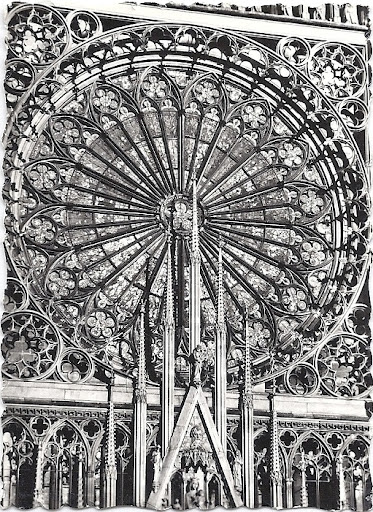
I think that I always tend to like pictures that focus on a small detail of a larger object. Often, these things, taken out of context, get a life of their own... sort of like what this blog is all about. Here, we see a gorgeous piece of architecture: a rosace, more commonly known as a 'rose window' (my spellchecker might not recognise the word 'rosace', but my Oxford Concise does, defining it as 'an ornamentation resembling a rose, in particular a rose window' - and I have a reason for wanting to use this specific word, as you'll soon see), and some spikes rising from a pediment, or a gable, or whatever the right architectural term is for that triangular thing. Also, some Gothic windows, and if you look hard at the top right there is what appears to be the feet of some statues. The use of black-and-white accentuates the lines and details of all this, the repeated forms, the very Gothic grandeur that you know the whole building must have just by looking at this small part. Kinda like a fractal, where every segment represents the whole.

אני חושבת שאני נוטה לאהוב תמונות שמתמקדות בפרט קטן של משהו גדול יותר. הרבה פעמים הדברים האלה, כשהם מחוץ להקשר המקורי, מקבלים מין חיים משלהם... שזה בערך כל הקטע של הבלוג, בעצם. כאן, אפשר לראות פריט ארכיטקטוני יפהפה: רוזטה, עם כמה שפיצים שצצים מגמלון (או, אם כמו שנדמה לי גמלון זה רק המשולש שמתחת לגג, מה שלא יהיה המינוח הארכיטקטוני המדויק של הדבר המשולש הזה שמגיח מתחתית התמונה). יש גם כמה חלונות גותיים, ואם מסתכלים היטב בפינה הימנית העליונה יש גם מה שנראה כמו רגלים של כמה פסלים. השחור-לבן מדגיש את הקווים והפרטים של הכל, את הצורות החוזרות, את הפאר הגותי שאפשר לדעת שמאפיין את הבניין כולו גם כשמסתכלים רק על החלק הקטן הזה. קצת כמו פרקטלים, כל מקטע מייצג את השלם.


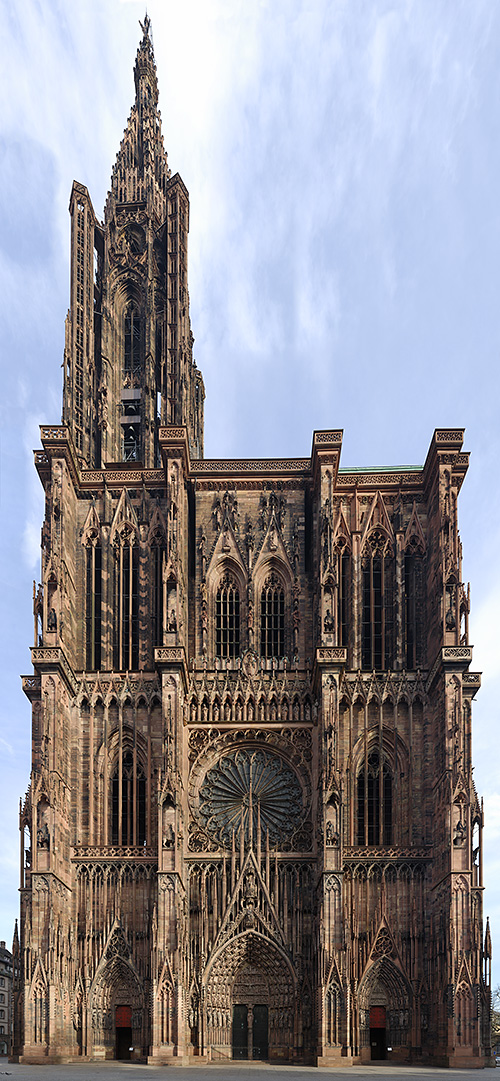
The back of the picture (not presented here, because it's not very interesting) explains what we are actually looking at: La Cathédrale de Strasbourg; La Rosace de la Façade principale. The rose window on the main front of the Strasbourg Cathedral (and here is where the word 'rosace' came from; I just thought 'rosace' sounded better than 'rose window', as a post title). So, now that we've had a good look at the detail, let's check out the whole. The Strasbourge Notre Dame Cathedral is, as the all-mighty Wikipedia tells us, 'widely considered to be among the finest examples of high, or late, Gothic architecture'. And it is indeed a marvelous structure. To get an impression of what it looks like, here's a modern picture of the cathedral:

בצד האחורי של התמונה (שאני לא מביאה כאן, כי הוא לא מעניין במיוחד) מסבירים לנו על מה בעצם אנחנו מסתכלים: La Cathédrale de Strasbourg; La Rosace de la Façade principale. הרוזטה בחזית המרכזית של הקתדרלה בשטראסבורג. אז עכשיו שהסתכלנו יפה יפה על הפרט, אפשר לבחון את השלם. קתדרלת נוטר-דאם בשטראסבורג, כפי שמספרת לנו וויקיפדיה המהוללת, 'נחשבת אחת הדוגמאות הטובות ביותר לאדריכלות הגותית המאוחרת' (תרגום חופשי שלי, כי לא אהבתי את הניסוח של הדף העברי, שגם החליט משום מה שהקתדרלה לא הושלמה [אני די בטוחה שזה לא נכון, אבל לא מספיק בטוחה כדי לתקן]). וזה אכן מבנה מרהיב. כדי לקבל רושם כללי לגביו, הנה תמונה מודרנית של הקתדרלה:


Wow, right?
Actually, this is not a regular picture but an orthoscopic image, which, as far as I can understand from the original page (which is not much, because it is written in French) means that it is a sort of super-detailed image comprised from a lot of smaller images of the details of the building. You should really look at this page even if you don't know French, since they have pictures explaining the process, and it's all pretty cool.

וואו, נכון?
למען האמת, זו לא תמונה רגילה אלא תמונה אורתוסקופית; עד כמה שהצלחתי להבין מהעמוד המקורי (שזה לא הרבה, כי הוא בצרפתית) זאת מין תמונה סופר-מפורטת שמורכבת מהמון תמונות קטנות של פרטי הבניין. כדאי להציץ בעמוד הזה אפילו אם אתם לא יודעים צרפתית, כי יש להם תמונות שמסבירות את התהליך, וזה די מגניב.

And this actually relates to what has become the theme of this post, about viewing the little details of a larger thing (I would say something about the fractal-esque quality of it and surmising the whole from the parts, but some of the people who read this actually have quite a good understanding of math and physics and will probably not like that I keep referring to fractals when this picture is, in fact, not a fractal except in a very loose metaphorical sense - because it is not an exact representation of the whole - and I'm pretty sure that math and physics tend to dislike metaphorical senses of concrete things). I wish there were a way to zoom in on the large picture, and examine the details, but that's not possible on the site where I found it; I'm sure that the original picture, wherever it is, is much more impressive, judging by the example they have of one of the smaller images it is made of. And of course, it must be amazing to stand by the real building and look up at it (even if you don't get to see all the details that way).

וזה בעצם מתקשר למה שהפך להיות הנושא הכללי של הרשומה, על הפרטים הקטנים של משהו גדול (הייתי אומרת משהו על האופי הפרקטלי של העניין הזה ואיך שאפשר להסיק על הכלל מתוך פרטיו, אבל חלק מהקוראים של הבלוג אשכרה מבינים מתמטיקה ופיזיקה ובטח לא יהיו מרוצים מזה שאני כל הזמן מתייחסת לפרקטלים כשהתמונה הזו היא בעצם לא פרקטל חוץ מאשר בצורה מטאפורית רופפת למדי - כי היא לא ייצוג מדויק של השלם - ואני די בטוחה שמתמטיקה ופיזיקה לא כל כך אוהבות התייחסויות מטאפוריות לדברים קונקרטיים). הלוואי שהיתה אפשרות לעשות זום על התמונה הגדולה ולבחון את הפרטים, אבל זה לא אפשרי באתר שבו מצאתי אותה; אני בטוחה שהתמונה המקורית, היכן שלא תהיה, הרבה יותר מרשימה, בהתחשב בדוגמא שיש באתר לאחת התמונות הקטנות שמהן היא מורכבת. וכמובן שזו בטח חוויה מדהימה לעמוד ליד הבניין האמיתי ולהביט למעלה (אפילו אם ככה אי אפשר לראות את כל הפרטים הקטנים).

Anyway, it gives some context to the small picture we had before. In fact, it makes you realise that the picture of the rose window alone is almost misleading - while it's certainly a central feature, the rose window is also pretty much the only part in the main front where you have a wide circular form. Pretty much everything else is narrow and pointed, drawing your eyes up, higher and higher, all the way to the top of the intricate roof of the tower (and then even higher, seeing as the main point of Gothic cathedrals was to make you look up and think of God and feel small and unimportant). Everything wants you to be looking up, except for this big round window, where all the points draw your eye to the centre. And this is the one part that our original picture emphasizes. Sure, you get some spires, but within that limited context, even they seem to be pointing at the circle, not away from it. And if you look at the windows below, you notice even they have circles and rosettes inside them. If you compare the effect of the two pictures, the difference is striking.

בכל אופן, התמונה הזו נותנת הקשר לתמונה הקטנה שראינו קודם. למעשה, היא מבהירה עד כמה התמונה של הרוזטה לבדה היא כמעט מטעה - כי אמנם זה אלמנט מרכזי בחזית הבניין, אבל הרוזטה היא פחות או יותר החלק היחיד שם שבו יש צורות עגולות ורחבות. כמעט כל השאר מורכב מדברים צרים ומחודדים, שמושכים את העין למעלה, גבוה יותר ויותר, עד לקצה סבך הגג שבראש המגדל (ואז אפילו יותר גבוה, בהתחשב בעובדה שהמטרה העיקרית של האדריכלות הגותית היא לגרום לאדם להביט למעלה ולחשוב על אלוהים ולהרגיש קטן וחסר-חשיבות). הכל מבקש ממך להביט למעלה, מלבד החלון העגול הגדול הזה, שבו כל החודים מושכים את העין למרכז. ודווקא זה החלק שהתמונה המקורית מדגישה. נכון, יש שם כמה שפיצים, אבל בתוך ההקשר המוגבל הזה אפילו הם נדמים כאילו הם מצביעים אל המעגל, ולא הלאה ממנו. ואם מסתכלים על החלונות שבתחתית התמונה, שמים לב שגם בהם יש מעגלים ורוזטות קטנות. אם משווים את האפקט של שתי התמונות, ההבדל ביניהן בולט מאוד.

I think I got a bit carried away with the artsy-speak. Sometimes my past as a student of art history rears its rusty head... and since one of the important things I studied back then was how to look at the details of a larger picture, and learn their significance, I can now tie it to the whole theme I kinda have going on, and call it a day, because really, there's a limit to how much I can blabber on about a single little picture.

אני חושבת שקצת נסחפתי עם התקשקשויות האמנות. לפעמים העבר שלי כתלמידת תולדות האמנות מרים את ראשו השחוק... ומכיוון שאחד הדברים החשובים שלמדתי אז היה איך להביט בפרטים של תמונה גדולה וללמוד את המשמעות שלהם, אני יכולה עכשיו לקשר את זה לנושא הכללי שיצא לי כאן, ולסגור את הבסטה להיום, כי באמת, יש גבול כמה אפשר ללהג על תמונה אחת קטנה.

Next time - back to postcards with stories. I already have one in mind.

בפעם הבאה - חזרה לגלויות עם סיפור. כבר יש לי רעיון לגלויה.

Monday, November 29, 2010

Still Life - טבע דומם

לפעמים אני קונה גלויות ישנות, בין אם כתוב עליהן משהו ובין אם לאו, פשוט כי הן יפות בעיניי. או ליתר דיוק (שהרי 'יפה' זה מונח נרחב למדי) מפני שיש בתמונה משהו מרשים, שתופס את תשומת הלב שלי, וגורם לי להמשיך ולהביט בה.

Sometimes I buy old postcards, whether they have anything written on them or not, just because I think they're pretty. Or, rather (since 'pretty' is kind of a wide term), because there's something striking about the picture, something that catches my attention, and makes me keep looking at it.

הגלויה שלהלן היא מקרה שכזה - ולמרות שלעומת מה שמצוין בכותרת זה לא 'טבע דומם' קלאסי, יש בה טבע, ויש בה גם הרבה דממה. משהו שקט ויפהפה.

This postcard is one of those cases - and while not exactly a classic 'still life', as the title implies, it does have a lot of stillness in it. Something quiet and beautiful.


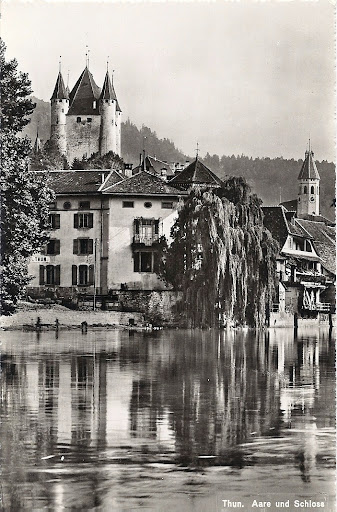
לגבי הכתובית בפינה, תון היא עיירה שווייצית, השוכנת על שפך הנהר אָרֶה לאגם תון. וכמו הרבה ערים ביניימיות אחרות (למען האמת היא היתה בסביבה עוד לפני ימי הביניים, אבל מילא), יש בה טירה, או בגרמנית: Schloss. אז זה די ברור, בעצם. הנה תון במפה:

Regarding the little caption, Thun is a town in Switzerland, on the spot where the river Aare (or Aar) flows into Lake Thun. And, like many medieval towns (it was actually around before medieval times, but still), it has a castle: or, in German, Schloss. Pretty straghitforward, really.
So, here's Thun on a map:


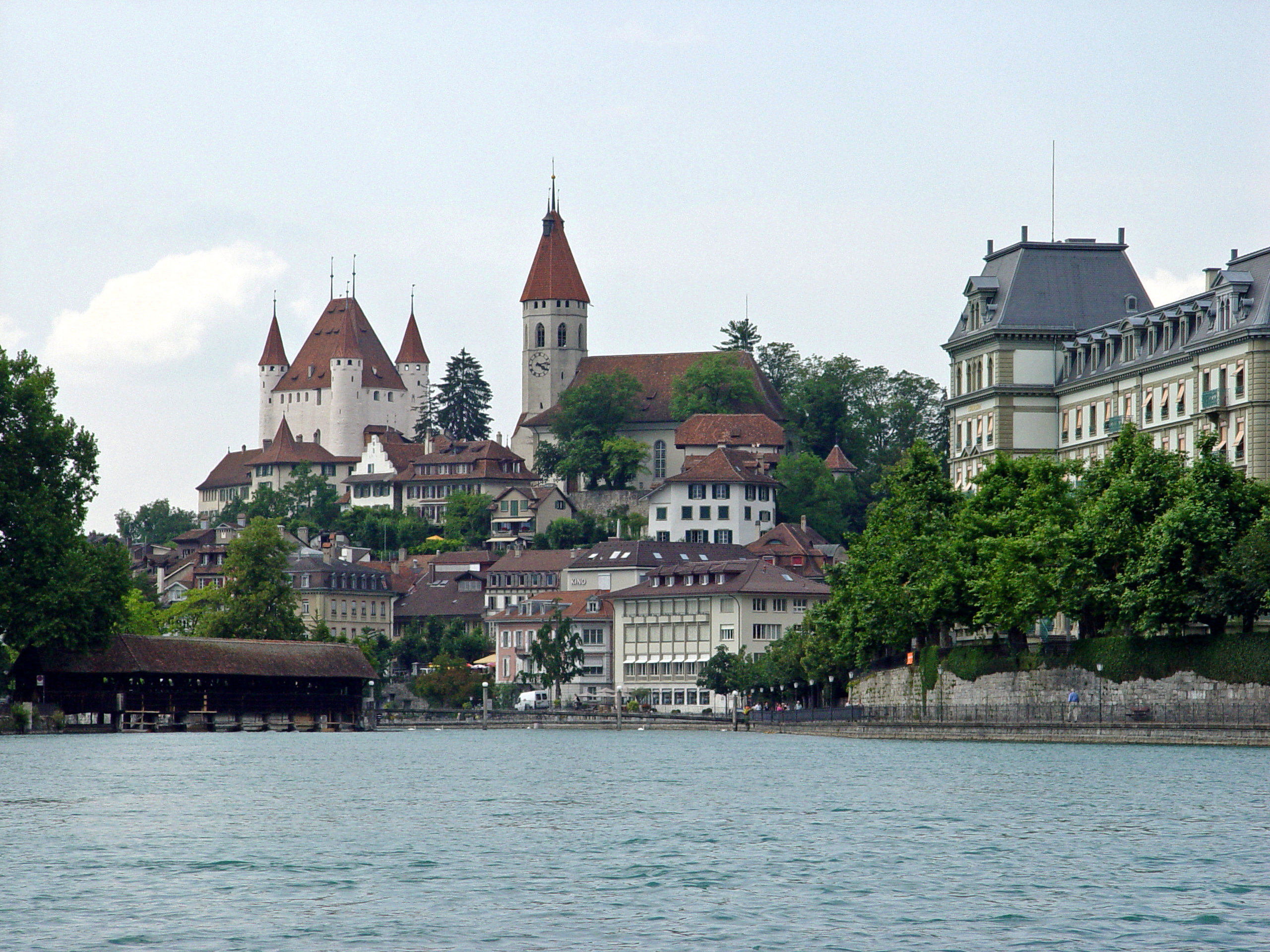
והנה תמונה מודרנית של ה-Aare und Schloss (לצערי לא הצלחתי למצוא תמונה עם קונפיגורציה זהה, אבל זה עדיין יפה:)

And here's a modern picture of the Aare und Schloss (unfortunately, I couldn't find anything with the same configuration, but it's still pretty):


וזהו, בסך הכל. לקחתי את הגלויה הזו פשוט כי אהבתי את התמונה. הדממה, ההשתקפות - שגם תופסת כמעט חצי מהחלל בפריים - היופי החד של השחור-לבן, הכל פשוט דיבר אלי, מבחינה אסתטית. הערבה והנהר נראים כאילו יצאו מציור אימפרסיוניסטי (אבל בשחור-לבן, כמובן). זו פשוט תמונה יפהפיה. אני יכולה להמשיך ולהביט בה הרבה זמן, ולמצוא כל מיני פרטים קטנים (עציצים על מרפסת; התגית 'Thun' שהודבקה משום מה על הבית הגדול, אולי למקרה שהכיתוב בפינה לא מספיק; איך שכל השפיצים על גגות הטירה ומגדל השעון והבתים מהדהדים את השפיצים של צמרות העצים ברקע...) וזה פשוט נפלא לגמרי.

So, that's about it. I just picked this card because I loved the picture. The stillness, the reflection - and the way the reflection takes almost half of the space in the frame - the stark black-and-white beauty of it, it all just spoke to me aesthetically. That willow, and the river, look like they came out of an impressionist painting (but in black-and-white of course). It's just beautiful. I can keep looking at it for a long time, and find all sorts of little details (flowerpots on a balcony; the label saying 'Thun' that was tacked on the big house for some reason, perhaps in case the caption wasn't enough; the way all those pointy tops on the castle and the clock tower and the houses seem to echo the pointed tops of the trees in the background...) and it's just absolutely wonderful.

אין סיפור, הפעם. רק רשומה קצרה על תמונה שאהבתי. אולי אעלה עוד כמה כאלה בקרוב, במקום כל הרשומות המסתבכות-להפליא על פיסות חיים. עד אז, היו שלום!

No story, this time. Just short post about a picture I enjoyed. Might do a few more of those soon, instead of all those surprisingly complicated piece-of-life posts. Till then, farewell!

Wednesday, November 24, 2010

Little Things - זוטות

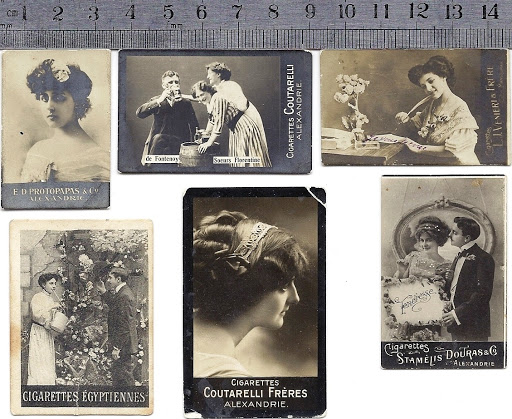
Something a little out of the ordinary, this time - a collection of all kinds of little things that I found in Trionfo in one of my recent visits downtown. Trionfo always has interesting tidbits (this was where I found the pictures of the lady from Skierniewice and the gentelman who doesn't really look like Jabotinsky), and this time I found there, in one of the boxes, a bunch of little pictures - there were movie star headshots, and little pictures used to advertise cigarettes (I'm guessing that they might have come inside the cigarette boxes), and among those were also a few personal photos, about the size of a passport photo, showing some anonymous girl. After looking through them, and resisting the temptation to buy the whole lot, I picked a selection of the various kinds.

משהו קצת שונה מהרגיל, הפעם - אוסף של כל מיני דברים קטנים שמצאתי בטריאונפו באחד הביקורים האחרונים שלי במרכז העיר. בטריאונפו תמיד יש דברים מעניינים (שם גם מצאתי את התמונות של האדונית מסקערניעוויץ ושל האדון שלא באמת דומה לז'בוטינסקי), והפעם מצאתי שם, באחת הקופסאות, אסופה של תמונות קטנות - היו שם דיוקנאות של כוכבי קולנוע, תמונות קטנות שנועדו לפרסם סיגריות (ואני מנחשת שאולי באו עם קופסאות הסיגריות), וביניהן היו פזורות גם כמה תמונות אישיות, בגודל של תמונת פספורט פחות או יותר, שהציגו ילדה אלמונית כלשהי. אחרי שעיינתי בהן, והתגברתי על הפיתוי לקנות את כולן, אספתי מבחר מכל הסוגים.

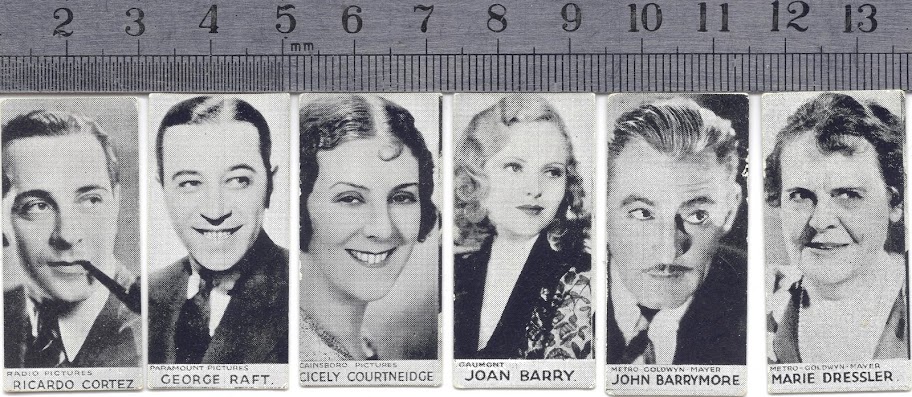
Since one of the things I liked about these pictures was how small they were, this time I scanned them next to a ruler, so you could also get an impression of their minuscule size. And since there are a lot of 'variations on a theme' here, I also put all pictures of the same kind together instead of dividing them to singles. Like I said, it's a bit different than the usual posts.

מכיוון שאחד הדברים שאהבתי בתמונות האלה הוא כמה שהן קטנות, הפעם סרקתי אותן ליד סרגל, כדי שתוכלו להתרשם גם אתם מגודלן הזערורי. ומכיוון שיש כאן הרבה 'וריאציות על נושא', גם שמתי את כל התמונות מאותו סוג יחד, ולא הפרדתי אותן לבודדות. כאמור, קצת שונה מהרשומות הרגילות.

Let's start with the movie stars. Most of the pictures were of actors I couldn't recognise (except for the one picture of Clark Gable, but I didn't take it, because I know who that is so it's not so interesting). Eventually I managed to narrow it down to just six, three actors and three actresses:

נתחיל משחקני הקולנוע. רוב התמונות שם היו של שחקנים שלא זיהיתי (מלבד תמונה אחת של קלארק גייבל, אבל לא לקחתי אותה, כי אני יודעת מיהו וזה לא כ"כ מעניין). בסופו של דבר הצלחתי לצמצם את הבחירה לשישה, שלושה שחקנים ושלוש שחקניות:

To any American readers (or wherever else they use those illogical Imperial measurements): these are centimetres. Make your own conversions if you need to.

Unlike in the knowledgeable writings of James Lileks, which are a semi-direct influence on the style of this segment and perhaps of this blog in general (you should check out his website; not that I think he needs the few views I might direct his way, but if you enjoy what I do here, you will probably like a lot of his stuff as well), I have to admit my ignorance regarding early 20th century film stars - like I said, I had no idea who any of these people were. But I looked them up. Ah, Wikipedia, what would I do without you? (Also, YouTube; some wonderful old stuff on there, and this post is going to have a lot of links to videos.)
So, let's list them.

בניגוד לכתיבה הידענית של ג'יימס ליילקס, שמהווה השפעה ישירה-למחצה על הקטע הזה ואולי גם על הבלוג באופן כללי (כדאי לכם להציץ באתר שלו; לא שנראה לי שהוא צריך את הקוראים הספורים שאני עשוייה להפנות אליו, אבל אם אתם נהנים ממה שאני עושה כאן סביר שתאהבו גם הרבה מהדברים שהוא עושה), אני חייבת להודות שאני די בורה לגבי כוכבי קולנוע מתחילת המאה ה-20 - כמו שאמרתי, לא הכרתי בכלל אף אחד מהאנשים האלה. אבל חיפשתי אותם. הו, וויקיפדיה, מה הייתי עושה בלעדייך? (וגם יוטיוב; יש שם כמה דברים ישנים נהדרים, וברשומה הזו יהיו די הרבה קישורים לקטעי וידיאו.)
ובכן, הבה נעבור עליהם.

The suave Ricardo Cortez was, as you may assume, quite a popular 'Latin Lover' actor for some time; the studio that employed him tried to push him as a competition for Valentino. He also played detective Sam Spade in the Maltese Falcon. No, not the one where Bogart plays Sam Spade, the one made ten years earlier (you can see a short clip here, and oh boy, Bogart was so much better - although apparently some people disagree). Funnily enough, as I was looking him up I thought to myself 'Hm, Ricardo Cortez... probably born Ruben Kramer, or something'. Many actors changed their names back then, after all. Well, I was wrong. Jacob Krantz. After he retired from the cinema he went to work as a stockbroker, and probably made his old Jewish mother very happy.
George Raft's picture made me think that he must have been a comedian, or a dancer; well, he started as a dancer, turns out, but made his fame playing gangsters. He's actually been in quite a lot of well-known films, including Some Like It Hot and Ocean's Eleven (the original, with Frank Sinatra and the Rat Pack), playing tough guys who wear fedoras and talk in that kinda-nasal gangster slang (here he is with Marlene Dietrich, in a film from the era when hitting a woman - sorry a 'dame' who was 'out of line' - was an acceptable sort of thing to do in a movie). Doesn't look it, from this picture.

ריקארדו קורטז האלגנטי היה, כצפוי, שחקן די פופולרי של דמות המאהב הלטיני, והאולפן שבו עבד גם ניסה לקדם אותו כתחרות לוולנטינו (מי היה מאמין). הוא גם שיחק את הבלש סם ספייד בסרט 'הנץ ממלטה'. לא, לא הסרט שבו האמפרי בוגארט משחק את סם ספייד, אלא הסרט שנעשה עשר שנים קודם (אפשר לראות קטע קצר כאן, ובחיי, האמפרי בוגארט היה כל כך הרבה יותר טוב - אם כי מסתבר שיש אנשים שלא מסכימים עם הקביעה הזו). מה שמשעשע הוא שכשחיפשתי אותו חשבתי לעצמי 'המ, ריקארדו קורטז... בטח נולד בשם ראובן קרמר או משהו'. הרי הרבה שחקנים שינו את השם שלהם בתקופה ההיא. ובכן, טעיתי. ג'ייקוב קרנץ. אחרי שהוא פרש מתחום הקולנוע הוא עבר לעבוד בבורסה, מה שבטח מאוד שימח את האמא הפולניה שלו.
מהתמונה של ג'ורג' ראפט הינחתי שהוא היה שחקן קומי, או רקדן; ובכן, הוא אכן התחיל כרקדן, אבל מסתבר שהוא התפרסם כשחקן של תפקידי גנגסטרים. הוא הופיע בדי הרבה סרטים מפורסמים, כמו 'חמים וטעים' ו'ה-11 של דני אושן' (המקורי, עם פרנק סינטרה וה'ראט פאק'), ושיחק בחורים קשוחים שחובשים מגבעת ומדברים בסלנג הגנגסטרי הזה, המאנפף-קמעה (הנה הוא עם מרלן דיטריך, בסרט מהעידן שבו להכות אשה - סליחה, 'בחורה' שהתנהגה 'לא במקום' - נחשב משהו שבסדר לעשות בסרט). הוא לא נראה כזה, בתמונה.

Cicely Courtneidge, on the other hand, was a comedian. And you can pretty much tell from the picture; she looks like the kind of actress that realised she doesn't have the looks to be a starlet, so she better be funny. And she was - I think she was brilliant. Looking for her on the mighty YouTube I found some movie clips of her, mostly song-and-dance numbers, and I highly recommend you look them up as well. My favourite has to be the Tiger Rag, embedded below - a highly amusing little ditty utilizing a bunch of different (mostly British) accents (and some pop culture references of the time that I don't get) - but she was also a very good slapstick dancer, which is something that takes a great deal of skill (check out her Apache Dance - and no, it's not as racist as it sounds).

סיסלי קורטניג', לעומתו, כן היתה שחקנית קומית. ופחות או יותר אפשר לזהות את זה בתמונה שלה; היא נראית כמו שחקנית שהבינה שהיא לא נראית מספיק טוב בשביל להיות כוכבנית, אז כדאי שתהיה מצחיקה. והיא היתה מצחיקה - אני חושבת שהיא היתה נהדרת. כשחיפשתי אותה ביוטיוב מצאתי כל מיני קטעי סרטים, בעיקר של ריקודים ושירים, ואני ממליצה בחום שתחפשו אותם גם כן. אני חושבת שהחביב עליי, מבין כל אלה, הוא ה'טייגר ראג', שהטמעתי להלן - שיר משעשע ביותר שמשלב כל מיני מבטאים (בעיקר בריטיים) שונים (וגם רפרנסים של תרבות פופולרית שאני לא מבינה) - אבל היא גם היתה רקדנית סלאפסטיק מצוינת, שזה משהו שדורש הרבה מאוד כשרון (תבדקו למשל את 'הריקוד האפאצ'י' שלה - ולא, זה לא גזעני כמו שזה נשמע).


(By the way, if you end up watching this clip a bunch of times, as I have, you might eventually notice that the piano guy says, right at the end, 'as long as you've got your health and strength, you should worry about tigers!' - and here's that vernacular 'you should worry' that I talked about a few posts ago. Cool!)

(דרך אגב, אם אתם צופים בקטע הזה הרבה פעמים, כמו שאני עשיתי, בסוף אולי תשימו לב שהפסנתרן אומר, ממש בסוף, 'as long as you've got your health and strength, you should worry about tigers!' - והנה השימוש הסלנגי בביטוי 'you should worry' שדיברתי עליו לא מזמן. מגניב!)

[Update 21.7.2011: Looks like the video has been taken down, which is a darn shame. The audio, at least, can be found here - not as funny as the whole thing, but still quite brilliant. Update of the update, 10 Nov 2012: During a conversation about Courtneidge I found out that the video is back up, and re-embedded it. I also discovered another beautiful video of her, a clip from the 1962 film 'The L-Shaped Room' - a dramatic role this time, and played in a subtle, touching way. I love it a lot, and if it weren't impossible to embed it would have put it right here (but I can't so there's just a link). Anyway, do check it out.]
[עדכון 21.7.2011: נראה שהורידו את הסרטון, שזה באמת חבל. את האודיו, לכל הפחות, אפשר למצוא כאן - לא מצחיק כמו הסרטון המלא, אבל עדיין נהדר. עדכון לעדכון, 10 בנובמבר 2012: בזמן שיחה על קורטנידג' גיליתי שהסרטון הועלה שוב, והטמעתי אותו מחדש. מצאתי גם עוד סרטון יפהפה שלה, קטע מתוך הסרט 'The L-Shaped Room' מ-1962 - תפקיד דרמטי, הפעם, והיא משחקת בו בצורה ממש עדינה ונוגעת ללב. אני אוהבת אותו מאוד, ולו היו מאפשרים להטמיע אותו הייתי מכניסה אותו לכאן (אבל אי אפשר, אז יש רק לינק). שווה לראות, בכל אופן.]

Starting to have to scroll up quite a lot for the picture, so let's round up the others quickly: Joan Barry, unlike Cicely Courtneidge, had the looks to be a starlet, and I guess that's pretty much what she was. She was young and pretty, and she had roles in a couple of movies (including an early-ish Hitchcock called Rich and Strange), and then she got married and retired from show business. At first, when I was researching, I had her confused with an American actress of the same name, who mainly got famous - or rather, infamous - for having an affair with Charlie Chaplin, and then suing him for paternity of her child (blood tests ruled him out as the father, but they were inadmissible in court; after this trial, the law was changed to make blood tests admissible). Then she went crazy, apparently. Seems like a sad story. Anyway, it's not her, so never mind that.
John Barrymore - with perhaps the most striking picture of the lot - was, in his time, a famous Shakespearean and film actor, nicknamed 'the Great Profile' (because he had one), as well as a well-known drunkard, although I suppose back then people might have thought it was manly and charming to drink yourself to death. He is also the father of John Drew Barrymore, who is the father of Drew Barrymore (not a lot of originality in the names, in this family).
And lastly, Marie Dressler (whose picture I picked because she was the only one that didn't really have a movie-star look; she just kinda looks like someone's aunt) was a pretty big star in vaudeville, and managed to survive the move from silent films to talkies because she had an impressive rumbling voice; she won a best actress Oscar in 1932 - and remember, the Academy Awards started in 1929, so this is one of the very first Oscars - and is, apparently, also somewhat famous for this lovely exchange with Jean Harlow (sorry for the bad quality, couldn't find a better version; however, the whole film is available on the Tube, if you want to see it. John Barrymore's in it too, so it's like a 2-in-1 deal). Quite a lady.

אני כבר צריכה לגלול למעלה די הרבה כדי להגיע לתמונה, אז הנה כל השאר בזריזות: ג'ואן בארי, לעומת סיסלי קורטניג', נראתה מספיק טוב כדי להיות כוכבנית, ואני חושבת שזה פחות או יותר מה שהיא עשתה. היא היתה צעירה ויפה, ושיחקה בכמה סרטים (כולל היצ'קוק מוקדם יחסית בשם 'Rich and Strange'), ואז היא התחתנה ופרשה מהשואו ביזנס. בהתחלה בזמן המחקר שלי בלבלתי אותה עם שחקנית אמריקאית באותו שם, שבעיקר התפרסמה - לשמצה, למען האמת - כי היה לה רומן עם צ'רלי צ'פלין, ואז היא הגישה נגדו תביעת אבהות על התינוק שלה (בדיקת דם קבעה שהוא לא היה האב, אבל היא לא היתה קבילה כראיה; בעקבות המשפט הזה, שינו את החוק כך שבדיקות דם ייחשבו ראיה קבילה). ואז היא השתגעה, כנראה. זה נשמע סיפור די עצוב. בכל אופן, זו לא היא, אז לא משנה.
ג'ון בארימור - עם תמונה שלדעתי היא המרשימה שבחבורה - היה בזמנו שחקן שייקספירי (ולא רק) מפורסם, שזכה לכינוי 'הפרופיל הגדול' (כי היה לו פרופיל גדול), והיה גם שיכור ידוע, אם כי אני משערת שאולי בזמנו חשבו שלהשתכר עד מוות זה גברי ושרמנטי. הוא גם אביו של ג'ון דרו בארימור, שהוא אביה של דרו בארימור (המשפחה הזו לא היתה בקטע של שמות מקוריים במיוחד).
ואחרונה חביבה, מארי דרסלר (שאת התמונה שלה בחרתי כי היתה היחידה שלא ממש נראתה כמו כוכבת קולנוע; היא נראית קצת כמו דודה) היתה כוכבת וודוויל די גדולה, והצליחה לשרוד את המעבר מסרטים אלמים למדברים כי היה לה קול רועם ומרשים. היא זכתה באוסקר לשחקנית הטובה ביותר ב-1932 - וצריך לזכור שפרסי האוסקר רק התחילו ב-1929, אז זה היה אחד הראשונים - ומסתבר שבין הסצנות המפורסמות שלה נמנה הדיאלוג החביב הזה עם ג'ין הארלו (סליחה על איכות הסרטון, לא יכלתי למצוא גרסא יותר מוצלחת; אבל כל הסרט נמצא על יוטיוב, אם אתם רוצים לראות אותו. גם ג'ון בארימור משחק שם אז זה כמו שניים-במחיר-אחד). אכן גברת שבגברות.

I don't really have much to say about the cigarette advertisement photos. It's interesting to see that they don't show the actual cigarettes (and probably not due to health concerns like today), but mainly romantic 'atmosphere shots', most of them pictures of women. Those that I ended up picking represent quite a few cigarette producers, all of them from Egypt, or to be more precise, Alexandria.

על תמונות הפרסומת לסיגריות אין לי הרבה מה לומר, למען האמת. מעניין לראות שהן לא מציגות את הסיגריות עצמן (ומן הסתם לא מהשיקולים הבריאותיים של היום), אלא בעיקר 'תמונות אווירה' בסגנון רומנטי, הרבה מהן של נשים. אלה שבחרתי בסופו של דבר מייצגות לא מעט יצרני סיגריות, כולם ממצרים, וליתר דיוק מאלכסנדריה.


I tried searching for information on these producers, but didn't really find anything on Google; anyway, I'm fairly sure that these pictures are from about the first quarter of the 20th century (if only because the headshots are probably from around the 30s, since that's when all these actors were famous). I have a sort of feeling that the people in these pictures represent an earlier era - for example, look at the girl in the top right hand picture, writing with a quill (by the way, if you click to enlarge you can see that someone added in handwriting je vous pense, I'm thinking about you) - but I don't know enough about the clothes and the writing styles and such to make an exact estimate. If that is indeed the case, I suppose it was meant to be somewhat nostalgic. Anyway, I like these pictures a lot, especially the lovely Coutarelli lass in the center bottom line, with the Greek nose and handsome tiara.
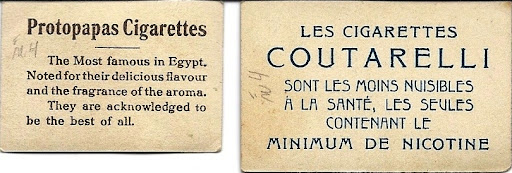
Some of the pictures also had a commercial message on the back:

ניסיתי לחפש מידע על היצרנים האלה, אבל לא מצאתי כמעט כלום בגוגל; בכל אופן, אני די בטוחה שהתמונות האלה הן מהרבע הראשון של המאה ה-20, בערך (ולו רק בגלל שהתמונות הקודמות הן כנראה מסביבות שנות ה-30, כי זו התקופה שבה כל המצולמים בהן היו מפורסמים). יש לי הרגשה שהאנשים שבתמונות מייצגים תקופה יותר מוקדמת - תסתכלו למשל על הבחורה בתמונה מצד ימין למעלה, שכותבת בעט נוצה (אגב, אם תלחצו להגדלה תוכלו לראות שמישהו הוסיף בכתב יד על המכתב שלה je vous pense, אני חושבת עליך) - אבל אני לא מבינה מספיק בבגדים ובסגנונות הכתב כדי לקבוע בדיוק. אם זה אכן כך, אני מניחה שזה נועד לשקף נוסטלגיה מסוימת. בכל אופן, אני מחבבת מאוד את התמונות האלה, ובייחוד את העלמה היפה של קוטארלי במרכז השורה התחתונה, עם האף היווני והנזר הנאה בשיער.
בכמה מהתמונות היה גם מסר פרסומי בצד האחורי:


(Interesting: the French one advertises the cigarettes as being healthier since they have a minimum of nicotine. I didn't realise it was known to be a health problem that far back.)

(מעניין: הטקסט הפרסומי בצרפתית אומר שהסיגריות בריאות יותר כי יש בהן מינימום של ניקוטין. לא קלטתי שכבר אז ידעו שזו בעיה בריאותית.)

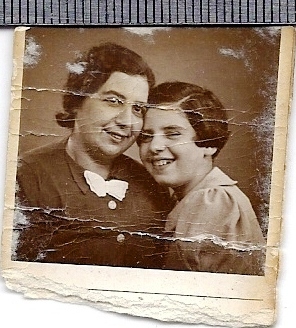
And that's about it on those pictures. The last picture is one of those personal photos I mentioned. I chose one where the girl appears with an older woman - her mother, grandmother, aunt, who knows. As you can see, it's in pretty bad shape, creased and with a torn bottom, but I still like it very much.

וזהו, לגבי התמונות האלה. התמונה האחרונה היא אחד התצלומים האישיים שהזכרתי. בחרתי את זה שבו הילדה הופיעה יחד עם אשה מבוגרת - אמא, סבתא, דודה, מי יודע. כמו שאפשר לראות, הוא לא במצב טוב במיוחד, מקומט וקרוע בתחתית, אבל אני בכל זאת מחבבת אותו מאוד.


I don't even know why I like it so much. It's just a nice family photo, is all. It kinda reminds me of similar photos we have of my mum and dad (and since the cigarette ads were from Egypt, and all these pictures were mixed together, it makes me feel like they are all from Egypt, which is where my mother was born, which makes me feel like there's some kind of a... connection, or something). A little piece of memory, completely out of context. That girl must be much older now. That woman is probably dead. But here they are, smiling awkwardly, in another place, in another time.

אני אפילו לא יודעת למה אני כל כך מחבבת אותו. זו פשוט תמונה משפחתית נחמדה, זה הכל. היא מזכירה לי תמונות דומות שיש לנו של אמא ואבא שלי (ומכיוון שהפרסומות לסיגריות היו ממצרים, ושכל התמונות היו מעורבבות יחד, זה גורם לי להרגיש שכולן ממצרים, ושם אמא שלי נולדה, אז אני מרגישה כאילו יש איזה... קשר, או משהו). פיסה קטנה של זכרון, נטולת הקשר לחלוטין. הילדה הזו בטח כבר מבוגרת בהרבה. האשה הזו בטח כבר מתה. אבל הנה הן, עם חיוכים נבוכים, במקום אחר ובזמן אחר.

It's actually the same with the movie stars (who are all dead as well), and even with those people posing in the cigarette ads. It's actually the same with a lot of the things I have on this blog. They're all just memories. I like the little personal things because it somehow feels closer, when they're regular people with stories that - barring the occasional amazing coincidence - I will never fully know, but when you think about it, all people have stories. Those movie stars have their own stories; they were born somewhere, and had families, and lived, and did many things, and they had their moments of fame, or even years of fame, but it was all just a part of their big story, and in many ways, we only have a glimpse of that. Even those carefully-staged pictures of ladies and gentleman in the cigarette ads are all a part of some story, not just for the people who participated in them, but for another era and another place. And that's what I love about all these things. They give me little glimpses to these places, to these times, to these stories.

למען האמת, זה אותו דבר עם כוכבי הקולנוע (שגם הם כבר מתו כולם), ואפילו עם האנשים שמדגמנים בפרסומות לסיגריות. זה אותו דבר עם הרבה מהדברים שיש לי בבלוג הזה. כולם רק זכרונות. אני אוהבת את הדברים האישיים הקטנים כי הם נדמים לי קרובים יותר, כי הרי אלה אנשים רגילים עם סיפורים שלהוציא צירופי מקרים מדהימים פה ושם, לעולם לא אוכל להכיר אותם במלואם - אבל כשחושבים על זה, לכולם יש סיפורים. לכוכבי הקולנוע היו סיפורים משלהם; הם נולדו איפשהו, והיתה להם משפחה, והם חיו ועשו כל מיני דברים, והיו להם גם רגעים של תהילה, או אפילו שנים של תהילה, אבל זה היה רק חלק מהסיפור הגדול שלהם, ובהרבה מובנים יש לנו רק מבט חטוף בסיפור הזה. אפילו התמונות המבוימות-להפליא של גבירות ואדונים בפרסומות לסיגריות הן רק חלק מאיזשהו סיפור, לא רק של האנשים שהשתתפו בהן, אלא של תקופה אחרת במקום אחר. וזה מה שאני אוהבת בכל הדברים האלה. הם מאפשרים לי מבט חטוף במקומות האלה, בזמנים האלה, בסיפורים האלה.

And to finish on a lighter note, here's a video of Marie Dressler, being regal and rumbling and funny and altogether awesome in the 1929 Hollywood Revue:

וכדי לסיים במשהו קליל יותר, הנה סרטון של מארי דרסלר, מלכותית ורועמת ומצחיקה ונפלאה באופן כללי, ב-Hollywood Revue מ-1929:

Monday, November 15, 2010

Small World - עולם קטן

21.11.2010
Updated! See below ----- עדכון! ר' למטה

זה אחד מצירופי המקרים הכי מוזרים שנתקלתי בהם עד כה בכתיבת הבלוג (ואני כוללת גם צירוף מקרים מגניב אחד שעדיין לא סיפרתי לכם עליו, כי עוד לא גמרתי להתעסק בו, אבל כשיגיע זמנו זה הולך להיות עדכון ממש מגניב, חכו ותראו). תמיד יש בי תקווה שמישהו פתאום יזהה את האנשים שכתבו את הגלויה או קיבלו אותה, אבל נטיתי להניח שמה שיקרה הוא שמישהו ימצא את דרכו לבלוג ויאמר 'הי, אני יודע מי זה'; אף פעם לא ציפיתי לגלות שהמשפחה שלי מעורבת בסיפור.

This is one of the weirdest coincidences that happened to me, so far, while writing this blog (and this is including one awesome coincidence that I haven't told you about yet, because I'm not finished with it, but when I will it'll be the coolest update, you'll see). I always kinda hope to have someone suddenly recognise the people who wrote or received the postcard, but I usually assumed it will just be somebody stumbling upon the blog and saying 'Oh, I know who this is'; I never expected to actually have my family entwined in a story.

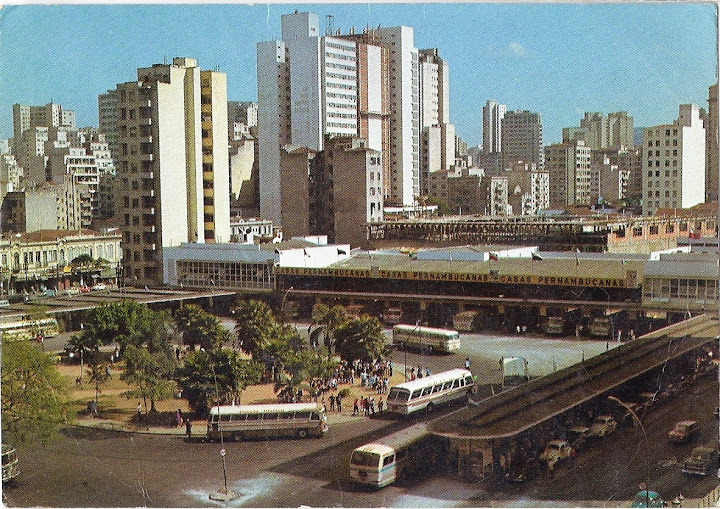
אז עכשיו שכולם סקרנים... כל העניין הזה התחיל בשבוע שעבר בערך, כשאמא שלי חזרה מביקור בברזיל. זה נתן לי את הרעיון להעלות פוסט עם הגלויה הזו מסאו פאולו, שם היא גדלה. למען האמת, זו בכלל היתה הסיבה המקורית שבחרתי את הגלויה הזו (טוב, גם כי אהבתי את כתב היד בצד האחורי, זו לעתים קרובות סיבה טובה לקחת גלויות בשפה שאני לא מבינה). אז הראיתי לה את הגלויה, כמובן.

So, now that I got you all curious... this all started around last week when my mother returned from a visit to Brasil (I scoff at your squiggly red lines! I write 'Brasil' with an S because this is how it's written in Portuguese and because I think it looks nicer that 'Brazil' with a Z, so there). It gave me an idea to have the next post be this postcard from São Paulo, where my mother grew up. Actually, that was the original reason I picked this card (well, and I liked the handwriting on the back, which is often a reason I pick up postcards in a language I don't know). So I showed it to her, of course.

צד קדמי:
Front:


כמובן שהיא זיהתה את העיר מייד (זו גם תמונה מ-1971, כשהיא עדיין גרה שם), ואפילו סיפרה שהיא גרה אז לא רחוק, קצת משמאל לתמונה. היא הבטיחה לכתוב עוד על המקום הזה בתגובות. זו תמונה די עגמומית של חלק די משעמם בעיר, ומוזר שעשו מזה גלויה; אני מניחה שזו היתה עוד סיבה שבחרתי אותה, כי אני תמיד אוהבת תמונות שמציגות את החלקים הפחות-רגילים בעיר, יותר מאשר כאלה שמציגות אתרים מפורסמים מזוויות מוכרות. זה יותר מעניין.

Of course she recognised it immediately (this is also a picture from 1971, when she was still living there), and even pointed out that she lived not far away, a little to the left from the picture. She promised to write more about it in the comments. It is a rather dreary picture of a rather boring spot to have on a postcard, which I suppose was another reason for me to pick it, since I always like pictures of unusual spots of a city better than those featuring a well-known monument from an often-used angle. It's more interesting.

בכל אופן, אחרי שדיברנו על התמונה, הראיתי לה את הצד האחורי, כי הוא בצרפתית ורציתי שתעזור לי לתרגם אותו.

Anyway, after talking about the picture, I showed her the back of the card, because it is in French and I needed her help translating it.

צד אחורי:
Back:


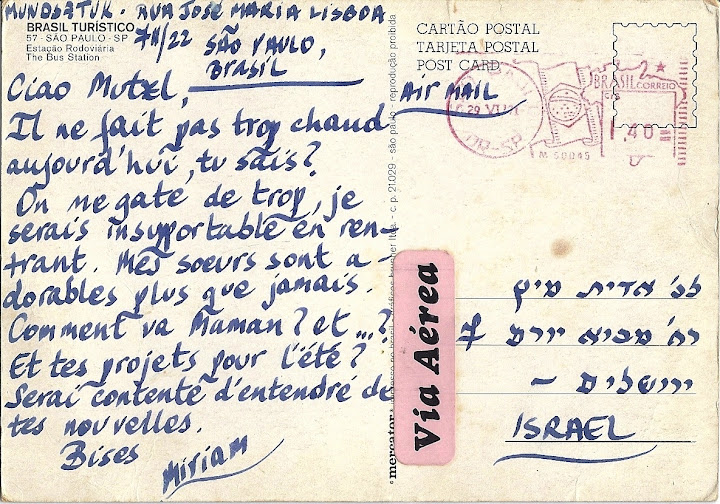
Ciao Mutel,
Il ne fait pas trop chaud aujourd'hui, tu sais?
On me gate de trop, je serais insupportable en rentrant. Mes seurs sont adorables plus que jamais.
Comment va Maman? et...? Et tes projets pour l'ètè?
Serai contente d'entendrè de tes nouvelles.
Bises, Miriam

צ'או מוּטֶל,
לא כל כך חם כאן היום, את יודעת?
מפנקים אותי מאוד, אני אהיה בלתי-נסבלת כשאחזור לארץ. האחיות שלי מקסימות כמו תמיד.
מה שלום אמא שלך? ו...? והתכניות שלך לקיץ?
אני שמחה לשמוע חדשות ממך.
נשיקות, מרים
Ciao Mutel,
It's not very hot here today, you know?
I'm getting terribly spoiled, I will be insufferable when I come back. My sisters are as sweet as ever.
How's your mother? and...? And your plans for summer?
I'm happy to hear news from you.
Kisses, Miriam

תודה אמא!

Thanks, mum!

ואחרי שהיא הקריאה לי את המסר (ותרגומו), היא התחילה לחשוב בקול רם אם אולי היא מכירה את מי שכתבה אותו. נכון שסאו פאולו היא עיר בת כמה מיליוני תושבים, אבל מצד שני, מספר האנשים שהיו עשויים לשלוח גלויה לישראל בשנות ה-70 (ועוד בצרפתית) הוא מן הסתם מעט מזעיר מתוך כל המיליונים האלה.

So, after reading (and translating) it to me, she was thinking out loud whether it was written by someone she knew. Sure, São Paulo has a population of several million people, but then again, the number of people who might have written a postcard to Israel in the 70s (and in French to boot) is obviously quite a minuscule percentage of this population.

אז היא הסתכלה שוב על הגלויה. 'מרים', הרהרה לעצמה, ואז הסתכלה על כתובת השולח בפינה השמאלית העליונה וקראה: 'מרים מונדשטוק! בטח שאני מכירה אותה! היא היתה בבית הספר שלי!'.

So, she gives another look. 'Miriam', she ponders, and then looks at the writer's address on the top left corner, and exclaims 'Miriam Mundsztuk! Of course I know her! She went to my school!'.

כן. גלויה שקניתי באופן שרירותי למדי לפני כמה שנים בחנות ספרים משומשים נשלחה, לגמרי במקרה, על ידי מישהי שאמא שלי הכירה בצעירותה. למעשה, מרים היתה בשכבה עם דודה שלי. וכמו שתיהן, גם היא עלתה לישראל, ומסתבר שכיום היא חיה באפרת, התנחלות (או יישוב, תלוי בנטייתכם הסמנטו-פוליטית; אני ממש, אבל ממש, לא רוצה להכניס ענייני פוליטיקה לבלוג הזה) ליד ירושלים, אם כי אני משערת שהיא שינתה את השם מאז (בעצם יש בפייסבוק מרים מונדשטוק-אורבך אחת - אני לא לגמרי בטוחה שזו היא, אבל אשלח לה הודעה לגבי הרשומה הזו, ונראה).

Yes. A postcard that I arbitrarily picked up in a used book store a few years ago just happened to have been sent by someone my mother knew growing up. Miriam was in the same class as my aunt, actually. And like both, she also moved to Israel, and now lives in Efrat, a settlement near Jerusalem, although I guess she changed her name since (actually, there is a Mirjam Mundsztuk-Orbach on Facebook - I'm not sure if it's her, but I'll send her a message about this post, and we'll see).

אני חייבת לומר שזה פחות או יותר הפיל אותי מהכסא. אני לא יכולה לחשוב על עוד משהו להוסיף לסיפור הזה (אם כי כמובן שאשמח מאוד אם אמא או דודה שלי, או אפילו מרים עצמה, ירצו להוסיף משהו; ואגב, אם מרים מגיעה לכאן מתישהו, אני רוצה לומר לה שאשמח להחזיר לה את הגלויה אם היא רוצה בה). זה... עולם קטן, באמת. זה פשוט מדהים.

Honestly, this pretty much blew my mind. I can't think of that much more to add to this story (although of course I'll be happy if my mother, or my aunt, or even Miriam herself might want to add something; actually, if Miriam gets here at some point, I want to let her know I will be happy to return the postcard, if she wants it). It's just... small world, really. It's absolutely amazing.

אה, ולגבי הנמענת, אדית מיץ: לפי ספר הטלפון (כלומר, אתר 144) נראה שהיא עדיין גרה באותה כתובת, בירושלים. וגם זה די מגניב.

Oh, as for the recipient, Edith Mitz, it appears from an online phonebook search that she is still living at the same address, in Jerusalem. Which is also pretty cool.

עולם קטן, באמת. עולם קטן.

Small world, really. Small world.


21 בנובמבר - עדכון!
בשבוע שעבר, אחרי שפרסמתי את הרשומה הזו, יצרתי קשר עם מרים בפייסבוק (למרות שאני לא מהמשתמשים הנלהבים ביותר של האתר הזה, אני חייבת להודות שהוא שימושי), והיא בהחלט זוכרת את הגלויה. אדית מיץ, היא סיפרה לי, היתה חברה שלה בזמנו, גם אם לא חברה מאוד טובה; היא היתה בחורה בלגית שהיא הכירה דרך השותפה שלה (של מרים), שהיתה גם היא מבלגיה. היא עורכת דין, ובזמנו גם עסקה במקצוע כאן בישראל, והיתה נשואה לעורך דין (שהיה מאיטליה במקור). היתה לה בת אחת איתו, ואז הם התגרשו. היא עזבה את ישראל בסוף שנות ה-70 / תחילת שנות ה-80, אז כיום (בגיל שישים-ומשהו) היא צריכה להיות בבלגיה, וכנראה שהיא גם התחתנה שוב.

21 Nov - Update!
Last week, after publishing this post, I contacted Miriam on Facebook (I'm not one of the avid users, but I gotta admit, that site is useful), and she definitely remembers this postcard. Edith Mitz, she tells me, was her friend in the day, but hardly a best friend; she was a Belgian girl, introduced to Miriam through her (Miriam's) roommate, who was also from Belgium. She is a lawyer, and back then practised law in israel, was married to another lawyer (who was originally from Italy), had a girl, and later got divorced. She left Israel in the late 70s / early 80s, so should now (in her early 60s) be back in Belgium, and is apparently remarried.

אז זו אדית, ושוב תודה למרים על הסיפור הזה. העובדה שבסופו של דבר הגלויה שלה הגיעה אליי, למרות שהיא עצמה לא היתה בישראל כבר כשלושים שנה, עדיין מוזרה למדי; אבל העובדה שהיא עדיין מופיעה במאגר של בזק דווקא מאפשרת הסבר כלשהו - אני חושבת שיכול להיות שהיא עדיין בעלת הדירה שבה גרה אז, ושהיא משכירה אותה. אם היא השאירה שם את הגלויה, אני יכולה לדמיין שאיזה דייר נתקל בה והחליט למכור אותה לחנות הספרים המשומשים (לא משהו שאני אישית הייתי עושה, אבל כמו שאולי שמתם לב יש לי איזה קטע עם גלויות ישנות). זה בהחלט יכול להסביר איך זה שגלויה שנשלחה לפני ארבעים שנה מברזיל לבחורה בלגית שגרה בישראל הגיעה בסופו של דבר לידיי. אבל צירוף המקרים המוחלט של כל העניין הזה עדיין מופלא.

So, that's Edith, and I want to thank Miriam again for telling me this story. The fact that I ended up with her postcard, although she has not been in Israel for about 30 years, is still odd; the fact that she appears in the phone book, however, suggests some explanation - it is possible, I guess, that she still owns the apartment she lived in, but rents it. If she left this card behind, I can imagine a tenant running into it, and selling it to the used book store (not something I would have done, but I have this thing about old postcards, as you may have noticed). It definitely can explain how a postcard sent 40 years ago from Brasil to a Belgian girl living in Israel ended up in my hands. But the sheer coincidence of the whole story is still amazing.

נ"ב - מרים אמרה לי שתשמח לקבל את הגלויה בחזרה, אז אשלח אותה אליה. מין סגירת מעגל. חתיכת הקרטון הזו עברה מסע די ארוך.

PS - Miriam said she will be happy to have the postcard back, so I will be sending it her way. Closing that circle. It's been a long journey, for a little piece of cardboard.

Wednesday, November 3, 2010

YMCA - ימק"א

No, no, stop singing. Seriously, this isn't funny. Stop it. The title is just because this postcard was written at the Jerusalem YMCA, and there's the picture, and...
Oh, fine. Go ahead. Get it out of your system and then we'll move on.

נו, די, תפסיקו לשיר. ברצינות, זה לא מצחיק. תפסיקו. הכותרת היא בגלל שהגלויה כאן נכתבה בימק"א בירושלים, ויש תמונה, ו...
טוב, בסדר. יאללה. תשחררו, תשתחררו, ואז נמשיך הלאה.


Are we good?
Great.
Right, so, basically, I thought of doing this card because the twisty story in the last post, with the hints of potential scandal, reminded me of the story here, which also has a hint of something a little out of the ordinary. You'll see.

הכל בסדר?
יופי.
אז ככה. בגדול, חשבתי להעלות את הגלויה הזו כי הסיפור הפתלתול ברשומה הקודמת, עם הרמזים לסקנדל פוטנציאלי, הזכיר לי את הסיפור שכאן, שגם בו יש רמז למשהו שקצת יוצא מגדר הרגיל. עוד תראו.

It begins, anyway, with the front of the card, showing a lovely, although kinda blurry (it was a bad picture in the original, too; scanning just enhanced how much so) picture of Jerusalem in snow, showing the YMCA building and the King David Hotel.

מתחילים, בכל אופן, עם הצד הקדמי של הגלויה, שעליו תמונה מקסימה גם אם מטושטשת (האיכות של התמונה היתה גרועה גם במקור; הסריקה רק הדגישה את זה) של ירושלים בשלג, שמתמקדת בבניין ימק"א ובמלון קינג דייוויד.

Front:
צד קדמי:

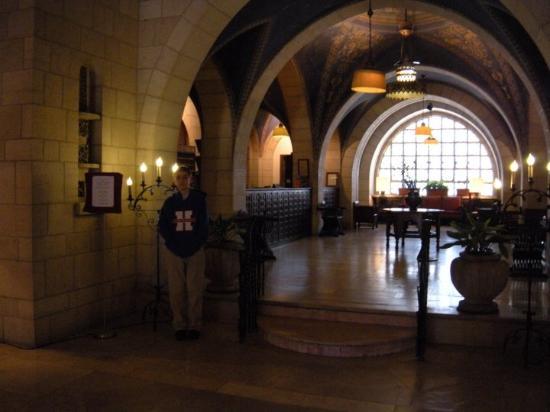
For those of you not familiar with my lovely city: while in many other places the Y is basically a boring square building with a gym, the one in Jerusalem is a fancy old building, right across from the very posh King David Hotel, and in addition to the customary gym, it also has has a gorgeous vaulted lobby and restaurant.

לאלה מכם שלא מכירים כ"כ טוב את עירי האהובה: בעוד שבהרבה מקומות אחרים ימק"א (או בכינויו הנפוץ 'ה-Y') זה פחות או יותר בניין מלבני משעמם עם חדר כושר, ימק"א ירושלים שוכן בבניין ישן ומפואר מול מלון קינג דייוויד, ובנוסף לחדר הכושר יש לו גם לובי יפהפה עם מסעדה ותקרה של קמרונות צולבים.

It also has a large tower with a rounded top, flanked by two smaller domed buildings, which of course gives rise to many unfortunate jokes.

יש לו גם מגדל גבוה עם ראש מעוגל, שבשני צדדיו בניינים קטנים עם כיפות, מה שכמובן מעלה מיידית כל מיני בדיחות מצערות למדי.

...Are you going to start singing again? Please don't. We have the back of the card to get to, and that's the really interesting part.

...בבקשה אל תתחילו לשיר עוד פעם. עדיין לא הגענו לצד האחורי של הגלויה, שהוא בכלל החלק המעניין באמת.

Back:
צד אחורי:

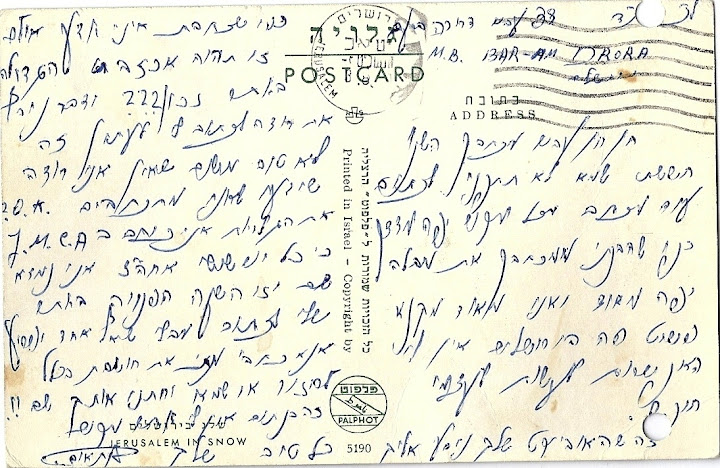
חן חן עבור מכתבך השני, חששתי שמא לא תתפני לכתוב עוד מכתב, מכל מקום יפה מצדך. כפי שהבנתי ממכתבך את מבלה יפה מאוד ואני מאוד מקנא, פשוט פה בירושלים אין לי האפשרות לעשות לעצמי חופש.
זה שהאובייקט שלך נוסע אליך כפי שכתבת איני יודע אולם זו תהיה אכזבתו הגדולה ביותר נכון??? ודבר נוסף, את רוצה לכתוב לי לעיתון, זה לא טוב משום שאין אני רוצה שידעו שאנו מתכתבים. O.K.?
את הגלויות אני כותב ב Y.M.C.A כי כל יום שישי אחה"צ אני נמצא שם וזו השעה הפנויה ביותר שלי לכתוב מבלי שאף אחד יפריע.
אנא כתבי מתי את חושבת בכלל לחזור או שמא יחתנו אותך שם!!
זה בנתים אין לי יותר מקום.
כל טוב. שלך, [חתימה]

Gracious thanks for your second letter, I was worried that perchance you will not have time to write another letter, at any rate it is nice of you. As I understand from your letter you are having a lovely time and I am very jealous, it is just that here in Jerusalem I do not have the possibility to give myself any time off.
That your Object is going to you as you have written, I do not know, but this will be his greatest disappointment, right??? And another thing, you want to write me at the newspaper, this is not good since I do not want others to know we are corresponding, O.K.?
I write the postcards at the Y.M.C.A because every Friday afternoon I am there and this is the freest time I have to write without any interruptions.
Please write me when you are thinking to come back at all, or if perchance they will marry you off over there!!
That's it for now I have no more room.
Best regards. Yours, [signature]

So, this seems interesting. If he's in Jerusalem, and she's away on vacation, why is he writing her to a P.O. box in Jerusalem? What paper does he work at, and why doesn't he want people there to know they're corresponding (that last bit, about not wanting people to know, fits quite well with writing to a P.O. box, at least)? Where is she? Who is the man only referred to as 'your Object', and why is he called that?
So many questions. There's a story, here.

וזה די מעניין. אם הוא בירושלים, והיא במקום אחר בחופשה, למה הוא כותב לה לתא דואר בירושלים? באיזה עיתון הוא עובד, ולמה הוא לא רוצה שהאנשים שם יידעו שהם מתכתבים (לגבי החלק האחרון, על זה שהוא לא רוצה שאחרים יידעו עליהם, זה מתאים לעובדה שהוא כותב לתא דואר, לפחות)? איפה היא נמצאת? מיהו הגבר שמכונה 'האובייקט שלך', ולמה הוא מכונה כך?
כל כך הרבה שאלות. יש פה סיפור.

I have to admit I don't really like this guy. I can't really put my finger on it, but something in his tone just bugs me. It's like he's trying to hide a possessive tendency by pretending he's just joking and nonchalant ('Haha, that other guy you're about to meet is going to be disappointed, right??? It's not like you're going to leave me. Haha. Ha.'). And again, I'm not sure why, but it feels like he's an older man, and like she's relatively young. Something about the whole thing feels a bit fishy. But there's a good chance I'm just reading too much into this. Making up a story and getting carried away in it. For all I know, there might be a much simpler explanation.

אני חייבת להודות שהאיש הזה לא כל כך מוצא חן בעיניי. קשה לי להגדיר את זה במדויק, אבל משהו בטון שלו פשוט מפריע לי. כאילו שהוא מנסה להסתיר נטייה לרכושניות מתחת מסווה של נונשלנטיות ובדיחות-דעת ('האהא, הבחור ההוא שבא לפגוש אותך הולך להתאכזב, נכון??? זה לא כאילו שתעזבי אותי. האהא. הא.'). ושוב, אני לא יודעת למה, אבל יש לי הרגשה שהוא גבר מבוגר ושהיא צעירה יחסית. משהו בכל הסיפור הזה מרגיש מפוקפק במקצת. אבל מצד שני, יש סיכוי לא רע שאני מייחסת לזה משמעות מוגזמת. ממציאה לי סיפור ואז נסחפת לתוכו. עד כמה שאני יודעת, יכול להיות הסבר הרבה יותר פשוט.

And that's it, really. Unlike the previous few inordinately long posts, here there wasn't really an option to do a lot of research and detective work. In Israel there are not so many documents available online, especially not from the late 60s (the card is from 1969), and googling the name didn't come up with much - while not an super-common name, 'Drora Bar-Am' is also not terribly extraordinary. Maybe if I could read the signature it would help, seeing as the writer worked in a newspaper (so there might be more mentions of him, especially if he was a reporter or an editor or something like this), but I can't read it.
But I wonder what happened to them, to the mystery man and the mystery Drora (and the Object), and how this story ended. If someday someone who knows Drora Bar-Am - or even Drora herself! It's only been 40 years, it's not unreasonable to assume she's still alive - reaches this post, maybe they'll be kind enough to tell us the ending.

זהו, בעצם. בניגוד לרשומות הקודמות הארוכות כאורך הגלות, כאן לא ממש יכלתי לחקור ולבלוש יותר מדי. אין כל כך הרבה מסמכים שזמינים אונליין בארץ, בטח שלא לגבי שנות השישים המאוחרות (הגלויה היא מתשכ"ט, או 1969 למתקשים), וחיפוש גוגל של השם לא מעלה הרבה - 'דרורה בר-עם' זה אמנם לא שם סופר-נפוץ, אבל גם לא יוצא דופן במיוחד. אולי אם הייתי מצליחה לקרוא את החתימה זה היה עוזר, בהתחשב בעובדה שהכותב עבד בעיתון (אז יש יותר סיכוי שיהיו אזכורים שלו, לפחות אם הוא היה כתב או עורך או משהו), אבל לא הצלחתי.
אבל אני תוהה מה קרה להם, לאיש המסתורין ולדרורת המסתורין (ולאובייקט), ואיך הסיפור הזה נגמר. אם ביום מן הימים יגיע לרשומה הזו מישהו שמכיר את דרורה בר-עם - או אפילו דרורה עצמה! עברו רק ארבעים שנה, לא בלתי-סביר להניח שהיא עדיין חיה - אולי הם יסכימו לגלות לנו את הסוף.